The Big Island has the most varied beach inventory in Hawaii — and the smallest crowds per coastline mile. White sand at Hapuna and Mauna Kea. Black sand at Punaluu, Pololu, and Kaimu. Green sand at Papakolea. Salt-and-pepper at Magic Sands. Snorkeling at Kahaluu and Two Step. The catch: a 4-million-year-old young island means many of the standout beaches require dirt-road or hiking access, and the Kona-Hilo geography splits the inventory across very different climates.
This guide ranks the 12 best beaches on Hawaii Island for 2026 by visitor profile — families, snorkelers, photographers, surfers, swimmers, and the curious — with access notes, water-safety context, and the season that suits each.
Big Island Beaches: The Quick Answer
The single strongest white-sand swimming beach on the Big Island is Hapuna Beach State Park on the South Kohala coast. The strongest snorkel beach is Two Step at Honaunau (also called Place of Refuge). The most photogenic black-sand beach is Punaluu on the south Ka’u coast, where green sea turtles haul out daily. The hardest beach to reach — but the most rewarding for hikers — is Papakolea green sand beach near South Point.
The 12 Best Big Island Beaches (Ranked)
1. Hapuna Beach State Park (South Kohala)
Hapuna is the half-mile crescent of white sand that defines the Big Island for most first-time visitors. Wide beach, gentle slope, year-round swimming in summer and fall, occasional winter shore-break. Lifeguard tower staffed by Hawaii Ocean Safety daily. Reservations are required for non-residents through the Hawaii State Parks reservation system: $10 per person plus a $10 parking fee. The reserved-entry system rolled out fully in 2024 and capacity caps fill weekends six weeks out.
2. Two Step / Honaunau Bay (Place of Refuge)
Two Step is the Big Island’s standout snorkel beach. Entry is via two lava-shelf steps; the reef drops to 25 feet inside a calm cove protected by the Pu’uhonua o Honaunau National Historical Park seawall. Visibility runs 60–100 feet most days. Spinner dolphins commonly transit the bay in early mornings; reef-fish density is among the highest in the state. Parking fills by 8 a.m. on weekends — arrive before 7 a.m. or after 3 p.m.
3. Punaluu Black Sand Beach (Ka’u)
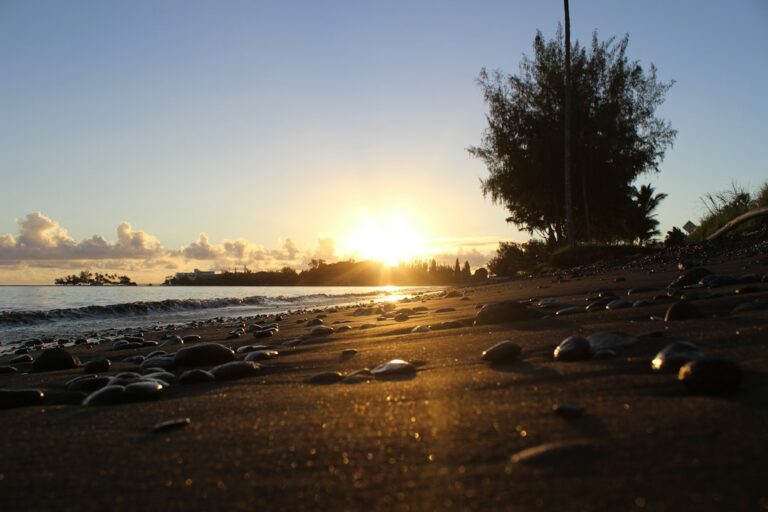
Punaluu is the most photographed black-sand beach in Hawaii. The sand is volcanic basalt ground fine over centuries; the beach formed from a lava flow that hit cold ocean water. Green sea turtles (honu) haul out to bask on the sand most days — stay back at least 10 feet per NOAA Marine Mammal Protection Act guidance. Swimming is not recommended at Punaluu due to strong currents and rocky entry; this is a photography and turtle-watching beach, not a swimming beach.
4. Mauna Kea Beach (Kauna’oa Bay)
Often called the prettiest beach in Hawaii by repeat travelers, Mauna Kea Beach is the white-sand crescent fronting the Mauna Kea Beach Hotel. Public access is guaranteed via beach access law: 26 public parking spaces are reserved at the hotel guard gate (arrive before 9 a.m.). The water clarity rivals Hapuna and the cove is more protected; manta rays are sometimes spotted at dusk near the south point.
5. Magic Sands Beach (White Sands, La’aloa)
Magic Sands lives up to its name — the sand actually disappears in winter swell and returns each spring. When the sand is in, it’s a small but excellent boogie-boarding and body-surfing beach on the Kona coast, with lifeguards and easy parking. When the sand is out (typically December through March), the beach is mostly exposed lava rock and unsafe for shorebreak swimming. Check the live Hawaii Beach Safety dashboard for current conditions.
6. Pololu Valley Black Sand Beach (North Kohala)
Pololu requires a 20-minute switchback hike down a steep cliff trail from the road’s end at the North Kohala overlook. The reward: a wild black-sand beach at the mouth of Pololu Valley, ringed by 1,000-foot cliffs. Swimming is dangerous — strong currents and shore break — but the walk down for photography and a short beach exploration is one of the Big Island’s most memorable hours. Park at the overlook (50 spaces, fills by 10 a.m. weekends).
7. Papakolea Green Sand Beach (South Point)
Papakolea is one of only four green-sand beaches on Earth. The olivine crystals in the sand come from a partially eroded volcanic cone (Pu’u Mahana) that frames the cove. Access requires a 2.5-mile each-way walk from South Point (Ka Lae) — flat but exposed, no shade, and the road past the parking area is impassable without high-clearance 4WD. Local outfitters offer unofficial truck rides for cash; the official position is to walk. Plan 4 hours round-trip from your vehicle and bring 3L of water per person.
8. Kahalu’u Beach Park (Kailua-Kona)
Kahalu’u is the most accessible snorkel beach on the Kona side: paved parking, lifeguards, restrooms, picnic tables, and a reef inside a protected lava-rock cove. The water can get cloudy by midday from heavy use; arrive before 9 a.m. for best clarity. The Kahalu’u Bay Education Center on-site offers free reef-safe sunscreen exchanges and a quick orientation.
9. Spencer Beach Park (South Kohala)
Spencer is the family beach of the Big Island. The water is exceptionally calm — Spencer sits inside the protected Kawaihae Harbor, so the wave train is broken before it reaches the sand. Lifeguards staff Spencer year-round. Camping permits are available through the Hawaii County Parks system. The beach is the safest swimming option on the entire western coast for toddlers and weak swimmers.
10. Kua Bay (Manini’owali Beach)
Kua Bay is the most photogenic white-sand cove on the Kona coast. The beach itself is small — maybe 300 yards — but the contrast of white sand against black lava cliffs makes it the top sunset beach on the Big Island. Swimming is excellent in summer but the winter shore break can be punishing; the Kua Bay Beach Safety advisory flag system runs year-round. Parking is paved (free) and the walk from car to sand is under 2 minutes.
11. Makalawena Beach (North Kona)
Makalawena is the wilderness-feeling option — three white-sand coves connected by lava-rock points, accessed via a 1.5-mile hike across an old lava field from Kekaha Kai State Park. No facilities, no lifeguards, no cell service. The reward: empty Hawaii beach experience that has otherwise become rare. Bring shade (no trees), water, and reef shoes for the lava hike in.
12. Anaeho’omalu Bay (A-Bay, Waikoloa)
A-Bay is the gentle west-side family beach with fishponds (the ancient Hawaiian aquaculture system) behind the sand. Equipment rental — boards, kayaks, snorkel gear, lessons — is concentrated at the south end. The Waikoloa Beach Resort sits behind the beach; public access is guaranteed and parking is free. Sunset paddleboarding here is one of the easier introductions to Hawaii’s water sports for first-timers.
Big Island Beaches by Trip Type
Different visitors prioritize different things. The matrix below pairs visitor types to the top three beach picks for that profile:
| Visitor Type | Top 3 Picks | Why |
|---|---|---|
| Family (small kids) | Spencer, A-Bay, Hapuna | Calm water, lifeguards, facilities |
| Snorkelers | Two Step, Kahalu’u, Mauna Kea | Clear water, abundant reef life |
| Photographers | Punaluu, Pololu, Papakolea | Black sand, green sand, dramatic cliffs |
| Surfers / body-boarders | Magic Sands, Pine Trees, Kua Bay | Shore break and reef breaks |
| Wilderness seekers | Makalawena, Papakolea, Pololu | Hike-in access, minimal crowds |
| Sunset chasers | Kua Bay, Hapuna, A-Bay | West-facing, dramatic backdrop |
The matrix is a starting point — visitors with mixed priorities (a family with both small kids and a teen snorkeler) will mix and match across rows.
Climate Split: Kona Side vs Hilo Side
The Big Island’s beach inventory splits cleanly across the climate divide. The western (Kona, Kohala) coast is dry, sunny, and beach-rich. The eastern (Hilo, Hamakua, Puna) coast is wet, lush, and beach-poor — most of the eastern coastline is sea cliffs, not beaches. National Weather Service Honolulu climate normals show Kona at under 10 inches annual rainfall against Hilo at 130+ inches.
For a beach-focused trip, base in Kohala (Hapuna area), Kona, or Keauhou. For volcano + beach, base in Kona and do a 2-night Volcano Village side trip. For a complete loop, do 4 nights Kona + 3 nights Hilo and accept the eastern beaches are limited.
Water Safety: What the Lifeguards Won’t Tell You
The Big Island has the lowest lifeguard-per-coastline ratio of the four major Hawaiian islands. Only six beaches have full-time lifeguards: Hapuna, Spencer, Magic Sands, Kahalu’u, Kua Bay, and Hapuna’s adjacent 69 Beach.
Hawaii Beach Safety‘s Big Island dashboard updates hourly with current advisories. Common winter hazards across all west-coast beaches: large shore break (December through March), strong currents at headlands, and the occasional Portuguese man-o-war jellyfish bloom 9–10 days after a south swell. Standard water safety rules apply:
- Never turn your back on the ocean — sneaker waves at Pololu and Punaluu
- If unsure, ask a lifeguard or check the daily flag
- Reef shoes for any lava-shelf entry (Two Step, parts of Magic Sands)
- Reef-safe sunscreen — Hawaii Act 104 bans oxybenzone and octinoxate
- Stay 10+ feet from basking sea turtles (NOAA enforcement)
- No vehicle break-ins are not unheard of at remote beach trailheads — empty the car
The Big Island averages 8–12 drownings per year per the Hawaii Department of Health — the highest per-capita rate in the state. Most occur at unguarded beaches in winter shore break.
When to Visit Big Island Beaches
The strongest beach window on the Big Island is May through October. Trade winds keep west-side waters clear, shore break is small, and Kona water temperatures hold at 78–82°F. November through April brings periodic large swells from the north Pacific that wrap around to the west coast and degrade Magic Sands, Kua Bay, and Two Step entry conditions in 2–3-day cycles.
| Season | Best Beaches | Avoid | Water Notes |
|---|---|---|---|
| Winter (Dec–Mar) | Spencer, A-Bay, Hapuna | Magic Sands (sand gone), Kua Bay shore break | 78°F, periodic high surf |
| Spring (Apr–May) | Hapuna, Mauna Kea, Two Step | None — peak swimming | 78°F, clearest visibility |
| Summer (Jun–Aug) | All — peak conditions | South-shore swell rare | 80°F, calm |
| Fall (Sep–Nov) | Kahalu’u, Pololu (post-rain), Papakolea | None | 79°F, post-summer clarity |
October–November 2026 beach conditions: October is the Big Island’s final peak beach month before winter swell patterns arrive. All west-side beaches—Hapuna, Kua Bay, Mauna Kea, Spencer, Two Step—are in excellent condition: water at 79–80°F with post-summer visibility and small shore break. Magic Sands: sand is present through October and typically holds until mid-December when winter swell strips it; this is one of the last reliable months to find a full beach. Kua Bay: excellent conditions through mid-October; shore break builds from late October and becomes punishing by mid-November. North Kohala (Pololu): first heavy north swells typically arrive on the Big Island’s north shore in late October—dramatic for photography but unsafe for swimming. Humpback whales arrive around November 15; October visitors just miss the season opener. Hapuna’s timed-entry weekend slots fill six weeks out—book ahead at HawaiiStatePark.com ($10/person + $10 parking for non-residents).
Getting to the Big Island Beaches
A rental car is essentially required. Public transit (Hele-On Bus) serves Kailua-Kona, Hilo, and Waikoloa but does not reach the standout beaches: Pololu, Papakolea, Makalawena, and even Hapuna require a vehicle. Distances are deceptive — Kona to Pololu is 75 miles and a 90-minute drive minimum. Allow time.
From Kona International Airport (KOA): Hapuna is 30 minutes north, Kahalu’u is 20 minutes south, Two Step is 35 minutes south, Pololu is 90 minutes north, Papakolea is 90 minutes south. From Hilo International (ITO): Punaluu is 75 minutes south via the Volcanoes National Park route, and most other beaches require crossing the island via Saddle Road (Highway 200) or via the southern coast.
Frequently Asked Questions
What is the best beach on the Big Island?
Hapuna Beach State Park is the strongest single beach for swimming, beach time, and facilities. Two Step (Honaunau) is the strongest snorkel beach. Mauna Kea Beach is the most photogenic white-sand option. The best for any individual visitor depends on the trip profile — families want Spencer, snorkelers want Two Step, and photographers want Punaluu or Pololu.
Are there sharks at Big Island beaches?
Tiger sharks and reef sharks are present in Hawaiian waters year-round. The Hawaii Department of Land and Natural Resources tracks confirmed shark incidents at under 1 per 100,000 visitor-days on the Big Island. Standard precautions: don’t swim at dawn or dusk, avoid murky water after rain, don’t swim alone, and exit the water if a shark is sighted. The DLNR shark incidents dashboard posts confirmed incidents in real time.
Can you swim at Punaluu Black Sand Beach?
Swimming is not recommended at Punaluu. The currents are strong, the entry is rocky, and the beach is most often visited for the sea-turtle viewing and photography. If swimming is the goal, choose Hapuna, Mauna Kea, Spencer, or A-Bay instead.
How do you get to the green sand beach?
Papakolea green sand beach requires a 2.5-mile each-way walk from South Point (Ka Lae). The walk is flat but exposed — no shade, no water, and the dirt road is impassable without high-clearance 4WD. Local trucks offer paid rides for cash but the National Park Service position is to walk. Plan 4 hours round-trip and bring 3L of water per person. Trailhead parking at South Point is free.
Are Big Island beaches safe for kids?
Three beaches are reliably calm for small children: Spencer Beach Park (inside Kawaihae Harbor), A-Bay (Waikoloa, gentle slope), and the Hapuna lifeguard zone in summer and fall. Magic Sands and Kua Bay can develop strong shore break that is dangerous for small children — check the daily Hawaii Beach Safety flag system before visiting.
Do I need to pay to enter Big Island beaches?
State parks (Hapuna, Kekaha Kai for Makalawena) charge $10 per non-resident plus $10 parking, with timed-entry reservations required at Hapuna. Most county beaches (Spencer, Kahalu’u, Magic Sands) are free with free parking. Mauna Kea Beach requires picking up one of 26 reserved public parking passes from the resort guard gate.
Which Big Island beach has the best snorkeling?
Two Step at Honaunau Bay has the best snorkeling on the Big Island, with 60–100-foot visibility, abundant reef fish, and frequent dolphin transits. Kahalu’u Beach Park is the most accessible snorkel option (paved parking, lifeguards) but water clarity degrades by midday. Mauna Kea Beach offers strong snorkeling on the south end.
When is the best time to visit Big Island beaches?
May through October is the peak window. Trade winds keep west-side beaches clear, shore break is small, water temperatures hold at 78–82°F, and visibility is at its best. Winter months bring periodic large swells from the north Pacific that affect Magic Sands, Kua Bay, and entry conditions at Two Step in 2–3-day cycles. For year-round beach reliability, base on the Kohala or Kona coast and check the daily surf forecast before each visit.
Beach-Focused Itineraries for the Big Island
Three pre-built itinerary templates below cover the most common Big Island beach trip types. The first is a 5-day Kohala beach base, the second is a 7-day full-island loop, and the third is a 10-day combo for travelers with more time:
5-Day Kohala Beach Base
Hapuna or Mauna Kea base, day-by-day:
- Day 1: Arrive KOA, drive to Kohala, Hapuna afternoon
- Day 2: Mauna Kea Beach morning, Spencer for kids in afternoon
- Day 3: A-Bay paddleboarding, sunset at Kua Bay
- Day 4: Pololu hike + black sand photography
- Day 5: Hapuna final morning, depart KOA
7-Day Full Island Beach Loop
Kona base then Hilo, day-by-day:
- Day 1–2: Kona base, Two Step snorkel, Kahalu’u, Magic Sands
- Day 3: Papakolea green sand hike (4 hours round trip from South Point)
- Day 4: Transit to Hilo via Volcano + Punaluu black sand
- Day 5: Hilo Bay, Onekahakaha Beach Park (kid-friendly tide pools)
- Day 6: Hamakua Coast — Waipio Valley overlook, Akaka Falls
- Day 7: Hilo to Kona return via Saddle Road, depart
10-Day Two-Island Combo (Big Island + Oahu)
Big Island first, Oahu second, day-by-day:
- Days 1–4: Kona base — Two Step, Hapuna, Kahalu’u, Pololu
- Day 5: Inter-island Hawaiian Airlines KOA-HNL (45 minutes)
- Days 6–9: Oahu — see the best Oahu beaches guide
- Day 10: Departure from HNL
The Big Island’s beach inventory rewards travelers willing to drive — and the lower per-mile visitor density makes even the famous beaches feel uncrowded compared to Oahu or Maui. For families, snorkelers, and photographers, the combination of variety and elbow room is hard to match anywhere else in Hawaii.
This post contains affiliate links. We may earn a commission from purchases at no extra cost to you.