Oahu has more named beaches than any other Hawaiian island — 125 along the public coastline — but the ones worth a place on a 7-day itinerary number closer to twelve. This guide covers the twelve that consistently stand out for water quality, access, and overall experience across visitor types.
The ranking is built around three filters: water quality (clarity, swimming safety, snorkeling), the surrounding experience (parking, facilities, vibe), and how each beach fits into different trip styles (families, surfers, postcard photographers, sunset-watchers). Safety data is cross-referenced against Hawaii Ocean Safety advisories for every recommendation.
The Top 12 Best Beaches on Oahu
Quick orientation: Oahu has four distinct coastlines. The south shore (Waikiki, Hawaii Kai) is sun-drenched and developed. The windward east coast (Kailua, Lanikai, Waimanalo) has the powder sand and turquoise water you see in calendars. The North Shore (Sunset, Pipeline, Waimea) is winter big-wave territory and summer-flat swimming. The leeward west side (Ko Olina, Waianae) is the driest, hottest, and least-touristed.
1. Lanikai Beach (Windward Side)
Consistently ranked one of the world’s most beautiful beaches. Half-mile crescent of fine white sand, turquoise water, and the iconic Mokulua Islands (“the Mokes”) offshore. The water stays shallow and calm for a long way out — ideal for kids, swimmers, kayakers, and stand-up paddlers. Sunrise here is the single most photographed moment on Oahu.
- Best for: Sunrise photography, calm swimming, kayaking to the Mokes
- Parking: Street parking only, residential neighborhood — arrive by 7 AM weekdays, 6:30 AM weekends
- Facilities: None on the beach (no restrooms, no showers, no lifeguards)
- Getting there: Drive through Kailua, turn onto Mokulua Drive, look for public-access paths between houses
Kailua is the natural pairing with Lanikai — same powder sand, same turquoise water, but with parking, lifeguards, and rentals.
2. Kailua Beach Park (Windward Side)
Two miles of soft white sand stretching from the Marine Corps Base to Lanikai Point. Kailua has the full beach-park infrastructure that Lanikai lacks — restrooms, showers, lifeguards, picnic tables, and a real parking lot. The water is calm year-round, with the same powder sand and turquoise color as Lanikai but more room to spread out. Former President Obama vacations here every December.
- Best for: Family swimming, kayak/SUP rentals, full-day beach setups
- Parking: Free lot at Kailua Beach Park (fills by 9 AM weekends), additional street parking on Kalaheo Avenue
- Facilities: Restrooms, outdoor showers, lifeguards, picnic pavilions
- Rentals: Kailua Beach Adventures rents kayaks, SUPs, beach chairs
Waimanalo is the locals’ counter-vote to Lanikai’s tourist crush. Same coast, ten miles further south, a tenth of the crowd.
3. Waimanalo Beach (Windward Side)
Five-mile stretch of soft sand that locals call the most beautiful beach on Oahu — partly because Lanikai’s traffic crowds drove the title south. Waimanalo’s water is identically turquoise, the sand is identically powder, and the crowds are 90% lower. Sherwood Forest (the southern end) and Bellows Field Beach Park (the middle, weekend-only access) are the two main public-access points. The full beach was named #1 in America by Dr. Beach in 2015.
- Best for: Long beach walks, escape from tourist crowds, body surfing
- Parking: Free at all three access points (Waimanalo Beach Park, Sherwood Forest, Bellows)
- Facilities: Restrooms and showers at Waimanalo Beach Park and Bellows; nothing at Sherwood
- Note: Bellows Field Beach Park is military land — open to the public Friday noon through Sunday midnight only
Waikiki gets dismissed by hardcore locals and lifted up by every first-time visitor. Both reactions are right.
4. Waikiki Beach (South Shore)
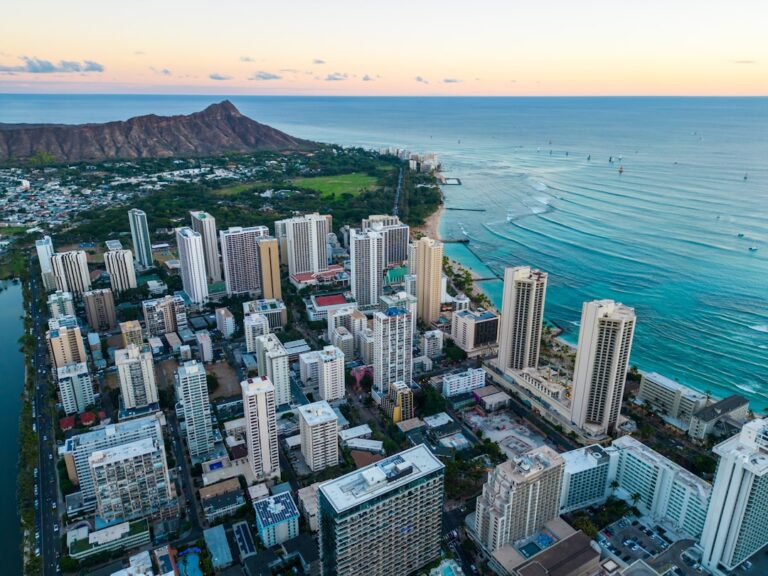
Yes, the famous one. Two miles of soft white sand fronting Honolulu (covered in our broader Oahu trip planner), divided into eight named sub-beaches (from Kahanamoku to Outrigger Reef to Queen’s Surf). The water is consistently calm and warm; the surf at Canoes and Queens is genuinely good for beginner lessons; the sunset views toward Diamond Head are unbeatable. Yes, it’s crowded. Yes, the sand is partially trucked in. None of that diminishes how good a swim or sunset cocktail here actually feels.
- Best for: First-time Hawaii visitors, beginner surf lessons, sunset views, walkability
- Parking: Paid garages (Waikiki Banyan, Royal Hawaiian Center) — $5-8/hour
- Facilities: Everything — restrooms, showers, lifeguards every 200 yards, food/drink/rental kiosks
- Surf: Canoes and Queens for beginners; Publics for intermediate longboarders
Hanauma is the only Oahu beach where the reservation gauntlet is worth the effort — a different ecosystem entirely from the sandy beaches above.
5. Hanauma Bay (South Shore)
The protected horseshoe bay that is Hawaii’s premier shore-snorkel destination. Water clarity is consistently excellent, the resident reef fish population is dense and unbothered, and the bay’s curve makes for safe family snorkel-friendly swimming even when the open ocean is rough. The catch: it’s a marine sanctuary with limited daily entry, and you must book in advance via the official reservation system.
- Best for: Snorkeling (Hawaii’s best shore-snorkel spot)
- Reservations: Required — drop 48 hours in advance at 7 AM HST and sell out within minutes
- Cost: $25 per adult (free for Hawaii residents), $3 parking
- Hours: Wednesday-Sunday only, 6:45 AM – 4 PM (closed Monday/Tuesday)
Sunset is two beaches in one body. Plan your visit knowing which season you’re walking into.
6. Sunset Beach (North Shore)
Two seasons, two beaches. Winter (November-March) brings 20-40 foot waves and the Vans Triple Crown of Surfing — the same swell window that overlaps the start of Hawaii whale season — Sunset is a pro-only break and unsafe for swimming. Summer (April-October) flips it to a wide, flat sand beach with calm shallow water and easy swimming. The summer sunsets here are arguably the best on Oahu — facing west, with no buildings or piers in the frame.
- Best for: Summer swimming (Apr-Oct), winter big-wave viewing (Nov-Mar), sunset photography
- Parking: Free lot off Kamehameha Highway (Route 83), fills early in winter
- Facilities: Restrooms, showers, lifeguards
- Warning: Never enter the water in winter unless you’re an expert surfer; the rip currents are deadly
Waimea’s seasonal split is the most extreme on the island — and the rock-jump is one of those quintessential summer-in-Hawaii experiences.
7. Waimea Bay (North Shore)
The most dramatic seasonal transformation of any Oahu beach. Summer: a calm cove with a popular rock-jump from “Jump Rock” off the south point, easy swimming, and family-friendly snorkeling around the perimeter. Winter: the location of the Eddie Aikau Big Wave Invitational, with waves regularly exceeding 30 feet and qualifying surfers riding face-of-the-wave drops as tall as a four-story building. The summer/winter contrast is what makes Waimea worth two separate visits.
- Best for: Summer swimming and rock-jumping, winter wave viewing
- Parking: Free lot at Waimea Bay Beach Park, fills by 10 AM in summer
- Facilities: Restrooms, showers, lifeguards year-round
- Eddie: The “Eddie Aikau” only runs when waves exceed 30 feet — has only run nine times in 40+ years
Ko Olina trades ‘natural’ for ‘guaranteed’ — and for a toddler family, that trade is the entire point.
8. Ko Olina Lagoons (Leeward Side)
Four man-made lagoons carved into the leeward coast, fronting the Aulani, Four Seasons, and Marriott Ihilani resorts. The lagoons are protected from open-ocean surf, the water is reliably calm and clear, and the sand is brought in and maintained. Lagoon 1 (Kohola) is the most family-popular; Lagoon 4 (Ulua) is the quietest. Public parking is available — you don’t need to be a resort guest.
- Best for: Toddler families, guaranteed-calm water, sunset over the Pacific
- Parking: Free public lots at each lagoon (limited — arrive by 9 AM weekends)
- Facilities: Restrooms, showers, paved paths; food/drinks at the adjacent resorts
- Drive time: 45 minutes from Waikiki, but feels like a different island
Sandy is a spectator beach for non-experts. Watch from the safety of the lookout and respect the lifeguards’ warnings.
9. Sandy Beach (Southeast Side)
The most dangerous swimming beach on Oahu — and the best bodyboarding beach in Hawaii. Steep shorebreak waves crash directly onto packed sand, creating the violent, fast wave that experienced bodyboarders and bodysurfers love. Hawaii Ocean Safety records more neck and spine injuries here annually than at any other Oahu beach. Watch from the lookout, don’t swim unless you know exactly what you’re doing.
- Best for: Expert bodyboarders, picnic spectator viewing, dramatic photography
- Parking: Free lot at Sandy Beach Park
- Facilities: Restrooms, showers, lifeguards (busiest rescue post in the state)
- Warning: Do not swim if you are not an experienced bodyboarder
Makapu’u is small but cinematic. Pair the beach with the lighthouse trail above for a full half-day.
10. Makapu’u Beach (Southeast Side)
Often called Hawaii’s prettiest small beach. A short, intense crescent of golden sand framed by black lava cliffs and the iconic Makapu’u Lighthouse on the headland above. Strong shorebreak makes swimming intermediate-to-advanced; the bodyboarding is excellent. Pair a visit with the 2-mile round-trip Makapu’u Lighthouse Trail above for the iconic photo.
- Best for: Photography, intermediate bodyboarding, paired hike+beach trip
- Parking: Free lot at Makapu’u Beach Park
- Facilities: Restrooms, showers, lifeguards
- Hike pair: Makapu’u Lighthouse Trail starts 1 mile north — 2 miles round-trip, paved
Diamond Head Beach is where Honolulu surfers go when they want intermediate waves without the Waikiki crowd.
11. Diamond Head Beach (South Shore)
The locals’ alternative to Waikiki. Sits at the base of Diamond Head Crater, just east of the main Waikiki beach stretch. No hotels, no rental kiosks, no luau noise — just a long narrow beach with consistent intermediate surf, snorkeling around the lighthouse point, and the best surfer-watching spot on the south shore. Cliff Lookout above gives you the iconic Diamond-Head-with-Waikiki-in-the-distance photo.
- Best for: Escaping Waikiki crowds, intermediate surfing, surfer-watching from the cliff
- Parking: Free along Diamond Head Road (limited)
- Facilities: No restrooms or showers; lifeguards at the main entry
- Snorkel: Around the lighthouse point on calm days only
Ala Moana is the urban beach that quietly outperforms every Waikiki alternative for actual relaxation.
12. Hapuna-Style Surprise: Ala Moana Beach Park (South Shore)
The locals’ favorite beach in urban Honolulu. Half-mile crescent of trucked-in sand fronted by a protected reef-formed lagoon — meaning the water is always calm, always swimmable, and always crowded with local families. Far better facilities than Waikiki at zero cost. The adjacent Magic Island peninsula is the prime Fourth of July fireworks viewing spot.
- Best for: Local-style beach day, fireworks viewing, picnic with full facilities
- Parking: Free lots (large) — usually find a spot even on weekends
- Facilities: Restrooms, showers, lifeguards, snack bars, tennis courts, jogging path
- Sunset: Magic Island has the best Waikiki-skyline-with-Diamond-Head sunset view on Oahu
Best Beaches by Trip Style
The right beach depends entirely on what kind of day you’re trying to have. Here’s how I’d narrow the top 12 down for each common trip style.
For Families with Young Kids
Calm water and full facilities are the two non-negotiables. The lagoon-style and reef-protected beaches all qualify.
- Ko Olina Lagoons — guaranteed-calm water, full resort facilities, four lagoons to rotate through
- Kailua Beach Park — soft sand, calm water, lifeguards, rentals
- Ala Moana Beach Park — reef-protected, urban convenience, free parking
For Snorkelers
Two clear winners and one underrated runner-up:
- Hanauma Bay — Hawaii’s best shore snorkel, but requires advance reservation
- Sharks Cove (North Shore, summer only) — rock pools and reef fish, advanced swimmers
- Electric Beach (Kahe Point Park) — bordering the power plant outflow, sea turtles guaranteed
For Surfers
Skill-matched lineup is everything in Hawaii. Beginner spots are very different from expert spots.
- Beginner: Canoes/Queens at Waikiki, lessons available everywhere
- Intermediate: Diamond Head, Ala Moana Bowls, summer-time White Plains
- Expert (winter only): Pipeline, Sunset Beach, Waimea Bay — only if you genuinely know what you’re doing
For Sunset Photography
West-facing beaches with no obstructions are the photographic gold:
- Magic Island (Ala Moana) — sunset with Waikiki skyline and Diamond Head in frame
- Sunset Beach (North Shore) — pure horizon-line sunset, no buildings
- Ko Olina Lagoon 4 — sunset with palm trees and calm lagoon foreground
Beach Safety in Hawaii: What to Know
Hawaii’s ocean is more powerful than most mainland visitors expect. Hawaii Ocean Safety reports 50-70 drowning deaths in Hawaii waters annually, with the highest concentration at unguarded beaches and during winter big-swell events. The safety rules below are non-negotiable.
The “If In Doubt, Don’t Go Out” Rule
- Always swim at lifeguarded beaches when possible
- Check the daily surf forecast from the National Weather Service Honolulu
- Watch the water for 5-10 minutes before entering; identify rip currents (calm streaks moving offshore between breaking waves)
The seasonal big-wave rules matter just as much. North Shore beaches that are summer-friendly become genuinely deadly in winter.
- November-March: All North Shore beaches (Sunset, Pipeline, Waimea) are advanced-surfer-only — do not swim
- May-October: South Shore beaches (Waikiki, Ala Moana) get the big swells; respect lifeguard warnings
- Box jellyfish: Avoid south-shore swimming 8-10 days after every full moon
Reef-Safe Sunscreen Is the Law
Hawaii law banned the sale and use of sunscreens containing oxybenzone and octinoxate as of 2021. The ban exists because these chemicals damage coral reefs. Bring or buy mineral-based (zinc oxide, titanium dioxide) sunscreen — multiple brands sell at every Foodland, Costco, and Walmart.
How to Build a 7-Day Oahu Beach Itinerary
If you’re spending a full week on Oahu and want to sample the island’s beach geography, this is the rotation I’d recommend. It minimizes driving, hits each major coast, and pairs each beach day with a complementary non-beach activity.
- Day 1: Waikiki Beach (orientation, sunset)
- Day 2: Hanauma Bay snorkel + Diamond Head hike
- Day 3: Lanikai sunrise + Kailua Beach Park full day + Whole Foods Kailua dinner
The North Shore deserves its own dedicated day — the drive itself is the experience:
- Day 4: North Shore loop — Sunset, Waimea, Sharks Cove (summer), Haleiwa town for shave ice
- Day 5: Ko Olina Lagoons day trip (rotate lagoons, sunset at #4)
- Day 6: Waimanalo / Sherwood Forest for the uncrowded windward experience
- Day 7: Ala Moana Beach Park morning, last sunset at Magic Island before flight
When Each Beach Peaks (Seasonal Cheat Sheet)
Most Oahu beaches are great year-round (this is the same shoulder/peak dynamic our Maui guide and Big Island guide cover for those islands), but a few have meaningful seasonal personalities. Bookmark this if you’re planning the trip months ahead.
- Year-round great: Lanikai, Kailua, Waimanalo, Waikiki, Ko Olina, Ala Moana
- Summer-only (Apr-Oct): Sunset Beach swimming, Waimea Bay swimming, Sharks Cove snorkeling
- Winter-only (Nov-Mar): Sunset Beach big-wave viewing, Pipeline contests, Waimea big-wave events
For trip-timing across the broader picture, see our best time to visit Oahu guide, which breaks down month-by-month weather, crowds, and pricing.
Beach Logistics: Parking, Permits, and Practical Stuff
Oahu’s beach access is mostly free and public — Hawaii state law protects beach access up to the high-water mark — but parking is where the friction lives.
Parking
- Most beach parks have free lots that fill by 9-10 AM on weekends
- Waikiki = paid garages only ($5-8/hour); plan to walk from a hotel garage
- Lanikai = street parking only in a residential neighborhood; arrive early and don’t block driveways
- North Shore = free lots, but the highway gets congested by 11 AM in summer
Permits
Camping, large-group gatherings (50+ people), and commercial photography all require permits from the Honolulu Department of Parks and Recreation. Casual day-use of any public beach is unrestricted and free.
Rentals
- Kailua Beach Adventures: kayaks, SUPs, beach chairs
- North Shore Surf Shop (Haleiwa): boards, wetsuits, lessons
- Waikiki beach concessions: surfboards, boogie boards, snorkel gear at every hotel beach front
- Ko Olina (any of the resorts): cabanas, SUPs, snorkel sets
Frequently Asked Questions
What is the #1 best beach on Oahu?
Lanikai Beach consistently tops international “world’s best beaches” lists. Powder-soft white sand, turquoise water, the iconic Mokulua Islands offshore, and reliably calm swimming conditions. The downsides are parking scarcity and zero facilities, which is why Kailua Beach Park (the same beach geography with full infrastructure) is often the practical day-trip pick.
Which Oahu beach has the best snorkeling?
Hanauma Bay is the answer, but it requires a 48-hour-advance reservation and sells out within minutes of release. Sharks Cove (North Shore, summer only) is the runner-up. Electric Beach at Kahe Point is the underrated third option — the warm-water outflow draws sea turtles year-round.
Are Oahu beaches free?
Yes. Hawaii state law guarantees public beach access. The only exceptions are Hanauma Bay ($25/adult entry fee for non-residents because it’s a State Park marine sanctuary) and specific commercial permits. Parking is sometimes paid (Waikiki garages, $3 at Hanauma) but the beaches themselves are free.
What’s the warmest beach on Oahu?
The leeward (west) side — Ko Olina, Pokai Bay, and the Waianae Coast — averages 2-4°F warmer water than the windward side year-round. Ko Olina’s protected lagoons trap and warm the water even more.
Where do locals go to the beach on Oahu?
Ala Moana Beach Park is the urban-Honolulu local favorite. Sandy Beach, Makapu’u, and Waimanalo’s Sherwood Forest are the south-east local picks. North Shore locals go to Three Tables and Sharks Cove in summer, Mokuleia in winter. Kailua locals walk to Kalama Beach Park (the south end of Kailua Beach) to avoid the rental-kayak crowds.
What’s the best beach on Oahu for sunset?
Magic Island at Ala Moana Beach Park for the Diamond-Head-and-Waikiki-skyline shot; Sunset Beach on the North Shore for pure horizon-line sunsets; Ko Olina Lagoon 4 for the palm-frame postcard. All three are unobstructed west-facing and have free parking.
Is Lanikai Beach worth the trip?
Yes — but plan around the parking constraint. Arrive at sunrise (between 6:00 and 6:30 AM most months), walk in via one of the public-access paths on Mokulua Drive, and pack out everything you bring in. The beach itself genuinely lives up to the photos. If sunrise doesn’t work, do Kailua Beach Park instead — same sand, same water, much easier logistics.
Are there any private beaches on Oahu?
No — every beach in Hawaii is public up to the high-water mark by state law. Resort beaches (the Halekulani’s Waikiki frontage, the Aulani’s Ko Olina lagoon) are technically public; the resorts can only restrict access to their cabanas and direct sand frontage, not the beach itself.
Bottom Line: Building Your Oahu Beach List
If you’re spending a week on Oahu, the must-hit beaches are Lanikai (sunrise), Hanauma Bay (snorkel reservation), Sunset Beach or Waimea Bay (North Shore), and Ko Olina Lagoons (calm-water family day). Add Waikiki for the iconic experience and Ala Moana for the local-style picnic, and you’ve covered every coast.
If you only have three days, drop the North Shore loop and focus on the windward side (Lanikai/Kailua), the south shore (Hanauma + Waikiki sunset), and one Ko Olina lagoon day. That trio covers calm-water family beach, world-class snorkeling, and resort-style luxury without forcing you onto the highway for hours.
For broader Oahu trip planning beyond just beaches, our best time to visit Oahu and best Hawaiian island guides cover month-by-month weather, crowds, and pricing. And if your trip is timed to December, January, or another specific month, the month-specific guides cover the seasonal beach-condition shifts in more detail — for instance our June and July guides cover when each Oahu beach hits peak conditions.