Hawaii has two surf seasons that flip the islands’ best breaks twice a year. North shores get the big winter swells from November through February — this is when Pipeline, Waimea Bay, Sunset Beach, and Pe’ahi (Jaws) come alive. South shores get smaller, cleaner summer swells from May through September, which is when Waikiki, Ala Moana Bowls, and the south-facing Maui breaks are at their best. Spring and fall are the lulls in between.
This guide breaks down when, where, and what to expect across the islands — for visiting surfers, beginners taking their first lesson, and anyone who just wants to know whether they’ll get to watch the world’s best surfers compete during their trip.
When Is Hawaii’s Surf Season?
It depends entirely on which side of the island you’re standing on:
- Winter (November–February): North Pacific storms send long-period swells south. North-facing shores see 8-to-30-foot faces; west-facing shores get smaller but still substantial waves. South shores stay mostly flat and beginner-friendly.
- Spring (March–April): The transition. North swells fade. South swells haven’t started. A quieter window all around.
- Summer (May–September): Southern Hemisphere storms send swells north. South-facing shores light up at 3-to-10 feet. North shores go dormant — usually waist-high or flat.
- Fall (October): South swells fade. The first north swells of the new winter start showing late in the month.
The pattern is consistent enough that surfers plan whole trips around it. If you want to watch big-wave Pipeline in December, you must come in winter. If you want to take a lesson at Waikiki on knee-high waves, summer is easier and warmer.
North Shore Surf Season (Winter)
Oahu’s North Shore is the world’s most famous surf coast, and from November through February it lives up to its reputation. A seven-mile stretch between Hale’iwa and Sunset Beach holds dozens of named breaks, with three carrying near-mythic status:
Banzai Pipeline (Ehukai Beach Park)
Hawaii’s most photographed wave. Pipeline is a shallow reef break that produces hollow, perfect barrels over a sharp lava reef. The wave is unforgiving — even pros get hurt — and viewing is best from the beach during a winter swell. The Pipe Pro/Masters competition runs here in late December or January when conditions align.
Waimea Bay
The home of big-wave surfing. Waimea wakes up when swells exceed 15 feet at the buoy. The Eddie Aikau Big Wave Invitational only runs when open-ocean buoy swells reach 20 feet — translating to 30–40-foot faces in the bay. The holding window runs from the first Thursday of December through early March. When conditions align, the world’s best big-wave surfers fly in within 12–48 hours. The event last ran on December 22, 2024 (Landon McNamara won, marking the 11th edition); the 2025–26 window closed without producing qualifying surf.
Sunset Beach
The most “rideable” of the famous North Shore breaks for accomplished surfers. Sunset hosts contests on the Vans Triple Crown of Surfing tour and is the most consistent of the trio through winter.
Other Notable North Shore Breaks
- Hale’iwa — More forgiving than Pipe; a regular Triple Crown venue.
- Rockpiles, Off the Wall, Backdoor — Just down the beach from Pipeline. Backdoor is Pipe in reverse, a right-hander that breaks across the same reef.
- Log Cabins, Velzyland (V-Land) — Reef breaks at the eastern end of the strip.
For visitors, the North Shore is a sightseeing destination even if you don’t surf. Park (lots fill early), walk the beach, and watch surfers paddle into waves bigger than houses. Combine the trip with a stop on the North Shore of Oahu for context on the area.
Big-Wave Surf at Pe’ahi (Jaws), Maui
On Maui’s north shore, Pe’ahi — known to the surf world as Jaws — produces the largest rideable waves in Hawaii. The break is only ridable on a handful of days each winter when an extreme North Pacific swell aligns with the right wind. Faces of 60 feet and higher are routine on the biggest days.
Most riding at Pe’ahi is tow-in (jet ski-assisted) or done by elite paddle big-wave surfers. The best vantage point for spectators is the cliff at the end of Hahana Road in Haiku — a long dirt road that gets crowded when a swell is forecast.
South Shore Surf Season (Summer)
From May through September, the action shifts to south-facing shores as Southern Hemisphere storms push north. The vibe is completely different — smaller waves, warmer water, more accessible breaks.
Ala Moana Bowls (Oahu)
The premier south-shore performance break on Oahu. Long lefts that hold size and shape. Heavy crowds during summer swells.
Waikiki Breaks
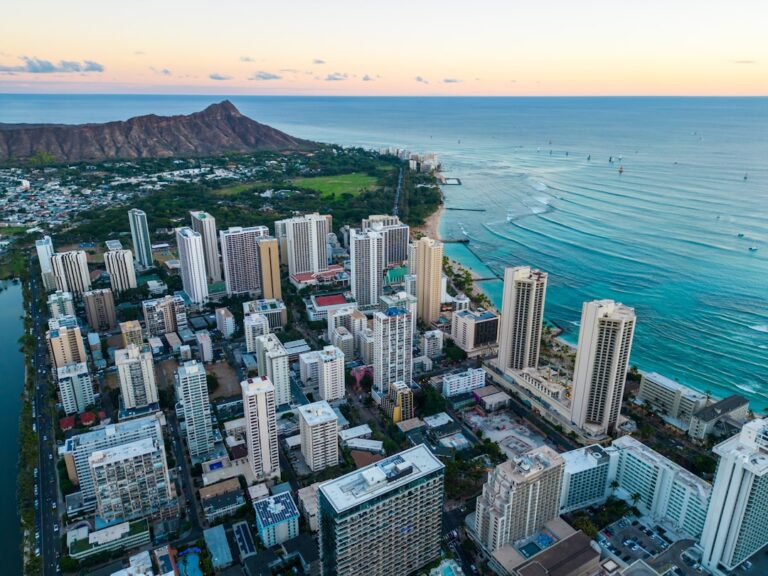
Canoes, Queens, Populars — the gentle, long-period waves at Waikiki are the world’s best beginner surf zone. Boards are rentable from beach shacks, lessons run hourly, and the wave forgives mistakes. Summer brings the most consistent waves; the bay is rideable year-round but smaller in winter.
Lahaina, Kihei, and Ma’alaea (Maui)
South-facing Maui breaks light up in summer. Ma’alaea’s “Freight Train” is reputed to be one of the fastest right-hand breaks in the world — when it breaks, which is only a few times a year on specific swell directions.
Pine Trees and Honolua Bay (Maui)
Honolua is technically a winter (north-shore) break, peaking November through March. Pine Trees on the Big Island is more of a summer south-shore wave. Worth knowing which is which when planning.
Major Surf Contests and the Triple Crown
If you want to watch the world’s best surf, time your visit around the contest calendar:
- Vans Triple Crown of Surfing (Oahu’s North Shore, November–December) — Three contests held during weather-dependent waiting periods: Hawaiian Pro at Hale’iwa (holding window ~Nov 12–24), World Cup at Sunset Beach (~Nov 25–Dec 6), and Pipeline Pro/Masters at Pipeline (~Dec 8–20). Spectating is free; the beaches get packed when the contests run.
- Eddie Aikau Big Wave Invitational (first Thursday of December through early March, Waimea Bay) — Only runs when open-ocean swells reach 20 feet (30–40-foot faces in the bay). Has been run 11 times since 1986. “The Bay calls the day.” Most recently ran December 22, 2024 (Landon McNamara won); the 2025–26 window closed without qualifying surf. The 2026–27 contest window opens December 3, 2026 — the first Thursday of December — and runs through early March 2027.
- Pe’ahi Challenge / Jaws Big Wave Championships (December–March holding window, Maui) — When the swell aligns. Spectators watch from the cliffs.
- Sunset Open (February, Sunset Beach) — A WSL Championship Tour stop.
Contest schedules shift year to year based on conditions. The WSL website publishes call windows, and contests are typically called on 24–48 hours’ notice when forecasts confirm rideable surf.
Best Beaches for Beginner Surfers
If you’re learning, focus on south-facing shores in summer and a couple of forgiving winter spots:
- Waikiki, Oahu — Year-round, gentle, dozens of lessons.
- Lahaina Breakwall, Maui — Summer south swells, plenty of beginner lessons.
- Kalama Park / Kihei, Maui — Smaller summer breaks, good for first-timers.
- Pu’aena Point, North Shore Oahu — A more forgiving spot near Hale’iwa, even in winter.
- Hanalei Bay, Kauai — A wide, sandy bay break that works in both seasons depending on swell direction.
For a proper introduction, see our Hawaii surfing lessons guide for what to expect, what to bring, and how much it costs.
Surf Safety in Hawaii
Hawaii’s beaches kill more visitors each year than any single shark or volcano statistic suggests. The two main dangers:
- Rip currents. Common on all islands, especially during high-surf days. If caught, swim parallel to the beach until out of the current, then paddle in.
- Shorebreaks and shallow reef. Sandy Beach (Oahu) and Makena (Maui) cause more spinal injuries than any reef break. Pipe’s reef is roughly 4 feet deep at the takeoff zone.
Watch the lifeguard flags. Red flags mean stay out. Yellow flags mean serious caution. Lifeguard counts are doubled on heavy-surf days on Oahu’s North Shore in winter, but many breaks (especially on the other islands) have no lifeguard at all. Check the surf forecast before you paddle out.
Most importantly: don’t paddle out at a break that’s bigger than your skill level. Pipeline, Waimea, and Pe’ahi have killed experienced surfers. The most common cause of serious injury for visitors is overestimating their ability at a big-wave spot.
Where to Find Surf Forecasts
- Surfline.com — The most-used surf forecast service. Live cams at most named Hawaii breaks. Free basic forecasts; paid premium.
- Magicseaweed — Free swell and wind forecasts.
- NOAA Pacific Tsunami Warning Center / NWS Honolulu — Official high-surf advisories, warnings, and tsunami alerts.
- Pat Caldwell’s surf forecast — The local-favorite long-range outlook, published weekly by NOAA.
Pay attention to high-surf advisories (faces over 15 feet on north and west shores), warnings (faces over 25 feet), and extreme warnings. These determine whether contests run and whether beaches stay open.
Combining Surf Season with the Rest of a Hawai’i Trip
Winter visitors get whales and big-wave surf — the two best months for both are January and February. See our guides to Hawaii whale season and Hawaii’s rainy season for how to plan around the weather.
Summer visitors trade big surf for warm, calm water — better for snorkeling, scuba, and beginner surfing. The best month to visit Hawaii guide covers the full calendar of tradeoffs.
Frequently Asked Questions
When are the biggest waves in Hawaii?
Mid-December through early February on Oahu’s North Shore and Maui’s Pe’ahi. Faces of 25–60+ feet are possible on the biggest swells. Most extreme days come from North Pacific storms tracking south.
Can you surf in Hawaii in summer?
Yes — summer is south-shore season. Waikiki, Ala Moana Bowls, south-facing Maui, and the south coast of Kauai all have surfable waves May through September. Waves are smaller and friendlier than winter north-shore breaks.
When does the Eddie Aikau run?
Only when open-ocean buoy swells reach 20 feet — translating to 30–40-foot faces at Waimea Bay. The holding window runs from the first Thursday of December through early March. It has been run 11 times since 1986, most recently on December 22, 2024 (Landon McNamara won). The 2025–26 window closed without qualifying surf. The 2026–27 contest window runs December 3, 2026 through early March 2027. Forecasts call the contest on 12–48 hours’ notice.
Is Pipeline open to the public?
Yes — Ehukai Beach Park is public. Spectators stand on the beach; surfing the break is for experienced surfers only. Walking up and watching is one of the best free experiences in Hawaii during winter.
Where can beginners surf in Hawaii?
Waikiki on Oahu is the best beginner spot in the world. Other forgiving options include Lahaina Breakwall and Kalama Park on Maui, Pu’aena Point on Oahu’s North Shore, and Hanalei Bay on Kauai.
Do I need a wetsuit to surf in Hawaii?
Water temps range from 74°F (winter) to 80°F (summer). Most surfers wear board shorts year-round. A thin spring suit or rash guard helps for long sessions, especially in winter.
Is it safe to surf the North Shore as a visitor?
At small-wave breaks like Pu’aena Point or Pa’akai, yes. At Pipeline, Waimea, or Sunset during a winter swell, no — these are professional-only on swell days. Watch from the beach.
Practical Bottom Line
If you’re a serious surfer, plan winter for the North Shore and summer for the South Shore — it’s not interchangeable. If you’re a spectator, visit Oahu’s North Shore between Thanksgiving and February for the biggest, most reliable big-wave action. If you’re learning, Waikiki any time of year is the safest, friendliest option in Hawaii. The seasonal rhythm has driven Hawaiian surf culture for centuries; planning around it is half the experience.