Pearl City sits right in the heart of Oahu’s central corridor, tucked between the Waianae mountain range and the shimmering waters of Pearl Harbor. It’s one of those communities that doesn’t get the glamorous travel-magazine treatment, but ask anyone who actually lives here and they’ll tell you — that’s kind of the point.
If you’re thinking about making the move to Hawaii and want somewhere that feels like a real neighborhood rather than a tourist destination, Pearl City deserves a serious look. Here’s what you need to know about daily life, costs, neighborhoods, and everything in between.
Where Exactly Is Pearl City?
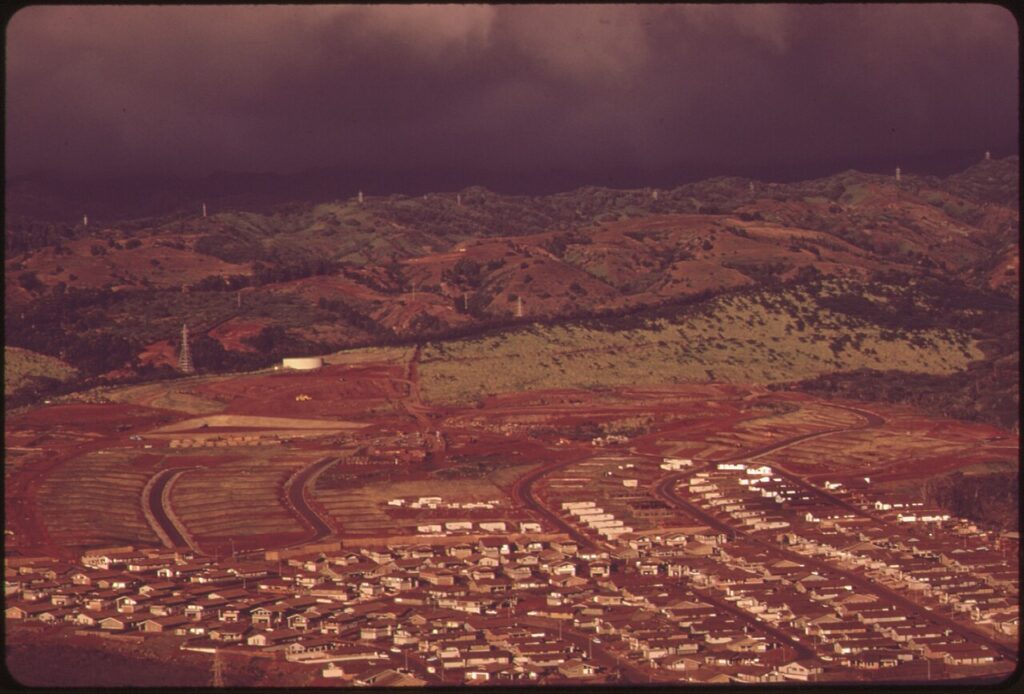
Pearl City is a census-designated place on the north shore of Pearl Harbor, roughly 10 miles northwest of downtown Honolulu. It stretches from the lowlands near the harbor up into the ridges of the Ko’olau foothills, giving the community a mix of flat suburban streets and hillside homes with genuinely impressive views.
The town is bordered by Aiea to the east and Waipahu to the west. If you’ve driven the H-1 freeway between Honolulu and the west side, you’ve passed through Pearl City — it’s that stretch where the freeway splits and you start seeing the Pearl Harbor National Memorial signs.
Population-wise, Pearl City is home to around 47,000 residents, making it one of the larger communities outside of urban Honolulu. It’s big enough to have everything you need but small enough that you’ll start recognizing faces at the grocery store within a few months.
Cost of Living in Pearl City
Let’s get the elephant in the room out of the way: living in Pearl City isn’t cheap by mainland standards. But by Hawaii standards? It’s actually one of the more affordable options on Oahu, sitting roughly 3-4% below the Honolulu metro average.
Housing Costs
As of 2026, here’s what you can expect:
- Median home price: Around $750,000–$860,000 depending on the neighborhood and property type
- 1-bedroom apartment rent: $1,500–$1,900/month
- 2-bedroom apartment rent: $2,100–$2,500/month
- 3-bedroom house rental: $2,800–$3,500/month
Condos in Pearl City tend to be significantly more affordable than single-family homes. Complexes like Pearlridge Square and Pearl Horizons offer units in the $350,000–$500,000 range, which is about as close to “affordable” as Oahu gets.
For more detailed numbers across the islands, check out our guide to renting in Hawaii.
Everyday Expenses
Groceries, gas, and utilities follow the typical Hawaii premium. Expect to pay about 60–70% more for groceries than you would on the mainland. A gallon of milk runs $7–$9, a dozen eggs around $5–6, and gas typically hovers around $5.40–$5.70 per gallon (as of September 2026).
Electric bills can be a shock — Hawaii has the highest electricity rates in the nation. For a 2-bedroom unit in Pearl City, budget around $200-350/month for electricity depending on whether you run AC (and trust me, in the summer, you’ll want to).
The median household income in Pearl City sits around $101,000, which is above the national average but pretty standard for Oahu. Most households here are dual-income to make the numbers work.
Pearl City Neighborhoods Worth Knowing
Pearl City isn’t one monolithic suburb — it’s actually a collection of distinct neighborhoods, each with its own character.
Pearl City Highlands
The “mauka” (mountain-side) section of Pearl City. Homes up here sit higher on the ridge, which means cooler temperatures, better breezes, and sweeping views of Pearl Harbor. The tradeoff? Steeper driveways and slightly longer commutes to the freeway. Property values tend to be higher in the Highlands, but the views are worth it.
Pearl City Peninsula
This narrow strip of land juts out into Pearl Harbor and offers some of the most unique waterfront living on Oahu. It’s quiet, the lots are larger than average, and there’s a community feel that’s hard to find elsewhere. The Pearl City Peninsula neighborhood park is a local gem with picnic areas right on the water.
Pacific Palisades
A well-maintained residential area with wide streets and mature trees. Very popular with military families stationed at nearby bases. Good mix of single-family homes and townhouses, and the community has its own pool and recreation area.
Waipio Gentry
Technically part of the greater Pearl City area, Waipio Gentry is a planned community with neat rows of townhomes and single-family houses. It’s popular with young families because of the affordable price point (by Hawaii standards) and proximity to Waipio shopping centers.
Curious how nearby communities compare? Read our guides on living in Aiea and living in Mililani.
Commuting and Getting Around
Here’s the honest truth: Pearl City’s location is both a blessing and a curse when it comes to commuting.
The blessing? You’re centrally located on Oahu with relatively easy access to both Honolulu (east) and the west side communities. The H-1 and H-2 freeways intersect right at Pearl City, giving you major highway access in every direction.
The curse? That same intersection is one of the biggest traffic bottlenecks on the island. Morning commutes to downtown Honolulu can easily take 45-60 minutes during peak hours, even though it’s only about 10 miles away.
Some commute tips from locals:
- Skyline rail: Oahu’s Skyline rail is now operational, with stations at Waiawa (Pearl Highlands) and Hālaulani (Leeward CC) in Pearl City, plus Kalauao (Pearlridge) nearby. The current eastern terminus is Kalihi Transit Center — the Ala Moana extension is projected for 2031 — but it already meaningfully cuts car-dependent commutes for Pearl City residents
- TheBus: Routes 40, 42, and 53 serve Pearl City with frequent service to downtown Honolulu
- Off-peak travel: Leave before 6 AM or after 9 AM and the commute drops to 20-25 minutes
- Remote work: If your job allows it, even 2-3 WFH days makes Pearl City living much more pleasant
For a detailed breakdown of island commuting, check out our Hawaii traffic and commute times guide.
Schools in Pearl City
Pearl City has a solid school system, which is one of the main reasons families settle here. The community falls within the Pearl City-Highlands-Waipahu complex of the Hawaii DOE.
Notable schools include:
- Pearl City High School — Consistently ranked among the better public high schools on Oahu. Known for strong STEM and athletics programs
- Pearl City Highlands Elementary — Well-regarded elementary school with active parent involvement
- Momilani Elementary — Another top-performing elementary school in the area
- Our Lady of Good Counsel — Private Catholic school option for K-8
- Leeward Community College — Located right in Pearl City for continuing education and associate degrees
UH West Oahu is also just a short drive away in Kapolei, and the main UH Manoa campus is accessible via the freeway (or soon, the rail line).
For a broader look at educational options, see our guide on the best public schools in Hawaii.
Things to Do in Pearl City
Pearl City isn’t exactly a nightlife destination, but it has plenty going on for everyday living.
Shopping and Dining
Pearlridge Center is the main shopping hub — it’s one of the largest malls in Hawaii with two phases (Downtown and Uptown) connected by a monorail. You’ll find everything from Ross and Target to local restaurants and services.
For food, Pearl City punches above its weight:
- Pearl City Tavern — A legendary local spot (RIP the original, but the spirit lives on in nearby bars)
- Gyotaku — Outstanding Japanese restaurant that’s been a Pearl City staple for years
- Shiro’s Saimin Haven — Old-school saimin shop that locals swear by
- Don Quijote (Pearl City) — Japanese discount store that doubles as one of the best places to grab poke and bento on the way home
Outdoor Activities
- Pearl Harbor National Memorial — Right in your backyard, and free for residents (though you’ll mainly bring visiting friends and family)
- Aiea Loop Trail — A 4.8-mile loop hike just minutes from Pearl City with amazing views of Pearl Harbor and the Ko’olau mountains
- Pearl City Urban Garden Center — UH’s botanical garden with free community workshops
- Neal S. Blaisdell Park — Waterfront park on Pearl Harbor with picnic facilities, a boat ramp, and stunning sunset views
Pros and Cons of Living in Pearl City
Pros
- Central location — Easy access to both Honolulu and the west side
- More affordable than Honolulu proper — Your dollar stretches further here
- Strong schools — Great for families with school-age kids
- Real community feel — Block parties, neighborhood associations, and actual neighbors who wave
- Diverse and welcoming — Pearl City is one of the most ethnically diverse communities in Hawaii (which is saying something)
- Military-friendly — Close to multiple bases with strong support networks
- Pearlridge shopping — Everything you need without driving to Honolulu
Cons
- Traffic — The H-1/H-2 interchange is brutal during rush hour
- No beach access — You’re on Pearl Harbor, not the ocean. Nearest beaches are Ewa Beach or Ala Moana (15-20 minute drive)
- Humidity — The lowland areas can feel sticky, especially in summer
- Airport noise — Some neighborhoods under the flight path from Honolulu International (Daniel K. Inouye) Airport
- Still expensive — “Affordable for Hawaii” is still pricey by any other standard
Is Pearl City Good for Military Families?
Absolutely. Pearl City is one of the top choices for military families stationed on Oahu, and for good reason. Joint Base Pearl Harbor-Hickam is literally next door, and Schofield Barracks is a straight shot up the H-2 freeway.
The community has a long history with the military, so you’ll find plenty of families in the same situation. Schools are experienced with military kids who transfer in and out, and there are established support networks throughout the area.
BAH (Basic Allowance for Housing) rates for the Honolulu area generally cover a 2-3 bedroom rental in Pearl City, making it one of the smarter financial moves for service members.
Pearl City vs. Other Oahu Communities
How does Pearl City stack up against nearby alternatives?
- Pearl City vs. Aiea: Very similar vibe and pricing. Aiea is slightly closer to Honolulu and has Pearlridge on its border too. Pearl City has more residential variety and larger lots in the Highlands
- Pearl City vs. Mililani: Mililani is newer, more planned-community, and slightly farther from Honolulu. Pearl City has more character and history; Mililani is more manicured and suburban
- Pearl City vs. Ewa Beach: Ewa Beach is newer construction, closer to actual beaches, but a longer commute to Honolulu. Pearl City wins on location; Ewa Beach wins on newer housing stock
- Pearl City vs. Honolulu: Honolulu has more dining, nightlife, and walkability. Pearl City has more space, lower rents, and a quieter lifestyle. Your call depends on your priorities
FAQ
Is Pearl City a safe place to live?
Yes, Pearl City is generally considered a safe community. The crime rate is below the national average, and violent crime is rare. Like anywhere, some pockets have higher property crime rates, but overall it’s a family-friendly area where kids play outside and neighbors look out for each other.
How far is Pearl City from the beach?
Pearl City sits on Pearl Harbor rather than the open ocean, so there are no swimming beaches within walking distance. The closest beaches are Ewa Beach (about 15 minutes south) and Ala Moana Beach Park in Honolulu (about 20 minutes east, traffic depending). North Shore beaches are roughly 30-40 minutes away.
Is Pearl City good for retirees?
Pearl City can be a solid choice for retirees, especially those who want a quieter lifestyle with easy access to medical facilities at Tripler Army Medical Center and Straub Medical Center. The cost of living is a consideration, but retirees who own their home outright find it quite manageable. The community’s walkability varies by neighborhood — the lowland areas are flatter and easier to navigate.
What’s the weather like in Pearl City?
Pearl City enjoys typical leeward Oahu weather — warm and relatively dry compared to the windward side. Expect daytime temperatures of 80-88°F in summer and 75-82°F in winter. The Highlands area gets slightly more rain and cooler temps. Trade winds keep things comfortable most of the year, though summer “Kona weather” (when winds shift) can bring muggy, still conditions.