The Big Island is the only Hawaiian island where the “best time to visit” question depends more on what you want to do than on what month it is. Travelers frequently fly in expecting the same dry, breezy week they had on Maui, only to discover that Hilo is getting 12 inches of rain while Kona is sitting in 82°F sunshine 75 miles away. The Big Island has 8 of the world’s 13 climate zones inside one drive, and that fact rewrites the planning playbook.
This guide draws on publicly available weather data, hotel pricing records, USGS eruption reports, and visitor research. Below is a month-by-month breakdown of weather, crowds, pricing, and what’s actually relevant for visitors right now — including the ongoing Kīlauea eruption cycle, which has reshaped 2026 demand in a way most older guides miss.
Quick Answer: The Best Month to Visit the Big Island
For most travelers, the strongest window is the second half of April through May, or the back half of September into mid-October. Those four-ish weeks each year deliver consistently dry Kona-side weather, the lowest lodging rates outside of post-holiday January, mild humidity, and active eruption viewing without summer or holiday crowds. The runner-up is mid-November through the first two weeks of December, before holiday pricing kicks in.
- Best overall: Late April – May, late September – mid-October
- Best for budget: Mid-January – early March (after the Jan 5 crash), September, early December
- Best for active eruption viewing: Whenever Kīlauea is in episode (check live status via USGS)
- Best for whale watching from Kohala Coast: January – March
- Best for manta night dives: Year-round, but visibility peaks May – October
- Worst for crowds and pricing: December 18 – January 5, June 15 – August 10
- Wettest for Hilo side: November – March (Hilo gets ~125 inches/year)
If you’re comparing across islands before booking, the best time to visit each Hawaiian island guide has the full side-by-side calendar.
Big Island Weather, Month by Month
The first thing to know about Big Island weather is that Kona and Hilo are two completely different climates. Kona (the leeward Kohala coast and the Kona town strip) is dry — Kailua-Kona averages about 25 inches of rain a year, per NOAA’s climate normals dataset. Hilo, on the windward side, averages roughly 125 inches according to the same dataset. That is one of the largest rainfall gradients in the United States.
January – Cool, whaley, eruption-friendly
Kona side stays around 80°F highs with light afternoon trades. Hilo is wet — expect rain most days. Mauna Kea and Mauna Loa summits can see snow above 12,000 feet, which most visitors don’t realize until they read Star-Advertiser snow alerts. Humpback whale activity along the Kohala Coast peaks. Hotels post-January 5 are at their annual floor outside September.
February – Drier on the dry side, whales everywhere
Kona has its lowest rainfall month, averaging under 1.5 inches. Hilo is still wet but starts trending drier. Whale season is at its peak — sightings from anywhere along the Kohala Coast happen daily. Volcanoes National Park is uncrowded in the morning. Manta ray night dives off Keauhou run nightly and have excellent calm-water conditions.
March – Trade winds settle in
By mid-March, Kona side sees consistent 82°F days with light rain. Hilo begins its drier season. Whale watching is still strong through about March 25. Spring Break weeks (mid-to-late March) create a temporary price spike — Kona resorts routinely jump from $300 to $480 a night during peak Spring Break weeks.
April – Shoulder season opens
Easter creates a one-week bump, then prices drop sharply. By April 15, Kona-side rates fall 20-30% below March averages. Trade winds stabilize. Volcanoes National Park is uncrowded. Snorkeling at Two-Step (Honaunau Bay) is excellent — 70-foot visibility most mornings. For first-time Big Island visitors, the third week of April is the calendar window that most consistently delivers good weather, low crowds, and reasonable rates.
May – The standout month for the dry side
Kona is dry, calm, warm (83°F highs), and quiet. Mauna Kea stargazing is excellent because winter weather is gone and summer haze hasn’t arrived. The Visitor Information Station at 9,200 feet runs nightly programs (verify status at University of Hawaii Institute for Astronomy before driving up). Hilo rainfall drops to about 9 inches monthly — its driest stretch.
June – Last cheap week before summer hits
The first ten days of June are still shoulder pricing. After that, rates jump 35-40% as school lets out. Weather is excellent across the island — 84°F Kona side, mid-70s in Volcano village. Vog from the active eruption can spike during light-wind days; checking the Star-Advertiser vog coverage and the vog guide before booking summer is a good habit.
July – Peak summer, peak prices
Kona is hot (86°F highs), still dry. Hilo gets afternoon thunderstorms more often than the rest of summer. Crowds at Volcanoes National Park double from May. Manta dives sell out 2 weeks ahead. July 4 week is the priciest week of the entire summer. If you must travel in July, target July 18-31.
August – Crowded, hot, and hurricane-prone
Hawaii’s Statehood Day on August 16th is a state holiday. Central Pacific hurricane season is at its statistical peak — check Central Pacific Hurricane Center forecasts through August. Big swells from distant storms occasionally hit South Point. Mauna Kea summit access can close during high-wind events. For a first-time trip, August is the calendar month most worth avoiding — every other month offers better value, lower crowds, or more comfortable conditions.
September – The hidden best month
September 2026 note: September marked the start of this year’s value window — school returned after Labor Day, crowds at Volcanoes National Park and Kohala Coast resorts dropped well below August, and Kona 4-star lodging hit its annual floor. Early October carries the same pattern forward. Ocean temperature sits around 80°F — the warmest of the year — while summer haze is clearing. Kīlauea’s ongoing episodic eruption at Halemaumau is active this fall; check the USGS Hawaiian Volcano Observatory for live episode status before booking around it.
September is the single best calendar window on the Big Island. School is back. Crowds drop 50% versus August. Kona rates fall 35-45%. Weather is still summer-warm (83°F, 79°F ocean). Whale season hasn’t started but everything else is at its peak. Flexible travelers who want a single month recommendation get September every time.
October – Excellent through mid-month
October 2026 update: We’re now in the early October window the guide highlights. The conditions that made September the recommended month — low crowds, Kona-side lodging near its annual floor, and warm ocean temperatures — carry directly into the first half of October. Kīlauea’s episodic eruption sequence has been active through this fall; check the USGS Hawaiian Volcano Observatory for current status before booking around an eruption window.
Early October mirrors September. After Columbus Day, prices tick up slightly. Late October sees the first front systems pass north, occasionally clipping the Kohala Coast with brief rain. Volcanoes National Park weather is excellent. Halloween in Hilo is genuinely fun — the town does a downtown trick-or-treat circuit that’s much smaller-scale than Lahaina ever was.
November – Transition month
The first half of November is shoulder season — great value, great weather. The second half pivots: Thanksgiving week brings a sharp price spike, and the first Kona winter swells start arriving. November 1-18 is the value sweet spot for the Big Island.
December – Whales return, prices explode
First humpbacks show up early December. Rates stay reasonable until about December 15, then jump 60-90% for the holiday window. Hilo is wet. Mauna Kea Access Road occasionally closes for snow above 9,000 feet. Come December 1-14 for value, or December 26-31 only with deep pockets.
The Eruption Factor: Planning Around Kīlauea
The big change to Big Island planning in 2026 is the ongoing Kīlauea eruption cycle. USGS has been tracking the current eruption sequence at Halemaumau via Hawaiian Volcano Observatory with weekly updates. When Kīlauea is actively erupting, demand for Volcano-village lodging and Hawaii Volcanoes National Park access spikes — sometimes within 24 hours of a new episode beginning.
Practical rules for planning around eruption activity:
- Book Volcano village lodging refundable so you can pivot if activity stops.
- If an episode is active or imminent, plan to be in the park 1 hour before sunset and stay through full dark for glow visibility.
- Crater Rim Drive overlooks (Keanakāko’i, Kīlauea Overlook, Uēkahuna) are the safest viewing — never go past the closure tape.
- Check vog forecast from the International Volcanic Health Hazard Network vog dashboard before driving up — south-side winds blow vog into Kau and Kona.
For a deeper dive on viewing logistics, the Hawaii volcano viewing guide has the hour-by-hour playbook including the five ranked overlooks.
Pricing: What the Big Island Costs Each Month
The figures below are running averages for a 4-star Kohala Coast or Kona property, double occupancy, midweek, booked 6+ weeks ahead. Volcano village vacation rentals run roughly 40-60% of these figures and follow the same seasonal pattern.
| Month | Avg nightly (4-star Kona) | Avg rental car/day | Crowd level |
|---|---|---|---|
| January (after the 5th) | $310 | $70 | Medium |
| February | $340 | $75 | Medium |
| March | $370 | $80 | Med-High |
| April (after Easter) | $280 | $65 | Low-Med |
| May | $250 | $60 | Low |
| June (first half) | $290 | $65 | Medium |
| July | $430 | $95 | Very High |
| August | $370 | $80 | High |
| September | $230 | $55 | Low |
| October (first half) | $270 | $60 | Low |
| November (1-18) | $290 | $65 | Low-Med |
| December (1-14) | $330 | $70 | Medium |
| December (15-31) | $620 | $130 | Extreme |
Activities are more stable in price. Manta dives run $130-180 per person. Mauna Kea summit tours run $250-330 (no driving rental cars up the access road — most insurance prohibits it). Helicopter eruption tours run $300-450 and are sometimes the only viable view when ground access is restricted. The Hawaii grocery prices breakdown covers what you’ll spend at Costco Kona, KTA, and Foodland.
What’s Actually Open When You Visit
Big Island activities don’t have the hard seasonal cutoffs that Kauai does — but a few things still require thought.
- Mauna Kea summit access: Closed during winter snow events. Best May-October.
- Volcanoes National Park: Open 24/7 year-round; eruption-dependent demand.
- Manta night dives Keauhou: Year-round; calmest May-October.
- Pololu Valley trail: Year-round; muddy in winter.
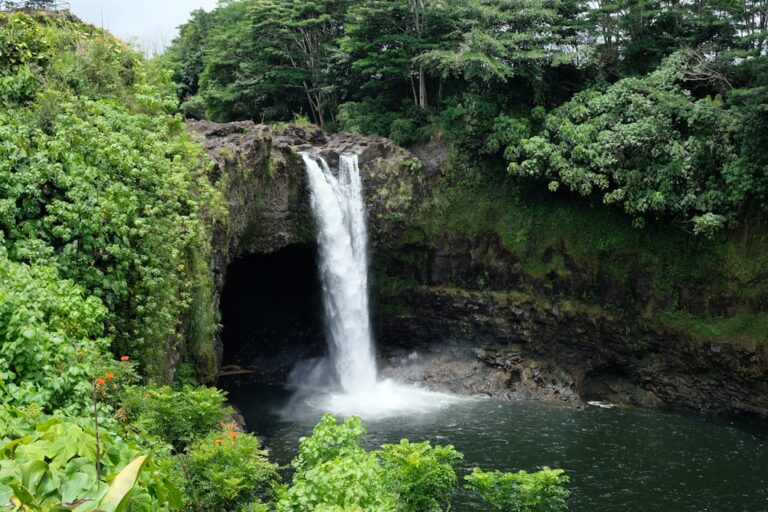
- Akaka Falls: Best after winter rain when flow is strongest.
- Punalu’u black sand beach turtle viewing: Year-round.
- South Point cliff jumping: Summer only — winter swells unsafe.
The Hawaii Volcanoes National Park NPS page has live status on road closures and eruption activity. Crater Rim Drive sections close routinely during gas emissions.
A Sample 7-Day Big Island Itinerary by Season
May trip (everything-is-open mode)
Day 1: Fly into Kona, snorkel at Two-Step. Day 2: Drive to Volcano village via Punalu’u, sunset at Kīlauea Overlook. Day 3: Hawaii Volcanoes National Park full day, sleep Volcano village. Day 4: Drive to Hilo via Akaka Falls. Day 5: Hamakua Coast, Waipi’o lookout, sleep Waimea. Day 6: Mauna Kea sunset summit tour, back to Kona. Day 7: Manta night dive after sunset, fly home next day.
February trip (whales + eruption mode)
Day 1: Kona arrival, sunset whale watch from Kohala Coast. Day 2: Captain Cook morning snorkel, Kealakekua Bay. Day 3: Drive to Volcano, evening at Halemaumau. Day 4: Hilo botanic gardens, rain plans. Day 5: Hapuna Beach (Kohala dry side). Day 6: Two-Step snorkel, Place of Refuge. Day 7: Kona town walking tour, fly home.
The trade-off in February is Hilo will be wet and Mauna Kea may be closed for snow. The upside is whales every day.
How the Big Island Compares to Other Islands
The Big Island is the only Hawaiian island where you really need a multi-base trip plan. On Maui or Oahu, basing in one town works well for a week. On Kauai, picking north or south without both is a reasonable tradeoff. On the Big Island, splitting at least one night between Kona side and Volcano or Hilo side is strongly recommended, because the drive across is 2.5+ hours and the climate difference is dramatic enough to be worth experiencing.
Adjacent reads if you’re comparing or combining: best time to visit Maui, best time to visit Oahu, best time to visit Kauai, Hawaii whale season guide, Hawaii surf season guide, and Hawaii hurricane season. Moving rather than visiting? Start with living in Kona and best Hawaiian island to live on.
Frequently Asked Questions About Visiting the Big Island
What is the rainy season on the Big Island?
For the Hilo and Hamakua sides, November through March is the wet season — Hilo averages 12+ inches monthly. For Kona and Kohala, there isn’t a real wet season; rainfall is light year-round, peaking at under 4 inches in any month per NOAA normals data. This split surprises most first-time visitors.
Is the Kīlauea eruption still happening in 2026?
USGS has tracked an ongoing episodic eruption sequence at Halemaumau Crater through 2026. Episodes typically last 1-3 days, separated by 1-3 week pauses. Check the USGS Hawaiian Volcano Observatory homepage for current activity status before booking around the eruption.
When can I see whales from the Big Island?
Mid-December through April. Peak whale density on the Kohala Coast occurs mid-January through mid-March. NOAA Fisheries data on Pacific humpback migration is at fisheries.noaa.gov.
Can I drive up Mauna Kea in any month?
The Visitor Information Station at 9,200 feet is generally accessible year-round in a standard rental car. The summit requires a four-wheel-drive vehicle and is closed during snow events (mostly December-March). Most rental contracts prohibit summit driving regardless of weather — a guided tour is the standard approach. The state’s DLNR Mauna Kea brochure covers safety.
How many days do I need on the Big Island?
Seven minimum to fairly see both sides. Five works if you skip Hilo. Three days is enough only for a Kona-side beach-and-snorkel trip. The drive distances on the Big Island are much longer than on the other islands, which is why a one-base trip leaves you in the car too much.
Is vog dangerous to visit?
For most healthy visitors, vog is unpleasant but not dangerous. People with asthma or heart conditions should track conditions daily — the Civil Beat environment desk covers air quality regularly, and the vog guide explains the science and protection steps.
What is the cheapest week to visit the Big Island?
The first full week after January 5 and the third week of September. Kohala Coast 4-star rates under $230 a night are common in both windows. Mainland flights to Kona are also at their annual low in mid-January and mid-September.
Is hurricane season actually a risk?
The Central Pacific hurricane season runs June 1 through November 30. Direct hits on the Big Island are uncommon but storms passing south sometimes send large surf to South Point and Hilo. The 2018 Hurricane Lane event dropped over 50 inches of rain on parts of Hilo. June-November isn’t worth avoiding on hurricane fear alone, but booking refundable lodging is a sensible precaution.
The Bottom Line
The short version: fly into Kona in late April, May, September, or early October. Build a 7-day trip that splits between Kona side and Volcano village. Track the eruption status the week before departure. Avoid August and the December 18 – January 5 holiday spike unless the budget is flexible. Get those right and the Big Island delivers a wider variety of landscapes per day than anywhere else in Hawaii.