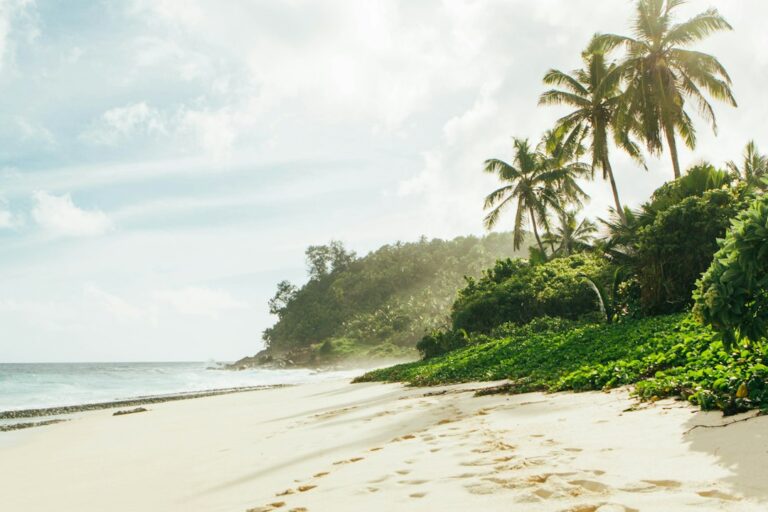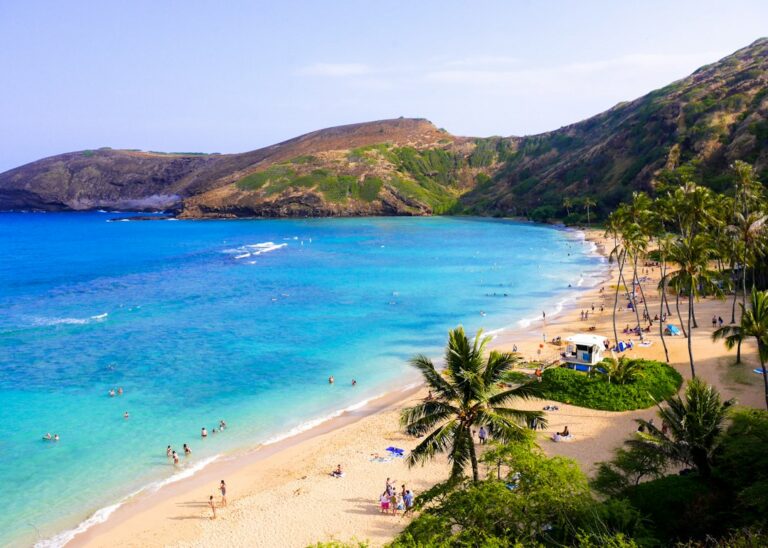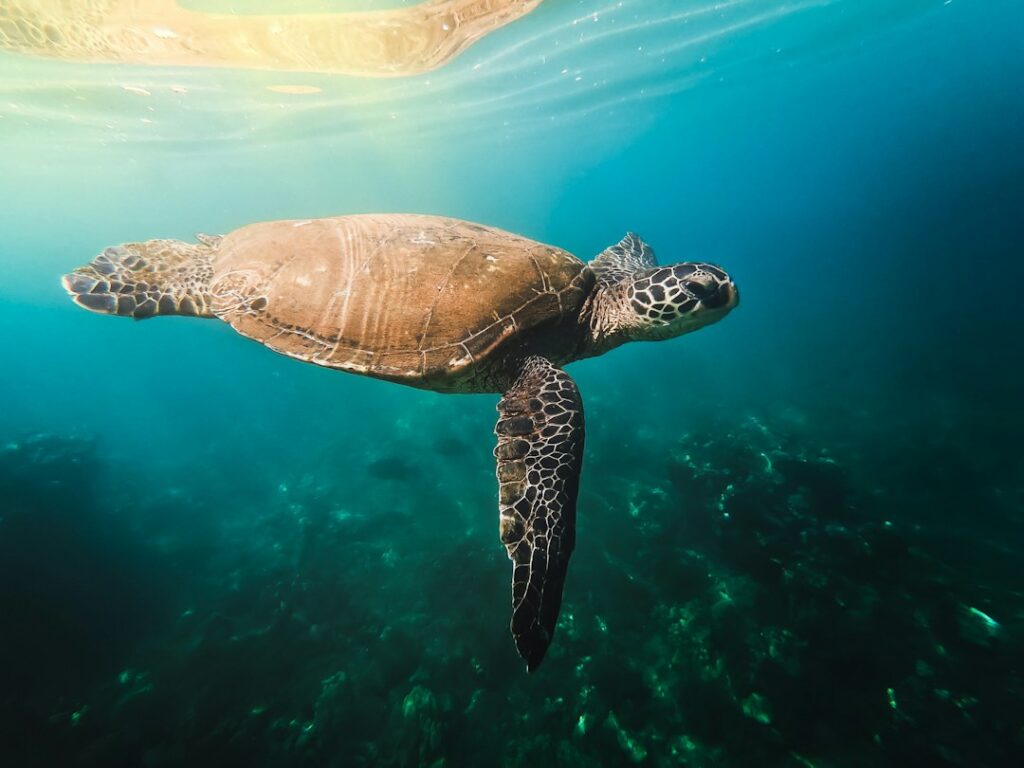
Makena Landing sits on the leeward South Maui coast between Wailea’s resort corridor and the wilder Makena State Park to the south. The small crescent cove has become the go-to shore access for snorkelers hoping to hover above a green sea turtle cleaning station and for paddlers heading out to Turtle Town and the collapsed lava arches off Nahuna Point.
Unlike Wailea’s manicured beach entries, the Landing is a working boat ramp with a concrete stair and metal ladder rather than a soft sand walk-in. That layout keeps the crowds thinner than Ulua or Wailea Beach, but it also means shore snorkelers have to plan the entry around wave action, boat traffic, and a parking lot that fills before 8 a.m. on any calm morning.
Relocating households researching South Maui often ask which cove offers the highest chance of a respectful turtle encounter without booking a snorkel charter. Makena Landing answers that question — provided visitors read the wind forecast, stay 10 feet back from every turtle under NOAA guidance, and understand the difference between paddling with a licensed guide and launching a rental sit-on-top from the ramp.
Where Makena Landing fits on the South Maui coast
Makena Landing Beach Park sits roughly 2.4 miles south of the Wailea Beach Marriott and about 5.3 miles south of Kihei’s Cove Park. The address on Makena Road puts the ramp between Nahuna Point to the north and Keawakapu Point to the south, forming a protected south-facing bight that opens onto shallow fringing reef.
The park is small — a boat ramp, a comfort station, a picnic pavilion, and roughly 35 to 40 painted stalls plus overflow shoulder parking on Makena Road. There is no lifeguard, no gear shack, and no rental concession on-site. Everything visitors need has to be packed in from Kihei, Wailea, or the nearest dive shop up in Kalama Village.
The nearest resort corridor is Wailea’s, which shapes housing costs across South Maui. Families weighing lodging locations often compare Kaanapali, Wailea, and Kihei as base camps for morning cove trips before the trades pick up.
Parking capacity, arrival timing, and closures
The paved lot holds about 20 vehicles in marked stalls, with another 15 to 20 shoulder spots along Makena Road within a five-minute walk of the ramp. Guided kayak operators reserve several stalls near the ramp for dawn launches, which cuts general parking below 25 usable spaces on peak mornings.
On a calm January or February morning, the lot fills between 7:15 and 7:45 a.m. During summer trade wind season, arrival by 8:30 a.m. usually still secures a spot because paddlers finish earlier before afternoon whitecaps develop. Weekend mornings run 30 to 45 minutes tighter than weekdays.
| Arrival window | Typical availability | Notes |
|---|---|---|
| 6:00–7:00 a.m. | Open, half full | Sunrise glass conditions; guided tours arrive |
| 7:00–8:00 a.m. | Filling fast | Weekend lots often full by 7:30 a.m. |
| 8:00–10:00 a.m. | Full, shoulder parking | Walk 3–7 minutes from Makena Road |
| 10:00 a.m.–2:00 p.m. | Rolling turnover | Short waits as tour groups return |
| After 3:00 p.m. | Open again | Winds pick up; underwater visibility drops |
Overnight parking is prohibited, and county code enforcement will ticket any vehicle blocking the ramp turnaround. The narrow shoulder along Makena Road cannot accommodate wide pickups with rear-mounted bike racks, so oversize vehicles are safer parked at Poolenalena Beach Park a half-mile south.
Sunrise access and etiquette
Unlike the coastal ridgelines on Oahu, Makena Landing has no formal sunrise access ban. Still, arrival etiquette around any dawn Hawaii site mirrors the strict rules seen at Kaiwa Ridge and Lanikai Pillbox: quiet voices in the lot, no headlights aimed at neighboring homes, and no leaving vehicles idling with music.
The ladder entry and shore snorkel path
Shore snorkelers enter from the north side of the boat ramp, where a short concrete stair drops to a metal ladder bolted to the rocks. The ladder has four to five rungs and lands in roughly 4 to 6 feet of water at mid tide. Fins go on at the ladder, not on the concrete pad above it.
The safer approach is to sit on the second rung, slide the mask down, then push off backwards while the trailing hand holds the ladder rail. That technique keeps neoprene socks and toes off the sea urchins wedged in the ladder’s crevices. Reef shoes help for anyone walking barefoot to the ramp.
Exit is the same ladder in reverse. Timing the exit between wave sets matters more than the entry, because a rising surge can push a snorkeler sideways into the concrete abutment. Watching three or four sets before committing, then swimming in with fins on until the last rung, is the standard technique used by kayak guides.
Reading the cove before entry
The cove looks flat from the parking lot even when a 2-foot south swell is running. A quick check from the point on the north side of the ramp shows whether wave sets are breaking over the outer reef. If white water is visible past the mooring line, snorkeling from the ladder is workable but paddling to Nahuna Point becomes rough.
Turtle cleaning stations inside the cove
The Hawaiian name for the green sea turtle is honu, and the state’s resident population is estimated at roughly 4,000 nesting females plus a much larger juvenile and subadult contingent that feeds along the coast. Makena Landing’s cove hosts several coral heads where honu hover while yellow tang, saddle wrasse, and surgeonfish pick algae and parasites off the shell and skin.
The most reliable cleaning stations sit 40 to 90 yards off the ladder, in 12 to 20 feet of water over the fringing reef that runs north toward Nahuna Point. Look for a coral head with three or four small fish orbiting it — the turtle usually settles in for 8 to 20 minutes at a time, breathing at the surface every 4 to 7 minutes.
Cleaning stations concentrate the strongest legal risk of the visit. A snorkeler drifting closer than 10 feet, or hovering directly above a turtle so it cannot rise to breathe, may be cited under the Marine Mammal Protection Act framework applied to honu through the Endangered Species Act. State enforcement can add fines up to $10,000 per incident.
How the cleaning behavior actually works
A honu approaches a preferred coral head, orients into the current, and stops finning. Reef fish then swarm in to pick loose algae, small barnacles, and sloughed skin. The turtle’s role is passive — it waits, breathes at intervals, and departs when finished. A hovering snorkeler above the coral head interrupts that queue and can push the turtle off the station.
Comparison with Wailea’s honu access
The closest peer to Makena Landing is Ulua Reef and its Wailea ladder-adjacent entry. Ulua has a softer sand walk-in but a shallower reef and more day-tripper foot traffic. Makena Landing rewards a slightly harder entry with fewer bodies in the water at 7 a.m. and quicker access to deeper cleaning stations off the ramp’s north wall.
Kayaking to Turtle Town and the Nahuna arches
“Turtle Town” is a marketing name that snorkel charters apply to a stretch of reef running north from Makena Landing around Nahuna Point to Five Graves. The submerged lava tubes and collapsed arches sit in 15 to 40 feet of water roughly 0.35 to 0.55 miles by paddle from the ramp. From Makena Landing, that works out to a 15 to 25 minute paddle each way in calm conditions.
The Nahuna Point (Five Graves) arches
The Nahuna Point site — also called Five Graves after the small family cemetery visible from the coastal road — features two well-known lava arches. The larger arch bottoms out around 25 to 30 feet with a top rim at roughly 15 feet, and the smaller “chimney” arch runs 12 to 18 feet deep. Both attract cleaning stations along their outer walls.
Paddle route from the ramp
From the ramp, paddlers exit the cove past the mooring buoys and turn right (north) along the shore. Keeping 75 to 150 yards off the cliff line puts kayaks over the fringing reef without drifting into swimmer traffic from Chang’s Beach and the Five Graves shore entries. The Nahuna arches sit off the second small point past Chang’s.
Anchoring a kayak on live coral violates state Department of Land and Natural Resources rules. Guided operators either raft up on a mooring buoy or hold the boats offshore while snorkelers work the arches on tethered lines. Reef damage from kayak anchors is documented in Star-Advertiser reporting on South Maui reef enforcement over multiple summers.
Guided kayak tour versus self-launch decision
The choice between a guided kayak-snorkel tour and a self-launched rental changes the trip’s price, safety envelope, and the amount of gear a visitor has to haul. Both options put a paddler over the same reef; the difference is who reads the wind and who spots the turtles.
| Option | Typical cost | Duration | Includes | Best for |
|---|---|---|---|---|
| Guided kayak-snorkel tour | $85–$135 per person | 2.5–4 hours | Kayak, mask, fins, snacks, naturalist | First-time paddlers, families with kids 6–12 |
| Self-launch sit-on-top rental | $45–$70 single, $65–$95 tandem | Full day | Kayak, PFDs, paddles, dry bag | Experienced paddlers with own snorkel gear |
| Guided outrigger canoe | $95–$150 per person | 2.5 hours | Canoe, gear, cultural briefing | Groups of 4–6 wanting stability |
| Boat snorkel charter from Kihei | $130–$185 per person | 4–5 hours | Vessel, gear, breakfast, lunch | Non-paddlers wanting more sites |
When guided makes sense
Guided tours pay for themselves when the paddler cannot judge Maui’s afternoon trade wind acceleration. South Maui winds routinely jump from 6 knots at 8 a.m. to 22 knots by noon, and a headwind on the return leg has capsized plenty of first-timers who launched at sunrise assuming glass conditions would hold through mid-morning.
Naturalist guides also enforce the 10-foot rule proactively, keeping the group’s collective footprint small and reducing the odds a novice inadvertently blocks a turtle’s ascent for a breath. That matters when a boat group of six wants to look at the same honu without churning the water column.
When self-launch works
Self-launch fits paddlers who bring their own snorkel gear, understand kayak self-rescue, and can flip a swamped hull back onto its keel in chop. Rental sit-on-tops from Kihei shops weigh 45 to 70 pounds empty, so a roof-rack cradle and two adults make the transport realistic. Solo transport of a 65-pound tandem is not.
Kayak comparison across the islands
Kayakers who enjoyed Makena Landing’s short blue-water paddle often move on to the Anini Reef fringing coral launch on Kauai or the calmer flatwater of the Wailua River paddle to Fern Grotto. For advanced open-water paddlers, the Napali Coast kayak versus boat access decision is the natural next question.
Mask, fin, and safety gear for the cove
Rental snorkel gear from Kihei stores runs $8 to $14 per day for a mask-snorkel-fins set, or $28 to $45 per week. Higher-end shops rent silicone-skirted low-volume masks and open-heel fins with 3 mm neoprene booties, which fit far better than the one-size flat rentals often handed out by resort activity desks.
Mask fit and defog
A leaky mask is the single biggest reason visitors abort a paddle short of the arches. The fit test is a two-second inhale through the nose with the strap unbuckled — the mask should suction and hold on the face without hands. Anti-fog drops or a drop of baby shampoo rubbed on the lens the night before beats spitting into the mask each entry.
Fin length
Short travel fins under 15 inches perform poorly against current at Nahuna Point, where the return leg often bucks a 1 to 2 knot flow around the headland. Full-foot fins of 18 to 24 inches, or open-heel fins with booties, provide enough thrust that a snorkeler can stop kicking, breathe, and observe from a stable hover rather than drifting onto a coral head.
Personal flotation and signals
State law requires a U.S. Coast Guard-approved PFD in the kayak for every occupant. Anyone under age 13 must wear the PFD while underway. A whistle attached to the vest costs about $3 and doubles as a signal to guides if a paddler separates from the group near the arches.
- Prescription mask option for glasses wearers (many Kihei shops carry stock diopters)
- Rash guard with 50+ UPF rating to reduce sunscreen use
- Dry bag rated to 5 liters for phone, keys, water, snack bar
- Reef-safe zinc stick for face, ears, and back of neck
- Neoprene socks or reef shoes for the ladder walk-down
- Split-tail defogger cloth kept dry in the kayak hatch
NOAA etiquette and the 10-foot rule
NOAA Fisheries publishes an approach guideline of 10 feet — roughly 3 meters — as the minimum distance for viewing wild honu in Hawaiian waters, whether basking on sand or resting on a reef. The rule is not a suggestion; it is the operational interpretation of “no harassment” under both the Endangered Species Act and Hawaii’s own protected species law.
What 10 feet looks like in the water
Ten feet is roughly two body lengths for an average adult snorkeler. The practical technique is to freeze finning, exhale slowly, and let the current define the distance. If the turtle raises its head sharply or changes swim direction, the observer is already too close and needs to back off two or three kicks.
Behaviors that trigger citations
- Chasing a turtle across a reef with fins churning
- Positioning between a resting turtle and the surface
- Touching the shell, flipper, or head under any circumstance
- Diving down to circle a turtle for photos or GoPro clips
- Feeding fish near a cleaning station to attract turtle traffic
- Standing on the reef to steady a camera above a swimming honu
Enforcement on South Maui is opportunistic — Department of Land and Natural Resources officers patrol Makena Landing on weekends and during winter break periods. State violations carry civil fines from $500 to $10,000 depending on documented harm. Federal ESA charges are rarely applied to swimmers but remain the ceiling.
For contrast, on-land basking turtles at Punaluu Black Sand on the Big Island are protected by the same 10-foot rule, backed by volunteer honu watch enforcement. The ranked Big Island beach guide covers the sites where basking behavior is most commonly documented.
Weather, tides, and hazards to check before launching
South Maui’s leeward orientation shelters Makena Landing from most northeast trade wind chop, but three specific weather patterns turn the paddle sketchy: a strong south swell in summer, a Kona wind reversal in winter, and a mid-afternoon acceleration of the trades that funnels between Haleakala’s slope and the West Maui Mountains.
| Condition | Season | Effect on cove | Recommended action |
|---|---|---|---|
| South swell 3+ ft | May–September | Waves break over Nahuna reef | Snorkel only, skip paddle |
| Kona winds | November–March | Onshore chop from southwest | Delay by 24–48 hours |
| Trade wind acceleration | Year-round afternoon | 18–25 kt headwind on return | Launch before 7 a.m. |
| Rain runoff (Kaonoulu) | January–March | Brown water plume, 2–5 ft visibility | Wait 48 hours after rain |
| King tide (peak +2.6 ft) | Multiple months | Ladder submerged, cross-cove current | Enter 2 hours before or after peak |
Water temperature and visibility
Surface water temperature at Makena runs about 75°F in February and March, warming to 80°F in September. Visibility averages 40 to 70 feet on a clean day and drops to 15 to 25 feet after heavy rain washes silt out of the Kaonoulu drainage. A 2 mm shorty wetsuit or rashguard adds roughly an hour of comfort on winter mornings.
Boat traffic at the ramp
Makena Landing is an active boat ramp. Guided kayak groups, private outrigger canoes, and dive boats launch from the same concrete pad, and the state Department of Transportation classifies it as a small-craft facility. Shore snorkelers must stay 30 feet north of the ramp centerline and never swim across the launch corridor, marked by red buoys on either side.
How Makena Landing compares with other Maui and Hawaii turtle sites
Makena Landing is one of several honu encounter sites on the leeward Maui coast, each with different entry logistics, crowd levels, and turtle density. The comparison below helps relocating households and repeat visitors match a Sunday morning plan to their gear, kids, and paddling ability.
| Site | Island | Entry | Turtle likelihood | Kayak launch |
|---|---|---|---|---|
| Makena Landing | Maui | Ladder, ramp | Very high | Yes, concrete ramp |
| Ulua Reef Wailea | Maui | Sand walk-in | High | Difficult, sand carry |
| Kapalua Bay | Maui | Sand walk-in | Moderate | Sand carry only |
| Punaluu Beach | Big Island | Black sand | Very high (basking) | No kayaking |
| Anini Reef | Kauai | Sand walk-in | High | Yes, sand launch |
| Hanauma Bay | Oahu | Sand, reservation | Moderate | No, protected |
Wailea’s Ulua Reef is the closest peer for shore snorkelers who want reliable cleaning stations without a kayak carry, and Punaluu offers a very different setting — basking honu on black sand under a strict on-land distance rule enforced by volunteer stewards.
West Maui offers a middle option at Kapalua Bay’s fringe coral entry, with softer sand access than Makena but shallower reef, less turtle traffic per hour, and no meaningful kayak put-in. Reservation-based sites like Hanauma Bay’s 48-hour booking window on Oahu add friction that Makena Landing entirely avoids.
Sunscreen rules, cultural signs, and site etiquette
Hawaii’s Act 104 banned the sale of over-the-counter sunscreens containing oxybenzone or octinoxate as of January 2021. Products purchased on the mainland should be checked against the ingredient label — the reef-safe sunscreen rules under Act 104 apply to what visitors put on skin, not just what stores sell. Enforcement runs through the state Department of Health, not beach citations.
Makena Road runs past the old Keawala’i Congregational Church, founded in 1832, and the small cemetery that gives Five Graves its nickname. Visitors should keep voices low near the churchyard, avoid parking on grass, and never step over the low stone walls that mark family plots.
Bathrooms and rinse
The comfort station has flush toilets and an outdoor cold-water rinse shower for wetsuits and gear. There is no potable drinking water on-site. Visitors should carry at least 1 liter of water per adult for a 3-hour session, and 1.5 liters if paddling in July or August when surface temperatures push past 82°F.
Trash and reef fragments
No trash cans exist inside the beach park. Pack-in-pack-out applies to everything from banana peels to the plastic wrap on a new fin strap. Reef fragments and coral pieces washed up on the shore are protected under state law and must not be collected as souvenirs. General Hawaii park etiquette guidance appears on the Hawaii Tourism Authority site.
Pet policy at the landing
Dogs are allowed on-leash in the parking lot and picnic area but not on the ramp during boat operations. Households moving to Maui with pets often work through the FAVN blood test process to skip Hawaii’s rabies quarantine months before the first ladder-entry snorkel with dogs waiting under a tailgate shade.
Sample morning at Makena Landing
A well-run visit starts the night before. Load water, sunscreen, fins, mask, and a small dry bag by 9 p.m. Set the alarm for 5:45 a.m. and check the National Weather Service surf discussion and buoy 51203 for south swell height and period. If both are inside the calm envelope, roll out of Kihei by 6:15 a.m.
Park by 6:45 a.m., use the comfort station, and defog masks on the tailgate. Enter the ladder by 7:15 a.m. and give the cleaning stations a full 45 minutes before considering the paddle to Nahuna. If wind stays under 10 knots, launch by 8:15 a.m., paddle north, and plan to be back on the ramp by 10:15 a.m.
A morning like that captures the cove at its quietest, the reef at its clearest, and the wind window before mid-morning acceleration. Local Civil Beat reporting on South Maui coastal use has documented the pattern for years: earlier is nearly always better than a longer session that stretches into afternoon.
Frequently asked questions
Is Makena Landing safe for beginner snorkelers?
The cove is calmer than most South Maui shore breaks, but the ladder entry, boat ramp traffic, and offshore depth of 12 to 20 feet at cleaning stations push it out of true beginner territory. First-time snorkelers should practice at Ulua or Kamaole Beach Park for a session before attempting the Makena ladder, especially on a day with any south swell running.
How close can snorkelers get to a green sea turtle?
NOAA Fisheries publishes a minimum viewing distance of 10 feet, or about 3 meters, from any wild honu in the water or on land. That distance is enforced under the Endangered Species Act framework and Hawaii state harassment statutes, with civil fines running $500 to $10,000 for violations documented by DLNR officers or by charter captains reporting incidents.
Do visitors need a kayak to reach the Nahuna Point arches?
The arches sit roughly 0.4 to 0.5 miles from the Makena Landing ladder — swimmable for strong open-water snorkelers, but a kayak or SUP is the safer choice for most visitors. The paddle takes 15 to 25 minutes each way in calm conditions and lets tired swimmers rest between snorkel drops instead of treading water over deep reef.
What time does the parking lot fill up?
On calm mornings in winter and shoulder season, the paved 20-stall lot fills between 7:15 and 7:45 a.m. Summer trade wind conditions push arrival to 8:00 or 8:30 a.m., and weekends run 30 to 45 minutes tighter than weekdays. Shoulder parking on Makena Road adds 15 to 20 more spaces within a 3 to 7 minute walk of the ramp.
Are guided kayak-snorkel tours worth the extra cost?
Guided tours run $85 to $135 per person compared with $45 to $70 for a full-day rental. The premium buys wind forecasting, all gear, safety coverage, and enforcement of the 10-foot rule — worth it for first-time paddlers, families with young kids, and anyone unfamiliar with South Maui’s afternoon trade wind acceleration to 22 knots.
Can visitors touch or feed the turtles?
No. Touching, feeding, chasing, or blocking a wild honu violates both the Endangered Species Act and Hawaii state protected species law. Feeding also habituates turtles to human presence, increasing their risk of boat strike and fishing line entanglement. Observe from 10 feet, avoid flash photography, and never position between a resting turtle and the surface.
What sunscreen is legal at Makena Landing?
Hawaii Act 104 bans the sale of sunscreens containing oxybenzone or octinoxate. Zinc oxide and titanium dioxide mineral formulas remain legal. Rash guards, long-sleeve UV shirts, and wide-brim hats reduce sunscreen use entirely. Visitors should apply mineral sunscreen 15 minutes before entry, allowing it to bind to skin rather than rinse off in the first minute of the swim.