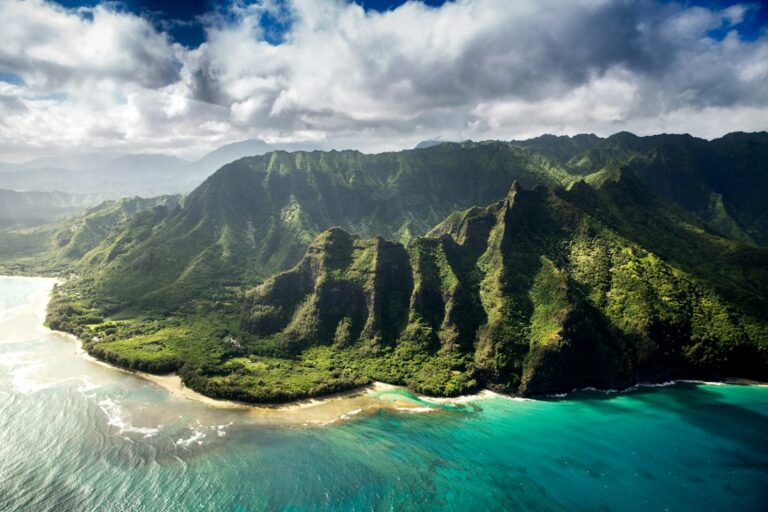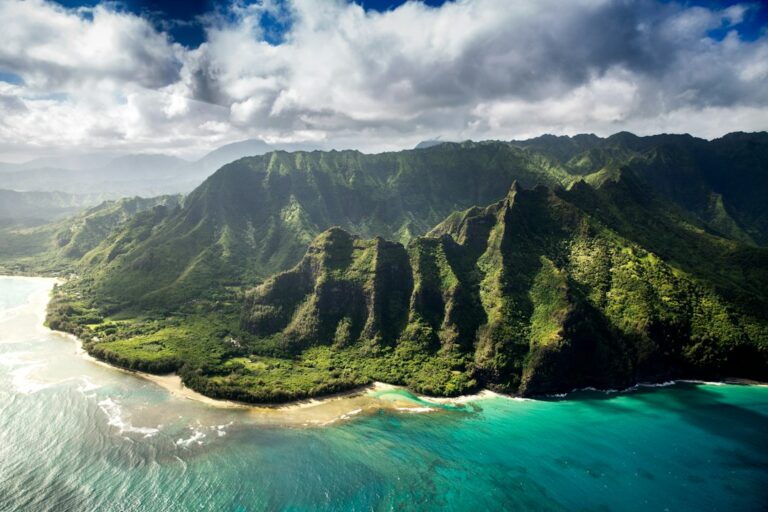
The Napali Coast stretches 17 miles along the northwestern edge of Kauai, a fluted wall of green cliffs rising nearly 4,000 feet from the Pacific with no road access from either end. For relocating households evaluating whether to base themselves on Kauai — or for mainland visitors scouting the island before a move — the coast represents the single most-photographed stretch of shoreline in Hawaii and one of the most logistically complex to visit.
Three access modes dominate the choice: a large catamaran running roughly five hours from Port Allen, a rigid-hull zodiac raft threading sea caves in about four hours, and a permit-only 17-mile guided kayak expedition available only May through September. Each mode filters passengers by age, mobility, budget, and tolerance for open-ocean swell, and each departs from a specific harbor that shapes drive time and morning schedule.
This comparison walks through price bands, physical demands, harbor decisions, and the Kalalau permit process for kayakers who intend to land at Kalalau Beach. Household priorities matter here: a retired couple weighs different tradeoffs than a family with a nine-year-old or a solo relocator scouting the North Shore. The right choice depends on which of those tradeoffs sits at the top of the list.
The Napali Coast at a Glance
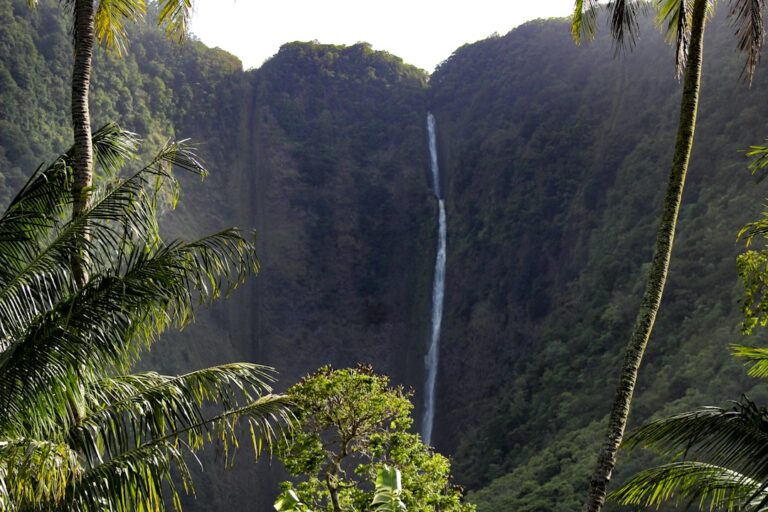
Napali means “the cliffs” in Hawaiian, and the name understates the geology. Waterfalls drop 800 feet into pocket beaches. Sea caves cut 200 feet into the volcanic rock. The Kalalau Trail — the only ground-level access — runs 11 miles from Ke’e Beach to Kalalau Beach and is closed to day hikers past the two-mile mark without a permit issued through Hawaii State Parks.
The Hawaii Division of State Parks manages the coastline as Napali Coast State Wilderness Park. Landing is prohibited at every beach except Miloli’i (winter and permitted vessels only) and Kalalau (kayak permit only, summer window). Everything else — Nualolo Kai, Honopu, Awaawapuhi — passes at 100 to 300 feet from the rail without a stop.
Weather runs the show. The North Shore of Kauai is exposed to Pacific winter swell from October through April, with wave heights routinely exceeding 15 feet and occasionally hitting 30. Most operators pull North Shore departures for winter and either cancel or reposition to Port Allen on the south. Summer flips the pattern: south swells appear but rarely close the coast to sea travel.
Catamaran Tours: The Family-Friendly Option
The five-hour catamaran is the default choice for households traveling with children under 12, older passengers, anyone with back injuries, or travelers who want a bathroom, a shaded seating area, and a hot lunch onboard. Boat lengths range from 47 to 65 feet with capacities of 30 to 49 passengers. Prices for the 2026 season sit in the $180 to $220 band per adult, with a $30 to $50 child discount.
Trip flow is predictable. Boats depart Port Allen at 7:00 or 7:30 a.m., motor west for about 90 minutes to the Napali coastline, cruise the full 17-mile length at slow speed for photography, then anchor at Nualolo Kai for a snorkel stop of 45 to 60 minutes. Lunch is served during the return, usually a deli buffet with pulled pork, rice, and a salad option.
Bathrooms are the sleeper feature. Zodiacs have none; kayaks obviously have none. On a 4.5-hour ocean trip with hydration required for sun exposure, the difference matters — especially for older passengers, pregnant travelers, or anyone with a small bladder. Catamarans also offer indoor and shaded seating, which reduces cumulative sun exposure over the return leg when the boat runs east into open ocean.
What Catamarans Skip
Sea caves are the largest tradeoff. A 65-foot catamaran cannot enter the Waiahuakua Sea Cave (the second longest in the world) or the Open Ceiling Cave, both of which are visual highlights of the zodiac experience. Catamarans view Waiahuakua from a stationary position 200 feet offshore, which is impressive but not the same as motoring inside a wet basalt cathedral with a skylight opening.
Timing is the second tradeoff. The five-hour block plus the drive to Port Allen — roughly 40 minutes from Poipu, 70 minutes from Princeville — consumes most of a day. Households on a five-day scouting trip who want to also see Waimea Canyon on the same day usually cannot make the math work without sacrificing sleep on both ends.
Zodiac Raft Tours: Sea Caves and Speed
Rigid-hull inflatable boats — universally called “zodiacs” or “rafts” on Kauai — trade comfort for access. A 24-foot zodiac carries 14 to 16 passengers on inflatable pontoons, sits low to the water, and can enter caves and pull close to the cliff face where a catamaran cannot maneuver. The 2026 price band runs $170 to $210 for the standard four-hour tour.
Cave access is the reason to book a zodiac. On calm summer mornings, captains commonly enter Waiahuakua (a 1,155-foot through-cave with two entrances), the Open Ceiling Cave (a collapsed lava tube with a waterfall in wet months), and the Honopu Sea Arch. None of these are visible from a catamaran deck. Zodiacs also stop at Nualolo Kai for snorkeling, though water time runs shorter, typically 30 to 40 minutes.
The physical cost is real. Zodiac passengers sit on the pontoons and absorb every wave through the lower back. Operators require passengers to be at least six years old on most Kauai zodiac boats, and pregnant travelers are usually refused. Passengers over 250 pounds, with recent back surgery, or with severe motion sickness should book a catamaran instead. The four-hour block plus a 20-minute launch briefing runs 4.5 hours total.
Departure Harbor Splits
Zodiac operators depart from three harbors depending on season and company. Port Allen on the south side runs year-round. Kikiaola Small Boat Harbor near Waimea sits closer to the Napali entry point and shaves 20 to 30 minutes off transit. Hanalei on the North Shore runs only from mid-May through mid-September and puts passengers directly at the Kalalau end of the coast in under 30 minutes.
The Kalalau Kayak Expedition: 17 Miles Under Human Power
The full-length Napali kayak is the single most physically demanding day-tour available in Hawaii. Guided groups launch from Ha’ena on the North Shore, paddle 17 miles to Polihale State Park on the west side, and take out on a beach with no protected harbor. Total on-water time runs 6 to 9 hours depending on wind, swell, and group pace.
The trip runs only May through September, when north swell drops enough to make the Hanalei launch reasonable. Even in the summer window, roughly 25 to 40 percent of scheduled days are cancelled for weather. Reputable operators cap group size at 12 to 14 paddlers with two or three guide kayaks. The 2026 price band runs $255 to $325 per person, guided.
Physical Requirements
Guides screen participants before booking. Standard minimums include ability to paddle continuously for 90 minutes without rest, comfort in open ocean beyond swimming distance from shore, and physical strength to right a capsized double kayak in 4-foot chop. Age minimums vary: most companies require 15 or 16 as the floor, with a parent required for anyone under 18.
Solo Kayak — Ke’e to Kalalau (Two-Day Overnight)
A distinct trip type: experienced solo paddlers who intend to camp at Kalalau Beach as part of the Kalalau Trail permit system paddle the 11 miles from Ke’e to Kalalau, spend one or more nights, then paddle back or hike out via the 11-mile trail. This requires a Napali Coast State Wilderness Park permit ($35 per person per night for non-residents in 2026, plus a $5 reservation fee) issued through Hawaii State Parks.
Permits release five days in advance for weekends and up to 30 days in advance for weekdays, and both Kalalau camping permits and the associated boat-landing endorsement compete against hikers for the same daily quota. Weekend summer permits sell out within seconds of release. Reasonable planning windows involve targeting Tuesday through Thursday nights when demand is thinner.
Direct Comparison of the Three Access Modes
| Feature | Catamaran | Zodiac Raft | Guided Kayak |
|---|---|---|---|
| Adult price (2026) | $180–220 | $170–210 | $255–325 |
| Duration | 5 hours | 4 hours | 6–9 hours |
| Season | Year-round | Year-round (Hanalei summer only) | May–September |
| Minimum age | None to 5 years | 6 to 8 years | 15 to 16 years |
| Sea caves entered | No | Yes, 2 to 4 caves | Only if guide permits |
| Bathroom onboard | Yes | No | No |
| Lunch included | Hot buffet | Snacks only | Deli lunch on beach |
| Physical demand | Low | Moderate | Extreme |
| Cancel rate (summer) | 5–10% | 10–15% | 25–40% |
| Snorkel stop | 45–60 min at Nualolo | 30–40 min at Nualolo | Beach breaks only |
The catamaran wins for households with wide age ranges or anyone with back concerns. The zodiac wins for able-bodied adults who want the sea caves. The kayak is a fitness expedition and is not comparable as a “tour” — it is a serious paddle that happens to have scenery.
Port Allen vs. Hanalei: Departure Harbor Decisions
Harbor choice shapes the entire day. Port Allen (Eleele) on the south side is the year-round hub for both catamarans and zodiacs. Hanalei on the North Shore runs only mid-May through mid-September and only for smaller boats. Kikiaola near Waimea is a niche zodiac harbor. Drive time from lodging to the ramp usually determines wake-up call more than tour length itself.
Households staying in Poipu or Koloa reach Port Allen in 35 to 45 minutes. From Princeville, the drive to Port Allen runs 75 to 90 minutes, meaning a 6:00 a.m. departure from the resort for a 7:30 a.m. check-in. Households staying North Shore side who want to avoid this drive should target a Hanalei summer zodiac departure at 30 to 45 minutes closer to the coastline start.
Small-boat harbor administration on Kauai runs through the Hawaii Department of Transportation’s harbors division, which sets the launch schedules and enforces the Coast Guard passenger caps. Every commercial operator posting a Napali trip is licensed through that system, and the state suspension list is public. Operators without visible license numbers on the hull should be avoided.
| Lodging area | Port Allen drive | Hanalei drive | Kikiaola drive |
|---|---|---|---|
| Princeville | 75–90 min | 10–15 min | 90–100 min |
| Hanalei town | 80–95 min | 5 min | 95–105 min |
| Kapaa | 45–55 min | 35–45 min | 60–70 min |
| Lihue | 30–35 min | 60–70 min | 45–55 min |
| Poipu / Koloa | 35–45 min | 90–105 min | 50–60 min |
| Waimea | 20–25 min | 110–120 min | 5–10 min |
What the Harbors Actually Look Like
Port Allen is a working commercial harbor on the south shore near Eleele. Parking is free and abundant, restrooms exist onshore, and boarding docks are floating. Kikiaola is smaller, more exposed, and used mainly by mid-sized zodiacs and fishing charters. Hanalei is not a harbor in any formal sense — boats launch off the beach through the surf on trailers, which means passengers walk into knee-deep water to board.
The Hanalei surf-launch matters more than most passengers expect. It is fine on a two-foot morning and difficult on a four-foot morning. Zodiac operators sometimes cancel or shift to Port Allen mid-season based on the daily surf report. Hanalei launches typically go earlier, around 7:00 a.m., to catch the flatter morning window before trade winds build.
The Kalalau Permit Process
Boat passengers do not need any permit. The Kalalau permit process only applies to travelers who plan to camp overnight at Kalalau Beach or Hanakoa (a mid-trail campsite), or who land on Kalalau Beach by kayak. The permit is administered by Hawaii State Parks under the Department of Land and Natural Resources.
The 2026 fees are $35 per person per night for non-Hawaii-residents and $20 for residents, plus a $5 reservation fee. Permits cover up to five consecutive nights, which is the maximum stay allowed. The system caps daily entries and enforces the cap with rangers at both trail entry points and via aerial surveillance flights.
Release Timing and Booking Strategy
- Weekday permits typically release 30 days in advance at 12:00 a.m. Hawaii time.
- Weekend and holiday permits release earlier and sell out fastest.
- The state uses a rolling window; refresh timing matters within seconds.
- Cancellations trickle back into the pool 24 to 72 hours before entry dates.
- Third-party permit scalping is prohibited and enforced through name-matched IDs.
The permit page requires each camper’s full legal name at booking. State parks staff check permits against government photo ID at ranger stations near Kalalau Beach and at the Hanakapiai crossing, so a permit purchased under one name cannot be transferred to another traveler. Groups larger than one need a separate permit for each additional person.
Kayak Landing Endorsement
Paddlers landing at Kalalau by kayak need both the camping permit and a boat-landing endorsement on the same reservation. This is a checkbox on the permit portal, not a separate application, but the daily cap for boat landings is lower than the hiker cap. On peak summer weekends, boat landings sell out within seconds of the release window opening.
Weather, Swell, and Seasickness Realities
Kauai’s North Shore behaves like two different coasts across the year. Summer trade winds blow 10 to 20 mph from the east-northeast and produce ocean swells generally under 3 feet at the boat departure points. Winter storm swells from the North Pacific regularly deliver 10 to 25 foot North Shore surf between November and March, which closes Hanalei launches entirely and reroutes zodiacs to Port Allen.
The rougher ride is not the sea caves. It is the run home along the west-facing coast after 11:00 a.m. when trade winds hit their afternoon peak. Passengers who take Dramamine or Bonine 60 to 90 minutes before departure fare much better than those who skip it. Ginger candy helps but does not replace the antihistamine dose.
Rainfall is the underappreciated factor. Waterfalls along Napali are seasonal — the coast displays dozens of visible falls in wet winter months and only a handful in dry August afternoons. For photography, February and March boat tours (weather permitting) deliver the strongest waterfall counts. For calm seas, June and July win.
Cancellation Policy Reality
Most operators guarantee a full refund or reschedule for weather cancellations they call themselves. Passenger no-shows and passenger-initiated cancellations receive 50 to 100 percent depending on notice. Reasonable trip insurance for the tour is available through the operator for $10 to $20 per person and covers passenger illness. Households booking three or four days of Kauai activities should build one buffer day for a possible reschedule.
Cost Comparison and Booking Windows
Napali tour prices increased 8 to 12 percent between 2023 and 2026, tracking with the broader jump in local operating costs. Fuel is the biggest driver: catamarans burn 40 to 60 gallons of diesel per trip at Kauai marine fuel prices tracked by the U.S. Energy Information Administration, which have run 15 to 25 percent above mainland averages through most of 2026.
State general excise tax applies to every ticket. Kauai’s rate under the Hawaii Department of Taxation is 4 percent at the state level, with a small pass-through markup shown on operator invoices. Booking windows for high-season summer weekends fill first. Two to three months out is a reasonable target for June through August catamaran and zodiac slots. Kayak trips fill four to six months out for summer weekends.
| Trip type | Adult (2026) | Child | Duration | Best months |
|---|---|---|---|---|
| Catamaran with lunch | $180–220 | $130–160 | 5 hr | May–October |
| Sunset dinner catamaran | $140–175 | $95–120 | 3.5 hr | April–September |
| Zodiac Napali (Port Allen) | $170–210 | $135–165 | 4 hr | Year-round |
| Zodiac Napali (Hanalei) | $185–225 | $150–175 | 4 hr | May 15–Sept 15 |
| Guided 17-mile kayak | $255–325 | Not offered | 7–9 hr | May–September |
| Private catamaran charter | $2,200–3,800 flat | N/A | 5 hr | Year-round |
| Kalalau permit (non-resident) | $35/night + $5 | Same | 1–5 nights | Year-round |
Rental Car Realities
A rental car is required for every boat trip since none of the harbors run resort shuttles. Airport rentals at Lihue run $75 to $130 per day in summer 2026 for a mid-size SUV. Off-airport locations near Poipu and Princeville cost 15 to 25 percent less but add pickup logistics. Households arriving Sunday should reserve the car before booking the tour, since Sunday inventory tightens fastest.
Kayakers on the 17-mile expedition receive shuttle transport from the takeout at Polihale back to Ha’ena included in the price. This is one of the underappreciated conveniences: passengers do not need to arrange car placement at both ends. Catamaran and zodiac passengers park at Port Allen or Hanalei and return to the same car.
Safety, Physical Demands, and Age Rules
Every operator publishes a set of firm rules that the Coast Guard requires them to enforce. Passenger weight limits apply on zodiacs — usually a 250-pound individual maximum or a boat-weight cap distributed across the group. Pregnancy is a hard no on zodiacs and kayaks and a maternal-choice risk on catamarans. Back injuries, heart conditions, and recent surgery merit an operator phone call before booking.
Life jackets are required on kayaks and available on all catamaran and zodiac decks. The Hawaii Department of Health publishes water quality advisories through its statewide portal — Kauai’s North Shore beaches are among the cleanest in the state, but Hanalei Bay can post advisories after heavy rain due to stream discharge from Hanalei River.
Snorkeling Realities at Nualolo Kai
Nualolo Kai is the reef inside a lava-formed cove roughly two-thirds of the way down the coast, and it is the standard snorkel stop for catamarans and zodiacs. Water clarity in June through September averages 60 to 100 feet of visibility. Reef fish density is high but turtle and monk seal sightings are less common than at south shore reefs. Water temperature runs 74°F in winter to 82°F in summer.
How This Fits the Relocation Decision
For readers evaluating Kauai as a relocation target, the Napali tour is one of the highest-value scouting activities. It reveals whether North Shore isolation appeals or overwhelms, exposes ocean-swell realities that shape every water sport on the island, and previews the drive-time consequences of choosing Princeville, Poipu, or Kapaa as a home base.
Households comparing Kauai to Maui or the Big Island should note that Kauai’s boat access is more weather-dependent than either neighbor island’s equivalent. Napali cancellations run higher than Molokini or Kona snorkel tours. Statewide population and household counts published in the Census QuickFacts profile for Hawaii help calibrate expectations about density, but any relocation research trip should still build a flex day for the coast itself.
Housing decisions tie in as well. North Shore homes near Hanalei command a large premium in part because they access this coast without the two-hour round-trip drive. Readers researching similar rural-Hawaii tradeoffs will find parallel considerations in a comparison of relocating to Haiku on Maui’s north shore, where the same isolation-versus-access calculus plays out.
Property research on Kauai’s North Shore should also account for the state’s shoreline setback and buffer rules. Coastal parcels near Hanalei and Ha’ena fall under the Special Management Area setback and DLNR certification framework, which governs where a home can sit relative to the wet-sand shoreline, and small-boat owners should understand the mooring permit process for DLNR harbors before assuming easy dock access.
Traditional Hawaiian access rights matter for anyone considering an interior parcel near the coast. The state recognizes kuleana land rights and ahupuaa access easements that can cut across privately owned lots — the coastal watershed above Napali contains several of these historic rights of way. Rain-based homes farther inland also face separate infrastructure questions such as catchment tank sizing by district.
Households with children who intend to enroll in Hawaii public schools while researching a move should also review the state’s special education due process path if any child receives services, since Hawaii’s DOE runs the only statewide-single school district in the country. Healthcare access on Kauai is more limited than on Oahu — details in the state-level healthcare cost and access overview.
Booking Strategy: A Practical Order of Operations
- Fix travel dates first, then pick two candidate tour days within the trip.
- Check swell forecasts on the National Weather Service Kauai product.
- Reserve rental car before booking any tour with mandatory harbor arrival.
- Book primary tour six to eight weeks out for summer weekends.
- Buy operator trip insurance if the trip has no flex day.
- Take Dramamine or Bonine 60 minutes before scheduled departure.
- Bring reef-safe sunscreen; regular chemical sunscreens are banned statewide.
The state banned oxybenzone and octinoxate sunscreens on January 1, 2021 through a law administered by the Hawaii Department of Health. Zinc oxide and titanium dioxide mineral sunscreens remain legal. Kauai retailers stock reef-safe brands in every convenience store, so travelers who forget can restock at Big Save or ABC Store on the way to the harbor.
For readers making a longer-term relocation decision rather than a scouting trip, the seasonality of Napali access shapes what “living near the coast” actually means. From October through April, most Kauai residents do not see the coast from the water. That single fact changes how a household should weight North Shore versus South Shore lodging or purchase decisions.
Frequently asked questions
Which napali coast boat tour is best for small children?
Households traveling with children under 8 should choose a five-hour catamaran from Port Allen. Catamarans have onboard bathrooms, shaded seating, indoor cabin space, and a hot lunch. Most catamaran operators allow children as young as 2 or 3. Zodiacs impose age minimums of 6 to 8 years and are physically punishing on small backs during the return leg.
Can travelers see sea caves on a catamaran?
Catamarans view the sea caves from the outside only. The Waiahuakua Sea Cave — the world’s second-longest sea cave at 1,155 feet — is visible from a stopped catamaran roughly 200 feet offshore, which is impressive but not the same experience as entering. The Open Ceiling Cave is inaccessible to any vessel over 30 feet. Zodiac tours are the only way to enter the caves.
How far in advance should a summer napali boat tour be booked?
Summer weekend catamaran and zodiac slots typically require booking 6 to 8 weeks in advance. Guided kayak trips fill 4 to 6 months out for summer weekends. Weekday tours in June through August often have availability at 2 to 3 weeks. Winter and shoulder-season catamarans usually have same-week availability. Groups larger than six should book a private charter earlier still.
Does a kalalau camping permit include boat landing rights?
No — the Kalalau camping permit and the boat-landing endorsement are two checkboxes on the same reservation, but landings have their own daily cap. Boat landings sell out faster than the general hiker permits, especially on summer weekends. Each traveler needs their own permit under their legal name, and rangers check IDs at the ranger station near Kalalau Beach.
What happens if a tour is cancelled for weather?
Operators that cancel for weather refund the full amount or offer a reschedule within the same trip window. Passenger-initiated cancellations follow separate rules — usually 100 percent refund with 48 to 72 hours notice, 50 percent inside 24 hours, and no refund for no-shows. Trip insurance for $10 to $20 per person covers passenger illness. Building a flex day into a Kauai itinerary makes reschedules workable.
Is the 17-mile kayak realistic for a first-time paddler?
No. Reputable outfitters screen for paddling endurance, open-ocean comfort, and re-entry ability in chop. First-time recreational paddlers should choose a catamaran or zodiac. Even fit first-timers routinely underestimate the physical toll — 6 to 9 hours in open ocean with sustained trade winds ends more expedition attempts than swell does. Sea-kayak experience on protected water is the minimum credential most guides expect.
Are drone flights allowed from the boat?
No. Drone flights are prohibited over Napali Coast State Wilderness Park under Hawaii State Parks regulations, and boat operators explicitly bar drone launches from their decks. Federal Aviation Administration Part 107 rules also require line-of-sight from the operator to the drone, which fails once the vessel moves. Passengers who bring drones typically leave them in the car at the harbor.