A two-hour group surf lesson in Hawaii typically costs between $85 and $150 per person, while a private lesson with one instructor runs $180 to $325. Those ranges hide large differences by island, by beach and by month. A Waikiki group class and a Kona group class can differ by $40 for nearly identical instruction time.
For many visitors, the question behind a trip to Honolulu best time of year for surfing is really two questions. One is which shore has beginner-friendly waves in a given month. The other is what a lesson, a board rental and the gear around them will actually cost once taxes and parking are added.
This guide compares published lesson rates across Waikiki, Lahaina and Kihei, Poipu and Hanalei, and Kona. It also covers hourly and daily board rentals, soft-top versus hard-board pricing, the seasonal swell pattern that decides where beginners should go, age minimums, and the sunscreen and rash-guard rules that apply on every island.
Hawaii surf lesson prices at a glance
Lesson operators across the state price in three tiers. Group lessons put four to six students with one instructor. Semi-private lessons cap the group at two or three people, often from the same household. Private lessons pair one student with one instructor for the full session.
The standard format almost everywhere is two hours. That usually means 15 to 20 minutes of land instruction on the sand, followed by roughly 90 minutes in the water. Some Waikiki operators sell 90-minute sessions at a lower price, so comparing the per-hour rate is more useful than comparing headline prices.
| Area | Group (2 hr) | Semi-private (2 hr) | Private (2 hr) |
|---|---|---|---|
| Waikiki, Oahu | $85–$120 | $140–$185 | $180–$275 |
| Kihei / West Maui | $95–$135 | $155–$200 | $200–$300 |
| Poipu, Kauai | $90–$125 | $150–$190 | $200–$285 |
| Hanalei, Kauai (summer) | $95–$130 | $160–$200 | $210–$300 |
| Kona, Big Island | $110–$150 | $165–$215 | $225–$325 |
These ranges reflect published rates from established operators heading into the 2026–2027 season. Prices listed online often exclude Hawaii’s general excise tax, which adds roughly 4.5% on Oahu and 4.712% when passed through to customers. The Hawaii Department of Taxation sets the base 4% rate, with county surcharges on top.
Gratuity is another line most visitors forget. Instructors commonly receive 15% to 20% of the lesson price, so a $100 group lesson realistically costs $115 to $125 all-in. A $250 private lesson lands closer to $290 to $310 after tax and tip.
Waikiki, Oahu: the cheapest and busiest place to learn
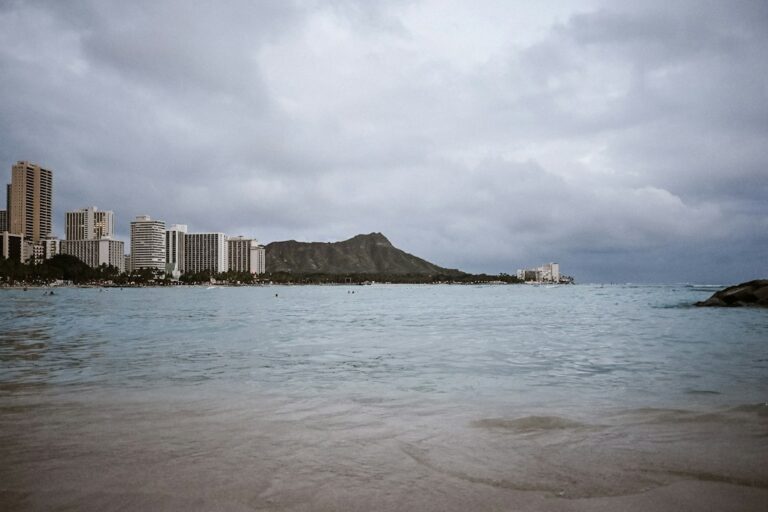
Waikiki is the default first lesson for most visitors, and the numbers explain why. It has the most operators, the most competition on price, and long, slow-breaking waves over a shallow reef shelf at breaks like Canoes, Queens and Pops. Those waves roll in gently enough for a beginner to stand within the first hour.
The site’s breakdown of Waikiki surf lessons for beginners covers board-size norms and instructor ratios in more detail. In short, beginners are typically put on 9- to 11-foot soft-tops, and reputable group lessons keep ratios at 4:1 or 5:1 rather than 8:1.
What a Waikiki lesson includes
- A soft-top board sized to the student’s weight and height
- A rash guard, and often reef booties for shallow sections
- Land instruction on paddling, pop-up and etiquette
- Instructor pushes into waves for the first several rides
- Free board use for 30 to 60 minutes after some lessons
Hidden costs in Waikiki
Parking is the main add-on. Hotel garages in Waikiki commonly charge $40 to $65 per night, and street meters near Kapiolani Park run $1.50 per hour with tight limits. Many lesson schools sit within walking distance of major hotels, which is a large part of their appeal.
Visitors staying outside Waikiki should check the City and County of Honolulu’s parking rules on honolulu.gov. For a broader Oahu itinerary that pairs a morning lesson with other stops, the guide to the best things to do on Oahu maps out drive times between the south and north shores.
A post-lesson meal is a common add-on too. Many students head to a nearby counter for a bowl; the list of the best poke in Honolulu includes several spots within a 10-minute drive of Waikiki, with bowls typically priced between $14 and $22.
Maui: Lahaina, Kihei and the West Side
Before August 2023, the Lahaina Breakwall was Maui’s best-known beginner break. The wildfire that destroyed much of Lahaina town changed that picture. Access, parking and operator locations along Front Street have shifted, and several schools relocated or now meet at Launiupoko Beach Park or along the Kaanapali coast.
Kihei, on the south side, has become the other main hub. Cove Park in Kihei is a small, sandy-bottom break with soft, slow waves, which makes it forgiving for first-timers. Lessons there often start at 7:00 or 8:00 a.m., before afternoon trade winds chop up the surface.
Maui pricing patterns
Maui lessons run roughly $10 to $15 higher than Waikiki at each tier. Operators cite higher commercial permit and insurance costs, plus fewer competitors. Group lessons commonly cost $95 to $135, and private sessions $200 to $300 for two hours.
Families combining a lesson with snorkeling on the west side can compare reef access in the guide to Lahaina snorkeling spots. For sand quality, parking and lifeguard coverage across the island, the ranked list of the best beaches on Maui flags which beaches have consistent beginner surf.
Kauai: Poipu in winter, Hanalei in summer
Kauai splits cleanly by season. Poipu, on the south shore, receives summer south swells and stays relatively calm in winter, making it the year-round lesson base. Hanalei Bay on the north shore offers some of the most scenic beginner surf in the state, but only between roughly May and September.
From November through March, Hanalei can see waves well over 10 feet on the outer reefs. Most Hanalei lesson operators either pause or move clients to sheltered inside sections near the pier on smaller days. The guide to Tunnels Reef and Haena currents explains how winter surf creates rip currents along that coastline.
Kauai’s pricing sits between Oahu and Maui. Group lessons in Poipu run about $90 to $125, while Hanalei group lessons in summer run $95 to $130. The list of the best beaches on Kauai separates north- and south-shore picks by month.
Kona, Big Island: the most expensive tier
The Big Island has the fewest sand-bottom beginner breaks in Hawaii. Much of the Kona coast is lava rock and reef, so lessons cluster at a handful of spots such as Kahaluu Bay and Pine Trees. Limited supply pushes prices up; group lessons commonly start around $110 and reach $150.
Private lessons in Kona run $225 to $325, the highest in the state. Some operators also cap daily bookings because Kahaluu is a protected nearshore area with heavy snorkel traffic. Booking two to three weeks ahead is common practice during December, March and July.
Hawaii County maintains beach park information and closures at hawaiicounty.gov. Visitors staying in Hilo should note that the east side has very little beginner surf; a lesson usually means a drive of about 2 hours each way across the island.
Group vs semi-private vs private: which format is worth it
The price gap between a group and a private lesson is roughly $100 to $175. Whether that gap is worth paying depends on the student’s age, fitness and goals. Instructor time is the real product being purchased, and the ratio determines how much of it each student receives.
| Format | Students per instructor | Typical waves caught (2 hr) | Cost per student, Waikiki |
|---|---|---|---|
| Large group | 5–6 | 8–12 | $85–$100 |
| Small group | 3–4 | 12–18 | $100–$120 |
| Semi-private (2 people) | 2 | 18–25 | $70–$93 |
| Private | 1 | 25–35 | $180–$275 |
The wave counts above are operator estimates for small, clean conditions; flat days or crowded lineups reduce them. The notable pattern is that a semi-private lesson for two people often costs less per person than a large group class. Couples and parent-child pairs tend to get the best value from that format.
When a group lesson makes sense
- Adults with reasonable fitness and swimming confidence
- Travelers testing whether they enjoy surfing before spending more
- Solo travelers who want a social setting
When a private lesson makes sense
- Children under 10 who need constant hands-on help
- Nervous swimmers or anyone with limited ocean experience
- Returning surfers working on turns or reading waves
- Visitors with physical limitations needing adaptive instruction
Board rentals: hourly, daily and weekly rates
After one lesson, many visitors rent a board to practice. Beach stands in Waikiki, Kihei, Poipu and Kona rent by the hour, while surf shops a few blocks inland usually offer better daily and weekly rates. Shop rentals often include a soft roof rack for a rental car.
| Rental type | Soft-top (8–10 ft) | Hard board, epoxy or fiberglass | Typical deposit |
|---|---|---|---|
| 1 hour (beach stand) | $20–$30 | $25–$35 | ID or card hold |
| 2 hours | $30–$40 | $35–$50 | ID or card hold |
| Full day (shop) | $30–$50 | $40–$60 | $100–$300 |
| 3 days | $75–$110 | $95–$140 | $200–$500 |
| 1 week | $125–$200 | $150–$250 | $300–$600 |
Soft-top versus hard board
Soft-tops have a foam deck and are the standard for beginners. They float well, cause fewer injuries when they hit a rider, and cost about $5 to $15 less per day. Their downside is speed and maneuverability, which only matter once a surfer can consistently ride down the line.
Hard boards, either fiberglass or epoxy, are faster and turn more sharply, but they are less forgiving. Shops usually charge ding fees of $50 to $250 for damage, and some require proof of experience before renting a shortboard. Most instructors recommend at least 5 to 10 sessions on a soft-top first.
Transporting a board
Rental car contracts often prohibit board racks or hold the renter liable for roof scratches. The site’s guide to Hawaii rental car prices covers daily rates by island and season. Drivers aged 21 to 24 should also review young driver fees and age rules, which can add $25 to $35 per day.
Seasons: where beginners should surf each month
Hawaii’s surf follows a predictable two-season pattern. From roughly October through April, storms in the North Pacific send large swells to north-facing shores. From May through September, storms in the Southern Hemisphere send smaller, longer-period swells to south-facing shores.
The detailed forecast calendar in the Hawaii surf season guide breaks this down by break and month. For lesson planning, the rule is simple: beginners surf south and west shores year-round, and avoid north shores in winter entirely.
| Months | South shore wave faces | North shore wave faces | Water temp | Beginner verdict |
|---|---|---|---|---|
| December–February | 1–3 ft | 10–30+ ft | 75–77°F | South shore only; small but steady |
| March–April | 1–3 ft | 6–15 ft | 75–77°F | South shore; north still dangerous |
| May–September | 2–6 ft | 0–3 ft | 78–81°F | Best overall; Hanalei opens on Kauai |
| October–November | 1–4 ft | 4–20 ft | 78–80°F | South shore; north swells return fast |
Why summer is the beginner’s season
Summer south swells are typically 2 to 4 feet on the face at Waikiki, with long intervals that create slow, rolling waves. Water temperatures sit near 80°F, and trade winds tend to blow offshore or side-shore along much of the south coast in the morning.
The trade-off is demand. June, July and August bring the highest visitor counts, so lessons sell out earlier and lineups get crowded. The site’s overview of summer in Hawaii covers heat, trade winds and peak pricing in that window.
Why the North Shore in winter is off-limits
Between November and February, Oahu’s North Shore hosts professional contests at Pipeline, Sunset Beach and Waimea Bay. Waves there regularly exceed 20 feet on the face and break over shallow reef. Strong rip currents and shorebreak cause injuries to experienced swimmers every season.
Lifeguards post closure signs on the largest days, and local news outlets such as Hawaii News Now and the Honolulu Star-Advertiser report high-surf warnings. Watching from the sand is a popular winter activity; paddling out without experience is not.
Spring and fall shoulder months
April, May, September and October are often the best value months. Lesson operators report shorter booking lead times, and the south shore usually has rideable surf. Statewide tourism data from GoHawaii shows these months fall outside the main summer and holiday peaks.
Visitors who want ocean wildlife alongside surfing can also time a trip around marine activity. The guide to the best time of year to see dolphins in Hawaii shows overlap with calm morning conditions on the leeward coasts.
Age minimums and who can take a lesson
Most Hawaii surf schools set a minimum age between 5 and 8 for group lessons. The reasoning is practical: younger children struggle to paddle a 9-foot board and cannot reliably follow instructions shouted over breaking waves. Private lessons often accept children from age 3 or 4.
| Lesson type | Common minimum age | Parent in water? | Swim requirement |
|---|---|---|---|
| Group | 6–8 years | Not usually | Comfortable swimming 50+ yards |
| Semi-private (family) | 5–6 years | Sometimes required | Comfortable in deep water |
| Private | 3–4 years | Often required under 6 | Varies; life vest may be used |
Students under 18 need a parent or guardian to sign a liability waiver. Many operators also set an upper weight limit, commonly around 250 to 275 pounds for group lessons, because of board size. Heavier adults can usually book a private lesson with a larger board.
There is no upper age limit at most schools. Operators report regular bookings from students in their 60s and 70s, typically in private or semi-private formats. Anyone with heart, shoulder or back conditions should check with a physician before booking.
Reef-safe sunscreen, rash guards and what to pack
Hawaii’s Act 104, in effect since January 1, 2021, bans the sale of sunscreens containing oxybenzone and octinoxate. The site’s explainer on Hawaii reef-safe sunscreen rules under Act 104 covers what the law does and does not restrict.
Maui County went further in October 2022, limiting sales to mineral sunscreens using zinc oxide or titanium dioxide. The Hawaii Department of Health also publishes UV and ocean-safety guidance. A UV index of 11 or higher, rated extreme, is common at midday from April through September.
Why a rash guard matters more than sunscreen
A two-hour lesson means lying face-down on a board, so the backs of the legs and the lower back take the most sun. Sunscreen washes off after 40 to 80 minutes in the water. A long-sleeve rash guard with UPF 50 blocks roughly 98% of UV and also prevents chest rash from wax.
Most lesson operators provide a short-sleeve rash guard. Bringing a personal long-sleeve version, typically $25 to $45 at mainland retailers, is a common upgrade. Many visitors already pack one for snorkeling; the snorkeling gear checklist for Hawaii lists overlapping items.
Surf lesson packing list
- Mineral sunscreen with zinc oxide, SPF 30 or higher
- Long-sleeve rash guard, UPF 50
- Swimsuit that stays secure when paddling and falling
- Reef booties for Waikiki and Kona’s shallow reefs
- Water bottle holding at least 1 liter
- Waterproof phone pouch or a locker key strap
- Towel and a change of clothes for the drive back
Budgeting a surf-focused trip
For a household of two planning several days of surfing, total costs stack up quickly. A practical budget typically includes one lesson, several days of board rental, and transport to the beach. Grocery and gas prices add to the bill; the BLS Urban Honolulu CPI tracks how those costs move year over year.
Sample costs for two people in Waikiki over 5 days
- One semi-private lesson: about $300 for two, plus tax and tip
- Two soft-top boards for 4 days: about $240 to $320
- Rash guards and mineral sunscreen: about $60 to $90
- Total surf spend: roughly $650 to $800
The same plan on Maui or the Big Island usually adds a rental car, since lesson beaches are spread out. Fuel prices in Hawaii consistently run above the national average; the EIA gasoline price tracker shows the West Coast benchmark that island prices often exceed by $0.50 to $1.00 per gallon.
Ways to lower the cost
- Book semi-private instead of group for pairs
- Choose early-morning time slots, sometimes discounted 10%
- Rent boards weekly from an inland shop, not a beach stand
- Travel in April, May, September or October
For households relocating to Hawaii
New residents usually stop taking lessons quickly and move to owning boards. A used soft-top on island classifieds typically sells for $150 to $300, and a used fiberglass longboard for $300 to $700. Many Honolulu surf shops also offer kamaaina, or resident, discounts of 10% to 15% on rentals.
Proximity to a beginner break also affects housing choices. Neighborhoods within a short drive of the south shore command a premium; the overview of Hawaii home prices by island shows how median sale prices compare. Civil Beat regularly reports on beach access and parking disputes that shape daily surf routines.
Frequently asked questions
How much does a surf lesson in Waikiki cost?
A two-hour group lesson in Waikiki typically costs $85 to $120 per person, a semi-private lesson $140 to $185, and a private lesson $180 to $275. Hawaii general excise tax of roughly 4.5% and an instructor tip of 15% to 20% usually add another $15 to $60 to the total.
What is the best time of year for beginners to surf in Hawaii?
May through September is generally the best window for beginners. South-shore swells are small and gentle, water temperatures reach about 80°F, and Hanalei Bay on Kauai becomes surfable. Beginners can still learn in winter on south and west shores, where waves stay in the 1- to 3-foot range most days.
Can beginners surf the North Shore of Oahu in winter?
No. From November through February, North Shore waves often exceed 20 feet on the face and break over shallow reef with strong rip currents. Lesson operators do not teach beginners there in winter. In summer the North Shore can go nearly flat, and a few spots become suitable for supervised lessons.
Is a private surf lesson worth the extra cost?
A private lesson usually costs $100 to $175 more than a group class but delivers roughly two to three times as many waves. It suits young children, nervous swimmers and returning surfers. For two adults, a semi-private lesson often costs less per person than a group class with similar instructor attention.
What is the minimum age for surf lessons in Hawaii?
Group lessons generally require students to be at least 6 to 8 years old. Private lessons often accept children from age 3 or 4, sometimes with a parent in the water. All students under 18 need a parent or guardian to sign a liability waiver before the lesson begins.
How much does it cost to rent a surfboard in Hawaii?
Beach stands typically charge $20 to $30 per hour for a soft-top. Inland surf shops charge about $30 to $50 per day, or $125 to $200 per week. Hard boards cost roughly $5 to $15 more per day and often come with damage fees of $50 to $250.
What sunscreen is allowed for surfing in Hawaii?
Hawaii bans the sale of sunscreens containing oxybenzone and octinoxate under Act 104. Maui County restricts sales further to mineral formulas using zinc oxide or titanium dioxide. A long-sleeve UPF 50 rash guard reduces how much sunscreen is needed during a two-hour lesson.
Do surf lessons include the board and rash guard?
Nearly all Hawaii surf lessons include a soft-top board and a rash guard in the price. Many Waikiki and Kona operators also supply reef booties. Some schools let students keep the board for 30 to 60 minutes after the lesson to practice, which adds value compared with renting separately.