Hawaii’s reputation for endless soft sand hides a real hazard for visiting swimmers: roughly half of the state’s most popular snorkel entries push through jagged basalt, ancient lava benches, or coral rubble that can slice an unprotected foot in seconds. Households arriving from the mainland often pack sandals, water sneakers, or nothing at all, then hobble back to the rental car with bleeding heels after a single morning at Sharks Cove or Two-Step.
The confusion is understandable. A beach like Poipu or Waimea Bay looks nothing like Honaunau’s black-glass shelf, and a $22 pair of neoprene booties looks nothing like a $95 hiking-grade water shoe. Some spots reward the extra layer of rubber and some do not; a few actively make swimming harder if the wrong sole is strapped on.
This guide separates the entries that demand real water shoes from those where bare feet are faster and safer, catalogs the shoe styles that survive Hawaiian basalt without shredding, and closes with a packing card that fits a two-week itinerary across multiple islands.
Why Hawaii’s coastline demands foot protection
The state’s beaches sit on a chain of shield volcanoes, and even the sandy ones often front a shallow reef flat or a bench of dried pahoehoe that must be crossed to reach swimmable water. Geological surveys place total shoreline at more than 750 miles across the eight main islands, with roughly 40 percent of well-known snorkel spots involving some form of lava-rock entry.
Basalt is glassy. Fresh flows can hold edges as sharp as a broken beer bottle, and even older weathered rock stays abrasive. A dry lava bench looks matte and gray; the moment it goes underwater it turns nearly invisible against the reef and grows a slick algal skin that hides sea urchins, cone snails, and rope-shaped seaweeds.
The Hawaii Department of Health notes that coral and urchin injuries account for a large share of emergency-room visits from visiting swimmers each summer. Cuts from marine debris carry a real risk of staph and vibrio infection because the water sits between 74°F in February and 82°F in September — warm enough for aggressive bacterial growth.
Water shoes solve two separate problems at once: they blunt the puncture and slice risk during entry, and they add grip on wet lava benches where a rubber flip-flop skids on the first step.
The four spots that absolutely require water shoes
Certain beaches are notorious even among locals for punishing bare feet. Four in particular have been sending unprepared visitors to urgent care for decades. Each demands a closed-toe water shoe with a real sole; open sandals, aqua socks with paper-thin fabric, and hiking sneakers will all fail here.
Sharks Cove, Oahu North Shore
Sharks Cove sits at Pupukea, about 250 feet across a jumbled basalt shelf from the paved parking lot. From November through April the north-shore swell pounds the outer reef and the cove is closed to swimming; from May through September the water calms into a 25-foot-deep pool that snorkelers love. Every foot of the entry is dry lava, tide pools, and rubble.
Standard trip reports from local dive shops advise a lace-up or bungee-cinched water shoe with a sole at least 5 millimeters thick. Slip-on booties get tugged off in the surge zone. The lava here has been polished by decades of foot traffic and is genuinely slippery when wet, so grip matters more than cushioning.
Two-Step at Honaunau, Big Island
Pu’uhonua o Honaunau on the South Kona coast is one of Hawaii’s cleanest snorkel spots, but the beach is not a beach. Swimmers enter down two natural lava steps carved into the shoreline bench. The steps are polished slick by generations of use and the drop-off is roughly four feet into 15 feet of water.
Water shoes serve two functions here. First, they protect against the jagged edges on either side of the steps if a swell knocks a swimmer off-line during entry. Second, the walk from the parking lot to the entry point crosses several hundred feet of exposed pahoehoe that reaches surface temperatures above 130°F under midday sun in July.
Kapoho tidepools (before the 2018 eruption)
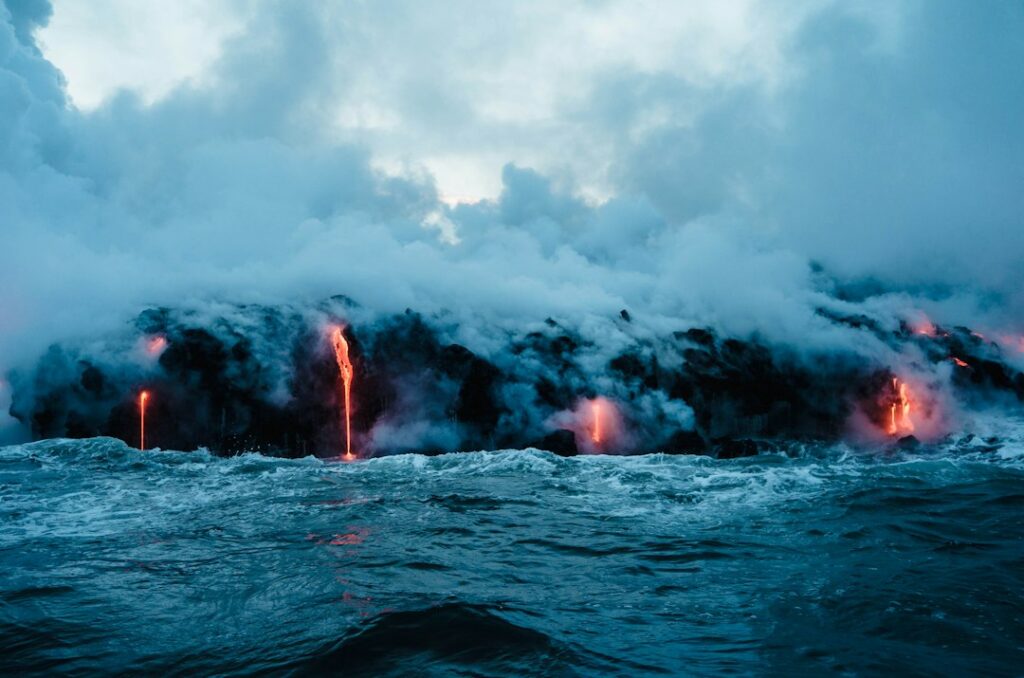
Kapoho tidepools on the Big Island’s Puna coast were, until May 2018, the most beloved beginner snorkel spot in Hawaii. The Kilauea lower-East-Rift eruption buried the entire pool complex, along with the village of Kapoho, under fresh a’a lava. Anyone with a pre-2018 guidebook needs to know the spot no longer exists in swimmable form; the coastline there is now raw new land documented in USGS Kilauea alert-level bulletins.
The lesson from Kapoho carries forward. Any tidepool complex in Hawaii can transform overnight, and any new lava bench formed by a recent flow is razor-sharp for years. Fresh a’a in particular will destroy cheap footwear within a single day.
Makua “Tunnels” Reef, Kauai North Shore
Makua Beach — locally called Tunnels — sits west of Hanalei and holds one of the state’s largest fringing reefs. Sand covers only the immediate shoreline; the reef flat begins about 30 feet out and extends 400 yards seaward in water that ranges from ankle deep to head deep. Coral heads, urchin colonies, and lava fingers dot the entire route.
Winter closes Tunnels the same way it closes the rest of the north shore, from October through April. Summer entry still requires shoes: the reef is too shallow to swim over without occasionally standing, and every stand-up on live coral damages the reef and the foot. The best snorkeling on Kauai roundup flags Tunnels as a shoes-mandatory site.
Other rocky entries worth packing for
Beyond the notorious four, Hawaii has dozens of second-tier reef entries where water shoes turn a stressful morning into a good one. None are as brutal as Sharks Cove, but each is rocky enough to justify the extra square foot of luggage.
- Kahekili “Airport” Beach, West Maui — coral rubble entry documented in the Kahekili Airport-end swim-cove writeup.
- Hulopoe Cove, Lanai — a metal ladder over sharp basalt covered in the Hulopoe Cove dolphin etiquette piece.
- Kealakekua Bay, Big Island — kayak landing on cobble beach requires shoes for the walk-up.
- Waianapanapa Black Sand, Maui — cinder-gravel beach, hot underfoot in afternoon.
- Ke’e Beach, Kauai — sandy entry but reef edges lurk at low tide.
- Richardson’s Beach, Hilo — mixed sand and rock, coral heads inside the reef.
Guided boat operators such as those documented in the Na Pali zodiac raft charter overview often require closed-toe water shoes as a boarding condition, since passengers step off the raft into knee-deep water over rock at drop-in sites.
Soft-sand beaches where bare feet win
Many of Hawaii’s showcase beaches have deep, fine sand from the shoreline through the swimmable zone. Water shoes at these spots waste luggage space, trap sand painfully, and slow swimmers down. A short list of the biggest soft-sand offenders where bare feet or slip-on sandals beat any shoe:
| Beach | Island | Entry Type | Shoes Needed? |
|---|---|---|---|
| Waikiki (Kuhio, Fort DeRussy) | Oahu | Soft sand, gentle slope | No |
| Kailua Beach | Oahu | Powder-white sand | No |
| Lanikai | Oahu | Soft sand, no reef flat | No |
| Poipu Beach Park | Kauai | Sand with small sandbar | No |
| Hanalei Bay | Kauai | 2 miles of soft sand | No |
| Kaanapali (main strip) | Maui | Sand, drops into deep water | No |
| Wailea Beach | Maui | Fine tan sand | No |
| Hapuna Beach | Big Island | Half-mile of soft sand | No |
| Mauna Kea Beach | Big Island | Curved white-sand crescent | No |
Overview roundups such as the Kauai beaches ranked guide and the Big Island beaches ranked list flag which of their picks fall into the shoes-optional camp versus the shoes-required one.
A useful rule: if the beach is featured in a resort brochure at sunset, it is probably soft sand and does not need shoes. If a snorkel-tour operator is dropping visitors there specifically for reef fish, expect rock and pack accordingly.
Reading a beach before arriving
Guidebooks and satellite views help decode a beach before the drive. Google Maps satellite view shows coral reef flats as darker patches offshore; solid dark bands within 100 yards of shore signal a rocky entry. Beach-guide sites labeling a spot as “tidepool” or “snorkel-only” almost always mean shoes required.
Local surf reports and county beach-park signage post daily hazard warnings. The Honolulu Star-Advertiser and Hawaii News Now both maintain surf and ocean-condition dashboards updated at least twice daily during summer.
Island-specific patterns
Oahu splits sharply by shore: south-shore Waikiki-to-Ko Olina strips run soft sand, while windward Kailua and north-shore Sunset carry both extremes. Sharks Cove, Kuilima, and Three Tables are all reef-heavy Oahu entries requiring shoes; Ala Moana and Kailua Beach do not.
Kauai’s north shore mixes fringing reefs with pocket sand beaches — Tunnels, Anini, and Ke’e all reward shoes at some tide levels. South-shore Poipu and Salt Pond are largely soft-sand crescents that welcome bare feet.
The Big Island runs the widest range: Hapuna and Mauna Kea are famous white-sand crescents, while Honaunau, Kapoho remnants, and most Puna coastline are pure lava. The Kailua-Kona shoreline holds pockets of both within a single mile.
Maui and Molokai fall between the two poles. Kaanapali proper is soft-sand, but the airport-end cove requires shoes. Kihei runs mostly soft-sand south from Ma’alaea, while Wailea’s Ulua and Mokapu carry rocky patches at either headland.
What makes a water shoe survive Hawaiian basalt
Not every shoe labeled “water shoe” is built for lava rock. Cheap mesh aqua socks with 2-millimeter foam soles will wear through in a single week of Big Island reef entries. Hiking sandals with open toes let urchin spines through. The following features separate a shoe that lasts a decade of Hawaii trips from one that gets thrown out on day three.
Sole thickness and material
Look for a molded rubber outsole at least 5 millimeters thick, ideally with a tread pattern designed for wet rock — small square lugs beat smooth rubber for grip. Vibram soles, common on hiking-grade water shoes in the $70–120 range, hold up best against Hawaiian basalt. Soles thinner than 4 millimeters bruise the arch on rocky entries and let cinder gravel drive through.
Closed toe box
Sea urchins are the single most common injury in Hawaii’s tidepools, and a closed toe box is the only real defense. Sandals with open ends — including Chaco Z-lines and Teva Hurricane models — leave the toes fully exposed. A rubber-capped toe like the one on the Astral Loyak or Merrell Hydro Moc turns a $400 urgent-care visit into a scuff on the shoe.
Drainage and dry time
Trapped water is heavy and breeds smell. Good water shoes have drainage ports in the sole and quick-dry fabric or neoprene uppers. A well-designed shoe drains within 30 seconds of exiting the water and air-dries in about 4 hours in Kailua-Kona’s dry heat, or overnight on Hilo’s wetter side.
Secure fit
Currents pull loose shoes off feet. Slip-on booties with elastic cuffs work in calm pools but not at Sharks Cove or Two-Step. Bungee toggles or lace closures keep the shoe on through 3-foot surge, which is the typical summer condition at both spots.
Shoe styles compared
The market splits water footwear into six broad categories. Each has a Hawaii use case and a Hawaii failure case. Prices below reflect 2026 retail from mainland outdoor retailers; small tourist shops in Lahaina or Kailua-Kona typically mark up 30–50 percent for on-island convenience.
| Style | Price Range | Best Hawaii Use | Fails At |
|---|---|---|---|
| Neoprene reef bootie | $22–$35 | Beginner snorkeling on calm reefs | Rough surge, long walks |
| Mesh aqua sock | $18–$28 | Poolside, resort beach walks | Any real lava rock |
| Hybrid water sneaker | $70–$120 | All-day snorkeling and hiking | Deep-diving snorkel trips |
| Open sport sandal | $65–$110 | Waterfall trails, kayak launches | Urchin-dense reef flats |
| Vulcanized dive bootie | $45–$85 | Cold-water snorkel with fins | Long overland walks |
| Crocs (classic clog) | $50 | Boat decks, condo balconies | Anything requiring a swim |
The sweet spot
For a first Hawaii trip covering multiple islands, a hybrid water sneaker in the $70–90 range hits the best cost-to-durability ratio. Astral, Merrell, and Xero Shoes each make models under 10 ounces per shoe that swim, hike, and drain fast. These will survive Sharks Cove, Two-Step, Tunnels, and every waterfall trail on Kauai in a single trip.
Households traveling with kids should size up half a size in growing feet and buy the cheapest neoprene bootie style. Children rarely need the grip and durability of adult reef shoes, and their feet outgrow footwear before it wears out.
Sizing, fit, and common buying mistakes
Water shoe sizing runs about half a size small compared with regular sneakers. Fabric-upper models stretch after the first swim, so a shoe that feels snug in the store often fits fine after 30 minutes in salt water. Rubber-heavy models like Crocs or Vibram-soled hikers do not stretch — order true to size or half up.
The single most common purchase mistake is choosing a slip-on where a strapped shoe is needed. The second most common is buying too tight, then having wet neoprene compress against the toenails and cause a bruise that lasts weeks.
Try shoes on wet if possible. Some retailers on the islands keep a testing bucket precisely so visitors can walk around in flooded shoes before buying, a habit that catches sizing problems before the receipt cools.
What not to buy
- Any shoe with cotton lining — salt water rots cotton within days.
- Shoes with metal buckles or eyelets — corrosion within a week.
- Anything labeled “beach shoe” but weighing over 14 ounces per shoe.
- Fashion water shoes with mesh sides and paper-thin soles.
- Adult sizes for kids — bulky shoes teach fear of water.
Packing card for a two-week Hawaii trip
Households flying from the mainland face a real luggage-space calculation. A hybrid water sneaker takes up about the same volume as a paperback book per shoe, and doubles as a light-hiking option for waterfall trails, so it earns its space. Neoprene booties compress smaller but only cover snorkeling.
The general Hawaii packing list flags water shoes as one of the highest-utility items to bring rather than buy on-island. Prices at ABC Stores and resort shops in Waikiki run roughly $30–$45 for entry-level neoprene, versus $18–$28 for the same item on Amazon.
| Traveler Profile | Recommended Setup | Approximate Cost |
|---|---|---|
| Solo, casual snorkeler | 1 pair neoprene bootie + flip flops | $35 |
| Solo, serious snorkeler | 1 pair hybrid sneaker + flip flops | $95 |
| Couple, mixed itinerary | 2 hybrid sneakers + 2 sandals | $220 |
| Family of four | 2 adult hybrids, 2 kids booties, 4 slaps | $260 |
| Diver or kayaker | Dive bootie + hybrid sneaker | $155 |
For trips in Kauai’s wet season, the November-through-March packing checklist stacks water shoes with quick-dry socks and a waterproof duffel; the same shoes cover both reef entries and slippery waterfall trails such as those detailed in the leptospirosis exposure risk guide.
Care, cleaning, and biosecurity
Salt water and Hawaiian mud both destroy footwear if left to dry in place. Rinse shoes in fresh water after every ocean use and hang them to dry out of direct sun. UV degrades neoprene and rubber; a shoe left on a Waikiki lanai in July loses about a year of life per week of exposure.
The Hawaii Department of Agriculture maintains biosecurity rules that apply to footwear moving between islands or off-island. Sand, mud, and organic material can carry invasive species — including the little fire ant that has spread through Puna since 1999 — so shoes should be scrubbed clean of debris before packing for a flight.
Interisland transfer
Anyone shifting shoes between Kauai’s north shore mud and Big Island reef entries should give them a serious wash between islands. Reef mud and freshwater algae from Kauai can seed new populations if dropped onto Big Island tidepools, and vice versa for cinder from lava benches.
End-of-trip disposal
Water shoes have a Hawaii lifespan roughly half of their mainland lifespan. Rather than pack a shredded pair back to the mainland, many visitors donate cleaned shoes to on-island thrift stores or leave them at hostel giveaway bins. Coral-reef research funded by the state and reported in outlets such as Honolulu Civil Beat notes that many reef entries see enough foot traffic to justify a formal shoe-drop program at trailheads.
Safety beyond the shoes
Water shoes prevent one class of injury; several other hazards need separate planning. Rip currents kill more visitors in Hawaii each year than sharks, reef cuts, and jellyfish combined. Ocean safety officers post daily condition reports through the state transportation portal and county lifeguard feeds; check them before every ocean day, regardless of footwear.
Sea urchin punctures still happen even with good shoes when swimmers put a hand down on the reef. Vinegar dissolves the calcium-carbonate spines and is stocked at most beach-park first-aid boxes on Oahu and Maui.
Coral cuts should be irrigated with clean water and disinfected within an hour. The warm ocean temperatures reported by the Honolulu-area federal data track summer coastal-water warmth that supports vibrio bacteria; untreated cuts can escalate within 24 hours.
Frequently asked questions
Can water shoes replace flip-flops for a whole Hawaii trip?
For active itineraries heavy on reef entries, yes; a good hybrid water sneaker covers snorkeling, beach walking, and waterfall trails. For beach lounging and dinner walks in Waikiki, flip-flops remain faster to slip on and cooler in 85°F afternoon heat. Most visitors end up packing both and rotating based on the day’s plan.
Are water shoes allowed as TSA carry-on?
Yes, water shoes go in carry-on or checked luggage without restriction. Damp shoes should be sealed in a plastic bag to protect other items. Some visitors buy their shoes at mainland outlets specifically to break them in before flying, since new water shoes can rub during the first hour of use before the fabric softens.
Do children need water shoes in Hawaii?
Only for reef entries. On soft-sand beaches like Kailua or Poipu, kids swim faster and safer barefoot. For Sharks Cove, Two-Step, or Tunnels, a $25 neoprene bootie prevents the majority of urchin and coral injuries. Kids under age 6 rarely explore rocky entries deep enough to justify anything more expensive than the entry-level style.
Will Crocs work as water shoes for Hawaii?
Crocs work for boat decks, condo balconies, and short beach walks, but not for actual reef swimming. The floating foam design pulls Crocs off feet in any surge stronger than knee-deep, and the open venting lets urchin spines through. They earn a spot in the luggage as backup footwear, not primary reef gear.
How long do good water shoes last in Hawaii?
A hybrid water sneaker used weekly at Big Island reef entries lasts roughly 8–14 months before the sole delaminates or the toe rubber wears through. A visitor using the same shoe on two two-week trips per year should get 5–7 years of life. Salt water, UV, and volcanic grit all shorten lifespan faster than mainland use.
Are there beaches where water shoes are actually discouraged?
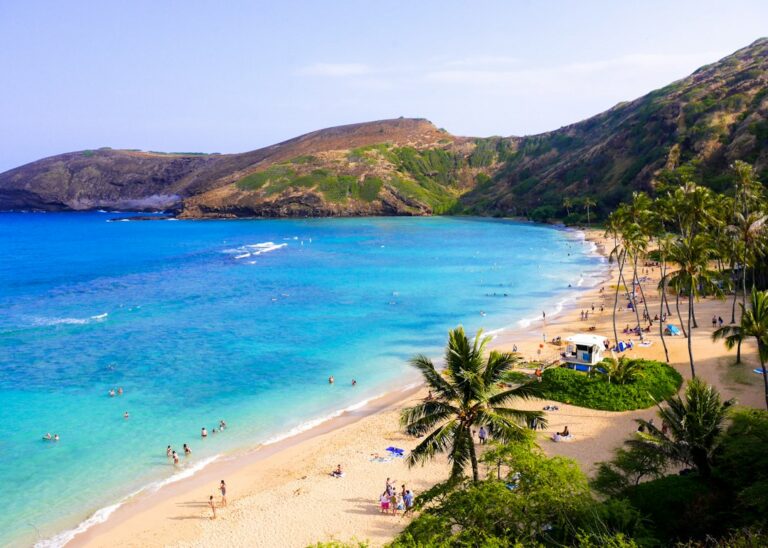
Yes. Big-wave body-surfing beaches like Sandy Beach on Oahu and Makena in South Maui punish loose gear — a shoe torn off in shore break becomes a projectile. Soft-sand swim beaches are also faster and safer barefoot because sand cakes inside any shoe. Lifeguards at Hanauma Bay often ask fin-wearing snorkelers to remove strap-on shoes before entering.
Where can water shoes be bought on-island if forgotten?
ABC Stores stock entry-level neoprene at $30–45 in Waikiki, Kailua-Kona, and Lahaina. Costco locations on Oahu, Maui, and the Big Island carry hybrid sneakers seasonally at roughly $35. Longs Drugs and Walmart run similar inventory. Serious hikers and divers should visit a specialty outfitter such as Snorkel Bob’s or Boss Frog’s for better fit and durability.