Hawaii’s ribbon waterfalls draw hundreds of thousands of hikers a year, and the state’s freshwater pools carry a bacterial infection that rarely reaches mainland trails at anything like the same rate. Leptospirosis is endemic to the islands, spread by rodent, mongoose, and feral pig urine draining into streams after rain, and the Hawaii Department of Health tracks case clusters tied directly to specific pools.
The illness is treatable when caught early and lethal when missed, and the two- to thirty-day incubation window means many travelers link their fever to jet lag or food rather than the swim they took a week earlier back on the mainland. Understanding which trails have posted advisories, how the bacteria actually enter the body, and what a doxycycline prophylaxis course looks like is the difference between a memorable dip and a hospital stay.
This article pulls together the current DOH advisory pattern, the trails that appear most often on posted warnings, the exposure mechanics that turn a scraped knee into a systemic infection, and the packing choices that keep the risk manageable for households relocating to the islands.
What leptospirosis is and why Hawaii amplifies the risk
Leptospirosis is a bacterial infection caused by spirochetes of the genus Leptospira, spread almost entirely through the urine of infected mammals. Rats, mongooses, feral pigs, cattle, and dogs shed the bacteria into soil and water, where it survives for weeks in warm, wet conditions. The pathogen enters humans through breaks in the skin, the mucous membranes of the eyes, nose, and mouth, or occasionally by ingestion.
Hawaii records more human cases per capita than any other U.S. state, with roughly 100 to 200 confirmed infections annually across a population of about 1.44 million residents. The islands’ combination of year-round temperatures in the mid-70s, dense mongoose and rat populations, and a hiking culture built around freshwater pools produces exposure numbers that dwarf mainland ranges.
The Hawaii Department of Health tracks cases through its Disease Investigation Branch and publishes advisories whenever a cluster ties back to a specific stream or pool. A single confirmed case linked to a named waterfall usually triggers a posted warning at the trailhead within days, and those signs stay up until the affected pool tests clear or the risk period passes.
How DOH advisories actually work
The Department of Health does not test every stream on a schedule. Testing follows illness, meaning an advisory typically appears only after a hiker gets sick, seeks treatment, and their case is traced back to a specific water source. Households moving to Hawaii should treat the absence of an advisory as absence of a recent cluster, not absence of risk.
Standing advisories exist for streams with recurring case histories, and additional bulletins appear during and after heavy rain. Rainfall stirs sediment, flushes rodent and livestock runoff into pools, and pushes bacterial counts higher for 48 to 72 hours after a storm. Guides on Kauai and East Maui often refuse to lead groups into pools during that window regardless of trail conditions.
Advisory notices go up at trailheads, on the DOH website, and in press releases carried by the Honolulu Star-Advertiser and Hawaii News Now. Residents planning weekend hikes with visiting family should check health.hawaii.gov the morning of the trip rather than relying on trail apps, which lag official notices by days.
Reading the advisory language
DOH advisories use graduated language. “Public health warning” appears when a confirmed case ties to a named pool. “Advisory” appears when conditions favor bacterial growth but no case has been confirmed. “Closed” appears rarely, only when state land managers physically bar access. The distinction matters for insurance and liability if a guided group is turned back at a trailhead.
The trails that appear most often on advisories
Three trails show up more often than any others in the DOH case record: Manoa Falls on Oahu, Waimoku Falls on Maui, and Hanakapiai Falls on Kauai’s Na Pali Coast. Each combines heavy visitor traffic, standing freshwater at the base, and drainage from watersheds with active feral pig and rat populations. Households evaluating the difference between Oahu and neighbor island living often underestimate how much these pools shape local outdoor culture.
Manoa Falls, Oahu
The Manoa Falls trail is 1.6 miles round trip and climbs about 630 feet through the Manoa watershed above Honolulu, an area that receives roughly 158 inches of rain annually. The 150-foot falls end in a shallow, silt-bottomed pool that is officially closed to swimming, though signs are ignored by a large share of hikers. The muddy trail conditions and required footwear compound the risk by scraping ankles before hikers reach the water.
The City and County of Honolulu Board of Water Supply and DOH have issued repeated advisories tied to Manoa pool exposures. Rockfall from the cliff face is a secondary hazard that closed the trail entirely in 2002 and 2020. Even when the trail is open, the base pool is treated by the state as a no-swim zone, and residents who hike it regularly usually keep to the viewing platform.
Waimoku Falls, Maui
Waimoku Falls sits at the top of the Pipiwai Trail in Haleakala National Park, a 4-mile round trip through the Ohe’o Gulch watershed. The falls drop 400 feet down a basalt wall, and pooling at the base is shallow and boulder-strewn. The bamboo forest section of the Pipiwai Trail receives roughly 3 to 5 hours of foot traffic daily during peak months.
The National Park Service posts leptospirosis warnings at the Kipahulu Visitor Center and at every stream crossing on the trail. Rangers actively discourage submersion at Waimoku and at the Seven Sacred Pools downstream, which were closed indefinitely to swimming in 2017 after a series of rockfalls and drownings. That closure remains in force as of the current management plan.
Hanakapiai Falls, Kauai
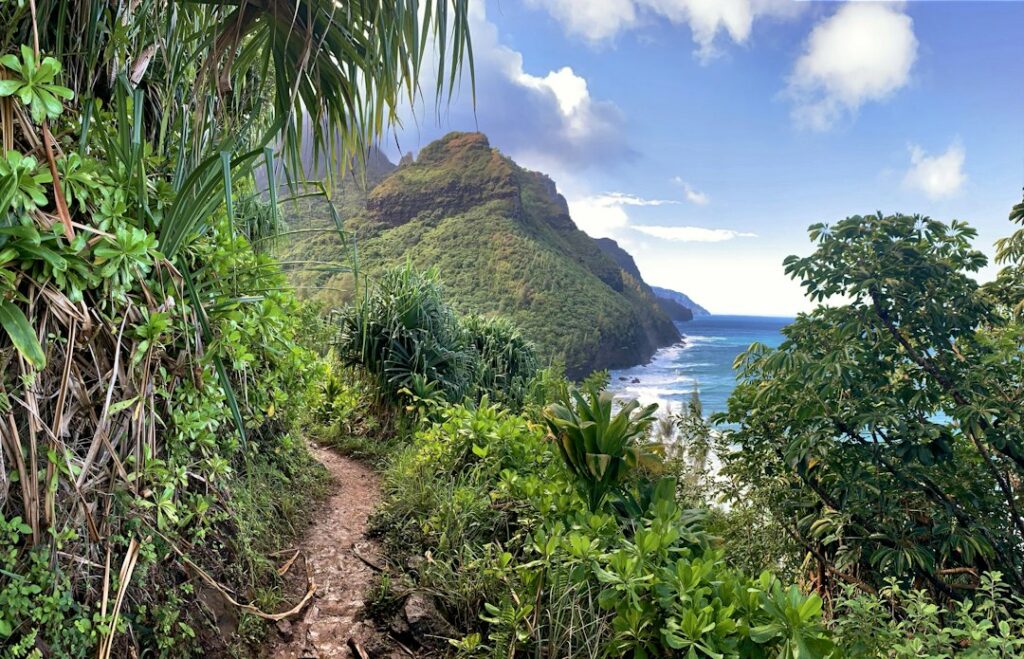
Hanakapiai Falls requires an 8-mile round trip on the Kalalau Trail, with roughly 6 miles of that distance beyond the Hanakapiai Beach turnoff. The falls drop about 300 feet, and the pool at the base is deep enough for actual swimming. The Na Pali watershed receives some of the heaviest rainfall in the state, feeding directly from Mount Waialeale, which averages roughly 460 inches per year.
Kauai DOH has traced multiple case clusters to Hanakapiai over the past decade. Access requires a state parks reservation, and rangers include a leptospirosis briefing in the trailhead orientation. The 4-mile inbound hike passes through cattle-grazed uplands whose runoff feeds the streams crossed on the trail, which raises baseline bacterial loads even in dry weather.
How the bacteria actually enter the body
Leptospires do not penetrate intact, dry skin. They enter through cuts, abrasions, blisters, insect bites, and softened skin that has been immersed for extended periods. The mucous membranes of the eyes, nose, and mouth are the highest-risk entry points, which is why guides specifically warn against putting the head underwater. Ingestion of contaminated water accounts for a smaller but documented share of cases.
A hiker with a scraped ankle from the muddy Manoa trail who then wades into the pool at the base is running the exposure most tied to Hawaii’s confirmed cases. The bacteria survive in freshwater for weeks and cluster near stream edges where organic matter accumulates. Salt water kills the organism quickly, which is why ocean exposure at pool outflows carries a fraction of the freshwater risk.
The following table maps common trail activities to their approximate exposure ranking based on DOH case narratives and CDC guidance.
| Activity | Exposure route | Relative risk |
|---|---|---|
| Full submersion, head under | Mucous membranes plus skin | Highest |
| Wading with cuts or blisters | Broken skin | High |
| Swimming with intact skin | Prolonged skin softening | Moderate |
| Splash while crossing stream | Skin contact, brief | Low |
| Filtered or UV-treated drinking water | Ingestion if filter fails | Very low |
| Standing on wet rocks, no cuts | None | Negligible |
The takeaway for households new to Hawaii is that risk is behavioral, not environmental in any simple sense. Two hikers standing at the same pool can carry radically different exposure profiles based on whether they have a fresh blister and whether they duck their head under.
Incubation and the two- to thirty-day window
Leptospirosis incubates for 2 to 30 days after exposure, with a typical range of 5 to 14 days. That window is the single most dangerous feature of the disease from a diagnosis standpoint. A traveler who swims at Hanakapiai on day one of a Kauai trip, flies home to Denver, and develops fever on day eleven often does not connect the two events.
Mainland emergency room physicians outside California, Texas, and Puerto Rico rarely see leptospirosis. A febrile illness three weeks after a Hawaii vacation is far more likely to be worked up as flu, dengue, or COVID than as a spirochetal infection. Patients and their travel companions have to volunteer the freshwater exposure history for the correct test to be ordered.
Symptoms in the first phase
The initial phase presents with abrupt fever above 101°F, severe headache, chills, muscle aches concentrated in the calves and lower back, and often red conjunctiva without discharge. Nausea, vomiting, and diarrhea appear in about half of cases. The picture looks like severe flu and often improves briefly after 4 to 7 days, which fools patients into thinking the illness is over.
The second, dangerous phase
A subset of patients enter a second immune-mediated phase within days of apparent recovery. This phase includes jaundice, kidney failure, meningitis, and pulmonary hemorrhage in severe cases, which together constitute Weil’s disease. Untreated Weil’s carries a mortality rate between 15 and 40 percent depending on organ involvement. Early antibiotic treatment before this phase begins prevents almost all deaths.
Doxycycline prophylaxis: what the guidance actually says
The CDC and DOH recommend doxycycline 200 mg orally once weekly for adults with sustained high-risk exposure, such as guides, researchers, or hikers spending days in flooded terrain. The standard prescription is not intended for a single afternoon swim. A 4-week supply of generic doxycycline typically costs $10 to $30 at Hawaii pharmacies, and requires a prescription that can be obtained through telehealth for $50 to $85.
Post-exposure prophylaxis is more contested. Some travel medicine physicians will prescribe a one-time 200 mg dose within 24 to 72 hours of a known high-risk exposure. The evidence base for single-dose post-exposure treatment is thinner than for weekly prophylaxis, and DOH does not formally endorse it. A discussion with a physician who knows Hawaii’s disease patterns is the right path.
| Prophylaxis approach | Dose | When to use | Cost estimate |
|---|---|---|---|
| Pre-exposure weekly | 200 mg once weekly | Multi-day flooded exposure | $10-30 for 4 weeks |
| Post-exposure single dose | 200 mg once, within 72 hours | Off-label, physician judgment | Same script |
| Treatment of confirmed illness | 100 mg twice daily, 7 days | Positive test or high suspicion | $15-40 |
| Severe or Weil’s disease | IV penicillin or ceftriaxone | Hospital admission | Inpatient billing |
Doxycycline carries known side effects: photosensitivity, gastrointestinal upset, and esophageal irritation if taken without adequate water. Photosensitivity is a real consideration in Hawaii, where UV index readings routinely exceed 11 from May through September. Hikers taking doxycycline need to layer sunscreen more aggressively and cover exposed skin during midday hours.
Why guides tell hikers not to submerge their heads
The single strongest exposure route in Hawaii’s confirmed cases is water contact with the mucous membranes of the eyes, nose, and mouth. Submerging the head puts all three surfaces in direct contact with pool water that may carry a high bacterial load. Every commercial hiking guide operating on Kauai’s Na Pali Coast, in Manoa Valley, or along the Road to Hana repeats this warning in the pre-hike briefing.
Wading to the waist with intact skin is a substantially different exposure profile from a full dunk. Guides will typically allow, and often encourage, cooling off up to chest height. They will actively pull swimmers back if they see anyone attempting to swim under a waterfall, drink from the pool, or spit water. This is not conservatism for its own sake — the DOH case log supports the distinction.
Households considering waterfall swimming as a regular family activity should also weigh the ancillary hazards: flash flood risk in Hawaii’s steep watersheds, rockfall from cliff walls above pools, and the sheer isolation of trails like Hanakapiai where cell service is unreliable and rescue times run into hours. The tradeoffs of island living include a shifted relationship with wild water.
The waterfall trail packing card
A minimal packing kit tuned to leptospirosis risk fits in a small dry bag and adds under half a pound to a day pack. The core items focus on covering breaks in the skin before water contact and on rinsing exposed surfaces quickly after any wade.
- Waterproof adhesive bandages, at least six, sized for knees, ankles, and knuckles.
- Liquid bandage tube for scrapes too irregular for adhesive strips.
- Tegaderm-style transparent film dressings for larger abrasions.
- Small bottle of potable rinse water, one liter minimum per hiker.
- Alcohol-based hand sanitizer for post-wade hand washing.
- Microfiber towel to dry face, hands, and any exposed cuts fast.
- Reef-safe sunscreen SPF 30+ for doxycycline photosensitivity.
Waterproof bandages hold their seal for roughly 24 hours in freshwater immersion when applied to clean, dry skin. Applying them in the parking lot before the hike is more effective than trying to seal a bandage to a wet, muddy ankle at the pool edge. Any bandage that lifts or peels during the hike should be replaced before the next stream crossing.
| Item | Purpose | Typical cost | Weight |
|---|---|---|---|
| Waterproof bandages, 20-pack | Seal small cuts | $8-15 | 2 oz |
| Liquid bandage 0.3 oz | Seal irregular scrapes | $6-9 | 1 oz |
| Tegaderm 4×4 in, 5-pack | Cover larger abrasions | $12-18 | 1 oz |
| 1L Nalgene rinse water | Post-exposure eye or wound flush | $3 refill | 36 oz |
| Trail runners, mesh dry-fast | Minimize blister formation | $80-140 | 18 oz pair |
| SPF 30+ zinc stick | Doxycycline sun protection | $10-18 | 0.5 oz |
Kauai households often keep a duplicate kit in the truck year-round. The Kauai wet-season packing considerations and the leptospirosis kit overlap on dry bags, spare socks, and quick-dry layers, so the incremental weight added by adding the medical items is modest.
What to do if symptoms appear after a hike
A fever above 100.4°F within 30 days of a Hawaii freshwater exposure warrants a same-day call to a physician. The critical action is to volunteer the exposure history explicitly, including the trail name, date, and whether the head went underwater. Physicians ordering the correct microscopic agglutination test or PCR without that context is rare outside Honolulu.
Empirical treatment with doxycycline 100 mg twice daily for seven days is standard for suspected mild cases before test results return. Delaying antibiotics to wait for confirmation is not appropriate given the disease trajectory. Patients showing jaundice, decreased urine output, or shortness of breath belong in an emergency department for IV penicillin or ceftriaxone and supportive care.
Kapiolani Medical Center and Queen’s Medical Center on Oahu, Wilcox Medical Center on Kauai, and Maui Memorial routinely handle leptospirosis cases and can guide out-of-state physicians by phone. The Hawaii DOH Disease Reporting Line at 808-586-4586 accepts calls from mainland providers who need consultation on Hawaii-specific exposure workups.
Seasonal patterns and DOH data
Case counts run higher in the wet season from November through March, with a secondary peak after summer storms in July and August. The shoulder-season conditions of May often produce lower rainfall on the leeward sides and a corresponding dip in stream advisory frequency. Kauai and East Maui carry the highest per capita case burden owing to their trail networks and rainfall totals.
The DOH publishes annual disease reports through the Disease Outbreak Control Division. Recent years show 40 to 90 confirmed cases per year, with hospitalization in roughly 60 to 70 percent of confirmed cases and a case-fatality rate under 3 percent when treatment is prompt. Underreporting is likely substantial, as mild cases resolve without diagnosis. The state’s 1.44 million population base means per capita rates are far higher than headline numbers suggest.
Households comparing island risk profiles for a move should note that Oahu’s higher raw case counts reflect population, not per capita danger. Neighbor islands with heavier trail traffic per resident often carry meaningfully higher individual risk, similar to how the vog and SO2 exposure patterns tracked by DOH vary sharply by island and by wind direction.
Comparing the headline trails at a glance
| Trail | Island | Round trip | Falls height | Pool status | Rainfall zone |
|---|---|---|---|---|---|
| Manoa Falls | Oahu | 1.6 mi | 150 ft | Closed to swimming | ~158 in/yr |
| Waimoku Falls | Maui | 4.0 mi | 400 ft | Not recommended | ~180 in/yr |
| Hanakapiai Falls | Kauai | 8.0 mi | 300 ft | Swimming common | ~200 in/yr |
| Wailua Falls | Kauai | Overlook only | 173 ft | Off-limits | ~90 in/yr |
| Twin Falls | Maui | 0.6-2 mi | ~30 ft | Swimming common | ~120 in/yr |
Lower-profile falls carry similar per capita risk relative to their visitor loads. The Twin Falls pullout on the Road to Hana and the Wailua Falls overlook on Kauai both draw heavy foot traffic even without a formal advisory record on file. Absence of DOH postings for a specific pool should never be read as endorsement of swimming there.
Risk framing for families relocating to Hawaii
The absolute risk for any single waterfall swim by a healthy adult with no open cuts and no head submersion is low. Risk compounds for households that make weekend waterfall hikes a routine, especially with children who are more likely to submerge their heads and less likely to notice minor scrapes. A household calculation, not a per-trip calculation, is the right frame for long-term residents.
Landlord disclosure about freshwater risks near a rental property varies wildly, and residents should not expect leptospirosis briefings from a property manager. The gaps in what Hawaii landlords disclose extend well past the usual mainland norms. Local knowledge from neighbors, hiking clubs, and DOH mailing lists fills that gap over time.
Other environmental hazards deserve a parallel framing exercise. Marine risks like Portuguese man o’ war wind patterns, air quality from volcanic emissions, sun exposure, and steep-trail rockfall each carry their own case histories and mitigation kits. Waterfall pools are one line item on a longer list, not the defining hazard of island life.
Frequently asked questions
How common is leptospirosis for Hawaii residents versus tourists?
Hawaii records 40 to 90 confirmed cases most years, split roughly evenly between residents and visitors. Residents accumulate more exposure days on trails but tend to know local guidance, while visitors take fewer trips but are more likely to swim under waterfalls or wade with fresh blisters from unfamiliar footwear. Per-trip risk is likely higher for visitors, though absolute case counts run similar between the two groups.
Can leptospirosis be caught from ocean water in Hawaii?
Salt water kills leptospires within minutes, so open ocean exposure carries essentially no risk. The exception is stream mouths where freshwater outflows meet the ocean, particularly after heavy rain when the freshwater plume extends yards offshore. Swimming at Hanalei Bay, Waimea Bay, or other river-mouth beaches during or right after storms is the one ocean scenario where the DOH advises caution.
Is filtered stream water safe to drink on Hawaii trails?
Standard 0.1-micron backpacking filters remove leptospires reliably because the bacteria are 6 to 20 microns long. UV pens and chemical treatment with iodine or chlorine dioxide also inactivate them. Untreated stream water carries real risk, so hikers heading up Hanakapiai or the Kalalau Trail should pack a filter or carry 3 liters of water per person for a day hike.
Should families with young children avoid Hawaii waterfall trails entirely?
The trails themselves remain rewarding hikes without submersion, and viewing platforms at Manoa and the base of Waimoku offer the scenic payoff. The decision point is whether children swim in the pools. Families uncomfortable with the case history often hike to the falls, take photos, and save swimming for chlorinated resort pools or the ocean, which the DOH considers acceptable practice.
What is the total cost of doxycycline prophylaxis in Hawaii?
Generic doxycycline runs $10 to $30 for a 28-day supply at Longs Drugs, Costco, or Walmart pharmacies statewide. A telehealth visit for the prescription runs $50 to $85 out of pocket. Most insurance plans, including Hawaii’s HMSA and Kaiser, cover both the visit and the medication with standard copays, so total out-of-pocket cost is typically under $100.
Do doctors on the mainland know how to test for leptospirosis?
Mainland physicians rarely see leptospirosis and often do not order the correct test without prompting. The critical patient action is naming the Hawaii freshwater exposure explicitly and asking for microscopic agglutination testing or PCR. The Hawaii DOH Disease Reporting Line at 808-586-4586 accepts consultation calls from mainland providers and can guide the workup for an atypical febrile presentation.
Are guided hikes safer than solo trips for freshwater exposure?
Guided hikes on Na Pali, in Iao Valley, and on the Road to Hana include mandatory pre-hike briefings on leptospirosis, active enforcement of no-submersion policies, and first-aid kits stocked with waterproof bandages. Solo hikers rely on trailhead signage, which is often faded or missing. Guided trips are meaningfully safer for freshwater exposure specifically, though they cost $150 to $300 per person.