The Napali Coast of Kauai stretches roughly 17 miles along the island’s northwest shore, and for most of the year it is only reachable by boat, helicopter, or an 11-mile hiking permit. Rigid-hulled inflatable rafts — commonly branded as zodiacs — carry the majority of small-group tours because they can nose into sea caves that displacement hulls cannot enter. Two south-shore harbors dominate the launch decisions for a Hawaii DOT harbor listings.
Why Napali Coast Rafts Are a Small-Boat Affair
Napali’s coastline offers no reef break, no protected coves, and no dock. Anything larger than a catamaran must anchor offshore and shuttle passengers, which most tour operators refuse to do inside the sanctuary boundary. Rigid inflatable rafts — usually 24 to 34 feet with twin 150 to 300 horsepower outboards — draft only 18 to 24 inches. That shallow draft allows entry into caves like Waiahuakua and open-ceiling formations that no keel-boat can safely enter.
Ride quality differs sharply from a catamaran. A 30-foot RIB slaps hard through short-period wind chop, and passengers sit on tubular pontoons rather than cushioned benches. Operators typically require passengers to be between roughly 5 and 75 years old, weigh under 250 pounds, and be free of back or neck injuries. Pregnant travelers are refused across every DLNR-permitted operator. This is not a cocktail cruise — it is a working boat outing.
Cave access windows
Signature caves are only enterable when swell height at the Napali buoy sits under about 4 feet and the period is longer than 9 seconds. Captains make the entry decision at the mouth of each cave, not before departure. Even on a scheduled cave-entry charter, Waiahuakua (the “double-door” cave) may be skipped if a north wraparound is punching through. Reader expectations should stay flexible on every charter regardless of season or forecast.
Port Allen Harbor: Kauai’s Main Napali Launch
Port Allen sits at Eleele on Kauai’s south-central coast, about 17 miles from Lihue Airport and roughly 25 minutes by car. It is the busier of the two commercial harbors and hosts the largest fleet of Napali operators, including two catamaran operators and roughly seven zodiac operators as of 2026. Parking is free in the harbor lot, restrooms are open from 5:30 a.m., and the check-in offices for most companies line a single row of low-slung wooden buildings.
The tradeoff Port Allen offers is convenience against distance. Its transit to the first Napali sea cliff at Nualolo runs about 20 nautical miles, or roughly 60 to 75 minutes of run time at 22 knots. That extra water means less time at the coast but calmer harbor entry, easier crew logistics, and closer proximity to the Poipu resort corridor. Groups based in Poipu save 40 minutes each way compared with driving to Kikiaola.
Amenities and check-in flow
Check-in typically opens 45 minutes before departure. Most operators film a live safety briefing rather than a printed waiver, so travelers should arrive with photo ID and the printed reservation confirmation. Rental car keys are held by the front desk during the charter, and dry bags for phones are provided by most crews. The harbor itself has one small snack window and a coffee cart that opens by 6:00 a.m. on weekdays.
Sunset trips and evening returns
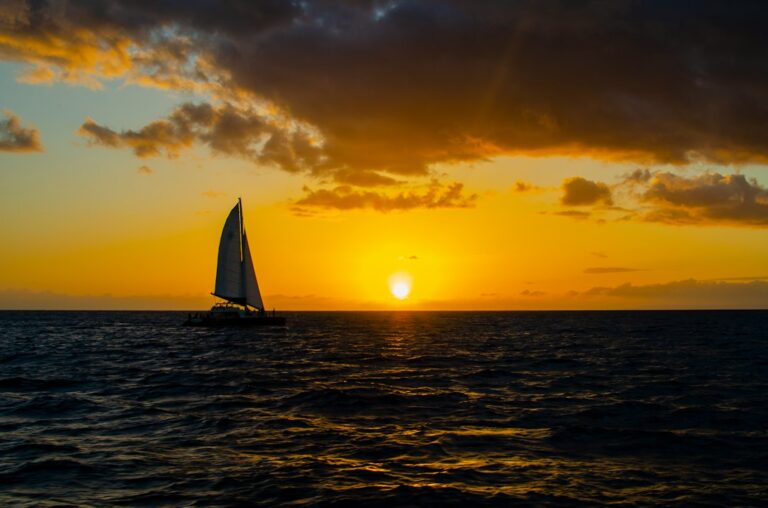
Port Allen also hosts the fleet’s sunset dinner runs, which follow different rules than a raft charter. Readers weighing an evening trip over a morning cave run should study the Napali sunset sail departure comparison for a direct look at how the two harbors differ after 4:00 p.m. Rafts rarely operate at sunset because the return leg into a 25-knot headwind punishes passengers on inflatable pontoons.
Kikiaola (Waimea) Harbor: The Closer, Rougher Alternative
Kikiaola Small Boat Harbor sits at Waimea, about 8 nautical miles west of Port Allen and roughly 30 minutes from Lihue. Being closer to Napali cuts one-way transit by 25 to 35 minutes, so a 5-hour Kikiaola charter often delivers more coastline time than a 6-hour Port Allen charter. Two of the smaller-fleet operators launch exclusively from Kikiaola, and one runs from both harbors depending on swell direction.
The harbor’s tradeoff is exposure. Kikiaola’s entry channel is narrow, and a wrapping south swell can produce a breaking bar that forces cancellations even when Port Allen is running. The harbor sits directly downwind of the Waimea River mouth, which stains inshore water brown after heavy rain in the Waimea Canyon watershed. That plume rarely reaches Napali itself but can turn the first 20 minutes of the ride visually murky.
Getting there and parking
Kikiaola parking fills by 6:15 a.m. in summer because the harbor also serves recreational fishing skiffs. Free overflow parking is available across Waimea Plantation Cottages road, adding a 6-minute walk. Restrooms at the harbor were rebuilt in 2023 and are open 24 hours. Fuel is not available on-site; operators fuel in advance and cache reserves offshore for the longer full-day runs.
Morning Glass-Off vs Afternoon Trades: Timing the Ride
Kauai’s leeward south shore experiences a predictable daily wind cycle. Between roughly 6:30 and 9:30 a.m., trade winds are typically blocked by the interior mountains, producing glass-off conditions — ocean surface as smooth as a pond. By 10:30 a.m., trades resume in the 12 to 22 knot range, and by 1:00 p.m. they routinely reach 25 knots along the Napali coast. Wind speed does not equal wave height, but it directly drives the chop that determines ride comfort.
Morning departures therefore serve two distinct customer profiles: passengers who suffer motion sickness, and photographers who want unbroken surface reflections. Snorkeling stops at Nualolo Reef also work better before 10:00 a.m., when visibility routinely exceeds 60 feet. Afternoon departures — usually cheaper by 15 to 25 percent — trade comfort for lower prices and rainbow-lit late cliffs. Afternoon light on the pali is genuinely spectacular between 3:30 and 5:00 p.m. from June through September.
What “glass-off” actually looks like
Operators use the term loosely. True glass — zero wind ripple — occurs on roughly 40 percent of summer mornings and perhaps 15 percent of winter mornings. More typical is a 5 to 10 knot westerly with 1 to 2 foot swell, which still allows cave entry and reads as calm to first-timers. Anything above 15 knots in the harbor at 7:00 a.m. suggests the day will not glass off at all.
Reading the shoulder-season swell chart
Travelers targeting the best odds should study Kauai’s May and September patterns, both of which sit at the transition between north and south hemisphere swell seasons. The Kauai shoulder-season swell overview tracks month-by-month cancellation risk on the north-facing coast. September is often calmer than May because south hemisphere swell has begun to fade while north swell has not yet arrived.
Half-Day (4-Hour) vs Full-Day (7-Hour) Charter Pricing
The two dominant charter formats are the 4- to 5-hour half-day (typically $155 to $195 per adult in 2026) and the 6- to 7-hour full-day (typically $210 to $285 per adult). The half-day usually runs from Port Allen to Honopu, includes one snorkel stop, and returns before the trades stiffen. The full-day continues past Kalalau to Ke’e Beach on the north shore, adds a beach landing on Nualolo Kai, and includes a hot lunch.
| Charter type | Duration | Adult price (2026) | Child (5-12) | Distance covered |
|---|---|---|---|---|
| Half-day morning (Port Allen) | 4.5 hours | $179 | $149 | 28 nautical miles |
| Half-day afternoon (Port Allen) | 4.0 hours | $149 | $129 | 26 nautical miles |
| Half-day (Kikiaola) | 4.5 hours | $189 | $155 | 32 nautical miles |
| Full-day with landing (Port Allen) | 7.0 hours | $259 | $215 | 44 nautical miles |
| Full-day cave focus (Kikiaola) | 6.5 hours | $249 | $205 | 42 nautical miles |
Nualolo Kai landing
The full-day charter’s beach landing on Nualolo Kai requires a separate DLNR commercial-landing permit issued to only three operators. The stop includes a guided archaeological walk through a 15th-century Hawaiian village site with restored heiau walls, followed by a 45-minute snorkel over Nualolo Reef. Landings run May 15 through September 15 only. Winter swell closes the site for 33 to 40 weeks per year, so a winter full-day charter substitutes an offshore snorkel.
What’s actually included
Half-day charters typically include water, sodas, tropical fruit, and pastries. Full-day charters add a hot lunch — usually kalua pork sliders or a chicken plate — plus a second snorkel round. Neither format includes gratuities (16 to 20 percent is standard), reef-safe sunscreen (bring your own), or dramamine (pharmacy price around $8 for a 12-pack). Bottled water beyond the two per passenger provided by most crews is a good addition.
DLNR-Permitted Operators for the Napali Coast
Hawaii’s Department of Land and Natural Resources caps the number of commercial-use permits along Napali to protect the coastline and its cultural sites. As of 2026, roughly 21 permits are held across catamaran, sailing, and RIB operators combined, and only around 12 hold zodiac-specific permits. The list changes slowly — new entrants can only enter when an existing permit is surrendered — so the operator roster is remarkably stable. Coverage in Honolulu Civil Beat tracks the ongoing commercial-use cap debate.
| Operator | Primary harbor | Fleet size | Nualolo Kai landing | Max group |
|---|---|---|---|---|
| Napali Riders | Kikiaola | 2 rafts | No | 16 |
| Kauai Sea Tours | Port Allen | 5 rafts | Yes | 16 |
| Napali Explorer | Both | 3 rafts | Yes | 14 |
| Blue Dolphin Charters | Port Allen | 2 rafts | No | 16 |
| Captain Andy’s | Port Allen | 2 rafts | Yes | 16 |
| Holo Holo Charters | Port Allen | 1 raft | No | 16 |
| Makana Charters | Kikiaola | 1 raft | No | 12 |
How to verify a permit is active
The current DLNR commercial permit list is published on the state harbors division site and updated quarterly. Travelers can also request the operator’s permit number at booking; any operator that refuses to provide it should be treated as a red flag. Uninsured or unpermitted charters occasionally operate on Craigslist and vacation rental bulletin boards. Their pricing may look attractive, but liability coverage for injury does not exist on those trips.
How the harbor-permit system works
Commercial harbor berthing itself falls under a separate DOBOR permit process, distinct from the Napali commercial-use permit. Operators must hold both. Readers interested in the mechanics of harbor allocation, transfer, and enforcement should review the Hawaii boat mooring and DOBOR harbor overview. Understanding the permit stack helps travelers distinguish licensed operators from opportunistic ones during peak-season sellouts.
Winter Swell Cancellation Rates and Refund Policy Patterns
Napali cancellations are seasonal and heavy. From late October through mid-March, North Pacific swells routinely exceed the operator safety threshold of 8-foot faces at 12-second period. Historical operator logs suggest average monthly cancellation rates of 22 percent in December, 28 percent in January, and 24 percent in February. Summer cancellations sit under 5 percent from June through August, when the dominant swell is a smaller south from below the equator.
| Month | Average cancellation rate | Typical swell direction | Rebook success within 3 days |
|---|---|---|---|
| January | 28% | NW 8-14 ft | 42% |
| February | 24% | NW/N 7-12 ft | 48% |
| March | 15% | N/NW 5-9 ft | 68% |
| May | 6% | S 2-5 ft | 92% |
| July | 3% | S 3-6 ft | 96% |
| October | 9% | Mixed 4-7 ft | 82% |
| December | 22% | NW 7-13 ft | 50% |
Refund policy patterns
Nearly every DLNR-permitted operator offers a full refund or free reschedule if the operator cancels for weather. Guest-initiated cancellations follow a stricter cascade: full refund at 72 hours out, 50 percent at 48 hours, and no refund inside 24 hours. Travel insurance sold through the operator (typically $12 to $18 per passenger) restores full refund rights but excludes hurricane cancellations, which fall under separate FEMA-linked provisions.
How to book around cancellation risk
Winter travelers should book their charter for the first or second day of a multi-day trip. Rescheduling within 72 hours costs nothing, but a same-week rebook window requires spare days. Trips arriving Saturday and departing Sunday six days later effectively have five reschedule attempts. Read the Hanalei winter overnight overview before locking a January or February date that sits at the end of the trip.
What to Bring, Wear, and Expect Onboard
A zodiac ride at 22 knots pushes constant salt spray onto passengers. Cotton clothing soaks quickly and stays cold; quick-dry synthetics, a lightweight windbreaker, and secured sunglasses are standard kit. Reef-safe sunscreen is required by Hawaii state law under Act 104 of 2018 and is enforced by operators — mineral zinc-based formulas at SPF 30 or higher work best. The Hawaii Department of Health maintains the list of banned ingredients.
Packing list
- Government-issued photo ID (some operators verify at check-in).
- Printed booking confirmation with confirmation number.
- Reef-safe mineral sunscreen (SPF 30 minimum, no oxybenzone or octinoxate).
- Quick-dry board shorts or a swim skirt, plus a warm layer for return.
- Small waterproof phone pouch on a neck lanyard.
- Motion sickness medication taken 45 minutes before departure.
- Bottled water in addition to what the operator provides.
- Cash for gratuities (about $20 to $40 per passenger is typical).
Motion sickness reality check
Roughly 25 to 35 percent of raft passengers report some queasiness on a 4-hour charter. Non-drowsy dimenhydrinate or a scopolamine patch applied 8 hours before departure gives strongest protection. Ginger candies help the mildly sensitive but rarely rescue a full-onset case. Passengers who know they suffer badly should book the earliest morning departure, sit near the stern, and eat a small dry-toast breakfast rather than skipping it entirely.
How Zodiac Rafts Compare to Catamarans and Kayaks
Zodiacs deliver the most coastline access and the fewest bells and whistles. A comparable catamaran runs $180 to $215 per adult, holds 30 to 49 passengers, cannot enter sea caves, but offers a bar, restrooms, and shaded seating. A guided kayak of the Napali coast is a 17-mile paddle limited to about 90 days per year in the calmest summer window, costs roughly $265 per person, and requires a permit issued by the state.
When each format wins
Zodiacs win for cave access, photography of cliff detail, and travelers under 65 without back injuries. Catamarans win for families with children under 5 or grandparents over 75, and for anyone prone to seasickness who still wants Napali footage. Kayaks are the athlete’s pick — a 6 to 8 hour paddle rated intermediate to advanced, with mandatory guide accompaniment on the through-paddle from Ke’e to Polihale.
Aerial view as a backup
Doors-off helicopter tours from Lihue cost $349 to $429 per passenger and last 55 to 65 minutes. They fly regardless of ocean swell, grounded only for cloud ceiling under 1,500 feet. Travelers whose zodiac cancels twice often pivot to helicopters as a same-week backup. The Kauai doors-off helicopter comparison covers the two dominant operators and their booking windows.
What Zodiac Passengers Actually See on the Coast
The transit north follows a straightforward sequence: Barking Sands military installation and the Mana Plain first, then the entry to the Napali cliffs near Polihale State Park. From there the coast climbs sharply. Nualolo, Awaawapuhi, and Kalalau valleys open one after another, separated by fluted ridges that fall directly into the ocean. Water depth 300 yards offshore already exceeds 200 feet, which is why the swell can slam directly onto cliff faces without breaking first.
Marine wildlife sightings vary by season. Humpback whales appear in the channel between roughly December 15 and April 10, with peak sightings in February. Hawaiian spinner dolphins reside year-round and frequently form pods of 40 to 200 near the harbor mouth in early morning. Green sea turtles are near-guaranteed at Nualolo Reef snorkel stops.
Monk seals — critically endangered with an estimated 400 individuals in the main Hawaiian islands — appear at Nualolo beaches on about 30 percent of summer days.
The specific sea caves
Waiahuakua Sea Cave, called the “double-door” because it has two openings, is the biggest — roughly 1,155 feet deep, making it the second-longest sea cave in the world. Open Ceiling Cave features a natural skylight that funnels midday sun onto the raft in a dramatic spotlight. Honopu Arch and the beach behind it are protected — landings are prohibited — but rafts can idle close enough for photographs and framing.
Weather versus swell — different closures
Rain closes almost no charters; only swell and wind do. That means the same storm system that closes north shore reefs like Tunnels Reef at Haena for two weeks in January may leave the south-shore harbors fully operational. Travelers should track buoy 51001 forecasts rather than local rain totals when scoring their booking window. Local coverage in Honolulu Star-Advertiser follows major closures.
Booking Timing, Deposits, and Multi-Day Strategy
Summer charters from June through August sell out 4 to 6 weeks in advance for morning slots. Winter afternoon charters can often be booked within 48 hours. Deposits run 25 to 50 percent at booking, with balance due 24 hours before departure. Most operators charge on a harbor Wi-Fi tablet at check-in, so a credit card is required even when a deposit has posted online. Debit cards are accepted but discouraged because of pre-authorization holds.
When to book for each season
Shoulder-season travelers benefit most from flexible booking. May and September consistently deliver the best combination of glass-off mornings, low crowds, and mid-tier pricing. The Hawaii in May pricing and Lei Day overview tracks the mid-month cutover from north to south swell dominance. November trips also work well; see the November pre-holiday shoulder rate breakdown for hotel savings that offset weather risk.
Combining a raft with other activities
The most-repeated itinerary among first-time Kauai visitors bundles a zodiac charter, a doors-off helicopter, and one north-shore reef snorkel. Time gaps matter: after a full-day charter passengers are exhausted, so the helicopter is best on a separate day. A sample 6-night itinerary places the zodiac on day 2, a north-shore beach day on day 3, helicopter on day 5, and reserves days 4 and 6 as weather buffers. Cross-reference the best-time-to-visit Kauai month index before locking dates.
Baseline destination information is also available from Hawaii Tourism.
Frequently asked questions
Is the Napali zodiac trip suitable for kids?
Most DLNR-permitted operators set a minimum age of 5 years for morning charters and 8 years for the full-day trip. Children under 5 are generally refused because the ride’s spray, noise, and slap-load is difficult on small bodies. Families with children under 8 usually book the calmer catamaran trip instead. Height under 4 feet also limits proper life jacket fit.
What is the difference between Port Allen and Kikiaola for a zodiac charter?
Port Allen offers more operators, easier parking, and better amenities, at the cost of an extra 25 to 35 minutes of transit each way. Kikiaola sits 8 nautical miles closer to Napali, giving more coastline time per hour, but has a narrower harbor entry that closes more often when south swell wraps in. Groups prioritizing convenience choose Port Allen; groups prioritizing coastline time choose Kikiaola.
How often are winter zodiac charters cancelled?
Cancellation rates run about 22 percent in December, 28 percent in January, 24 percent in February, and 15 percent in March. Operators cancel when swell exceeds 8-foot faces at 12-second period at the Napali buoy. Nearly all operators refund fully or reschedule at no cost when they call the cancellation, but a same-week rebook only succeeds about 45 to 50 percent of the time in peak winter months.
Can passengers see the sea caves without a zodiac?
Catamarans cannot enter any Napali sea cave — their drafts, freeboard, and turning radius exceed cave entry limits. Kayakers can enter Waiahuakua when conditions allow but rarely reach Honopu Arch. Zodiacs are the only commercial option for interior cave entry, which is why they command higher per-hour pricing. A helicopter shows the caves from above but not from inside them.
What is the refund policy if weather cancels a charter?
Every DLNR-permitted operator refunds fully or reschedules free of charge when the operator makes the cancellation call. Guest-initiated cancellations follow a stricter schedule: full refund at 72 hours out, 50 percent at 48 hours, and no refund inside 24 hours. Optional operator-sold travel insurance, usually $12 to $18 per person, restores full guest-initiated refund rights.
Do zodiac operators land on Nualolo Kai beach?
Only three DLNR-permitted operators hold the additional commercial-landing permit for Nualolo Kai, and landings occur only between May 15 and September 15. The stop lasts about 90 minutes and includes a guided archaeological walk plus a snorkel over Nualolo Reef. Winter charters substitute an offshore snorkel stop because swell prevents safe landings for roughly 33 to 40 weeks per year.
What should first-timers wear on a zodiac charter?
A quick-dry swimsuit, a rash guard for sun protection, a lightweight windbreaker for the return leg, and secured sunglasses on a strap are standard. Cotton stays wet and cold, so avoid t-shirts and denim. Reef-safe mineral sunscreen at SPF 30 or higher meets Hawaii’s Act 104 requirement. A small dry bag or waterproof phone pouch on a lanyard protects electronics.