Maui rewards first-time visitors who plan around three fixed anchors: a Haleakala sunrise reservation booked 60 days out, a Road to Hana morning start before 7:00 AM, and a Molokini snorkel boat that departs Maalaea Harbor by 6:30 AM. Everything else on the island flexes around those windows.
This 7-day itinerary treats the calendar as the scarcest resource. It routes drives efficiently, batches west-side beach days separately from east-side jungle days, and slots the two dawn wake-ups on non-consecutive days so exhaustion never cascades into a wasted afternoon.
Rental-car pickup, hotel region, snorkel gear, and reef-safe sunscreen decisions all fall out of the itinerary rather than the other way around. The sections below cover each in the order a planner needs them, with packing lists and a budget table at the end for quick reference.
Rental Car Is Not Optional on Maui
Maui has no rail transit, no meaningful bus network for tourists, and rideshare pricing that collapses any budget over a week. The Maui Bus system runs limited routes centered on Kahului and does not serve Hana, the Haleakala summit, or most beach parks. A rental car is functionally required.
Kahului Airport (OGG) is the only realistic pickup. Reserving 60-90 days ahead through a broker aggregator typically saves $18-$35 per day versus walk-up rates. A compact car handles every paved road on the island, including the entire Road to Hana and the Haleakala summit road at 10,023 feet.
Some rental agreements prohibit driving the back road from Hana around the south side of Haleakala via the Piilani Highway. Read the contract line covering unpaved roads before signing — coverage decisions on the Piilani Highway return loop hinge entirely on that clause.
What size vehicle
A midsize sedan or small SUV fits two adults with luggage comfortably. A Jeep Wrangler soft-top costs an extra $40-$70 per day and delivers no functional benefit for this itinerary. Four-wheel drive is unnecessary for the summit road, which is fully paved to Puu Ulaula. Convertible tops are miserable during Hana rain squalls.
Where to Base Yourself for the Week
Maui splits into four resort regions: West Maui (Kaanapali, Kahana, Napili), South Maui (Kihei, Wailea, Makena), Central Maui (Kahului, Wailuku), and Upcountry (Kula, Makawao). Each affects morning drive times to the three anchors differently, and the choice compounds across a full week.
West Maui offers the most swimmable winter beaches but adds 45 minutes each way to the Haleakala summit drive. South Maui puts Molokini and Wailea beaches within 15 minutes and Haleakala within 75 minutes, at the cost of a longer Road to Hana approach through Kahului.
The full comparison of amenities, walkability, and price bands lives at where to stay on Maui for first-time visitors. For a week that includes the summit run and Molokini, South Maui usually wins on total drive time. A two-hotel split week (three nights west, three nights south) trades car-check-out logistics for lower total driving.
| Region | To Haleakala summit | To Hana | To Molokini boat | Nightly $ range |
|---|---|---|---|---|
| Kaanapali | 90 min | 3 hr | 50 min | $450-$1,100 |
| Wailea | 75 min | 3.5 hr | 12 min | $550-$1,400 |
| Kihei | 70 min | 3 hr 15 min | 10 min | $275-$650 |
| Paia | 60 min | 2 hr 15 min | 35 min | $350-$800 |
| Kula (upcountry) | 35 min | 3 hr | 45 min | $225-$500 |
The 7-Day Itinerary at a Glance
The sequence below stacks the two hardest wake-ups (Molokini on Day 3, Haleakala sunrise on Day 6) with recovery days between. Arrival and departure days flex around flight times. Days 2, 5, and 7 hold beach time and afternoons that can absorb a rainout or a nap without breaking the plan.
| Day | Anchor | Wake time | Region |
|---|---|---|---|
| 1 | Arrival, Kaanapali sunset | Flight-dependent | West |
| 2 | Lahaina history, beach day | 7:30 AM | West |
| 3 | Molokini snorkel | 4:45 AM | South |
| 4 | Road to Hana out-and-back | 5:30 AM | Cross-island |
| 5 | Iao Valley + upcountry | 8:00 AM | Central |
| 6 | Haleakala sunrise | 2:45 AM | Upcountry |
| 7 | Beach + departure | 7:00 AM | South/West |
Day 1 — Arrival, Groceries, and Kaanapali Sunset
Most mainland flights land at OGG between 12:30 PM and 4:00 PM. Baggage claim and the rental-car shuttle add 45-60 minutes. Foodland Kahului sits five minutes from the airport and beats resort-market pricing by 40-60% on water, snacks, coffee, and beer. Costco Kahului sits ten minutes further and rewards a bigger stock-up.
Aim for hotel check-in by 4:00 PM. The rest of the afternoon belongs to unpacking, changing into swimwear, and walking to the nearest beach. Nothing ambitious. Jet lag from Pacific and Eastern time zones sets in around dinner, so a light meal beats a long reservation.
Sunset on Kaanapali Beach lands between 5:52 PM in December and 7:18 PM in June. The nightly cliff-diving ceremony at Puu Kekaa (Black Rock) runs around 6:00-7:00 PM. Details on the resident green sea turtles and best viewing angles live at Blackrock Kaanapali dusk snorkel.
Day 2 — Lahaina Rebuild Visit and West-Side Beach Day
The August 2023 wildfire destroyed most of historic Lahaina — roughly 3.5 square miles, including nearly all of Front Street. Reopened businesses, memorial sites, and public-access boundaries change month to month. Check the current status page covered at best things to do in Lahaina before driving in.
Coverage from the Honolulu Star-Advertiser tracks rebuild permits and reopening timelines. The banyan tree at the courthouse survived and remains visitable. Respect posted no-entry signage — much of the fire zone is still private residential land where families lost homes and are working through insurance and permitting.
Afternoon slots into a Kaanapali or Napili Bay beach session. Kapalua Beach ranks in the state’s top ten most years and offers protected snorkeling in the north bay. The 12 best beaches on Maui comparison helps narrow the choice by swim skill and shade availability.
Snorkeling right from shore
Black Rock at the north end of Kaanapali is the highest-value shore snorkel on the west side. Visibility runs 30-50 feet on calm mornings. Green sea turtles feed on the reef ledges most days between 9:00 AM and 2:00 PM. Sunset visibility drops but marine-life activity increases as fish switch to evening feeding.
Gear rental at ABC Store runs $9/day for a mask-fins-snorkel bundle. Own gear pays off after four days and delivers a materially better mask fit. The full checklist including fit-testing and defog technique lives at snorkeling gear checklist for Hawaii.
Day 3 — Molokini Crater Snorkel
Molokini is a partially submerged volcanic crescent three miles off the South Maui coast. Its inside wall shelters a Marine Life Conservation District where visibility routinely exceeds 100 feet — the clearest reef diving on Maui. Access is boat-only; kayaks and paddleboards are prohibited by state rule.
Boats depart Maalaea Harbor between 6:30 AM and 7:30 AM, returning around noon. Afternoon trade winds pick up around 10:30 AM and turn the crater choppy. The first-departure boats reach the crater ahead of the crowd and get the calmest water for the clearest photographs.
Expect $130-$185 per adult for a five-hour catamaran with breakfast, deli lunch, gear, and one Molokini stop plus a secondary turtle-viewing stop at Turtle Town off Makena. Book 30-60 days ahead in December-April peak. Kids’ pricing typically saves $30-$50 per child under 12.
Reef-safe sunscreen requirement
Since January 1, 2021, Hawaii state law bans the sale of sunscreens containing oxybenzone or octinoxate. Tour operators enforce compliance and often provide free zinc-based sunscreen on board. The chemistry, product recommendations, and enforcement history are covered at Hawaii reef-safe sunscreen under Act 104.
What a Molokini day feels like
The crescent’s inside wall drops from waist-deep at the reef top to 150 feet in 40 yards. Beginners stay near the top; certified divers explore deeper along the wall. Common sightings: yellow tang, parrotfish, moorish idol, humuhumunukunukuapua’a. Whitetip reef sharks appear on 30-40% of trips but stay in the deeper channels.
Day 4 — Road to Hana
The Hana Highway (Route 360) covers 52 miles from Paia to Hana across 620 curves and 59 one-lane bridges. Standard drive time east runs 2.5 hours without stops or 6-8 hours with stops. Standard return is 2 hours if backtracking or 2.5 hours via the Piilani Highway loop.
Leave the hotel by 6:00 AM. Paia sits at mile 0. Fuel up at the Minit Stop in Paia — the next reliable station is in Hana itself. Grabbing malasadas from Komoda Store Bakery in Makawao the day before is a common breakfast strategy for the long drive.
The full mile-marker guide at Hana Highway mile-marker sequence lists roadside pullouts that reward a five-minute stop versus the ones best skipped when time is tight. Attempting every marked stop overloads the day.
The must-stop shortlist
- Twin Falls (mile 2): first waterfall, easy 15-minute walk
- Waikamoi Ridge Trail (mile 9.5): bamboo forest, 30 minutes
- Upper Waikani “Three Bears” Falls (mile 19.5): roadside view
- Wailua Valley Lookout (mile 18.6): pull-off, no walking
- Waianapanapa Black Sand Beach (mile 32): reservation required
- Wailua Falls (mile 45): 80-foot roadside falls, easy stop
- Oheo Gulch pools (mile 42, past Hana): $30 park fee
Waianapanapa State Park requires an advance reservation booked at gostateparks.hawaii.gov — $10 per person parking, $5 entry. Slots open 30 days ahead and sell out for peak morning windows. No reservation, no entry — rangers turn cars away at the gate and there is no informal overflow parking.
The return decision
Backtracking the Hana Highway retraces the same 620 curves in fatigue conditions after 8 hours already behind the wheel. The Piilani Highway loop wraps around the south face of Haleakala on 40 miles of mostly paved road with 8 miles of rough gravel. Rental contracts may prohibit it — check first. The full trade-off framework is at Piilani Highway return loop decisions.
Day 5 — Iao Valley, Central Maui, and Upcountry Recovery
Day 5 recovers from Hana. Iao Valley State Monument sits 15 minutes west of Kahului in a rainforest cirque. The Iao Needle rises 1,200 feet from the valley floor. Parking costs $10 for non-residents, entry $5 per person. Advance reservations required through gostateparks.hawaii.gov.
Morning rain is common — the valley averages over 380 inches of rainfall per year at higher elevations. If clouds shroud the needle, the paved loop trail completes in 45 minutes regardless of visibility. The rain-day framing appears in Iao Valley Needle central Maui rain afternoon alternative.
Afternoon shifts upcountry. The drive up Haleakala Highway to Kula climbs from sea level to 3,200 feet in 25 minutes. Ali’i Kula Lavender Farm charges $3 admission. Surfing Goat Dairy tours run $14. Ocean View Farm and the Kula Botanical Garden ($15) round out a low-intensity afternoon with cooler air.
Central Maui dining anchors
Central Maui restaurants sit 30-50% below resort pricing for similar quality. Tin Roof (chef Sheldon Simeon), Sixtyeight Pastry Shop, and Marlow in Wailuku fit an early dinner on the way back. Poi by the Pound in Kahului serves plate lunches under $18 with generous portions of kalua pork and lomi salmon.
Day 6 — Haleakala Sunrise Summit
Haleakala’s summit sits at 10,023 feet. Sunrise viewing requires a reservation booked exactly 60 days in advance on recreation.gov at 7:00 AM Hawaii time — a $1 non-refundable fee per vehicle. All 150 vehicle slots for a given date typically sell out within minutes of release.
Sunrise runs 5:45-7:15 AM depending on season. The park requires arrival by sunrise time, which means leaving Kihei by 3:30 AM or Kula by 4:45 AM. Full reservation-window mechanics live at Haleakala sunrise summit Recreation.gov reservation window.
Summit temperatures range from 30°F to 45°F at dawn even in July. Wind chill can push effective temperature into the 20s Fahrenheit. Layers, hat, gloves, and a warm drink in a thermos are essential. Rental-car heaters take several minutes to warm up at altitude, so start the engine early.
Where to view from
Three official viewing spots: Pu’u ‘ula’ula (Red Hill) at the true summit, Haleakala Visitor Center at 9,740 feet, and Kalahaku Overlook. Red Hill fills first and holds roughly 30 vehicles. The visitor center parking lot is larger and offers a cleaner horizon line to the east once the ranger talk begins around 5:15 AM.
The bike descent alternative
Guided sunrise bike tours descend 26 miles from 6,500 feet (federal park regulations prohibit commercial bike starts inside the park boundary) down through Kula to Paia. Cost runs $170-$220. Age minimums typically 15, weight limits around 250 lbs, no rain suspensions unless conditions are dangerous.
If the reservation is sold out
Sunset viewing at Haleakala requires no reservation. Temperatures are 15-20°F warmer at 6:30 PM than at dawn, wind is often calmer, and the color show over Molokini and West Maui rivals the sunrise on many nights. Rangers report roughly equal weekly attendance across both windows once the reservation constraint is removed.
Day 7 — Final Beach Morning and Departure
South Maui offers the best departure-day beaches for west- or south-based visitors. Wailea Beach (fronting the Grand Wailea) provides showers, restrooms, and easy parking through 11:00 AM. Big Beach at Makena adds surf and requires stronger swimming — currents can grab weaker swimmers at the shorebreak.
OGG rental returns close 2 hours before flight time under most agency policy. Kahului traffic backs up from 3:30-5:30 PM on weekdays. A 5:00 PM flight requires beach-off by 1:00 PM, lunch by 1:30, drive by 2:15, rental return by 3:00. Cushion the timeline for airport agricultural inspection.
Souvenir shopping fits between beach and airport at the Maui Swap Meet (Saturdays only, 7:00 AM-1:00 PM, $1 admission) or Whalers Village in Kaanapali. TSA at OGG typically runs 30-45 minutes at peak, plus 15 minutes for the required agricultural inspection of checked bags carrying fruit or plant material.
Seasonal Windows and Weather Realities
Maui operates on trade-wind seasons rather than four seasons. May through October brings drier weather, water temperatures of 78-82°F, and consistent northeast trades of 10-20 knots. November through April sees larger north-shore swells, occasional Kona storms, and water temperatures of 74-78°F. Whale watchers benefit from that second window.
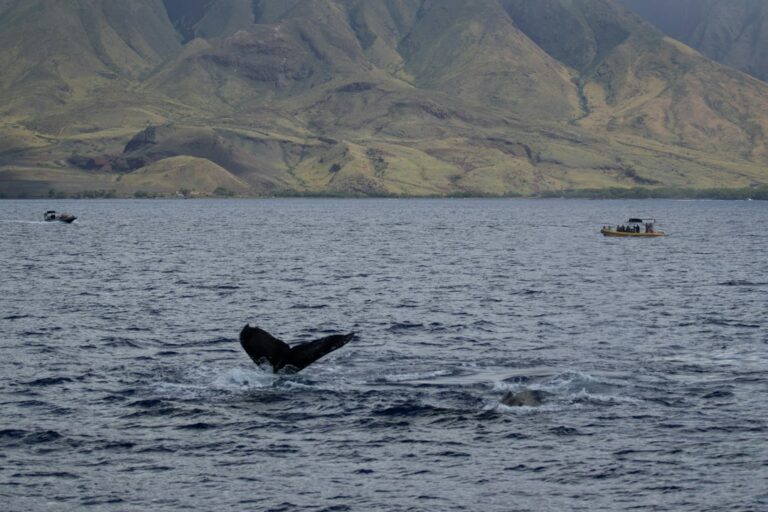
Humpback whale season runs mid-December through mid-April. Whales are visible from any west or south shore beach or from the deck of any Molokini boat. Peak sightings January through early March. The official Hawaii visitor bureau maintains updated whale-sighting reports and responsible-viewing guidance.
Hurricane season officially runs June 1 through November 30. Direct hits on Maui remain rare — the last major impact was Hurricane Iniki in 1992, which primarily hit Kauai. Travel insurance covers most named-storm cancellations if purchased before the storm is named. Standard coverage: $80-$140 per person per trip.
What to Pack for This Itinerary
Maui packing splits into three thermal zones: 78-85°F beach clothing, 55-65°F rainforest layers for Hana and Iao, and 30-45°F winter layers for the Haleakala summit at dawn. A visitor arriving with only beach gear fails at the summit and freezes for two hours in the dark.
| Item | Purpose | Cost to buy on Maui |
|---|---|---|
| Reef-safe zinc sunscreen (SPF 30+) | Legal + reef compliance | $18-$28/bottle |
| Snorkel mask (own, fitted) | Molokini + shore snorkels | $35-$75 |
| Fleece + beanie + gloves | Haleakala summit at dawn | $40-$90 combined |
| Rain shell | Road to Hana, Iao Valley | $25-$60 |
| Water shoes or reef sandals | Rocky beach entries | $20-$45 |
| Dry bag (10-20L) | Waterfall stops, boat | $18-$30 |
| Insect repellent (DEET or picaridin) | Hana waterfalls, Iao | $8-$14 |
| Refillable water bottle (1L+) | Every day | $15-$30 |
Rental options: boogie boards $10-$15/day at ABC Stores, mask-snorkel-fins bundles $9-$12/day, wetsuit tops $8/day. Anything used four or more days on the itinerary usually costs less to bring from home than to rent locally, especially bulky items with cheap mainland pricing.
Budget Framework for Two Adults, 7 Days
Costs vary sharply by season and hotel choice. December 20-January 5 and June 15-August 15 run 40-70% higher than shoulder months. May, September, and October offer the best combination of weather, prices, and thinner crowds. Booking 90 days out unlocks meaningful savings on cars and hotels alike.
| Category | Value tier | Mid tier | Premium tier |
|---|---|---|---|
| Hotel (6 nights) | $1,650 | $3,600 | $7,800 |
| Rental car (7 days) | $385 | $525 | $980 |
| Molokini + tour add-ons | $260 | $420 | $680 |
| Food (2 people, 7 days) | $525 | $980 | $1,750 |
| Fuel + parking + park fees | $180 | $220 | $260 |
| Trip total | $3,000 | $5,745 | $11,470 |
Honolulu-area consumer prices sit 21% above the U.S. urban average per the BLS Honolulu Consumer Price Index. Maui restaurant tabs generally track slightly higher than Honolulu due to added shipping distance.
Fuel on Maui runs $1.10-$1.60 higher per gallon than the mainland U.S. average, per the EIA weekly gasoline report. Budget $75-$110 for the week assuming a compact car and one Hana round trip of roughly 105 miles.
Booking Sequence and Reservation Deadlines
Six reservations gate this itinerary. Missing any one degrades the trip. Set calendar reminders for each opening date, and use the exact time zones — most Hawaii state parks open reservations at 7:00 AM Hawaii Standard Time, which is 10:00 AM Pacific and 1:00 PM Eastern on the mainland.
- Flights: 60-120 days out for the best mainland fares
- Rental car: 90 days out via aggregator; rebook if the price drops
- Hotel: 60-120 days out for peak season, 30-60 for shoulder
- Haleakala sunrise: exactly 60 days out at 7:00 AM HST
- Waianapanapa State Park: 30 days out for Hana day
- Iao Valley entry: 30 days out, easier to secure than Waianapanapa
- Molokini boat: 30-60 days out for peak, 14 days shoulder
Weather cancellations happen. Molokini boats occasionally divert to alternate reef sites when swells exceed 4-6 feet. Haleakala closes the summit road for lightning, ice, or snow — check the Hawaii Department of Transportation conditions page each morning before summit or Hana departures.
Frequently asked questions
Is 7 days enough for a first Maui trip?
Seven days is the practical minimum for the three anchor experiences (Haleakala, Hana, Molokini) plus real beach time. Five days forces cutting either Hana or the sunrise summit. Ten days allows adding Molokai or Lanai day trips. Most first-timers report 7 days feels tight but complete.
Can the Road to Hana be done as a guided tour instead?
Yes. Guided van tours run $180-$240 per person and eliminate the driving stress on 620 curves. Trade-off: fixed stops, no freedom to skip. Small-group Mercedes van tours (12 passengers or fewer) rank higher than large bus tours. Self-drive gives roughly 3x more stops per day and full pacing control.
What if the Haleakala sunrise reservation is sold out?
Reservations release 60 days ahead at 7:00 AM HST. Cancellations open a rolling 24-hour and 48-hour secondary window on recreation.gov — check three times per day the week before travel. Sunset viewing requires no reservation and offers similar payoff with warmer temperatures, calmer winds, and no 3:00 AM alarm.
How much reef-safe sunscreen is needed for a week?
Two adults snorkeling three times need roughly 400ml combined. That translates to two 6-ounce bottles at $18-$28 each. Zinc mineral formulas leave a white cast on skin. Tinted versions cost $4-$8 more but blend better. Boat tours often provide free reef-safe sunscreen on board — confirm when booking.
Is Maui safe to visit after the 2023 Lahaina fire?
Yes. The fire affected roughly 3.5 square miles of Lahaina town. Kaanapali resorts, Kapalua, Kihei, Wailea, and all of east and south Maui operate normally. Visitor spending directly supports rebuilding jobs and displaced-worker recovery. Respect closure boundaries and avoid disaster-tourism photography in residential fire zones.
Which airport should first-timers fly into?
Kahului (OGG) is Maui’s only realistic entry. Kapalua (JHM) handles small commuter flights from Honolulu only. Flying into Honolulu (HNL) and connecting adds 3-4 hours versus a direct OGG flight and rarely saves money. Direct mainland flights from LAX, SFO, SEA, DEN, PHX, and DFW reach OGG in 5-6 hours.
When is the cheapest time to visit Maui?
Mid-September through mid-October and mid-April through mid-May offer the lowest hotel rates outside major events. Rates drop 40-60% from the December holiday peak. Weather remains excellent — trade winds moderate, water temperature 76-80°F, and rain concentrated on windward slopes rather than the leeward beach zones where most visitors stay.
Do first-timers need to visit other islands too?
Not on a 7-day trip. Adding Oahu or Kauai to a first Maui visit fragments each stay to under 4 days and burns a full day on inter-island flights and re-checking hotels. Second-time visitors often pair Maui with Big Island (Hawaii Island) for volcanic-landscape contrast on a subsequent trip.