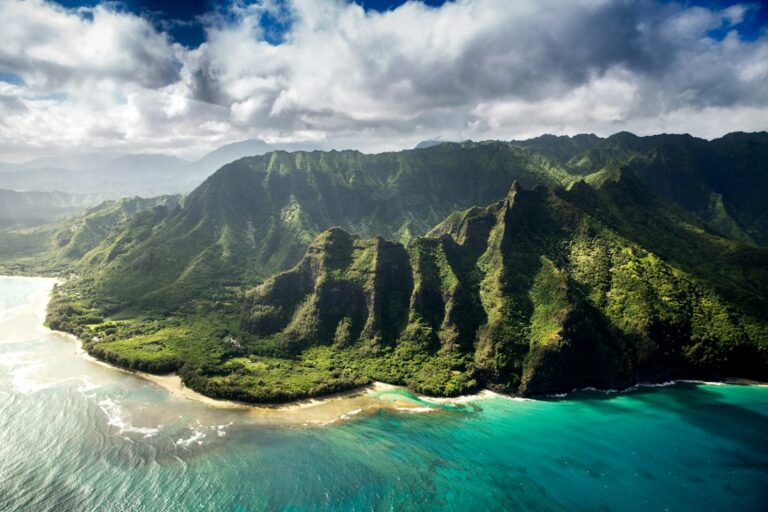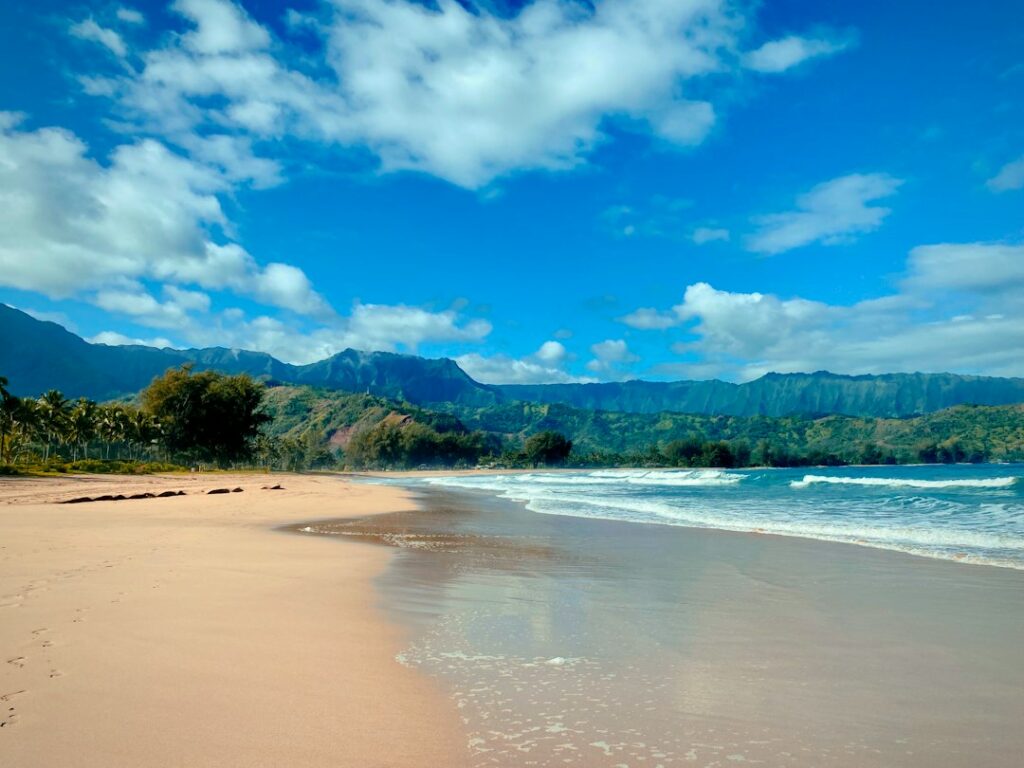
Few Maui days generate more debate than the trip to Hana. The route covers roughly 64 miles from Paia to Hana town, but that mileage hides 620 curves, 59 bridges, and pullouts every few minutes. Choosing between a rental car and a guided van decides how much of the day the household spends driving versus looking out the window.
The financial gap is real. A self-drive day with a mid-size rental car and a tank of fuel usually runs $80 to $150 total for the vehicle, while a seat on a guided van typically prices at $150 to $250 per adult before tip. For a couple that math favors driving; for a family of four, the tour cost stacks fast.
The tradeoffs go beyond dollars. Waterfall stops now involve paid reservations, cell service disappears for long stretches, and rental contracts frequently prohibit the back-road Piilani Highway return. Households making this call benefit from mapping the day against fatigue, photography goals, and the group’s tolerance for narrow lanes with oncoming traffic.
The two modes at a glance
Self-driving means renting a vehicle at Kahului Airport or a Kihei-area lot, driving Highway 36 through Paia and onto the Hana Highway (Route 360), and returning either the way out or via the restricted southern loop. Total wheel time typically lands between 10 and 12 hours, including 25 to 40 minutes of active driving between most pullouts.
Guided van tours pick up at hotels or a central Kahului meetup between 6:30 and 7:30 a.m., seat 8 to 14 passengers, and follow a fixed itinerary of 8 to 12 stops. Drivers narrate history, geology, and cultural context, then deliver riders back to the hotel between 5:30 and 7:30 p.m. — a 12-to-13-hour commitment with no navigation load.
A third and growing option is a mid-tier hybrid: a self-drive with an audio-guide app such as Shaka Guide or GyPSy, priced at $15 to $20 per vehicle. The app plays GPS-triggered narration through the car speakers, replacing much of what a live guide provides while keeping the flexibility of a private vehicle.
Cost comparison: self-drive versus guided van
Direct costs vary widely by season and vendor, but the ranges below reflect what mainland households encountered across peak (December to April, June to August) and shoulder months in recent seasons. Rental rates from Kahului spike hardest in Christmas and spring-break weeks.
| Line item | Self-drive couple | Self-drive family of 4 | Guided van (per adult) |
|---|---|---|---|
| Vehicle for the day | $65–$110 | $85–$140 (SUV) | $0 |
| Fuel (Kahului round trip, ~120 mi) | $18–$28 | $22–$34 | $0 |
| Tour seat | $0 | $0 | $159–$249 |
| Waianapanapa reservation (non-resident) | $10 vehicle + $5 pp | $10 vehicle + $20 pp | Included |
| Twin Falls parking | $10 | $10 | Included |
| Lunch | $28–$45 | $55–$85 | Often included |
| Driver tip (18–20%) | — | — | $30–$50 |
| Approx. total per person | $65–$100 | $50–$75 | $189–$299 |
The economics flip around group size. Two adults save roughly $180 to $400 by driving themselves. A family of four saves closer to $600 to $900 over a tour, which is often the difference between a Hana day and skipping it altogether. Solo travelers land closest to break-even and often prefer the tour to avoid a full day of solo mountain driving.
Rental partners matter. Discount Hawaii Car Rental and Kihei-based Kimo’s Rent-A-Car tend to price below the airport majors by $15 to $30 per day, but they close earlier — often 4 or 5 p.m. — which forces an earlier turnaround than a Hana loop needs.
Time budget and fatigue math
The published drive time of “2.5 hours each way” is an average without stops. In practice, households who leave a Kahului hotel at 6:30 a.m. and target 8 stops on the way out reach Hana town around 1 p.m. Adding the loop past Hana to Pipiwai Trail or Kipahulu pushes lunch to 2 p.m. and return to hotel between 6 and 8 p.m.
Guided vans compress the day differently. Because drivers know pullout etiquette, oncoming-truck timing, and shortcut turnouts, the same 8-stop itinerary often runs 45 to 60 minutes faster than a first-time self-driver. That buffer lets tour operators fit in Waianapanapa, Wailua Valley, and a rainforest walk without dinner arriving at 9 p.m.
| Segment | Distance | Self-drive typical time | Van tour typical time |
|---|---|---|---|
| Kahului to Paia | 7 mi | 15 min | 10 min (early) |
| Paia to Twin Falls (MM 2) | 10 mi | 20 min | 18 min |
| Twin Falls to Ke’anae Peninsula (MM 16) | 14 mi | 55 min | 45 min |
| Ke’anae to Hana town (MM 34) | 18 mi | 65 min | 55 min |
| Hana to Kipahulu (Pipiwai) | 10 mi | 30 min | 25 min |
| Hana return via Highway 360 | 52 mi | 2 hr 15 min | 1 hr 55 min |
Fatigue is the hidden line item. Drivers spend the entire day at 15 to 25 mph on single-lane bridges, backing up for oncoming trucks, and watching for kids darting between pullouts. Passengers on van tours can nap on the return leg; drivers cannot. Households with only one licensed driver over 25 should weigh that heavily.
Mile-marker highlights that define the route
The Hana Highway numbers restart at mile marker 0 in Kahului on Route 36, then again at MM 0 on Route 360 just past Paia. Most guidebooks use the second numbering. The mile-marker sequence from Paia to Hana lays out the pullouts in order, but the marquee stops group into six clusters.
Miles 2–10: The first waterfalls
Twin Falls at MM 2 is the first commercial waterfall stop, with private-land parking that runs $10 and a fruit stand at the trailhead. Waikamoi Ridge Trail near MM 9 offers a 30-minute rainforest walk. Twin Falls etiquette for first-time visitors matters here because the pullouts fill by 9 a.m.
Miles 12–18: The Ke’anae stretch
Upper Waikani Falls (also called Three Bears) sits near MM 19 and is the most photographed roadside cascade on the route. Ke’anae Peninsula, a signed left turn near MM 16, extends into the ocean with a black-sand church, taro fields, and Aunty Sandy’s banana bread stand — most van tours stop here for a snack break.
Miles 19–32: Mid-route pullouts
Pua’a Ka’a State Park at MM 22 has restrooms and two shallow pools. Nahiku Marketplace at MM 28 supports a coffee stand and Thai food truck. Ula’ino Road at MM 31 connects to Kahanu Garden and Pi’ilanihale Heiau, a 3-acre lava-rock temple that receives roughly 3,000 visitors monthly.
Miles 32–36: The Hana approach
Waianapanapa State Park at MM 32 protects a black-sand beach, lava tube caves, and blowholes. Hana town itself sits at MM 34, with fuel, groceries at Hasegawa General Store (open since 1910), and the Hana-Maui Resort. Beyond town, Hamoa Beach and Koki Beach add 10 minutes of side-tripping.
Miles 36–42: Kipahulu and Pipiwai
The road continues past Hana into Haleakalā National Park’s Kipahulu district. Entry costs $30 per vehicle for 3 days or is free with an America the Beautiful pass. The Pipiwai Trail climbs 4 miles round-trip through a bamboo forest to 400-foot Waimoku Falls; the Pools of Ohe’o (Seven Sacred Pools) sit just off the parking lot.
Waianapanapa reservations and the paid-stop shift
Waianapanapa State Park now requires advance reservations for all non-Hawaii-residents. The system opened in March 2021 after parking overflow shut down the highway. Bookings run through the state parks portal and release 30 days in advance. Slots for weekends fill within hours.
Rates as of the current fee schedule sit at $5 per non-resident visitor plus $10 per vehicle. Residents park free with a Hawaii driver’s license. Time slots run in three-hour windows: 7 to 10 a.m., 10 a.m. to 12:30 p.m., 12:30 to 3 p.m., and 3 to 6 p.m. Missing a window means being turned around at the gate.
Guided vans hold operator permits that bundle Waianapanapa entry into the tour price, sparing riders the 30-days-out booking scramble. Self-drivers who forget this step usually find every remaining slot claimed and must skip the park’s signature black-sand beach entirely. The Hawaii Department of Health and state parks agencies both publish updated fee schedules worth checking within 60 days of a trip.
Twin Falls’ private landowner parking sits outside the state system at a flat $10 per vehicle, cash preferred. Ho’okipa Beach lookout, Ke’anae Peninsula, and Ohe’o Gulch stops within Haleakalā National Park charge park-wide entry fees rather than per-stop parking.
Cell dead zones and navigation reality
AT&T, Verizon, and T-Mobile all publish partial coverage on the route, but on-the-ground signal drops out for long stretches between MM 10 and MM 32. The most reliable dead-zone map any first-time driver can trust is: assume no signal between Ho’okipa and Hana town, and any signal received is a bonus.
This has three practical consequences. Google Maps navigation stops updating around MM 8 unless the route is downloaded for offline use — a step that takes 90 seconds and costs nothing. Ride-share apps do not function past Paia, and emergency 911 calls sometimes route only through the strongest available carrier, which is often not the primary phone’s carrier.
Van tour drivers carry radios and know every fuel pump and turn without an app. That eliminates one common self-drive failure mode: circling looking for a signed but hidden pullout, or missing the Ke’anae turn entirely because it sits at a sharp bend with no reception to reroute.
Drivers who plan the loop should download the entire Kahului-to-Hana-to-Kipahulu offline map before leaving Wi-Fi, screenshot the mile-marker list, and note that the fuel cadence between Paia and Hana allows only one guaranteed pump: Hana Gas near MM 34. Paia’s Aloha station is the last cheap fill before the highway climbs.
The Piilani Highway back-road question
Highway 31 (Piilani Highway) closes the loop by continuing past Kipahulu around the southern flank of Haleakalā, through Kaupo, and back to Kula and Kihei. On a map it looks like a smart return alternative that avoids driving the twisty section twice. In practice, rental contracts and road conditions complicate the decision.
Most major rental agencies — including Hertz, Enterprise, Alamo, Budget, and Avis — explicitly prohibit driving beyond the pavement at Kipahulu. Contracts state that mechanical breakdown or damage on the back road voids collision coverage. Discount Hawaii Car Rental and a handful of local outfits allow it in a 4WD; Kimo’s and Kihei Rent-A-Car sometimes permit it in dry conditions with prior approval.
The road itself alternates paved and unpaved for roughly 20 miles, drops to single-lane sections with no guardrails, and washes out during heavy rain — particularly December through March. Cell service is nonexistent from Kaupo to Ulupalakua, and no tow service will retrieve a vehicle from that stretch without a several-hundred-dollar charge and multi-hour wait.
A full breakdown of the tradeoffs lives in the Piilani Highway return loop decision guide. In short: van tours never take it because the vehicles are too long. Self-drivers with a permitted 4WD and dry-weather conditions save 45 minutes and see Kaupo Store and Manawainui Gulch; everyone else drives back the way they came.
Who each option actually suits
The tradeoff is less about money than energy. A household with a strong driver who enjoys mountain roads, two or more paying adults, and photography goals that require flexibility will get more from self-driving. A group with older adults, small children, motion sickness, or first-day-in-Hawaii jetlag will get more from the tour.
Self-drive tends to fit
- Couples or families of 3+ who benefit from splitting a rental car cost
- Photographers who need to linger at Upper Waikani or wait for cloud breaks
- Households already renting a car for the rest of the trip
- Travelers who prefer breakfast at a favorite Paia bakery, not a hotel lobby
- Groups planning to stay overnight in Hana instead of same-day returning
Guided tour tends to fit
- Solo travelers who don’t want to drive 12 hours alone
- Older adults, or anyone prone to motion sickness on curves
- First-day-in-Maui arrivals still adjusting to a 3-to-6-hour time zone shift
- Households without a rental car for the wider trip
- Anyone who prioritizes cultural narration over photo control
Staying overnight in Hana flips the math again. A one-night stopover at Hana-Maui Resort, an Airbnb in the area, or nearby Haiku vacation stays near Twin Falls lets a household drive out at leisure, sleep close to Hamoa Beach, then drive back the next morning without the fatigue compression.
Booking logistics and what to pack
Guided tours book out 2 to 6 weeks ahead in peak season. Roberts Hawaii, Valley Isle Excursions, Polynesian Adventure, Skyline Hawaii, and Temptation Tours are the largest operators; small-group options from Hana Picnic Tours cap at 8 riders and cost 20 to 40 percent more. Hotel-desk bookings often carry a $15 to $25 markup over direct websites.
Self-drivers should reserve Waianapanapa 30 days out for the 7 to 10 a.m. window, download offline maps in Kahului the night before, and start engines by 6:30 a.m. to reach Twin Falls before parking fills. Fueling at the Aloha Island Mart in Paia saves $0.40 to $0.60 per gallon over Hana Gas.
Packing list either way
- Reef-safe sunscreen (required in Hawaii since 2021) and hat
- Water: 2 liters per person minimum for a full day
- Sturdy trail shoes for Pipiwai bamboo forest and Twin Falls trail
- Swimsuit and quick-dry towel for pool stops
- Snacks and cash for banana bread and roadside stands
- Motion sickness tablets taken 30 minutes before departure
- Rain shell — MM 10 to 30 sees rain roughly 200 days a year
Waterfall pools carry a real health risk. The Hawaii Department of Health warns about leptospirosis from fresh water; the leptospirosis exposure guidance for Hawaii waterfall trails covers what to avoid, particularly submerging cuts or drinking from streams. The bacteria is present in roughly 3 to 8 percent of Hawaii stream samples.
Weather, seasonality, and the day’s rhythm
The windward side receives 60 to 400+ inches of annual rainfall depending on elevation. Rain is likely on any Hana day, particularly November through April. That is the trade for the waterfalls existing at all: dry season (August to October) means smaller cascades and fewer new-water reflections. Peak flow usually follows storms by 12 to 36 hours.
Van tours run in nearly all conditions — only flash flood warnings from the National Weather Service or road closures on Highway 360 cancel them, with full refunds. Local reporting from the Honolulu Star-Advertiser and Hawaii News Now covers closure events. Self-drivers face the same weather but bear the risk of turnaround if a bridge is impassable at MM 21 or MM 24, both known to flood.
The road hits peak congestion between 10 a.m. and 2 p.m. in Ke’anae and Waianapanapa. Van tours strategically bunch on the outbound morning and thin on the return, giving Kipahulu-bound drivers a quieter afternoon at Ohe’o Gulch. Early self-drivers who reach Waianapanapa in the 7 to 10 a.m. window face notably lighter foot traffic than 11 a.m. arrivals.
Safety, rentals, and what surprises mainlanders
Route 360 has a documented crash-per-mile rate roughly triple the state average, per Hawaii Department of Transportation data. Guardrails end at many pullouts, and single-lane bridges follow the “who arrives first goes first” custom. Locals often flash headlights to yield. The Hawaii DOT and Civil Beat coverage both track periodic closures and infrastructure repair windows.
Rental insurance matters. Standard collision damage waivers cover paved-road accidents; the back-road Piilani exclusion is contractual. A U.S.-mainland auto policy usually extends to Hawaii rentals for 30 days, but not to prohibited-road exclusions. Credit card rental coverage similarly voids on prohibited terrain. Any damage from the back road becomes an out-of-pocket bill of $1,500 to $8,000.
Fuel costs run 25 to 40 percent higher than mainland averages. The EIA regional gasoline data shows Hawaii regular unleaded typically 90 to 130 cents above the U.S. average. Hana Gas often runs another 40 to 70 cents higher than Paia; a full-tank fill in Paia leaves plenty of range.
For anyone still deciding whether they’ll rent a car for the broader trip at all, weighing what surprises mainlanders about driving in Hawaii against a shuttle-and-tour strategy for the whole island frames the Hana decision inside a bigger transportation choice.
Comparing Hana to other Hawaii driving days
Mainland households often overestimate how much a rental car unlocks on other Hawaii islands. On Oahu, a full-loop drive covers 112 miles in 5 to 6 hours with fewer stops and no dead zones — the Oahu full-loop route is far gentler than Hana. On Big Island, Chain of Craters Road and Kona Coffee Belt farm tours also compete for a “one long drive” day.
| Signature drive | Distance | Total hours | Tour equivalent | Difficulty |
|---|---|---|---|---|
| Road to Hana (Maui) | 64 mi each way | 10–12 hr | $159–$249 | High |
| Oahu full loop | 112 mi total | 5–6 hr | $99–$149 | Low |
| Chain of Craters (Big Island) | 19 mi each way | 3–4 hr | $140–$220 | Low |
| Piilani back road (Maui) | 38 mi one way | 2–3 hr | N/A | Very high |
| Mauna Kea summit | 28 mi from Saddle | 3–5 hr | $220–$350 | High (4WD) |
Snow-related closures on Mauna Kea and access rules from park rangers are covered in the Mauna Kea summit road closure triggers, which follows a comparable “guided versus self-drive with 4WD” framework. Hana is unique in its combination of length, congestion, and rental restrictions — no other Hawaii drive stacks all three.
Frequently asked questions
Is the guided van tour worth the price for a couple?
For most couples, the guided van costs $300 to $500 total against roughly $100 to $150 for a self-drive day, so the tour carries a $200 to $350 premium. It’s worth that markup mainly if one partner would rather nap on the drive back than shoulder 12 hours of mountain driving after a red-eye flight.
Can you drive the Road to Hana in a compact rental car?
Yes. Route 360 is fully paved with the exception of the back-road Piilani stretch, and thousands of compact sedans complete the round trip weekly. Ground clearance is unnecessary for the standard loop. A 4WD is only required for the prohibited Kaupo section, and rental agreements typically forbid driving there in a compact anyway.
How far in advance should Waianapanapa reservations be booked?
Reservations release 30 days in advance at midnight Hawaii time and often sell out for weekend slots within 12 to 48 hours. Weekday windows and the 3 to 6 p.m. late slot hold availability longer. Booking should happen the moment the trip’s Hana day is confirmed, ideally with a backup weekday in mind.
What happens if a rental car is driven on the prohibited back road?
The rental contract’s damage waiver is voided the moment the vehicle leaves paved authorized roads. Any mechanical failure, flat tire, or collision becomes a full out-of-pocket expense, typically $1,500 to $8,000 plus towing that can exceed $600 from Kaupo. Credit card and personal auto policies generally decline coverage for prohibited-terrain exclusions.
Is one overnight in Hana better than a round-trip day?
An overnight solves the fatigue problem and doubles the daylight available for hikes. Hana-Maui Resort runs $500 to $900 per night, while Airbnbs in Nahiku and Hana proper run $200 to $400. The tradeoff is packing an extra bag, checking out of a west-side hotel, and eating limited dinner options after 8 p.m.
Do van tours include lunch, or is it separate?
Most full-price tours ($199 and up) include a boxed or picnic lunch in Hana or Nahiku, often with vegetarian options. Budget operators near $159 typically stop at a food truck cluster where riders pay $12 to $20 individually. Confirming lunch inclusion at booking avoids a surprise cash outlay mid-day in a low-signal area.
Are audio-guide apps a real substitute for a live tour guide?
They cover geology, mile-marker triggers, and cultural notes competently for $15 to $20 per vehicle. They cannot answer questions, adjust for weather, or replace a driver’s knowledge of oncoming-truck patterns on single-lane bridges. Households comfortable with driving who mainly want narration get 70 to 80 percent of the tour experience at 5 percent of the cost.