The Puako coastline on the Big Island’s Kohala shore hides one of Hawaii’s longest continuous fringing-reef flats. When the tide drops below roughly 0.4 feet, a shelf of Pleistocene fossil coral emerges from the surf and turns into a walkable low-relief limestone platform stretching close to a mile. Locals treat it as a sunrise ritual; visiting households discover it after their first tidepool tour and often return again.
For newcomers researching Hawaii’s coastline as part of a move, Puako represents a different kind of ocean access than a sand beach with lifeguards. There is no lifeguard tower, no rinse shower, and no formal parking lot at most access points. The shelf itself is sharp, slippery, and covered in urchins outside the pool basins. Timing, footwear, and neighbor etiquette matter more here than at any resort strand on the coast.
This article breaks down what relocating households need to know before parking on Puako Beach Drive: the mechanics of the tide window, how to read the fossil coral safely, why green sea turtles rest on the shelf edge, and the specific residential access rules that keep the community open to respectful visitors. Two packing cards summarize reef-shoe choices and rental-car logistics from Kona International Airport.
Where Puako Sits on the Kohala Coast
Puako is a narrow residential strip about 35 miles north of Kailua-Kona, tucked between the Mauna Lani resort area and Hapuna Beach on the South Kohala shore. The community sits at sea level along a lava bench that formed roughly 10,000 years ago, then partially collapsed to expose the older fossil coral shelf now visible at low tide. About 800 residents live along the three-mile Puako Beach Drive, which is the only paved through-road.
Kohala’s leeward geography matters for anyone timing a tidepool visit. The Kohala Mountains block trade-wind moisture, leaving Puako with fewer than 10 inches of annual rainfall — one of the driest zones in the state. That produces reliable morning calm, minimal glare from cloud cover, and consistent visibility for spotting reef fish inside the pool basins. Households comparing microclimates during a move usually check Census population figures for South Kohala before shortlisting the corridor.
The six numbered access points
The Hawaii Department of Land and Natural Resources marks six numbered shoreline accesses along Puako Beach Drive, labeled Access 1 through Access 6. Each is a narrow public easement between private lots, most no wider than eight feet. Access 2 and Access 3 give the shortest walk to walkable tidepool ledges. Access 5 opens onto a larger pocket beach preferred by families with small children. Signage is minimal — usually one small wooden marker at the road edge.
The Low-Tide Window: When the Shelf Walks
The fossil coral shelf becomes safely walkable only when the tide drops below roughly 0.4 feet above mean lower low water. Hawaii’s tide range is small — usually between minus 0.5 feet and plus 2.5 feet — so the swing is subtle but consequential. On a spring low tide during a new or full moon, the shelf stays exposed for 90 to 120 minutes.
On a neap tide, that window shrinks to under 45 minutes, and some ledges never fully drain.
Reading the NOAA chart before driving
Anyone planning a Puako visit should pull the daily tide prediction for Kawaihae Harbor station 1617433, which sits eight miles north and correlates within a few minutes to Puako conditions. Look for a predicted low under 0.5 feet, then subtract 30 minutes to arrive as the shelf begins draining. The best months for extreme lows during daylight are typically May through July, when the lowest tides fall between 5:30 a.m. and 9:00 a.m.
Sunrise timing month by month
The sunrise ritual works because the sun clears the Kohala Mountains between 5:47 a.m. in June and 6:59 a.m. in December. Households aiming for both the low tide and warm first light should target the two-week windows around a new or full moon in late spring and early summer. Winter sunrises pair with higher morning tides more often, so the walkable shelf usually opens after breakfast in December and January.
| Month | Typical AM low tide | Sunrise | Best walk window |
|---|---|---|---|
| January | 10:12 a.m. | 7:07 a.m. | Late morning |
| April | 8:34 a.m. | 6:22 a.m. | Post-sunrise |
| June | 6:41 a.m. | 5:47 a.m. | Sunrise |
| August | 7:28 a.m. | 6:00 a.m. | Sunrise |
| October | 9:15 a.m. | 6:24 a.m. | Mid-morning |
| December | 11:03 a.m. | 6:59 a.m. | Late morning |
Fossil Coral Formations Underfoot
The exposed shelf at Puako is not modern coral but a raised Pleistocene reef limestone deposited during a higher sea-level interval roughly 120,000 years ago. The rock is dense, gray to yellow-brown, and pocked with old coral heads still recognizable as Porites lobata and Pocillopora meandrina. Wave action over millennia carved deep basins between the coral heads, and those basins now trap water at low tide and host the fish, urchins, and juvenile eels visible from above.
Live coral colonies grow on the outer edge of the shelf, past the drop-off into ten to fifteen feet of water. That deeper reef is the same living fringing system that stretches south to Anaehoomalu and north to Hapuna, and it feeds the shelf’s tidepool ecology by exchanging water with each incoming swell. The comparison with the Anini fringing reef on Kauai’s north shore helps explain why Puako’s biology holds up in a similar cross-island pattern.
What lives in the basins
Rockmover wrasse, sergeant majors, saddle wrasse, and juvenile parrotfish are the most commonly identified species inside the pools. Wana, or long-spined black urchins, cluster in cracks and pose the primary injury risk to bare feet. Small octopus (heʻe) sometimes emerge at first light, and eels shelter in the deeper crevices. The Hawaii Department of Health tracks water quality across the Kohala coast, and current beach advisories appear on the state health department portal.
Honu Haul-Outs and Ten-Foot Distance Rules
Green sea turtles (honu) are the signature large animal on the Puako shelf. They feed on limu (algae) growing on the outer live reef, then haul out onto the fossil coral platform to rest and warm in the sun. Federal and state law require observers to stay at least 10 feet away in the water and roughly 10 feet on shore. Approaching, touching, or feeding a honu carries civil penalties starting at $500 under Hawaii Administrative Rules Title 13.
The etiquette pattern at Puako mirrors what visitors learn at other well-known haul-out sites, including Hookipa Point on Maui’s north shore and Ulua Reef in Wailea. Volunteer stewards from the Malama na Honu program sometimes rope off resting turtles with orange cones. Newcomers who see cones on the shelf should treat them as a hard boundary and continue past on the seaward side rather than crossing between the animal and the water.
Peak haul-out counts
Local observers report the highest daily counts of resting turtles from July through September, when 8 to 15 individual honu may occupy a 200-yard stretch of shelf on a single morning. Winter numbers drop to 2 or 4 as some animals migrate to deeper feeding grounds. Hawaiian monk seals also occasionally haul out at Puako; a resting seal triggers a 150-foot buffer under NOAA guidelines, well beyond the turtle standard.
Puako Beach Drive Parking and Residential Rules
Puako Beach Drive is a public road, but the shoulders are narrow, unpaved, and lined with private residences whose driveways cross the drainage swale. Hawaii County posts no-parking signage at every driveway apron and at each intersection with the numbered accesses. Vehicles blocking a driveway, fire hydrant, or the 20-foot approach to an access easement are ticketed and towed at owner expense. Fines start at $35 and rise to $200 for repeat violations.
Roadside spots exist only in short segments where the shoulder widens to about 6 feet and no driveway or hydrant sits within 30 feet. On a typical Saturday morning during summer low tide, those legal segments fill by 6:15 a.m. Visitors arriving after 7:00 a.m. often park at the Puako Community Association lot near the boat ramp at the road’s northern end, then walk south along the beach. The community’s rules resemble the Lanikai sunrise parking ban on Oahu.
Residential courtesy checklist
- Park only where the shoulder is at least 6 feet wide.
- Leave 30 feet of clearance to any driveway or hydrant.
- Never block access easement signage or gates.
- Keep voices low before 7:00 a.m. — sound carries.
- Pack out all trash; the community has no public bins.
- Rinse gear at the Hapuna Beach shower, not resident hoses.
- Do not launch drones — county ordinance restricts residential airspace.
Enforcement patterns tightened in 2024 after the community petitioned Hawaii County for stricter signage. Newcomers who plan to live nearby — perhaps in the Waikoloa Village area or at Mauna Lani — should treat parking discipline as the price of ongoing shoreline access. The Hawaii County parking code is the authoritative source for citation rules.
Reef Shoe and Gear Packing Card
The fossil coral shelf is unforgiving on bare skin. Barnacle edges, dried urchin spines, and shallow basin lips slice ordinary flip-flops after a single visit. Households moving from the mainland usually underestimate how quickly footwear breaks down in Hawaiian salt and sun. The packing card below outlines the minimum kit for the Puako shelf and matches recommendations in the site’s broader Hawaii packing list.
| Item | Typical price | Why it matters |
|---|---|---|
| Closed-toe reef shoes | $35–$65 | Solid rubber sole blocks urchin spines and coral slice. |
| Rash guard (long sleeve) | $25–$40 | UPF 50 fabric offsets 11:00 a.m. UV index of 11+. |
| Reef-safe zinc sunscreen | $18–$28 | Complies with Hawaii ban on oxybenzone and octinoxate. |
| Snorkel + defog mask | $45–$85 | Basin visibility improves with a proper skirt seal. |
| Dry bag (10 L) | $15–$25 | Keeps phone and key fob dry on the shelf edge. |
| Reusable water bottle | $20–$35 | No potable water at any Puako access point. |
| Microfiber towel | $12–$22 | Dries fast in the leeward Kohala breeze. |
Choosing the right reef shoe
Not all water shoes handle Puako’s shelf equally. Slip-on booties with mesh tops fail after the first sharp edge. Look for a shoe with a full rubber sole at least 6 millimeters thick, a reinforced toe cap, and a secure heel strap. Brands like Astral, KEEN, and Body Glove make purpose-built reef models in the $40 to $70 range. Households buying in bulk for a family of four should budget close to $200 for the initial gear round.
Rental Car Card: Getting There From Kona
Kona International Airport (KOA) sits 26 miles south of Puako along Queen Kaahumanu Highway. Drive time is 35 to 45 minutes depending on morning traffic through Waikoloa Village. Every major rental brand operates from the KOA lot roughly one mile from the terminal, connected by a five-minute shuttle. Daily rates for a standard SUV run $75 to $130 in low season and can spike above $180 during winter holiday peaks according to Star-Advertiser travel coverage.
| Segment | Miles | Drive time | Notes |
|---|---|---|---|
| KOA terminal to Hwy 19 | 2 | 4 min | Right turn out of rental lot. |
| Hwy 19 to Waikoloa Village exit | 19 | 22 min | Two-lane divided; watch for cyclists. |
| Waikoloa exit to Puako Rd | 4 | 6 min | Left onto Puako Beach Drive. |
| Puako Rd to Access 3 | 1.4 | 4 min | Slow to 15 mph past homes. |
| Return via Hapuna coffee | 2 | 5 min | Optional post-tidepool stop. |
Fuel budget from Kona
Gasoline runs consistently 15 to 25 percent above the national average on the Big Island. The U.S. Energy Information Administration’s weekly gasoline price series is the cleanest data source. A round-trip Puako run from KOA burns roughly 2 gallons in a compact SUV, which translates to $10 to $14 at typical Hawaii pump prices. Households doing daily tidepool visits during a scouting week should factor $60 to $85 into their fuel budget.
Alternatives to renting
The Hele-On county bus does not serve Puako directly; the nearest stop is 3.5 miles inland along the highway. Rideshare service exists but pickup wait times on the Kohala Coast frequently exceed 25 minutes and one-way fares from KOA to Puako range $60 to $95. Households considering a car-free scouting trip should base themselves at a Waikoloa or Mauna Lani resort with a shuttle to nearby beach access points.
Comparing Puako to Other Fringing-Reef Access
Puako’s mile-long shelf is unusual in scale but not unique in structure. Other Hawaiian coastlines offer similar fringing reefs with different tradeoffs on parking, crowd volume, and shelf exposure. The comparison matters for households evaluating where to live: a family that centers its weekends on tidepools may value proximity to a comparable coastline. Cross-island research on this exact question tends to weigh a mix of drive time, fringe length, and neighborhood parking discipline.
| Site | Island | Fringe length | Parking | Best season |
|---|---|---|---|---|
| Puako | Big Island | ~1 mile | Residential shoulder | May–September |
| Anini | Kauai | ~2 miles | Public roadside | April–October |
| Tunnels | Kauai | ~0.7 mile | Limited lot | April–October |
| Kahekili (Airport) | Maui | ~0.4 mile | Paved lot | Year-round |
| Kapalua Bay | Maui | ~0.3 mile | Paid resort lot | April–October |
| Ulua | Maui | ~0.3 mile | Small public lot | Year-round |
Households who spend their scouting weekends comparing shorelines can also weigh Kapalua Bay’s reef entry timing on West Maui, Tunnels reef on Kauai’s Haena coast, and Kahekili’s airport-end cove in Kaanapali. Each has a different tide-window profile and a different noise/crowd tradeoff, which shapes long-term relocation decisions.
Safety, Weather, and Seasonal Cutoffs
Puako sits on the leeward side of the Big Island and rarely sees the north-swell surf that closes out Kauai’s north shore each winter. Even so, south swells from May through October can push 3-foot waves across the shelf and turn a safe low-tide walk into a hazard within 20 minutes. NOAA’s daily marine forecast for the Kohala waters is the authoritative source, and rough-water advisories should override any tide-window plan.
Vog and air quality
Volcanic smog (vog) from Kilauea’s active vents drifts north along the Kohala coast when trade winds weaken. The Hawaii Department of Health’s air quality monitoring system posts real-time PM2.5 and SO2 readings. On heavy vog days, Puako can register moderate air quality (AQI 60–90) even under clear visual conditions. Households with respiratory sensitivity should check the reading the night before a sunrise visit.
Water temperature and thermal comfort
Kohala coast sea-surface temperatures range from 75°F in February to 81°F in September. Basins on the shelf can warm 5 to 8°F above the open ocean by mid-morning because the dark limestone absorbs solar heat. Newcomers unaccustomed to Hawaiian water often overheat during long tidepool sessions, so a wide-brim hat and a hydration bottle matter more than a wetsuit. Wind chill drops sharply if morning trades exceed 15 mph, adding a layer to comfort math.
A Sample Morning: 5:15 to 8:45 a.m.
A realistic Puako morning at a summer spring low tide begins with a 5:15 a.m. departure from Waikoloa Village. The drive covers 4 miles and takes 8 minutes. Legal shoulder parking near Access 3 is available at 5:23 a.m., with two or three vehicles already staged. Reef shoes go on at the car; walking pace to the shelf edge is 90 seconds. The first pool basins drain around 5:35 a.m., and the sun clears the mountain wall at 5:47 a.m.
By 6:15 a.m., the walkable shelf extends south for roughly 500 yards. Two honu typically haul out onto the flat by 6:30 a.m., taking positions 40 to 60 feet apart. Photographers work from the seaward side. By 7:00 a.m., the tide begins refilling the outer basins, and by 7:45 a.m. the walkable stretch has shrunk to about 200 yards. Most visitors leave by 8:15 a.m. as the shelf slips back underwater and the residential street resumes commuter traffic.
Living Near Puako: Cost of Access
The Puako residential strip itself is one of the most expensive real-estate corridors on the Big Island. Median oceanfront listings on Puako Beach Drive cleared $3.4 million in 2025, and interior lots on the mauka (mountain) side start around $1.1 million. Most relocating households instead cluster in Waikoloa Village or Waimea, both within 20 minutes of the shelf. Rentals in Waikoloa Village run $2,800 to $4,200 for a three-bedroom home on a long-term lease.
Utility costs on the Kohala side match statewide averages, which are the highest in the U.S. The EIA state electricity data shows Hawaii residential rates near 42 cents per kWh — roughly 2.5x the national average. Consumer prices for food and household goods track the Honolulu CPI series published by the Bureau of Labor Statistics, and the Big Island typically runs 3 to 6 percent below Honolulu on groceries but higher on shipping-sensitive goods.
Shipping and the Matson factor
Household goods and vehicles arrive on the Big Island through Hilo or Kawaihae Harbor. Matson and Pasha Hawaii handle the container traffic, and Kawaihae’s proximity to Puako (8 miles north) means goods generally reach South Kohala the same day they clear the dock. Vehicle shipping runs $1,600 to $2,400 from West Coast ports, with an additional $150 to $300 in dockside fees.
Military families weighing a Big Island posting versus Oahu’s active-duty concentration should factor in the coastal access differential. Puako-quality reef flats sit within 20 minutes of housing at Waikoloa or Waimea, while Oahu equivalents typically require driving out of urban Honolulu on H-1. Households prioritizing daily ocean access after work often rank Big Island postings above equivalent Oahu billets for that specific reason.
Regulations and Stewardship at Puako
The waters offshore of Puako are part of the West Hawaii Regional Fishery Management Area, which restricts spearfishing and aquarium collection along specific coordinates. The Waialea Marine Life Conservation District begins 1.4 miles north and prohibits all fish take. Newcomers who plan to fish should review the state license framework and the current DLNR rules before entering the water with any gear beyond a mask and fins.
Coral bleaching events tied to marine heatwaves have hit the Kohala coast three times in the past decade, most recently in the fall of 2023. Local scientists monitor bleaching thresholds around 85°F sustained sea-surface temperature. Households that come to love the reef often join the Puako Reef Ambassadors program, which trains volunteers to record haul-out counts and report new bleaching sites.
Reporting problems
Reports of coral damage, illegal fishing, or stranded wildlife go to different agencies. DLNR’s DOCARE hotline (643-DLNR) handles fishing violations and reef damage. NOAA Fisheries hotline (888-256-9840) handles stranded turtles or monk seals. Non-emergency parking complaints go to the Hawaii County Police non-emergency line at 808-935-3311. Photos with GPS coordinates dramatically speed up any response. Local news outlets like Hawaii News Now often cover ongoing stewardship efforts.
What to leave alone
- Never pry rocks or coral heads loose from the shelf.
- Do not collect shells, urchins, or sea cucumbers.
- Avoid stepping directly on any living coral colony.
- Do not touch turtles, seals, or any resting marine life.
- Skip reef tours that promise fish feeding.
- Report injured wildlife to NOAA at 888-256-9840.
Weekly and Monthly Planning for Newcomers
A first-year household in South Kohala typically settles into a weekly Puako rhythm within three months. Weekend spring lows become planning anchors; weekday visits shift toward afternoon high-tide snorkel sessions. Households often keep a laminated tide card in the car, updated monthly with the six best morning windows. Water bottles, reef shoes, and a dry bag stay in a shared kit near the front door — that reduces the departure-time overhead by roughly 8 minutes per visit.
A monthly maintenance cycle keeps the kit ready: rinse reef shoes with fresh water after every fifth visit to prevent salt bloom in the sole seams; replace snorkel mask straps every 6 to 9 months as UV degrades the silicone; and rotate sunscreen tubes before the 24-month expiration. Waikoloa Village stores stock most kit items at prices roughly 12 percent above mainland retail. Ordering through mainland vendors with two-week shipping cuts costs and matches the local turnover pace.
Frequently asked questions
How long is the walkable Puako tidepool shelf?
The exposed fossil coral platform stretches close to one mile along the Puako shoreline, running roughly parallel to Puako Beach Drive from Access 2 south past Access 6. Not every section drains during every low tide. Spring low tides during new or full moons open the longest continuous walkable stretch, typically 0.7 to 0.9 mile end to end.
Can visitors park overnight at Puako?
No. Puako Beach Drive prohibits overnight parking on the residential shoulder and at every numbered access easement. Signage posted by Hawaii County lists the 10:00 p.m. to 5:00 a.m. window as the no-park period. Vehicles left overnight are ticketed and towed. Sunrise visitors should arrive no earlier than 5:00 a.m. and depart before 8:00 a.m. on peak summer mornings.
Are the tidepools safe for children?
The shallow basins between fossil coral heads are generally safe for supervised children over age five, provided each child wears closed-toe reef shoes. The primary hazards are wana (urchin) spines, slippery limestone edges, and sudden south-swell wave surges from May through October. Toddlers do better at nearby Waialea Beach or Hapuna Beach, both of which have protected sand entry rather than a coral shelf.
What if a turtle blocks the walking path?
Give the turtle at least 10 feet of buffer and walk around on the seaward side of the shelf rather than the shoreward side. Turtles that feel cornered may bolt back toward the water, which risks injury to both animal and observer. If volunteer stewards have placed orange cones, treat the cone line as the mandatory boundary. Never attempt to redirect or touch the honu.
Do reef-safe sunscreen rules apply at Puako?
Yes. Hawaii’s statewide ban on oxybenzone and octinoxate sunscreens took effect January 2021 and applies at every ocean access point including Puako. Retailers on the Big Island stock compliant mineral zinc formulations for $15 to $30 per tube. Enforcement is largely educational rather than punitive, but the community reef ambassadors do politely flag noncompliant sunscreens at the access points.
Is Puako a good destination outside of low tide?
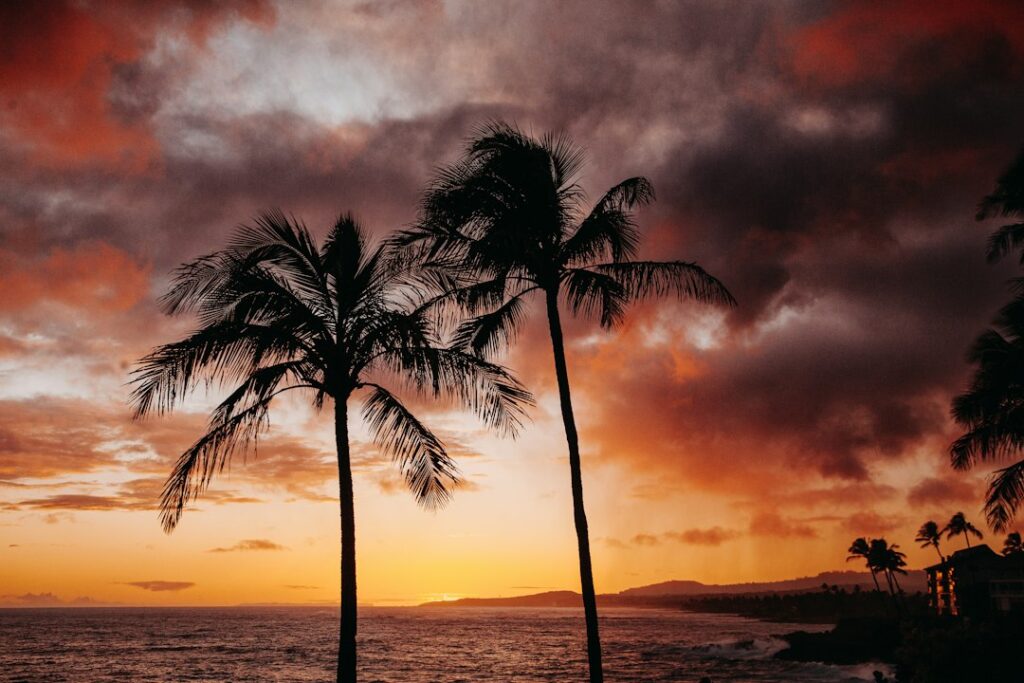
Yes, but the character changes. At high tide, the shelf disappears under two to three feet of water and turns into a snorkel platform with steady visibility over live coral in 8 to 15 feet. Swimmers should stay clear of the residential swim-only zones and avoid the boat ramp channel. Sunset viewing from the shoreline benches is popular year-round, particularly during November when the sun sets over Kohala Mountain silhouettes.
Does short-term rental law affect visitors staying nearby?
Yes. The nearby Mauna Lani and Waikoloa Beach Resort areas allow permitted vacation rentals, but private homes along Puako Beach Drive itself operate under stricter Hawaii County zoning that limits nightly rentals. The pattern differs from Oahu’s Bill 41 short-term rental rules, which apply only to Oahu. Visitors should verify the rental’s permit status with Hawaii County before booking.