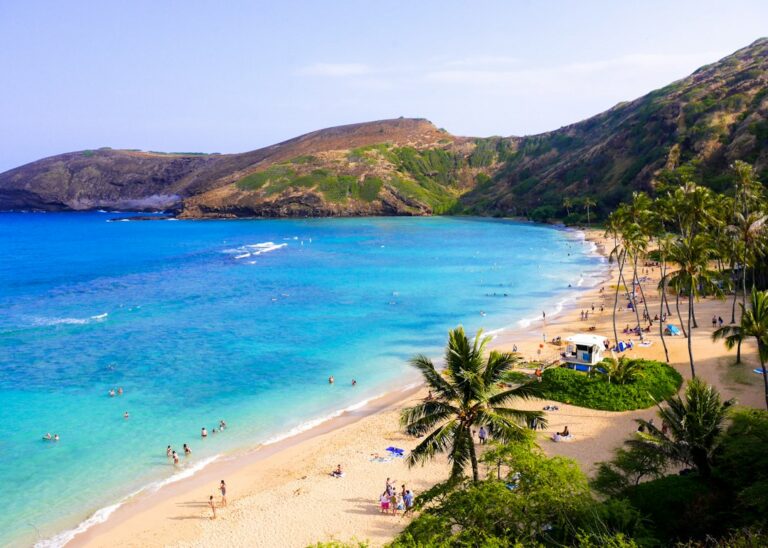
Tunnels Reef, called Makua by longtime Kaua’i residents, sits on the North Shore about 6.5 miles west of Hanalei town. The reef is famous for two contradictory reputations: a summer snorkeling lagoon so clear divers can spot green sea turtles from shore, and a winter shorebreak that closes water entry for months at a time.
The swing between those two states runs on a predictable calendar. From roughly May through September, trade winds and small south swells leave the inner lagoon glassy and swimmable. From November through March, North Pacific storm energy hits the outer reef with waves that regularly break at 12 to 20 feet, sending water and sand across the entry channel.
For mainland households researching a Kaua’i visit or a permanent move to the North Shore, understanding this cycle — plus the Haena State Park reservation system, the $10 non-resident entry fee, and Hawaii’s Act 104 reef-safe sunscreen enforcement — is the difference between a productive planning trip and a wasted drive to the end of the road.
Where Tunnels Sits on Kaua’i’s North Shore
Tunnels Reef fronts Makua Beach in Haena, at approximately mile marker 8 on Kuhio Highway (Route 560). The reef sits between Ke’e Beach — the trailhead for the Kalalau Trail — and Kepuhi Point to the east. Total drive time from Lihue Airport runs 75 to 90 minutes depending on traffic through Kapa’a.
The reef takes its English name from a series of caverns and lava tubes on its outer wall, which are popular with intermediate scuba divers. Locals prefer Makua, the older Hawaiian place name, and county signage uses both interchangeably. The parking situation is what makes Tunnels distinct from every other Kaua’i reef.
Since 2020, the state has capped daily entry to Haena State Park at 900 people to reduce road congestion and reef trampling. Non-residents cannot drive private vehicles past the checkpoint. The only paved access points are the tiny turnouts along Kuhio Highway before mile 8, and those fill by 7 a.m. on summer weekends.
Distance and drive times
| Origin | Miles | Typical drive | Traffic risk |
|---|---|---|---|
| Lihue Airport | 39 | 90 minutes | Heavy through Kapa’a |
| Princeville | 10 | 25 minutes | Slow past Hanalei bridge |
| Hanalei town | 6.5 | 18 minutes | Bridge one-lane bottleneck |
| Poipu | 52 | 110 minutes | Kapa’a corridor |
| Kilauea | 15 | 35 minutes | Moderate |
The Nov-Mar Shorebreak That Closes Entry
Winter on Kaua’i’s North Shore behaves like a switch. Between roughly November 1 and March 31, the Aleutian low-pressure system generates long-period swells that arrive at Tunnels from the north and northwest. Wave faces of 8 to 15 feet are typical; peak storm events push 20 to 30 feet, which the National Weather Service Honolulu forecast office flags with High Surf Warnings.
The problem at Tunnels is geometry. The inner lagoon connects to the open ocean through a narrow sand channel roughly 40 yards wide. When outer-reef sets exceed 6 feet, that channel funnels the returning water into a rip current that can pull an average swimmer offshore at 2 to 3 feet per second — faster than most people can swim.
Lifeguards from Kaua’i County post red flags across Haena beaches for large portions of the winter. On red-flag days, entering the water past knee depth is prohibited, and citations are issued. The Hawaii surf season cycle behind these closures follows the same pattern as O’ahu’s North Shore.
Winter warning signs to read from shore
- Whitewater visible across the entire outer reef line
- Sand-colored water pushing seaward through the channel
- Red or yellow flags at the Haena Beach Park tower
- Waves breaking directly onto the sand at the entry
- No local surfers or paddlers visible in the channel
The most dangerous days are the ones that look calm at the shoreline while the outer reef takes 15-foot sets. Water pulled onto the reef by those sets returns as an invisible seaward current. Local drowning statistics tracked by the Hawaii Department of Health show North Shore Kaua’i beaches accounting for a disproportionate share of visitor water deaths each winter.
May-Sep Clarity and the Inner Lagoon
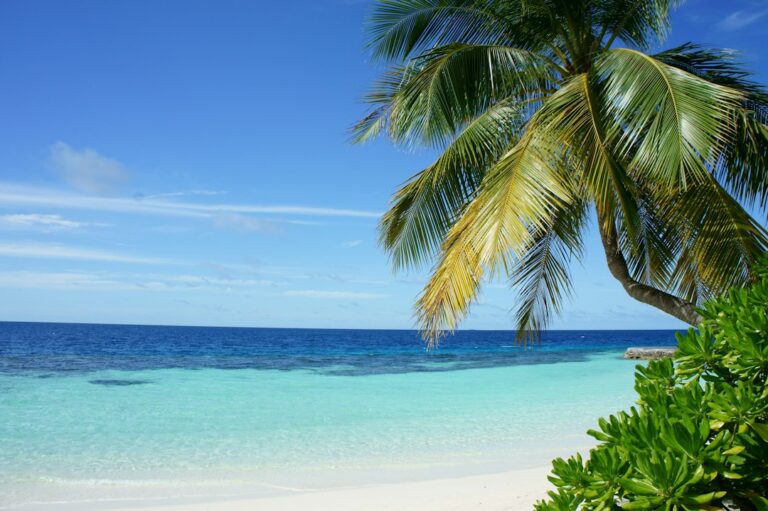
The summer version of Tunnels looks like a different coastline. Between May and September, the North Pacific goes quiet, and inner-reef visibility routinely runs 60 to 100 feet. Water temperature sits at 78 to 82°F. Trade winds from the east or northeast blow offshore over the reef, holding the surface flat through mid-morning.
The inner lagoon is a shallow, coral-strewn basin roughly 800 yards long and 150 yards wide, protected by the outer reef crest. Depth ranges from 3 feet at low tide near the sand to 25 feet in the deeper coral patches. Green sea turtles (honu) feed in the algae flats, and reef fish counts on Tunnels routinely rank in the top three for Kaua’i.
Snorkelers who stay inside the reef crest — easy to spot as a line of breaking whitewater 400 yards offshore — face minimal current risk. The problem starts when strong swimmers try to reach the outer reef caverns without a boat, misjudging both the wall depth and the drift back.
Summer visibility by month
| Month | Water temp | Typical viz | North swell risk |
|---|---|---|---|
| May | 76°F | 50–70 ft | Low |
| June | 78°F | 70–90 ft | Very low |
| July | 80°F | 80–100 ft | Very low |
| August | 81°F | 80–100 ft | Very low |
| September | 82°F | 70–90 ft | Low |
| October | 81°F | 50–80 ft | Rising |
The Mile-Long Outer Reef Structure
The outer reef at Tunnels forms an arc roughly one mile long, curving from the eastern edge near Kepuhi Point to the western terminus near Ke’e. Depth on the outer face drops from 25 feet to over 90 feet within a few hundred yards. This vertical wall is what makes the site a signature Kaua’i dive location.
Named features include First Cathedral, Second Cathedral, and a series of lava-tube “tunnels” that run through the reef body itself. Divers report seeing whitetip reef sharks resting under ledges, spotted eagle rays gliding along the wall, and monk seals hauling out on the sand between morning tide changes.
Local dive operators run boat trips out of Hanalei Bay from May through September only. Prices in 2026 range from $175 to $225 per person for a two-tank guided dive. Shore diving to the outer reef is technically possible in glass conditions but requires local knowledge; several visitor fatalities each decade trace to inexperienced divers attempting the outer wall from Makua Beach.
Reef zones from shore outward
- Sand entry channel (0–3 feet deep)
- Inner lagoon coral patches (3–25 feet)
- Outer reef crest and breaking wave line (5–15 feet)
- Outer wall and cavern zone (25–90 feet)
- Blue water beyond the drop-off (90+ feet)
Haena State Park $10 Pass and Shuttle Reservation
Non-resident access to Haena State Park — which controls the parking closest to Tunnels — requires two separate reservations made through gohaena.com. The first is a $10 per-person entry fee. The second is either a $10 parking slot for a private vehicle or a $40 round-trip shuttle seat from Waipa. Hawaii residents with a valid state ID enter free.
The reservation window opens 30 days in advance at 12:00 a.m. Hawaii Standard Time. Peak summer weekends sell out within the first hour. The state limits total daily park entries to 900 people, split roughly 60/40 between drive-in and shuttle passengers. Ongoing state management of the daily cap has been covered by Honolulu Civil Beat.
Rangers at the checkpoint scan QR codes on printed or phone-displayed passes. Vehicles without a confirmed parking reservation are turned around at the entry gate and directed back to the small roadside pullouts before mile 8, which have no restrooms and no lifeguard coverage.
Haena State Park entry costs (2026)
| Item | Non-resident | HI resident | Booking window |
|---|---|---|---|
| Entry fee (per person) | $10 | Free with ID | 30 days out |
| Parking (per vehicle) | $10 | Free with ID | 30 days out |
| Shuttle from Waipa | $40 round trip | $15 round trip | 30 days out |
| Children under 3 | Free | Free | Not required |
| Kalalau Trail day-hike combo | +$0 | Free | Same booking |
The shuttle runs from the Waipa Park-and-Ride, three miles west of Hanalei, on a rolling loop between 6:20 a.m. and 6:40 p.m. Passengers must return on any shuttle before the last outbound run — missing it means a long walk or an expensive taxi. Vehicles left overnight at Waipa are towed.
Reservation-holders can compare the Haena system with other Kaua’i and neighbor-island permit programs, including the Diamond Head Crater non-resident booking window on O’ahu and the Haleakala sunrise summit reservation on Maui, since all three run on similar 30-day rolling calendars.
Drift Toward Kepuhi and Current Patterns
The dominant water movement at Tunnels runs east-to-west along the shoreline, then reverses into a return current that funnels through the sand channel on the eastern edge. On days with a north or northwest swell, snorkelers drift steadily toward Kepuhi Point about 400 yards east of the primary entry.
Kepuhi Point sticks out from the shoreline as a low rocky headland. Water moving past the point accelerates into a bottleneck between the point and the eastern edge of the outer reef. Local water safety officers describe this bottleneck as the “Tunnels drift,” and rescues here account for the majority of non-fatal incidents on the beach.
Snorkelers who lose track of their entry position often surface near Kepuhi and try to walk back along the shoreline. This works in summer at low tide. In winter or at high tide, the shoreline route requires climbing over slippery lava benches with unpredictable wave sets. Retracing the swim inside the reef crest is safer.
Current management for snorkelers
- Enter and exit through the same sand channel
- Fix a shore landmark (a tree, a house roof) before submerging
- Surface every 5 minutes to check drift
- Stay inside the whitewater line marking the outer reef
- Turn back when the channel bearing changes by 45 degrees
Water temperature at Tunnels changes minimally through the year, but wind exposure does. Afternoon trades from the northeast create surface chop by 1:00 p.m. on most days, reducing visibility from 90 feet to 40 feet within an hour. Serious snorkelers and divers finish their sessions before noon.
Act 104 Reef-Safe Sunscreen Enforcement
Hawaii Act 104 took effect January 1, 2021, and prohibits the sale and distribution of sunscreens containing oxybenzone or octinoxate anywhere in the state. Kaua’i County added octocrylene and avobenzone to its local ban under Ordinance 979 in 2022, making Kaua’i beaches — including Tunnels — the strictest reef-chemical zone in the United States.
Enforcement at Tunnels is uneven but real. Rangers at the Haena State Park entry occasionally check bags and confiscate non-compliant products. The state’s original fine schedule set penalties at $500 for a first offense and $1,000 for subsequent violations. Most enforcement happens through retail-side inspection, not beach checkpoints.
Compliant options are widely stocked at ABC Stores, Foodland, and Times Supermarket across the island. Prices for a 4-ounce zinc-based tube run $18 to $32, roughly triple the cost of a mainland drugstore sunscreen. Details on the ingredient rules and household planning are covered in the site’s Act 104 sunscreen guide.
Approved vs banned active ingredients
| Ingredient | Status | Statute | Common in |
|---|---|---|---|
| Non-nano zinc oxide | Allowed | — | Mineral sunscreens |
| Non-nano titanium dioxide | Allowed | — | Baby formulas |
| Oxybenzone | Banned statewide | Act 104 | Many drugstore sprays |
| Octinoxate | Banned statewide | Act 104 | Chemical sunscreens |
| Octocrylene | Banned on Kaua’i | Ord. 979 | Sport formulas |
| Avobenzone | Banned on Kaua’i | Ord. 979 | Broad-spectrum sprays |
Long-sleeve UPF 50 rash guards and full-length swim leggings solve most of the sunscreen problem for reef snorkelers and cost less over a two-week trip than daily reapplication of $28 zinc tubes. State health guidance from the Hawaii Department of Health explicitly recommends physical UV protection over chemical sunscreen at reef sites.
Real Costs to Visit Tunnels from the Mainland
Planning a Tunnels-focused day requires more line items than most reef stops on the Hawaiian Islands. A household of four traveling from Princeville can expect to spend $190 to $280 for a single park visit once fees, rentals, and reef-safe sunscreen are included.
Sample four-person day-trip budget
| Line item | Cost | Notes |
|---|---|---|
| Haena entry (4 × $10) | $40 | Booked at gohaena.com |
| Parking | $10 | Per private vehicle |
| Snorkel gear rental (4 sets) | $60 | Hanalei outfitters |
| Reef-safe sunscreen (2 tubes) | $56 | Zinc, 4 oz each |
| Water and lunch | $45 | Foodland Princeville deli |
| Rash guards (if buying) | $80 | Optional one-time cost |
| Total (rental route) | $211 | Excluding rash guard purchase |
Households comparing lodging near Tunnels typically weigh Princeville condos against Poipu resorts on the sunnier south side. The site’s breakdown of Poipu vs Princeville lodging covers the winter tradeoff — Poipu stays swimmable when Tunnels closes.
Households planning to relocate rather than visit should also consider the local rules affecting short-term rentals on the North Shore, since many condos near Princeville are restricted under Kaua’i TVR use permits. Long-term rentals within a 15-mile radius of Tunnels command a premium of roughly 40 percent above island median rent.
Emergency Response and Reported Hazards
Kaua’i County stations lifeguards at Haena Beach Park, a short walk east of Tunnels’ main entry. Coverage runs 9:00 a.m. to 5:30 p.m. daily. Outside those hours, the nearest tower is at Hanalei Beach, roughly 6.5 miles east — a response gap that has factored into several reported drownings.
The nearest full-service hospital is Wilcox Medical Center in Lihue, 39 miles and 90 minutes away by road. Serious trauma cases are typically air-lifted to The Queen’s Medical Center in Honolulu, which adds 45 minutes of Coast Guard or Air 1 helicopter transit. Cell coverage at Tunnels is spotty; Verizon works, AT&T is intermittent, T-Mobile often fails.
Documented hazards ranked by frequency
- Rip current at the entry channel
- Coral cuts from standing on the reef
- Reef-fish stings (scorpionfish, stonefish)
- Portuguese man-o’-war during windward periods
- Sea urchin punctures on rocky shoreline exits
- Sun exposure without shade at midday
Coral cuts at Tunnels heal slowly because of bacterial contamination. Local urgent care clinics in Hanalei report a steady summer caseload of infected reef cuts requiring oral antibiotics. Rinsing with fresh water and applying antibiotic ointment within an hour of exit is the standard household prevention protocol.
Portuguese man-o’-war blooms track eight to ten days after strong east-northeast trades. The Hawaii Department of Health publishes a beach hazard forecast that snorkelers should check the morning of a planned visit. Local news outlets like Hawaii News Now often flag active jellyfish reports during peak trade-wind cycles.
Reef Ecology and Ongoing Preservation
Tunnels sits inside the North Shore Reef Complex, a state-designated area under partial management by the Division of Aquatic Resources. Coral cover on the outer reef ranges from 25 to 45 percent depending on the transect, which is high by Hawaiian standards but down from an estimated 55 to 65 percent in the 1980s.
Coral bleaching events tied to elevated sea-surface temperatures affected the reef during the 2015, 2019, and 2023 warm seasons. State monitoring flagged localized mortality but no full reef die-off. Coral recovery at Tunnels tracks the same slow pace as reefs across the archipelago — roughly 1 to 2 percent cover recovery per year in undamaged zones.
Green sea turtles (honu) are protected under both the federal Endangered Species Act and Hawaii state law. Approaching a resting turtle closer than 10 feet is a citable offense. Rangers at Haena issue between 20 and 60 warnings per summer season for turtle-approach violations.
Species commonly observed at Tunnels
- Green sea turtle (honu)
- Hawaiian monk seal (occasional haul-out)
- Yellow tang, Moorish idol, and butterfly fish
- Whitetip reef shark on the outer wall
- Spotted eagle ray during summer
- Trumpetfish and cornetfish in coral patches
State conservation policy at Tunnels is documented through the Hawaii Department of Agriculture aquatic services office, and reef monitoring data appears in bulletins from the University of Hawaii Sea Grant program. Households considering long-term participation in reef stewardship can look into commercial pond and reef work through DLNR aquaculture lease programs.
Where to Stay, Eat, and Refuel
The nearest supermarket to Tunnels is the small Hanalei Big Save, 6 miles east. Foodland Princeville is 10 miles east and stocks a larger reef-safe sunscreen selection. Gas stations are limited: the Chevron in Princeville and the small Menehune Food Mart in Hanalei are the last fuel stops before the end of the road at Ke’e.
Restaurants near Tunnels are scarce. Haena Beach Park has picnic tables and a covered pavilion but no food vendors. Households often pack lunch from Princeville or grab plate lunches at Hanalei Bread Company ($14 to $22) or Chicken in a Barrel ($18 to $26).
Fuel and grocery distances from Tunnels
| Service | Location | Miles | Round-trip minutes |
|---|---|---|---|
| Fuel (Chevron) | Princeville | 10 | 50 |
| Groceries (Foodland) | Princeville | 10 | 50 |
| Urgent care | Hanalei | 6.5 | 36 |
| ATM | Hanalei | 6.5 | 36 |
| Post office | Hanalei | 6.5 | 36 |
Fuel prices on Kaua’i’s North Shore run 30 to 60 cents per gallon above Lihue prices, per weekly reports from the EIA gasoline and diesel tracker. Filling in Lihue before the drive up saves a two-tank rental car household roughly $18 to $25 per trip.
Rental car availability for winter Kaua’i stays is generally strong, since demand shifts toward South Shore destinations. Households traveling in summer should book both cars and Haena reservations at least 45 days ahead. Winter visitors focused on the drier south end may prefer basing in Kalaheo — the site’s guide to relocating to Kalaheo details upcountry weather patterns.
Frequently asked questions
Is Tunnels Reef safe for beginner snorkelers in summer?
Yes, between May and September the inner lagoon is one of the calmest reef environments on Kaua’i. Beginners should stay inside the visible whitewater line marking the outer crest, enter through the sand channel, and finish sessions before 1 p.m. when trade winds create surface chop. Wearing a bright-colored rash guard improves visibility to lifeguards along the shoreline.
Can visitors drive directly to Tunnels without a reservation?
No. Non-residents cannot drive past the Haena State Park checkpoint without a $10 entry pass and a $10 parking reservation booked at gohaena.com. Roadside turnouts before mile 8 offer a limited alternative but fill by 7 a.m. on summer weekends and have no lifeguards or restrooms. Hawaii residents with valid state ID enter free but still need shuttle bookings.
How dangerous is Tunnels in winter?
Very dangerous for water entry. From November through March, north swells push 12- to 20-foot waves across the outer reef, and the return current through the entry channel can exceed 3 feet per second. Kaua’i County lifeguards post red flags on most winter days, and citations are issued for swimming past knee depth. The beach itself remains open for shoreline walking.
What sunscreen is legal to use at Tunnels?
Only non-nano mineral formulas based on zinc oxide or titanium dioxide. Kaua’i County bans oxybenzone, octinoxate, octocrylene, and avobenzone. Compliant tubes cost $18 to $32 at Foodland and ABC Stores. Long-sleeve UPF 50 rash guards and full-length swim leggings reduce chemical use and cost less than repeated tube purchases over a two-week trip.
When do the Haena State Park reservations open?
The booking window opens 30 days before the intended visit, at 12:00 a.m. Hawaii Standard Time on gohaena.com. Peak summer weekend slots sell out within the first hour. The system covers three products: entry pass, private-vehicle parking, and the Waipa shuttle. Cancellations sometimes free up spots two to five days out — refreshing the site helps.
How does the Waipa shuttle work?
Passengers park at the Waipa Park-and-Ride three miles west of Hanalei, then ride a shuttle bus on a rolling loop between 6:20 a.m. and 6:40 p.m. Round-trip fare is $40 for non-residents. Riders can return on any shuttle before the last outbound run. Missing the final shuttle means arranging a taxi from Ke’e, which usually runs $60 to $90.
What is the best month to visit Tunnels?
June and July offer the most consistent conditions: 78° to 80°F water, 70 to 100 feet of visibility, minimal north swell, and reliable morning glass-off. September is quieter for crowds but carries a small rising-swell risk. Avoiding weekend days between June 15 and August 15 improves the parking outlook and reservation availability at gohaena.com.