If you’re thinking about moving to Hawaii — or you just landed and you’re apartment hunting — traffic and commute times should be near the top of your research list. On O’ahu especially, where you live relative to where you work can mean the difference between a 15-minute cruise and a 90-minute crawl.
Updated September 2026: Hawaii public schools started the 2026–27 school year in early August—expect heavier traffic through the school year than during summer months. TheBus and Skyline fares also increased July 1, 2026: the adult monthly pass is now $90 (up from $80). All commute estimates in this guide reflect typical school-year conditions.
Here’s the honest breakdown of Hawaii traffic and commute times in 2026, neighborhood by neighborhood, so you can plan accordingly.
How Bad Is Hawaii Traffic, Really?
Let’s start with the big picture. The average one-way commute in Honolulu County is around 27 minutes according to Census data — which sounds reasonable until you realize that number includes people who live five minutes from work in Kaka’ako. If you’re commuting from Kapolei or Ewa Beach into downtown Honolulu during rush hour, you’re looking at 45 minutes to over an hour and a half.
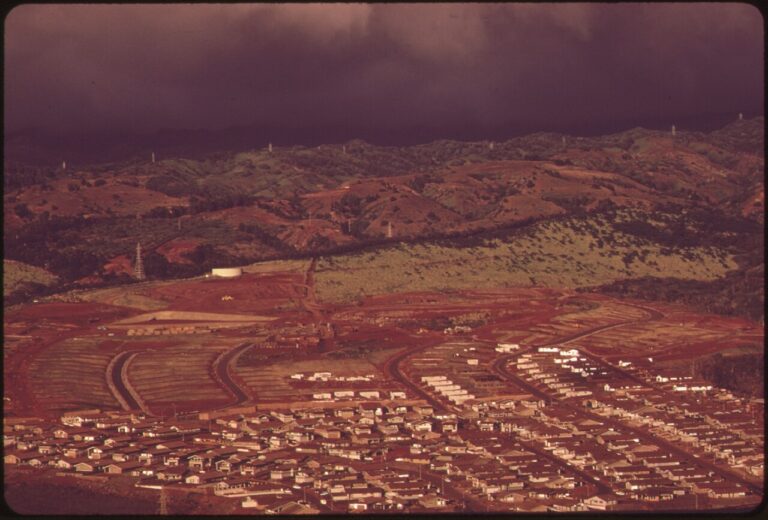
Honolulu has historically ranked among the worst cities in America for traffic congestion. INRIX data has shown drivers spending upwards of 90 hours per year stuck in traffic, costing over $1,200 annually in wasted fuel and time. The core problem is simple: most jobs are concentrated in urban Honolulu (downtown, Ala Moana, Waikīkī), but affordable housing keeps pushing people further west toward Kapolei, Ewa Beach, and beyond.
The result? A bottleneck on the H-1 Freeway that’s become legendary among locals.
Peak Rush Hour Times on O’ahu
If you want to avoid the worst of it, here are the windows to watch out for:
- Morning rush: 6:00 AM – 8:30 AM (westbound to Honolulu is brutal)
- Afternoon rush: 3:00 PM – 6:00 PM (eastbound back to Ewa/Kapolei)
- Midday: Generally clear, with minor congestion around Waikīkī from tourist traffic
- Weekends: Much lighter, though North Shore traffic on Saturdays can be heavy
More than 50% of workers living in the Moanalua-to-Pearl City corridor, Central O’ahu, and Ewa leave home before 7:00 AM just to beat the worst of it. If you can shift your schedule to start work before 7 AM or after 9 AM, you’ll save yourself a lot of frustration.
Commute Times by Neighborhood (to Downtown Honolulu)
Here’s what you can realistically expect during morning rush hour heading into downtown Honolulu or the Ala Moana area:
Kaka’ako / Ala Moana
Commute time: 5–15 minutes
If you live and work in the urban core, traffic is basically a non-issue. You might even walk or bike. This is one reason Honolulu’s central neighborhoods command premium rents — you’re paying for proximity.
Kailua
Commute time: 25–50 minutes
Kailua is one of the most popular residential areas on O’ahu, and the commute into town is manageable but route-dependent. You’ll take the Pali Highway (Route 61) or the Likelike Highway (Route 63) through the Ko’olau Range. Without traffic, it’s about 20 minutes. During rush hour, 35–50 minutes is normal. Accidents in the tunnels can turn it into a nightmare — there’s essentially no alternate route.
Pearl City / Aiea
Commute time: 15–45 minutes
Central O’ahu communities like Pearl City and Aiea sit along the H-1 corridor and offer a decent middle ground. Off-peak, you’re downtown in 15–20 minutes. During rush hour, expect 30–45 minutes depending on exactly where you’re headed. The Pearlridge area is well-served by bus routes too.
Mililani
Commute time: 35–60 minutes
Mililani is a popular planned community in Central O’ahu with good schools and a suburban feel. The trade-off is the commute — you’ll take H-2 south to H-1, and that merge point is one of the island’s worst chokepoints. Leaving before 6:00 AM helps significantly.
Kapolei / Ewa Beach
Commute time: 45–90+ minutes
This is where it gets real. Kapolei has been marketed as O’ahu’s “second city,” and while development is bringing more jobs and amenities westward, the majority of commuters still head east into Honolulu. The H-1 from Kapolei to downtown during morning rush is regularly 60–90 minutes. Some residents report commutes exceeding 90 minutes when there’s an accident. The upside? Housing is significantly more affordable out here compared to town.
Hawai’i Kai
Commute time: 25–45 minutes
On the east side, Hawai’i Kai residents take the Kalaniana’ole Highway (Route 72) into town. It’s a scenic drive, but the two-lane sections create bottlenecks. Morning commutes are typically 30–45 minutes.
North Shore (Hale’iwa / Waialua)
Commute time: 60–90+ minutes
Very few people commute daily from the North Shore to Honolulu — and for good reason. It’s beautiful up there, but the drive is long and winding. Most North Shore residents either work locally, work remotely, or have flexible schedules.
The Skyline Rail: A Game-Changer?
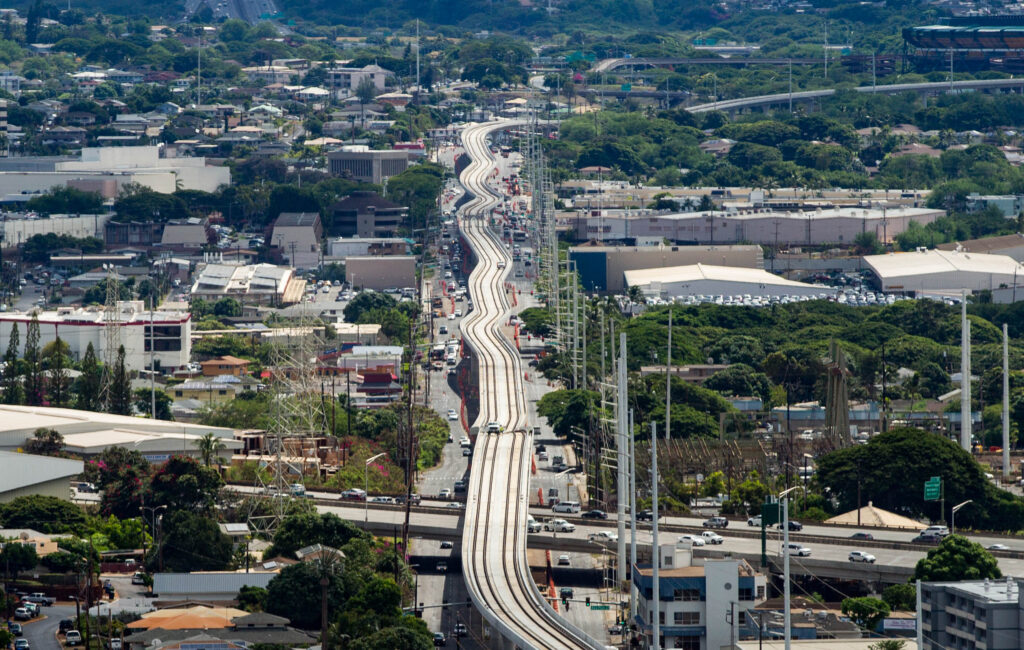
The Honolulu Skyline rail system has been one of the most talked-about (and debated) infrastructure projects in Hawaii’s history. As of 2026, Segments 1 and 2 are operational, running from East Kapolei to Middle Street with 11 stations along the route.
Key stations include Kualaka’i (East Kapolei), Ho’opili (Honouliuli), Pouhala (Waipahu Transit Center), Waiawa (Pearl Highlands), and Kalauao (Pearlridge). The automated, driverless system connects with TheBus for transfers into urban Honolulu.
Segment 3 — extending the line through Kalihi, Chinatown, Downtown Honolulu, and ultimately to Civic Center in Kakaʿako — is under active construction. HART placed the first of 148 guideway columns in April 2026, with full completion targeted for 2031. Once open, the 20-mile route will genuinely transform commuting for West O’ahu residents. For now, Segments 1 and 2 provide relief but don’t eliminate the H-1 bottleneck entirely.
Tips for Beating Hawaii Traffic
After talking to locals and researching what actually works, here are the best strategies:
1. Choose Your Home Based on Your Commute
This sounds obvious, but it’s the single biggest decision you’ll make. If you work in downtown Honolulu, living in Kailua or Pearl City will save you hours per week compared to Kapolei. Use Google Maps’ “depart at” feature to check realistic rush hour times before signing a lease. Check out our guide to the best neighborhoods in Honolulu for family-friendly options with reasonable commutes.
2. Shift Your Schedule
If your employer allows it, starting work at 6:30 AM or 9:30 AM instead of 8:00 AM can cut your commute time by 30–50%. Many Hawaii employers are flexible about this because they know the traffic situation.
3. Use TheBus + Skyline
O’ahu’s public transit system (TheBus) is actually quite good by U.S. standards, with over 100 routes covering the island. A monthly pass costs $90 (increased from $80 effective July 1, 2026). Combined with the Skyline rail, it’s becoming a viable alternative for West O’ahu commuters. You can read, nap, or work instead of white-knuckling the H-1.
4. Explore Remote Work
The post-2020 shift to remote and hybrid work has been a genuine quality-of-life improvement for many Hawaii residents. If you can negotiate even 2–3 remote days per week, it dramatically changes the calculus of where you can afford to live.
5. Know Your Alternate Routes
When the H-1 is jammed, locals use surface streets like Nimitz Highway, Kamehameha Highway, or Fort Weaver Road. Waze is popular on the island and does a decent job routing around accidents. The H-3 freeway connecting Windward O’ahu to Pearl Harbor area is often underutilized and can be a lifesaver if it’s on your route.
Commute Times on Neighbor Islands
Traffic on Maui, the Big Island, and Kaua’i is a completely different story. While each island has its pinch points, commute times are generally much shorter:
- Maui: Kahului to Kīhei takes 20–30 minutes. The worst stretch is the Honoapiʻilani Highway between Lahaina and Kahului (45–60 minutes during peak times). Check our guide on the best places to live on Maui for more details.
- Big Island: Traffic is minimal. Kailua-Kona to Waimea is about 40 minutes with almost no congestion. Hilo has very light traffic.
- Kaua’i: The most you’ll deal with is a 30-minute stretch from Kapa’a to Līhu’e during rush hour. The rest of the island is wide open.
What Locals Say About Commuting in Hawaii
Talk to anyone who’s lived on O’ahu for a while and you’ll hear a common theme: the commute is the trade-off. You’re living in one of the most beautiful places on Earth, but you’re paying for it in time on the road (among other things).
Many residents have adapted by restructuring their lives around traffic. They surf before work at 5 AM, hit the gym near the office instead of near home, or schedule errands for midday when the roads are clear. Some couples even stagger work schedules so one parent avoids rush hour entirely.
The key takeaway? Factor commute time into every decision — where to live, what job to take, what school to enroll your kids in. In Hawaii, your commute isn’t just a drive. It shapes your entire daily routine.
Frequently Asked Questions
What is the average commute time in Hawaii?
The average one-way commute in Hawaii is approximately 25–28 minutes according to U.S. Census data. However, this varies dramatically by location. Honolulu County averages around 27 minutes, while commuters from West O’ahu (Kapolei, Ewa Beach) into downtown regularly face 45–90 minute drives during rush hour.
What time is rush hour in Honolulu?
Morning rush hour on O’ahu runs from approximately 6:00 AM to 8:30 AM, with the worst congestion heading eastbound (toward Honolulu) on the H-1 Freeway. Afternoon rush hour is from 3:00 PM to 6:00 PM heading westbound. Avoiding these windows can cut your commute time in half.
Is the Honolulu rail system worth using for commuters?
As of 2026, the Skyline rail covers East Kapolei to Middle Street (Segments 1 and 2), with 11 stations operational. It’s useful for West O’ahu residents, especially when combined with TheBus transfers. Segment 3 (Kalihi to Civic Center in Kakaʿako) is under active construction—HART placed the first guideway column in April 2026—with a target opening of 2031.
How can I reduce my commute time in Hawaii?
The most effective strategies are: choose housing close to your workplace, shift your work schedule to avoid peak hours (before 6 AM or after 9 AM), use the Skyline rail and TheBus system, negotiate remote work days, and learn alternate surface-street routes for when the H-1 is backed up.