Thinking about moving to Maui? You’re not alone. The Valley Isle draws people from across the mainland with its jaw-dropping scenery, year-round warm weather, and that unmistakable island pace of life. But Maui isn’t one-size-fits-all — each town and neighborhood has its own personality, price range, and lifestyle vibe.
After spending years in the islands, I can tell you that where you land on Maui matters more than most people realize. The sunny south side feels completely different from the lush upcountry, and the rebuilt west side has a different energy than the bohemian north shore. Here’s an honest, area-by-area breakdown to help you find your spot.
Kihei — Best for Affordable Beach Living
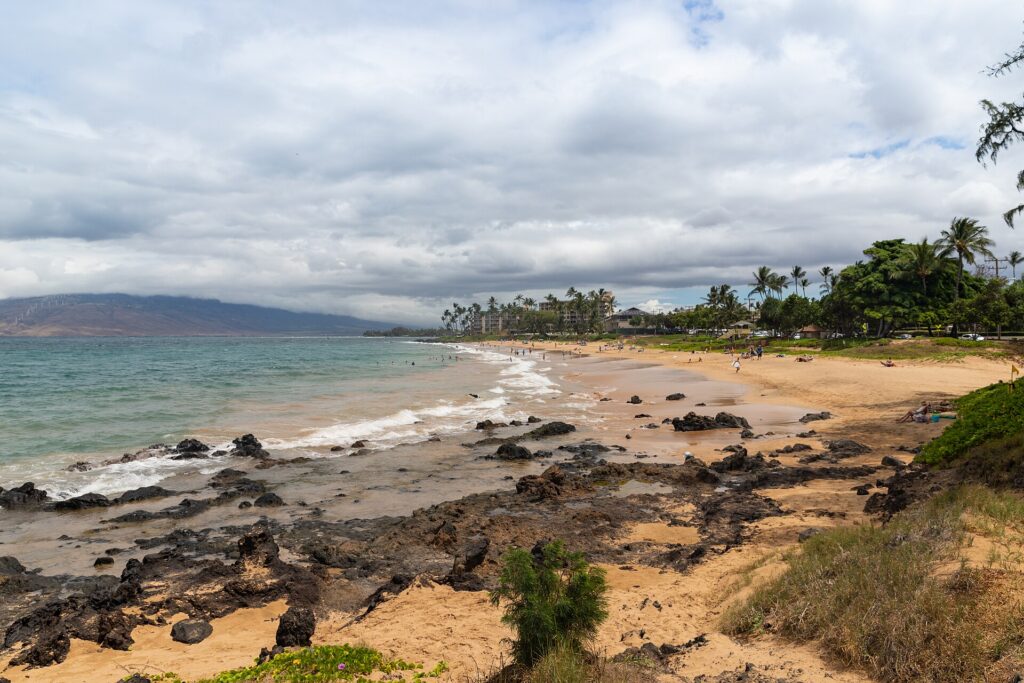
If you want sun, beaches, and relatively reasonable prices (by Maui standards), Kihei is where most newcomers end up — and for good reason. This south Maui town stretches along six miles of coastline and gets more sunny days than almost anywhere else on the island.
Kihei is home to the famous Kamaole Beach Parks I, II, and III, which offer excellent swimming, snorkeling, and sunset views. The town has a laid-back, slightly tourist-heavy vibe, but once you get off South Kihei Road, the residential areas feel genuinely local.
Cost of Living in Kihei
One-bedroom apartments in Kihei typically rent for $2,000 to $2,800 per month in 2026. Condos are the most common housing type, with median sale prices hovering around $650,000 to $800,000. It’s not cheap, but compared to Wailea down the road, it’s a bargain. Groceries run about 30-50% higher than mainland prices — expect to pay $6-7 for a gallon of milk and $5+ for a dozen eggs.
Who It’s Best For
Young professionals, remote workers, and couples who want beach access without Wailea prices. Kihei also has decent shopping (Kihei Gateway Plaza, Azeka Shopping Center) and plenty of restaurants, so you won’t feel isolated. If you’re looking for rental options in Hawaii, Kihei has the most inventory on Maui.
Wailea & Makena — Best for Luxury Living
Just south of Kihei, the vibe shifts dramatically. Wailea is Maui’s upscale resort community with manicured landscapes, championship golf courses, and some of the most beautiful beaches in Hawaii. Makena, further south, is even more secluded and exclusive.
Big Beach (Oneloa) at Makena State Park is regularly ranked among the best beaches in the world. Wailea Beach Path, a 1.5-mile oceanfront walkway, connects five stunning beaches and passes by the Four Seasons, Grand Wailea, and Fairmont Kea Lani.
Cost of Living in Wailea
This is the premium tier. Condos in Wailea start around $1.2 million, and single-family homes often exceed $3 million. Rentals are limited but expect $4,000+ for a one-bedroom. You’re paying for world-class amenities, security, and some of the best weather on the island — Wailea averages less than 15 inches of rain per year.
Who It’s Best For
Retirees with healthy savings, executives working remotely, and anyone who prioritizes luxury, privacy, and top-tier amenities. If you’re considering retiring in Hawaii, Wailea is hard to beat for comfort.
Kahului — Best for Convenience and Families
Kahului is Maui’s commercial hub. It’s where the airport is, where Costco is, where the major shopping centers are (Maui Marketplace, Queen Ka’ahumanu Center), and where most of the island’s jobs are concentrated. It’s not the prettiest town on Maui, but it’s arguably the most practical.
Kanaha Beach Park, right near the airport, is actually a fantastic beach with great windsurfing and kiteboarding conditions. The harbor area has been getting some upgrades, and Kahului is slowly developing more character beyond its strip-mall reputation.
Cost of Living in Kahului
Kahului offers some of the more affordable housing options on Maui, especially in neighborhoods like Kehalani and Maui Lani. Median home prices sit around $750,000 to $900,000 for single-family homes. One-bedroom rentals range from $1,800 to $2,400 per month. Having Costco, Walmart, and Home Depot nearby helps keep daily expenses somewhat manageable.
Who It’s Best For
Families with school-age kids (Maui’s best public schools are in this area), working professionals who need to be centrally located, and anyone who values convenience over beachfront living. The Hawaii school system can be hit or miss, but Central Maui has some solid options including Maui Waena Intermediate and Maui High School.
Wailuku — Best for Local Culture and Character
Right next to Kahului but with ten times the personality, Wailuku is Maui’s county seat and the island’s most authentically local town. Market Street has been revitizing over the past decade with local shops, galleries, restaurants like Wailuku Coffee Company, and a genuine small-town feel that’s increasingly rare in Hawaii.
The Iao Valley, one of Maui’s most sacred and beautiful natural areas, sits at the western edge of town. Wailuku Heights and some of the hillside neighborhoods offer stunning views of the valley and the ocean.
Cost of Living in Wailuku
Wailuku runs slightly cheaper than Kahului for homes, with median prices around $700,000 to $850,000. Rentals are comparable to Kahului at $1,800 to $2,300 for a one-bedroom. You get more house for your money here, and the historic homes have way more character than the newer subdivisions in Kahului.
Who It’s Best For
People who want to feel like they actually live in Hawaii, not just near Hawaii. Artists, local business owners, and anyone who values community over resort polish. Wailuku is also a great base for exploring — you’re 20 minutes from the south shore beaches, 15 minutes from the north shore, and right next to Iao Valley.
Paia — Best for the Bohemian Lifestyle
Paia is Maui’s quirky surf town on the north shore. It’s the last stop before the Road to Hana, and it’s packed with eclectic boutiques, health food stores, surf shops, and some of the best restaurants on the island (Mama’s Fish House, just east of town, is legendary).
The surf break at Ho’okipa Beach Park, a few miles east, is world-class. The town itself has a creative, slightly hippie energy that attracts artists, surfers, yoga practitioners, and digital nomads.
Cost of Living in Paia
Paia is pricey for what you get space-wise. Homes typically sell for $1 million to $2 million+, and there aren’t many rentals available — competition is fierce. When rentals do pop up, expect $2,500+ for a one-bedroom. The trade-off is the lifestyle: you’re steps from world-class surf, surrounded by creative people, and living in one of the most beautiful small towns in Hawaii.
Who It’s Best For
Surfers, artists, remote workers with good incomes, and anyone who wants a small-town feel with big natural beauty. If you’re moving to Maui with a flexible schedule and a love for the ocean, Paia is tough to beat.
Lahaina & West Maui — Best for Sunsets and Tourism Jobs
West Maui has been through an incredibly difficult period since the devastating 2023 wildfires that destroyed much of historic Lahaina. As of 2026, the community is still rebuilding, and the landscape is changing. New housing developments are underway, and the town is slowly finding its footing again.
Despite the challenges, West Maui remains one of the most desirable parts of the island. Ka’anapali Beach is consistently ranked among America’s best beaches, and the sunset views from the west side are unmatched. Napili and Kapalua further north offer quieter, more residential alternatives.
Cost of Living in West Maui
Housing costs vary significantly depending on the specific area. Ka’anapali and Kapalua condos start around $800,000 and go well over $2 million. Napili and Kahana offer slightly more affordable options. Rentals in the $2,500 to $3,500 range are common for one-bedrooms, though availability has been impacted by the rebuilding efforts. Knowing how much money you need to move to Hawaii is especially important when considering West Maui.
Who It’s Best For
People who work in tourism and hospitality (West Maui’s biggest employers), sunset chasers, and those who want resort-style living. The rebuilding of Lahaina also presents unique opportunities for those who want to be part of a community’s renewal.
Upcountry (Makawao, Kula, Pukalani) — Best for Space and Views
If you want to escape the coastal heat and tourist crowds, Upcountry Maui is a different world. Sitting on the slopes of Haleakalā at elevations between 1,500 and 4,000 feet, towns like Makawao, Kula, and Pukalani offer cooler temperatures, ranch land, farms, and panoramic views that stretch from the central valley to the ocean.
Makawao is the most well-known Upcountry town — a former paniolo (cowboy) town that’s now a mix of art galleries, boutiques, and local eateries like Komoda Store & Bakery (get there early for the cream puffs). Kula is more rural and agricultural, known for its lavender farm and protea flower farms. Pukalani is the most suburban of the three, with a shopping center and more affordable homes.
Cost of Living Upcountry
You generally get more land for your money Upcountry compared to coastal areas. Homes in Pukalani range from $700,000 to $1 million. Makawao and Kula skew higher, especially for properties with acreage — expect $900,000 to $2 million+. Rentals are limited but typically $2,000 to $2,800 for a one-bedroom. One thing to budget for: you’ll drive more. Everything requires a 20-30 minute trip downhill.
Who It’s Best For
Families who want space, hobby farmers, equestrians (there are several horse properties), and anyone who prefers cooler weather and mountain views over beach proximity. Upcountry also works well for retirees who don’t mind the drive and prefer a quieter, more rural lifestyle.
Haiku — Best for Privacy and Nature Lovers
Tucked into the lush, rainy northeast side of Maui, Haiku is where you go when you want land, privacy, and more of a jungle-meets-farm vibe. Properties here tend to sit on one to five acres with lots of tropical vegetation. It rains more in Haiku than on the south or west shores, which keeps everything impossibly green.
The community is tight-knit and somewhat off the tourist radar. The old Haiku Cannery (now Haiku Marketplace) serves as the town center with a few restaurants and shops. It’s a 15-minute drive to Paia and the beach, so you’re not completely cut off from coastal life.
Cost of Living in Haiku
Haiku offers some of the best value for land on Maui. Homes on multi-acre lots sell for $800,000 to $1.5 million — and you’re getting serious property for that price. Rentals on cottage-style properties range from $1,800 to $2,500. The trade-off is more rain, more bugs, and more maintenance on tropical properties.
Who It’s Best For
Anyone who wants acreage, gardeners and small-scale farmers, people who work from home and don’t need to commute daily, and nature lovers who prefer the sound of rain on a tin roof to the sound of resort pool music.
Hana — Best for Total Seclusion
Hana is at the end of the famous Road to Hana — and that 52-mile, 600-turn drive is exactly why Hana stays so remote and unspoiled. This tiny town on Maui’s east coast feels like stepping back in time. There’s one gas station, one general store, and the iconic Hasegawa General Store. That’s pretty much it for commerce.
Red sand beach (Kaihalulu), Hamoa Beach, and the pools at Ohe’o Gulch (Seven Sacred Pools) are all nearby and stunningly beautiful. The community is predominantly Native Hawaiian, and the pace of life here is genuinely slow.
Cost of Living in Hana
Property prices in Hana vary wildly — from $500,000 for a simple home to multi-million dollar estates on oceanfront acreage. The real cost is convenience: gas is $1-2 more per gallon than the rest of Maui, groceries are limited and expensive, and any serious shopping or medical care requires the 2.5-hour drive to Kahului. Building your first month survival plan is critical if you’re considering Hana.
Who It’s Best For
Artists, writers, telecommuters with satellite internet, retirees who truly want to disconnect, and anyone willing to trade convenience for one of the most beautiful and unspoiled places in Hawaii. Be realistic though — most people who romanticize Hana don’t last more than a year.
Key Factors to Consider When Choosing Your Area
Weather and Climate Zones
Maui has multiple microclimates. South and West Maui (Kihei, Wailea, Lahaina) are dry and sunny. North Shore (Paia, Haiku) gets more rain and wind. Upcountry (Makawao, Kula) is cooler — nighttime temps can drop into the 50s in winter. Pick based on what weather you actually enjoy living in, not just vacationing in.
Commute and Access
Maui traffic has gotten worse over the years, especially on the Mokulele Highway between Kahului and Kihei, and the Honoapiilani Highway to West Maui. If you work in Kahului, living Upcountry or in Kihei means a 25-40 minute commute. West Maui can be 45-60 minutes in traffic.
Job Market
Tourism dominates Maui’s economy. Most jobs are in hospitality, food service, retail, healthcare, and construction. Remote work has become increasingly popular post-pandemic. If you’re job-hunting, check out the best jobs for mainland transplants in Hawaii.
Island Tax Considerations
Hawaii has its own tax structure that catches many newcomers off guard. The state income tax can go up to 11%, and property taxes vary by county. Make sure to research the Hawaii state tax situation before committing to a purchase.
Frequently Asked Questions
What is the cheapest place to live on Maui?
Kahului and Wailuku in Central Maui offer the most affordable housing options, with median home prices around $700,000 to $900,000 and one-bedroom rentals starting around $1,800 per month. Haiku also offers good value if you want more land. Keep in mind that “affordable” on Maui is relative — the overall cost of living is significantly higher than the mainland.
Is Kihei or Lahaina better to live in on Maui?
Kihei offers more affordable housing, consistent sunny weather, and better access to everyday shopping and services. Lahaina (West Maui) has better sunset views and a stronger tourism job market but is still rebuilding after the 2023 fires and generally costs more. For most newcomers, Kihei is the safer and more practical choice.
How much do you need to earn to live comfortably on Maui?
A single person should plan on earning at least $60,000 to $75,000 per year to live modestly on Maui. A family of four will need $120,000 to $150,000+ depending on housing costs and lifestyle. These figures assume renting, not buying. If you want to purchase a home, you’ll need significantly more or a substantial down payment saved up.
Is Maui a good place to raise a family?
Maui can be a wonderful place for families, especially in areas like Kahului, Pukalani, and Kihei where schools and family-friendly amenities are accessible. The outdoor lifestyle is unbeatable — kids grow up surfing, hiking, and swimming year-round. The downsides are limited extracurricular options compared to bigger cities, high childcare costs, and the fact that many families eventually leave when kids reach high school age for more opportunities on the mainland or Oahu.