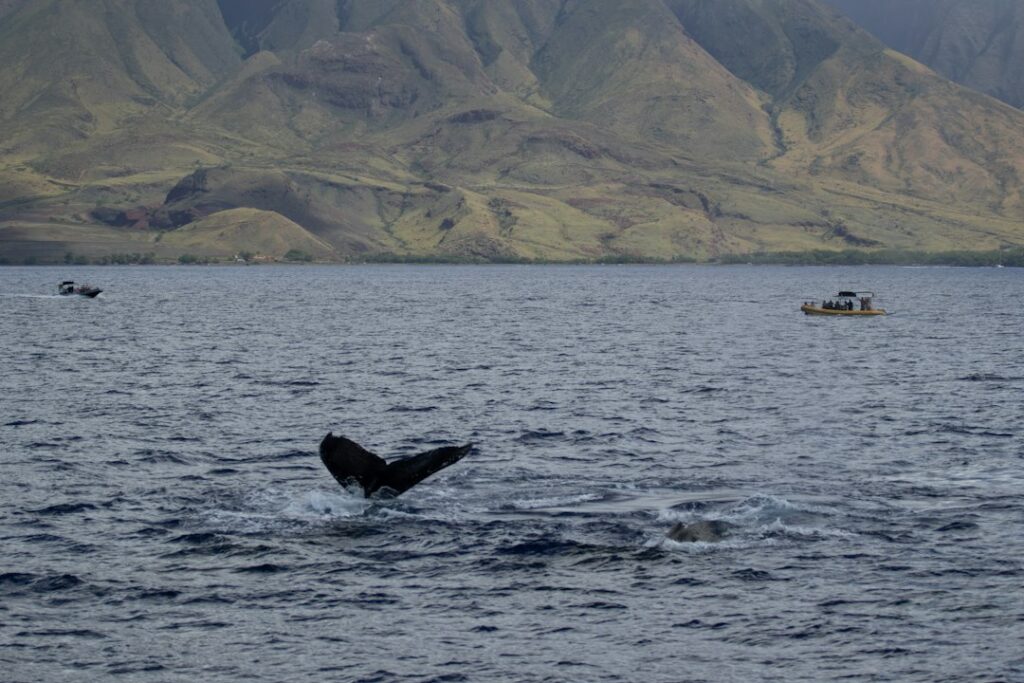
Every winter, thousands of North Pacific humpback whales leave their Alaskan feeding grounds and swim roughly 3,000 miles south to Hawaii’s warm, shallow waters. They come to mate, give birth and nurse calves. For about four months, the islands are one of the most reliable places on Earth to see them, either from a boat or from shore.
For households thinking about moving to Hawaii, whale season matters for more than tourism. It affects winter traffic on coastal highways, boat-tour prices and rental car demand. It even shapes weekends for residents who spend Saturday mornings counting spouts from a lookout.
This guide covers whale watching in Hawaii in full. It explains when the migration peaks, why the Auau Channel off Maui has the most whales and what the federal approach rules require. It also compares boat options by length and price, lists free viewpoints on each island and explains how to stay comfortable on the water.
The humpback migration window: December through April
Humpbacks can arrive in Hawaiian waters as early as late October, but sightings stay rare until December. Numbers climb steadily through the holidays, peak from about January through March, then fall off through April. A few late whales are seen into May, usually mothers with calves who left Alaska late.
Researchers estimate that 8,000 to 12,000 humpbacks visit Hawaii each season, more than half of the North Pacific population. The trip from Alaska takes about six to eight weeks. The whales do not feed while in Hawaii. They live off fat stored during the Alaskan summer.
Month-by-month sighting odds
The table below shows how sighting odds and conditions change over the season. Water temperatures stay close to 75°F the whole time. That is warm enough for newborn calves, which do not yet have thick blubber.
| Month | Whale activity | Typical sightings per 2-hour tour | Avg. daytime high |
|---|---|---|---|
| November | Early arrivals, scattered | 0–3 whales | 83°F |
| December | Building fast | 3–10 whales | 81°F |
| January | Near peak, competitive pods | 10–20+ whales | 80°F |
| February | Peak density | 15–30+ whales | 80°F |
| March | Peak continues, many calves | 10–25 whales | 81°F |
| April | Tapering, mother-calf pairs | 2–8 whales | 82°F |
| May | Rare stragglers | 0–2 whales | 84°F |
Sighting counts are typical ranges reported by Maui tour operators. They vary with weather, sea conditions and island. February is widely considered the best single month. The site’s guide to February Maui humpback peak charter departure timing compares morning and afternoon boats that month.
What whales are doing at each stage
Early in the season, adult males and competitive pods dominate. In a competitive pod, several males chase one female, charging, breaching and slapping their tails. These “heat runs” can last for hours and produce the most dramatic surface action of the season.
By February and March, newborn calves are common. Calves are born about 10 to 15 feet long and weigh about one ton. They surface every three to five minutes, often next to a resting mother. Late-season sightings are slower, but boats often get a closer, longer look.
Why the Auau Channel off Maui has the highest density
The Auau Channel is the water between West Maui and Lanai, with Molokai to the north and Kahoolawe farther south. Together these four islands form what is often called the Maui Nui basin. It holds the highest concentration of humpbacks anywhere in Hawaii.
Shallow, sheltered and warm
Three physical features explain why so many whales gather here. First, the channel is shallow, mostly under 300 feet and rarely deeper than 600 feet. Mothers with calves prefer shallow water like this, probably because it gives predators and pushy males fewer ways to approach.
Second, the surrounding islands block much of the open-ocean swell and some of the trade wind. Third, the water stays near 75°F all winter. A newborn calf can rest and nurse without using up the energy it needs to grow.
The national marine sanctuary
Congress created the Hawaiian Islands Humpback Whale National Marine Sanctuary in 1992. It covers about 1,370 square miles of water, and its largest section surrounds Maui, Lanai and Molokai. The sanctuary’s visitor center is on South Kihei Road in Kihei, with free exhibits and a shoreline viewing deck.
For travelers, the result is simple. A boat leaving Maalaea or Kaanapali reaches whale water within 10 to 20 minutes. On other islands, tours often run 30 minutes or more before the first sighting, and the sea is usually rougher.
The 100-yard rule: federal approach limits under NOAA
Humpbacks in Hawaii are protected under the Marine Mammal Protection Act. Under federal rules enforced by NOAA Fisheries, no one may approach a humpback closer than 100 yards in Hawaiian waters. The rule covers boats, kayaks, paddleboards, surfboards and swimmers.
What the rules require
- No approach closer than 100 yards (about 90 meters) by any watercraft or swimmer.
- No aircraft, including drones, within 1,000 feet of a humpback.
- No disturbing whale behavior, such as cutting across a whale’s path.
- No placing a vessel in a whale’s path to force a close encounter.
The rule limits people, not whales. If a humpback surfaces within 100 yards of a stopped boat, the captain must keep the engine in neutral until the whale moves away. Many of the closest encounters on tours happen this way.
Voluntary guidelines operators follow
Most reputable Hawaii operators also follow “Be Whale Aware” practices developed with sanctuary staff. These include keeping speed at 15 knots or less during whale season, posting a dedicated lookout and never approaching a whale from directly behind or in front.
Speed limits matter because collisions are a real danger to both whales and passengers. Outlets such as Hawaii News Now report boats striking whales most winters. Calves resting near the surface are the most at risk.
Kayakers, paddlers and drone pilots
The 100-yard limit applies just as much to paddleboarders and kayakers, who sometimes drift toward whales without noticing. Paddlers who end up too close should stop paddling, stay together and let the whale pass.
Drone pilots must keep a stricter 1,000-foot buffer. Many coastal parks also ban drone launches outright, so check county and state park rules before flying.
Boat options compared: raft, catamaran and eco tours
Hawaii whale watching tours fall into a few main types. Each one balances comfort, closeness and price differently. The best choice depends on group size, how well a person handles motion and budget.
| Boat type | Typical duration | Adult ticket range | Passengers | Best for |
|---|---|---|---|---|
| Zodiac-style raft | 2–2.5 hours | $90–$160 | 12–24 | Eye-level views, adventurous groups |
| Large catamaran | 2 hours | $65–$120 | 49–149 | Families, stability, restrooms |
| Nonprofit eco tour (Pacific Whale Foundation-style) | 2 hours | $70–$110 | 49–149 | Naturalist commentary, research focus |
| Sunset or dinner whale cruise | 2–2.5 hours | $120–$220 | 40–149 | Couples, dinner plus sightseeing |
| Sailing yacht or small sailboat | 2–3 hours | $110–$180 | 6–40 | Quiet, engine-off listening |
| Private charter | 2–4 hours | $800–$2,500 per boat | 2–12 | Multigenerational groups, photographers |
Prices are typical published adult fares for the 2025–2026 season, before taxes and harbor fees. Children’s tickets usually cost 30% to 50% less. Children under 3 or 4 often ride free on catamarans but are not allowed on most rafts.
Zodiac-style rafts
Rigid-hull inflatable rafts sit low on the water, so passengers are almost at eye level with a surfacing whale. Groups are small, and every seat is close to the edge. The tradeoff is motion: rafts bounce hard in choppy water, have no restrooms and offer little shade.
Most raft operators require passengers to be at least 5 to 8 years old. Pregnant passengers and anyone with back or neck problems are usually told to choose a larger boat. The site’s guide to Napali Zodiac raft charters from Port Allen covers Kauai’s south-shore rafts in detail.
Large catamarans
Catamarans 50 to 65 feet long do most of the whale watching in Hawaii. Their twin hulls reduce rolling, and most carry restrooms, shaded seats and a snack bar. Decks can feel crowded when a whale surfaces, but nearly everyone still gets a clear view.
Many catamarans carry hydrophones, underwater microphones that let passengers hear male humpbacks singing. One song lasts 10 to 20 minutes and is repeated for hours. In the Auau Channel, the singing can be loud enough to hear through a boat’s hull.
Nonprofit eco tours
Pacific Whale Foundation, a Maui-based nonprofit, runs the largest whale watch fleet in the state, mostly from Maalaea Harbor. Several smaller operators use the same model. A certified naturalist joins every tour, and proceeds go toward research and conservation.
These tours usually come with a sighting guarantee. If no whales are seen, passengers get a voucher for a free return trip that season. Prices are at the low end of the catamaran range, and early-morning trips are often discounted.
Departure harbors by island
- Maui: Maalaea Harbor, Kaanapali beach launches and Kihei boat ramp.
- Oahu: Kewalo Basin, Waikiki beach catamarans and Hawaii Kai.
- Hawaii Island: Honokohau Harbor near Kona, Kawaihae and Anaehoomalu Bay.
- Kauai: Port Allen on the south shore and Nawiliwili near Lihue.
Since the August 2023 Lahaina wildfire, Lahaina Harbor has operated in a limited way, and many West Maui trips moved to Kaanapali beach or Maalaea. The Honolulu Star-Advertiser and Civil Beat report on the harbor’s reopening, so confirm the departure point before booking.
How whale watching compares across the islands
Humpbacks visit every main Hawaiian island, but numbers and conditions vary widely. Maui is the clear leader. The other islands still offer good sightings, often as part of a snorkeling or coastline tour.
| Island | Whale density | Time to whale water | Typical adult tour price | Common sea state |
|---|---|---|---|---|
| Maui | Highest | 10–20 minutes | $65–$160 | Calm mornings, windy afternoons |
| Hawaii Island (Kona/Kohala) | Moderate to high | 15–30 minutes | $90–$150 | Generally calm, sheltered west coast |
| Oahu | Moderate | 20–40 minutes | $60–$130 | Moderate chop, more swell |
| Kauai | Moderate | 20–45 minutes | $150–$260 (4–5 hr combo) | Rough in winter, especially north |
Visitors splitting a trip between two islands often take the whale tour on Maui and save the other island for hiking or snorkeling. The site’s two-island Hawaii itinerary shows how to pair Maui with Oahu or Kauai over 10 days.
Free shore-based viewpoints on every island
A boat is not required. During peak months, spouts can be seen from dozens of coastal lookouts. Binoculars at 8x or 10x turn distant splashes into clear breaches. The calmest water and easiest spotting usually come in the morning, from about 8:00 to 11:00 a.m.
| Island | Viewpoint | Access | Cost |
|---|---|---|---|
| Maui | McGregor Point Lookout | Roadside pullout, mile marker 9 | Free |
| Maui | Papawai Point | Roadside pullout, mile marker 8 | Free |
| Maui | Sanctuary deck, Kihei | Visitor center, weekday hours | Free |
| Oahu | Makapuu Point Lighthouse Trail | 2 miles round trip, 500 ft gain | Free |
| Oahu | Lanai Lookout and Halona Blowhole | Roadside parking on Highway 72 | Free |
| Kauai | Kilauea Point refuge | Advance reservation required | $10 per adult |
| Kauai | Poipu and Makahuena Point | Short coastal walk | Free |
| Hawaii Island | Lapakahi State Historical Park | Coastal trail, about 1 mile loop | Free or small fee; check current rates |
| Hawaii Island | Puukohola Heiau and Kawaihae | Paved paths, visitor center | Free |
Maui shore spots
The stretch of Honoapiilani Highway between Maalaea and Olowalu looks over the Auau Channel and is the best whale-watching shoreline in the state. McGregor Point and Papawai Point sit on cliffs about 100 feet above the water. Both pullouts fill fast on February weekends. HDOT highway updates list lane closures on this road.
Do not stop on the shoulder. Drivers slowing to look at whales cause frequent rear-end crashes on this two-lane road. In West Maui, options include the cliff walk at Kaanapali’s Black Rock and the Kapalua coastal trail. The guide to Kaanapali humpback migration peak vantage points covers both.
South Maui beaches from Kihei to Wailea are also easy places to watch. The paved Wailea Beach Path runs about 1.5 miles past resort lawns, with benches facing Kahoolawe. Several of the island’s top swimming beaches double as whale lookouts, as noted in the site’s ranking of the best beaches on Maui.
Oahu shore spots
Oahu’s southeast coast is its best shoreline for whales. The paved Makapuu Point Lighthouse Trail climbs about 500 feet over 1 mile each way, with views toward Molokai. There is no shade, so bring at least 1 liter of water per person, even in winter.
Lanai Lookout and the Halona Blowhole Lookout sit right on Kalanianaole Highway and have free parking. Diamond Head summit and the coast near Kaena Point also produce sightings. The City and County of Honolulu posts hours and closures for county coastal parks.
Kauai shore spots
Kilauea Point National Wildlife Refuge on the north shore has a lighthouse platform about 180 feet above the ocean, with seabirds as a bonus. Entry requires a timed reservation in advance and a $10 adult fee. South-shore viewing from Poipu and Makahuena Point is free and often calmer.
On Kauai’s east side, the Ke Ala Hele Makalae coastal path in Kapaa is a flat paved route with several miles of ocean views. Kauai winters are wet, so check the site’s Kauai rainy-season packing checklist before heading to the shore.
Hawaii Island shore spots
The Kohala Coast north of Kona is the island’s best area for viewing. Lapakahi State Historical Park, Puukohola Heiau National Historic Site near Kawaihae and the beaches at Anaehoomalu Bay all overlook calm, sheltered water where whales pass close to shore.
Upolu Point, at the island’s northern tip, faces Maui across the Alenuihaha Channel and sees heavy whale traffic. The County of Hawaii keeps beach park listings with facility and parking details for the Kohala and Kona coasts.
The Sanctuary Ocean Count
Each season, the sanctuary runs a volunteer whale count from shore on the last Saturday of January, February and March, usually from 8:30 a.m. to 12:30 p.m. Volunteers at dozens of sites on Oahu, Kauai and Hawaii Island record whales and their behavior. Pacific Whale Foundation runs a similar Great Whale Count on Maui.
New residents often use the count as a cheap way to learn about whale behavior and meet neighbors. Registration usually opens in December, and popular sites fill within weeks.
Seasickness: prevention that actually works
Hawaii’s channels can be rough, especially after 11:00 a.m., when trade winds pick up to 15 to 25 mph. Maalaea is one of the windiest harbors in the islands. Passengers prone to motion sickness should plan for it when booking, not after boarding.
Choosing the boat and seat
- Book a morning trip, ideally before 9:00 a.m., when the water is usually calmest.
- Choose a large catamaran over a raft or single-hull boat.
- Sit low and near the middle of the boat, where motion is smallest.
- Stay outside in fresh air and keep your eyes on the horizon.
- Avoid long stretches of looking at a phone or through binoculars.
Medication options and timing
| Option | When to take | Duration | Notes |
|---|---|---|---|
| Meclizine (Bonine, Dramamine Less Drowsy) | 1 hour before boarding | Up to 24 hours | Over the counter, less drowsiness |
| Dimenhydrinate (original Dramamine) | 30–60 minutes before | 4–6 hours | Over the counter, often causes drowsiness |
| Scopolamine patch | At least 4 hours before | Up to 72 hours | Prescription only, worn behind the ear |
| Ginger chews or capsules | 30 minutes before | 2–4 hours | Drug-free, limited evidence |
| Acupressure wristbands | Before boarding | Reusable | Drug-free, about $10 per pair |
Ask a doctor or pharmacist about medication, especially for children, older adults and anyone taking other prescriptions. A light, low-fat breakfast and plenty of water also help. Drinking alcohol the night before tends to make symptoms worse.
Layering and packing for a winter whale tour
Winter air temperatures in Hawaii usually range from 65°F to 82°F, but a moving boat feels much colder. With 20 mph wind and ocean spray, the deck can feel 10°F to 15°F cooler than shore. Early-morning trips start near 68°F.
What to wear
- A light, wind-resistant jacket, even on a sunny morning.
- A quick-dry long-sleeve sun shirt as the base layer.
- Shorts or quick-dry pants; rafts often soak the lower body.
- Closed-toe water shoes or non-slip sandals for wet decks.
- A hat with a chin strap, since wind blows loose hats overboard.
What to pack
- Reef-safe mineral sunscreen; Hawaii bans sunscreens with oxybenzone and octinoxate.
- Polarized sunglasses, which cut glare and make spouts easier to spot.
- Binoculars, 8x or 10x, in a waterproof case.
- A dry bag or zip-top bags for phones and cameras.
- Seasickness medication and a refillable water bottle.
Hawaii’s sunscreen law took effect January 1, 2021, and Maui County added stricter mineral-only rules in 2022. The sun stays strong in winter, with midday UV index readings often reaching 7 to 9. The Hawaii Department of Health publishes sun and ocean safety guidance.
Camera tips
Phones capture spouts and tail flukes well, but a breach is over in less than two seconds. Burst mode, or a dedicated camera with a zoom lens of at least 200mm, improves the odds of a sharp shot. Keeping the camera ready instead of filming nonstop saves battery on a two-hour trip.
Planning logistics: booking, rental cars and timing
Peak whale season overlaps with Hawaii’s busiest and most expensive travel period. Holiday weeks, Presidents Day weekend in February and spring break in March bring the highest demand for tours, rooms and cars.
When to book
- Book whale tours 1 to 3 weeks ahead for February weekends.
- Schedule the tour early in the trip so a voucher can be used if needed.
- Check cancellation policies, since tours cancel for high wind or small craft advisories.
The site’s overview of Hawaii in winter covers winter weather, swell and airfare more broadly. Travelers weighing season against crowds can compare islands in the guide to the best time to visit each Hawaiian island.
Getting to harbors and lookouts
Most shore viewpoints and harbors are outside resort areas and poorly served by public transit. A rental car is the practical choice on Maui, Kauai and Hawaii Island. On Maui, peak winter rates commonly run $70 to $140 per day before taxes and fees.
Harbor parking adds cost too. Parking at Maalaea is limited and fills early on peak mornings, so plan to arrive 30 to 45 minutes before check-in. The site’s guide to Hawaii rental car prices breaks down rates by island and month.
Official visitor resources
The Hawaii Tourism Authority’s GoHawaii site lists licensed activity operators and seasonal events, including whale festivals. Maui usually holds whale-themed events and races in February, timed to the peak.
What whale season means for Hawaii residents
For people who move to Hawaii, whale season becomes a regular part of the year rather than a once-in-a-lifetime outing. Many residents never book a boat. They watch from coastal parks, condo lanais and even their morning drives along the water.
Some tour operators give kamaaina (resident) discounts of 10% to 25% with a valid Hawaii ID. In South and West Maui, many residents watch from home, where spouts appear offshore almost every February morning.
Whale season also has practical downsides. From late December through March, coastal highways are busier, harbor parking lots are fuller, and rental and lodging prices are higher. People planning a move often find January through March a busy and expensive time to arrive.
Frequently asked questions
When is the best time for whale watching in Hawaii?
The humpback season runs from December through April, with the peak from about January through March. February is generally considered the best single month, when Maui tours often report 15 to 30 or more whales on a two-hour trip. Early December and late April still produce sightings, but fewer.
Which Hawaiian island is best for whale watching?
Maui is the clear leader. The shallow, sheltered Auau Channel between Maui, Lanai and Molokai holds the highest concentration of humpbacks in the state, and boats reach whale water within 10 to 20 minutes. Hawaii Island’s Kohala Coast ranks second. Oahu and Kauai offer good but less consistent sightings.
How close can boats and swimmers get to humpback whales?
Federal rules prohibit approaching a humpback closer than 100 yards in Hawaiian waters, whether by boat, kayak, paddleboard or swimming. Drones and other aircraft must stay at least 1,000 feet away. If a whale comes close to a stopped boat on its own, the boat must stay in neutral until it leaves.
How much does a whale watching tour cost in Hawaii?
Standard two-hour catamaran and nonprofit eco tours usually cost $65 to $120 per adult. Zodiac-style raft tours run about $90 to $160, and sunset or dinner whale cruises cost $120 to $220. Private charters start around $800 per boat. Children usually pay 30% to 50% less than adults.
Can whales be seen from shore in Hawaii?
Yes. During peak months, spouts and breaches can be seen from many free lookouts. These include McGregor Point and Papawai Point on Maui, Makapuu Point on Oahu, Kilauea Point on Kauai and the Kohala Coast on Hawaii Island. Binoculars and calm morning light between 8:00 and 11:00 a.m. greatly improve the odds.
Is a raft or a catamaran better for whale watching?
Rafts offer eye-level views and small groups, but they bounce hard, have no restrooms and often have minimum ages of 5 to 8 years. Catamarans are larger and more stable, which suits families and anyone prone to seasickness. For most first-time visitors, a morning catamaran is the safer, more comfortable choice.
What should people wear on a winter whale watching boat?
Layers work best. A quick-dry sun shirt, a light wind-resistant jacket, shorts or quick-dry pants and non-slip shoes cover most conditions. Wind and spray can make the deck feel 10°F to 15°F cooler than shore. Also bring a hat with a strap, polarized sunglasses and reef-safe mineral sunscreen.
Do whale watching tours guarantee sightings?
Many Hawaii operators, including Pacific Whale Foundation, offer a sighting guarantee during peak season. If no whales are seen, passengers usually get a voucher for a free return trip that same season. Booking early in a vacation leaves time to use the voucher if the first trip comes up empty.