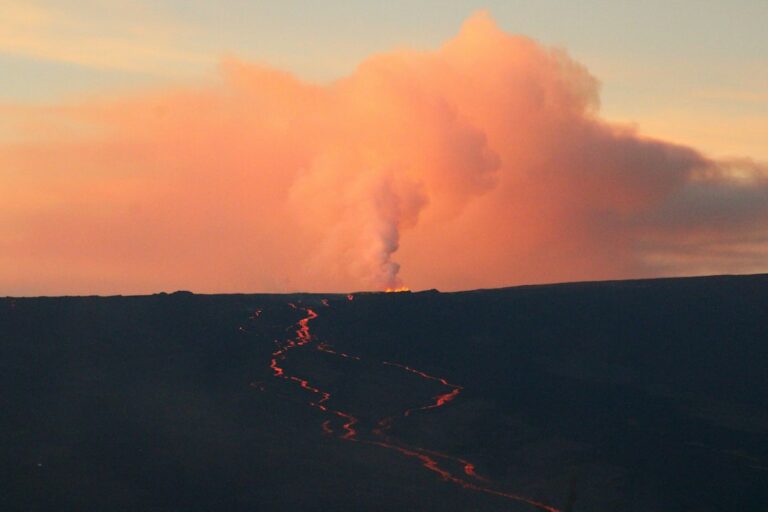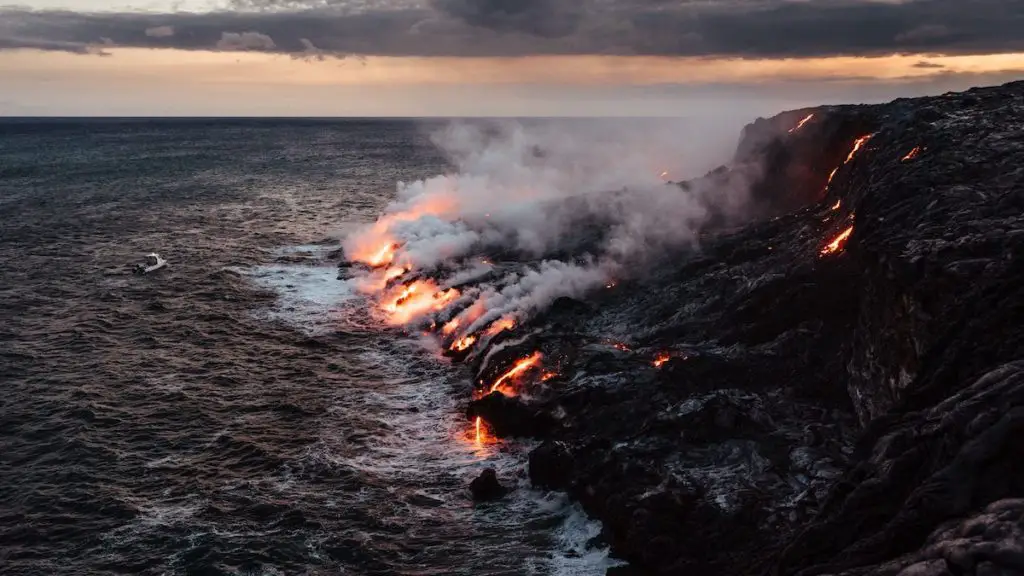
If you live on Hawai’i Island — or visit during an eruption — you’ll hear the word vog a lot. It looks like haze, smells faintly like a struck match, and on bad days it can leave your throat scratchy and your eyes stinging by lunchtime. Here’s the honest, lived-in version of what vog is, what it does to your body, and how locals actually deal with it.
Current eruption status (October 2026): Kīlauea remains actively erupting at Halemaʻumaʻu crater. As of October 11, 2026, USGS Hawaiian Volcano Observatory reports the alert level at WATCH (Orange aviation color code). The most recent major fountaining episode (Episode 54) occurred August 25, 2026; current activity is low-intensity overflow from the north vent between episodic events. Episode 55 has not yet begun — summit remains highly pressurized and scientists report another fountaining episode could occur within days to weeks. Lava flows remain confined within the caldera. SO₂ emissions continue, making vog an ongoing concern for leeward communities on the Kona coast, Kaʻū, and downwind Maui and Oʻahu. Check USGS HVO updates and VMAP for current conditions before outdoor plans.
What Is Vog, Exactly?
Vog is short for “volcanic smog.” It forms when sulfur dioxide (SO₂) and other gases from Kīlauea react with sunlight, oxygen, moisture, and dust in the atmosphere. The result is a fine mist of sulfate aerosols and tiny acidic particles that drift downwind — usually southwest toward Ka’ū, then up the leeward Kona coast, and on bigger days all the way over to Maui and O’ahu.
Two things to keep straight: SO₂ is the raw gas (worst close to the vent in places like Volcano Village and Pāhala), and vog is the aged, particle-heavy haze you breathe everywhere else. They cause slightly different problems, but both irritate your airways.
The Real Health Effects of Vog
For most healthy adults, mild vog feels like a stuffy nose and a dry, scratchy throat. On heavy days — when Kona looks like Los Angeles in August — it’s a different story. Here’s what the Hawai’i Department of Health and the Hawaiian Volcano Observatory consistently flag.
Common Symptoms
- Burning, watery eyes
- Sore throat and dry cough
- Headache (the classic “vog headache” — dull, behind the eyes)
- Sinus congestion and runny nose
- Fatigue and a vague “blah” feeling
- Shortness of breath after light activity
Who Gets Hit Hardest
Sensitive groups feel vog first and worst:
- People with asthma or COPD — SO₂ can trigger bronchoconstriction within minutes, even at low concentrations.
- Kids — they breathe faster relative to body size and are often outside playing.
- Pregnant people — fine particulate matter has been linked to lower birth outcomes.
- Older adults and anyone with heart disease — particulates raise the risk of cardiovascular events.
- Outdoor workers and athletes — landscapers, surf instructors, runners. More breaths = more dose.
Long-Term Effects
This is where the science is still catching up. A widely cited 2016 University of Hawai’i study (Tam et al.) found measurable lung function differences in schoolchildren in Ka’ū compared to less-exposed areas. For otherwise healthy adults, current research hasn’t shown permanent damage from typical vog exposure, but chronic asthma flare-ups and sinus issues are real and worth taking seriously.
Where Vog Hits Hardest in Hawai’i
Vog is not evenly distributed. The trade winds (out of the northeast) push emissions from Kīlauea’s summit and rift zones toward the south and west of the Big Island. That means:
- Pāhala, Nā’ālehu, Ocean View — closest to source, often the worst SO₂ levels.
- Kona side (Kailua-Kona, Captain Cook, Hōlualoa) — chronic vog haze, especially mornings.
- Volcano Village — direct SO₂ exposure when the wind shifts; locals know to watch the “Kona winds” forecast.
- Maui, Moloka’i, O’ahu — affected during southerly Kona wind events. Honolulu can get noticeably hazy when this happens.
- Hilo and the windward Hāmākua coast — usually spared because trade winds blow vog away from them. This is one reason real estate on the Hilo side stays popular despite the rain. (More on that in our guide to the best places to live in Hawai’i.)
How to Check Vog Levels Before You Go Out
Locals don’t guess — they check. Bookmark these:
- VMAP (Vog Measurement and Prediction Project) — vog.ivhhn.org. Real-time SO₂ and PM2.5 forecasts plus animated drift maps for the Big Island.
- Hawai’i Short-Term SO₂ Advisory — hiso2index.info. Color-coded by station with suggested activities.
- AirNow.gov — for general AQI on all islands.
- USGS HVO Volcano Updates — for what Kīlauea is actually doing today.
Rule of thumb: if the index is yellow, sensitive groups should ease off outdoor exertion. Orange or red? Everyone scales back.
How to Protect Yourself From Vog
Inside Your Home
- Close up and recirculate. Shut windows and doors on heavy vog days. Set AC to recirculate mode (don’t pull in outside air).
- Get a HEPA air purifier. A good one for a bedroom runs $150–$350. Look for “true HEPA” plus an activated carbon filter — the carbon helps with SO₂ gas, the HEPA catches the sulfate particles. Coway, Levoit, and Austin Air are popular Big Island picks.
- Skip the cheap ionizers. They can produce ozone, which adds insult to injury.
- Keep a “clean room.” One sealed bedroom with a purifier is the local move during multi-day events.
Outside
- Reduce strenuous activity. Save the trail run for a clearer morning.
- Stay hydrated — water and warm liquids help loosen congestion.
- Sunglasses cut eye irritation more than people expect.
- If you must work outside in heavy vog, an N95 helps with particulates but does not filter SO₂ gas. The DOH does not recommend respirators for the general public.
- Eye drops (preservative-free) and a saline nasal spray are cheap quality-of-life upgrades.
If You Have Asthma or COPD
- Keep your rescue inhaler on you — not in the car, not in the bathroom.
- Talk to your doctor about a vog action plan before eruption season ramps up.
- Don’t tough it out. Wheezing that doesn’t respond to your inhaler is an ER visit.
Vog and Your Garden, Pets, and Catchment Water
Vog isn’t just a lung problem. The acidic deposition can:
- Damage sensitive plants — bean, lettuce, and some flowers show leaf burn first. Native ʻōhiʻa and many tropicals tolerate it well.
- Lower the pH of catchment water — a real issue in Ka’ū and Puna where many homes rely on rain catchment. Test your water and consider a neutralizing system if you’re below 6.5 pH. Our Hawai’i home-buying guide covers what to ask about catchment systems before closing.
- Affect pets — dogs and cats with respiratory issues react the same way humans do. Keep them indoors on heavy days.
Should Vog Stop You From Moving to Hawai’i?
Honestly? For most people, no. The vast majority of residents adapt: they pick a windward neighborhood, run a HEPA in the bedroom, and check the forecast before long outdoor plans. If you have severe asthma, the calculus changes — and the Big Island’s south and west sides are the riskiest places to land. Hilo, Hāmākua, windward O’ahu, and Kaua’i see far less vog overall.
If you’re weighing the broader trade-offs of island life, our cost of living in Hawai’i breakdown and complete moving to Hawai’i guide are good next reads.
FAQ: Vog in Hawai’i
Is vog dangerous for healthy adults?
Short-term, mild to moderate vog usually causes nuisance symptoms — scratchy throat, headache, irritated eyes — that resolve once you’re in clean air. Long-term, heavy exposure is being studied, but no clear evidence shows lasting damage to otherwise healthy people. Sensitive groups should be more cautious.
Does an N95 mask protect against vog?
Partially. An N95 filters the fine particulate (PM2.5) part of vog but does not filter SO₂ gas. For most residents, the Hawai’i Department of Health does not recommend respirators in everyday life. They can help outdoor workers in heavy particulate conditions.
Which Hawaiian island has the least vog?
Kaua’i typically has the least vog because it’s farthest upwind from Kīlauea. Windward O’ahu, windward Maui, and the Hilo/Hāmākua side of the Big Island are also generally low-vog because trade winds push emissions away from them.
How do I know if my symptoms are from vog?
If your eyes, throat, and sinuses flare up on hazy days and clear on trade-wind days, vog is the likely culprit. Cross-check with the VMAP forecast — when SO₂ or PM2.5 spikes line up with your symptoms, you have your answer. Persistent or severe symptoms warrant a doctor’s visit.