The Wailea Coastal Pathway threads 1.5 paved miles along Maui’s leeward south shore, linking Grand Wailea to Polo Beach and passing four public beaches along the way. Households researching a move to the island often walk it first as a shortlist of what South Maui living looks like: reef access, morning turtle sightings, and resort-adjacent amenities that stay open to the public under Hawaii’s shoreline access rules.
The trail sits within the 1,500-acre Wailea Resort master plan, but every foot of it remains free to walk. Wailea Beach, Ulua Beach, Mokapu Beach, and Polo Beach are all state-designated public shorelines, and the connecting concrete and pavers stay open dawn to dusk. That mix of resort polish and public access shapes how relocating readers evaluate the neighborhood before signing a lease near Kihei or Wailea itself.
This research brief details distances between each beach access, where green sea turtles rest on the lava outcrops between Ulua and Mokapu, how thick the sunrise crowds get by month, and the parking policy resorts enforce against non-guest cars. Tables cover mileage, sunrise timing, parking counts, and a comparison of Wailea’s public paths with other South Maui shoreline walks.
Route overview: what the 1.5-mile pathway actually connects
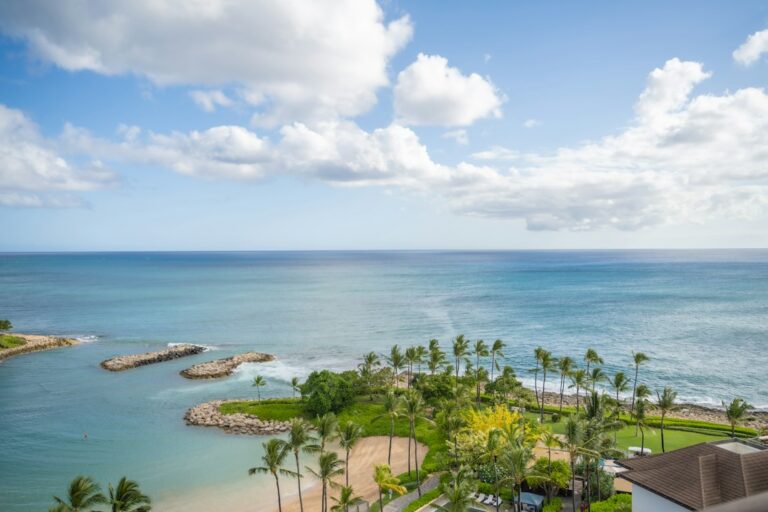
The pathway runs south-southwest from the Grand Wailea Resort’s north edge to the southern end of Polo Beach in front of the Fairmont Kea Lani. The full length measures roughly 1.5 miles one way, or 3 miles round trip. Paving alternates between poured concrete, textured pavers, and stamped asphalt, all wheelchair-passable except for two short beach sand transitions near Ulua and Wailea.
Four resorts sit directly on the path: Grand Wailea, Andaz Maui, Wailea Beach Resort (Marriott), Four Seasons Resort Maui, and the Fairmont Kea Lani anchors the south end. The Grand Wailea and Four Seasons face Wailea Beach itself; the Andaz sits above Mokapu; Fairmont Kea Lani stands over Polo. Each resort maintains its section of the walkway under a shared shoreline easement.
The four beaches in order
Walking north to south along the pathway, hikers pass Wailea Beach first, then Ulua Beach, then Mokapu Beach (which sits directly next to Ulua), and finally Polo Beach at the south terminus. Distances between each beach access point are short — mostly under half a mile — which makes the whole route friendly for casual sunrise strolls and after-dinner cool-downs.
| Segment | Distance (miles) | Walk time | Fronting resort |
|---|---|---|---|
| Grand Wailea to Wailea Beach | 0.15 | 4 minutes | Grand Wailea |
| Wailea Beach to Ulua Beach | 0.35 | 9 minutes | Four Seasons/Andaz |
| Ulua to Mokapu Beach | 0.08 | 2 minutes | Andaz Maui |
| Mokapu to Polo Beach | 0.55 | 14 minutes | Fairmont Kea Lani |
| Full length one way | 1.5 | ~35 minutes | Grand Wailea to Fairmont |
Distance breakdown and elevation profile
Elevation gain across the full 1.5 miles is minimal — under 60 vertical feet cumulative. Two short rises stand out: the climb up the lava point between Ulua and Mokapu (about 20 feet), and the ramp up to the Fairmont Kea Lani at the Polo end (about 15 feet). The rest of the path sits within 10 feet of sea level, hugging the low bluff above the sand.
Walking pace averages 24 to 28 minutes at a brisk clip and 40 to 50 minutes at a photo-taking pace with turtle stops. Joggers finish out-and-back three-mile loops in 26 to 32 minutes, and cyclists are prohibited except along the parallel Wailea Alanui service road. The path stays open 24 hours, though resort security politely discourages loitering after 10 p.m.
Path surface and accessibility
Roughly 78 percent of the pathway uses poured concrete or textured stone pavers, with the remaining 22 percent stamped asphalt near the Andaz and Fairmont sections. The whole route meets ADA gradient standards under 5 percent slope. Two bench pull-outs sit between Wailea Beach and Ulua, and three shaded gazebos punctuate the southern half. Wheelchairs and strollers roll smoothly except across the two sand-crossing gaps.
Turtle-sighting stops off the lava outcrops
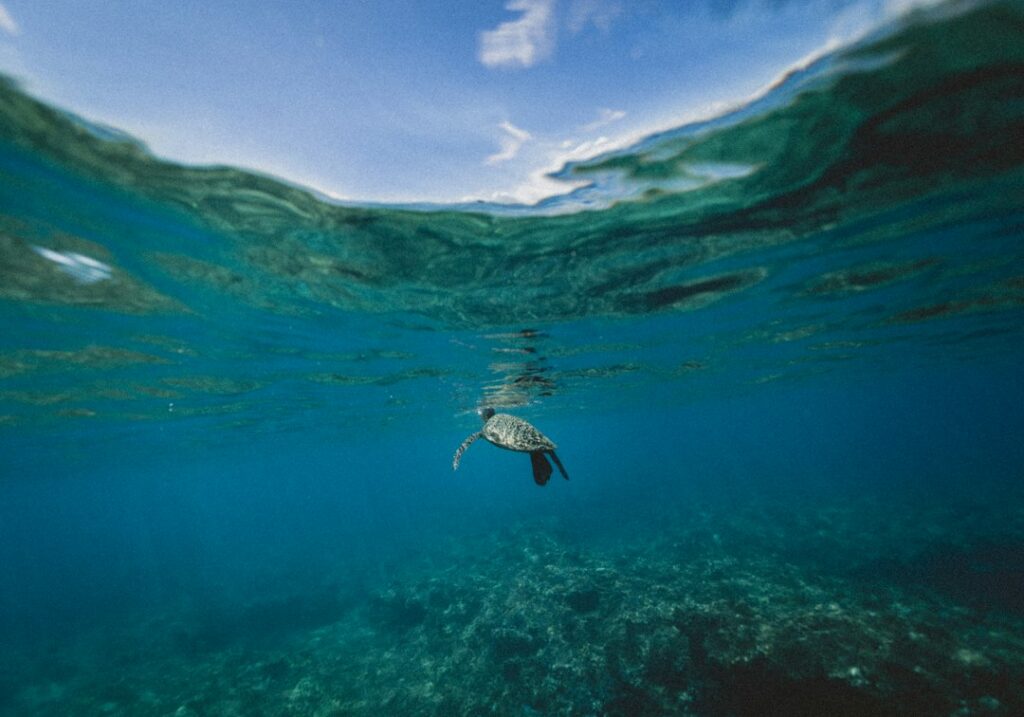
The rocky point between Ulua and Mokapu Beaches is the single most reliable turtle stop on the entire pathway. Green sea turtles (honu) surface here to feed on the algae mats coating the shallow lava shelf, and cleaning stations on the reef below Ulua bring larger adults inshore. Sightings occur most reliably between 8 a.m. and 11 a.m., when incoming tide covers the algae shelf.
A detailed breakdown of the reef geometry appears in the Ulua Reef Wailea Maui sea turtle cleaning cove writeup, which covers the ladder descent and cleaning behavior. Households curious about kayak-launched turtle encounters further south should compare notes with the Makena Landing cove kayak put-in guide.
Federal law requires a 10-foot buffer from any Hawaiian green sea turtle under the Endangered Species Act, and NOAA enforcement has issued fines up to $1,500 for touching or blocking a resting turtle. Zoom lenses and phone cameras with 3x optical work well from the pathway railing without dropping down onto the lava outcrops themselves.
Which outcrops produce which sightings
- Ulua-Mokapu point: 3-6 turtles per morning, cleaning behavior common at 15-30 foot depth.
- South end of Wailea Beach: 1-2 turtles feeding on algae mats near sunset.
- Polo Beach north lava: occasional sightings, lower reliability, better for reef fish.
- Mokapu south point: 2-3 juveniles common in summer months.
Basking turtles — resting on land — are far less common in Wailea than on Big Island beaches. Readers wanting to see hauled-out honu should study the Punaluu Black Sand basking etiquette guide, since Wailea’s reef structure doesn’t produce the same beach-resting behavior seen on the Ka’u coast.
Sunrise-hour crowd levels by month
Wailea faces east-southeast, so sunrise light hits the coastal pathway broadside from October through March. Crowds concentrate at three spots: Wailea Beach fronting Grand Wailea, the Ulua Beach access, and the Polo Beach south end. Pathway traffic during the first 60 minutes after sunrise ranges from 15 people in low season to 180-plus during holiday weeks.
| Month | Sunrise time | First-hour walkers | Peak turtle sightings |
|---|---|---|---|
| January | 7:05 a.m. | 140–180 | 4–6 per morning |
| March | 6:35 a.m. | 90–120 | 3–5 per morning |
| May | 5:55 a.m. | 50–75 | 5–7 per morning |
| July | 5:50 a.m. | 70–100 | 6–8 per morning |
| September | 6:15 a.m. | 40–60 | 4–6 per morning |
| December | 7:00 a.m. | 150–200 | 3–5 per morning |
Winter holidays — December 22 through January 3 — draw the thickest sunrise crowds because major resorts run at 92 to 98 percent occupancy according to Hawaii Tourism Authority reports referenced in Star-Advertiser coverage. Shoulder months (April, September, October) see fewer than half the winter walker counts, and pathway benches sit empty for stretches.
Sunrise versus sunset comparison
Sunset walks on the pathway draw larger crowds than sunrise, since Wailea faces slightly west of true south and the Molokini and Kahoolawe silhouette makes for widely photographed evening scenes. Sunset peaks at 300 to 500 pathway users during the golden hour in July, when the sun sets at 7:15 p.m. Turtle activity, however, is markedly lower at sunset.
Resort parking policy for non-guests
Every Wailea resort actively enforces guest-only self-parking, and non-guest cars found in resort lots are towed at owner expense within 30 to 60 minutes. Valet service costs $45 to $65 per day for guests and is unavailable to non-guests. Non-guest access to the pathway therefore routes exclusively through state-mandated shoreline access lots, each of which has firm daily-fill patterns worth planning around.
| Public access lot | Stalls | Fill time (winter) | Nearest pathway entry |
|---|---|---|---|
| Wailea Beach access | 36 | 7:30 a.m. | Grand Wailea end |
| Ulua/Mokapu access | 47 | 8:00 a.m. | Mid-path (Andaz) |
| Polo Beach access | 42 | 9:00 a.m. | Fairmont Kea Lani |
| Overflow street (Kaukahi St.) | ~30 | Rarely fills | 0.3 mi walk to path |
Each public access lot is required by Hawaii Revised Statutes Chapter 115 (shoreline access) and confirmed on Hawaii DOT road right-of-way filings. Signage at each lot lists the 6 a.m. to 8 p.m. official hours. Parking is free, and there are no meters, but the stalls fill quickly during peak sunrise windows in winter.
Enforcement patterns non-guests should know
- Grand Wailea security ticket sweeps at 6:30 a.m., 10:00 a.m., and 2:00 p.m.
- Fairmont Kea Lani tow contract activates within 45 minutes of an alert.
- Four Seasons enforces the strictest policy — self-parking blocked at guard shack.
- Wailea Alanui shoulder parking is illegal and posted with no-stopping signs.
- Public lots reopen quickly after 11 a.m. as morning walkers depart.
Households relocating from mainland cities where free resort parking is common should not assume anything similar in Wailea. The pattern mirrors the Lanikai Pillbox sunrise parking bans on Oahu, where residential enforcement got tight after neighborhood complaints. Wailea’s version is resort-driven rather than residential but functionally similar for non-guests.
What relocating households actually get from the walk
The Wailea Coastal Pathway is the closest thing South Maui has to a permanent public promenade, and it functions as a de facto community feature for residents living within a 3-mile radius. Families in Kihei drive down for weekly sunrise walks; retirees walk it daily for cardio; visiting family and friends cycle through the same 1.5-mile loop as an introduction to the neighborhood.
The path also anchors a lifestyle comparison for households weighing Wailea against other Hawaii shoreline neighborhoods. Kauai’s south shore has the Mahaulepu Heritage Coastal Walk, which is longer but rougher and less accessible; Maui’s west side has the Kaanapali Beachwalk, which is comparable in length but denser with food stops.
Cost of living context
Wailea rental prices track roughly 40 to 55 percent above the Kihei median, largely because the pathway and resort amenities lift perceived value. A one-bedroom condo near the path averaged $3,850 monthly in early 2026 per South Maui MLS pulls, versus $2,450 in central Kihei. Consumer price index data for Honolulu published on BLS Hawaii shows shelter costs statewide up 4.2 percent year-over-year.
Hotel-affiliate research: which Wailea resort to book for pathway access
Households researching a Maui trip often want to test the pathway experience before committing to a home purchase or rental in South Maui. Booking a Wailea resort places walkers directly on the path each morning, skipping the parking scramble entirely. Rates vary widely by property, and each resort fronts a different beach access point along the 1.5-mile route.
| Resort | Fronting beach | Nightly rate range (2026) | Pathway access |
|---|---|---|---|
| Grand Wailea | Wailea Beach | $795–$1,425 | North terminus |
| Andaz Maui | Mokapu Beach | $725–$1,395 | Mid-path |
| Wailea Beach Resort (Marriott) | Wailea Beach | $650–$1,150 | North quarter |
| Four Seasons Wailea | Wailea Beach | $1,295–$2,850 | North-central |
| Fairmont Kea Lani | Polo Beach | $895–$1,595 | South terminus |
Grand Wailea and Four Seasons offer the fastest access to Wailea Beach itself and the shortest walk to the Ulua-Mokapu turtle point. The Fairmont Kea Lani sits quieter and is closer to Polo Beach’s smaller crowds and the Hawaii Tourism Authority-designated south-end sunset overlook. Andaz strikes a middle balance with adults-only pool areas and mid-path convenience.
Resort fees and pathway amenities
Wailea resort daily fees run $45 to $75 per night on top of the room rate, and typically cover self-parking, cabana loungers on the fronting beach, and Wi-Fi. Non-guests can walk the pathway for free but cannot use resort beach loungers, towel service, or restrooms except at the state-required public restrooms at Ulua and Polo Beach access points.
Rental car research: getting to Wailea from Kahului airport
Every Wailea trip begins with a rental car from Kahului Airport (OGG), which sits 17.4 driving miles north of the Grand Wailea across the isthmus and down Piilani Highway. Drive time runs 26 to 40 minutes depending on Kihei traffic, and rental-car counter waits at OGG average 22 minutes during peak arrival windows in December and July.
| Vehicle class | Daily rate (2026) | Weekly rate | Wailea-fit notes |
|---|---|---|---|
| Economy sedan | $52–$78 | $310–$465 | Fine for two adults, tight for coolers |
| Midsize SUV | $85–$135 | $515–$795 | Best all-rounder for beach gear |
| Full-size SUV | $115–$195 | $695–$1,150 | Needed for families of five plus |
| Convertible | $135–$225 | $825–$1,395 | Trunk holds two beach chairs max |
| Jeep Wrangler | $125–$210 | $795–$1,275 | For Road to Hana or Haleakala |
Gasoline prices on Maui averaged $4.75 per gallon in early 2026 according to EIA fuel data, roughly $1.50 above the national mainland average. Wailea’s driving distances stay short — most everyday trips fall within 8 miles — so a compact rental completes a week on 12 to 16 gallons unless a Hana or Haleakala drive is added.
Alternatives to a rental car
- Maui Bus route 10 stops in Wailea; fare is $2 one-way, $4 day pass.
- Rideshare from OGG to Wailea runs $65–$95 one way in peak season.
- Resort shuttle circulators run within Wailea but do not extend to Kihei.
- Bike rentals average $45 per day; the Wailea Alanui shoulder allows cycling.
Extensions beyond the paved 1.5 miles
Committed walkers can extend the pathway in two directions. North of Grand Wailea, an unofficial dirt-and-cinder path continues 0.8 miles to Keawakapu Beach through undeveloped shoreline. South of Polo Beach, the pavement ends but a rough trail continues along the coast toward Palauea Beach and, eventually, the Makena Landing area a full 2.5 miles further south.
The southern extension crosses onto county-managed land and eventually reaches Makena Landing cove, where kayak turtle tours launch. Total possible extended distance north to south runs about 4.8 miles one way if households combine Keawakapu, the paved Wailea section, and the Makena Landing coastal route into a single long day.
South Maui shoreline access map
Hawaii’s shoreline access law requires each county to maintain public rights-of-way. The county-level shoreline access pattern established statewide catalogs 61 public shoreline access points on Maui, and Wailea alone accounts for 3 of them at Wailea Beach, Ulua, and Polo. Public restrooms operate at Ulua and Polo year-round on daily maintenance schedules.
Safety, tides, sunscreen, and reef etiquette
Wailea’s south-facing coast catches south and southwest swells from May through September. Wave heights along the pathway shoreline peak at 3 to 6 feet in July, and rip currents form along the Ulua-Mokapu lava point during larger swells. Winter waves stay smaller — typically under 3 feet — but occasional west swells wrap around and produce chop at the north end of Wailea Beach.
The Hawaii Department of Health tracks bacterial water quality at Wailea Beach and posts advisories after heavy rain events. Rain runoff from the Kula slopes reaches the coast within 4 to 8 hours after major storms. Households planning morning swims should check current advisories before entering, particularly after storm cycles in December through February.
Reef-safe sunscreen law
Hawaii banned oxybenzone and octinoxate sunscreens statewide in 2021, and Maui County added octocrylene and avobenzone to its local ban effective October 2022. Enforcement at Wailea Beach falls to state Department of Land and Natural Resources rangers who patrol weekend mornings. Fines run $100 to $2,000 per infraction. Mineral-only sunscreens (zinc oxide, titanium dioxide) are the safe legal choice for pathway walkers heading to the water.
Turtle etiquette recap
- Stay 10 feet from any honu, whether in water or on land.
- Never touch, feed, or block a turtle’s path to the ocean.
- Report harassment to NOAA at 888-256-9840 for enforcement follow-up.
- Keep dogs leashed and away from beach access points near lava outcrops.
- Use zoom photography rather than approaching for close-up turtle shots.
Comparing Wailea’s walk to Hawaii’s other paved shoreline paths
South Maui’s pathway is one of four notable paved coastal walks in the Hawaiian Islands. Each offers a different length, terrain style, and mix of amenities. Households choosing an island for relocation often use these walks as proxies for neighborhood walkability and daily-outdoor rhythm before signing a longer lease or contract.
| Path | Island | Length | Character |
|---|---|---|---|
| Wailea Coastal Pathway | Maui | 1.5 mi | Resort promenade, turtles |
| Kaanapali Beachwalk | Maui | 3.0 mi | Longer, food-focused |
| Waikiki Beach Walk | Oahu | 2.0 mi | Urban, shopping-heavy |
| Mahaulepu Heritage Trail | Kauai | 4.0 mi | Unpaved cliff-top |
Wailea’s advantage is turtle reliability and paved accessibility with dense resort backing. Kaanapali offers more length and food density; Waikiki concentrates urban conveniences; Mahaulepu delivers wilder scenery. For households targeting South Maui specifically, no other island has a directly comparable path within a single resort district serving daily walking needs.
Living-nearby practicalities: schools, groceries, healthcare
Households considering renting or buying near the pathway typically settle in Wailea proper, north Wailea (Wailea Ekolu, Ekahi, Elua condos), or south Kihei (Keonekai Road area). Groceries route to Whole Foods Kihei (4.2 miles from the pathway) and Times Supermarket in Kihei (3.5 miles). Costco sits 16 miles north in Kahului, and Target Kihei is 5 miles north.
Healthcare access on the south side of Maui requires driving to Wailuku for hospital-level care. Maui Memorial Medical Center is 21 miles from Wailea, or roughly 35 minutes without traffic. Urgent care clinics operate in Kihei at 4 to 6 miles from the pathway. Households used to mainland urgent-care density will notice the sparser coverage across South Maui.
Property considerations
Non-resident sellers considering short-term flips near Wailea should study HARPTA 7.25% withholding rules, which apply to any non-Hawaii-resident selling Hawaii property. Property tax data from Hawaii Department of Taxation shows Maui County residential rates at roughly $2.00 per $1,000 assessed value for owner-occupied and $8.50 for non-owner-occupied.
Military households posted at nearby installations rarely rotate to Maui directly, but a small population commutes for research and civilian roles. The broader picture appears in the military living in Hawaii guide, which covers BAH allocations that seldom stretch to Wailea rents without additional stipend layering or dual-income households.
Frequently asked questions
Is the entire Wailea Coastal Pathway open to the public?
Yes. All 1.5 miles of the pathway sit on public shoreline easement despite passing through private resort property. Hawaii Revised Statutes Chapter 115 mandates unrestricted public access to the shoreline and any paths connecting to public beaches. Resorts maintain the surfaces but cannot close, gate, or charge for use, even at night.
How reliable are turtle sightings along the path?
Very reliable at the Ulua-Mokapu lava point, where 3 to 6 green sea turtles typically feed and clean between 8 a.m. and 11 a.m. daily. Sightings drop to about half that count during large swells above 4 feet. Sunset viewings are less consistent since turtles typically settle onto the reef by dusk.
Can non-guests park at any Wailea resort for free?
No. Every resort tows non-guest cars from self-parking and valet areas. Non-guests must use the three state-required public access lots at Wailea Beach (36 stalls), Ulua-Mokapu (47 stalls), or Polo Beach (42 stalls). Overflow street parking on Kaukahi Street adds about 30 stalls with a 0.3-mile walk.
What time do the public parking lots fill on winter mornings?
Wailea Beach fills by 7:30 a.m., Ulua-Mokapu by 8:00 a.m., and Polo Beach by 9:00 a.m. during December through March. Summer fills run 60 to 90 minutes later. Arriving 30 minutes before sunrise almost always secures a spot, and lots reopen quickly after 11 a.m. as morning walkers depart.
Is the pathway safe to walk in the dark before sunrise?
Yes. Resort-side lighting covers about 85 percent of the path, and the remaining sections have enough ambient light from the moon and neighboring properties for basic navigation. Resort security patrols the area regularly. Households should still bring a small flashlight for the lava-point transitions between Ulua and Mokapu, where lighting drops.
Are dogs allowed on the Wailea Coastal Pathway?
Leashed dogs are permitted on the paved pathway itself, but not on any of the four beaches. Hawaii state law prohibits dogs on public beaches with limited exceptions, and Maui County follows that rule. Waste stations are limited, so households should bring their own bags. Early morning walks avoid the midday heat that stresses pets.
How does Wailea’s walk compare to Kaanapali on Maui’s west side?
Kaanapali’s beachwalk runs 3 miles — twice Wailea’s length — and features denser food stops at resort restaurants. Wailea is quieter, wealthier, and produces more reliable turtle sightings. Kaanapali gets afternoon sun; Wailea excels at sunrise. Households comparing neighborhoods often use both walks as data points for lifestyle fit and daily walkability.