September is the value sweet-spot for first-time Hawaii visitors. The crowds drop hard the moment U.S. mainland schools restart, hotel rates fall roughly 25 to 35 percent off the August peak, and the weather stays almost identical to August on the leeward side. The only real downside is that September is the climatological peak of Central Pacific hurricane season, covered in detail below. Booking data from 2025 showed identical Kaanapali rooms running roughly 30 percent cheaper than the same week in August — a pattern repeated across multiple Maui and Oahu properties. Here’s the full picture.
Real-world example — Hurricane Lowell (September 2026): In September 2026, Hurricane Lowell illustrated how quickly the threat level can escalate. Lowell peaked as a Category 4 storm (140 mph sustained winds) on September 3 before tracking north toward the islands. A Tropical Storm Warning was in effect for Kauaʻi County from September 6–8; Lowell’s center passed approximately 230 miles north-northwest of Līhuʻe, weakening to a Category 1 storm before all coastal warnings were lifted. South-shore resort areas experienced moderate rain and elevated surf but avoided the worst impacts. The bottom line: September hurricane threats are rare but real — always check nhc.noaa.gov before departing during this window.
September Weather: Calm, Hot, and Mostly Sunny
September weather on the leeward coasts is essentially August with the humidity edge filed off. Honolulu’s climate normal from the National Weather Service shows September averaging 88°F daily highs and 75°F lows — identical to August — with rainfall ticking up slightly to 0.7 inches average over the month (per weather.gov/hfo/climate). Trade winds blow at 8 to 15 mph from the northeast most days, ocean temperature averages 80 to 81°F, and the leeward sky stays clear 75% of daytime hours.
The notable shift between August and September is that trade winds get more variable in September. Some weeks blow consistently, others go light or even reverse to Kona winds (south or southwest), which brings the muggy, vog-heavy days that locals call “hot.” When trades stall, leeward Oahu can hit 92°F by midafternoon and feel 8 to 10 degrees warmer. The Big Island’s leeward (Kona) side handles this best because it sits in the rain shadow of Mauna Loa.
Rain in September is still mostly the 5-minute leeward shower variety. Windward sides (Hilo, Hana, Princeville, Kaneohe) pick up 5 to 7 inches over the month. Hurricane-related rain events happen 1 to 2 times in an average September and dump 4 to 10 inches in 24 hours when they do, though direct hits on the islands remain rare.
September Crowd Drop: The Real Shoulder Window
Mainland US schools restart between August 8 and August 25 depending on state. By the time September 1 arrives, family travel demand is gone. Hawaii Tourism Authority arrivals data shows September averaging 720,000 to 800,000 monthly arrivals across the islands — about 15 to 20% below August (see Hawaii Tourism Authority research). The combination of family-vacation dropoff plus pre-college-fall-break timing makes September one of the lowest-demand months that still has full summer weather.
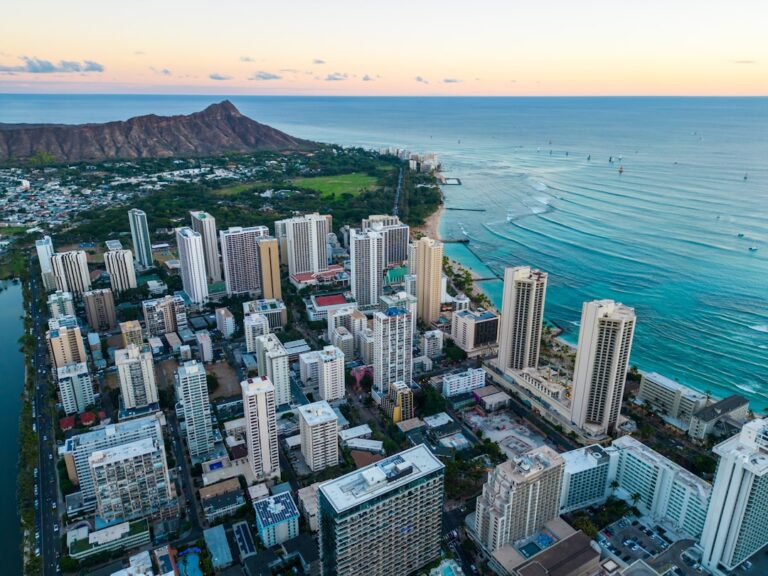
Beaches feel noticeably different. September 2025 visitor reports placed just 14 people on Kaanapali’s main stretch — a beach that holds 200+ in August. Kapalua Bay parking was showing open stalls at 10:30 a.m. on weekday Thursdays, which is essentially impossible in July or August. Waikiki stayed busy at the Royal Hawaiian Center, but the beach in front of the Sheraton held roughly a third of August’s beach-chair density. Restaurants rarely require reservations more than a day out. Tour operators have day-of availability.
The crowd math has practical SEO-friendly implications: if you can shift one or two weeks out from August or one or two weeks before Thanksgiving, you save serious money. Our best month to visit Hawaii roundup ranks September as the #1 value month of the year for that reason.
September Hotel and Flight Pricing
Hotels drop fastest in the second week of September. From 2024 and 2025 booking data, a Waikiki mid-tier hotel (Hyatt Place, Outrigger Reef, Sheraton Princess Kaiulani) ran roughly $220 to $300 a night through most of September, down from $310 to $420 in early August. A Maui resort (Hyatt Regency Kaanapali, Sheraton Kaanapali) ran $420 to $560 in mid-September versus $580 to $780 in early August — a 25 to 30% drop for the same room.
The biggest savings stack the second and third weeks of September (September 8 through September 22), when family demand is fully gone but most North American business travel still favors weekday-only trips. Booking platforms like Kayak, Google Flights, and Hopper consistently surface September 7 to September 24 as the cheapest 17-day window of the second half of the year for Hawaii flights from the West Coast.
Flight pricing from West Coast US in September runs about $360 to $560 per adult round-trip — roughly $120 cheaper than August. East Coast runs $620 to $920. From Australia, September is the start of southern-hemisphere spring; Sydney-Honolulu sits around AUD $1,200 to $1,600 round-trip versus AUD $1,700+ in their July school holidays.
Hurricane Season: September Is the Statistical Peak
The Central Pacific hurricane season runs June 1 through November 30, and September 10 to September 20 is the climatological peak of named-storm formation (per the National Hurricane Center climatology). The Central Pacific Hurricane Center in Honolulu averages 4 to 5 named storms per season, and roughly 60% of them form between August 15 and October 15. Most storms recurve north of the islands or dissipate over cooler northern Pacific water; direct hits are rare and the last major one was Hurricane Iniki on Kauai in September 1992.
That said, “rare” is not “never.” Hurricane Lane in August 2018 stalled south of Maui and dumped 52 inches of rain on Mountain View on the Big Island — the second-highest rainfall total ever recorded from a tropical cyclone in the U.S. Tropical Storm Hone in August 2024 brought 60 mph gusts to the Big Island and shut down ferry and inter-island flight service for 2 days. Hurricane Lowell in September 2026 peaked as a Category 4 storm with 140 mph sustained winds before tracking just west of Kauaʻi — the closest significant approach to the main Hawaiian Islands in recent years — with a Tropical Storm Warning in effect for Kauaʻi County; all warnings cleared September 8. The standard approach for September Hawaii travel is the same as any Caribbean trip in season — book refundable hotel rates when possible, buy travel insurance with hurricane-disruption coverage, and check nhc.noaa.gov daily starting 10 days out.
If a storm is forecast within 300 miles, the standard fallback is shifting to the windward Big Island. The Big Island’s mass plus elevation tends to dampen the worst of storm impacts compared to the lower-elevation Kauai. Our Hawaii hurricane season guide has the full month-by-month breakdown.
Best Things to Do in Hawaii in September
September is consistently ranked among the best snorkeling and surf-lesson months across all the islands. The water activities:
- Snorkeling Honolua Bay (Maui) — last full month of the calm summer pattern before north swells fire in October. Visibility 30+ feet most mornings.
- Snorkeling Two Step (Big Island) — flat morning water through September. See our best snorkeling locations roundup.
- South-shore surf lessons — south swell still active but smaller and more learner-friendly than August.
The clear-sky and cultural side of the September calendar:
- Mauna Kea stargazing — September has the clearest skies of any month at the summit. See our Mauna Kea stargazing guide.
- Aloha Festivals events (all month) — Hawaii’s largest cultural celebration since 1946; full schedule at the official Aloha Festivals site.
- Hike Haleakala for sunrise or sunset — reservations through recreation.gov; September is the easiest month of the year to land a slot.
And the lava-and-road picks worth their travel time:
- Kilauea volcano viewing — intermittently erupting since 2021. Check current activity at the USGS Kilauea page. Our volcano viewing guide covers logistics.
- Road to Hana (Maui) — green and waterfall-flush, far less traffic than summer. Leave Paia by 7:30 a.m.
What to skip in September: humpback whale-watching (still gone until late November — see whale season), north-shore Oahu surfing as a beginner (north swells start hitting late September), or Kauai north-shore swimming once the first fall north swell lands.
Best Hawaiian Island for September
September picks fall into a clear hierarchy based on hurricane exposure and rain-shadow geography. Ranked from strongest to weakest:
| Island | September grade | Why |
|---|---|---|
| Big Island (Kona side) | A | Driest coast in September, Mauna Kea clear, lower storm impact |
| Maui (south + west) | A | Calm Honolua snorkeling, Kaanapali at 30% off August, Hana lush |
| Oahu (south shore) | A- | Best value Waikiki rates, surf lessons easier than August |
| Kauai (Poipu) | B+ | Slightly higher hurricane exposure but stunning weather most days |
| Lanai / Molokai | B | Quiet shoulder-season pricing, limited services |
The grading weights hurricane exposure, leeward weather, value pricing, and snorkel/surf conditions equally.
The strongest single-island September pick is Maui’s west or south side, mid-September. A common multi-island split is 4 days Big Island (Kona side) and 4 days Maui. We compare island-by-island in our best time to visit each island guide.
What a September Trip Costs
Estimated 7-day September Hawaii trip for a family of four, mid-tier hotel, based on tracked 2025–2026 booking data. Flight costs first:
- Flights from West Coast US (LAX/SEA/SFO): $360 to $560 per adult round-trip, $280 to $440 per child
- Flights from East Coast / Midwest: $620 to $920 per adult round-trip
Then accommodation by island:
- Hotel (Waikiki mid-tier): $220 to $300 a night × 7 = $1,540 to $2,100
- Hotel (Maui resort): $420 to $560 a night × 7 = $2,940 to $3,920
- Hotel (Big Island Kona): $290 to $410 a night × 7 = $2,030 to $2,870
And on-the-ground spend:
- Rental car (compact, including taxes): $55 to $80 a day × 7 = $385 to $560
- Food and activities: $170 to $260 a day for a family of four
A realistic mid-tier 7-day September trip for a family of four to Oahu lands at $5,500 to $7,200 from the West Coast. Maui equivalent: $7,200 to $9,200. Big Island equivalent: $6,200 to $8,000. That’s $1,000 to $2,500 cheaper than the same trip in August. For broader cost context see our Hawaii cost of living breakdown and grocery prices guide.
What to Pack for Hawaii in September
Same core pack as August with two additions. The base clothing load:
- 3 to 4 quick-dry T-shirts plus 2 long-sleeve UPF rashguards
- 2 pairs of board shorts or swim suits
- 1 pair of closed-toe trail-running shoes (Diamond Head, Koko Crater, lava hikes)
- 1 pair of reef shoes — Honolua Bay entry is sharp lava, not optional
- 1 light fleece for Mauna Kea summit (temps drop to 30 to 45°F at 13,800 feet)
September-specific weather additions:
- 1 light rain shell — September rain events from tropical-storm passes can soak you in 5 minutes
- Travel insurance documentation printed — easier to file claims if a storm disrupts your plans
Sun-protection and pest gear that earns its place in any Hawaii suitcase:
- 2 tubes of mineral reef-safe sunscreen — SPF 50 plus a face-specific zinc
- Mosquito repellent for east-side Maui and Big Island
- Quality polarized sunglasses
Frequently Asked Questions About September Hawaii
Is September a good time to visit Hawaii?
September is one of the single best months to visit Hawaii. Weather mirrors August on the leeward coasts, hotel and flight prices drop 20 to 30 percent once mainland schools restart, and the beaches and restaurants are noticeably less crowded. The main tradeoff is that September is the statistical peak of Central Pacific hurricane season, so buying travel insurance and watching the forecast is essential.
Will I get rained out in September?
The leeward coasts get less than an inch in an average September, mostly in 5- to 15-minute passing showers. East-facing windward coasts pick up 5 to 7 inches over the month, almost all as afternoon trade-wind showers. The real rainout risk is a tropical storm passing close enough to drop 4 to 10 inches in a day.
How likely is a hurricane during my September Hawaii trip?
September is the climatological peak of Central Pacific hurricane season. The basin averages 4 to 5 named storms per season, with about 60% forming between August 15 and October 15. Direct strikes are rare — Hurricane Iniki in 1992 was the last — but nearby storms can close beaches and dump heavy rain. Hurricane-disruption travel insurance is strongly recommended for any September Hawaii booking.
What is the cheapest week of September to visit Hawaii?
The second and third weeks (roughly September 8 through September 22) are the cheapest. Mainland US schools are fully back, business travel hasn’t picked up its fall pace, and most Labor Day travelers are gone by September 8. Hotel rates can fall 30 to 35 percent below early-August pricing during this window, and flights from the West Coast routinely drop below $400 round-trip.
Is the water warm enough to swim in September?
Yes. The ocean averages 80 to 81°F across all leeward coasts in September — essentially the same as August, and the warmest of any month on Kauai. South-shore Oahu, west and south Maui, Kona Big Island, and Poipu Kauai all swim great. The exception is the north-facing beaches once the first fall north swell arrives in late September, which can push waves to 6 to 10 feet without warning.
Are there fewer tourists in Hawaii in September?
Yes — September is one of the lowest tourist-density months of the year. Hawaii Tourism Authority data shows September averaging 15 to 20 percent fewer monthly arrivals than August. Practical signals visitors consistently report: Kapalua Bay parking has open stalls at 10 a.m., Honolua Bay snorkeling stays uncrowded on weekday mornings, and restaurants in West Maui (including the Lahaina-area corridor, which has been gradually rebuilding its dining scene since the 2023 wildfires), Wailea, and Waikiki rarely require reservations more than a day or two ahead.
The Bottom Line on September in Hawaii
September is the sweet spot of the Hawaiian travel calendar — August weather at off-peak prices, the islands still warm and lively but not packed. The hurricane caveat is real and worth taking seriously, but with refundable bookings and travel insurance the risk is manageable. If first-time visitors had to pick just two months, September and April are the strongest. Book the second or third week, pick a leeward-coast hotel, watch the storm forecast 10 days out, and bank the savings. It’s consistently the top-value month in our analysis.