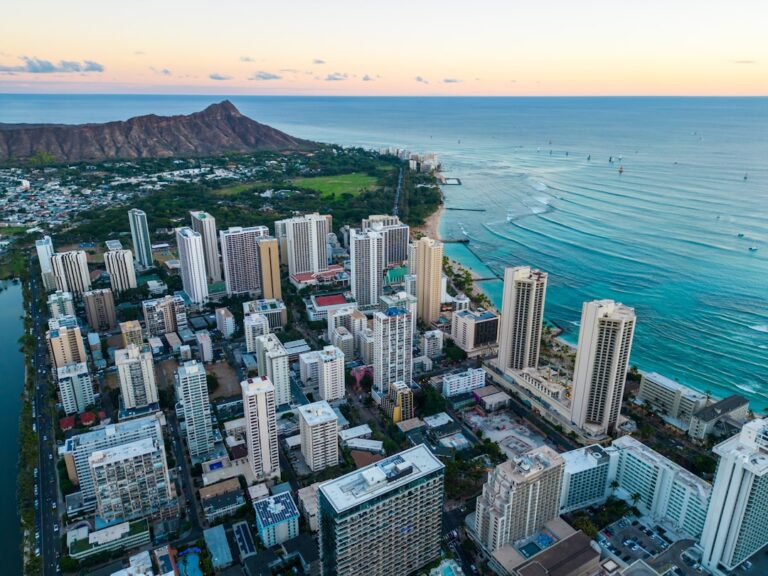
October is Hawaii’s quiet sweet spot. Summer crowds have left, mainland school holidays haven’t yet kicked in, and the islands sit at the tail end of the dry season with weather that still feels like summer minus the heat spikes. The official hurricane season runs through November 30, but Central Pacific activity drops off sharply after early October — meaning travelers get the value pricing of shoulder season with statistically declining storm risk. Hotel and vacation-rental rates run 20 to 35 percent below the August peak. Inter-island airfares can dip as low as $59 one-way.
This guide breaks October down across the four main islands: real weather (and where the wet side starts to fire up again), the festival calendar (Aloha Festivals statewide, HIFF in Honolulu, the Hana Relays on Maui), pricing data with the late-month bargain windows called out, and the surf and water-temperature trends that mark the seasonal pivot from summer to winter Hawaii.
2026 season update (September 29 — Hurricane Nolo moves north, main islands clear): Two named systems have tested the Central Pacific this season. Hurricane Lowell tracked north of the Hawaiian Islands on September 8 as a weakened Category 1 system with 75 mph sustained winds — all coastal watches and warnings were cleared that afternoon. Hurricane Nolo (CP152026) posed a more direct concern in late September: a Hurricane Watch was issued for all Big Island districts before Nolo downgraded to Category 1 (90 mph) and drifted westward; the watch was cancelled on September 27 as the storm moved away from the island chain. Nolo briefly re-intensified to Category 4 (125 mph) on September 28, centered near 17.7°N, 163.1°W — well west of the main islands — before weakening again. As of September 29, Nolo carries approximately 110 mph sustained winds near 20.5°N, 164.2°W, moving north and now impacting only the remote Papāhānaumokuākea Marine National Monument. No tropical cyclone watches or warnings are in effect for the main populated Hawaiian islands. No additional systems are active in the Central Pacific, and October 2026 is on track for typical late-season quiet.
Hawaii Weather in October 2026: The Honest Picture
October is the transitional bridge between Hawaii’s two seasons. The first half of the month is closer to September — warm, dry on leeward coasts, light trades. By the last week, the windward sides start picking up the first measurable wet-season rain bands, and surf on the north shores begins to build toward winter sizes. The National Weather Service Honolulu office records mean October coastal highs of 84°F across all four islands, with lows in the high 60s to low 70s.
Tradewinds remain steady in October, blowing 10 to 20 mph on most days. The combination of consistent trades and pre-rainy-season air masses produces some of Hawaii’s most reliable sunny days of the year on the leeward sides — Kona, Wailea, and Waikiki record under 1 inch of rain on average across the whole month. Windward areas (Hilo, Hana, Princeville) trend wetter as the month progresses, but the first half of October is the last reliable dry window on the windward side before the wet season takes over.
Water temperature peaks for the year in October at 79°F to 81°F. That’s the warmest snorkeling and swimming window of the year — a noticeable 4 to 5 degrees warmer than winter sessions. North shore wave heights remain manageable through mid-October before the first big winter swells arrive, typically between October 25 and November 5. The snorkeling-by-month guide has the detailed visibility and reef condition data.
Average October conditions by island
Long-term NWS records show October as the driest leeward month after September:
- Oahu (Waikiki): high 86°F, low 73°F, 1.8 inches rain.
- Maui (Kihei): high 87°F, low 70°F, 0.9 inches rain leeward; 4 to 6 inches on the Hana side.
- Kauai (Lihue): high 82°F, low 70°F, 3.2 inches rain; Princeville averages 5 to 8 inches.
- Big Island (Kona): high 84°F, low 70°F, 0.4 inches rain leeward; Hilo records 7 to 10 inches.
- Haleakala summit: highs 55°F, lows 38°F, dropping into the 30s on clear nights.
The Big Island’s Kona side is the statistical driest base in October across all of Hawaii. Hilo on the same island ranks among the wettest. The two are 90 minutes apart by car.
Hurricane Risk in October: The Real Numbers
The Central Pacific hurricane season officially runs from June 1 through November 30. October sits past the historical peak (early September) but the season is not over. NOAA’s National Hurricane Center climatology data shows that named storms in the Central Pacific basin drop sharply after September — averaging 1.0 to 1.5 storms in October versus 2.5 in August and September.
The risk profile most travelers care about is not “could a hurricane form” but “would it hit Hawaii.” Of named storms that develop in the Central Pacific basin, fewer than 15 percent make landfall or pass within 100 miles of any Hawaiian island. Combined with the seasonal decline, October’s probability of a direct Hawaii hurricane impact is well under 5 percent in any given year.
For travelers worried about the back end of the season, the Hawaii hurricane season guide covers detection lead times, insurance considerations, and how local emergency systems handle a watch or warning. The short version: you’ll have 48 to 72 hours notice, all major resorts maintain hurricane plans, and travel insurance with a “cancel for any reason” rider runs $80 to $200 on a typical Hawaii trip.
Pricing in October: The Value Window
October is one of Hawaii’s three best-value months, alongside September and early December. The Hawaii Tourism Authority arrivals data shows October visitor counts running 18 to 25 percent below July and August. Resort rates on Maui’s Kaanapali and Wailea coasts run $389 to $599 per night versus $549 to $899 in summer. Vacation rentals in Kihei and Kapolei dip 25 to 35 percent below summer.
The late-October window — the last 10 days of the month — is the cheapest stretch before the Thanksgiving surge starts pulling rates up. Hawaiian Airlines and Southwest both offer inter-island deals dipping as low as $59 to $79 one-way between Honolulu and Kahului or Lihue during this period. Mainland-to-Hawaii flights run $389 to $499 round-trip from Los Angeles and San Francisco — about $200 below July rates.
Typical October nightly rates by island
Rates below reflect mid-October 2026 bookings made 30 days ahead, two-night minimum. Late-October rates trim another 10 to 15 percent off these bands.
| Area | Mid-range hotel | Vacation rental (2BR) | Resort property |
|---|---|---|---|
| Waikiki (Oahu) | $189–$249 | $209–$289 | $329–$489 |
| Kaanapali / Wailea (Maui) | $259–$349 | $309–$429 | $489–$799 |
| Kihei (Maui) | $169–$229 | $199–$279 | $289–$399 |
| Princeville / Poipu (Kauai) | $249–$309 | $279–$379 | $419–$649 |
| Kailua-Kona (Big Island) | $179–$249 | $199–$279 | $339–$549 |
| Hilo (Big Island) | $129–$189 | $149–$209 | $199–$289 |
For broader cost context once on island, the Hawaii grocery prices guide and the full cost of living breakdown cover food, fuel, and dining in 2026 dollars.
Where to Base in October: Island-by-Island
October’s island-pick depends on the trade-off between dry-side reliability and the cultural events spread across the four main islands. Each island delivers a different value proposition this month.
Oahu in October
Oahu wins for travelers who want events density. The Hawaii International Film Festival (HIFF) runs the second half of October into early November (October 21–November 5 on Oahu), the Honolulu Marathon training peaks (with race-related crowd activity beginning to build), and the North Shore surf scene is starting to fire — the Triple Crown of Surfing begins its run during the last week. Waikiki delivers calm swimming and the broadest range of restaurants per square mile in the state.
For traveler-focused beach recommendations and the surf-vs-swim swap that happens in late October, see best beaches on Oahu. North Shore (Pipeline, Sunset, Waimea) by October 25 should be treated as professional-surf territory only.
Maui in October
Maui is the strongest October pick for travelers who want the warmest reliable water with the smallest crowds. Kihei averages 0.9 inches of rain in October — drier than any other month on the south shore. The Hana side begins picking up wet-season showers but rarely a full-day washout. The Road to Hana remains a worthwhile day trip, but check gohawaii.com for closure updates.
Post-Lahaina-fire, the Front Street area is closed to general visitors and the community continues to ask travelers to support adjacent towns (Napili, Kapalua, Kihei, Wailuku) rather than visit the burn site. For a Maui month-by-month breakdown, the Maui timing guide covers what’s open and the pricing differential between Kihei and Kaanapali.
Kauai in October
Kauai is the gamble. Its first half feels like summer; its second half starts feeling like the wet season. Princeville and the north shore can deliver three-inch rain days even in mid-October, while Poipu on the south shore averages under 2 inches across the whole month. Hanalei Bay (the Waikiki of Kauai) is at its calmest of the year — flat enough for paddleboards through early October before the first winter swells arrive.
The Napali Coast cliffs are at their photogenic best in October — late-summer green still holds and the air is clearer than later in the wet season. Boat tours run reliably through most of the month before December storm cancellations begin.
Big Island in October
The Big Island is the most weather-resilient October pick. Kona on the leeward (west) side averages 0.4 inches of rain across the entire month — one of the driest single-month averages anywhere in the U.S. The Ironman World Championship triathlon (Saturday October 11, 2025 — the 2026 race is the second Saturday in October) is the single biggest sporting event on the island and locks up Kona-area lodging for the surrounding two-week window. Plan around it or plan for it.
The USGS Hawaiian Volcano Observatory publishes daily Kilauea status. October 2026 falls inside the active episodic-eruption pattern that began in late 2024. The Hawaii volcano viewing guide covers timing, parking, and the difference between the Crater Rim and night-glow observation points.
October Events Worth Planning Around
Six events anchor the October calendar. Some draw crowds that lock up lodging — others are quiet enough to feel like a local secret.
Early October events
- Hawaii International Film Festival (HIFF) (Honolulu, October 21–November 5, 2026; neighbor islands November 6–15): screenings at the Consolidated Ward 16 theater, Doris Duke Theater, and other venues. Pacific-region focus.
- Ironman World Championship (Kona, second Saturday in October): the Big Island’s largest sporting event. Locks up Kona lodging across an 8-day window. Book 6+ months ahead or stay in Waikoloa.
- Hana Relays (Maui, early October): 6-person team relay along the Hana Highway. Closes lanes intermittently.
HIFF and the Ironman alone draw 15,000-plus visitors who would not otherwise travel in October — concentrated to Honolulu and Kona respectively. Other islands feel no impact.
Late October and statewide events
- Aloha Festivals Floral Parade (Waikiki, Saturday September 26, 2026 — the parade is a September event, with some associated programming extending into mid-October): floral floats, pa’u riders, Hawaiian music. Free.
- Halloween in Hawaii (statewide, October 31): historically Front Street Lahaina was the largest party in the state — that has not returned post-fire. Waikiki and Kailua-Kona now host the biggest local-feel celebrations.
- Hawaii Food & Wine Festival (Big Island October 16–17, Maui October 23–25, Oahu November 5–8): celebrity chef demos, tasting events. The Big Island and Maui legs fall in October; the Oahu finale runs into early November. Ticketed.
Safety Calls That Trip Up October Visitors
October has fewer hazard windows than the high-surf winter months, but three specific risks catch travelers off guard during the transitional stretch.
1. Late-month north-shore surf. The first big winter swells typically arrive between October 25 and November 5. A beach that was flat for paddleboards on October 22 can produce 12-foot faces by October 28. The NWS Honolulu office posts swell forecasts 4 to 6 days out.
2. Sudden upslope rain on windward roads. Hana Highway, Kuhio Highway around Hanalei, and Saddle Road on the Big Island can flood within 90 minutes during an October rain band. Postpone the drive during an active flash-flood warning.
3. Lingering hurricane watches. Even a low-probability Central Pacific storm 1,000 miles south can trigger swell warnings and rip-current advisories. Check NHC’s Central Pacific page before booking sunset cruises.
For travelers carrying gear between islands (snorkel sets, dive equipment), the inter-island travel guide covers extra-bag policies on Hawaiian and Southwest.
What October Does Best (and What It Skips)
The strongest case for October is value. No other month in the Hawaii calendar delivers warm-water snorkeling, dry leeward weather, and an active eruption viewing window at 25 to 35 percent below peak pricing. Pair that with the festival cluster (HIFF, Aloha Festivals, Food & Wine, Ironman) and October earns its reputation as the savvy traveler’s pick.
What October skips: it’s not the month for winter-only experiences (whale watching, big-wave surf spectatorship at full Pipeline scale, north-shore swimming). Travelers prioritizing whale season should look at January or the January monthly guide instead. Travelers chasing big-wave surf should target December or January. The island-by-island timing comparison lays out the tradeoffs head-to-head.
October Packing List: What’s Different From Summer
October packing is closer to summer than winter, but two items separate a smooth trip from a damp one. The light shell and the layer for Haleakala summit are the difference makers.
- Light rain shell (windward microclimates build in the last 10 days).
- Long-sleeve layer for Haleakala or Mauna Kea visits (summit temps drop into the 30s°F at night).
- Reef-safe sunscreen (oxybenzone and octinoxate banned under HRS §342D-21).
- Polarized sunglasses for surf and reef spotting.
- Light rashguard for snorkeling (water is at its annual peak warmth — 79°F to 81°F).
- Headlamp for Haleakala sunrise (3–7 a.m. reservation via recreation.gov).
Travelers spending the full week on a leeward side may never touch the shell. Anyone planning Hana, Princeville, or Hilo time will need it at least once.
Frequently Asked Questions About Hawaii in October
Is October a good time to visit Hawaii?
October is one of Hawaii’s three best-value months. It delivers the warmest water temperatures of the year, the driest leeward-side weather, declining hurricane probability, and 20 to 35 percent lower lodging rates than summer peak. The tradeoff is the transitional weather — the last 10 days start picking up wet-season rain on windward sides — and the absence of winter-only experiences like whale watching.
What is the weather like in Hawaii in October?
October coastal highs average 84°F across the four main islands with lows in the high 60s to low 70s. Leeward sides (Waikiki, Kihei, Kona, Poipu) average under 2 inches of rain for the full month. Windward sides (Hilo, Hana, Princeville) average 4 to 8 inches with most of it falling in the last 10 days. Water temperature peaks at 79°F to 81°F.
Are there hurricanes in Hawaii in October?
October is past the Central Pacific hurricane peak but still inside the official season, which ends November 30. NOAA climatology data shows October averages 1.0 to 1.5 named storms in the Central Pacific basin versus 2.5 in August and September. Direct Hawaii impact probability in October is under 5 percent in any given year. Travel insurance with a cancel-for-any-reason rider runs $80 to $200 for a typical Hawaii trip.
Is October expensive in Hawaii?
October is one of the cheapest months to visit Hawaii. Resort rates run 20 to 35 percent below August peak. Inter-island flights drop as low as $59 to $79 one-way. Mainland-to-Hawaii round-trip airfare from California runs $389 to $499 — about $200 below July rates. The last 10 days of October are the single cheapest window before the Thanksgiving surge.
Which Hawaiian island is best in October?
The Big Island’s Kona side is the strongest October pick for weather reliability — 0.4 inches of average rain is one of the driest single-month averages anywhere in the U.S. Maui’s Kihei coast is the strongest pick for warm-water snorkeling combined with low crowds. Oahu wins for travelers who want festival density. Kauai is the gamble — first half delivers summer, second half starts the wet season.
What should I avoid in Hawaii in October?
Avoid booking Kona lodging during the Ironman World Championship window without 6+ months lead time. Avoid swimming north-facing beaches in the last week of October once the first big winter swells arrive. Skip Hana Highway and Saddle Road drives during active flash-flood warnings. Do not treat Lahaina town as a sightseeing destination — the community is still in active recovery.
Can you see whales in Hawaii in October?
October is too early for reliable whale sightings. The North Pacific humpback population begins arriving in mid-November, with peak density in February. A small number of early arrivals are occasionally reported in the last week of October, but a dedicated whale trip is far better placed between December and March. The Hawaii whale season guide has the monthly density data.