A Hawaii helicopter tour is one of the largest single line items in a typical island trip budget. A 45 to 60 minute flight runs roughly $269 to $449 per person before tax, so a family of four can spend more than $1,500 in under an hour. Relocating households hosting visiting relatives often face the same question repeatedly: which island’s flight actually justifies the money?
The answer depends on what the ground cannot show. Kauai’s Napali Coast has no road, and much of the island’s interior is reachable only on foot or by air. Hawaii Island’s value rises and falls with Kilauea’s eruption cycle. Maui’s best route crosses a channel to the sea cliffs of Molokai, while Oahu offers the shortest and cheapest flights in the state.
This analysis compares routes, departure points, per-person fares for enclosed and doors-off aircraft, weight rules and surcharges, weather windows, refund policies and clothing requirements. Prices reflect published 2026 operator rate cards and booking-platform listings. Those shift with season and fuel costs, so the figures work best as budgeting ranges rather than quotes.
Which island is worth it: the short answer
Route content and traveler reviews point to a consistent ranking. Kauai delivers the most scenery that cannot be seen any other way. Hawaii Island produces the strongest flight in the state when lava is visible and a harder sell when the eruption is paused. Maui’s West Maui and Molokai route is the best value on that island, and Oahu suits short stays and tighter budgets.
| Island and base | Signature route | Flight time | Enclosed fare | Doors-off fare | Verdict |
|---|---|---|---|---|---|
| Kauai (Lihue) | Napali, Waimea Canyon, Waialeale | 50–60 min | $319–$399 | $379–$449 | Highest value; most terrain unreachable by car |
| Hawaii Island (Hilo) | Kilauea and Hilo-side waterfalls | 45–50 min | $299–$389 | $349–$449 | Excellent during an active eruption |
| Hawaii Island (Waikoloa) | Kilauea plus Kohala valleys | 105–120 min | $699–$849 | Limited availability | Long and costly; suits Kona-side stays |
| Maui (Kahului) | West Maui and Molokai sea cliffs | 45–50 min | $339–$429 | $399–$479 | Best Maui route for the money |
| Oahu (Honolulu) | Diamond Head, Pearl Harbor, Koolau cliffs | 45–60 min | $269–$369 | $329–$429 | Cheapest; more city than wilderness |
Households choosing between islands for a first visit can weigh the flight against other priorities in the Maui versus Kauai first-trip comparison. Travelers splitting a week or more between two islands can use the two-island Hawaii itinerary to decide which stop gets the flight budget.
What a Hawaii helicopter tour costs in 2026
Fares cluster tightly because each island has a handful of major operators flying similar aircraft on similar routes. The biggest price drivers are flight length, aircraft type, whether the doors come off and whether the tour lands. Island matters less than route: a 45-minute Maui flight and a 50-minute Kauai flight often sit within $30 of each other.
| Tour format | Typical length | Per-person fare before tax | Notes |
|---|---|---|---|
| Short sightseeing hop (Oahu) | 20–30 min | $169–$249 | Waikiki, Diamond Head, Pearl Harbor |
| Standard enclosed tour | 45–60 min | $269–$429 | Five- or six-passenger turbine aircraft |
| Doors-off tour | 45–60 min | $329–$479 | Three or four passengers, harnesses, gear rules |
| Extended enclosed tour | 65–90 min | $429–$599 | Maui complete island, Kauai extended routes |
| Landing tour (Kauai) | 75–90 min | $499–$649 | Ground stop near Manawaiopuna Falls |
| Big Island long tour | 105–120 min | $699–$849 | Waikoloa to Kilauea and Kohala |
| Private charter | 50–60 min | $1,800–$3,000 per aircraft | Useful for groups with weight issues |
Taxes, fuel surcharges and fees
Advertised fares frequently exclude Hawaii’s general excise tax. Businesses in all four counties may pass up to 4.712% on to customers, according to the Hawaii Department of Taxation. Some operators also add fuel surcharges of about $15 to $25 per rider, which follow the same energy-cost swings visible in fuel price data from the U.S. Energy Information Administration.
The math adds up quickly. A $349 fare plus a $20 fuel surcharge and 4.712% tax totals about $386 per person, or roughly $1,546 for four riders. Optional in-flight video typically costs another $40 to $60 per booking, and a few operators add small online booking or card fees at checkout.
Kamaaina rates and booking discounts
Once a household relocates, residency changes the price. Many operators publish kamaaina rates for riders showing a Hawaii driver’s license or state ID, commonly 10% to 25% below visitor fares. Terms vary, so residents hosting mainland family should ask whether the discount covers every seat in a booking or only the resident’s own seat.
Booking direct on an operator’s website often beats third-party platforms by $10 to $25 per seat. Fares also track the wider cost climate: consumer prices in the Honolulu metro area, measured by the Bureau of Labor Statistics, have kept operating costs rising, and published tour fares tend to climb between seasons rather than fall.
Kauai: Napali, Waimea Canyon and the Waialeale crater
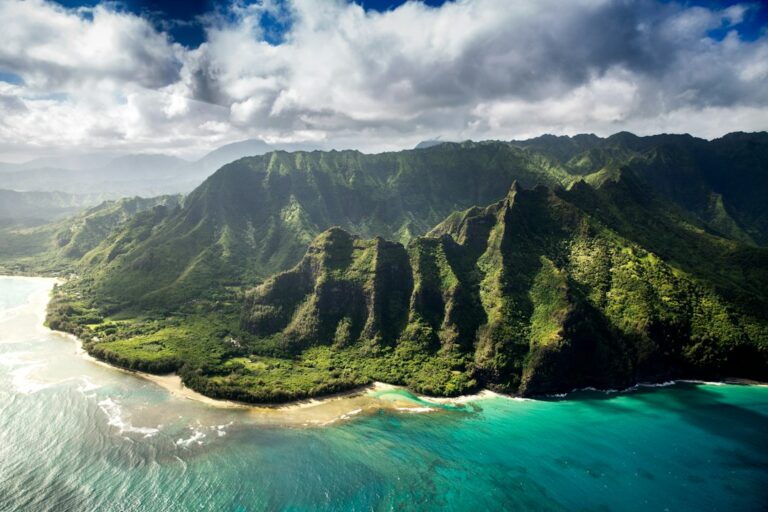
Kauai is where a helicopter tour most clearly earns its price. The Napali Coast runs about 17 miles with no road, and the only land route is the 11-mile Kalalau Trail, which requires a state permit beyond the first 2 miles. Waimea Canyon and the Alakai plateau are partly visible from lookouts, but the deepest valleys and tallest waterfalls are aerial-only sights.
The standard circle-island route
Most Kauai tours depart Lihue and last 50 to 60 minutes. Routes generally head southwest over Hanapepe Valley and into Waimea Canyon, which reaches about 3,600 feet deep, then north across the Alakai Swamp to the Napali cliffs. The return leg passes Hanalei and the north shore before cutting through the interior toward Mount Waialeale.
Manawaiopuna Falls, the roughly 400-foot waterfall shown in the opening of Jurassic Park, sits on private land and is visible only from the air. The Waialeale crater, often called the Weeping Wall, is a box canyon with walls near 3,000 feet threaded by waterfalls. The summit area averages roughly 450 inches of rain a year.
That rainfall means the crater is skipped on some flights. Pilots decide in the air, and cloud frequently fills the crater by mid-morning. The Napali segment and Waimea Canyon are far more reliably visible, so a flight without the crater still covers most of the island’s signature scenery. Ground-level context sits in the guide to the best things to do on Kauai.
Enclosed, doors-off and landing tours on Kauai
Enclosed flights run about $319 to $399 per person, while doors-off flights in smaller aircraft cost roughly $379 to $449. The doors-off premium on Kauai usually lands between $45 and $65. Operator-level detail on aircraft, camera rules and routes appears in the Blue Hawaiian versus Jack Harter doors-off comparison.
Landing tours cost the most. These flights, commonly 75 to 90 minutes including ground time, set down near Manawaiopuna Falls and run about $499 to $649 per person. Landing access at the privately owned site is tightly limited, so seats often sell out weeks ahead in June, July and August. A Princeville-based alternative flies shorter Napali-focused routes of 40 to 50 minutes.
Kauai’s weather deserves extra attention when scheduling. The north shore and interior receive heavy winter rain, and cancellations run highest from December through February. The month-by-month Kauai timing guide shows why late spring and early fall tend to pair drier conditions with lower prices.
Hawaii Island: Kilauea, the Kohala waterfalls and the departure question
Hawaii Island is larger than all the other Hawaiian islands combined, and that geography shapes every tour. Kilauea sits on the southeast side, about 30 road miles from Hilo. The Kohala Mountains and their waterfall valleys sit at the island’s northern tip. A single flight covering both from the west side becomes a two-hour tour at roughly double the price.
Hilo departures
Flights from Hilo reach Kilauea within minutes, so a 45 to 50 minute tour spends most of its time over volcanic terrain. Typical routes cross the East Rift Zone, the 2018 lower Puna lava flows and the summit caldera, then return past waterfalls along the Hilo and Hamakua coasts. Enclosed fares run about $299 to $389, and doors-off options about $349 to $449.
Hilo is the value choice, with one catch. It is among the wettest cities in the United States, averaging about 125 inches of rain a year, so morning departures give the best odds of clear air. Visitors deciding on a base can compare the trade-offs in the guide to staying in Kona, the Kohala Coast or Hilo.
Kona and Waikoloa departures
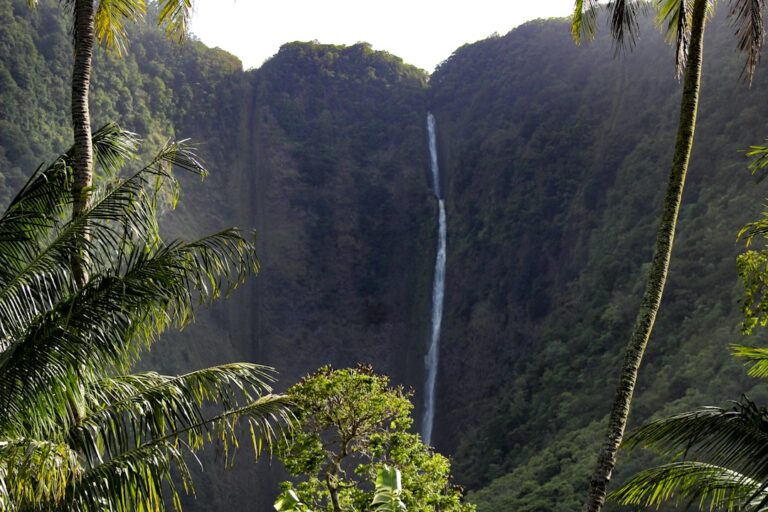
West-side resort guests usually fly from the Waikoloa heliport, where two products dominate. A Kohala-only tour of 45 to 60 minutes covers Pololu, Honokane and Waimanu valleys, with waterfalls dropping more than 1,000 feet, for roughly $329 to $429. The full volcano-and-Kohala loop runs 105 to 120 minutes and costs about $699 to $849 per person.
The long loop spends a meaningful share of the flight in transit across lava fields. For households staying in Kona, the alternative is driving roughly 2 hours each way to Hilo for the shorter flight. That saves $300 or more per rider but consumes most of a day. The Volcanoes National Park day trip comparison maps the drive from both bases.
How eruption status changes what riders see
Kilauea’s summit eruption, which began December 23, 2024, spent 2025 behaving episodically. Short bursts of lava fountaining inside Halemaumau crater, some topping 1,000 feet, alternated with pauses lasting days or weeks. A tour booked a month ahead cannot be timed to an episode, so riders should check USGS Hawaiian Volcano Observatory updates and reporting from Hawaii News Now before flying.
| Eruption status | What daytime riders typically see | Suggested booking lead time | Best-value flight |
|---|---|---|---|
| Active fountaining episode | Lava fountains, glowing crater floor, gas plume | 1–3 days | Hilo, 45–50 min, $299–$389 |
| Paused between episodes | Steaming vents, fresh black crater floor, cones | 7–14 days | Hilo volcano and waterfalls, $299–$389 |
| No eruption | 2018 collapse crater, Puu Oo cone, older flows | 7–14 days | Waikoloa Kohala tour, $329–$429 |
| Elevated alert or airspace limits | Altered routes; volcano segment may be dropped | 24–48 hours | Confirm route and refund terms first |
Air access has limits even during eruptions. Commercial tours over Hawaii Volcanoes National Park operate under a federal air tour management plan that caps annual flights and fixes routes and altitudes. Riders view the crater from set distances rather than low overhead.
Vog, the volcanic haze tracked by the Hawaii Department of Health, can also cut visibility, especially on the Kona side. Month-by-month weather, pricing and eruption context appear in the Big Island timing guide.
Maui: West Maui and Molokai versus Hana and Haleakala
Most Maui tours depart the heliport at Kahului Airport, part of the state airport system run by the Hawaii Department of Transportation. From there, operators split into two main 45-minute routes heading in opposite directions, plus a combined flight of about 65 to 75 minutes that covers both halves for $499 to $599.
West Maui Mountains and the Molokai sea cliffs
This route climbs into the West Maui Mountains, where the summit of Puu Kukui receives more than 300 inches of rain a year and feeds waterfalls such as the 1,100-foot Honokohau Falls. Aircraft then cross the roughly 9-mile Pailolo Channel to Molokai’s north shore, where sea cliffs rise to about 3,900 feet, among the tallest in the world.
Almost none of this is reachable by car. The Molokai cliffs are visible from land mainly at the Kalaupapa overlook, and West Maui’s interior valleys have no public roads. Enclosed fares run about $339 to $429, and doors-off versions cost roughly $399 to $479. For scenery that cannot be seen otherwise, this is the stronger Maui flight.
Hana rainforest and Haleakala
The eastern route flies over the rainforest valleys above the Road to Hana and toward Haleakala, whose summit reaches 10,023 feet. Its value is more debatable. Much of the Hana coast can be driven, and Haleakala’s summit is reachable by car. Trade-wind clouds also tend to band the volcano’s middle slopes by late morning, which can obscure the crater.
Households already planning a sunrise drive to Haleakala often find the West Maui and Molokai flight adds more new scenery. The Maui month-by-month guide covers when trade winds and rain are least disruptive. Humpback whales winter in Maui waters from roughly December through April, and January through March flights often spot them in the channels.
Oahu: the shortest and cheapest flights
Oahu tours depart mainly from Daniel K. Inouye International Airport in Honolulu, with a smaller number of North Shore departures. Short 20 to 30 minute flights over Waikiki, Diamond Head and Pearl Harbor start around $169 to $249. Fuller 45 to 60 minute circle-island tours run about $269 to $369 enclosed and $329 to $429 doors-off.
The scenery differs from the neighbor islands. Oahu flights mix urban and historic sights, including Diamond Head crater, Hanauma Bay and views toward Pearl Harbor, with the fluted windward cliffs of the Koolau Range, Kaneohe Bay, Kualoa Ranch and the North Shore surf breaks. Most highlights can be reached by car, but the Koolau ridgeline and its valley waterfalls look far more dramatic from above.
Oahu makes sense for short stays, cruise passengers and first-time flyers testing their tolerance for helicopters before paying more elsewhere. Honolulu’s leeward departure point is also one of the drier spots in the state. Drier months and crowd patterns are covered in the Oahu timing guide.
Weight rules, seating and surcharges
Helicopters must be balanced, so every operator collects each passenger’s weight at booking and most weigh riders again at check-in. The pilot assigns seats based on weight distribution, not by request. Riders who under-declare can be moved to a later flight, charged a surcharge or refused boarding, often without a refund.
| Aircraft type | Passenger seats | Common individual threshold | What happens above it |
|---|---|---|---|
| Airbus EC130 or AS350 (enclosed) | 5–6 | About 250 lb | Comfort seat at $100–$150 or a second full fare |
| MD 500 or Hughes 500 (doors-off) | 3–4 | 240–300 lb | Seat reassignment, extra seat or denied boarding |
| Robinson R44 | 3 | About 240 lb | Private booking may be required |
| Private charter | 3–6 | Set by total aircraft load | Priced per aircraft at $1,800–$3,000 |
Doors-off flights add further limits, since harnesses must fit properly. The larger Kauai operators commonly restrict doors-off seats to riders 12 and older and may set minimum heights. On any tour, every passenger, including young children, generally needs a paid seat with a seat belt.
Front seats beside the pilot offer the widest views, but they are assigned for balance. A few operators sell guaranteed front-row upgrades; others refuse all requests. Groups of heavier travelers sometimes find a private charter cheaper than paying several comfort-seat fees on a six-passenger aircraft.
Best time of day and season for visibility
Morning flights generally see the clearest mountains. Trade winds push moisture against windward slopes as the day warms, so cloud typically builds over Waialeale, Puu Kukui and Haleakala’s middle slopes by late morning. The first departures, often between 7:00 and 9:00 a.m., also tend to have calmer air, which helps riders prone to motion sickness.
Afternoon light can flatter leeward coastlines, and some Oahu and Big Island operators schedule sunset flights. But the odds of seeing mountain and crater segments fall through the day. Season matters as much as time: summer usually brings steadier trade winds and less rain, while winter storms and Kona winds ground more flights.
| Island and base | Annual rain near base | Best months for visibility | Most cancellations | Best departure window |
|---|---|---|---|---|
| Kauai (Lihue) | About 38 in | May–September | December–February | 7:00–9:30 a.m. |
| Hawaii Island (Hilo) | About 125 in | May–October | November–March | 7:00–9:00 a.m. |
| Hawaii Island (Waikoloa) | About 10 in | April–October | December–February | 7:30–10:00 a.m. |
| Maui (Kahului) | About 17 in | April–October | December–March | 7:00–9:30 a.m. |
| Oahu (Honolulu) | About 17 in | April–October | November–February | 7:00–11:00 a.m. |
Waterfall volume runs opposite to visibility. Winter rain fills the falls on Kauai and West Maui, while late summer can reduce some to trickles. Travelers who want reasonable flow and fewer cancellations often target April, May, September and October. Seasonal events that drive demand and pricing are listed on the state’s official GoHawaii visitor site.
Weather cancellations and refund norms
Operators, not passengers, decide whether a flight goes. Calls are usually made 60 to 90 minutes before departure, based on cloud ceilings, wind and visibility along the route. When an operator cancels for weather or mechanical reasons, the industry norm is a choice between a full refund and free rebooking.
Partial route changes, such as skipping a crater or shortening a coastline pass, generally do not trigger refunds. Passenger cancellations are stricter. Common policies require 24 to 72 hours’ notice for a full refund, and late cancellations or no-shows usually forfeit the entire fare. Third-party booking platforms may apply their own rules, which do not always match the operator’s terms.
- Book the flight for the first two or three days of an island stay.
- Keep at least two later mornings open for a weather rebooking.
- Choose the earliest departure available on the chosen day.
- Get the refund policy in writing, especially through booking platforms.
- Reconfirm the evening before, since schedules can shift with forecasts.
Enclosed or doors-off: how to choose
Doors-off flights remove window reflections, which matters most for photographers using larger cameras. The premium usually runs $45 to $80 per person. The trade-offs are stronger wind, louder cabins, cooler temperatures and strict rules on loose items. Enclosed turbine aircraft are quieter, warmer and generally more comfortable for older riders and children.
- Doors-off suits photographers, repeat visitors and riders comfortable with open air.
- Enclosed suits families, nervous flyers and travelers prone to motion sickness.
- Doors-off aircraft usually carry 3 or 4 passengers, so nearly every seat has an edge view.
- Enclosed cabins make narration easier to hear and keep cameras out of the wind.
Air temperature drops about 3.5°F per 1,000 feet of altitude before wind chill. Tours often cross interior ridges at 3,000 to 5,000 feet above sea level, so doors-off riders commonly feel temperatures in the 60s even when the ramp reads 80°F. Winter flights between December and March can feel colder still.
What to wear and bring
Dark clothing is the standard recommendation for enclosed flights, because white and bright shirts reflect in the windows and spoil photos. Doors-off flights add stricter requirements. Operators commonly refuse boarding to riders in flip-flops or loose sandals, and anything that could blow away must be secured or left on the ground.
- Dark, non-reflective top, ideally long-sleeved for doors-off flights
- Light windbreaker or fleece for winter or doors-off tours
- Closed-toe shoes with secure heels
- Sunglasses with a retaining strap and no loose hats
- Phone or camera with a wrist tether on doors-off flights
- Motion-sickness medication taken 30 to 60 minutes before takeoff
- Hair tie for anyone with long hair
Check-in usually opens 30 to 45 minutes before departure for the safety briefing and weigh-in. Bags, purses and backpacks typically stay on the ground. Morning traffic to heliports at Lihue, Kahului or Honolulu can add 20 to 40 minutes, so late arrivals risk losing their seats without a refund.
Safety records and how to vet an operator
Hawaii air tours fly under federal rules that generally require aircraft to stay at least 1,500 feet above terrain unless the operator holds an approved deviation. The December 2019 Safari Helicopters crash off Kauai, which killed seven people, brought renewed scrutiny of weather decisions and oversight, covered extensively by Civil Beat and the Honolulu Star-Advertiser.
- Confirm the operator holds an FAA Part 135 air carrier certificate.
- Ask how many years the company has flown on that specific island.
- Search NTSB accident records by the operator’s name before paying.
- Ask which aircraft type is assigned and whether it has crash-resistant fuel tanks.
- Favor operators that cancel readily when weather is marginal.
Some smaller companies fly tours under Part 91 letters of authorization, which carry lighter maintenance and crew-rest requirements than Part 135 certificates. A willingness to cancel on a cloudy morning is a good sign rather than a nuisance, even when it costs a traveler a planned day.
Frequently asked questions
Which Hawaiian island has the best helicopter tour?
Kauai is generally considered the strongest overall because the Napali Coast, the Waimea Canyon interior and the Waialeale crater are largely unreachable by road. Hawaii Island can rival it when Kilauea is actively erupting. Maui’s West Maui and Molokai route ranks next, and Oahu offers the lowest prices with more urban sights.
How much does a 45 to 60 minute helicopter tour cost in Hawaii?
Enclosed flights of 45 to 60 minutes typically cost $269 to $429 per person before tax in 2026, with Oahu at the low end and Kauai and Maui at the high end. Doors-off flights usually add $45 to $80. General excise tax of up to 4.712% plus fuel surcharges can add roughly $30 to $40 more.
Is a doors-off helicopter tour worth the extra cost?
For photographers, usually yes, because the open cabin eliminates window glare and reflections. For families, older riders and anyone prone to motion sickness, an enclosed flight delivers nearly the same views with less wind, noise and cold. Doors-off tours also carry stricter weight limits, age minimums and rules on loose items.
Is there a weight limit for Hawaii helicopter tours?
Most operators set an individual threshold of roughly 240 to 300 pounds, depending on aircraft. Passengers above it may need a comfort seat costing about $100 to $150 or a second full seat. Every rider declares weight at booking, and operators commonly weigh passengers at check-in, refusing boarding when weight is significantly understated.
What happens if weather cancels a helicopter tour?
When an operator cancels for weather, the norm is a full refund or free rebooking on a later flight. Decisions are typically made 60 to 90 minutes before departure. Changes made during the flight, such as skipping Kauai’s Waialeale crater because of cloud, generally do not qualify for a partial refund.
What time of day is best for a helicopter tour in Hawaii?
Early departures, usually between 7:00 and 9:30 a.m., generally offer the clearest mountain views and the calmest air. Trade-wind clouds tend to build over interior peaks as the day warms, making afternoon crater and summit views less reliable. Sunset flights can work well along the leeward coasts of Oahu and Hawaii Island.
Can visitors see lava from a Big Island helicopter tour?
Only when Kilauea is actively erupting and an episode coincides with the flight. Since December 2024, activity has often come in episodes separated by pauses of days or weeks. During pauses, riders see steaming vents, fresh crater floors and older lava flows. Checking USGS volcano updates shortly before booking improves the odds considerably.
What should riders wear on a helicopter tour?
Dark, non-reflective clothing reduces window glare on enclosed flights. Doors-off riders should add long sleeves or a windbreaker, closed-toe shoes and strapped sunglasses, since temperatures aloft can feel 10 to 15°F cooler than on the ground. Loose hats, scarves and untethered phones are generally prohibited when the doors are removed.