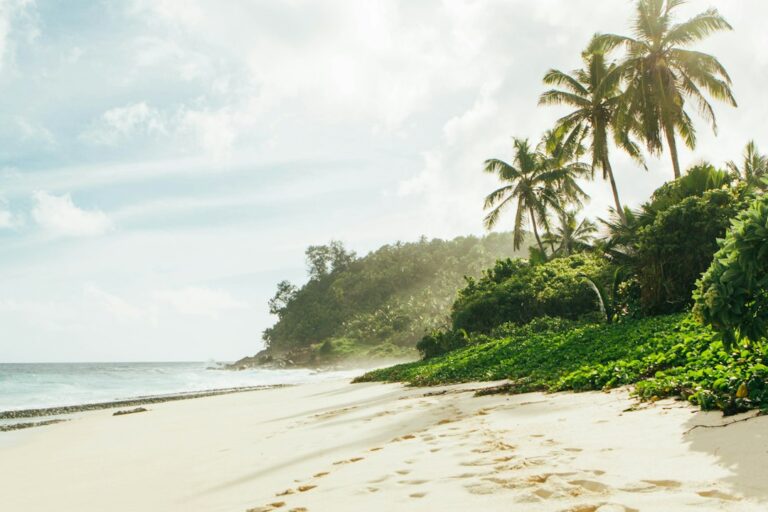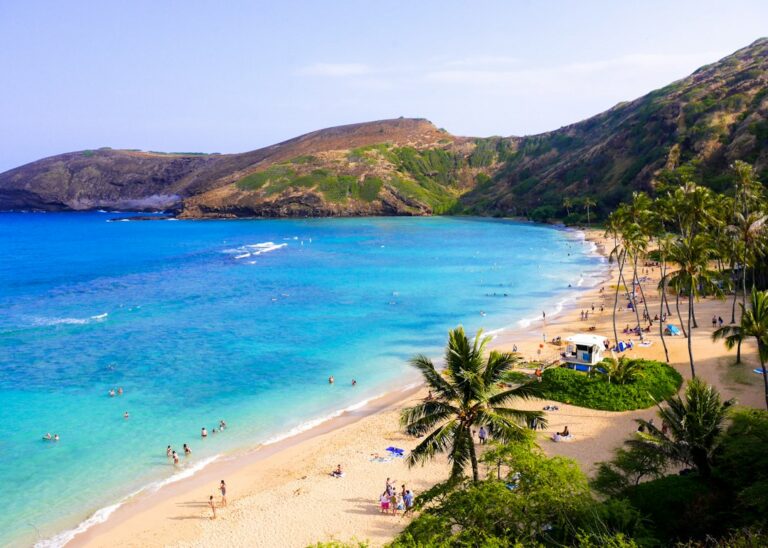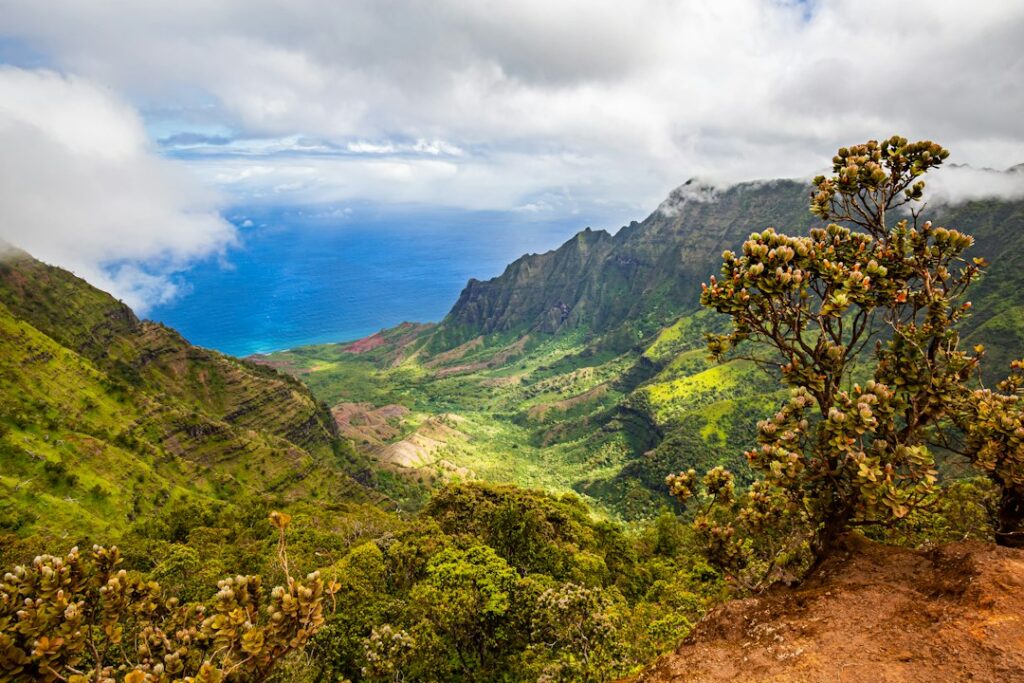
Kauai’s 11-mile Kalalau Trail cuts along the Na Pali Coast from Ke’e Beach to Kalalau Beach, threading past sea cliffs that rise more than 2,000 feet above the Pacific. The full route ends at a beach with no road access, which means anyone spending the night must carry in gear, water treatment, and food, then carry out every scrap of trash. The Hawaii Division of State Parks limits overnight use through a strict permit system managed on camping.ehawaii.gov.
The permit cost sits at $35 per person per night for non-residents and $20 per person per night for Hawaii residents, with a five-night maximum inside the Na Pali Coast State Wilderness Park. Permits are released in a 60-day rolling window that produces a competitive scramble each morning at midnight Hawaii Standard Time. Households planning a Kauai trip around this trek need to build travel dates around the reservation cadence, not the other way around.
This article walks relocating mainland households through the booking mechanics, the Hanakoa versus Kalalau Beach site decision, the trailhead ranger ID check at Ha’ena State Park, and the winter stream-crossing hazard that has killed hikers. The goal is a clear-eyed picture of what backcountry access on this coast actually requires, so newcomers can decide whether to attempt the full route, book a day hike to Hanakapi’ai, or approach the coast from the water instead.
The Na Pali Coast State Wilderness Park permit system
The Na Pali Coast State Wilderness Park stretches roughly 6,175 acres along Kauai’s northwest shoreline, and its only legal overnight access route runs through the Kalalau Trail. Permits are administered by the Hawaii Department of Land and Natural Resources Division of State Parks. The single booking portal is camping.ehawaii.gov, the same system that handles most Hawaii state park reservations. There is no phone or in-person alternative.
A camping permit authorizes overnight use at Hanakoa Camp (mile 6) or Kalalau Beach (mile 11). A separate day-use permit allows travel past Hanakapi’ai Falls to Hanakoa, but not overnight stays. Anyone hiking past the 2-mile Hanakapi’ai marker without a camping or day-use permit risks citation. Rangers do check.
The fees, set by state administrative rule, are tiered by residency:
| Permit type | Non-resident | Hawaii resident | Max nights |
|---|---|---|---|
| Kalalau Beach overnight | $35 per person per night | $20 per person per night | 5 |
| Hanakoa overnight (in transit) | $35 per person per night | $20 per person per night | 1 |
| Napali day-use (past Hanakapi’ai) | $15 per person | $10 per person | 1 day |
| Ha’ena State Park entry (non-resident) | $5 per person + $10 parking | Free with HI ID | Reserved slot |
Hanakoa is designed as a way-station rather than a destination. Permit holders are allowed one night there in each direction, on the way in and on the way out. Most groups walking the full 11 miles in one push do not stop at Hanakoa overnight, but the option exists for parties needing to break the hike into two days.
Comparing this option with Zodiac boat and catamaran access from Port Allen or Kikiaola is worth doing before committing to the trail — the coast can be seen without walking it, and rough winter surf sometimes shuts the beach approach entirely.
The 60-day release window and booking cadence
Permits open on a rolling 60-day window. That means the reservation for July 14 becomes available at 12:00 a.m. Hawaii Standard Time on May 15. Because Hawaii does not observe daylight saving, that is 3:00 a.m. Pacific Daylight Time or 6:00 a.m. Eastern Daylight Time in most of the mainland summer. Mainland households routinely set alarms for this drop.
Kalalau Beach caps out at 60 permits per night. During peak windows — spring break, summer school vacation, and Thanksgiving through New Year’s — those 60 slots often clear within minutes of the midnight release. Hanakoa is smaller, with a nightly cap of 10 permits. Neither site is guaranteed unless booked during the first minutes of the release.
The booking mechanics on camping.ehawaii.gov require:
- An account created before the release, not during
- A saved credit card to skip typing at checkout
- Full legal name and government ID number for every person
- Total nights and specific dates chosen up front
- Payment completed within the session or the cart drops
Cancellations do appear. The state does not automatically refund cancelled permits, so some cancelled dates never reopen. Others are released back to the pool at random intervals. Households that missed the initial release should refresh the calendar view several times per day in the two weeks before their target dates. Weekday nights (Sunday through Wednesday) cancel more often than Friday or Saturday.
Compared with the Diamond Head Crater 30-day booking window or the Haleakala 60-day Recreation.gov drop, Hawaii’s high-demand permits have converged on similar mechanics: tight caps, midnight releases, and no walk-up option.
What the release calendar looks like month by month
Booking difficulty follows Kauai’s visitor curve. December through March are heavy despite the wetter weather, driven by holiday travel and winter escape trips. June through August see the peak load, especially around Independence Day. September and early November are the softest windows, with dates sometimes still available inside 30 days.
| Month | Typical fill time from release | Weather notes |
|---|---|---|
| January | Under 10 minutes for weekends | Highest rainfall risk, stream floods likely |
| March | Under 5 minutes for spring break | Transition month, waterfalls still full |
| May | 15–30 minutes | Dry season begins, whales gone |
| July | Under 3 minutes for holiday nights | Warm, dry, longest daylight (~13.5 hours) |
| September | Same-week availability common | Dry, warm, hurricane season peak |
| November | Under 20 minutes near Thanksgiving | Trade winds return, cooler evenings |
Timing a Kauai relocation research trip around the shoulder season pays off. Households looking at Hawaii moves during May’s off-peak window often find the permit calendar unusually open compared with the July frenzy that dominates most booking guides.
Hanakoa versus Kalalau Beach: choosing the campsite
The two legal camp locations sit at very different points on the trail. Hanakoa is a jungle valley with limited views. Kalalau Beach is the 11-mile terminus with a mile-long crescent of sand, sheer cliff backdrop, and access to Kalalau Valley behind. The vast majority of permit-holders push through to Kalalau Beach and use Hanakoa only as a bailout if daylight runs short.
Trail conditions between the two sites climb hard. The 5-mile stretch from Hanakoa to Kalalau Beach includes Crawler’s Ledge, a narrow rock traverse roughly 400 feet above the ocean. The exposure is real. Loaded packs — 30 to 45 pounds is typical for a five-night stay — magnify the risk of a fall.
| Feature | Hanakoa Camp | Kalalau Beach |
|---|---|---|
| Distance from trailhead | 6 miles | 11 miles |
| Elevation profile | Rolling valley, ~800 ft high | Coastal, sea level |
| Nightly permit cap | 10 permits | 60 permits |
| Max nights allowed | 1 (each direction) | 5 within the trip |
| Water source | Hanakoa Stream (treat) | Ho’ole’a Falls, Kalalau Stream |
| Toilet | Composting pit | Multiple composting toilets |
| Beach access | None | Direct, plus sea caves |
| Cell service | None | Occasional AT&T bars on ridge |
Hanakoa’s smaller cap makes it counterintuitively harder to grab than Kalalau Beach on the exact same date. Groups aiming to split the inbound hike into two days should try to book Hanakoa in the first 60 seconds of the release window, then chain the Kalalau Beach nights that follow.
The mile-by-mile breakdown
- Mile 0 to 2: Ke’e Beach to Hanakapi’ai Beach, day-use permit sufficient
- Mile 2 to 4: Hanakapi’ai to Hoolulu Valley, first big climb (~800 feet gain)
- Mile 4 to 6: Hoolulu to Hanakoa, gentler grade through wet forest
- Mile 6 to 7: Hanakoa to Crawler’s Ledge, exposure begins
- Mile 7 to 9: Crawler’s Ledge to Red Hill descent
- Mile 9 to 11: Red Hill down to Kalalau Beach
Most fit hikers cover the 11 miles in 8 to 11 hours with a full pack. That timing assumes an early start from Ke’e Beach — typically before 8 a.m. — because trailhead parking reservations only cover a specific arrival window and afternoon storms can strand parties in exposed sections after dark.
The Ha’ena State Park gate and trailhead ranger ID check
The Kalalau Trail begins inside Ha’ena State Park at the end of Kuhio Highway. Since 2019, Ha’ena has run its own visitor cap — 900 people per day — separate from the wilderness camping permits. Non-residents must reserve a parking slot or shuttle ticket in advance through gohaena.com. Walking or biking in without a reservation is not permitted.
The shuttle runs from Waipa Park and Ride near Hanalei. Non-resident round-trip fares are $40 per adult as of 2026, and slots also release on a rolling window. Households driving to Ha’ena instead pay a $10 parking fee plus $5 per-person entry, with a strict 4-hour maximum for day visitors. Overnight Kalalau permit holders park at Waipa or Princeville and take the shuttle.
At the trailhead itself, Division of State Parks rangers spot-check permits before the 2-mile Hanakapi’ai marker and again on the way back out. Every adult on the permit must show government-issued photo ID that matches the name on the reservation. Children under 18 must be listed on a parent or guardian’s permit.
Common ID check failure modes include:
- A booking name that does not match the ID (nicknames, spouse-account bookings)
- An expired driver’s license or passport
- A digital-only permit printout that cannot be shown offline
- A group with an extra person who is not on the roster
- Missing signed release forms for minors
Rangers do turn parties around at Hanakapi’ai when the paperwork does not check out. The state does not refund permits invalidated at the ID check. Screenshots of the confirmation email work when cell service fails, so downloading a copy before leaving Hanalei is wise.
The Kalalau Stream winter crossing hazard
Kalalau Stream and Hanakapi’ai Stream both cross the trail and both flood catastrophically. The Hanakapi’ai crossing at mile 2 has recorded multiple drowning fatalities since the state park was established. The stream widens from ankle-depth to a raging chocolate-brown flow within 30 minutes of upslope rain. Because rainfall in the Kalalau backcountry can happen while the beach itself is sunny, downstream hikers rarely see the storm that produces the flash flood.
Signs posted at both crossings warn hikers to turn back if the water is above the knee or moving with debris. Waiting for the flow to drop typically takes 2 to 6 hours after rain stops. Groups have spent unplanned nights on the wrong side of a swollen stream because the water never dropped enough before dark.
Rainfall figures for the region drive the pattern:
| Metric | Kalalau Valley (approx.) | Contrast: Poipu (south shore) |
|---|---|---|
| Annual rainfall | 75–90 inches | ~30 inches |
| Wettest month (average) | December, ~10 inches | December, ~4 inches |
| Driest month (average) | June, ~3 inches | June, ~1 inch |
| Days per year with rain | 200+ | ~90 |
| Waialeale summit (nearby) | ~450 inches | Not applicable |
The Kauai District Health Office and the Hawaii Department of Health publish leptospirosis warnings for the Kalalau streams because livestock and goat contamination is common upstream. Cuts and open blisters are gateways for infection. Filtered or boiled water is essential, and any cut deep enough to reach the bloodstream while wading through a flood is a real medical concern.
Coverage in Honolulu Civil Beat and the Honolulu Star-Advertiser tracks Na Pali Coast rescues each winter. The pattern is consistent: hikers underestimate the speed of the stream rise, attempt a crossing during rising water, and require Coast Guard or Kauai Fire Department extraction that can take a full day to organize.
Rescue realities
Kalalau Beach has no cellular emergency service. Groups relying on satellite communicators like Garmin inReach or Apple’s Emergency SOS are the ones getting help when injuries happen. A helicopter extraction from Kalalau Beach starts around $8,000 to $15,000 out of pocket without medical evacuation insurance. Households considering the trek should look at Global Rescue, Medjet, or credit card travel medical benefits before booking.
Packing, food, and water for a five-night maximum stay
The five-night cap creates a specific pack-weight equation. Water weight is manageable because Kalalau Stream and Ho’ole’a Falls supply the beach year-round. Food, cook stove, tent, sleeping bag, first aid, and rain gear are non-negotiable. Wet clothing takes days to dry in the coastal humidity, so backup layers matter more than warmth-per-ounce ratings.
The state prohibits open fires anywhere in the wilderness park. Canister stoves are legal. Fuel canisters cannot fly in checked or carry-on luggage on any commercial airline, so out-of-state hikers must buy stove fuel on Kauai. Ace Hardware in Hanalei, Lihue’s Walmart, and Pedal ‘n Paddle in Hanalei all typically stock isobutane canisters, though supply runs thin in July.
A representative five-night packing list looks like:
| Category | Weight range | Notes |
|---|---|---|
| Tent (2-person, freestanding) | 3–5 lbs | Rainfly non-negotiable |
| Sleeping bag (40–50°F rating) | 1.5–2.5 lbs | Synthetic outperforms down in humidity |
| Sleeping pad | 1–1.5 lbs | Sand at beach softens the choice |
| Water filter (Sawyer/Katadyn) | 0.25–1 lb | Backup tablets recommended |
| Stove + fuel | 0.5–1.5 lbs | Buy fuel on-island |
| Food (5 nights) | 7–10 lbs | Bear canister not required, rat protection is |
| Rain shell + pack cover | 1–2 lbs | Assume rain every day |
| First aid + repair kit | 1–2 lbs | Include blister and stream cut supplies |
Feral goats, chickens, and rats on the beach will chew through unprotected food bags. The recommended storage is a hard-sided dry bag hung from a tree, or an Ursack tied off. Trash must be packed out entirely — there are no dumpsters at the beach and no waste-hauling service into the valley.
Newcomers researching Hawaii’s broader camping permit landscape should note that Kalalau is by far the most restrictive site in the state system. Comparing it to a weekend at Polihale or Malaekahana sets realistic expectations for the intensity of gear management required.
Water sources, sanitation, and Leave No Trace
The wilderness park has no drinkable water source. Every water bottle refilled on the trail must be filtered or chemically treated. The two most-used sources are Ho’ole’a Falls at the west end of Kalalau Beach and Kalalau Stream itself. Ho’ole’a is cleaner because it drops from the cliff face above human contamination points, but the falls slow to a trickle during dry June and July stretches.
Sanitation depends entirely on composting toilets maintained by state park staff. There are four composting toilets spread across Kalalau Beach and one at Hanakoa. Toilet paper must be packed out — dropping it into the composting units breaks the aerobic process. Groups typically bring extra zip-top bags for used paper.
Leave No Trace principles that apply here in a specific, enforced way:
- Pack out all food scraps, not just packaging
- No soap in streams, ever — biodegradable or not
- No fires, driftwood or otherwise, on the beach
- No cairns, rock stacks, or petroglyph tracing
- No drone flights (state park rule)
- No wildlife feeding, including cats and goats
Rangers do issue citations for these infractions. Repeat offenders can be banned from state park permits, which effectively closes off the trail permanently for that person.
How Kalalau compares to Hawaii’s other backcountry options
The Na Pali Coast permit system is the strictest overnight backcountry setup in the Hawaiian Islands, but not the only one. Households who miss the release window or want a lighter first attempt at Hawaii wilderness camping have alternatives that require less commitment.
| Site | Island | Non-res nightly fee | Booking window | Difficulty |
|---|---|---|---|---|
| Kalalau Beach | Kauai | $35/person | 60 days | Very high |
| Haleakala Wilderness Cabins | Maui | $75/cabin flat | 180 days | Moderate |
| Kokee State Park cabins | Kauai | ~$90/cabin | Variable (private) | Low |
| Polihale State Park camping | Kauai | $30/night group | 30 days | Low (drive-in) |
| Kipahulu (Haleakala) drive-in | Maui | $15/vehicle | Walk-up | Low |
| Malaekahana State Rec Area | Oahu | $20/person | 30 days | Low |
For hikers who want the Na Pali coastline experience without the permit lottery, Kokee State Park’s rim trails offer views into upper Kalalau Valley from Pu’u O Kila Lookout. The Awa’awapuhi and Nualolo trails deliver comparable vertical drama with no overnight permit at all.
The Zodiac and catamaran operators out of Port Allen also reach Kalalau Beach as a day-stop between mid-May and mid-September, when the surf allows shore landings. That option lets travelers set foot on the beach without the 11-mile pack-in, though camping is not permitted on those day tours.
When to go: weather, moon, and dry-season calendar
The Kauai north shore has two distinct seasons. The dry season runs May through September, with June through August the driest. The wet season, October through April, produces the swollen streams that generate almost every reported trail rescue. Peak surf on the north shore also lands in winter, sometimes cutting Kalalau Beach’s usable width by 100 feet during high-surf events.
Temperature ranges are consistent enough to plan around:
| Month | Average high | Average low | Rain days | Trade wind reliability |
|---|---|---|---|---|
| January | 77°F | 62°F | 17 | Interrupted by Kona storms |
| April | 79°F | 66°F | 13 | Trades returning |
| June | 82°F | 70°F | 8 | Strong trades |
| August | 84°F | 72°F | 9 | Strong trades, hurricane season begins |
| October | 83°F | 71°F | 11 | Hurricane peak, then transition |
| December | 78°F | 64°F | 16 | Kona storms possible |
Moon phase matters more than most first-time visitors expect. Kalalau Beach has zero light pollution, so a new moon night in May, June, or July delivers Milky Way visibility that is hard to match anywhere in the continental United States. A full moon washes the sky out but lets hikers move around camp without headlamps.
Households comparing weather windows across the archipelago should cross-reference Hawaii electricity data at EIA and NOAA marine forecasts to build a realistic trip calendar. Trade wind reliability, not temperature, dictates whether the beach approach or the water approach is safer on a given week.
Costs adding up for a Kauai research trip that includes Kalalau
The Kalalau permit itself is one line item in a Kauai research budget. Households scouting the island for a possible move often bundle the trek with a broader trip that includes a rental car, north shore lodging near Princeville, and Ha’ena parking. The full cost is easy to underestimate.
| Line item | Typical 2026 cost (per person, 2 travelers) |
|---|---|
| Kalalau permits (5 nights) | $175 |
| Ha’ena shuttle round-trip | $40 |
| Rental car week (economy) | $380–$550 |
| North shore lodging pre/post (2 nights) | $300–$500 |
| Flights from West Coast | $450–$750 |
| Isobutane fuel, groceries | $60–$90 |
| Trip insurance with medevac | $120–$180 |
| Total (approx.) | $1,525–$2,285 |
The Hawaii general excise tax adds 4.712% to most goods purchased on-island, and the transient accommodations tax adds another 10.25% to lodging. Details on how those layered taxes work are covered by the Hawaii Department of Taxation. Long-term relocation research should factor these percentages into every quoted price, because they rarely appear in the sticker figure.
Non-resident households seriously considering a Kauai purchase after a scouting trip should also read up on HARPTA’s 7.25% withholding on property sales, which affects the eventual exit cost, along with Oahu’s Bill 41 short-term rental crackdown as a parallel to Kauai’s ongoing enforcement of vacation rental rules.
What to do if the permit release fails
Missing the 60-day drop is not fatal. Households have several fallback options that still deliver a serious Na Pali experience.
- Set two calendar alerts: one for the initial 60-day drop, one for the 14-day cancellation refresh
- Watch camping.ehawaii.gov during weekday mornings HST when cancellations post
- Book a Hanakapi’ai day-use permit ($15) for a 4-mile taste of the trail
- Reserve a Zodiac or catamaran tour with a Kalalau Beach landing
- Book Kokee State Park’s Nualolo-Awa’awapuhi loop for aerial views
- Consider a shoulder-month attempt (May or September) with more availability
Third-party permit resellers do not exist for Kalalau. Anyone advertising a paid transfer is running a scam because the ID check at the trailhead voids transferred permits. Cancellations must go back through the state’s system, and refunds are handled per Hawaii Administrative Rule §13-146.
Hawaii’s other unique wilderness bookings — from Hanauma Bay’s 48-hour window on Oahu to Big Island manta ray night dives — follow similar mechanics: small caps, prepaid, no walk-ups. Building a relocation research itinerary around these fixed windows saves headache later.
Frequently asked questions
Do children need their own Kalalau Trail overnight permits?
Yes. Every person entering the wilderness park overnight — including infants and children — needs a permit reservation, and each pays the full nightly fee. The state uses this rule to enforce the 60-person nightly cap at Kalalau Beach. Parents book children under a guardian account, but each child counts as a full permit slot in the reservation system.
Can Hawaii residents book Kalalau permits at a lower rate?
Yes. Hawaii residents with a valid state driver’s license or state ID pay $20 per person per night versus the $35 non-resident rate. Residency is verified at booking and again by rangers at the trailhead. Recent arrivals to Hawaii need at least one utility bill or lease at a Hawaii address in addition to a state-issued ID to qualify.
Is drone photography allowed on the Na Pali Coast?
No. State park rules ban drone flights inside the Na Pali Coast State Wilderness Park, including Kalalau Beach. Federal aviation rules also restrict drones near helicopter tour corridors on the coast. Citations from state park rangers run $100 or more per incident and confiscation is possible. Permitted commercial drone filming requires a separate application to the Division of State Parks.
What happens if the weather cancels the hike after permits are paid?
The state’s default policy is no refunds for permits that go unused. Trip insurance that covers named-storm cancellations and adverse weather is the only reliable financial protection. Some travelers request date changes through the permit portal, though these are granted only when identical alternate dates exist in the same permit period, which is rare during peak season.
Are bathrooms available at Kalalau Beach?
Only composting toilets. There are no showers, no sinks, and no running water anywhere in the wilderness park. The four composting units at Kalalau Beach are maintained on an irregular schedule and can be full during peak weeks. Toilet paper must be packed out. Bathing happens in the ocean or under Ho’ole’a Falls, with no soap allowed.
Can hikers leave gear at the beach and side-hike into Kalalau Valley?
Yes, and this is common. Kalalau Valley extends inland roughly 2 miles from the beach with several use-trails through overgrown terraces of ancient taro cultivation. Day-hiking into the valley requires no additional permit for those already holding an overnight reservation. Gear left at the beach should be secured against goats and rats using dry bags hung from trees.