Oahu packs remarkable trail variety into 597 square miles, from a paved 20-minute cliff walk at Makapuu to a 5-mile albatross sanctuary trek at Kaena Point. Newcomers researching the island for a move or first visit often ask which trails actually deliver views without turning into an alpine ordeal. The answer depends on cardio tolerance, permit patience, and how early the group can leave the house.
This guide ranks six signature Oahu day hikes from easiest to hardest, with distance, elevation gain, parking situation, permit requirements, and best time-of-day windows for each. Every trail listed here is a legitimate day hike that a moderately fit adult can complete before lunch, provided the timing avoids midday heat and afternoon rain.
Reservation rules changed sharply in 2022 for Diamond Head, and residential parking bans have tightened around Lanikai Pillbox. What worked in a 2018 guidebook does not work in 2026. Current permit costs, entry hours, and lot capacities appear in the tables below, with citations to the county and state agencies that publish the rules.
How Oahu day hikes rank by difficulty
The six trails covered here span roughly 1.6 to 5 miles round trip and 300 to 1,208 feet of elevation gain. Difficulty on Oahu is less about mileage than cardio load per minute and surface quality — muddy roots after November rain change a moderate hike into a slow crawl.
The table below scores each hike across the four dimensions relocating households care about: distance, gain, exposure, and permit friction. Ratings run 1 (easiest, lowest) to 5 (hardest, highest).
| Trail | Round trip | Elevation gain | Difficulty | Permit or reservation |
|---|---|---|---|---|
| Makapuu Lighthouse | 2.0 mi | 500 ft | 2/5 | None |
| Diamond Head Crater | 1.6 mi | 560 ft | 2/5 | Yes: $5 + $10 parking |
| Manoa Falls | 1.7 mi | 800 ft | 3/5 | $7 private parking |
| Lanikai Pillbox | 1.8 mi | 600 ft | 3/5 | No trailhead parking |
| Koko Head Stairs | 1.6 mi | 900 ft | 5/5 | None, free lot |
| Kaena Point | 5.0 mi | 300 ft | 4/5 | None (fenced reserve) |
1. Makapuu Lighthouse — easy paved cliff walk
The 2-mile round trip on a paved service road to Makapuu Lighthouse is the gentlest big-view hike on Oahu. Elevation gain runs about 500 feet across the outbound mile, which averages a 10% grade — steady but never scrambling. Handrails, wide asphalt, and no washed-out sections make the trail passable in trail runners or even sturdy sandals.
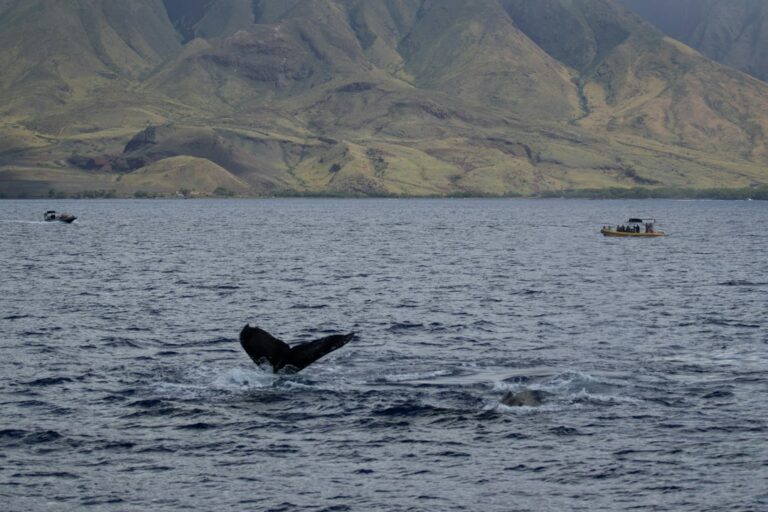
Whale-watching season runs mid-December through April, when North Pacific humpbacks migrate past the point. The lower observation deck sits about 400 feet above the surf and typically produces multiple spouts per hour during peak February weeks. Sunrise faces east, over Manana (Rabbit) Island and the smaller Kaohikaipu.
Parking and timing
The state lot at the trailhead holds roughly 40 vehicles and fills by 7:30am on weekends. The gate opens around 7:00am and closes at dusk per state transportation postings. Sunrise-hopeful hikers park at the roadside pullout below the gate and walk in on the shoulder.
Midday temperatures push the paved surface above 110°F in July and August, so most guides recommend starting by 8:00am or after 4:30pm. The full Makapuu paved ascent breakdown covers the whale-viewing pullouts, the shortcut spur, and the tidepools option at the base cliff.
2. Diamond Head Crater — reservation required
Diamond Head Summit Trail (Le’ahi) is the most visited hike in Hawaii and now runs a mandatory advance reservation for out-of-state visitors. The 1.6-mile round trip climbs 560 feet from the crater floor to the World War I-era fire control station at 761 feet elevation, delivering a 270-degree view over Waikiki, the Ko’olau range, and the open Pacific.
Non-residents pay $5 per person plus $10 per vehicle at the gate. Hawaii residents with a state ID enter free without a reservation. The booking window opens 30 days in advance, and popular sunrise slots (6:00am–7:00am) sell out within minutes of release. See the non-resident booking window guide for exact release timing.
Trail surface alternates between paved switchbacks and two staircase sections totaling 174 steps. A 225-foot tunnel dug through the crater wall in 1908 sits about two-thirds up. Headlamps help for pre-dawn starts, though the tunnel now has interior lighting on a dawn timer.
Sunrise vs. mid-morning at Diamond Head
First trail entry is 6:00am and the last entry is 4:00pm; the park closes at 6:00pm. Sunrise hits the summit around 6:20am in June and 7:10am in December. The predawn route choice writeup compares the historic stairs versus the ramp branch installed for accessibility. Mid-morning slots (8:00am–10:00am) are less competitive.
3. Manoa Falls — muddy rainforest to a 150-foot cascade
Manoa Falls Trail runs 1.7 miles round trip through a Waihi Stream valley that receives roughly 158 inches of rain per year. The reward is a 150-foot slender cascade at the trail end. Elevation gain totals about 800 feet across packed dirt, exposed roots, wooden boardwalk, and one steep switchback near the plunge pool.
Parking at the private Paradise Park lot costs $7 for the day. The state DLNR forbids swimming in the plunge pool because of leptospirosis risk from feral pig contamination — a real medical hazard, not a liability posture. The Hawaii Department of Health confirms 5–10 lepto cases per year traced to freshwater exposure.
Footwear matters more here than on any other Oahu day hike. The muddy-trail footwear selection guide compares grippy trail runners versus low-cut approach shoes for the last switchback, which stays slick even in dry-season afternoons.
Lyon Arboretum add-on
The Manoa lot sits 200 feet from the entrance to the Harold L. Lyon Arboretum, a 194-acre University of Hawaii botanical research site with 5,000 tropical species and a suggested $10 donation. Combining the falls hike with an hour in the arboretum makes for a strong rain-day plan when the ridgeline trails are unusable.
4. Lanikai Pillbox (Kaiwa Ridge) — sunrise favorite with a parking crackdown
The Kaiwa Ridge Trail, universally called Lanikai Pillbox, climbs 600 feet in the first quarter mile to two World War II observation bunkers on a ridgeline above Lanikai Beach. Round trip is 1.8 miles. The initial pitch is steep enough that most hikers use hands on the rope-assisted rock scramble section near the top of the first climb.
Sunrise slots are the draw because the ridge faces the Mokulua Islands due east, and the light hits both concrete pillboxes around 6:00am in summer or 7:10am in winter. Photographers cluster on the first (lower) pillbox roof from 30 minutes before dawn onward, three deep on peak weekends.
The catch is parking. The City and County of Honolulu banned street parking on Aalapapa Drive and Mokulua Drive after resident complaints escalated in 2019, and Honolulu Civil Beat reporting has tracked enforcement patterns since. Tow trucks work the neighborhood from 5:30am. Read the sunrise parking ban and access etiquette before driving out.
Where to park legally
The Kailua Beach Park lot on Kawailoa Road holds about 100 cars and opens each morning at 5:00am. From that lot it is a 0.8-mile walk to the trailhead across the Kaelepulu Canal footbridge. Total sunrise mission runs about 2.5 hours door-to-door from Waikiki, including the 25-minute drive over the Pali Highway.
5. Koko Head Stairs — the 1,048-rung cardio burn
The Koko Head Crater Railway Trail is a decommissioned military tramway grade converted into an outdoor StairMaster. Hikers ascend 1,048 wooden railroad ties from the Koko Head District Park parking lot to the 1,208-foot summit and a former bunker complex. Round trip covers 1.6 miles and 900 feet of gain, most of it in the middle 800 ties.
Grade averages 26% and hits 45% at the notorious washed-out bridge section around tie 700, where the ties span an eroded gully with open air below the sleepers. Falling through is not a joke; multiple rescues per month appear in Honolulu Fire Department callouts reported by Hawaii News Now.
Sun exposure is total. No shade, no water sources, and no bailout to a shortcut trail. Start times before 6:30am and after 5:00pm are the only reasonable windows May through September. Detailed pacing notes and step-by-step section splits appear in the 1,048-rung ridgeline climb writeup.
Fitness benchmarks for Koko Head
Fit hikers finish the ascent in 25–35 minutes. First-timers averaging one gym session per week typically take 55–75 minutes. Descent takes 20–30 minutes regardless of fitness because the ties are hard on the knees. Trekking poles help both directions, and the Honolulu-area REI stocks collapsible aluminum pairs around $80.
6. Kaena Point — remote 5-mile point with an albatross colony
Kaena Point is the westernmost tip of Oahu and one of the few intact native coastal ecosystems left on the island. The most common route starts at the end of Farrington Highway on the Mokuleia (north shore) side and runs 5 miles round trip along a former railway grade, with only 300 feet of net elevation change.
The trail is a dirt jeep road for the first 2.2 miles, then enters the Kaena Point Natural Area Reserve through a predator-proof fence gate installed in 2011. Inside the reserve, hikers walk another 0.3 miles to the point itself, past nesting Laysan albatross (November through July) and Hawaiian monk seals hauled out on the beach.
Difficulty comes not from elevation but from exposure. There is no shade for the full 5 miles, ambient summer coastal temperatures reach 90°F, and the road surface reflects heat. Trade winds usually blow 15–25 mph, which helps cooling but sandblasts the face during dry spells.
Which side to start from
Mokuleia (north) is the recommended access. The Waianae (west) side reaches the point in 3.5 miles round trip but has a documented pattern of car break-ins at the trailhead lot and a longer drive from Honolulu (about 55 minutes via H-1 west). Both sides converge at the fenced reserve entrance.
Trail comparison at a glance
Head-to-head numbers for the six hikes above, useful for building a Saturday plan that combines an easier morning hike with an afternoon beach or shave ice stop.
| Trail | Typical time | Best start | Cost (non-resident) | Water needed |
|---|---|---|---|---|
| Makapuu Lighthouse | 60–90 min | 7:00am or 4:30pm | Free entry | 1 liter |
| Diamond Head | 60–90 min | 6:00am slot | $5 + $10 parking | 1 liter |
| Manoa Falls | 60–90 min | 8:00am (pre-rain) | $7 parking | 1 liter |
| Lanikai Pillbox | 75–120 min | Sunrise ±30 min | Free (walk from Kailua Beach) | 1 liter |
| Koko Head Stairs | 75–120 min | Before 6:30am | Free | 2 liters |
| Kaena Point | 2.5–4 hours | Before 8:00am | Free | 3 liters |
Timing, weather, and monthly rain windows
Oahu’s leeward south coast (Diamond Head, Koko Head, Makapuu) is dry roughly 300 days per year with average lows near 65°F in February and highs near 89°F in September. The windward and interior valleys where Manoa Falls sits behave differently, catching orographic rain most afternoons even during the dry season.
Kailua and Lanikai on the windward side receive measurable precipitation on 15–20 days per month November through March. Sunrise windows almost always break clear even in wetter months because the trade wind flow reforms clouds around 9:00am–10:00am. Afternoon hikes carry higher rain risk on the windward side than morning starts.
See the month-by-month Oahu weather breakdown for exact rainfall averages by region. December, January, and February are the coolest hiking months. July through September are the driest but hottest, with heat exhaustion risk on Koko Head and Kaena Point.
| Month | Avg high (Honolulu) | Rain days | Best hikes |
|---|---|---|---|
| January | 80°F | 10 | Diamond Head, Makapuu (whales) |
| April | 83°F | 7 | All six |
| July | 88°F | 3 | Kaena, Koko (5:30am start) |
| October | 87°F | 7 | Lanikai, Manoa |
| December | 81°F | 10 | Makapuu (whales), Diamond Head |
Packing card for Oahu day hikes
Every hike on the ranked list above can be completed with the same basic kit, adjusted for water volume and headlamp needs. Overpacking is the more common mistake; the trails are short by mainland standards, and rescue teams typically reach the summits within 45 minutes of a 911 call.
- 1–3 liters of water in an insulated bottle or hydration bladder
- Trail runners with 4mm+ lug depth (running shoes slip on Manoa mud)
- Reef-safe sunscreen SPF 30+ with zinc oxide, per Hawaii Act 104
- Wide-brim or ball cap plus polarized sunglasses for glare
- Headlamp for pre-dawn Diamond Head, Lanikai, or Koko Head starts
- Snack with 200–400 calories (bar, banana, trail mix)
- Small first-aid kit with blister patches and electrolyte tabs
- Phone with AllTrails or Gaia GPS offline map downloaded before leaving wifi
Skip cotton entirely. Cotton holds sweat, and afternoon humidity on the windward side runs 75–85%, which prevents evaporation. Merino wool or synthetic wicking layers dry between hikes and stay usable across multiple trail days without laundry.
Rental car strategy for hikers
All six trailheads sit outside walking distance of Waikiki hotels, and TheBus network reaches Diamond Head and Makapuu but not Kaena Point or Manoa Falls efficiently. A rental car unlocks the full list. Honolulu airport (HNL) rental counters run typical daily rates of $55–$95 in dry season and $75–$130 in December peak weeks.
Economy models handle every trailhead in this guide. Only the Kaena Point Waianae-side dirt access truly benefits from ground clearance, and that route is not recommended anyway for security reasons. Free parking exists at Koko Head and both Kaena trailheads; paid or reserved parking applies at Diamond Head, Manoa Falls, and Kailua Beach.
Insurance and rental gotchas
Personal auto insurance from the mainland usually extends to Hawaii rentals, but credit-card primary CDW coverage does not always cover unpaved roads. Check the fine print before driving the Mokuleia dirt track toward Kaena, because a rock strike on a rental oil pan runs $600–$1,400 out of pocket even with basic coverage.
Return the tank at Waipahu or the airport-adjacent stations before the airport approach. Fuel at HNL rental returns runs $7.50–$9.00 per gallon versus $4.30 average at Costco Iwilei per county consumer postings. Full-day rentals returned with less than a quarter tank almost always trigger the top-off charge.
Combining hikes with beaches and rest days
Six good hikes are more than one week’s worth of exertion for most first-time visitors. A common pairing pattern is hike plus adjacent beach: Makapuu into Waimanalo, Lanikai Pillbox into Kailua Beach, Diamond Head into Waikiki, Manoa Falls into a Kaimuki lunch, Koko Head into Sandy Beach, and Kaena Point into the Mokuleia shoreline.
The family-friendly Oahu beach guide lists calm-water pairings for the Makapuu and Lanikai hike days. For an easier day off the ridgelines, the Sherwoods bathing approach at Kaiona Point works well after a morning Makapuu ascent.
Rest days for jet lag and sunburn recovery matter more than most itineraries admit. Two hard hikes back-to-back (Koko Head followed by Kaena Point, for example) leaves most visitors sore for three days. Spread cardio-heavy trails at least 48 hours apart and use rest days for the Ho’omaluhia Botanical Garden or the Bishop Museum.
Longer trail options beyond the ranked six
Oahu has dozens of good hikes past this short list. Popular next-tier options include the Kuli’ou’ou Ridge Trail (5 miles round trip, 1,900 feet gain to a Ko’olau summit), the Wiliwilinui Ridge (5 miles, 1,600 feet, requires the gated Kuliouou Ridge Road entry code), and the Aiea Loop (4.8 miles, 900 feet).
The 12 best hiking trails on Oahu writeup expands the list to include Waimano Falls, the pillbox hike above Ehukai Beach on the North Shore, and the Koko Crater Botanical Garden loop for a low-stress rest-day option.
Two closed trails deserve mention because they still appear in outdated blog posts. Haiku Stairs (Stairway to Heaven) began demolition in April 2024 and is patrolled by private security 24 hours a day. Sacred Falls has been closed since a Mother’s Day 1999 landslide killed eight hikers and injured 50 more. Neither should be attempted.
Permit and access rules by trail
The regulatory picture changes fast. State DLNR, City and County of Honolulu, and private landowners each control different trailheads, and rules updated for the 2024 fiscal year now govern most reservations and fees.
| Trail | Managing agency | Reservation required | Non-resident fee |
|---|---|---|---|
| Diamond Head | Hawaii DLNR State Parks | Yes, 30 days ahead | $5 person + $10 vehicle |
| Makapuu | DLNR (Kaiwi Scenic Shoreline) | No | Free |
| Manoa Falls | DLNR Na Ala Hele | No; $7 private parking | Free trail access |
| Lanikai Pillbox | DLNR (Kaiwa Ridge trail) | No, but no trailhead parking | Free |
| Koko Head | City and County of Honolulu | No | Free |
| Kaena Point | DLNR Natural Area Reserve | No general permit | Free |
Refer to Hawaii DOTAX for the 4.712% general excise tax that guided hike operators must include in tour pricing. Group sizes of 10 or more inside the Kaena Point reserve require a separate DLNR commercial use permit that takes 30–45 days to issue.
Safety, cell service, and rescue realities
Verizon and T-Mobile both provide reasonable coverage on Diamond Head, Makapuu, and Lanikai Pillbox. Koko Head has intermittent coverage on the summit. Manoa Falls goes dark near the falls basin because of the surrounding ridgelines. Kaena Point has no coverage past the fence line — a documented dead zone that has slowed several rescues.
Hawaii’s Emergency Medical Services runs helicopter rescues from a base at Kalaeloa. Rescue is not billed to the hiker unless negligence is proven, but flash floods, cliff-edge falls, and heat stroke on the exposed trails claim visitors every year. The Honolulu Star-Advertiser tracks incidents and closures.
Rules and short-term rental patterns for hikers who want to base themselves near a trailhead have shifted under Oahu’s Bill 41 short-term rental crackdown, which limits sub-30-day rentals outside designated resort zones. Kailua and Manoa neighborhoods have almost no legal short-term inventory as of 2026.
Frequently asked questions
Do Diamond Head reservations sell out for sunrise slots?
Yes. The 6:00am, 6:15am, and 6:30am entry windows sell out within 5–10 minutes of release, which happens 30 days in advance at midnight Hawaii time. Non-residents who miss the window can still book 8:00am or later slots for the same $5 fee. Hawaii residents with a state ID walk up without a reservation at any hour.
Which Oahu hike works best for young kids?
Makapuu Lighthouse is the strongest kids’ pick because the paved surface accepts jogging strollers up to the lower observation deck. Diamond Head handles school-age children (roughly 7 and up) because the 174 steps and dark tunnel require some coordination. Manoa Falls is doable for kids but demands mud tolerance and strict adherence to the no-swimming rule at the plunge pool.
Is Koko Head safe for people afraid of heights?
Not really. The washed-out bridge section around railroad tie 700 spans an eroded gully, and exposure is direct — the ties are open with no decking underneath. Most hikers with mild acrophobia manage by staying on the left rail and not looking down, but severe cases should choose Diamond Head or Makapuu instead for equally strong summit views without the exposure.
What is the earliest legal parking at Lanikai for sunrise?
Kailua Beach Park lot opens at 5:00am, which allows a 5:15am walk to the trailhead and a 5:45am ridgeline arrival for a summer sunrise. Aalapapa Drive and Mokulua Drive have 24-hour parking bans enforced by Honolulu Police, with tows starting 5:30am. See the parking ban and access etiquette guide for map detail.
Can visitors do Kaena Point without a rental car?
Not practically. TheBus route 52 reaches Mokuleia with limited weekend service, and the final stop leaves a 3-mile walk to the trailhead before the 5-mile hike itself. Ride-share pickups do not exist at the Farrington Highway terminus, and cell coverage vanishes past the fence line. A rental car or organized tour is effectively required for this trail.
Are these trails safe for solo female hikers?
Diamond Head, Makapuu, Manoa Falls, and Lanikai Pillbox see enough daily foot traffic that solo hiking is routine and low-risk during daylight hours. Koko Head is also busy but exposed to heat. Kaena Point sees fewer people midweek and the Waianae-side parking has documented break-in patterns, so solo hikers should stick to the Mokuleia trailhead with visible activity around 7:00am start times.
How does hiking on Oahu compare to Maui or the Big Island?
Oahu hikes are shorter, more accessible, and more crowded than counterparts on Maui or Hawaii Island. Haleakala summit trails on Maui reach 10,000 feet and demand cold-weather layers; Big Island volcano hikes cross active lava fields with respirator recommendations. Oahu’s advantages are bus access, urban proximity, and lower elevation. The island timing comparison helps decide season by island.
Does the state charge visitors a hiking pass on top of parking?
Only Diamond Head charges a per-person entry fee ($5 non-resident). Other DLNR trails on Oahu use parking fees, not entry fees, to fund maintenance. A statewide visitor Green Fee has been proposed at the legislature multiple sessions but was not enacted as of the 2026 session. Current fee structures live on state park pages and update each fiscal year.