Choosing a family beach on Oahu is not the same as choosing a beautiful one. Toddlers and elementary-age kids need shallow water, gentle entry, a lifeguard tower in sight, and a restroom under 200 feet away. Photogenic sand and dramatic surf do not help when a three-year-old wants to walk in without falling over.
This guide ranks the shorelines that mainland families actually manage successfully — the ones where parents can eat a sandwich under shade while kids splash in ankle-deep water. It draws on lifeguard station data from the City and County of Honolulu Ocean Safety Division, parking capacity counts, and reservation systems that gate the most popular spots.
The short list: the four manmade Ko Olina lagoons for infants and toddlers, Kailua Bay for elementary swimmers, Ala Moana Beach Park for urban stays, Waimea Bay only from May through September, and Hanauma Bay for older children willing to snorkel. Each pick comes with a timing window, a parking strategy, and gear notes below.
The Five Criteria That Separate Family Beaches From the Rest
Oahu has more than 125 named beaches. Only a fraction meet the bar for families with children under twelve. Five factors do most of the sorting work, and every beach on this ranking was scored on the same rubric.
Shallow, protected entry means water under three feet deep for at least 20 yards from shore, with no sudden drop-off and no reef shelf underfoot. Lifeguard presence means a staffed tower in visual range, not just occasional patrols. Facilities means flush restrooms, freshwater rinse showers, and a picnic pavilion within 300 feet of the sand.
Parking capacity means enough free stalls to arrive after 9:00 a.m. on a weekend without circling. Shade means mature ironwood trees or built ramadas, since umbrella-only setups fail on the 15-to-20-mph trade winds that pick up most afternoons.
The island-wide family beach ranking uses the same framework across all four main Hawaiian islands. This Oahu-specific guide adds the local logistics — reservation windows, rental car mileage from Waikiki hotels, and the seasonal north-shore switchover — that make or break a beach day here.
| Criterion | Family threshold | Why it matters |
|---|---|---|
| Entry depth | Under 3 ft for 20+ yards | Toddlers walk in without floating gear |
| Wave height | Under 2 ft breaking | Prevents knockdowns of small children |
| Lifeguard tower | Staffed 9:00 a.m.–5:30 p.m. | Rescue response within 90 seconds |
| Restroom distance | Under 200 ft from sand | Handles urgent toddler needs |
| Shade coverage | Ironwood canopy or pavilion | UV index hits 11 by 11:00 a.m. |
| Parking | 150+ free stalls | Reduces circling with hungry kids |
Ko Olina Lagoons: Oahu’s Most Protected Family Water
The four Ko Olina lagoons on the leeward coast are the most family-friendly saltwater on Oahu, and the ranking is not close. Each lagoon is a semicircular cove carved into the coastline by developers in the 1990s, protected by a rock breakwater that stops open-ocean swell. Water inside stays under four feet across most of the swimming area, with no reef fingers underfoot.
The lagoons sit about 20 miles west of Daniel K. Inouye International Airport and 24 miles from Waikiki. That works out to roughly a 35-minute drive off-peak and a 55-minute drive during weekday commute windows. The Waikiki versus Ko Olina lodging tradeoff matters most for families planning three or more lagoon days.
Lagoon 1 (Kohola)
Kohola is the northernmost and largest of the four. Public parking is limited to about 26 stalls off Aliinui Drive, and they fill by 9:00 a.m. on weekends year-round. Restrooms and outdoor rinse showers sit at the north end, next to a grassy shaded lawn under mature ironwood trees. Kohola gets the most stroller traffic because the sand-to-lawn transition stays level.
Lagoon 2 (Honu)
Honu, the second lagoon, sits in front of Aulani Resort and gets steady day-guest use from non-hotel visitors. Public shoreline access is legal along the perimeter path. Parking is limited to about 20 free stalls, and lifeguards are on duty daily from around 9:00 a.m. Water depth stays consistent under four feet, and shade comes from resort-planted palms rather than dense canopy.
Lagoon 3 (Nai’a)
Nai’a is quieter than the first two because it fronts vacation rentals rather than a hotel. The parking lot has about 24 stalls that turn over slowly through the morning. Sand is coarser and the swimming area is slightly smaller, but the tradeoff is genuine off-peak calm — even on Saturdays it rarely feels crowded before noon.
Lagoon 4 (Ulua)
Ulua, the southernmost lagoon, is the smallest but the deepest at its center. Parking is the tightest of the four — about 22 stalls behind Beach Villas at Ko Olina. It fills earliest on weekends. Ulua works for confident swimmers ages six and up who can handle shoulder-deep water without gear. It is not the right pick for crawling infants or unsteady toddlers.
| Lagoon | Public stalls | Typical weekend fill | Best age band |
|---|---|---|---|
| Kohola (1) | 26 | 9:00 a.m. | All ages |
| Honu (2) | 20 | 8:30 a.m. | Infants to age 8 |
| Nai’a (3) | 24 | 10:30 a.m. | Toddler to age 10 |
| Ulua (4) | 22 | 9:30 a.m. | Ages 6 and up |
Kailua Bay: Windward Oahu’s Wide Sandy Playground
Kailua Bay stretches roughly 2.5 miles along Oahu’s windward coast, and the section anchored by Kailua Beach Park is the most family-usable segment. The bay’s outer reef sits about 400 yards offshore, blocking most open-ocean swell before it reaches the sand. That leaves a shallow lagoon-like inner bay with waist-deep water and turquoise clarity.
Kailua Beach Park itself covers about 35 acres of ironwood-shaded lawn behind the sand, with roughly 200 free stalls, three restroom blocks, outdoor showers, and a boat ramp at the south end. Lifeguards staff two towers daily. Trade winds run 10 to 20 mph most afternoons, which is why the bay is a windsurfing and kite-surfing hub — good for older kids, mixed for toddlers on breezy days.
Families staying on the windward side can pair a Kailua beach morning with lunch at one of the town’s family-friendly restaurants before an afternoon nap. The Kailua neighborhoods guide covers which vacation rentals put families within walking distance of sand.
Alternatives Along Kailua Bay
Kalama Beach Park, half a mile north of Kailua Beach Park, has fewer facilities but more parking turnover through midday. Lanikai Beach, immediately south past the boat ramp, has zero public parking and no restrooms — the postcard color comes with logistics that break most family days. Families with young children should default to Kailua Beach Park and skip Lanikai entirely.
Windward Rainy-Day Backup
The windward side gets 20 to 35 inches more annual rainfall than the leeward coast, so families staying in Kailua should always have an indoor backup planned. Hoomaluhia Botanical Garden works for a stroll under tree cover during light showers, and the garden requires a weekend entrance reservation from 2026 onward.
Ala Moana Beach Park: Urban Oahu’s Family Anchor
Ala Moana Beach Park is the largest urban beach on Oahu at roughly 100 acres including the interior lawn and Magic Island peninsula. It sits a mile west of Waikiki along Ala Moana Boulevard. A submerged reef about 400 yards offshore breaks incoming swell, creating a wide, flat, shallow swimming zone that runs the full half-mile length of the beach.
Water depth stays under four feet almost everywhere inside the reef line, which makes Ala Moana the only Oahu family beach where non-swimming adults can wade the full length of the shoreline with a child on each hand. The sand slope is gentle and the bottom is soft.
Parking is the strongest logistic advantage: roughly 1,100 free stalls across multiple lots, including the Magic Island peninsula on the east end. Restrooms, showers, picnic pavilions, playgrounds, and food trucks make this the closest thing Oahu has to a full-service urban beach park. Lifeguards staff four towers along the shoreline.
Ala Moana is where families staying in Waikiki with toddlers often escape the tourist crowd for a lower-key afternoon. The park sits 10 minutes from most Waikiki hotels by car, 15 minutes by TheBus, or roughly 30 minutes on foot along the shoreline path.
Waimea Bay in Summer: The Season Makes the Beach
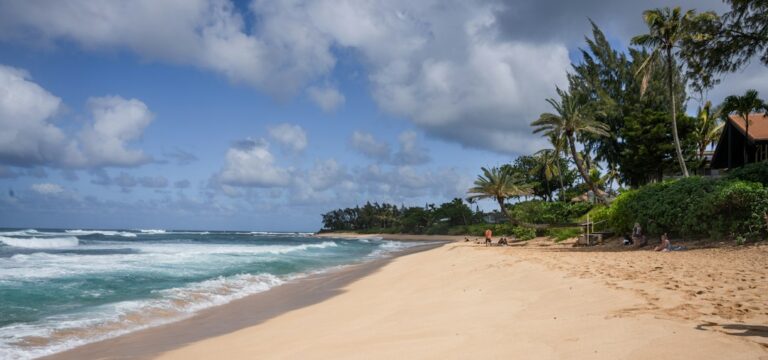
Waimea Bay on the North Shore is effectively two different beaches depending on the month. From May through September, the bay flattens to lake-like calm, with water clarity above 40 feet and a wide sandy entry that works for confident child swimmers. From October through April, the same bay hosts 15-to-30-foot open-ocean swells that draw big-wave surf contests and make the shorebreak lethal for children.
The bay has one lifeguarded tower, roughly 100 parking stalls, one restroom block with cold showers, and shade under a few large trees at the south end. Facilities are modest for the summer crowd volume — expect the lot to fill by 9:30 a.m. on weekends from June through August, with a long informal overflow line along Kamehameha Highway.
The National Weather Service posts High Surf Advisories for North Shore beaches when swells exceed eight feet, and Waimea’s lifeguards close swimming to the public during any advisory-level surf. Families driving to the North Shore should check the local surf forecast the morning of a planned Waimea day and hold Ala Moana or Kailua as a fallback.
Waimea in Context With the North Shore Drive
The drive from Waikiki to Waimea takes 55 to 75 minutes each way via H-1 west and H-2 north — routes managed by the Hawaii Department of Transportation. Families making the round trip should treat it as a full-day commitment with stops at Haleiwa town for lunch. Turning around for one splash in the bay is not a rational use of the drive, which is why summer is the only time Waimea belongs on a family list.
Hanauma Bay: Reservations, Reef, and Whether It Fits Family Trips
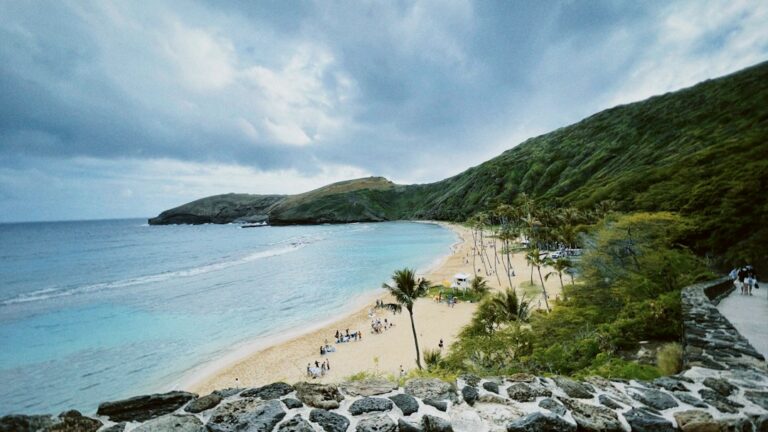
Hanauma Bay Nature Preserve sits on the southeastern tip of Oahu, about 30 minutes east of Waikiki via the H-1 and Kalanianaole Highway. It is Oahu’s premier snorkeling site and a working marine reserve managed by the City and County of Honolulu. Rules govern everything from reservation windows to sunscreen chemistry to parking access.
The Hanauma Bay reservation system opens exactly 48 hours before arrival at 7:00 a.m. Hawaii time, and most slots sell out within five minutes. Entry costs $25 per non-resident age 13 and up; children 12 and under enter free. Parking is $3 per vehicle for non-residents. The preserve is closed Mondays and Tuesdays year-round.
Inside the bay, water is shallow over the reef flats (under three feet) but the reef itself is live coral and requires either reef-safe sunscreen or a rash guard. Families with elementary-age kids who can wear a mask do well here; toddlers and non-swimmers get less from the visit than at Ko Olina. The mandatory nine-minute orientation video plays before descent to the sand.
Hanauma Logistics for Families
The parking lot has 300 stalls and typically fills by 10:00 a.m. even with reservation gating. Strollers do not roll down the paved switchback path to the beach — plan to carry infants or use a soft carrier. The tram ride back up costs $1.50 per person as of 2026 and helps enormously on the return leg with tired kids.
Snorkel gear can be rented at the beach concession for around $20 per set, but families should read the snorkeling gear checklist and consider bringing masks that fit small faces. Rental masks in the smallest available size still leak on kids under age six. The state tourism board maintains updated preserve schedules and seasonal closures.
Side-by-Side Family Beach Comparison
The five ranked beaches sort differently on each factor. Families rarely need one perfect beach — they need to know which one fits a specific day’s logistics, weather, and drive-time budget.
| Beach | Best age | Lifeguard | Parking | Entry fee | Drive from Waikiki |
|---|---|---|---|---|---|
| Ko Olina Lagoons | Infant to 12 | Yes, 4 towers | ~92 free stalls total | $0 | 35–55 min |
| Kailua Beach Park | Age 3 and up | Yes, 2 towers | ~200 free stalls | $0 | 25–40 min |
| Ala Moana Beach Park | All ages | Yes, 4 towers | ~1,100 free stalls | $0 | 10–15 min |
| Waimea Bay (summer) | Age 6 and up | Yes, 1 tower | ~100 free stalls | $0 | 55–75 min |
| Hanauma Bay | Age 5 and up | Yes, 3 towers | 300 stalls, $3 | $25 adult | 25–35 min |
Reef-Safe Sunscreen: Act 104 and Family Coverage
Hawaii’s Act 104 banned the sale of sunscreens containing oxybenzone and octinoxate effective January 1, 2021, and Maui County later expanded the ban to include avobenzone and octocrylene. Enforcement happens at retail, not on the beach, so tourists arriving with a mainland-purchased tube technically remain compliant — but reef damage happens regardless of purchase point.
Families should switch to mineral-only sunscreens with non-nano zinc oxide or titanium dioxide as the active ingredient. Full detail on the law is in the Act 104 rundown. Stick formulations apply faster on wriggling children than lotions; a 3-ounce stick covers three days of family beach use for a typical trip.
Application timing matters as much as ingredient choice. Sunscreen needs 15 minutes to bind before water contact, and reapplication should happen every 80 minutes of exposure or after any towel-drying. Data from the Hawaii Department of Health shows the UV index in Honolulu holds at 11 (extreme) from roughly 11:00 a.m. to 3:00 p.m. from May through September.
| Item | Active ingredient | Reef-safe | Rough cost |
|---|---|---|---|
| Mineral stick, 3 oz | Non-nano zinc oxide | Yes | $16–$22 |
| Mineral lotion, 6 oz | Zinc + titanium | Yes | $18–$28 |
| UPF 50 rash guard, kids | Fabric | Yes (no chemical needed) | $22–$35 |
| Standard chemical spray | Oxybenzone/octinoxate | Banned in HI retail | $8–$12 |
Rental Cars, Parking Windows, and Getting to Each Beach
Ala Moana is reachable on foot or by TheBus from Waikiki, but every other family beach on this list requires a car. Rental car rates from Daniel K. Inouye International Airport ran $52 to $95 per day for a midsize during peak summer 2025, with occasional weekly rates under $325 through Costco Travel or Hertz President’s Circle.
Booking a car for the full stay is cheaper than day-of rentals for beach trips. Families staying in Waikiki without a car often pay $80 to $130 round trip in rideshare to Ko Olina — a full week of that math approaches the cost of a rental plus daily hotel parking. The general Oahu beach guide covers non-family-specific picks that also require driving.
Parking Windows by Beach
Ko Olina lagoons fill first — arrive before 8:30 a.m. on Saturdays or accept a 20-minute wait for a stall to turn over. Kailua Beach Park fills by 10:00 a.m. on weekends; the overflow lot on Kalaheo Avenue often has capacity until 11:30 a.m. Ala Moana rarely fills except on July 4 and Sunday afternoons. Hanauma is reservation-gated, so parking follows the entry window.
| Beach | Weekend arrival by | Weekday arrival by | Overflow option |
|---|---|---|---|
| Ko Olina Lagoon 1 | 8:30 a.m. | 10:00 a.m. | Wait or try Lagoon 3 |
| Kailua Beach Park | 9:30 a.m. | 10:30 a.m. | Kalaheo Ave lot |
| Ala Moana | 10:00 a.m. | Anytime | Magic Island lot |
| Waimea Bay | 9:00 a.m. | 10:30 a.m. | Pupukea road shoulder |
| Hanauma Bay | Reservation-based | Reservation-based | None |
Safety, Lifeguards, and When Not to Go
The Honolulu Ocean Safety Division operates around 40 lifeguard towers across Oahu, and every beach on this list is staffed daily from roughly 9:00 a.m. to 5:30 p.m. The tower flags matter — a red flag means the water is closed, a yellow flag means caution, and no flag with a lifeguard present means normal conditions. Parents should read the posted board before setting up.
Rip currents cause most fatal drownings in Hawaii. Ko Olina lagoons have essentially none because of the breakwater geometry. Kailua Bay can develop rips near the reef gap on the south end during trade wind swells. Ala Moana has one persistent rip at the west end near the Magic Island channel. Waimea Bay’s summer rips are minor but present near the south cliff.
Families using masks and fins should check gear fit before Hanauma or the Waimea summer season. Children under six do better with a flotation vest than a snorkel, even in shallow water. For any beach with rocky sections — Hanauma and parts of Waimea — water shoes matter to prevent cuts on submerged reef edges.
Sun and Heat Windows
Honolulu’s daily high sits between 82°F and 89°F from May through October, and the UV index reaches 11 (extreme) for six hours daily during that stretch. Families with young children should treat 10:00 a.m. to 2:00 p.m. as high-risk sun and either use shade structures or plan around it. Morning sessions from 8:00 to 10:30 a.m. work better than midday for infants and pale-skinned kids.
Ocean Temperature Year-Round
Water temperature on Oahu shorelines runs 75°F in February to 82°F in September, warm enough for barefoot children in every month of the year. Cold shock is not a concern here the way it is on the mainland Pacific coast. A rash guard adds sun protection more than warmth, and toddlers rarely need a wetsuit even on the coolest February morning.
Seasonal Timing: When Each Beach Actually Works
Oahu has two beach seasons that operate on opposite calendars. South-facing shores get swell in summer, north-facing shores get swell in winter, and the leeward and windward sides are relatively protected year-round. Families visiting outside the peak summer window need to know which beaches shift.
Waimea Bay is the sharpest example: family-safe roughly May 15 through September 30, and dangerous for children the rest of the year. Ala Moana and Kailua are consistent year-round because the offshore reefs block swell from either direction. Ko Olina lagoons are the most weather-immune spot on the island — the breakwater does not care what season it is.
| Beach | Winter (Nov–Apr) | Summer (May–Oct) |
|---|---|---|
| Ko Olina Lagoons | Excellent | Excellent |
| Kailua Beach Park | Windier, still usable | Excellent |
| Ala Moana | Excellent | Occasional south swell |
| Waimea Bay | Dangerous, avoid | Excellent |
| Hanauma Bay | Excellent | Excellent |
What Families Actually Pack for an Oahu Beach Day
Overpacking is the default mistake. Undergearing on sun protection is the second. The essentials list below reflects what families with children under 10 actually use during a five-hour beach session.
- Mineral sunscreen stick (3 oz) plus a backup 6-oz lotion tube
- UPF 50 rash guard per child, wide-brim hat with chin strap
- Reef water shoes if the beach has any rock or coral entry
- Beach umbrella with sand anchor, or a pop-up sun shelter
- Two microfiber towels per child for quicker afternoon drying
- One-gallon insulated water jug and a soft cooler with ice
- Snack bag with fruit, crackers, and a peanut-butter alternative
- Small first-aid kit with tweezers for reef abrasions
Snorkel gear is only worth packing for Hanauma, Waimea in summer, and Ko Olina Lagoon 4 (which has a small reef patch at the outer edge). The other three family beaches on this list have soft sand bottoms with limited fish life inside the swimming zone. Rentals near the beach usually cost less than checking bulky gear in a suitcase.
Frequently asked questions
What is the calmest beach on Oahu for a toddler?
Ko Olina Lagoon 1 (Kohola) is the calmest saltwater on Oahu for toddlers. The rock breakwater blocks all open-ocean swell, water stays under two feet deep for the first 15 yards, and the sand-to-grass transition is stroller-friendly. Lifeguards staff daily and a restroom sits within 100 feet of the sand. Arrive before 9:00 a.m. on weekends for a parking stall.
Is Hanauma Bay worth it for families with young kids?
Hanauma Bay works well for families with children age five and older who can wear a snorkel mask and float. It is a stretch for toddlers because the paved switchback path is steep and the coral bottom rules out casual splashing. The $25 adult entry, 48-hour reservation window, and mandatory nine-minute video make it a planned outing rather than a spontaneous stop.
When is Waimea Bay safe for kids to swim?
Waimea Bay is safe for confident child swimmers roughly May through September, when North Shore swells drop below three feet and the bay flattens. Lifeguards close swimming when the surf exceeds eight feet, and any High Surf Advisory from the National Weather Service means the beach is not usable. Families should always check the morning forecast before making the 60-minute drive from Waikiki.
Do families need a rental car for beach days on Oahu?
Ala Moana Beach Park is reachable on foot or by TheBus from Waikiki, so families staying nearby can skip a rental for that beach alone. Every other beach on this list — Ko Olina, Kailua, Waimea, Hanauma — requires either a rental car or rideshare. Full-week rentals typically cost less than five or six round-trip rideshares to Ko Olina Lagoons.
What sunscreen is legal to use in Hawaii?
Hawaii’s Act 104 banned retail sale of sunscreens containing oxybenzone and octinoxate statewide; Maui County extended that ban to avobenzone and octocrylene. Mineral sunscreens with non-nano zinc oxide or titanium dioxide as the only active ingredient are compliant. UPF 50 rash guards eliminate the need for chemical coverage on torso and shoulders and hold up better on swimming children.
How early should families arrive at Ko Olina lagoons on a weekend?
Weekend parking at Ko Olina fills by 8:30 to 9:00 a.m. from Memorial Day through Labor Day. Families driving from Waikiki should leave the hotel by 7:15 a.m. to allow for the 35-to-55-minute drive plus a short stall search. Lagoons 3 and 4 turn over more slowly than 1 and 2 and offer better odds of a stall after 10:00 a.m.
Which Oahu beach has the best facilities for a full day with kids?
Ala Moana Beach Park has the most complete facilities on the island: roughly 1,100 free parking stalls, multiple restroom blocks, outdoor showers, shaded pavilions, a playground, food trucks, and four lifeguard towers along a half-mile of calm swimming water. The park works for a full 10:00 a.m. to 4:00 p.m. day with children of any age and requires no reservation or entry fee.