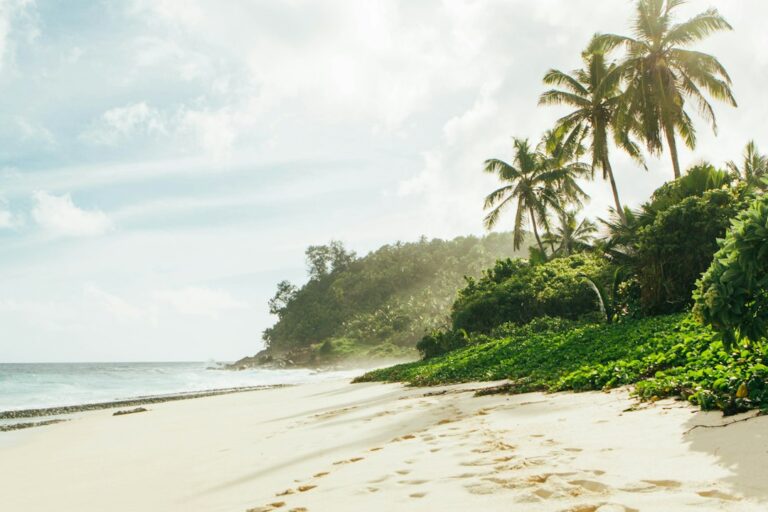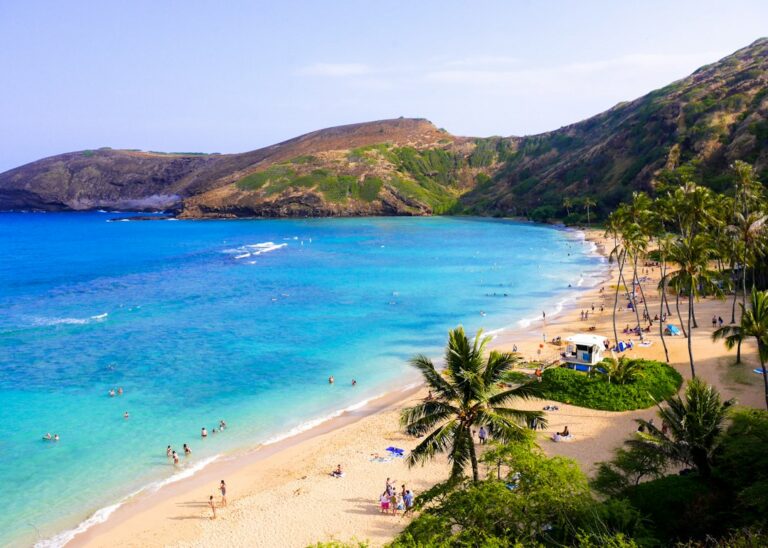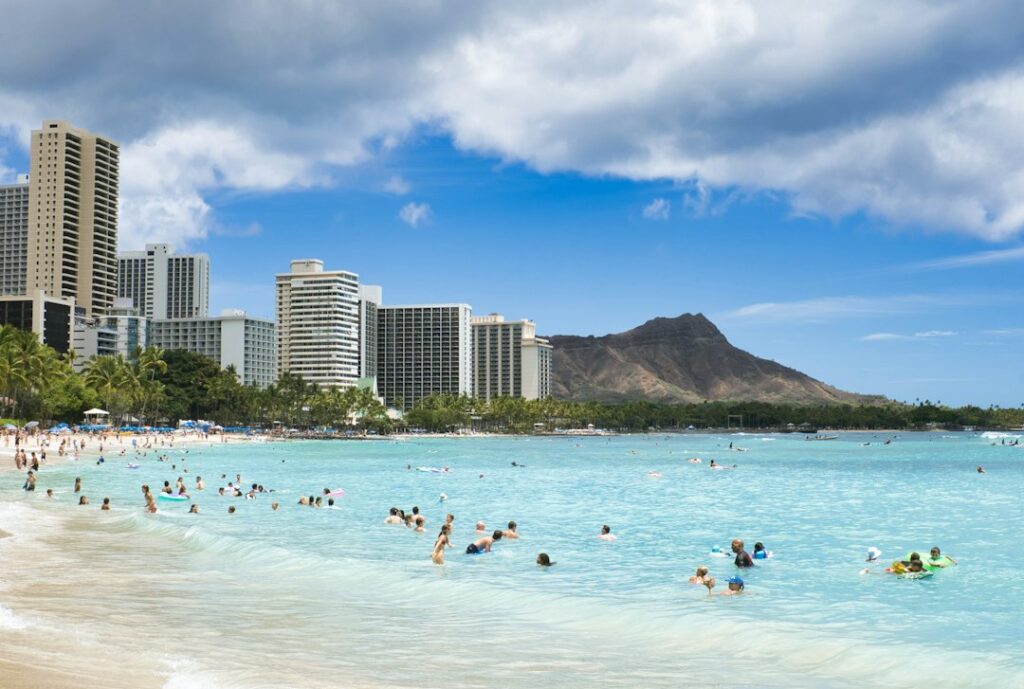
Hawaii’s alcohol rules trip up more visiting mainlanders than almost any other regulatory quirk on the islands. The state’s promotional imagery — a mai tai on a sunset beach, a cold beer in the surf — sits directly at odds with statutes that make almost every version of that scene illegal. Every county in Hawaii prohibits alcohol on public beaches and in public parks, and the penalties are enforced.
The confusion runs deeper than beaches. Hotel bars close earlier than mainland guests expect. Luau providers reject the “just bring your own bottle” workaround that mainland resort culture takes for granted. Rental-car passengers who set an open cocktail in the cupholder are one traffic stop from a criminal citation under HRS 291-3.3.
This article compiles what statutes, county ordinances, and DLNR enforcement records actually say about drinking in Hawaii as a tourist, plus which resort pools permit poolside service and which do not. All figures reflect published fee schedules and code sections in effect through 2026.
The statewide public-park alcohol prohibition
Every one of Hawaii’s four counties bans the possession or consumption of alcohol in county-managed parks and on county-managed beaches. Honolulu’s ordinance sits in Chapter 10, Article 1 of the Revised Ordinances of Honolulu; Maui, Hawaii, and Kauai counties have parallel rules under their respective codes. The Hawaii State Parks system layers a separate prohibition on top for the 51 state park units, enforced by DLNR’s Division of State Parks.
The practical result is that essentially no public shoreline in Hawaii permits open alcohol. Waikiki Beach, Kailua Beach, Poipu Beach, Hapuna, Wailea’s public accesses, and every stretch in between fall under the ban. The Hawaii Department of Health tracks alcohol-related injuries as part of statewide injury surveillance, and beach-related totals hold steady year over year — enforcement pressure does not lapse in shoulder seasons.
A narrow set of exceptions exists for permitted events. County parks departments issue special-use permits for weddings, family reunions, and organized gatherings; some of those permits allow beer and wine service inside a defined footprint with a designated server. Permit lead time runs 30 to 90 days depending on the county, and fees range from $50 to over $500 depending on group size.
County ordinances at a glance
| County | Code section | Base fine | Also covers |
|---|---|---|---|
| Honolulu (Oahu) | ROH 10-1.2 | $100 | Bike paths, harbors |
| Maui | MCC 13.04.145 | $100 | Parking lots, boat ramps |
| Hawaii County | HCC 15-14 | $50 | Restrooms, pavilions |
| Kauai | KCC 12A-3.1 | $100 | Trails, bike paths |
| State parks | HAR 13-146-25 | $100–500 | Camping areas, trails |
What counts as a public beach
Hawaii’s shoreline is public from the vegetation line seaward under HRS 205A-41 and case law dating to the 1968 Ashford decision. The beach in front of any resort — Kaanapali, Wailea, Poipu, the Kohala Coast — is county-managed land subject to the ban, even where a hotel maintains the sand. Guests who carry a drink from a poolside bar across the beach line are technically in violation, regardless of who mixed it.
Practical enforcement varies by micro-location. Officers rarely cite resort guests strolling five feet past a pool deck. They routinely cite groups with coolers at Ala Moana Beach Park, Magic Island, Kalama Park, or Hanalei Bay. The shoreline setback framework under DLNR is the reason the “public beach” definition sweeps so widely — the certified shoreline runs to the wet-sand mark.
HRS 291-3.3 and open containers in vehicles
Hawaii Revised Statutes section 291-3.3 criminalizes open containers of alcohol in the passenger area of any motor vehicle on a public highway. Unlike some mainland states where only the driver is restricted, Hawaii’s statute applies to every occupant. A beer between a passenger’s feet, a wine bottle without the seal intact in the console, or a partially consumed cocktail in a cupholder all trigger the same violation.
“Passenger area” is defined broadly. Convertibles count in their entirety. SUVs without a fixed partition count in their entirety. Only a locked glove compartment, the trunk of a sedan, or the cargo area behind the last upright seat in a hatchback or SUV qualifies as “not readily accessible” and therefore lawful.
The fine under HRS 291-3.3(d) is $100 for a first offense, plus roughly $30 in mandatory driver-education surcharges under HRS 291-11.6. A second offense within one year runs $500. The violation is a petty misdemeanor for the driver in some circumstances but stays as a civil traffic infraction for passengers, which does not carry jail exposure but does appear on driving records for insurance purposes.
Rental-car returns produce a surprising number of open-container problems. A half-finished bottle of wine tucked behind the passenger seat during a late drive back to Kahului or Honolulu airport is a violation the moment the vehicle leaves a private lot. Sealed store-bought bottles in the trunk are fine; opened restaurant wine handed over in a “recorked” bag is not, because a broken factory seal defeats the exception.
Where in the vehicle alcohol can legally sit
| Storage location | Sedan | SUV/hatchback | Convertible | Pickup |
|---|---|---|---|---|
| Trunk (locked) | Legal | N/A | N/A | N/A |
| Cargo behind last seat | N/A | Legal | Illegal | Legal if bed covered |
| Passenger footwell | Illegal if open | Illegal if open | Illegal if open | Illegal if open |
| Locked glove box | Legal | Legal | Legal | Legal |
| Center console | Illegal if unsealed | Illegal if unsealed | Illegal if unsealed | Illegal if unsealed |
Serving hours: the 6am-to-4am framework
Hawaii’s Liquor Control Commissions in each county set default serving hours from 6:00 AM to 4:00 AM the following day for on-premises consumption licenses. That 22-hour window is one of the longest legal serving stretches in any U.S. state and reflects a licensing regime shaped around the tourism economy. Actual hours at any given bar are set by that establishment’s license class and any conditions attached at renewal.
Hotel-based licenses (Class 4 in Honolulu, Class 8 dispenser elsewhere) can run the full window. Standalone restaurants with Class 2 licenses typically stop at 2:00 AM. Nightclubs holding cabaret endorsements can push to 4:00 AM but pay higher annual fees — $6,000 to $12,000 depending on the county compared with $1,500 to $3,500 for a standard restaurant license.
The 4:00 AM cutoff matters for red-eye travelers. A guest returning to a Waikiki hotel bar after a late flight at 3:30 AM has 30 minutes of service before pours stop. Room service alcohol at most large properties ends at 11:00 PM or midnight because of staffing, not licensing — the license permits later service; the operational schedule does not.
Sunday and holiday adjustments
Sunday morning service on Oahu cannot begin before 8:00 AM under Honolulu Liquor Commission rules, a two-hour delay from the weekday default. Maui, Hawaii, and Kauai counties align to the same 8:00 AM Sunday opening for retail package sales but not for hotel-bar service, which continues on the standard schedule. Election-day dry hours were abolished statewide in 2019, so 2026 election polling days carry no additional restrictions.
The luau BYO myth
Mainland guests frequently arrive at commercial luaus assuming they can bring their own beer or wine. The assumption comes from mainland winery-tour and outdoor-event culture; it does not apply in Hawaii. Every commercial luau operating on hotel grounds or on private venue property holds a specific liquor license that legally prohibits guests from bringing outside alcohol onto the licensed premises. Bringing a cooler is grounds for refused entry and, at some venues, refund forfeiture.
The ticket price includes what the license allows. Standard luau packages bundle two to four house drinks (mai tai, POG-and-vodka, house beer) into the base fare, typically $145 to $225 per adult depending on the property. Premium packages add table service, often for another $60 to $90, and switch drinks to a broader open bar for the duration of the meal.
The Polynesian Cultural Center in Laie operates under a different model: as a nonprofit tied to Brigham Young University-Hawaii, PCC does not serve alcohol at all. That distinguishes it from every commercial luau on the four main islands. Guests who assume PCC will match Old Lahaina Luau or Chief’s Luau on the bar experience will be disappointed; those who want a dry cultural evening will find it fits.
What licensed luaus include vs. exclude
| Luau type | Alcohol model | BYO permitted? | Typical adult price |
|---|---|---|---|
| Standard hotel luau (Oahu) | 2–3 house drinks included | No | $160–195 |
| Premium open-bar luau (Maui) | Unlimited house selection | No | $215–275 |
| Big Island resort luau | 1–2 drinks + cash bar | No | $150–210 |
| Kauai commercial luau | Open bar during dinner | No | $175–230 |
| Polynesian Cultural Center | No alcohol served | No | $140–200 |
Penalties, enforcement, and diversion options
Penalties for beach and park alcohol violations look modest on paper — most counties list a $100 base fine — but the actual out-the-door cost after mandatory surcharges runs $150 to $250 for a first offense. Honolulu’s District Court adds a $30 crime-victim compensation fee, a $7 computer-system fee, and a $50 driver-education contribution when the case gets processed alongside a vehicle stop.
Repeat violations escalate. A second citation within 12 months in Honolulu carries a $500 base fine plus court-appearance requirements. Hawaii County’s ordinance permits community-service alternatives — typically 20 to 40 hours of park cleanup — in lieu of the fine for first offenders who accept a diversion plea within 30 days of citation.
Enforcement patterns vary by location and time. HPD’s Waikiki district runs weekend beach sweeps between 4:00 PM and 10:00 PM from May through September. Maui Police Department focuses on Kaanapali and Wailea corridors on holiday weekends. Kauai Police typically issue warnings on Poipu and Hanalei except during declared events. The Honolulu Star-Advertiser reports Waikiki citation totals that consistently exceed 400 per summer month.
Policy coverage from Civil Beat notes that county councils have repeatedly considered — and rejected — pilot programs to designate small “wet zones” on specific beaches. Every proposal since 2015 has failed at the committee stage due to opposition from residents’ groups and DLNR concerns about litter and injury data.
Fine escalation across offenses
| Offense | Base fine | Court fees | Total typical | Escalation |
|---|---|---|---|---|
| First public-park alcohol | $100 | $50–90 | $150–190 | Payable by mail |
| Second within 12 months | $500 | $90–140 | $590–640 | Court appearance |
| HRS 291-3.3 (first) | $100 | $40–70 | $140–170 | Traffic record entry |
| HRS 291-3.3 (second) | $500 | $70–110 | $570–610 | License impact |
| Public intoxication | Up to $1,000 | $100–200 | Up to $1,200 | Possible jail |
Resort pool service: where poolside drinks are actually legal
Because the beach-alcohol ban applies to publicly managed sand while resort pool decks sit on privately held resort land, poolside cocktail service is common and legal at properties with the correct license. Hawaii’s Class 8 dispenser license permits service on any part of the licensed footprint the commission has approved — typically the main pool, adjacent lawns, and cabana row, but not the beach itself.
Not every pool at a Hawaii resort is licensed. Boutique properties, condominium resorts without a full-service restaurant, and older aparthotels frequently have unlicensed pools where guests can drink alcohol they bring from a room but cannot buy poolside. Vacation-rental pools in condominium buildings are covered by the building’s HOA rules, which sometimes forbid alcohol in common areas outright.
Poolside service at major resorts
| Resort area | Property | Poolside bar service | Cabana minimum |
|---|---|---|---|
| Waikiki, Oahu | Royal Hawaiian | Yes, 10 AM–8 PM | $150/day |
| Ko Olina, Oahu | Four Seasons Oahu | Yes, 9 AM–9 PM | $250/day |
| Kaanapali, Maui | Sheraton Maui | Yes, 10 AM–7 PM | $125/day |
| Wailea, Maui | Grand Wailea | Yes, 9 AM–8 PM | $300/day |
| Kohala Coast, Hawaii Island | Mauna Lani | Yes, 10 AM–7 PM | $175/day |
| Poipu, Kauai | Grand Hyatt Kauai | Yes, 10 AM–8 PM | $200/day |
Cabana rentals in the $150 to $300 range typically include a food-and-beverage minimum that must be spent on-site — a two-adult day of light drinks and lunch usually clears the minimum without effort. The Wailea corridor’s resort cluster concentrates the most competitive poolside programming on Maui, with rotating happy-hour pricing during shoulder-season months.
The Kaanapali Beachwalk passes six resort properties whose pool bars all license through Maui County. Guests staying at any of them can be served at any of the others’ bars in most cases, but the drink cannot cross onto the sand between properties without violating the county-managed beach jurisdiction line — a technical violation many guests unknowingly commit hourly.
Buying alcohol as a visitor
Retail package sales run through licensed liquor stores, supermarkets, and convenience stores. Hawaii recognizes 21 as the drinking age, matching federal law, and enforcement of ID checks is strict — visitors under 30 should carry a passport in addition to a driver’s license, since Hawaii clerks are trained to distrust unfamiliar out-of-state license formats. Refusal to accept an out-of-state ID is not illegal and does happen at busier stores.
Costco Iwilei, Foodland, Times Supermarket, and ABC Stores dominate the tourist-facing retail market. ABC prices run 30 to 60 percent above supermarket prices for the same product because of location convenience — a six-pack of Kona Longboard that runs $12 at Foodland runs $17 to $19 at an ABC Store in Waikiki. Hawaii’s excise tax on liquor is $5.98 per gallon on distilled spirits, $0.93 per gallon on beer, and $1.38 per gallon on wine.
Public transit and rideshare avoid the open-container statute since it applies only to private motor vehicles. Guests moving from a restaurant to a hotel bar can carry a to-go cup in a Lyft or on TheBus without violating HRS 291-3.3. Rideshare pickup at Oahu vacation-rental properties operating under the post-Bill-41 framework is unaffected by beverage restrictions.
Rental vehicle logistics for alcohol transport
Rental agencies in Hawaii do not restrict alcohol transport beyond what statutes require, but their vehicle mix skews toward SUVs and convertibles — categories where open-container compliance is harder. Convertibles have no legal storage area for open alcohol; a passenger holding a partial bottle of wine violates the statute the moment the top is down or up. SUVs and hatchbacks require the alcohol to sit behind the last upright seat.
The practical workaround is what island retailers call the “package store card” — a plain business card handed out at checkout that reads “Please keep this bag sealed until you reach your destination.” It has no legal weight but signals to officers at a traffic stop that the bag came from a store and has not been opened in the vehicle. Store-sealed bags in a locked trunk are unambiguously legal.
Airport rental returns at the Kahului fuel-and-drop cycle and at Honolulu’s Consolidated Rental Facility are staffed by attendants trained to spot open containers. Attendants are not law enforcement and cannot cite, but the practical result of a spotted open bottle is a cleaning fee added to the rental — typically $75 to $150 — plus refusal of the “no damage” walkthrough sign-off.
For visitors driving between Big Island destinations like Volcano Village and the Kohala Coast, a three-hour drive covers multiple jurisdictional shifts but no change in vehicle rules — HRS 291-3.3 applies statewide with no county variation. Sealed bottles bought at a Waimea grocery for evening consumption at a Kona vacation rental should travel in the trunk.
Island-by-island enforcement variations
The written law is uniform statewide, but enforcement is decidedly local. Waikiki, Ala Moana, and the airport corridor on Oahu see the heaviest citation activity in Hawaii, with HPD’s District 6 issuing more open-container tickets than any other jurisdiction. Maui Police concentrate on the Kaanapali and Kihei-Wailea strips during summer weekends and on Halloween in Lahaina, when foot traffic overloads the corridor.
Kauai runs a lower-volume, warning-first posture at Poipu, Hanalei, and Kalapaki. Hawaii County splits its enforcement between the Kohala Coast resort strip and downtown Hilo, with Hilo’s Bayfront receiving concentrated attention during weekend farmers markets. Visitors heading inland to Kokee State Park on Kauai encounter DLNR park rangers rather than county police, and DLNR fines run higher than county fines.
The Kauai resort regions handle enforcement through hotel security more than through police — properties want the alcohol issue managed quietly, and staff will redirect guests back inside a pool deck long before calling KPD. That informal buffer exists on all islands but is most pronounced on Kauai, where police staffing is thinnest per resort visitor.
Enforcement intensity by micro-area
| Micro-area | Enforcement intensity | Typical response | Peak months |
|---|---|---|---|
| Waikiki Beach | High | Citation on first contact | May–September |
| Ala Moana Beach Park | High | Citation, cooler seizure | Year-round weekends |
| Kaanapali public accesses | Medium-high | Warning then citation | June–August, December |
| Wailea beach accesses | Medium | Warning first | Holiday weeks |
| Poipu Beach Park | Low-medium | Warning typical | Winter holidays |
| Hanalei Bay | Low | Warning, redirect | Summer weekends |
| Hapuna State Beach | Medium (DLNR) | DLNR ranger citation | June–August |
Cruise ship, tour boat, and charter rules
Alcohol on U.S. Coast Guard-inspected passenger vessels is governed federally rather than by Hawaii county ordinance. Sunset cruises operating out of Lahaina, Waikiki, and Kailua Bay serve alcohol under their own vessel liquor licenses issued through the county commissions. NCL’s Pride of America — the only U.S.-flagged cruise ship in inter-island service — serves under Hawaii Liquor Commission rules while docked and under maritime rules underway.
Small boat charters departing from state small boat harbors under DLNR-DOBOR jurisdiction cannot serve alcohol before departure. Once past the harbor entrance, licensed vessels can serve. This is why sunset cruises always board dry and start bar service five to ten minutes after leaving the slip. Guests who bring their own bottle onto a licensed charter violate the same “outside alcohol” prohibition that applies at luaus.
Boater education requirements under the Hawaii Boater Education Card framework are relevant for guests renting boats without a licensed captain — those renters become the responsible party for any alcohol on board and can be cited under HRS 200-81 for boating under the influence, with a limit of 0.08 percent BAC matching the vehicle standard.
Practical planning: what a lawful drinking day looks like
A visitor spending the day on Kaanapali Beach can lawfully drink at a hotel pool bar, walk to a beachfront restaurant for a lunchtime beer, and return to a pool cabana for afternoon cocktails — all without violating any statute. The transitions that create legal risk are the walks across the sand with a drink in hand and the drives back to the hotel with a partial bottle.
An evening plan that keeps everything legal: taxi or rideshare from resort to a Class 2-licensed restaurant, dinner with wine, taxi to a Class 4 hotel lounge for after-dinner cocktails until closing, taxi back. Total transport cost on Kaanapali runs $12 to $18 per one-way Lyft; on Kauai’s south shore it runs $18 to $28 per one-way because of driver scarcity.
Visitors renting condominium units should confirm HOA alcohol rules for common areas before assuming pool access. Some Kihei condominium complexes prohibit glass in the pool area entirely; some Poipu buildings prohibit alcohol in common spaces after 8:00 PM. These rules are separate from state statute and can be enforced by property management with fines against the unit owner, which pass through to the renter.
Frequently asked questions
Can visitors drink on Waikiki Beach at sunset?
No. Waikiki Beach is county-managed public land subject to Honolulu’s park alcohol ban. HPD cites regularly through summer evenings and issues $100 base fines plus court fees. Legal alternatives include the beachfront bars at the Royal Hawaiian, Moana Surfrider, and Halekulani — all serve until at least 10:00 PM with direct beach views.
What happens if a passenger holds an open beer in a rental car?
The passenger receives a citation under HRS 291-3.3 carrying a $100 base fine plus roughly $40 in court fees for a first offense. The driver may also be cited if the officer determines the driver knew about the open container. Rental agencies typically add a cleaning fee if the beer spills, adding $75 to $150 to the total cost.
Do commercial luaus allow guests to bring outside alcohol?
No commercial luau in Hawaii permits BYO alcohol. Every licensed venue operates under a liquor license that legally forbids outside beverages on the premises. Ticket prices typically bundle two to four house drinks; premium packages upgrade to open bar. The Polynesian Cultural Center is dry entirely due to its nonprofit religious affiliation with BYU-Hawaii.
Are hotel pool bars actually different from beach bars legally?
Yes. Hotel pool decks sit on privately held resort property covered by the property’s liquor license, while the adjacent beach is county-managed land subject to the ban. Service is lawful on the pool deck up to the vegetation line; the same drink becomes a violation when carried onto the sand. Resort security enforces this boundary informally throughout the day.
What time do hotel bars in Hawaii stop serving?
The statewide legal serving window runs from 6:00 AM to 4:00 AM. Most Waikiki hotel bars stop actual service between midnight and 2:00 AM on weekdays for staffing reasons; club-endorsed venues push to 4:00 AM on Fridays and Saturdays. Room service alcohol typically ends at 11:00 PM or midnight, well inside the legal window.
Can guests drink on a sunset dinner cruise?
Yes, once the vessel clears the harbor entrance. Small boats under DLNR-DOBOR jurisdiction cannot serve alcohol in the harbor itself; commercial sunset cruises start bar service five to ten minutes after departure. Guests cannot bring outside alcohol onto a licensed vessel — the same prohibition that applies at commercial luaus applies at sea.
Does Hawaii have dry counties or dry areas?
No. Hawaii has no dry counties. Every county issues on-premises and off-premises liquor licenses, and package sales are available at supermarkets, convenience stores, and licensed liquor stores statewide. Retail hours vary by county; Sunday morning package sales cannot begin before 8:00 AM anywhere in Hawaii. Individual venues like the Polynesian Cultural Center choose to remain dry.