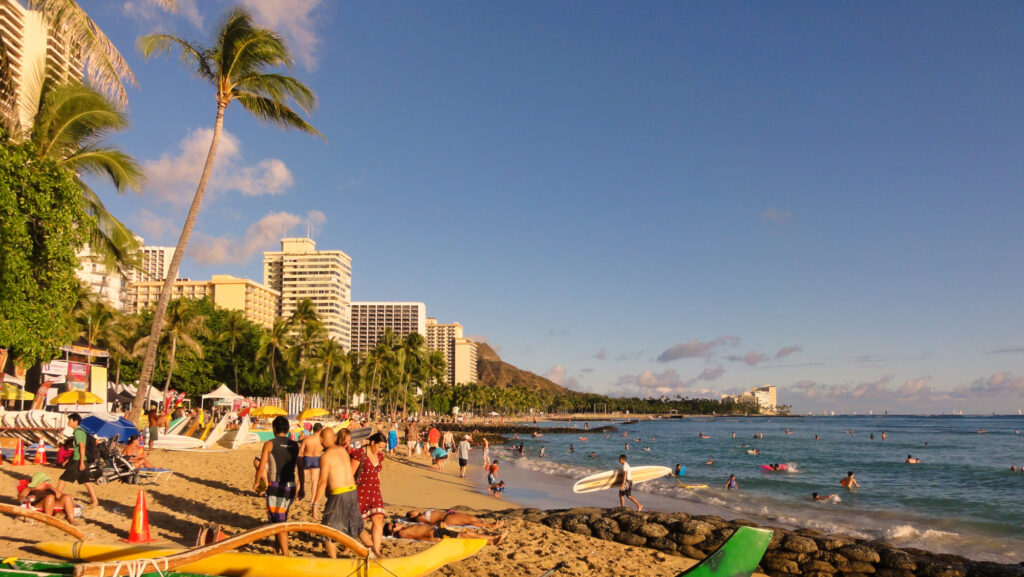
Waikiki gets written off as “just for tourists” by a lot of people who’ve never actually tried living there full-time. The image of sunburned visitors on Kalākaua Avenue doesn’t obviously suggest a long-term home — but accounts from long-term residents and rental data consistently show a more liveable neighbourhood than the tourist surface suggests.
This guide covers what it’s really like to live in Waikiki long term — the costs, the daily routine, the trade-offs, and whether it actually makes sense for you in 2026.
What Makes Waikiki Different as a Long-Term Resident
Here’s the thing most people miss: Waikiki has two faces. There’s the tourist strip along Kalākaua and Kūhiō Avenues — the ABC stores, the shaved ice stands, the hotel lobbies. Then there’s the residential side, tucked into the streets behind the main drag, along the Ala Wai Canal, and in the quieter blocks toward Diamond Head.
Long-term residents mostly live in older condo towers and walk-up apartments on streets like Seaside Avenue, Walina Street, and Liliuokalani Avenue. These buildings aren’t flashy, but they’re functional, affordable (by Honolulu standards), and often have surprisingly good layouts. Many were built in the 1960s and 70s during Waikiki’s first big development boom.
The residential vibe in these pockets is surprisingly chill. You’ll see regulars at the same coffee shops, neighborhood dogs getting walked along the Ala Wai, and the morning crowd at Kapiolani Park doing tai chi. It feels like a community — not a resort.
Cost of Living in Waikiki: Honest Numbers
Let’s talk money, because this is where most people either commit or bail. Here’s what you’re looking at in 2026:
Rent
Studios: $1,400–$1,900/month for a basic unit. Older walk-ups on the Ala Wai side are cheapest. Anything with an ocean view jumps to $2,200+.
1-bedrooms: $1,800–$2,600/month. The sweet spot for long-term residents. Buildings like the Waikiki Banyan, Marina Tower, and Fairway Villa often have units in this range.
2-bedrooms: $2,400–$3,500/month. Harder to find, and they go fast. Check Craigslist Honolulu, Facebook groups, and walk the neighborhood looking for “For Rent” signs — some of the best deals never make it online.
Other Monthly Costs
- Electricity: $120–$200/month (Hawaii has the highest electricity rates in the nation). Waikiki condos with central AC run higher.
- Groceries: $400–$600/month per person. Foodland Farms on Kūhiō is your main grocery store. For cheaper options, drive to Don Quijote in Kaheka or Times Supermarket on Beretania.
- Parking: $150–$300/month for a reserved stall. Many older buildings include one stall; newer ones charge extra. Street parking on the Ala Wai is free but competitive.
- Internet: $55–$80/month (Spectrum or Hawaiian Telcom).
- Car insurance: $100–$180/month. Hawaii car insurance rates can surprise newcomers.
Realistic monthly budget for a single person: $3,200–$4,500, depending on lifestyle and whether you own a car.
Do You Actually Need a Car in Waikiki?
This is Waikiki’s biggest selling point for long-term living: you genuinely might not need a car. The neighborhood has a Walk Score of 96, making it one of the most walkable places in all of Hawaii.
Within walking distance you’ve got:
- Multiple grocery stores (Foodland, Walmart at Ala Moana, and several convenience stores)
- Ala Moana Center — 10-minute walk from the edge of Waikiki
- Banks, pharmacies (Longs Drugs on Kūhiō), medical clinics
- The beach — obviously
- Kapiolani Park for running, yoga, and weekend farmers markets
TheBus routes 2, 8, 13, 19, 20, and 42 all serve Waikiki and connect you to the rest of Honolulu. The new Skyline rail doesn’t reach Waikiki directly, but a bus connection from Ala Moana Station gets you on the system.
If you do keep a car, prepare for parking stress. Many residents go car-free and use a mix of walking, biking, and Uber for anything outside the neighborhood. It’s a legitimate lifestyle here — one that saves you $400–$600/month between parking, insurance, and gas.
The Pros of Long-Term Waikiki Living
Walkability That’s Hard to Beat
We just covered this, but it’s worth emphasizing. Waikiki is one of the only places in Hawaii where you can truly live car-free without feeling trapped. Everything from food to fitness to nightlife is within a 15-minute walk. For anyone coming from a walkable mainland city, this feels natural. For everyone else, it’s a revelation.
Built-In Social Scene
Loneliness is one of the biggest complaints from people who move to quieter Hawaii neighborhoods. Waikiki doesn’t have that problem. Between the beach regulars, the restaurants, the bars on Kūhiō, and the community events at Kapiolani Park, you’ll meet people whether you’re trying to or not.
There’s also a surprisingly large long-term expat community — remote workers, retirees, military-adjacent folks, and people who came for vacation and just… stayed.
Beach Access Every Day
Living five minutes from the ocean changes your daily routine in ways you don’t expect. Morning swims before work. Sunset walks to decompress. Weekend surfing at Queens or Canoes without loading up the car. It becomes your backyard, and it never gets old.
World-Class Food at Every Price Point
Waikiki’s food scene goes way beyond tourist traps. Marukame Udon serves handmade noodles for under $8. Musubi Cafe Iyasume does perfect spam musubi. Ramen Nakamura is a local favorite. And if you want to splurge, places like Sushi Sho and Roy’s are right there too. Check out our guide to the best restaurants in Honolulu for more options beyond Waikiki proper.
The Cons: What Nobody Tells You
Tourist Crowds Are Constant
There’s no off-season anymore. Kalākaua Avenue is busy year-round. If slow-walking tourists, loud groups, and the general chaos of a resort area bother you, Waikiki will test your patience. You learn to navigate around the main strips, but it’s always there.
Noise Is Real
Emergency vehicle sirens, construction (always construction), bar noise on weekends, and the general hum of a dense urban area. If your unit faces Kūhiō Avenue, invest in good earplugs. Units facing the Ala Wai or toward Diamond Head tend to be quieter.
Small Living Spaces
Most Waikiki apartments are compact. A 400-square-foot studio is standard. One-bedrooms rarely exceed 600 square feet. If you’re coming from mainland square footage, this is a major adjustment. You’ll become an expert at minimalism — or you’ll go crazy. There’s no in-between.
The Homelessness Issue
Waikiki, like much of urban Honolulu, has visible homelessness. The Ala Wai area, Kapiolani Park edges, and certain blocks along Kūhiō have encampments. The city does periodic sweeps, but it’s an ongoing reality. It’s not dangerous in most cases, but it’s something you’ll encounter daily.
Parking Is a Nightmare
Already covered above, but it deserves its own con slot. If you keep a car, finding and paying for parking is a constant headache. Monthly stalls are expensive, street parking is limited, and guest parking for your visitors barely exists.
Best Streets and Buildings for Long-Term Living
Not all of Waikiki is created equal. Here’s where long-term residents tend to settle:
Ala Wai Boulevard
The canal-facing side of Waikiki is where you’ll find the most residential feel. It’s quieter, has free street parking (if you’re lucky), and the canal path is great for jogging. Buildings like the Ala Wai Terrace and Ala Wai Plaza cater to long-term residents.
Diamond Head Side
The eastern end of Waikiki — closer to Kapiolani Park and the zoo — has a more relaxed vibe. It’s farther from the tourist epicenter and closer to green space. The Waikiki Grand and Waikiki Shore are popular with residents.
Seaside/Kaiolu Area
The streets between Kūhiō and the Ala Wai in the central section have a mix of older walk-ups and mid-rise condos. Rents tend to be lower here, and it’s still walking distance to everything.
Waikiki vs. Other Honolulu Neighborhoods
Choosing between Waikiki and other areas? Here’s a quick comparison:
- Waikiki vs. Makiki: Makiki is quieter and more residential with slightly lower rents, but far less walkable. You’ll need a car. Waikiki wins for convenience, Makiki for peace.
- Waikiki vs. Kaimuki: Kaimuki has a great local food scene and neighborhood feel without tourists. But it’s further from the beach and less walkable for daily errands.
- Waikiki vs. Manoa: Manoa is lush, green, and feels like a different world. But it’s rainy, you absolutely need a car, and the commute gets old.
- Waikiki vs. Kakaako: Kakaako is newer, trendier, and growing fast. Rents are higher for comparable spaces, but the buildings are modern. It’s Waikiki’s closest competitor for urban car-optional living.
Tips for Finding a Long-Term Rental in Waikiki
The rental market in Waikiki moves fast. Here’s how to land a place:
- Walk the neighborhood. Seriously. Many buildings post “For Rent” signs that never hit websites. Spend a few days wandering the side streets.
- Check Craigslist Honolulu daily. Filter for Waikiki specifically. Good listings disappear within hours.
- Join Facebook groups: “Oahu Housing,” “Hawaii Rentals,” and similar groups often have direct-from-owner listings.
- Avoid vacation rental conversions. Some units bounce between short-term and long-term. Ask whether the building allows vacation rentals — if it does, expect more noise and turnover.
- Budget for first, last, and security. Most landlords want three months upfront. That’s $4,000–$7,500 for a 1-bedroom.
Is Waikiki Worth It for Long-Term Living?
If you want a walkable, social, beach-adjacent lifestyle and you’re okay with compact spaces and tourist crowds — yes, absolutely. Waikiki long-term is one of the best deals in Honolulu for the lifestyle you get. You’re paying for convenience, location, and the ability to live car-free in Hawaii, which is practically unheard of anywhere else on the islands.
If you need space, quiet, or a yard, look elsewhere. North Shore and Ewa Beach offer completely different lifestyles at different price points.
The people who thrive in Waikiki long-term tend to be adaptable, social, and comfortable with urban density. If that sounds like you, this neighborhood might be the best-kept secret in Honolulu — hiding in plain sight behind all those tourists.
Frequently Asked Questions
How much does it cost to live in Waikiki long term?
Expect to spend $3,200–$4,500/month as a single person, including rent, utilities, groceries, and transportation. Rent alone ranges from $1,400 for a basic studio to $3,500+ for a 2-bedroom. Going car-free saves $400–$600/month on parking, insurance, and gas.
Can you live in Waikiki without a car?
Yes, and many long-term residents do exactly that. Waikiki has a Walk Score of 96 with grocery stores, restaurants, medical facilities, and transit all within walking distance. TheBus connects you to the rest of Honolulu, and the Skyline rail is accessible via Ala Moana Station.
Is Waikiki safe for residents?
Waikiki is generally safe for residents. Like any urban area, use common sense — lock your doors, be aware of your surroundings at night, and avoid leaving valuables in your car. The main safety concern for most residents is property crime (bike theft, car break-ins) rather than violent crime.
What’s the best area in Waikiki for long-term renters?
The Ala Wai Boulevard side and the Diamond Head end of Waikiki tend to be quieter, more residential, and slightly more affordable. Avoid units directly on Kūhiō Avenue if noise sensitivity is an issue. The streets between Seaside Avenue and the Ala Wai Canal offer a good balance of price and livability.