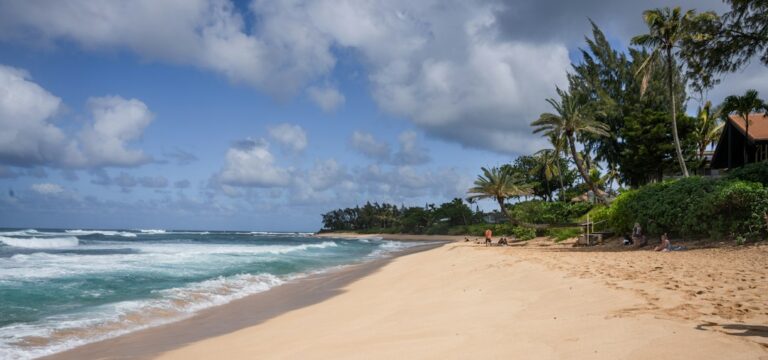
Relocating households who start shopping Hawaii listings quickly hit a fork in the road: spend $750,000 on a two-bedroom condo a mile from the beach, or stretch to $1.2 million for a small single-family house on a 5,000-square-foot lot inland. The sticker prices tell only part of the story. Monthly carrying costs, financing rules, insurance, and the long tail of leasehold paperwork can flip which option is actually cheaper over a ten-year hold.
The condo-vs-house decision in Hawaii is not the same calculus mainland buyers are used to. AOAO fees on older Honolulu high-rises routinely run $1,200 to $2,400 per month. Roughly one in eight condo listings statewide is leasehold rather than fee simple. Lenders treat non-warrantable buildings differently than detached homes. And island geography — what is even available on Kauai versus Oahu versus the Big Island — narrows the choice before budget does.
This guide walks through the real numbers, the fee structures, the financing differences, and the trade-offs that matter most to mainland buyers planning a move. It draws on Honolulu CPI data, county tax records, and current listing patterns to compare what households actually pay across both paths.
The price gap at a glance
Condo and single-family pricing in Hawaii do not move in lockstep. On Oahu, the median single-family sale price hovered near $1.1 million through 2025, while the median condo traded closer to $525,000 — roughly a 2:1 ratio that has held for most of the past decade. On Maui and the Big Island, the gap is wider in dollar terms but narrower in ratio, since condo inventory is heavily skewed toward resort areas.
Kauai sits in its own category: condo inventory is tight, fee simple condos are scarce, and many oceanfront buildings carry vacation-rental zoning that pushes prices above comparable houses inland. For relocating buyers who want a primary residence and not a short-term rental, the practical price gap can disappear entirely on that island.
| Island | Median SFH price | Median condo price | Typical condo AOAO/mo |
|---|---|---|---|
| Oahu | $1,105,000 | $525,000 | $850–$1,800 |
| Maui | $1,295,000 | $795,000 | $950–$2,200 |
| Big Island | $615,000 | $485,000 | $600–$1,400 |
| Kauai | $1,180,000 | $895,000 | $900–$2,100 |
Households comparing the two paths should anchor on monthly outlay, not headline price. A $525,000 Oahu condo with a $1,400 AOAO fee, $250 in property tax, and a 7% mortgage on a 20% down payment carries roughly $4,450 per month. A $1.1 million single-family at the same down payment, with $400 monthly property tax and $250 in homeowner-paid insurance, lands near $7,100 — a 60% jump in real outflow at a similar interest-rate environment.
That $2,650 monthly delta funds a lot of the trade-offs buyers worry about: yard work, repairs, longer commutes, or the discretionary fund that pays for two trips back to the mainland each year. The complete real estate guide to buying a house in Hawaii covers the broader purchase path; this article zeroes in on the condo-versus-house fork specifically.
What HOA and AOAO fees actually cover
Hawaii condos are governed by an Association of Apartment Owners (AOAO), the local term for what most states call an HOA on a condo. The monthly fee bundles insurance, utilities for common areas, reserves, management, and often a surprising number of pass-throughs. A buyer reading “AOAO $1,650/month” on a listing should treat that as a partial budget line, not a number to add to the mortgage.
What is typically included
- Master hazard and hurricane insurance on the building shell
- Water and sewer for the unit (in most buildings)
- Common-area electricity, elevators, hallway HVAC, and lobby staff
- Landscaping, pool, gym, and trash removal
- Reserve contributions for roof, plumbing, and façade work
- Property management and on-site resident manager
What is almost never included
- In-unit electricity (often $120–$280/month in high-rises)
- HO-6 walls-in insurance the owner must carry separately
- Property taxes
- Internet and cable, unless bulk-billed
- In-unit plumbing, appliances, and HVAC repairs
The split matters because some buildings appear cheap on the AOAO line but push costs onto owners. A 1970s-era Waikiki tower with submetered electric and no bulk internet can run $300 a month in invisible expenses on top of the listed fee. Hawaii residential electricity averaged roughly 41 cents per kWh in 2025 per EIA state data, the highest in the country.
Why Hawaii AOAO fees creep faster than mainland HOAs
Three forces push Hawaii condo fees up year after year. The first is insurance: the state’s hurricane and wildfire exposure has hardened the market since 2023, with master policies on older Honolulu buildings repricing 40% to 90% at renewal. The second is labor: the same wage pressure that makes Hawaii groceries expensive applies to resident managers, janitors, and elevator technicians.
The third is deferred maintenance catching up. Many Honolulu high-rises built between 1965 and 1985 are now hitting plumbing and spalling-concrete repairs that reserves never fully funded. Special assessments of $15,000 to $80,000 per unit have hit several buildings since 2022. The cost of living in Honolulu breakdown covers how these pressures filter through the rest of a relocating household’s budget.
Buyers should request the last three years of AOAO budgets, the most recent reserve study, and the minutes from the last six board meetings before going under contract. A reserve study showing under 40% funded is a yellow flag; under 25% is a red flag that an assessment is likely within five years.
Maintenance fee creep: the ten-year math
A common mistake among relocating buyers is comparing today’s AOAO fee to today’s house maintenance budget and stopping there. Condo fees in Hawaii have risen roughly 6% to 9% per year over the last decade in most buildings, versus general inflation closer to 3% to 4%. The compounding gap is what makes a “cheap” condo look different at year ten.
| Year | Starting AOAO $1,400/mo | At 7% annual rise | House maintenance $450/mo | At 4% rise |
|---|---|---|---|---|
| 1 | $16,800 | $16,800 | $5,400 | $5,400 |
| 3 | $16,800 | $19,229 | $5,400 | $5,841 |
| 5 | $16,800 | $22,016 | $5,400 | $6,317 |
| 10 | $16,800 | $30,886 | $5,400 | $7,686 |
| 10-yr total | $168,000 | $232,236 | $54,000 | $64,830 |
The ten-year condo line runs roughly $167,400 more than the ten-year house maintenance line in this scenario. That figure does not include special assessments, which add another wildcard. Houses have their own maintenance cliff — a $35,000 roof replacement, a $12,000 hurricane shutter retrofit, a $20,000 cesspool conversion on the Big Island — but those costs hit on a schedule the owner can plan around.
The buyer’s question is not “which is cheaper today” but “which volatility profile fits the household.” Condo fees behave like a subscription that auto-increases. House maintenance behaves like a series of lumpy capital expenses. Cash-flow-sensitive buyers often prefer the predictability of the house if they have the savings buffer to absorb the lumps.
Leasehold: the asterisk on condo pricing
Hawaii has a leasehold tradition that does not exist in most mainland markets. A leasehold property means the buyer owns the structure but rents the land underneath from a separate lessor — often a trust like Kamehameha Schools or a private estate. Condos are far more likely to be leasehold than houses, which catches mainland buyers off guard when they spot a $300,000 Diamond Head listing that looks impossibly cheap.
Roughly 12% to 15% of Honolulu condo inventory is leasehold, concentrated in older buildings in Waikiki, Hawaii Kai, and parts of Makiki. A leasehold listing trades at a steep discount because the lease eventually expires — sometimes in 18 years, sometimes in 60 — and the building reverts to the landowner unless a lease extension is negotiated. The leasehold vs fee simple breakdown walks through how the structure works mechanically.
The hidden cost: lease rent and renegotiation
Leasehold owners pay a monthly lease rent on top of the AOAO and mortgage. Lease rent is often locked for the first 20 to 30 years, then renegotiated to market — which can mean a jump from $180 a month to $1,400 a month overnight. The shock has wiped out retirees on fixed incomes more than once in Honolulu’s history.
For a relocating buyer, the calculus is sharp: leasehold can work if the lease expires after the household’s likely ownership horizon, or if the lessor has historically offered fair fee-simple conversions. It rarely works as a long-term family asset. Lenders also restrict leasehold financing — most require the lease to run at least 10 years beyond the loan’s maturity.
| Scenario | Fee simple condo | Leasehold condo |
|---|---|---|
| Asking price | $525,000 | $285,000 |
| Monthly AOAO | $1,400 | $1,400 |
| Monthly lease rent | $0 | $185 (renegotiates 2034) |
| Years remaining on lease | N/A | 27 |
| Resale risk | Standard market | Discount widens each year |
| Loan availability | Conforming & jumbo | Portfolio lenders only |
The deeper background on these structures, including which estates control which parcels, sits in the fee simple vs leasehold ownership guide. Single-family leasehold exists too — particularly on Hawaiian Home Lands and certain Bishop Estate parcels — but it is far less common than condo leasehold.
Financing differences buyers underestimate
Mortgage approval on a Hawaii condo runs differently than on a detached house. Lenders evaluate not just the borrower and the unit but the building itself. Fannie Mae and Freddie Mac require buildings to meet warrantability standards covering owner-occupancy percentages, reserves, litigation history, single-entity ownership concentration, and insurance adequacy. A surprising share of Hawaii condos fail at least one check.
What pushes a building non-warrantable
- More than 20% of units owned by a single investor or entity
- Reserves funded at below the threshold for the lender’s program
- Active litigation that could affect the AOAO’s finances
- More than 35% to 50% of units used as short-term rentals
- Insufficient hurricane or master flood coverage
- Hotel-condo conversions or properties zoned resort-residential
A non-warrantable building does not mean a deal is dead, but it does mean conforming 30-year financing at posted rates is off the table. Buyers move to portfolio lenders — local credit unions, Bank of Hawaii, First Hawaiian — that hold the loans rather than selling them. Rates run 0.5% to 1.25% higher, down payments often climb from 10% to 25%, and reserves required at closing increase.
Single-family houses dodge most of these checks. The underwriting question collapses to the borrower and the appraisal. That predictability is one reason a household with strong income but tight cash reserves sometimes finds the house easier to finance than a comparably priced condo, despite the higher purchase price.
Down payment and PMI quirks
Conventional condo loans in Hawaii usually require a minimum 10% down for warrantable buildings, 25% for non-warrantable. FHA loans require the entire building to be on the FHA-approved condo list, and the Hawaii list is short — fewer than 80 active projects statewide at any given time. VA buyers face a similar but separate VA-approved condo roster.
Single-family loans face none of those project-level gates. A VA buyer can put zero down on a $900,000 Big Island house if the price falls within county loan limits, but the same buyer trying to put zero down on an Oahu condo first needs the building on the VA list. For households relocating with military orders, this asymmetry is often decisive.
Insurance: master policy versus individual coverage
Hawaii hurricane and homeowner insurance changed sharply after the 2023 Lahaina fire. Master policies on condo buildings repriced aggressively at renewal, and several insurers stopped writing new business in the state for parts of 2024. Buyers comparing condo and house should understand which policy covers what — and where gaps tend to open.
Condo owners carry an HO-6 policy that covers walls-in: cabinetry, flooring, fixtures, and personal property. Premiums typically run $400 to $1,200 a year depending on unit value. The AOAO master policy covers the building structure, common areas, and liability on shared spaces. Owners are exposed to assessments if the master policy’s deductible — sometimes 3% to 5% of insured value — gets triggered by a windstorm or named storm event.
House owners carry a standard HO-3 policy plus a separate hurricane policy through the Hawaii Hurricane Relief Fund or a private carrier. Combined premiums on a $1.1 million Oahu single-family run $2,800 to $5,500 a year. The Hawaii homeowners and hurricane insurance guide covers the underwriting mechanics in depth.
The condo buyer’s invisible exposure is the master policy deductible. A Category 2 storm hitting Waikiki could trigger a $3 million deductible on a building; that gets allocated by ownership percentage and billed as a special assessment. A $1 million condo could absorb a $15,000 to $30,000 line item on no notice. House owners face the deductible directly but at least see it on their own policy.
Property tax treatment by island
Each Hawaii county sets its own real property tax rules, and the treatment of owner-occupied homes versus non-owner-occupied condos varies meaningfully. Honolulu offers a $120,000 home exemption that reduces the assessed value before the rate is applied. The Big Island offers a $50,000 to $100,000 exemption depending on age. Maui’s owner-occupied rates run far below its short-term rental rates.
| County | Owner-occupied rate per $1,000 | Non-owner condo rate | Home exemption |
|---|---|---|---|
| Honolulu (Oahu) | $3.50 | $6.00–$13.60 | $120,000 |
| Maui | $2.00 | $5.85–$11.20 | $300,000 |
| Hawaii (Big Island) | $6.15 | $11.10 | $50,000–$100,000 |
| Kauai | $3.05 | $8.05–$9.85 | $160,000 |
For a $525,000 owner-occupied Honolulu condo, the annual tax after exemption runs roughly $1,418. The same condo as a non-owner secondary residence could tax at $3,150 or more. Mainland buyers planning to spend winters in Hawaii and summers elsewhere should run both scenarios — a part-time residence may not qualify for the owner-occupied rate even if the buyer is on title.
House tax bills usually look heavier in dollar terms simply because assessed values are higher. A $1.1 million owner-occupied Oahu home pays about $3,430 after exemption — still less per dollar of value than many non-owner condos. Detailed county-by-county figures appear on the official Hawaii Department of Taxation site, and county assessors publish their current rolls each year.
Which fits which budget and island
The right answer depends on three variables: total monthly carrying capacity, household lifestyle, and which island the buyer can actually live on. A surgeon relocating to Honolulu with $25,000 a month in carrying capacity has different options than a remote-working couple with $8,500. Both can find paths, but the paths look nothing alike.
Budgets under $5,500/month all-in
- Big Island fee simple condo or small Puna house — most flexible market
- Older Honolulu fee simple condo, non-Kakaako, with stable AOAO
- Oahu leasehold condo only if lease runs past ownership horizon
- Kauai houses generally out of reach in this band
Budgets $5,500–$8,500/month all-in
- Mid-tier Oahu fee simple condo in Kakaako or Ala Moana
- Big Island three-bedroom house in Waikoloa or Hilo neighborhoods
- Maui condo outside resort zones with stable AOAO history
- Kauai condo in Princeville or Lihue, fee simple only
Budgets above $8,500/month all-in
- Single-family on Oahu in Hawaii Kai, Mililani, or Kailua
- Maui or Kauai single-family with full hurricane coverage
- Newer Honolulu luxury condo with predictable AOAO trajectory
- Big Island larger acreage with agricultural classification
Island geography sharpens the choice further. The comparison between Oahu and the neighbor islands covers what daily life looks like on each. Condo inventory is concentrated on Oahu and Maui’s west side; the Big Island is dominated by single-family stock outside Waikoloa and Kona resort zones; Kauai has the thinnest condo market for primary residents.
Lifestyle and maintenance trade-offs
Beyond the dollars, the daily reality of condo versus house living in Hawaii diverges along several axes. Condo owners trade outdoor space for security, lock-and-leave flexibility, and shared amenities. House owners gain a yard, more storage, garage space for surfboards or a second vehicle, and the freedom to renovate without board approval — at the cost of every weekend hour spent on yardwork.
Climate-driven maintenance unique to Hawaii
- Termite exposure: drywood termites require tenting every 8–12 years
- Salt-air corrosion on metal fixtures within two miles of coast
- Wood rot from year-round humidity, especially windward exposures
- Catchment systems and cesspools common on Big Island lots
- Vog deposits on Big Island paint and metal from Kilauea activity
Condo owners offload most of those concerns to the AOAO. House owners absorb them directly. A typical Oahu single-family budget reserves $400 to $700 a month for maintenance — modest in good years, painful when a Category 1 storm strips half the roof. Storm and salt exposure climbs on windward shorelines, with August and September the historical peak months for tropical activity in the Central Pacific basin.
Storage matters more than mainland buyers expect. Condos rarely include enough room for surfboards, paddleboards, camping gear, hurricane supplies, and the inevitable warehouse bulk-buy. The guide to Costco in Hawaii covers which bulk purchases actually pencil — and most of them require a garage or a pantry the typical 800-square-foot condo cannot provide.
Commute geometry
Condo inventory concentrates near job centers — Honolulu CBD, Kakaako, Waikiki, Lahaina pre-fire, Kihei, Kailua-Kona. Single-family inventory at the same price point pushes buyers to Mililani, Ewa Beach, Wahiawa, or up-country Maui. A 9-mile commute on Oahu can run 55 minutes at peak, which often surprises mainland buyers used to highway speeds. Hawaii Department of Transportation traffic counts show the H-1 corridor consistently among the country’s most congested.
That commute drives the math more than buyers expect. A house 14 miles west of downtown for $850,000 sounds like a deal versus a $625,000 Kakaako condo until the buyer factors in 90 minutes of daily commute, two cars instead of one, and the vehicle registration costs covered separately on the site.
Common pitfalls relocating buyers hit
Several recurring mistakes show up in buyer surveys and broker post-mortems. Each one is avoidable with a 30- to 60-day landing period and disciplined diligence.
- Skipping the AOAO document review and missing pending assessments
- Assuming leasehold and fee simple list the same way on the MLS
- Underestimating the master policy deductible exposure
- Overlooking non-warrantable financing rate premiums
- Missing the owner-occupied tax exemption deadline (Sept 30 in most counties)
- Forgetting that GE tax applies to short-term condo rentals if renting nights
- Buying sight-unseen without a rental landing strategy first
The most defensible playbook for relocating buyers is to rent for 30 to 90 days before buying. The renting-before-buying landing strategy covers how to use that window to test neighborhoods, commute times, climate microclimates, and lifestyle fit before committing capital. The cost of an extra rental month is trivial compared to the cost of buying the wrong unit on the wrong island.
How to run the side-by-side analysis
The decision frame that works best is a ten-year total cost of ownership comparison. Build a spreadsheet with rows for principal, interest, AOAO or maintenance reserve, property tax, insurance, lease rent if applicable, and expected special assessments. Inflate the AOAO line at 7% per year and the house maintenance line at 4%. Add a closing-cost row and a hurricane-deductible scenario.
The number that matters at the bottom is total dollars out minus equity built. House equity tends to compound faster because the asset is fee simple land plus structure — and land in Hawaii has appreciated 4% to 6% annually over long periods, per Census housing data and county assessor trend lines. Condo equity grows more slowly because the underlying asset is depreciating concrete and steel, partly offset by location premium.
Households planning to hold for five years or less should weight monthly cash flow heavily. Households planning to hold ten years or more should weight equity accumulation. The break-even crossover for typical Oahu inventory has historically sat around year seven to year nine depending on appreciation assumptions.
Frequently asked questions
Is a condo always cheaper than a house in Hawaii?
On sticker price, yes — median Hawaii condos trade at roughly half the price of median single-family homes. On total carrying cost over ten years, not necessarily. AOAO fees that climb 7% to 9% annually plus special assessments can close the gap or invert it. The fee-simple house with predictable maintenance often wins past year seven for buyers who can afford the higher initial monthly outlay.
Should mainland buyers ever buy leasehold?
Only when three conditions align: the lease runs at least ten years past the buyer’s expected ownership horizon, the lease rent is locked through that period, and the lessor has a track record of fair fee-simple conversion offers. Otherwise the discount masks a depreciating asset and a renegotiation cliff. Most relocating buyers should stick to fee simple unless they fully understand the timeline.
How do you tell if a Hawaii condo is warrantable?
Ask the listing agent or AOAO for the most recent condo questionnaire that lenders use during underwriting. Key red flags include investor ownership over 20%, reserves funded below the lender threshold, active litigation, master insurance gaps, and short-term rental concentration above 35%. A local mortgage broker can usually screen a building in 48 hours before a buyer wastes time on an offer.
What is the realistic monthly outlay for a $700,000 Honolulu condo?
At 20% down on a 7% thirty-year loan, principal and interest run about $3,725. Add $1,500 AOAO, $200 property tax after the owner-occupied exemption, $75 HO-6 insurance, and $180 in-unit electricity for high-rise central air: total around $5,680 a month. Buyers should add $200 to $400 a month in reserve for the AOAO escalation curve and possible special assessments.
Do property taxes favor houses or condos?
Owner-occupied rates apply equally to both, so the per-dollar tax is the same within a county. Houses pay more in raw dollars because assessed values are higher. The bigger swing comes when the property is not owner-occupied — Honolulu and Maui charge sharply higher rates on second homes and short-term rentals, which hits condo investors more than house investors given inventory patterns.
Which island is friendliest to single-family buyers under $700,000?
The Big Island, by a wide margin. Median single-family pricing in Hilo, Puna, and parts of Ka’u sits well below the $700,000 threshold, with three-bedroom homes routinely available in the $450,000 to $625,000 range. Oahu and Kauai single-family stock under that price point is essentially nonexistent. The Big Island cost of living analysis covers the trade-offs that come with that affordability.
How much should buyers budget for special assessments?
A defensible reserve is $5,000 to $15,000 per year set aside in a separate account for older Honolulu buildings, $2,000 to $5,000 for newer construction. Buildings with reserve studies below 40% funded should push the buyer toward the higher end. Special assessments historically hit roughly one in five Honolulu buildings within any ten-year window, with median assessments around $18,000 per unit.