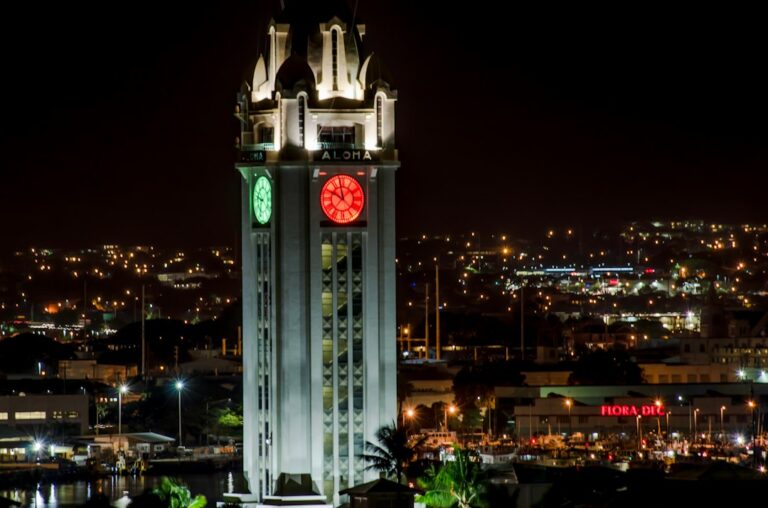
When mainland buyers shop for a Honolulu condo or a Big Island gated community, the listing price tells only half the story. Hawaii has the highest concentration of condominium ownership in the United States, with the Honolulu metropolitan area counting more than 150,000 condo units. The monthly association charge attached to that title often crosses $1,000 and routinely exceeds $2,000 in older oceanfront towers.
Those fees fund the Association of Apartment Owners, known locally as the AOAO, or the homeowners association in single-family developments. Both structures are governed by Hawaii Revised Statutes Chapter 514B for condos and Chapter 421J for planned communities. Together they decide which expenses a unit owner shares and which fall on the individual title.
For relocating households comparing Hawaii to lower-fee states, the maintenance bill changes the math on every mortgage scenario. This breakdown walks through what AOAO and HOA dues cover, why Hawaiian buildings command premium rates, and which documents a buyer should pull before signing.
What is an AOAO and how does it differ from a mainland HOA?
AOAO stands for Association of Apartment Owners, a term unique to Hawaii statute. Every condominium project filed under Chapter 514B operates one. The acronym covers everything from a 6-unit walkup in Kaimuki to a 400-unit Waikiki resort tower. Membership is automatic at closing and tied to the unit title, not the resident.
A planned community of single-family homes, by contrast, falls under a Hawaii HOA governed by Chapter 421J. Names like Kapolei’s Mehana, Big Island’s Mauna Lani Resort, and Kauai’s Princeville master associations all use the HOA framework. These communities typically share roads, gates, parks, and stormwater systems rather than full building shells.
Statutory framework
Hawaii’s condo statute requires every AOAO to maintain bylaws, a board of directors, and a fiduciary obligation to fund reserves. The Real Estate Commission at the Department of Commerce and Consumer Affairs publishes registration data, and disputes can be filed through the state’s mediation program. Buyers should request the project’s registration number before closing.
Who actually runs the building
Day-to-day operations usually fall to a licensed managing agent such as Hawaiiana, Associa Hawaii, or Touchstone. Volunteer owner-board members set policy, approve budgets, and sign contracts. In a typical 100-unit Honolulu high-rise, the managing agent fee runs $18 to $28 per door each month, and the resident manager position consumes another $90,000 to $140,000 in payroll.
What monthly maintenance fees actually cover
Condo fees in Hawaii bundle services that mainland buyers often pay for separately. The exact split is spelled out in the project declaration, but a typical Honolulu tower budget allocates dues across roughly 10 categories. Reading the budget line by line is the single most useful exercise before submitting an offer.
- Building insurance covering structure, common areas, liability, and hurricane perils
- Water and sewer service billed to the building rather than individual meters
- Trash collection, recycling pickup, and bulky-item hauling for the property
- Common-area electricity for elevators, hallway lighting, garage ventilation, and pumps
- Landscaping, pest control, and routine pool or spa maintenance
- Elevator service contracts, fire alarm monitoring, and sprinkler inspections
- Resident manager salary, front-desk security, and after-hours staffing
- Reserve contributions earmarked for roofs, plumbing risers, and elevator replacement
- Cable television or bulk internet contracts negotiated at the building level
- Property management fees paid to the licensed managing agent
What fees usually do not cover
Individual unit interiors remain the owner’s responsibility, including in-unit plumbing fixtures, appliances, paint, flooring, and any HVAC unit serving only that apartment. The owner also pays for their own electricity meter, contents insurance, and an HO-6 policy that covers walls-in damage and personal liability. Skipping the HO-6 is one of the most common closing mistakes.
How fees compare across islands and building types
Maintenance dues vary widely by age, height, and amenity load. A walk-up in Hilo with no pool and no elevator can run under $500 a month, while a luxury Honolulu high-rise with concierge, valet, and infinity pool decks tops $3,500. The table below summarizes typical 2026 ranges by category, drawn from active listing data and recent budgets reviewed by relocating buyers.
| Building type | Typical monthly AOAO fee | Common amenities included |
|---|---|---|
| Low-rise walk-up, Hilo or Kapaa | $380 to $620 | Insurance, water, trash, basic landscaping |
| Mid-rise Kakaako or Kailua condo | $700 to $1,200 | Adds pool, gym, parking gate |
| Honolulu high-rise, 1990s to 2000s | $900 to $1,800 | Resident manager, valet parking, pool |
| Luxury Waikiki or Ala Moana tower | $1,400 to $3,500 | Concierge, two pools, sky deck, valet |
| Maui resort condo, Kaanapali or Wailea | $1,100 to $2,800 | Resort pools, beach access, security |
| Big Island gated HOA, Mauna Lani | $280 to $850 | Roads, gate, parks, sometimes golf access |
| Oahu master-planned HOA, Mililani Mauka | $45 to $160 | Parks, rec centers, community pool |
Why Hawaii association fees rival a mortgage
A first-time buyer comparing a $700,000 Honolulu condo to a $400,000 mainland equivalent often discovers the fee structure flips the affordability calculation. Three structural forces push Hawaii dues above national averages: building insurance pricing, isolation-driven labor and materials costs, and the energy intensity of high-rise operations. Each one has accelerated since 2021.
Insurance is the largest single line item
Master insurance premiums in Hawaii rose 200 to 600 percent between 2022 and 2025 for many high-rise condos. Carriers reduced capacity statewide after the August 2023 Lahaina fire, and global reinsurance markets reprice hurricane risk every renewal cycle. Civil Beat has documented buildings that saw a single line item jump from $400,000 to $1.8 million in one year. The Kona Low storms in March and April 2026 added further upward pressure on reinsurance pricing across all islands. A June 2026 FEMA update also reclassified 3,700 additional Oʻahu parcels into Special Flood Hazard Zones, creating mandatory flood insurance requirements that add a new fixed cost to affected building budgets.
Imported materials cost more
Replacement parts for elevators, chillers, and plumbing risers ship through Matson or Pasha Hawaii from West Coast warehouses. A board ordering a new chiller in March can wait 6 to 10 weeks for delivery and pay 15 to 30 percent more than the Long Beach price after freight and handling fees.
Electricity costs flow through the budget
Common-area power often consumes 18 to 24 percent of an oceanfront tower’s operating budget. Hawaiian Electric’s 2025 residential rates ranged from 40.5 cents per kilowatt-hour on Oʻahu to 41.6 cents on Maui, 45.8 cents on the Big Island, and 48.5 cents on Molokaʻi — the highest residential electricity prices in the nation. Households researching the broader picture can review the cost of electricity in Hawaii for context.
Labor and trades are scarce
Hawaii’s licensed plumber, elevator mechanic, and HVAC technician pools are small. Emergency callouts run $185 to $325 per hour with travel surcharges between islands. Buildings on Maui, Kauai, and the Big Island often fly mainland specialists in for major projects, adding airfare, lodging, and per-diem to every line item in the reserve study.
Special assessments and the post-Lahaina lending climate
A special assessment is a one-time charge approved by the board to fund a project that the reserve fund cannot cover. In Hawaii, the typical trigger is a deferred plumbing replacement, a hurricane deductible after a windstorm, or an insurance premium that breaches the operating budget mid-year. Assessments running $8,000 to $45,000 per door are no longer rare.
Recent examples
A 1972-vintage Waikiki tower assessed owners $32,000 each in 2024 for cast-iron drain replacement after multiple wall-line failures. A 1980s Kaanapali resort condo levied $18,500 per unit in 2025 to cover an uninsured wildfire deductible. Boards must give 30 days written notice and, in many bylaws, a member vote when the assessment exceeds a stated percentage of the annual budget.
Lender treatment
Conventional lenders since 2024 increasingly require condo project review forms confirming no active or anticipated special assessment exceeding 10 percent of the annual budget. Fannie Mae’s temporary requirements added scrutiny on buildings over five stories with deferred maintenance. A buyer in escrow can lose financing if a board approves a major assessment between offer and closing.
Reserve studies every buyer should review
Hawaii law requires every AOAO to perform a reserve study at least every three years and to fund either a cash reserve or a board-adopted alternative funding plan. The study itemizes every common component, projects its remaining useful life, and recommends annual contributions. A well-funded reserve sits at 70 percent or higher of fully funded condition.
What percent funded actually means
Percent funded compares cash on hand to the dollar amount required to cover deferred replacements based on age and condition. A building at 35 percent funded faces a higher probability of a near-term special assessment than one at 85 percent. Reviewing the most recent reserve study, the operating budget, and three years of audited financials answers most underwriting questions a buyer should ask.
Key components and useful lives
| Component | Typical useful life | Replacement cost range per unit |
|---|---|---|
| Built-up roof on high-rise | 20 to 25 years | $3,500 to $7,200 |
| Cast-iron drain risers | 50 to 60 years | $12,000 to $35,000 |
| Elevator modernization | 25 to 30 years | $6,000 to $14,000 |
| Cooling tower or chiller | 20 to 25 years | $4,200 to $9,500 |
| Exterior spalling concrete repair | 15 to 25 years | $5,000 to $25,000 |
| Pool resurfacing and equipment | 10 to 15 years | $900 to $2,400 |
| Hurricane-rated window replacement | 30 to 40 years | $8,500 to $22,000 |
Reading the governing documents
Hawaii sellers must deliver a packet of association documents during escrow, often called the resale disclosure. The packet typically includes the declaration, bylaws, house rules, current operating budget, reserve study summary, audited financials, and minutes from the last 12 to 24 months of board meetings. Most title companies charge $250 to $475 to assemble the disclosure on the seller’s behalf.
Minutes reveal what budgets hide
Board minutes flag pending litigation, in-progress reserve projects, insurance renewal struggles, and resident complaints. A buyer reading minutes from a Honolulu high-rise might learn that a $3.2 million plumbing project is out for bid but has not yet been booked into the budget. That signals a likely special assessment within 18 months.
Pet, rental, and renovation rules
House rules govern noise, short-term rentals, pets, parking, and renovation hours. Many older Waikiki buildings still allow 30-day rentals, while new construction in Kakaako prohibits anything under 180 days. Pet policies range from no animals at all to two dogs under 50 pounds. Buyers planning hardwood flooring should also confirm the soundproofing underlayment specification before closing.
Factoring fees into the true cost of ownership
A realistic Hawaii buyer model layers six monthly costs: principal and interest, property tax, master and HO-6 insurance, AOAO or HOA dues, parking or storage fees, and a reserve for the next special assessment. The Hawaii Department of Taxation publishes county property tax rates at tax.hawaii.gov. Honolulu’s residential rate sits at $3.50 per $1,000 of assessed value for owner-occupants.
Sample monthly carrying cost
| Cost component | $650,000 Kakaako 1BR | $1,250,000 Kahala mid-rise |
|---|---|---|
| Principal and interest (6.75%, 20% down) | $3,373 | $6,486 |
| Property tax (owner-occupant) | $165 | $346 |
| AOAO maintenance fee | $985 | $1,640 |
| HO-6 walls-in insurance | $58 | $112 |
| Reserve for special assessment | $120 | $250 |
| Parking and storage stall | $45 | $0 (included) |
| Total monthly carrying cost | $4,746 | $8,834 |
Comparison shoppers should adjust
Households modeling a move from a lower-cost state can compare these figures against guides like Hawaii vs Nevada cost of living or Hawaii vs North Carolina cost of living. The maintenance fee gap alone often consumes the savings from a smaller principal balance, which is why island-specific budgeting matters before relocation.
Master insurance, HO-6, and the hurricane question
Every AOAO carries a master insurance policy covering the building shell, common areas, and association liability. Hawaii buildings typically split coverage into property, general liability, fidelity, workers’ compensation, and a separate hurricane policy because most carriers exclude named-storm wind. Premium increases since 2023 have driven many associations to raise dues twice in a single fiscal year.
The HO-6 individual policy
HO-6 walls-in coverage protects fixtures, cabinets, flooring, and the owner’s personal property. Standard HO-6 policies in Hawaii run $400 to $1,100 annually for a typical condo, plus a separate hurricane endorsement of $250 to $900. Loss-assessment coverage of $50,000 is a strongly advised add-on because it pays toward a special assessment triggered by an insured loss.
Deductibles and assessment exposure
Hurricane deductibles in Hawaii commonly run 2 to 5 percent of the building’s insured value. A 300-unit tower with a $90 million replacement value carries a deductible of $1.8 to $4.5 million. When a storm damages the building, the deductible flows to owners as a special assessment unless the master policy includes assessment coverage and the loss qualifies.
Leasehold versus fee simple inside a condo
A surprising number of Hawaii condos sit on leased land. The unit owner holds the apartment title but pays ground rent to the fee owner of the dirt below. Lease rent can range from $35 a month at a 1970s walk-up to $1,800 at a Waikiki high-rise approaching renegotiation. Buyers comparing options should review leasehold versus fee simple before assuming the listed maintenance fee is the only monthly obligation.
Renegotiation years matter
Ground leases include renegotiation dates, typically every 25 to 35 years. A unit with an upcoming renegotiation in 2029 may see lease rent triple overnight. Lenders often will not finance leasehold units with fewer than 30 years remaining on the lease, which can collapse resale value as the date approaches.
Red flags before closing
Some warning signs in association documents reliably predict trouble. Boards that have not adopted the reserve study recommendation, audits that flag material weaknesses, or operating budgets propped up by transfer-fee income deserve extra scrutiny. A buyer’s agent who has reviewed dozens of Hawaii AOAOs can usually spot these patterns in a single 45-minute document review.
Specific items to flag
- Reserve funding below 30 percent of fully funded condition
- A reserve study older than three years or marked draft only
- Pending litigation against the AOAO listed in audit footnotes
- Master insurance with a hurricane deductible exceeding 5 percent
- Special assessment voted but not yet collected at closing
- Reserve contribution waived in the most recent fiscal year
- Concrete spalling repair recommended but not funded in the budget
- Operating deficits in two of the past three audited years
Documents to request in writing
The buyer’s agent should request the resale disclosure packet, current annual budget, reserve study summary and full report, three most recent audited financials, board minutes for the past 24 months, current insurance certificates, and any pending special-assessment notices. Most reputable Hawaii sellers deliver these within 5 to 10 business days.
Island-specific considerations
Each island carries its own AOAO fee profile because building age, climate exposure, and amenity expectations vary. Maui resort condos in Kaanapali and Wailea face the highest insurance pressure after 2023 wildfires. Big Island master associations rely more heavily on private water systems and septic infrastructure. Kauai HOAs in Princeville and Poipu balance hurricane exposure against a smaller resident base for cost-sharing.
Oahu
Honolulu’s condominium stock is the deepest in the state, with units ranging from 1960s Diamond Head walk-ups to 2024-vintage Ward Village towers. Fees typically include water, sewer, trash, and basic cable. New construction in Kakaako includes amenities such as theaters, dog parks, and chef’s kitchens, pushing fees toward $1.50 per square foot per month.
Maui
Wailea and Kaanapali resort condos commonly run $1,400 to $2,800 monthly. Many buildings sit within hotel-licensed operations that bundle reservations management with the AOAO. Owners who short-term rent should expect 28 percent transient accommodations tax plus 4.712 percent general excise tax, detailed in the Hawaii general excise tax breakdown, layered on top of monthly dues.
Big Island
Big Island living costs often look approachable until association fees enter the model. Mauna Lani and Hualalai master HOA dues range from $280 to $850 monthly for road, gate, and common-area maintenance. Volcanic activity adds vog exposure that accelerates exterior paint cycles and metal corrosion on guardrails and fixtures.
Kauai
Kauai resort condos in Princeville and Poipu typically charge $850 to $1,650 monthly. Hurricane Iniki’s 1992 damage still influences underwriting decisions for buildings that did not retrofit. Buyers should ask whether the project completed structural hardening after that storm and whether the current master policy includes named-storm coverage at full replacement value.
Frequently asked questions
How much is an average AOAO fee in Hawaii?
Average AOAO fees in Hawaii range from $650 monthly in a small mid-rise condo to $2,400 in a Waikiki luxury tower. The Honolulu metro median sits near $950 in 2026, well above mainland averages tracked by federal housing surveys. Older buildings with deferred plumbing or elevator work often charge more than comparable newer construction with full reserve funding.
What does AOAO stand for?
AOAO stands for Association of Apartment Owners. The term is Hawaii-specific and codified in Hawaii Revised Statutes Chapter 514B. Every condominium project filed in Hawaii operates an AOAO, and membership attaches to the unit title automatically at closing. Mainland buyers sometimes use the word condo HOA interchangeably, but the statutory framework is distinct.
Are AOAO fees tax deductible?
AOAO dues are not deductible for an owner-occupied primary residence under federal tax law. For a rental property, the portion of dues allocated to maintenance, repairs, insurance, and services qualifies as a deductible operating expense on Schedule E. Special assessments funding capital improvements must usually be added to basis rather than deducted in the year paid.
Can an AOAO raise fees without owner approval?
A Hawaii AOAO board can typically raise the annual operating budget by a set percentage, often 15 to 20 percent, without a member vote. Larger increases or special assessments above a threshold defined in the bylaws require a recorded membership vote. Owners receive written notice with a budget breakdown and have the right to inspect supporting documents.
What happens if an owner stops paying AOAO dues?
Hawaii law permits the AOAO to record a lien against the unit after 60 days of unpaid dues. The lien accrues interest, late fees, attorney costs, and ultimately supports a non-judicial foreclosure under Chapter 514B. Lenders treat AOAO liens as senior to subsequent mortgages in certain priority scenarios, which protects the association’s cash flow from delinquent owners.
Do new construction condos have lower AOAO fees?
New construction condos in Hawaii often start with lower fees during the developer’s first one to three years because reserves accumulate from zero and insurance pricing reflects the brand-new structure. By year five, fees typically reset higher as actual operating costs are observed and the reserve study calls for funded contributions. Initial low fees should not be projected forward.
How do special assessments get approved?
Special assessment approval depends on the building’s bylaws. Many Hawaii AOAOs allow the board to levy an assessment up to a stated dollar threshold or percentage of the operating budget without member vote, while anything larger requires owner approval at a meeting with proper notice. Buyers should request a copy of the assessment provision before submitting an offer.
Should buyers hire a third-party reviewer for condo documents?
Independent document review through a Hawaii real estate attorney or specialized condo consultant typically costs $400 to $900. The review covers the reserve study, bylaws, recent litigation, and insurance certificates. For purchases above $500,000 or in buildings older than 25 years, the cost is small relative to the risk of an undisclosed plumbing or facade project.