Oahu packs an outsized share of Hawaii’s most-searched attractions into 597 square miles, and first-time visitors routinely try to see all of them in five days. That impulse creates the classic Oahu trap: driving 180 miles between marquee stops while missing the quiet windows when Hanauma Bay is calm and Diamond Head is under 78°F.
This guide treats Oahu as four distinct regions rather than a single sightseeing loop, ranks the 15 attractions that first-timers most regret skipping, and lists the exact reservation windows for the two sites that turn people away daily. The goal is a workable shortlist for a first trip, not a listicle to scroll.
Every attraction below includes typical time on site, current fees, whether it requires an advance booking, and the hour when crowds and heat both hit their low. Costs and drive times come from operator sites and state agencies, cross-checked against 2026 pricing where available.
Building the Oahu shortlist by region
Most first-time itineraries fall apart on day two, when jet lag collides with a plan that treats Kailua, Pearl Harbor, and the North Shore as an easy day trip. They are not. H-1 traffic during weekday peaks routinely stretches a 22-mile drive to 75 minutes, per HDOT congestion data.
A better frame is to group attractions by region and dedicate one day to each. Honolulu and Waikiki anchor the south shore. Pearl Harbor sits about 12 miles west. The North Shore is a full day, and the Windward coast pairs cleanly with Hanauma Bay or Kualoa Ranch depending on the direction of travel.
The table below sketches the four regions, their driving time from Waikiki without traffic, and the anchor attraction most visitors build the day around. A rental car is assumed for all regions except Honolulu and Waikiki, which the Waikiki Trolley and TheBus cover reasonably well.
| Region | Drive from Waikiki | Anchor attraction | Full-day plan? |
|---|---|---|---|
| Honolulu/Waikiki | 0–10 min | Diamond Head + Waikiki Beach | Half day |
| Southwest (Pearl Harbor) | 25 min | USS Arizona Memorial | Full day |
| Southeast (Hanauma) | 25 min | Hanauma Bay Nature Preserve | Half day + windward loop |
| Windward (Kailua/Kaneohe) | 30–45 min | Kualoa Ranch, Lanikai | Full day |
| North Shore (Haleiwa) | 55–75 min | Waimea Bay, Haleiwa town | Full day |
| Leeward (Ko Olina) | 40–55 min | Ko Olina lagoons | Half or full day |
Weather and swell steer the sequence more than distance. North Shore surf swells from November through March make Waimea Bay unsafe for swimming but spectacular for viewing; the same beaches are placid tide-pool territory from May through September, as the state Department of Health notes for seasonal beach hazard advisories.
For a fuller month-by-month picture that shapes which regions to prioritize, the island-by-island timing guide lays out swell and rainfall windows for all four major islands.
Honolulu and Waikiki: the base camp attractions
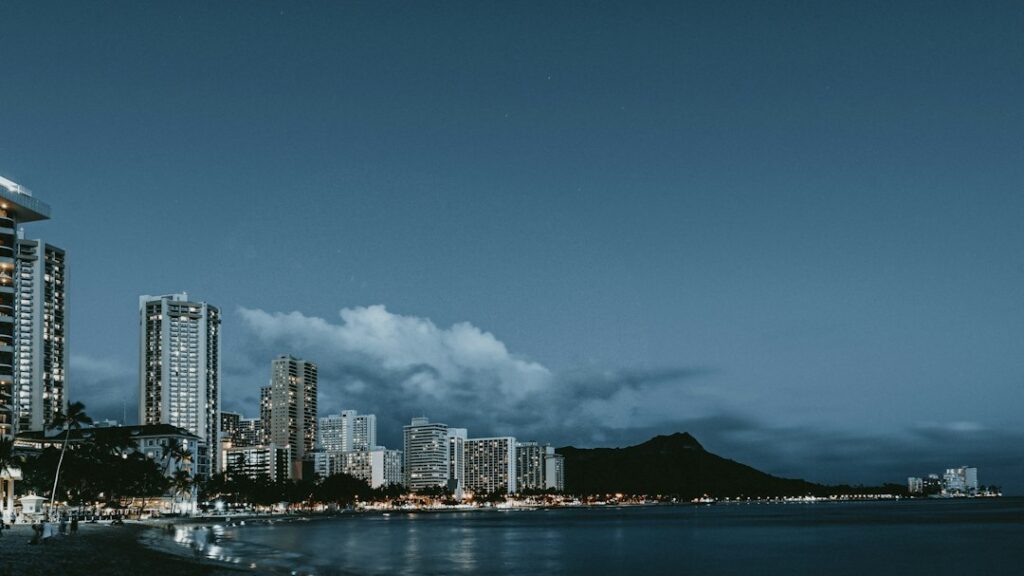
Roughly 85 percent of Oahu’s hotel inventory sits in the Waikiki strip, and most first-time visitors sleep within a mile of Kalakaua Avenue. Building the first day around walkable Waikiki attractions and a Diamond Head sunrise avoids the rental-car scramble on jet-lagged legs.
Diamond Head State Monument
The 1.6-mile round-trip crater hike climbs 560 vertical feet in about 45–60 minutes each way. Out-of-state visitors pay $5 per person to enter and $10 per vehicle to park, per the state parks fee schedule. Reservations are mandatory and open 30 days in advance in 30-minute time slots.
The first entry slot at 6:00 a.m. beats both the heat and the tour buses. Peak trail temperatures often exceed 88°F by 10:00 a.m., and the last third of the trail has no shade. Sturdy shoes matter — the summit stairs are steep concrete.
Waikiki Beach, Kuhio Beach, and the sunset catamarans
Waikiki’s public beach frontage runs roughly two miles from Fort DeRussy to Kapiolani Park. Kuhio Beach at the Diamond Head end is the calmest for beginner swimmers and beginner surfers thanks to the offshore breakwater. Board rentals average $20 for two hours; group surf lessons run $85–$120 per adult.
Sunset catamaran sails from the pier at Duke Kahanamoku Statue leave hourly between 4:00 and 6:00 p.m., typically $50–$75 for a 90-minute BYOB cruise. Book the sailing that departs 90 minutes before sunset for the best light and the most predictable trade winds. For a more detailed Waikiki-only breakdown of activities, see the neighborhood-focused list.
Iolani Palace and downtown Honolulu
Iolani Palace, the only royal palace on U.S. soil, sits in downtown Honolulu about 4 miles from Waikiki. Self-guided audio tours cost $20 for adult non-residents; guided docent tours are $30 and run Wednesday through Saturday. Plan 75–90 minutes for the audio option and pair with a Chinatown lunch walk.
The palace closes Sundays and Mondays, which trips up many first-timers who try to slot it in on arrival day. Booking the Wednesday morning docent tour also aligns with the King Kamehameha statue across the street, the Hawaii State Art Museum, and the free Aloha Tower observation deck.
Pearl Harbor historic sites (southwest Oahu)
Pearl Harbor is not a single museum but a cluster of four sites operated by three different entities across two islands within the harbor. Getting the sequence and the tickets right is the single biggest logistics decision on an Oahu trip, since demand for the Arizona Memorial routinely exceeds supply by 3:00 a.m. release time.
USS Arizona Memorial
Entry to the visitor center and its two museum galleries is free, but the boat shuttle to the memorial itself requires a timed ticket. Tickets release on Recreation.gov 8 weeks in advance at 3:00 p.m. Hawaii time and again 24 hours in advance at 3:00 p.m. Both waves sell out in under 15 minutes during peak season.
A small $1 reservation fee per ticket applies. The 24-hour window is often the more realistic route for spontaneous trips — the specific Recreation.gov ticketing mechanics are covered in depth in their own guide. Arrive at least 60 minutes before the tour time; TSA-style screening is enforced and no bags are permitted.
Battleship Missouri Memorial
Reached by a separate shuttle from the main visitor center, the Mighty Mo requires a paid ticket: $34.99 for adults and $17.49 for kids ages 4–12, with heritage and guided options up to $99. Allow 2 to 3 hours on the ship. The signature stop is the surrender deck plaque where WWII formally ended on September 2, 1945.
Pacific Aviation Museum and USS Bowfin
Both sit within the Pearl Harbor complex and can be walked to from the visitor center or the Ford Island shuttle. Standard admission runs $25.99 (Aviation Museum) and $21.99 (Bowfin submarine). The Bowfin is not wheelchair accessible — steep ladders down into a 1943 submarine hull.
The most efficient sequence puts the timed Arizona tour first, then walks to Bowfin, breaks for lunch, and finishes with Missouri and the Aviation Museum in the afternoon. A bundled Pearl Harbor Passport ticket covers Missouri, Bowfin, and Aviation Museum at a modest discount and is worth pricing for a full day.
- USS Arizona Memorial (timed shuttle) — the 8:00 or 9:00 a.m. tour
- USS Bowfin submarine — 60 to 90 minutes, walk-up entry
- Lunch at the visitor center café or Restaurant 604 next door
- Ford Island shuttle to Battleship Missouri Memorial
- Pacific Aviation Museum on Ford Island for the closing hour
Hanauma Bay Nature Preserve (southeast Oahu)
Hanauma Bay is the best beginner snorkel site on the island and among the most tightly managed marine reserves in the state. It sits inside a 32,000-year-old volcanic crater about 10 miles east of Waikiki, roughly a 25-minute drive with no traffic. The bay is closed Mondays and Tuesdays for reef recovery.
Non-resident entry costs $25 per person for anyone age 13 and up, plus $3 parking. Children 12 and under enter free. All visitors watch a mandatory 9-minute conservation video before descending the switchback path to the sand.
The 48-hour reservation window
Slots release online at 7:00 a.m. Hawaii time exactly 48 hours in advance and sell out within 5 to 15 minutes almost every day. Walk-up entry is not permitted for non-residents. The mechanics of the Hanauma Bay 48-hour booking window — including the two hourly release intervals — are covered separately.
Early slots between 6:45 and 8:30 a.m. offer the calmest water and best visibility, often 40 feet or more. Trade winds pick up by mid-morning and stir sediment near the shorebreak. Bring reef-safe mineral sunscreen; oxybenzone products are banned statewide under Hawaii law effective January 2021.
- Reef-safe mineral sunscreen (oxybenzone banned since January 2021)
- Water shoes — the coral entry is sharp basalt
- Printed or downloaded reservation QR code (no cell signal at the bay)
- Bottled water — no vending inside the preserve
- Underwater camera and defog spray for masks
North Shore: turtles, surf, and shrimp trucks
The North Shore day is Oahu’s most photogenic and its longest by driving time. The corridor between Haleiwa and Turtle Bay stretches about 12 miles, but the anchor stops sit an hour or more from Waikiki. Plan a 10 to 12-hour outing counting all stops.
Waimea Bay, Sharks Cove, and Sunset Beach
Winter and summer are two different beaches. From roughly November through February, Waimea Bay hosts 20 to 40-foot surf, with the Eddie Aikau big-wave contest triggering only when swells sustain 20-foot Hawaiian face heights (about 40-foot faces). Swimming is dangerous in that window; the shorebreak at Ke Iki has a documented history of spinal injuries.
From May through September the same beaches flatten to lake-like conditions and Sharks Cove becomes one of the best snorkel sites north of Kaneohe. Bring water shoes — the entry is jagged basalt. Parking at Waimea Bay is limited to about 80 spaces; arriving before 9:00 a.m. is essentially the only way in on weekends.
Haleiwa town, food trucks, and shave ice
Haleiwa is the commercial heart of the North Shore and the practical lunch stop. Giovanni’s Shrimp Truck in Kahuku (about 15 minutes past Haleiwa) sells its garlic shrimp plate for around $16. Matsumoto Shave Ice charges roughly $4.50 for a small and often has 20 to 40-minute lines on weekends.
Two mid-morning stops in Haleiwa — a bakery on Kamehameha Highway plus the Waialua Sugar Mill coffee tasting — take about 60 minutes combined and set up the beach loop nicely. Restrooms are limited past Haleiwa, so time facilities accordingly.
Polynesian Cultural Center and Laie
Operated by Brigham Young University–Hawaii, the Polynesian Cultural Center in Laie is a full-afternoon commitment: general admission runs $89.95 for adults with luau-and-show packages reaching $269.95. Doors open at 12:45 p.m. and the evening show closes around 9:00 p.m. Plan 6 to 8 hours plus a 75-minute drive each way.
Windward coast: Kualoa, Kailua, and Kaneohe
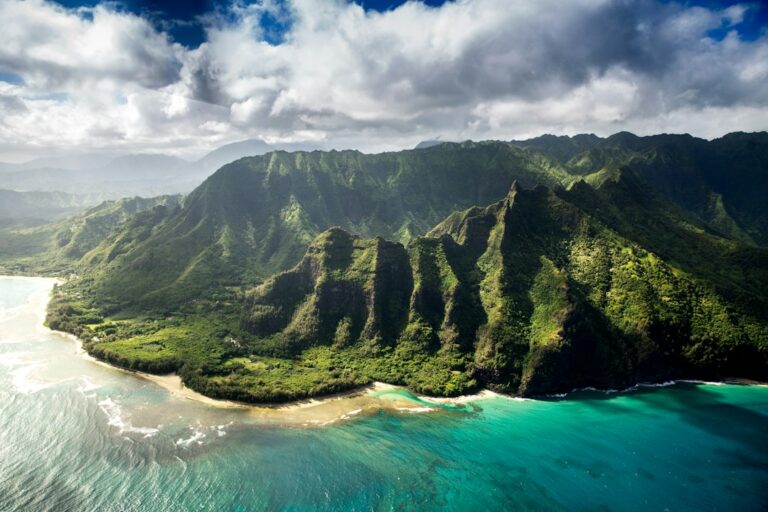
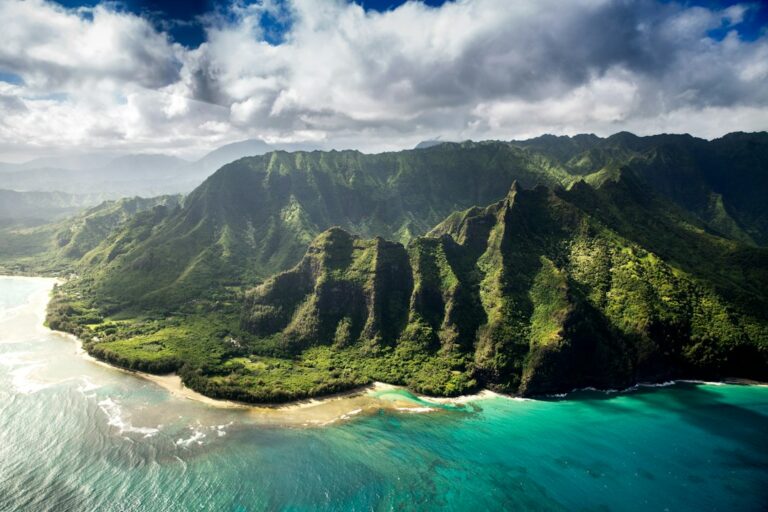
The Windward side is the greenest, wettest, and most cinematic part of Oahu, with the Koolau ridge rising nearly 3,150 feet directly behind the coast. It rains here about 60 to 80 inches per year at the base of the range — three to four times what Waikiki gets — so expect passing showers even on nominally sunny days.
Kualoa Ranch filming locations
Kualoa Ranch spans 4,000 acres on the Windward coast about 45 minutes from Waikiki and has doubled as filming grounds for Jurassic Park, Jumanji, and dozens of other productions. Tours cost from $54.95 (Movie Sites Tour, 90 minutes) to $145.95 (Premier Experience). ATV, horseback, and e-mountain-bike options add roughly $35–$80 above the base rate.
Weekday morning tours run smaller and dustier; afternoon tours during the winter wet season often intersect a shower. The full menu of Kualoa Ranch filming-location tour options — including which movies each covers — is broken down separately.
Lanikai Beach and the Pillbox hike
Lanikai is a residential neighborhood, not a park, and street parking is heavily regulated with 3-hour limits enforced by boot-and-tow. Kailua Beach Park, a mile north, is the practical parking base. The Ka’iwa Ridge (Pillbox) hike opposite the neighborhood climbs 570 feet in about 30 minutes and delivers the classic Mokulua Islands photograph.
Hoomaluhia Botanical Garden
Hoomaluhia sits at the base of the Koolau range in Kaneohe and offers 400 acres of tropical plant collections free of charge on weekdays. Since 2023, weekend and holiday entry has required a same-week reservation. The Hoomaluhia weekend reservation system is straightforward but easy to miss if planned late.
Leeward coast and Ko Olina
The Leeward side is drier, sunnier, and quieter than the Windward coast. Ko Olina, a planned resort community about 22 miles west of Honolulu, features four man-made lagoons cut into the lava shoreline. The lagoons are free and open to the public despite their proximity to the Four Seasons, Aulani Disney Resort, and the Marriott Beach Club.
Lagoon 1 is closest to Aulani and busiest; Lagoon 4 to the south is calmer and has more shade trees. Parking is free but limited — around 60 stalls at Lagoon 4 and roughly 100 across Lagoons 1 through 3. Sunrise arrivals get the palms-and-clear-water shot without crowds.
For families weighing a full-week Ko Olina stay against a Waikiki base, the Waikiki versus Ko Olina lodging tradeoff breaks down driving distances to each attraction from both bases.
Fees, times, and reservation windows at a glance
The following table consolidates entry fees, typical time on site, and the reservation window for every attraction discussed above. Prices are for non-resident adults in 2026 dollars unless noted; residents with valid Hawaii ID often pay reduced or waived fees.
| Attraction | Adult fee | Time on site | Reservation window |
|---|---|---|---|
| Diamond Head | $5 entry + $10 parking | 2 hours | 30 days ahead |
| USS Arizona Memorial | Free + $1 reservation | 75 minutes | 8 weeks or 24 hours ahead, 3:00 p.m. HT |
| Battleship Missouri | $34.99 | 2–3 hours | Recommended but not required |
| Pacific Aviation Museum | $25.99 | 2 hours | Walk-up ok |
| USS Bowfin | $21.99 | 60–90 minutes | Walk-up ok |
| Hanauma Bay | $25 + $3 parking | 3–5 hours | 48 hours ahead, 7:00 a.m. HT |
| Kualoa Ranch (Movie Tour) | $54.95 | 90 minutes | 1–2 weeks ahead |
| Polynesian Cultural Center | $89.95 | 6–8 hours | 1 week ahead |
| Hoomaluhia (weekend) | Free | 2 hours | Same week |
| Iolani Palace (audio) | $20 | 90 minutes | Recommended |
| Ko Olina Lagoons | Free | Half day | None |
A workable 5-day first-timer itinerary
Five days is the sweet spot for Oahu: enough to see the four regions without turning the trip into a driving tour. The schedule below assumes a Waikiki base, a rental car picked up on day two, and adherence to the reservation windows listed above.
| Day | Morning | Afternoon | Evening |
|---|---|---|---|
| 1 (arrival) | Kuhio Beach swim | Waikiki walk, dinner | Sunset at Kaimana Beach |
| 2 | Diamond Head 6:00 a.m. | Iolani Palace + Chinatown | Sunset catamaran |
| 3 | Hanauma Bay 7:00 a.m. | Windward drive to Kailua | Kailua dinner |
| 4 | Pearl Harbor (Arizona 8:00 a.m.) | Missouri + Aviation Museum | Ko Olina sunset |
| 5 | North Shore: Haleiwa | Waimea Bay or Sharks Cove | Return via H-2, dinner |
Two rules make this schedule survive contact with reality. First, book Hanauma Bay for day three the moment the 48-hour window opens on day one at 7:00 a.m. Second, buy Arizona Memorial tickets during the 8-week release well before the trip, or set a phone alarm for the 24-hour drop the day before day four.
The first and third slots of any given day at Hanauma Bay are still available roughly 55 percent of the time in the 48-hour window, per visitor reports; midday slots vanish in under 6 minutes.
Costs, rental cars, and getting around
Oahu is the only Hawaiian island with a functional public bus system. TheBus charges $3 per one-way adult fare or $7.50 for an all-day HOLO card pass, per the City and County of Honolulu. It reaches most attractions in this guide, though the North Shore run takes about 2 hours 15 minutes each way.
For a shortlist that spans all four regions, a rental car is more efficient. Economy cars from Honolulu Airport averaged $58 per day in 2026 spring pricing, with airport concession recovery fees adding roughly 20 percent. Waikiki hotel self-parking averages $45–$65 per night — an important number when weighing rental days.
Gas prices tend to run about $1.10 above the national average, per the EIA weekly retail gasoline dataset. Full-tank returns near the airport at Costco cost roughly 40 cents less per gallon than the branded stations along Nimitz Highway.
Ride share versus rental car math
Uber and Lyft cover Honolulu and Waikiki reliably but thin out fast on the North Shore. A Waikiki-to-Pearl-Harbor round trip runs about $70–$90 in ride shares. A Waikiki-to-Haleiwa round trip approaches $180. Two round trips like that pay for two rental days plus parking, so the crossover point is roughly two off-Waikiki days.
Weather, swell, and seasonal timing
Oahu’s climate is mild but seasonal. Average Waikiki highs run 80°F in January and 88°F in August, per NOAA station HNL. Rainfall is bimodal: the north-facing coast peaks in December–February, while Waikiki’s leeward-side annual total sits near 17 inches, most falling as brief afternoon showers.
Swell direction reshapes the calendar. Winter (November through March) brings 15 to 40-foot north swells that shut down North Shore swimming but light up Sunset Beach for viewing. Summer (May through September) flips the pattern: south swells make Waikiki’s beginner surf breaks livelier while the North Shore turns glassy.
Air quality and vog
Oahu is 200 miles upwind of Kilauea and rarely sees the vog conditions that plague the Big Island. Average PM2.5 sits around 4–6 µg/m³, per the state Department of Health air quality monitors. Kona weather patterns — when trade winds die and the flow reverses — can push volcanic haze north for a day or two.
What to skip on a first trip
The most common first-timer mistake is trying to add a neighbor-island day trip. Same-day inter-island round trips cost around $200–$350 and burn 10 hours for maybe 6 usable hours on the ground. Save Maui for the next trip and use the Maui first-trip 7-day itinerary when planning that follow-up.
A second common trap is the Circle Island driving tour marketed by many bus operators. It covers roughly 110 miles in 8 hours with 15-minute stops at each viewpoint, which is enough for photos but not for swimming, snorkeling, or lunch at any of them. Renting a car and doing the same loop in two days works better.
Legal considerations for lodging
Short-term rental rules changed in 2022 under Bill 41, and enforcement tightened again in 2024. Anything under 30 days outside a small number of resort zones is now illegal on Oahu, with fines up to $10,000 per day. The Bill 41 rules on Oahu short-term rentals explain which neighborhoods still qualify.
Food, water, and supplies on the road
Groceries on Oahu run about 40 to 60 percent above the U.S. mainland average, per the BLS Honolulu-area Consumer Price Index. Costco in Iwilei and Foodland Farms in Ala Moana are the two large stops used most often by visitors staging beach coolers.
A single Poke bowl at a Foodland deli runs around $12–$18. A gallon of water is $2.50 at Costco versus $6 at a convenience store in Waikiki. Packing a soft cooler with sandwiches and drinks before a North Shore or Windward day trip saves roughly $40 for a family of four.
Frequently asked questions
How many days on Oahu is enough for a first trip?
Five days is the practical minimum to cover Waikiki, Pearl Harbor, Hanauma Bay, the Windward coast, and the North Shore without rushing. Four days works if a traveler skips one region; three days is a Waikiki-and-Pearl-Harbor trip only. Anything beyond seven days on a first visit typically means adding beach downtime rather than more sights.
Do you need a rental car on Oahu?
For a shortlist that includes the North Shore, Windward coast, and Pearl Harbor, yes. TheBus reaches most attractions but takes two to three times as long. A common compromise is picking up a rental only for the three off-Waikiki days, saving roughly $150 in parking versus a five-day rental at a Waikiki hotel.
When do Hanauma Bay reservations open?
Slots release at 7:00 a.m. Hawaii Standard Time exactly 48 hours before the visit day, in hourly waves. The bay is closed Mondays and Tuesdays. Popular midday slots sell out within 5 to 15 minutes, while first-hour slots at 6:45 and 7:00 a.m. remain available slightly longer and offer the calmest water and best snorkel visibility.
Is Pearl Harbor worth a full day?
Yes for most first-time visitors. The four sites — Arizona Memorial, Battleship Missouri, USS Bowfin, and the Pacific Aviation Museum — collectively cover 3.5 to 6 hours of content plus meals and shuttle waits. A half day realistically covers the Arizona Memorial and one other site. Bundled Passport tickets are the cheapest way to see all four in a single day.
What is the best time of year to visit Oahu?
April to early June and September to early November hit the sweet spot: warm water (77–80°F), low rainfall, mid-season pricing, and neither the winter surf that shuts down North Shore swimming nor the summer south swells that stir Waikiki. Airfare and hotel rates also drop 15 to 25 percent between the peak Christmas and summer school-break windows.
How does Oahu compare to Maui or Kauai for a first Hawaii trip?
Oahu concentrates the most iconic attractions — Pearl Harbor, Waikiki, Diamond Head, the North Shore — into the shortest driving distances of any island. Maui offers the Road to Hana and Haleakala sunrise but requires more time on the road. Kauai is the quietest and most nature-focused. First-timers with limited days generally choose Oahu.
Are there free attractions on Oahu worth planning around?
Yes. Waikiki Beach, Ko Olina lagoons, Lanikai Beach, Sunset Beach viewing during winter swell, the Aloha Tower observation deck, weekday Hoomaluhia Garden entry, and the Kalakaua Avenue Friday-night hula show are all free. Add Pearl Harbor visitor center exhibits (also free) and a well-planned trip can cover five to seven substantive attractions at zero admission cost.