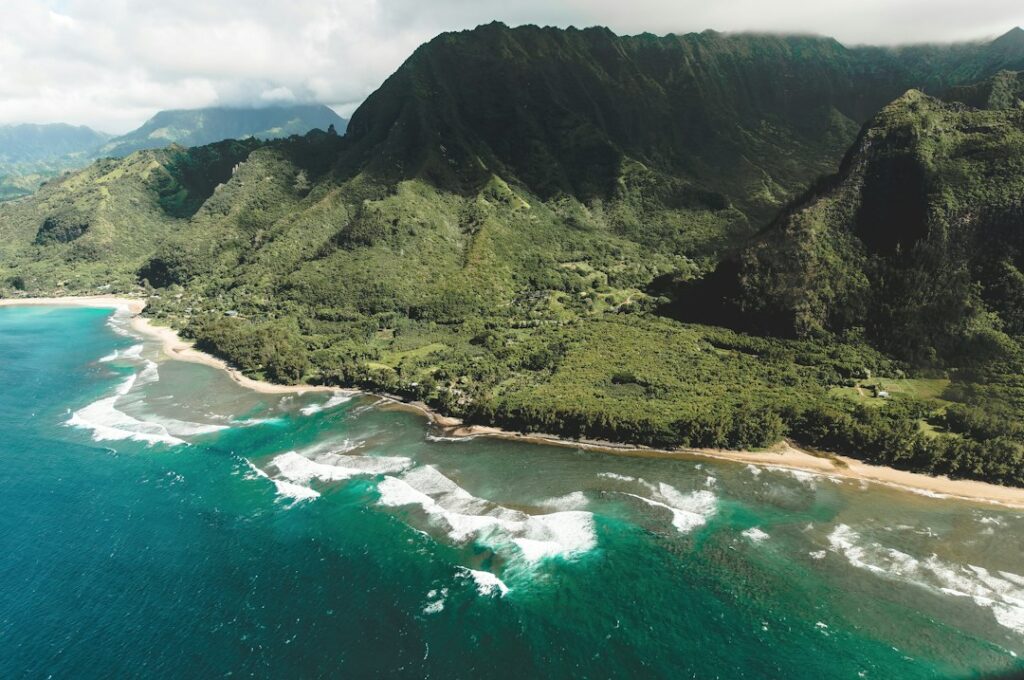
Hawaii’s coastal ponds and nearshore waters sit on state-owned submerged lands and beds administered by the Department of Land and Natural Resources (DLNR). Anyone who wants to farm fish, limu, oysters, or shrimp in a walled loko iʻa or an open-ocean cage typically needs a written lease from the state before a single fingerling goes in the water.
The path runs through the Division of Aquatic Resources (DAR) under Hawaii Revised Statutes chapter 187A and Hawaii Administrative Rules title 13, chapter 74.
The framework is old — HAR 13-74 dates from the 1980s — but the demand has shifted. Native Hawaiian nonprofits restoring 400-year-old fishponds, commercial finfish operators eyeing warm 76°F Kona waters, and limu farmers testing quarter-acre plots all queue up through the same lease system. The application fee is only $25, yet the total cost of getting a site permitted often runs into six figures once environmental review, cultural consultation, and Conservation District paperwork stack up.
This article walks relocating households, investors, and community groups through what a DLNR aquaculture lease actually authorizes, how the application flows, which side permits attach to shoreline and ocean sites, and where projects most often stall. Numbers throughout come from published DLNR notices, state statutes, and federal energy and census sources.
What a DLNR aquaculture lease actually authorizes
A Chapter 187A lease grants a specific person or entity the exclusive right to cultivate aquatic life on a defined parcel of state-owned submerged land, pond, or water column for a fixed number of years. It is not a permit to fish, not a title to the land, and not an exemption from other regulations.
The lease is a real property interest recordable at the Bureau of Conveyances, transferable only with BLNR consent, and forfeitable if the lessee stops actively farming.
The Board of Land and Natural Resources (BLNR) — a seven-member body of gubernatorial appointees — signs every lease. DAR staff shepherd the application, but the vote happens at a public BLNR meeting. That distinction matters: the seven volunteers on the Board can and do send DAR staff back for more analysis, additional community meetings, or narrower lease boundaries even after two years of technical review.
Who qualifies as an applicant
HAR §13-74-31 opens the process to any individual over 18, corporation registered with the Hawaii DCCA, partnership, limited liability company, or nonprofit. Non-Hawaii entities can apply but must appoint a resident agent for service of process. Federal, county, and state agencies also apply — the National Oceanic and Atmospheric Administration holds several research-scale leases in Kaneʻohe Bay. Native Hawaiian organizations restoring loko iʻa often apply through 501(c)(3) affiliates so donations qualify for federal tax deductions.
What the lease does not include
Water quality permits stay separate. National Pollutant Discharge Elimination System (NPDES) coverage for effluent discharge is issued by the Hawaii Department of Health under a delegation from the U.S. Environmental Protection Agency. A hatchery importing broodstock also needs a Plants and Animals Declaration processed through the Department of Agriculture. Federal Endangered Species Act and Marine Mammal Protection Act clearances still apply if humpback whales or monk seals frequent the site during the December through May calving window.
Legal framework: HRS 187A and HAR 13-74 explained
Chapter 187A of the Hawaii Revised Statutes was consolidated in 1979 to place aquaculture under a single state framework. Section 187A-6 gives DLNR the authority to set commercial fishing and aquaculture rules, and §190D governs ocean leasing specifically. The administrative rulebook — HAR chapter 13-74 — spells out application forms, fee schedules, notice requirements, and lease term limits. Rents are set by BLNR resolution rather than a fixed formula, but must at least cover appraised fair market rental value.
The 3-mile territorial sea marks the outer boundary of state jurisdiction. Anything beyond that is federal water regulated by NOAA Fisheries under the Magnuson-Stevens Act. Inside 3 miles, from the mean high water line seaward, DLNR is the lease landlord. That includes almost every calm bay, atoll passage, and near-shore reef flat between Niʻihau and Hawaiʻi Island.
Households researching lease frameworks often start by comparing statutory paths across resources. The geothermal lease structure administered by DLNR and coordinated with the Public Utilities Commission uses a similar BLNR approval flow, and readers unfamiliar with resource leasing may find the geothermal lease royalty framework a useful reference point for how the Board handles rent, term, and public-hearing scheduling on state lands.
Loko iʻa restoration leases and Kuapa fishponds
Hawaii holds an estimated 488 traditional Hawaiian fishponds documented statewide, though only about 40 remain in usable structural condition. Kuapa-style ponds — the massive walled loko iʻa built along the shoreline with stone walls and wooden makaha sluice gates — dominated pre-contact aquaculture. The 1965 Bishop Estate survey mapped most of them, and the state now controls the pond bottoms and walls of the majority, having acquired title through the ceded lands trust or through direct acquisition.
A restoration lease under Chapter 187A typically runs 35 years, occasionally with two 10-year renewal options. The rent for a functioning fishpond producing awa (milkfish), moi (Pacific threadfin), or ʻamaʻama (striped mullet) commonly runs $1 per year for a nonprofit lessee committed to cultural education, plus community access covenants. Commercial restorations pay appraised market rent, historically $2,500 to $12,000 annually for a 15-acre pond depending on infrastructure condition.
The Aha Moku consultation step
Act 288 of 2007 formalized the Aha Moku Advisory Committee — an island-district system that gives Native Hawaiian practitioners a formal voice on ocean and shoreline management decisions. DLNR routinely refers loko iʻa lease applications for Aha Moku comment, and the practical result is that projects without community sign-on rarely reach BLNR agenda. Applicants schedule at least two community meetings on the affected island moku, six months apart, before hearing dates.
Streamlined loko iʻa permitting under Act 90
Act 90 of 2011 created a special permit path allowing a single umbrella permit to satisfy the U.S. Army Corps of Engineers 404 permit, DOH water quality certification, DLNR conservation district use permit, and Special Management Area permit for loko iʻa restoration. The umbrella covers repair of makaha, rebuilding of stone walls, and initial stocking — but it does not replace the 187A lease itself. Applicants still need both instruments in hand before operations begin.
Ocean leases inside the 3-mile territorial sea
HRS chapter 190D authorizes commercial ocean leases for finfish, shellfish, and limu operations in state waters. Cage sites typically range from 5 to 50 surface acres with the water column reserved down to the seafloor. Depths generally must exceed 100 feet to keep cages off the reef substrate and to allow sufficient tidal flushing to prevent nutrient buildup. Kona coast sites with year-round 76–80°F surface temperatures dominate current commercial activity.
Only a handful of commercial ocean leases have been issued since 190D took effect in 1999. The two most cited operations — a Kona-based amberjack and kampachi farm — hold long-term leases on offshore sites at depths of 200–260 feet approximately 2 nautical miles from shore. Rent is set on a per-acre basis with a minimum production royalty, typically ranging from $200 to $500 per surface acre per year for open-water sites.
| Lease type | Statute | Typical term | Annual rent range | Site size range |
|---|---|---|---|---|
| Loko iʻa restoration (nonprofit) | HRS 187A | 35 years + renewals | $1 to $500 | 3–35 acres |
| Loko iʻa commercial | HRS 187A | 25–35 years | $2,500–$12,000 | 10–30 acres |
| Nearshore limu farm | HRS 187A | 10–20 years | $300–$1,200 | 0.25–5 acres |
| Open-ocean finfish cage | HRS 190D | 20–35 years | $200–$500 per acre | 5–50 acres |
| Research permit (short-term) | HAR 13-74 | 3–5 years | $50–$500 | varies |
Species restrictions and non-native prohibitions
HAR §13-74-42 bars culture of any species not native to Hawaii except under a specific import permit issued by the Hawaii Department of Agriculture. Tilapia, catfish, and shrimp remain culturable under legacy permits, but new applications for non-native finfish face steep review. Native species with active commercial track records include moi, kahala, awa, opihi, and native oyster strains. Limu farmers work primarily with ogo (Gracilaria parvispora) and native limu manauea.
The $25 application fee and initial filing
The application filing fee under HAR §13-74-33 sits at just $25, payable to the Department of Land and Natural Resources at submission. The low fee is deceptive — it covers only intake and initial log-in. Once staff open a case, applicants bear all costs of appraisal, environmental review, survey, and public notice. Total pre-lease expenditures for a 20-acre commercial site typically run $85,000 to $250,000 before the lease is signed.
The application packet itself includes DLNR Form DAR-AL-1, a metes-and-bounds description prepared by a licensed Hawaii land surveyor, a bathymetric survey for water sites, a business plan showing five-year revenue projections, proof of financial capacity in the form of bank letters or CPA statements, and a $25 check. Missing any required document triggers a “return without prejudice” letter within 30 days.
Survey and boundary requirements
Pond leases require a certified boundary survey tied to state plane coordinates. The DLNR survey office publishes coordinate standards, and applicants for shoreline pond sites must also obtain a certified shoreline through the DLNR-approved surveyor process. Households researching parallel shoreline work will find the shoreline certification and SMA setback process follows the same certified-surveyor path used for aquaculture pond boundary work.
Financial capacity documentation
DLNR requires applicants to prove sufficient working capital to run the operation for two years without revenue. A nonprofit restoration lessee typically shows $300,000 to $500,000 in pledged donations or committed grants. A commercial finfish site under 190D generally shows $2 million to $8 million in capital availability, given hatchery, feed, and cage costs. Bank letters, audited financials, or SEC-registered pledge documents all satisfy the requirement.
Environmental assessment and EIS triggers under HRS 343
Hawaii’s environmental review statute — HRS chapter 343 — attaches whenever an action uses state land, state funds, or a shoreline area. Nearly every aquaculture lease triggers §343 because the lease itself conveys use of state submerged land. The applicant, not DLNR, is the responsible party for drafting the environmental assessment (EA) and paying for consultant work. Draft EAs run 80 to 220 pages depending on site complexity and public comment volume.
The Office of Planning and Sustainable Development (OPSD) publishes drafts in The Environmental Notice, a bi-monthly bulletin issued on the 8th and 23rd of each month. A 30-day public comment window follows publication. If comments raise unresolved significant impacts, the applicant must upgrade the EA to a full Environmental Impact Statement (EIS), which typically adds 12 to 24 months and $150,000 to $600,000 to the timeline.
| Review stage | Statute | Typical duration | Consultant cost estimate |
|---|---|---|---|
| EA scoping and drafting | HRS 343 | 6–9 months | $45,000–$120,000 |
| Draft EA public comment | HRS 343-5 | 30 days | — |
| Final EA with FONSI | HRS 343-5 | 2–4 months | $10,000–$25,000 |
| Full EIS (if triggered) | HRS 343-5 | 12–24 months | $150,000–$600,000 |
| Cultural impact assessment | Act 50 of 2000 | 3–6 months | $8,000–$40,000 |
Cultural impact assessment requirements
Act 50 of 2000 requires an EA to include a Cultural Impact Assessment (CIA) describing traditional and customary Native Hawaiian practices at the site. For loko iʻa sites the CIA effectively drives the entire environmental review because ponds carry significant genealogical, subsistence, and ceremonial value. Consultants typically interview 8 to 20 kupuna and practitioners, review Mahele records, and consult Land Commission Awards for the ahupuaʻa surrounding the pond.
National Environmental Policy Act overlay
Federal permits triggered by the same project — most commonly a §404 Clean Water Act permit from the U.S. Army Corps of Engineers — bring parallel NEPA review. Sensible applicants combine state HRS 343 and federal NEPA documents into a single environmental review document, saving 6 to 10 months over sequential review. The Army Corps Honolulu District processes typically issue §404 nationwide permits within 60 to 120 days once state review closes.
CDUP coordination on shoreline pond sites
Every loko iʻa and shoreline structure sits inside the Conservation District, which covers all state land seaward of certain elevation contours plus most beaches and submerged land. HAR chapter 13-5 requires a Conservation District Use Permit (CDUP) or Conservation District Use Application (CDUA) before construction or ground-disturbing repair. For loko iʻa work the CDUP addresses wall repair, makaha reconstruction, and any dredging of accumulated sediment inside the pond enclosure.
CDUP applications sit with the DLNR Office of Conservation and Coastal Lands (OCCL), which reviews them in parallel with the 187A lease application. Board-level CDUPs — for projects over $500,000 in construction value or subject to public objection — go to BLNR for the same hearing as the lease. Departmental CDUPs — smaller projects — are approved by the DLNR Chairperson without a public hearing.
Coastal permitting also intersects the Special Management Area (SMA) rules administered by each county planning department. SMA boundaries typically run 300 feet mauka of the shoreline but extend farther on some islands. Any pond wall or breakwater repair inside the SMA needs a Special Management Area Use Permit before the CDUP goes final, and county planning fees range from $500 to $8,500 depending on project value.
| Permit or review | Issuing office | Filing fee | Typical processing |
|---|---|---|---|
| 187A/190D lease application | DLNR DAR | $25 | 18–36 months |
| Conservation District Use Permit | DLNR OCCL | $1,000–$2,500 | 6–12 months |
| SMA Use Permit | County Planning | $500–$8,500 | 4–9 months |
| Section 404 wetland permit | U.S. Army Corps | $100 individual | 60–120 days |
| NPDES water quality | DOH Clean Water Branch | $1,000 base | 90–180 days |
| Section 401 water certification | DOH | Included | 60 days |
| Cultural impact assessment | Applicant consultant | Consultant billing | 3–6 months |
Rent, term, and financial obligations
Lease rent under HAR 13-74 must at minimum cover appraised fair market rental value plus a nominal minimum. BLNR generally accepts appraisals prepared by MAI-certified Hawaii appraisers with aquaculture experience. Appraisals must be updated every 10 years, with the option of a mid-term readjustment at year 15 or year 20 depending on lease language. Rent step-ups typically range from 10% to 25% at readjustment, tied to comparable land rents in the region.
Production royalties apply on some ocean leases. Historic 190D leases used a 2% to 4% gross revenue royalty in addition to per-acre rent, though newer leases have shifted toward flat rent with production reporting. Lessees file annual production reports with DAR by January 31 each year, and failure to file on time triggers a $500 late fee under HAR §13-74-52.
Performance bonds and insurance
Ocean lease holders post a performance bond equal to 12 months of rent — typically $50,000 to $500,000 depending on site — to guarantee removal of cages, moorings, and gear at lease termination. General liability insurance of $1 million per occurrence and $2 million aggregate is the standard requirement, listing the state as additional insured. Marine pollution coverage of at least $500,000 applies to any finfish cage operation.
Transfer, mortgage, and assignment rules
A 187A or 190D lease may be assigned only with prior BLNR consent, and the Board typically requires the assignee to demonstrate financial and technical capacity equivalent to the original applicant. Leases may be mortgaged as collateral for aquaculture-related financing, but the mortgagee must accept the state’s reversionary interest and comply with the same operating covenants if it takes possession following foreclosure.
Timeline from filing to first stocking
A realistic timeline from initial application to first fish in the water runs 24 to 48 months for a straightforward site and 4 to 7 years for a contested one. Delay factors include EIS triggers, contested case hearings under HRS chapter 91, agency staffing gaps, and federal permit review. Applicants who have not budgeted at least 30 months of pre-revenue operating cost frequently run out of capital before the first harvest cycle.
| Milestone | Elapsed months | Cumulative pre-lease cost |
|---|---|---|
| Application intake with $25 fee | 0 | $25 |
| Survey and site plan complete | 4 | $18,000 |
| Draft EA published | 10 | $85,000 |
| Final EA with FONSI | 14 | $110,000 |
| BLNR lease approval | 22 | $135,000 |
| CDUP issued | 26 | $155,000 |
| NPDES and 404 permits issued | 30 | $175,000 |
| Construction and first stocking | 36 | $1.2M–$8M |
Contested case hearings
HRS chapter 91 gives any party with standing the right to request a contested case hearing on a BLNR permit or lease decision. Standing typically requires demonstrated cultural, ecological, or economic interest at the site. A contested case adds 8 to 18 months and $60,000 to $300,000 in legal costs. About 15% of BLNR aquaculture actions in the last decade have drawn contested case petitions, most on shoreline restoration sites where community groups disagreed with the applicant’s cultural use plan.
Related regulatory intersections
Aquaculture leases intersect a surprising number of adjacent state processes. Applicants who purchase adjoining upland parcels confront title, easement, and probate questions that echo the same DLNR administrative style. Households transferring aquaculture-lease-holding entities through succession should review the transfer on death deed framework under HRS 527 and the small-asset probate affidavit path for estate planning that touches leasehold interests.
Corporate signatories under an LLC or trust structure often act through a Hawaii-form power of attorney. The HRS 551E uniform power of attorney form is the standard instrument for authorizing an agent to sign lease documents, environmental filings, or bond obligations on behalf of a family trust or investment vehicle. Signatures on lease documents require notarization, and the Attorney General notary commission pathway governs the notaries who witness them.
Water rights and near-shore hunting regulations sit under related DLNR divisions. The DOFAW game mammal hunt tag process shows how DLNR uses similar public-notice mechanisms across divisions. Trust holders considering restructuring an aquaculture leasehold under changed circumstances can look to the trust decanting statute at HRS 554D for guidance on moving lease-holding trusts into new instruments without losing lease consent.
Common failure modes and how to avoid them
Roughly 45% of aquaculture lease applications filed since 2010 have been withdrawn or denied before reaching BLNR. Analysis of published DLNR agendas and OPSD environmental filings suggests the recurring causes cluster in five buckets: undercapitalization, missing cultural consultation, incomplete EA scoping, incompatible site conditions, and inability to secure NPDES coverage.
- Undercapitalization: applicants show only 6–9 months of working capital rather than 30+.
- Missing Aha Moku engagement: applicant skips community meetings and BLNR defers the vote indefinitely.
- EA scoping too narrow: the draft misses cumulative impacts and DOH requires an EIS upgrade.
- Site conflicts: cage site overlaps a humpback whale breeding preserve or a monk seal haul-out.
- NPDES denial: nutrient loading models fail to demonstrate acceptable dilution.
- Survey deficiencies: metes-and-bounds descriptions fail to match certified shoreline surveys.
Reading the BLNR calendar
BLNR meets twice monthly, typically on the second and fourth Fridays. Agendas are published seven days before each meeting on the DLNR website. Aquaculture lease items appear on the Land Division or Aquatic Resources sub-agendas. Applicants who track agendas can schedule community meetings, technical updates, and public comment submissions to align with expected hearing dates rather than requesting emergency continuances that damage credibility with the Board.
Costs of living factors for lease operators
Anyone relocating to Hawaii to run an aquaculture operation confronts operating cost pressures well above mainland norms. According to the U.S. Bureau of Labor Statistics, the Honolulu-area Consumer Price Index historically runs 10% to 20% above the U.S. city average, and electricity for hatchery pumps and aerators pushes budgets further. The U.S. Energy Information Administration reports Hawaii retail electricity rates often exceed 40 cents per kilowatt-hour, more than three times the mainland average.
Fuel for feed barges and diver support vessels tracks a similar premium. The EIA weekly gasoline and diesel report generally shows Hawaii marine diesel running 60–90 cents above Pacific Coast benchmarks. State demographic context from the Census Bureau QuickFacts page shows a resident population of about 1.4 million spread across seven inhabited islands, with dense pockets on Oʻahu and much thinner labor markets on neighbor islands.
Tax obligations flow through the Hawaii Department of Taxation, which administers the general excise tax at 4% (with a 0.5% Oʻahu surcharge for many operations). Aquaculture products sold at wholesale qualify for the reduced 0.5% GET rate, but retail sales fall under the standard 4.5% rate. Shipping products to mainland buyers via Matson or Pasha Hawaii adds container costs that operators bake into wholesale prices.
Labor and workforce considerations
Aquaculture labor typically requires divers certified for commercial work, boat operators with USCG credentials, hatchery technicians with fish husbandry backgrounds, and biosecurity staff. Statewide the workforce is thin — probably fewer than 900 workers hold commercial aquaculture-specific experience. Wages for skilled positions run $28 to $52 per hour, with divers on the upper end. Operators often relocate specialists from Washington or California, which requires housing subsidies given median rents on Oʻahu exceed $2,400.
Comparing Hawaii’s process to other states
Hawaii’s application fee is remarkably low at $25 compared to peer states. Washington charges $500 to $1,500 for shellfish leases through DNR, and California charges $1,225 for aquaculture registration through the Fish and Game Commission. But Hawaii’s overall regulatory burden — cultural consultation, HRS 343 environmental review, Conservation District coordination, and BLNR public hearing — makes the total pre-lease timeline and cost among the highest in the country.
Restoration-focused loko iʻa lessees benefit from the $1 nominal rent structure that no mainland state offers. Federal grants from the U.S. Fish and Wildlife Service, NOAA Restoration Center, and the Administration for Native Americans routinely fund $200,000 to $1.5 million in loko iʻa project support. Native Hawaiian nonprofits stack these against state Legacy Land Conservation Program grants that pay for adjacent upland conservation acquisitions.
Frequently asked questions
How long does a DLNR aquaculture lease last in Hawaii?
Standard leases under HRS 187A or 190D run 20 to 35 years, with some carrying renewal options of 10 years each. Loko iʻa restoration leases held by nonprofits often reach the full 35-year cap plus two 10-year renewals, giving up to 55 years of tenure. Commercial ocean cages under 190D usually get 25 to 35 years without automatic renewal.
Can a private landowner already holding a fishpond bypass the DLNR lease?
Rarely. Most functional loko iʻa sit on state-owned pond bottoms even when the surrounding kuleana land is private. If the applicant proves clear private title to the pond bottom via a Land Commission Award and post-Mahele conveyances, the state lease may not apply — but a Conservation District Use Permit still governs any wall repair or dredging. Title research typically costs $8,000 to $25,000.
What triggers an EIS instead of a simpler EA?
A full Environmental Impact Statement is required when the action may cause significant impacts to natural resources, cultural resources, or public trust interests. Common triggers include cage placement near humpback whale calving areas, ponds within critical habitat for endangered waterbirds, or projects with substantial community opposition. OEQC guidance under HAR 11-200.1 lists 13 significance criteria, any one of which can push a project from EA to EIS.
Do federal permits stack on top of the state lease?
Yes. Any construction below the mean high water line typically requires a U.S. Army Corps of Engineers Section 404 permit under the Clean Water Act. Cages within federal marine sanctuaries — particularly the Hawaiian Islands Humpback Whale National Marine Sanctuary in shallow waters off Maui — require additional NOAA authorization. Endangered Species Act consultation with U.S. Fish and Wildlife Service applies whenever monk seals, sea turtles, or waterbirds may use the site.
How does DLNR handle competing applications for the same site?
HAR §13-74-35 gives DLNR discretion to solicit competing bids through public auction if more than one qualified applicant wants overlapping water. In practice competing applications are rare because sites are large and the pre-application investment is substantial, but nonprofits and commercial applicants have occasionally landed on the same pond. BLNR usually favors restoration applicants with community backing over commercial applicants when the site has significant cultural value.
What happens if a lessee stops actively farming the site?
HAR §13-74-53 authorizes DLNR to declare a lease forfeited after a 12-month period of non-operation, subject to notice and a cure period. Forfeiture reverts the site to state control and voids the lessee’s investment in improvements. Lessees experiencing temporary disruption — a storm, a disease outbreak, or a permit dispute — can petition BLNR for a suspension of operating covenants for up to 24 months, with justification.
Are there tax incentives for aquaculture operations in Hawaii?
Yes. The Hawaii Enterprise Zone program under HRS 209E offers up to 80% state income tax abatement over seven years for qualifying aquaculture operations in designated zones. Products sold at wholesale qualify for the reduced 0.5% general excise tax rate rather than the standard 4%. Federal renewable energy investment tax credits also apply to solar arrays powering hatcheries — a common cost offset given Hawaii’s high electricity rates.
What role does the county planning department play?
County planning departments issue Special Management Area (SMA) permits for any work within the coastal zone that fronts a pond or cage site’s shoreline access. Fees range from $500 to $8,500 depending on project value. County zoning also applies to any upland support infrastructure — hatcheries, processing facilities, worker housing — which typically requires standard building permits and variance requests when agricultural district land is used.