Norwegian Cruise Line’s Pride of America is the only large cruise ship that sails a full week among the Hawaiian Islands without leaving the state. Every Saturday it departs Honolulu. Over seven nights it calls at four ports on three neighbor islands, stays overnight in two of them, and returns to Oahu early the following Saturday.
The ship’s appeal is easy to explain. Travelers unpack once, skip the interisland flights, and wake up docked at a different island almost every morning. It also has trade-offs that the marketing leaves out, including short port days on Hawaii Island, a tender port at Kona, and fewer hours ashore than a fly-around trip that bases travelers on land.
This guide covers the itinerary port by port, the cabin categories and their usual price bands, boarding at Pier 2, NCL’s Freestyle dining, the gap between ship-booked and independent excursion prices, the federal law that explains why the ship exists, and where a resort-based itinerary comes out ahead.
Why Pride of America is the only ship of its kind
Pride of America flies the US flag, carries an American crew, and is registered in Honolulu. That status is the whole reason it can run a Hawaii-only itinerary. Most cruise ships are registered in the Bahamas, Panama, or Malta, and foreign-flagged ships cannot carry passengers between two US ports unless they also call at a distant foreign port.
The Jones Act and the Passenger Vessel Services Act
People usually credit this rule to the Jones Act of 1920, which covers cargo moving between US ports. For passengers, the controlling law is the older Passenger Vessel Services Act of 1886. Both laws do the same basic thing: they reserve domestic coastal trade for ships that are US-built or US-flagged and crewed mostly by US citizens.
A foreign-flagged ship can still visit Hawaii, but it has to work around the law. That is why the round-trip Hawaii cruises from Los Angeles, San Diego, Seattle, and Vancouver all stop in Ensenada, Mexico, and spend four or five days at sea each way. The ships, sea days, and routes on those sailings are covered in the guide to cruises to Hawaii from the West Coast.
What US-flag status costs passengers
American crews cost more. Wages, payroll taxes, and US labor protections all raise operating costs above those of a ship crewed internationally. Comparisons by cruise-industry analysts consistently find Pride of America’s per-night fares among the highest in NCL’s mainstream fleet, often 30–60% above a comparable Caribbean week.
The ship itself is older. It entered service in 2005 at roughly 80,400 gross tons and carries about 2,186 passengers at double occupancy. It got a major refurbishment in 2016, with smaller updates since, but it lacks the go-kart tracks, water parks, and large pool decks found on NCL’s newer ships.
The seven-night itinerary, port by port
The route has barely changed in more than a decade. The schedule below is the typical pattern. NCL sometimes shifts arrival times by an hour or two, so the cruise documents for a specific sailing have the final word.
| Day | Port | Arrive | Depart | Approx. hours ashore |
|---|---|---|---|---|
| Saturday | Honolulu, Oahu (Pier 2) | Boarding from ~11:00 am | 7:00 pm | Embarkation only |
| Sunday | Kahului, Maui | 8:00 am | Overnight | — |
| Monday | Kahului, Maui | — | 6:00 pm | ~34 hours total |
| Tuesday | Hilo, Hawaii Island | 8:00 am | 6:00 pm | ~10 hours |
| Wednesday | Kona, Hawaii Island (tender) | 7:00 am | 5:30 pm | ~9 hours after tendering |
| Thursday | Nawiliwili, Kauai | 8:00 am | Overnight | — |
| Friday | Nawiliwili, Kauai, then Napali Coast | — | 2:00 pm | ~30 hours total |
| Saturday | Honolulu, Oahu | 7:00 am | Disembark by ~9:00 am | — |
Maui overnight in Kahului
Kahului is an industrial harbor on Maui’s north-central shore, not a resort town. The rental car counters at Kahului Airport (OGG) are about 3 miles away, and the major agencies run shuttles to the pier on cruise days. With the overnight, there is time for both a Haleakala sunrise and a full Road to Hana day.
The west Maui resorts are 25–30 miles from the pier, about 45 minutes each way without traffic. Some passengers spend one of their Maui days walking the Kaanapali Beachwalk and its resort food stops, then drive back to the ship for dinner.
Hilo and Kona on consecutive days
The ship spends two days on Hawaii Island, one on each side. Hilo is a dock port on the wet windward coast, and Hawaii Volcanoes National Park is roughly 30 miles away, about 45 minutes by car. For most passengers, Hilo day means volcano day.
Kona is a tender port. Passengers ride lifeboat-style tenders into Kailua Pier, and the first boats usually go to ship-booked tour groups. Independent travelers can wait 30–60 minutes for a tender ticket on busy mornings, and rough swell occasionally cancels the call entirely.
Kauai overnight and the Napali sail-by
Nawiliwili sits next to Lihue Airport, so getting a rental car is quick. With roughly 30 hours in port, passengers can drive to Waimea Canyon (about 1 hour 15 minutes each way) one day and spend the next morning on the North Shore beaches before the 2:00 pm all-aboard.
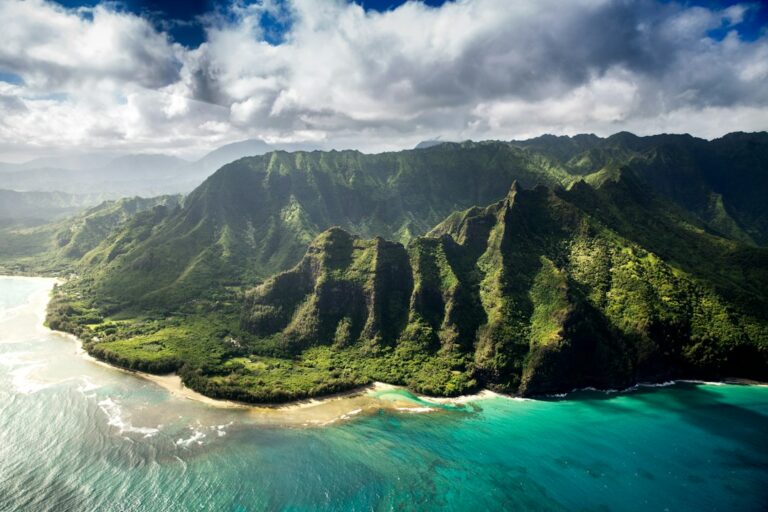
After leaving Kauai, the ship sails along the Napali Coast through mid-afternoon, weather permitting. It is one of the few ways to see the cliffs without a boat tour or helicopter. In winter, from roughly November to March, high north swell sometimes makes the captain cut the sail-by short or keep the ship farther offshore.
Cabin categories and price bands
Pride of America has about 1,000 staterooms in four broad groups. Fares change a lot by season and by how close to sailing the cabin is booked. The ranges below are typical published fares per person, double occupancy, before taxes, fees, and gratuities, based on NCL listings across 2025 and 2026 sailings.
| Category | Approx. size (sq ft) | Typical fare per person, 7 nights | Per person, per night |
|---|---|---|---|
| Inside | 130–160 | $1,100–$1,900 | $157–$271 |
| Oceanview (window) | 145–180 | $1,300–$2,200 | $186–$314 |
| Balcony | 170–230 | $1,700–$3,000 | $243–$429 |
| Club Balcony / Family Suite | 250–420 | $2,800–$4,500 | $400–$643 |
| Owner’s and Deluxe Owner’s Suite | 580–850+ | $5,000–$9,000+ | $714–$1,286+ |
Inside and oceanview cabins
The ship spends most of its days docked, so cruisers on this itinerary often say an inside cabin is easier to accept than it would be on a sea-heavy route. An inside cabin saves roughly $600–$1,100 per person compared with a balcony. That money can cover a helicopter flight on Kauai or a rental car on all three islands.
Some oceanview cabins on lower decks have obstructed views from lifeboats. NCL labels these in the booking engine, and they often cost only $100–$200 more than an inside cabin.
Balconies and the Napali side question
Balconies are the most requested category. They are most valuable on the overnight port calls and during the Napali sail-by. The ship usually passes the coast with its port (left) side facing the cliffs, which is why port-side balconies are in steady demand, though the ship’s heading can change with conditions.
Balcony fares usually climb fastest from June through August and over the December holidays, when families with school-age children fill the ship.
Suites and The Haven question
Pride of America does not have The Haven, the private suite complex on NCL’s newer ships. Its top suites come with concierge service, priority boarding, and a separate breakfast venue, but they do not include the private pool and sundeck that Haven guests get elsewhere in the fleet.
What the full fare actually costs
The advertised fare is only the starting point. Port charges, government taxes, the daily service charge, and Hawaii’s newer tax on cruise fares all add to the bill. Couples often find their total is 20–30% higher than the cabin price they first saw.
Act 96, signed in 2025, extended Hawaii’s transient accommodations tax to cruise fares beginning July 1, 2026, prorated by the share of each voyage spent docked in Hawaii ports. Pride of America spends nearly all of its nights in state waters, so its passengers feel this tax more than those on transpacific ships. Current rates and guidance are posted by the Hawaii Department of Taxation.
| Cost line (two adults, balcony) | Low estimate | High estimate |
|---|---|---|
| Cruise fare ($1,700–$3,000 pp) | $3,400 | $6,000 |
| Port fees and government taxes | $500 | $700 |
| State transient accommodations tax (prorated) | $300 | $600 |
| Service charge (~$20 pp/day x 7) | $280 | $280 |
| Round-trip airfare from the West Coast | $700 | $1,400 |
| Pre-cruise Honolulu hotel, 1 night | $280 | $500 |
| Estimated total before excursions | $5,460 | $9,480 |
The pre-cruise hotel night adds its own taxes. On Oahu, state and county lodging taxes plus general excise tax come to roughly 18–19% before any resort fee. The breakdown is in the guide to Hawaii hotel taxes and resort fees.
Pier 2 embarkation logistics
Pride of America sails from the Pier 2 cruise terminal in Honolulu Harbor, just Ewa (west) of the Aloha Tower Marketplace and next to Kakaako. Commercial harbors in the state are run by the Hawaii Department of Transportation’s Harbors Division, which posts advisories about terminal access and construction.
Getting from the airport to the pier
Daniel K. Inouye International Airport (HNL) is about 5 miles from Pier 2. The drive takes 15–25 minutes outside rush hour and can stretch past 40 minutes on a weekday afternoon. On Saturdays, traffic is usually light in the late morning.
- Taxi or rideshare: typically $35–$55 one way, depending on surge pricing.
- NCL transfer: about $25–$35 per person, booked through the cruise reservation.
- TheBus: routes 19 and 20 run near the harbor for $3, but luggage makes this impractical.
- Rental car: parking near Pier 2 is limited and expensive for a full week.
Bus routes and fares are listed on the City and County of Honolulu site. Most travel planners recommend flying in Friday. A Saturday morning flight from the West Coast that runs late, or a missed connection, can leave passengers with no way to catch the ship until it reaches Maui the next day.
Boarding timeline
- Online check-in opens in the NCL app weeks ahead; passengers choose a boarding window.
- Terminal doors typically open around 11:00 am for priority and suite guests.
- General boarding runs in staggered windows until roughly 4:00 pm.
- All aboard is usually 6:00 pm, one hour before the 7:00 pm departure.
- Checked bags arrive at cabins between late afternoon and early evening.
The day before sailing gives passengers a chance to eat on Oahu, since the island is otherwise just a turnaround point. Honolulu Harbor’s working fish piers are a short drive from Pier 2, and the guide to ordering at Nico’s Pier 38 makes a good pre-boarding lunch plan.
Disembarkation on the final Saturday
The ship docks around 7:00 am, and cabins have to be empty by about 8:00 am. Self-assist passengers who carry their own bags are often off by 7:30 am. Passengers who put their luggage out the night before usually leave in timed groups through about 9:30 am.
Most mainland flights leave HNL in the afternoon or evening, which leaves a gap of 5–10 hours. NCL sells post-cruise tours that end at the airport, and plenty of travelers simply store their bags and spend the day in Waikiki or downtown.
Freestyle dining aboard Pride of America
NCL’s Freestyle model means no assigned dining times, no fixed tablemates, and no formal nights. Passengers eat when they want at any open venue. The trade-off is that the two main dining rooms can have waits of 20–45 minutes between about 6:30 pm and 8:00 pm, especially on port days when everyone comes back to the ship at once.
Included venues
- Skyline Restaurant: the larger main dining room, serving breakfast and dinner.
- Liberty Restaurant: second main dining room with a rotating menu.
- Aloha Café: buffet with breakfast, lunch, and dinner stations.
- Cadillac Diner: 1950s-style diner open late, with burgers and milkshakes.
- Room service: limited complimentary menu; delivery fees apply to some items.
Specialty restaurants and packages
The specialty restaurants carry a cover charge or à la carte pricing. Cagney’s Steakhouse usually runs $60–$75 per person, La Cucina Italian about $30–$40, and Jefferson’s Bistro French-style dining about $40–$55. Multi-meal dining packages bring the per-meal price down, and NCL often includes one in its “More at Sea” promotional bundles.
Since the ship docks most evenings, many passengers eat dinner ashore on Maui or Kauai and skip the specialty restaurants. Those who plan to be back on board by 6:00 pm can book specialty tables through the app before sailing to get around the peak-hour waits.
Drinks and bundled perks
US-flag status affects the bar program in small ways. Drink prices match NCL’s fleet-wide pricing, with cocktails around $12–$16 plus an automatic 20% gratuity. A beverage package is usually cost-effective only for passengers who drink five or more drinks a day, given how much time the ship spends in port.
Ship-booked vs independent excursions
NCL sells dozens of shore excursions at every port. Booking through the ship has two main advantages: guaranteed return to the ship, and priority tender tickets at Kona. Independent booking usually costs 20–50% less and offers more choice, but passengers carry the risk if a tour runs late.
| Excursion | Port | Ship-booked, per person | Independent, per person | Notes |
|---|---|---|---|---|
| Haleakala sunrise | Kahului | $200–$260 | $1 reservation + $30 per vehicle + rental car | Sunrise permits sell out 60 days ahead |
| Road to Hana tour | Kahului | $220–$280 | $170–$210 (operator) or rental ~$90/day | 12-hour day; overnight makes it workable |
| Volcanoes National Park | Hilo | $120–$190 | Rental ~$80/day + $30 park entry | About 45 minutes each way by car |
| Kealakekua Bay snorkel cruise | Kona | $150–$190 | $110–$150 | Morning departures fit the tender schedule |
| Kauai doors-on helicopter | Nawiliwili | $330–$420 | $290–$360 | 45–55 minutes; Lihue heliport is close by |
| Waimea Canyon tour | Nawiliwili | $110–$160 | Rental ~$85/day for the whole car | Self-drive suits groups of 3–4 |
Maui choices
Haleakala sunrise requires a vehicle reservation from the National Park Service, released 60 days ahead and 2 days ahead at 7:00 am Hawaii time. Ship-booked sunrise tours skip that step. Independent drivers have to leave Kahului around 3:00 am to cover the 37 miles to the summit, which sits at about 10,023 feet and often drops below 40°F before dawn.
Hawaii Island choices
In Hilo, a rental car makes the most sense for couples and families. With 10 hours in port, a full loop of Crater Rim Drive and Chain of Craters Road is realistic. The tradeoffs between a Hilo base and a Kona base are covered in the Volcanoes National Park day-trip comparison.
Kona is where the cruise’s limits are most obvious. The ship leaves at 5:30 pm, so passengers cannot take the island’s most famous evening activity, the manta ray night snorkel from Keauhou or Kailua. Daytime snorkeling works well, and the guide to Kealakekua, Two Step, and Kahaluu compares the main sites.
Kahaluu Beach Park is about 5 miles south of Kailua Pier, and independent cruisers often get there by taxi for roughly $20–$25 each way. The County of Hawaii posts beach park hours and any closures.
Kauai choices
Kauai’s overnight makes it the most flexible port for independent travelers. Common plans pair a morning helicopter flight with an afternoon at Poipu, about 30 minutes from the pier. The second morning goes to Wailua or Kapaa before the 2:00 pm departure. Island-wide visitor information is on GoHawaii, the state tourism authority’s site.
Managing the return-to-ship risk
- Aim to be back at the pier 60–90 minutes before all-aboard on single-day calls.
- Book independent tours that start early and end by mid-afternoon.
- In Kona, get a tender ticket early; return lines build after 3:00 pm.
- Passengers who miss the ship pay their own way to the next port.
Where the cruise falls short of a fly-around itinerary
A land-based trip that pairs two or three islands with interisland flights is the main alternative. Neither option is better in every case. Each one wins on different measures, and the right choice depends on the traveler’s priorities.
| Factor | Pride of America (7 nights) | Fly-around resort trip (7 nights, 2 islands) |
|---|---|---|
| Islands visited | 4 (Oahu briefly, Maui, Hawaii, Kauai) | Usually 2 |
| Hours on Hawaii Island | ~19, split across two coasts | 72+ if chosen as a base |
| Evening activities ashore | Possible only on Maui and Kauai | Unrestricted |
| Interisland flights | None | 1–2 at roughly $80–$160 each |
| Typical lodging cost for two | $5,000–$9,500 incl. most meals | $3,500–$7,000 lodging plus $1,000–$1,800 food |
| Packing and unpacking | Once | Twice or more |
| Beachfront time | Limited; piers are in working harbors | Daily, if staying at a resort |
The case against the cruise
The biggest drawback is depth. Ten hours in Hilo and about nine usable hours in Kona do not come close to covering an island larger than all the others combined. Travelers who want to understand how the Kona, Kohala, and Hilo sides differ will learn more from a few nights on land. The guide to where to stay on Hawaii Island lays out those differences.
None of the ports are resort beaches. Kahului, Hilo, and Nawiliwili are working harbors with container cranes and fuel tanks, so getting to good beaches takes a car or a tour. Oahu, the most-visited island, gets almost no time apart from embarkation.
Channel crossings can be uncomfortable. The Alenuihaha Channel between Maui and Hawaii Island is one of the roughest stretches in the state, and passengers prone to seasickness notice it most in winter, when trade-wind seas can run 8–12 feet.
The case for the cruise
For first-time visitors who want a quick look at four islands, the cruise packs in more variety than any land trip of the same length. It works well for multigenerational groups, travelers with limited mobility who would struggle with airport transfers, and anyone who dislikes driving long distances after dark.
The two-island Hawaii itinerary guide shows how a 10-day land trip compares in pace and cost. For couples weighing a honeymoon, the honeymoon planning guide explains why most planners choose one resort-based island over a moving ship.
Using the cruise as a relocation scouting trip
Some households thinking about moving to Hawaii book Pride of America to compare islands before committing. As a first filter, it does the job. Within a week, passengers can see how different Kahului’s dry plains, Hilo’s rain-soaked downtown, Kona’s leeward sprawl, and Lihue’s small-town scale feel from one another.
It is a poor tool for the practical questions. Port days rarely leave time to tour neighborhoods, visit schools, or look at rentals in the evening, when commute traffic shows up. Households serious about a move usually come back later for a longer land-based trip to one or two islands.
What to check during port days
- Grocery prices at a Foodland, Safeway, or KTA compared with mainland receipts.
- Gas prices posted near each harbor, typically $1.00–$1.50 above the national average.
- Drive times from candidate neighborhoods to hospitals and big-box stores.
- Rental listings in the towns closest to each port.
Rental costs vary a lot by island, and Kauai and Maui usually rank above Hawaii Island. The guide to average rent in Hawaii by island gives studio through three-bedroom ranges. Broader price trends appear in the Bureau of Labor Statistics Honolulu consumer price index releases.
Households comparing Honolulu with their current city can also use the comparison of Honolulu’s cost of living against Seattle, Denver, and Austin. Local reporting on housing and tourism policy, including the cruise tax debate, is regularly covered by Civil Beat.
When to sail: seasons, seas, and pricing
Pride of America sails year-round, about 52 departures a year apart from scheduled dry docks. Air temperatures at the ports stay between roughly 75°F and 88°F all year. The bigger seasonal differences are fares, ocean conditions, and crowds.
| Period | Typical balcony fare pp | Sea conditions | Highlights |
|---|---|---|---|
| January–March | $2,000–$2,800 | Rougher channels, big north swell | Humpback whales visible from the deck |
| April–May | $1,700–$2,300 | Moderate | Lower fares, fewer families |
| June–August | $2,300–$3,000 | Calmest Napali sail-by odds | Peak family season |
| September–early December | $1,700–$2,400 | Moderate; hurricane season to November 30 | Best value window |
| Late December holidays | $2,800–$3,500+ | Variable | Highest demand of the year |
The Central Pacific hurricane season runs from June 1 to November 30. Direct hits are rare, but storms can force port changes. In past years, the ship has swapped ports or added a sea day to stay away from a storm.
From late December through March, whale-watching is a real bonus. Humpbacks gather in the Auau Channel off Maui, and naturalists on board often announce sightings over the ship’s speakers during morning arrivals.
Packing for the itinerary
- A warm layer for Haleakala, where summit temperatures can drop near freezing.
- Rain gear for Hilo, which averages more than 120 inches of rain a year.
- Reef-safe sunscreen; Hawaii bans oxybenzone and octinoxate formulas.
- Casual resort wear; one collared shirt covers any specialty restaurant.
Travelers who would rather buy island clothing than pack it can use the guide to authentic aloha shirt brands in Honolulu, which lists shops reachable from Pier 2 before boarding.
Frequently asked questions
Why does Pride of America not stop in a foreign country?
Pride of America is US-flagged and crewed mainly by Americans, so the Passenger Vessel Services Act does not require it to call at a foreign port. Foreign-flagged ships sailing to Hawaii have to stop somewhere like Ensenada, Mexico, which is why their Hawaii cruises run 14 nights or longer.
How much does a Pride of America cruise cost for two people?
A couple in a balcony cabin can expect to pay about $5,500–$9,500 in total, covering fare, port fees, state tax, service charges, airfare, and a pre-cruise hotel night. An inside cabin brings that down by roughly $1,200–$2,200, and excursions usually add $400–$1,500 on top.
Can passengers do the Kona manta ray night snorkel?
Generally, no. The ship leaves Kona at about 5:30 pm, and manta ray tours depart after sunset, usually between 5:30 pm and 7:30 pm depending on the season. Passengers who want the manta experience have to add nights on Hawaii Island before or after the cruise.
Is a balcony worth it on this itinerary?
Balconies are most useful on the overnight calls and during the Napali Coast sail-by on Friday afternoon. The ship spends most days in port, though, so many budget-minded travelers book an inside cabin and put the $600–$1,100 per-person savings toward rental cars and excursions.
How early should passengers arrive in Honolulu?
Most planners recommend flying in the day before departure. The ship leaves at 7:00 pm on Saturday with all-aboard around 6:00 pm, and a delayed flight could mean missing it completely. A Friday arrival also gives time for a meal on Oahu, since the island otherwise gets little time.
Are ship-booked excursions safer than independent tours?
Ship-booked tours guarantee the ship will wait if a tour runs late, and they get priority tender access at Kona. Independent tours usually cost 20–50% less. Passengers who book independently should allow a 60–90 minute buffer before all-aboard on single-day port calls.
Does the Napali Coast sail-by always happen?
No. The Friday afternoon sail-by depends on the weather. In winter, strong north swell sometimes leads the captain to shorten the route or keep the ship farther from the cliffs. Summer sailings between June and August usually have the calmest conditions and the clearest views.