A sunset cruise is one of the most-booked activities in Hawaii. It is also one of the easiest to get wrong. The same evening can be a 90-minute open-bar catamaran sail off Waikiki for about $75, or a four-hour dinner trip along Kauai’s Na Pali coast for close to $300. What the boat does, how long it stays out and how much swell it meets vary a great deal by island and by month.
This guide compares the main formats on the four major islands: Waikiki catamarans and Honolulu dinner ships on Oahu, Ka’anapali and Ma’alaea departures on Maui, Na Pali coast sails from Port Allen on Kauai, and Kona sails on Hawaii Island. It covers typical price bands, sunset times, the months with the calmest water, and how passengers prone to seasickness can cut their risk.
The research draws on published operator rates for 2025–2026, state and county sources, and the patterns relocating households and long-stay visitors report. Prices change often, so treat the figures as planning ranges, not quotes. Always confirm the current rate, fees and cancellation terms with the operator before booking.
Sunset cruise formats in Hawaii, compared
Almost every sunset cruise in Hawaii falls into one of four formats. The format sets the price more than the island does. A cocktail sail on Maui costs much the same as one on Oahu. A dinner cruise on either island costs about twice as much as a cocktail sail.
Cocktail sails
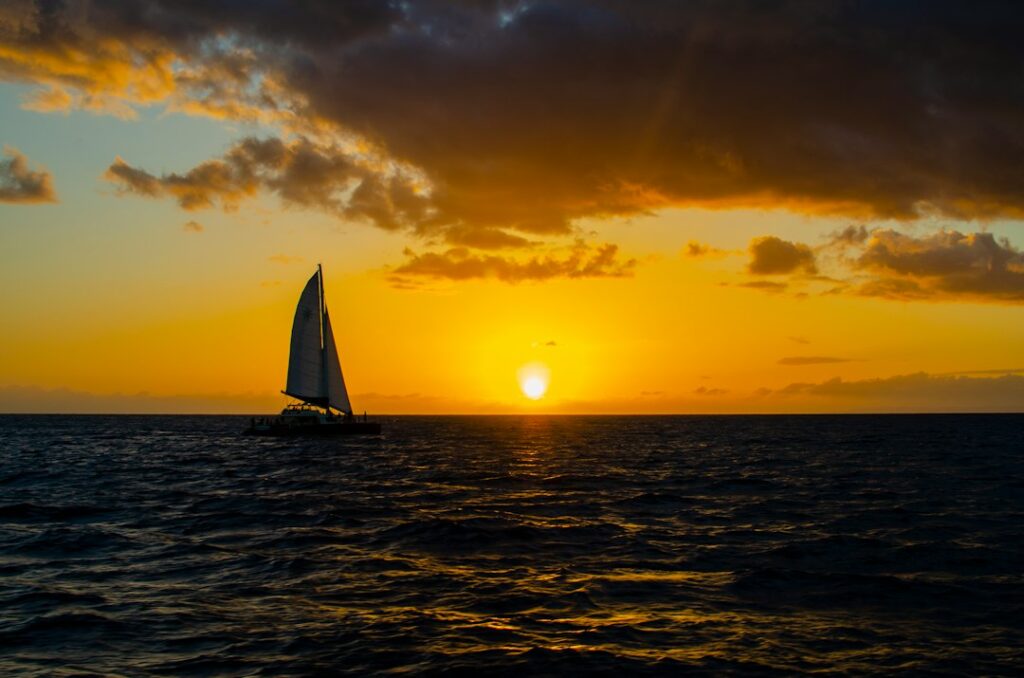
Cocktail sails are the most common format. They usually run 90 minutes to 2 hours on a sailing catamaran carrying 20 to 49 passengers. The price normally includes mai tais, beer, wine and soft drinks, plus light pupus such as chips, fruit or chicken skewers. The boat stays near shore, so the water is usually calmer than on longer trips.
Because these boats are under sail for at least part of the trip, the ride is quieter than on a motor vessel. Most operators allow two to four alcoholic drinks per adult, and some pour without a limit. Guests must be 21 or older with photo ID to drink. Children ride at a reduced fare.
Dinner cruises
Dinner cruises take one of two forms. The first is a large motor vessel, often 150 to 230 feet long, carrying 300 to 1,000 guests, with a buffet or plated meal, a stage show and tiered seating. The second is a smaller catamaran that serves a hot buffet on deck to 40 to 100 passengers.
The large ships ride the swell well, because their size dampens the motion. The catamaran versions feel more like a sail with a meal added. Dinner cruises usually run 2 to 2.5 hours. On Kauai’s Na Pali route they last 3.5 to 4 hours, because of the distance from Port Allen to the cliffs.
Combination and specialty sails
Some evening trips pair sunset with something else. Maui runs sunset whale watches from December through April. Kona sells sunset sails that run straight into a manta ray night snorkel. A few Oahu operators sell fireworks sails on Friday nights, timed to the Hilton Hawaiian Village show when it runs.
Private charters
Private charters suit groups of 6 or more, wedding parties and proposals. A two-hour private catamaran charter typically costs $1,200 to $3,500 before tax and gratuity, depending on the boat’s size and the season. Split among 12 people, that can come close to the per-person price of a shared dinner cruise.
| Format | Typical length | Passengers | Typical adult price | Food and drink |
|---|---|---|---|---|
| Cocktail catamaran sail | 1.5–2 hours | 20–49 | $65–$150 | Open or limited bar, light pupus |
| Catamaran dinner sail | 2–2.5 hours | 40–100 | $140–$220 | Hot buffet, 2–3 drinks |
| Large-ship dinner cruise | 2–2.5 hours | 300–1,000 | $110–$260 | Buffet to multi-course, show |
| Na Pali sunset dinner sail | 3.5–4 hours | 30–60 | $180–$290 | Buffet, open bar on return |
| Sunset whale watch (Maui) | 1.5–2 hours | 40–149 | $80–$140 | Drinks sold or included |
| Private charter | 2 hours | 6–49 | $1,200–$3,500 total | Custom catering |
Oahu: Waikiki catamarans and Honolulu dinner cruises
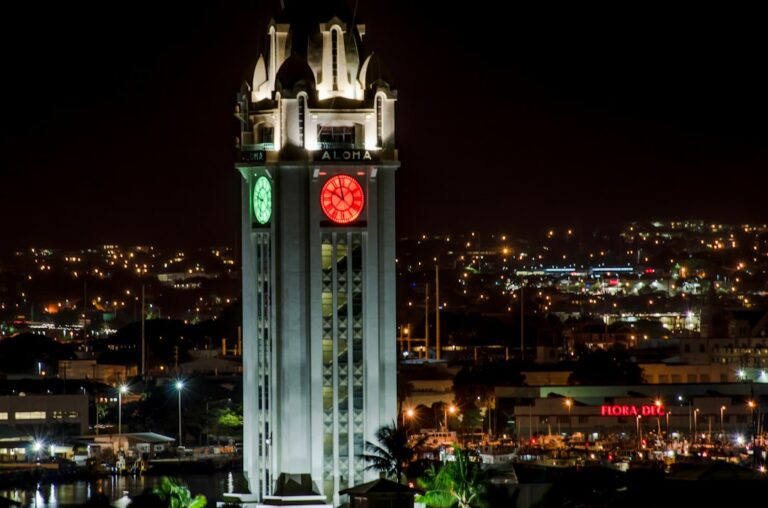
Oahu has more sunset departures than any other island, and the most price competition. Most of them start in two places: on the sand along Waikiki Beach, or at the commercial piers near Aloha Tower in downtown Honolulu. A smaller group leaves from the Ko Olina resort marina on the leeward coast.
Waikiki beach catamarans
Several catamarans run their boats right up onto Waikiki Beach between Duke Kahanamoku Beach and the Royal Hawaiian. Passengers walk through ankle- to knee-deep water and climb a short ladder. On most evenings there are at least four or five beach departures, and advertised cocktail fares run from about $65 to $110.
These sails usually last 90 minutes. The boats run east toward Diamond Head, then turn back as the sun drops west over the Waianae range and the open ocean. For visitors staying in Waikiki, the beach departure means no car and no parking fee. That is a real saving, as hotel valet parking there often costs $45 to $65 a night.
In summer, south swells can make boarding wet and a little awkward. Sandals, a dry bag and quick-dry shorts are the practical choice. Households planning a full Oahu itinerary can fit the sail around the other top Oahu activities, from Pearl Harbor to the North Shore.
Honolulu harbor dinner ships
The large dinner ships leave from the Aloha Tower Marketplace piers, about 3 miles and 15 to 25 minutes by car from central Waikiki in evening traffic. Fares are tiered. A basic buffet with one drink starts around $110 to $130, while top-deck seating with a multi-course menu and premium drinks can reach $230 to $260.
Many packages include round-trip bus transfers from Waikiki hotels for $15 to $25 per person, which avoids paying for harbor parking. Travelers without a car can also reach the piers on TheBus routes between Waikiki and downtown Honolulu for $3 each way. On the way back after 9 pm, though, buses run less often.
Ko Olina and the leeward coast
Ko Olina, about 25 miles west of Waikiki, has sunset sails from its private marina. The leeward coast is drier and usually sunnier than Honolulu, and the sun sets straight over open water. Spinner dolphins are often seen there in the late afternoon. Fares are similar to Waikiki’s, at about $80 to $140 for cocktail and dinner sails.
Families staying at Ko Olina resorts tend to prefer these sails to the drive into town. The resort’s lagoons also appear in reviews of calm-water bases for Oahu trips with kids. From Waikiki, the drive west on H-1 takes 45 to 75 minutes at rush hour, which makes Ko Olina impractical for most Waikiki guests.
Maui: Ka’anapali, Ma’alaea and winter whales
Maui’s sunset cruise market changed after the August 2023 Lahaina wildfire. Lahaina Harbor, once the island’s busiest departure point, was badly damaged. Most west-side operators moved to beach landings at Ka’anapali, while south-side trips continued from Ma’alaea Harbor. Lahaina Harbor’s reopening has been gradual, so travelers should check each operator’s current departure point.
Local outlets such as Civil Beat and Hawaii News Now have covered the harbor’s recovery schedule. Check them for the latest status before choosing a departure point.
Ka’anapali beach departures
Ka’anapali catamarans load straight from the sand in front of the beach resorts, much as Waikiki’s do. Cocktail sails run about $95 to $150, and dinner sails $150 to $220. Most trips last about 2 hours. The boats sail along the coast while the sun sets behind Lanai and Molokai.
The water here is sheltered by the islands of Lanai, Molokai and Kahoolawe, which together block much of the open-ocean swell. That makes it some of the calmest sunset water in the state. The trade winds can still funnel through the Pailolo Channel to the north at 15 to 25 mph in the late afternoon, though.
Ma’alaea Harbor departures
Ma’alaea, on the isthmus between West Maui and Haleakala, is about 20 minutes by car from Kihei and Wailea. Ka’anapali is roughly 25 miles and 40 to 50 minutes from Ma’alaea. Sunset cocktail and dinner trips from Ma’alaea usually cost $90 to $170, with free or low-cost harbor parking.
The catch is wind. The isthmus funnels trade winds into Ma’alaea Bay, and afternoon gusts of 20 to 30 mph are common, especially from May through September. Boats usually head for the calmer water off the Wailea and Makena coast, but the first 15 to 20 minutes after leaving the harbor can be choppy.
Whale season sunset sails
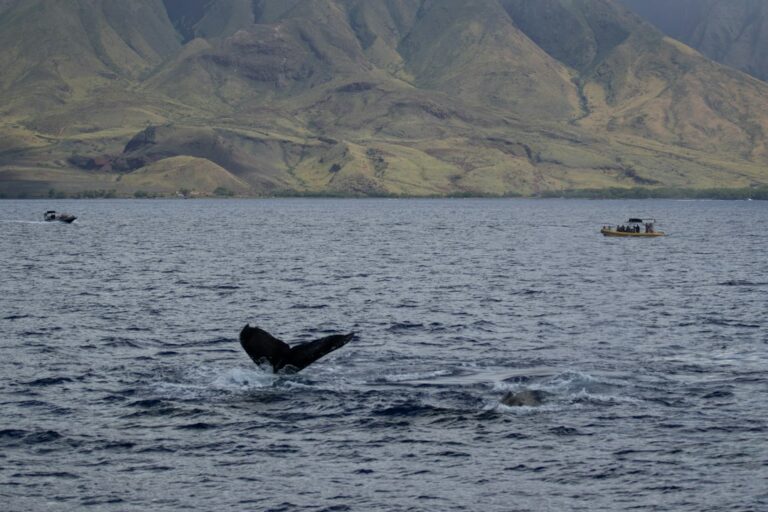
Humpback whales winter in Maui’s warm, shallow channels from roughly December through April. Sightings peak in January, February and March. Sunset whale watches from Ma’alaea and Ka’anapali typically cost $80 to $140. Federal rules require vessels to stay at least 100 yards from humpbacks, so close views happen when whales approach the boat.
The whale season also means peak demand for Maui hotels and cars. A detailed month-by-month look at Maui’s weather, whales and value shows how these trade off. Travelers deciding between islands for a first trip can weigh whales against Na Pali in a Maui vs Kauai comparison for first-time visitors.
Kauai: Na Pali coast sunset dinner sails
Kauai’s sunset cruises are the longest and most expensive in the state, and for many visitors the most memorable. Almost all Na Pali tours leave from Port Allen on the southwest coast. Boats run west past Kekaha and Polihale and then north along the Na Pali cliffs, which rise up to 4,000 feet from the sea.
What the Na Pali sunset trip involves
A typical Na Pali sunset dinner sail lasts 3.5 to 4 hours and costs $180 to $290 per adult. Departures are usually 2.5 to 3 hours before sunset, so the boat reaches the cliffs in the evening light and turns back as the sun goes down. Dinner is usually a buffet, and drinks are often served only on the return.
Spinner dolphins, green sea turtles and, in winter, humpback whales are common sightings. The route is exposed open ocean, unlike sheltered west Maui. Passengers prone to seasickness should treat this as the most demanding sunset trip in the state.
Shorter Kauai sunset sails
Travelers who want a shorter, cheaper trip can choose 2-hour sunset sails from Port Allen that stay along the south shore. These cost about $110 to $170. A few operators also run Poipu-area sails in summer. Neither option reaches the Na Pali cliffs.
Seasonality and cancellations
From roughly October through April, north and northwest swells regularly reach Na Pali. On those days boats often turn back short of the full coastline or cancel. From May through September the sea is usually much calmer. Most operators offer a full refund or a rebooking when the captain cancels for sea conditions.
Families weighing this trip against calmer options can compare it with the calm-water swims and easy outings recommended for Kauai with kids. Many operators set a minimum age of 4 to 6 for Na Pali sailing catamarans.
Hawaii Island: Kona sunset sails and manta nights
The Kona coast is on the leeward side of Hawaii Island, sheltered from the trade winds by Mauna Loa and Hualalai. That gives it some of the most reliable calm evening water in Hawaii. Sunset trips leave from Kailua Pier, from Honokohau Harbor about 3 miles north of town, and from Keauhou Bay about 6 miles south.
Kona sunset cocktail and dinner sails
Kona cocktail sails usually last 1.5 to 2 hours and cost $90 to $150. Dinner sails run $130 to $190. The boats cruise past the old Kailua-Kona waterfront and lava rock coastline with Hualalai’s slopes behind. Haze from Kilauea’s vog sometimes softens the sunset into deep orange and red.
Vog is volcanic smog: sulfur dioxide and fine particles from the eruption. It can irritate people with asthma. The Hawaii State Department of Health and the state’s air quality monitoring program post current readings that sensitive passengers can check on the day of the sail.
Sunset into manta ray snorkels
Kona’s best-known evening trip is the manta ray night snorkel off Keauhou or near the airport at Garden Eel Cove. Many boats leave about an hour before sunset, stop at dusk and then snorkel over underwater lights that draw plankton and feeding mantas. These trips cost about $130 to $220.
Where visitors stay matters for this trip. The drive from Waikoloa resorts to Keauhou is 35 to 45 miles, compared with 10 minutes from central Kona. Relevant tradeoffs are covered in the guide to choosing a base among Kona, the Kohala Coast and Hilo.
Sunset cruise prices by island
The table below pulls together typical 2025–2026 published adult fares. Child fares usually run 25 to 50 percent below adult rates. Prices are before Hawaii’s general excise tax, harbor or fuel fees, and crew tips. Those extras together can add 20 to 30 percent to the advertised price.
| Island and departure | Cocktail sail | Dinner sail or cruise | Specialty option | Typical length |
|---|---|---|---|---|
| Oahu: Waikiki Beach | $65–$110 | $120–$180 | Friday fireworks sail, $80–$130 | 1.5–2 hours |
| Oahu: Aloha Tower piers | Not typical | $110–$260 | Premium tiers, $200+ | 2–2.5 hours |
| Oahu: Ko Olina | $80–$120 | $130–$180 | Dolphin sails by day | 2 hours |
| Maui: Ka’anapali Beach | $95–$150 | $150–$220 | Sunset whale watch, $90–$140 | 2 hours |
| Maui: Ma’alaea Harbor | $90–$130 | $120–$170 | Sunset whale watch, $80–$120 | 1.5–2 hours |
| Kauai: Port Allen | $110–$170 | $180–$290 (Na Pali) | Private Na Pali charter, $2,500+ | 2–4 hours |
| Hawaii Island: Kona | $90–$150 | $130–$190 | Manta night snorkel, $130–$220 | 1.5–2.5 hours |
Price levels track the wider cost of living. Honolulu’s consumer prices regularly run well above the national average, according to the Bureau of Labor Statistics Honolulu CPI. Fuel, crew wages and slip fees push charter prices up year after year.
Cocktail sails vs dinner sails: which fits
For most households the choice comes down to three things: budget, the age of the group, and whether dinner on land would be better. A dinner cruise on a catamaran is convenient, but a buffet served on a moving deck rarely matches a good restaurant meal.
The cost math
A couple on a Waikiki cocktail sail at $85 each spends about $210 after tax and tip. Add a casual dinner ashore at $80 to $120, and the evening costs about $290 to $330. A mid-tier Honolulu dinner cruise at $150 each comes to roughly $370 after tax, tip and transfers. So the cocktail-plus-restaurant evening is often cheaper.
When a dinner sail makes sense
- On Na Pali trips, which last 4 hours and get back after normal dinner time.
- For groups with small children who will be tired by 8:30 pm.
- For anniversaries or proposals, when a single booked evening is easier.
- When staying far from good restaurants, as in parts of Kauai’s west side.
When a cocktail sail is the better pick
- For travelers prone to seasickness, since shorter trips mean less exposure.
- When restaurants near the harbor are better than the onboard buffet.
- For budget trips, since cocktail sails cost about half as much.
- For better views, as smaller boats often get closer to the coast.
| Factor | Cocktail sail | Catamaran dinner sail | Large-ship dinner cruise |
|---|---|---|---|
| Typical adult price | $65–$150 | $140–$220 | $110–$260 |
| Length | 90–120 minutes | 2–2.5 hours | 2–2.5 hours |
| Drinks included | 2–4 or open bar | 2–3 typical | 1–3 by tier |
| Motion felt | Moderate | Moderate | Low |
| Typical group size | 20–49 | 40–100 | 300–1,000 |
| Best for | Couples, budget trips | Families, celebrations | Seniors, large groups |
Swell, wind and seasickness
Hawaii’s sea conditions follow a fairly predictable seasonal pattern. Winter brings large north and northwest swells. Summer brings smaller south swells. Trade winds blow from the northeast most of the year, usually at 10 to 20 mph, and tend to strengthen in the afternoon, just as sunset cruises are leaving.
How winter and summer swells differ
From about October through April, north Pacific storms send swells that can reach 15 to 30 feet on exposed north shores. Oahu’s Pipeline is the best-known example, as the guide to photographing Ehukai Pipeline in winter swell shows. South-facing sunset departures such as Waikiki and Kihei are mostly sheltered from these swells.
From May through September, Southern Hemisphere storms send south swells of 2 to 6 feet, sometimes more, to south-facing shores. That can make Waikiki boarding wetter and the first minutes of a sail bouncier. Even in summer, south swell on these departures rarely reaches the level that would cancel a trip.
Small craft advisories
The National Weather Service in Honolulu issues small craft advisories when sustained winds reach 25 knots or seas reach 10 feet. These are common in the Alenuihaha Channel between Maui and Hawaii Island, and in the Pailolo Channel. An advisory does not automatically cancel a cruise. Captains decide based on their route and their boat.
Preventing seasickness
Seasickness is common on sunset cruises, especially longer ones over open water. Passengers who are sensitive to motion can reduce their risk by planning ahead:
- Take meclizine or dimenhydrinate about 1 hour before boarding, following the label.
- Ask a doctor about a prescription scopolamine patch, applied at least 4 hours beforehand.
- Eat a light meal 2–3 hours before; avoid sailing on an empty stomach.
- Limit alcohol, which makes motion sickness worse for many people.
- Sit at the back or middle of the boat, low down, and watch the horizon.
- Avoid reading or scrolling on a phone while underway.
Catamarans have two hulls, so they roll less than single-hull boats, though they can pitch in a head sea. The large dinner ships are the most stable option. Na Pali and Ma’alaea departures are the most likely to cause seasickness, while Ka’anapali and Kona are usually the calmest.
Best months for calm seas and sunset times
Each island has a different calm season. Sunset times also matter, because Hawaii does not use daylight saving time. The sun sets as early as about 5:45 pm in late November and as late as about 7:20 pm in late June. That shifts dinner sail times by nearly 90 minutes over the year.
| Island | Calmest months | Roughest months | June sunset (approx.) | December sunset (approx.) |
|---|---|---|---|---|
| Oahu (Waikiki) | October–April | June–August (south swell) | 7:15 pm | 5:50 pm |
| Maui (Ka’anapali) | April–October | December–February | 7:10 pm | 5:45 pm |
| Maui (Ma’alaea) | October–March | May–September (wind) | 7:10 pm | 5:45 pm |
| Kauai (Na Pali) | May–September | November–March | 7:20 pm | 5:55 pm |
| Hawaii Island (Kona) | Year-round; best April–October | Winter storm days | 7:05 pm | 5:50 pm |
The table offers general patterns, not a guarantee. Any month can bring a calm week or a rough one. Travelers trying to match a cruise to the rest of their plans can cross-check it with island-by-island guidance on the best time to visit each Hawaiian island. Water temperatures range from about 75°F in February to 81°F in September.
Shoulder months tend to give the best overall value. April, May, September and October bring lower demand, more availability, and usually decent seas on most routes. December holidays and the July 4 week are the hardest times to book, and some boats sell out 2 to 3 weeks ahead.
Getting to the harbor: rental car, parking and timing
Except for Waikiki and Ka’anapali beach departures, most sunset cruises require a car. Port Allen, Ma’alaea, Honokohau and Keauhou are not well served by public transport. Check-in is typically 30 to 45 minutes before departure. A late arrival generally means a forfeited ticket.
| Departure point | From | Distance | Typical drive | Parking |
|---|---|---|---|---|
| Aloha Tower, Honolulu | Central Waikiki | 3 miles | 15–25 minutes | Paid lots, about $5–$20 |
| Ma’alaea Harbor, Maui | Wailea | 13 miles | 20–25 minutes | Free to low-cost lots |
| Ma’alaea Harbor, Maui | Ka’anapali | 25 miles | 40–50 minutes | Free to low-cost lots |
| Port Allen, Kauai | Poipu | 14 miles | 25–30 minutes | Free harbor lot |
| Port Allen, Kauai | Kapaa | 30 miles | 50–70 minutes | Free harbor lot |
| Honokohau Harbor, Kona | Waikoloa | 22 miles | 25–30 minutes | Free harbor lot |
Traffic is the biggest risk. Kauai’s Kuhio Highway through Kapaa and Wailua backs up between 3 pm and 6 pm, just when sunset boats are boarding. Maui’s Honoapiilani Highway between Ma’alaea and Lahaina has frequent roadwork. The Hawaii Department of Transportation posts lane closures that are worth checking that afternoon.
Rates vary widely by island and season. Comparisons of Hawaii rental car prices by island, season and airport show how a one-day rental can be cheaper than several ride-share trips. On Kauai a ride-share to Port Allen at sunset can be hard to find, and the trip back after 9 pm even harder.
Many drinks are included on sunset sails, so households should plan for a sober driver or a taxi home. Hawaii’s legal limit is 0.08 blood alcohol, as in all other states. Police in Honolulu and Maui County run regular evening checkpoints, especially on weekends and holidays.
Hidden costs, booking windows and cancellation terms
The advertised price is rarely the final price. The extra costs follow a predictable pattern, and a household that budgets for them up front avoids surprises at checkout.
Taxes and fees
Hawaii charges a general excise tax on almost all sales, including boat tours. With county surcharges it comes to about 4.5 to 4.7 percent, depending on the county. Rates are published by the Hawaii Department of Taxation. Many operators also add harbor, fuel or booking fees of $5 to $15 per person.
Gratuity
Crew tips are customary and usually not included. The norm is 15 to 20 percent of the fare, paid in cash to the crew at the end or added at checkout. On a $180 Na Pali dinner sail, that comes to $27 to $36 per adult.
When to book
- Standard cocktail sails: 3–7 days ahead outside holidays.
- Dinner and Na Pali sails: 2–4 weeks ahead in peak season.
- Whale season Maui sails: 2–3 weeks ahead for January–March weekends.
- Christmas, New Year and July 4 weeks: book 4–6 weeks ahead.
Cancellation policies
Most operators allow free cancellation 24 to 72 hours before departure. When the captain cancels for weather or sea conditions, passengers usually get a full refund or a free rebooking. Booking early in a trip leaves room to reschedule if the first attempt is cancelled. That is especially useful on Kauai in winter.
Sunset cruises for new residents and kama’aina rates
For people relocating to Hawaii, sunset cruises become something to buy occasionally, often when hosting visiting family or celebrating a birthday. Many operators offer kama’aina, or resident, discounts of 10 to 25 percent to anyone with a Hawaii driver’s license or state ID.
Those discounts add up for households hosting a steady stream of mainland guests. Four adults on a $120 Ka’anapali sail save $48 to $120 with a resident rate. Not every operator advertises the discount online, so new residents often need to call or email to ask for it.
Residents also tend to book differently. They often choose shoulder-season weeknights, which are cheaper and less crowded. Their entertaining budget has to compete with high everyday costs: housing, covered in the guide to Hawaii home prices by island, and groceries, compared in Hawaii grocery prices by island.
The Census Bureau’s Hawaii QuickFacts shows the state’s median household income is well above the national figure, but so are its housing costs. A $300 night out on the water is easy to justify for a visitor and harder to repeat often as a resident.
Planning a sunset cruise into a multi-island trip
Travelers covering two islands usually get the most from one sunset trip per island, in different formats. Common pairings are a Waikiki cocktail sail followed by a Na Pali dinner sail on Kauai, or a Ka’anapali whale-season sail followed by a Kona manta night. The 10-day two-island Hawaii itinerary shows how to space them out.
A good rule is to book the most weather-dependent cruise early in the stay on that island. A Na Pali sail booked for the first or second evening on Kauai can be moved if the swell comes up. One booked for the last night cannot. The Hawaii Tourism Authority’s official visitor site lists licensed operators by island.
Frequently asked questions
How much does a sunset cruise in Hawaii cost?
Shared cocktail sails typically cost $65 to $150 per adult, depending on the island and operator. Dinner cruises run $110 to $260, and Kauai’s Na Pali sunset dinner sails cost $180 to $290. Add about 4.5 percent general excise tax, $5 to $15 in fees, and a 15 to 20 percent crew tip.
Which Hawaiian island has the best sunset cruise?
It depends on what the traveler wants. Kauai’s Na Pali sail has the most dramatic scenery but the roughest water. West Maui’s Ka’anapali sails are calm and offer whales from December through April. Waikiki has the most choice and the lowest prices, while Kona combines calm water with manta ray snorkels.
What is the best month for a calm sunset cruise?
For most routes, April through October brings the calmest overall conditions, particularly on Kauai’s Na Pali coast and west Maui. Waikiki is often calmest from October through April, between south swell seasons. Kona’s leeward coast is reliably calm year-round. September and October also bring warm water near 81°F and fewer crowds.
Is a catamaran or a large dinner ship better for seasickness?
Large dinner ships of 150 feet or more move the least and suit passengers very prone to motion sickness. Catamarans are steadier than single-hull boats but still pitch in choppy water. Short cocktail sails from Ka’anapali or Kona are a good compromise, and taking meclizine an hour before boarding helps.
Do sunset cruises in Hawaii include alcohol?
Most cocktail sails include mai tais, beer, wine and soft drinks, either as an open bar or two to four drinks. Dinner cruises usually include one to three drinks depending on the tier. Guests must be 21 with valid photo ID, and families can usually book reduced child fares on the same sails.
Do I need a rental car for a Hawaii sunset cruise?
Not on Waikiki and Ka’anapali beach departures, which board from the sand within walking distance of many hotels. Ma’alaea, Port Allen, Honokohau and Keauhou are much easier to reach by car, and ride-shares can be scarce after dark. Arrive 30 to 45 minutes early, and plan a sober driver.
Can you see whales on a sunset cruise in Hawaii?
Yes, especially from December through April, with the peak in January through March. Maui’s Ka’anapali and Ma’alaea departures have the highest sighting rates, because humpbacks gather in the sheltered Au’au Channel. Kauai and Kona sunset sails also see whales in winter, but less reliably. Boats must stay at least 100 yards away.
What happens if a sunset cruise is cancelled for weather?
When the captain cancels for wind, swell or a small craft advisory, operators almost always give a full refund or a free rebooking. Na Pali trips are the most likely to cancel, mainly from November through March. Booking early in a stay leaves time to reschedule on a calmer evening if the first trip falls through.