Moving to Oahu raises a question most mainland transplants haven’t asked since college: can a household actually live here without owning a car? With gasoline prices that routinely lead the nation, car insurance premiums averaging $1,800 a year for full coverage, and registration fees layered on top, the cost of vehicle ownership in Honolulu is unusually steep. So the appeal of skipping it altogether is real.
The honest answer depends almost entirely on where on the island a person settles. Honolulu’s urban core — roughly Kakaako through Waikiki and out to the University of Hawaii at Manoa — has the densest transit, the most bikeshare docks, and walkable groceries. Drop a household in Mililani, Hawaii Kai, or rural Waianae and the calculus flips quickly. This article works through the network, the fares, the math, and the neighborhood-by-neighborhood reality.
Per the Census Bureau, around 80 percent of Honolulu County workers commute by car, but the remaining share — over 100,000 daily transit users — relies on one of the most-ridden bus systems per capita in the United States. The infrastructure exists; it just rewards careful neighborhood selection.
TheBus: the backbone of car-free Oahu
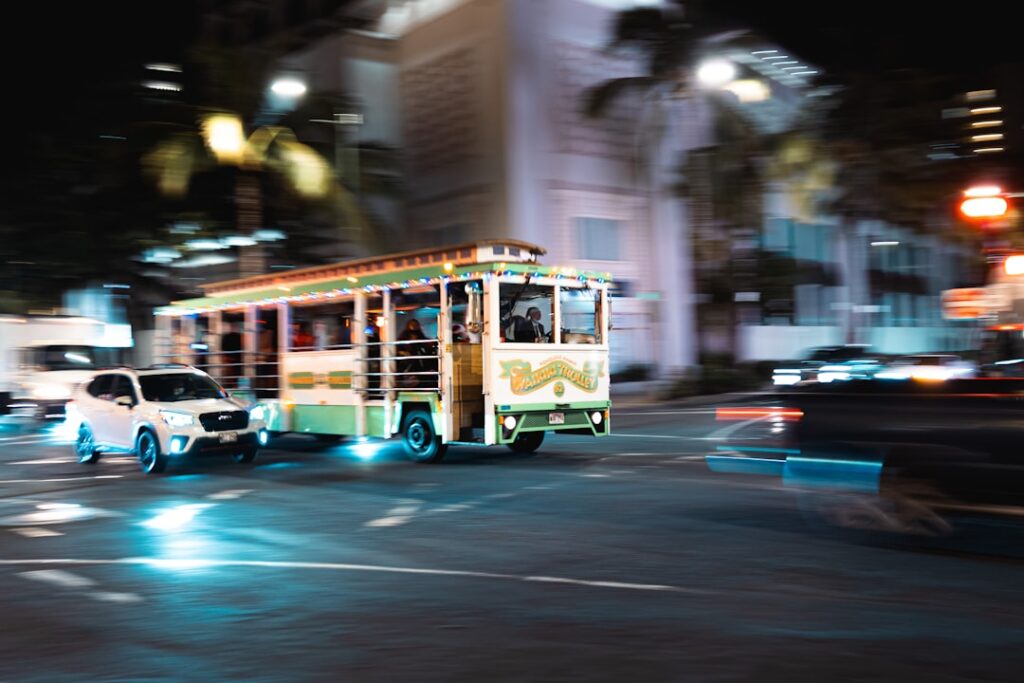
TheBus is operated by Oahu Transit Services under contract with the City and County of Honolulu, and it remains the only countywide transit system in Hawaii. The agency runs roughly 100 routes covering Kapolei, Pearl City, downtown Honolulu, Kailua, the North Shore, and out to Makaha. Annual ridership before the pandemic hovered near 65 million boardings — making it one of the densest bus networks per resident in the country.
Two route categories matter most to a new resident. Country Express and CityExpress routes (the 40, the C, the E, the 401) connect the rail corridor and West Oahu to downtown with limited stops. Local routes — the workhorses such as Route 8, Route 13, Route 20, and Route 42 — handle Waikiki, Kalihi, the airport, and the leeward coast on dense schedules. The Hawaii Department of Transportation coordinates highway service with these local trips.
Frequency varies dramatically by route and time of day. Route 8 (Waikiki–Ala Moana) runs as often as every 8 minutes during morning rush, while Route 55 to the North Shore drops to one bus per hour after 7 p.m. Most urban routes operate from roughly 5 a.m. to 11 p.m., with select late-night service on Routes 2, 3, 13, and 40. Sundays generally run reduced schedules.
Where TheBus shines
The single strongest use case is the Honolulu–Waikiki–Manoa corridor. A resident living near University Avenue, McCully, or Ala Moana can reach a grocery store, a beach, a pharmacy, and a hospital on one or two transfers. The airport is a direct shot on Route 20 or the Skyline-plus-shuttle combination, and downtown jobs are 15–25 minutes from most urban stops. Service to Kailua via Route 67 or 671 over the Pali Highway is also reliable.
Where TheBus disappoints
Long trips eat the day. A bus ride from Mililani to downtown can easily exceed 75 minutes one-way during rush, and connecting from Hawaii Kai to the airport often involves two transfers totaling over two hours. Late-night returns from concerts, dinners, or a friend’s house on the other side of the island frequently force a $40–$70 rideshare. North Shore service exists but is slow enough that surfers commonly bike or rideshare for the last mile.
The HOLO card and TheBus fare structure
HOLO is Oahu’s contactless transit card, replacing the old paper transfer system in 2021. A blank adult card costs $2 from sales outlets including Foodland, Times Supermarket, and Satellite City Halls. The card is reloaded online, at TVMs, or at retail. It works on TheBus, the Skyline rail, and is moving toward acceptance on the Handi-Van paratransit service.
Adult fares are a flat $3.00 per boarding, but HOLO automatically caps daily and monthly spending. Once a rider taps to $7.50 in a single day, the rest of that day is free. Once monthly tap totals reach $80, additional rides through month-end are free. That structure makes the card effectively a “pay as you go” pass without forcing an upfront $80 purchase.
Discounted fare categories carry their own caps. Youth ages 6–17 pay $1.50 per ride with a $3.75 daily and $40 monthly cap. Riders 65 and older, Medicare cardholders, and disabled riders pay $1.25 per tap with a $2.50 daily cap and a $5 monthly cap — effectively unlimited transit for under $60 a year once approval is processed.
| Rider category | Per-tap fare | Daily cap | Monthly cap |
|---|---|---|---|
| Adult (18–64) | $3.00 | $7.50 | $80.00 |
| Youth (6–17) | $1.50 | $3.75 | $40.00 |
| Senior (65+) or disabled | $1.25 | $2.50 | $5.00 |
| Medicare cardholder | $1.25 | $2.50 | $5.00 |
| Child under 6 | Free | Free | Free |
Transfers between TheBus and Skyline are seamless: a tap counts once per “trip” within a 2.5-hour window, so a bus-to-rail-to-bus journey is a single $3.00 charge. Cash fares still exist at $3.00 but issue no transfer, which makes the HOLO card mandatory for any multi-leg commute. New residents should register the card online to enable balance protection if it’s lost.
Skyline: the rail that changes the math
The Honolulu Authority for Rapid Transportation opened Segment 1 of the Skyline elevated rail in June 2023. The first phase runs 10.75 miles from East Kapolei to Halawa near Aloha Stadium, with nine stations along the western half of the island. Trains are driverless, four cars long, fully air-conditioned, and run every 10 minutes during peak hours and every 15 minutes off-peak. Civil Beat has documented ridership ramping toward 4,000 weekday boardings.
Segment 2, expected to open in late 2025, extends service to the Daniel K. Inouye International Airport and Middle Street Transit Center. Segment 3 — which would carry trains all the way to Ala Moana Center in urban Honolulu — is slated for 2031 pending funding. Until Segment 3 opens, the rail’s usefulness for a Waikiki or downtown resident is limited to airport access via a connecting bus.
For households in Kapolei, Ewa Beach, Waipahu, Pearl City, and Aiea, the rail already replaces hour-plus bus slogs along the H-1 freeway. The trip from East Kapolei to Halawa takes about 23 minutes regardless of traffic — a meaningful improvement over driving the same corridor at 7:30 a.m. New Oahu developments along the rail corridor are explicitly marketed on this commute advantage.
| Skyline metric | Detail |
|---|---|
| Segment 1 length | 10.75 miles, 9 stations |
| Endpoints (current) | East Kapolei to Halawa / Aloha Stadium |
| Trip time end-to-end | About 23 minutes |
| Peak frequency | Every 10 minutes |
| Off-peak frequency | Every 15 minutes |
| Service hours | 5:00 a.m.–7:00 p.m. weekdays |
| Adult fare (HOLO) | $3.00, integrated with TheBus transfers |
| Segment 2 opens | Late 2025 — adds airport access |
| Segment 3 target | 2031 — extends to Ala Moana |
One quirk to flag: as of mid-2026 the Skyline does not yet run evenings or weekends in full operating hours, with last trains often departing by 7 p.m. Weekend service has expanded incrementally. Anyone considering car-free life around a stadium-area job should confirm the latest schedule directly with the City and County of Honolulu.
Biki bikeshare and cycling Oahu
Biki is Honolulu’s bikeshare system, operated by the nonprofit Bikeshare Hawaii since 2017. The fleet of about 1,300 single-speed cruisers serves roughly 130 docking stations stretched from Kalihi through Chinatown, downtown, Kakaako, Ala Moana, McCully, the University, and Waikiki down to Diamond Head. Stations sit at most major bus stops, parks, hospitals, and grocery anchors inside that core. Outside the core — Kahala, Kaimuki, Salt Lake, Aiea — there are essentially no docks.
Pricing rewards regular use. A single 30-minute ride costs $4.50 paid at the kiosk. The $25 monthly “Commuter” pass bundles 300 minutes of riding split into 30-minute trips. The $189 annual “Free Spirit” pass includes 60-minute rides with no monthly minute cap, and works out to about 52 cents per day. Helmets are not required by law for adults but are strongly recommended; riders bring their own.
| Biki plan | Price | Ride length | Best for |
|---|---|---|---|
| Single Ride | $4.50 | 30 minutes one-way | Occasional tourist or backup trip |
| Commuter (monthly) | $25.00 | 300 minutes total, 30-minute trips | Daily 1-mile commute |
| Free Spirit (annual) | $189.00 | 60-minute trips, no monthly cap | Year-round daily rider |
| Voyager (annual) | $25.00 | 30-minute trips, EBT/SNAP recipients | Income-qualified residents |
Cycling infrastructure has improved but remains uneven. Honolulu has built protected lanes on King Street, South Street, and Pensacola Street, plus a 4.5-mile bike route along the South King–Beretania couplet. Outside the core, riders mostly share lanes with cars on roads with 35–45 mph speed limits. The trade winds blow steadily from the northeast, meaning eastbound rides into Kailua or Hawaii Kai are often a calorie burn while westbound returns coast.
Private bikes are common — many residents own a beach cruiser or a commuter hybrid in addition to a Biki membership. E-bikes have surged, especially on the North Shore where the distance between Haleiwa and Sunset Beach is impractical on a standard bike.
Neighborhoods where car-free actually works
Geography decides everything. The following pockets of Oahu have the density, the sidewalks, the grocery anchors, and the transit frequency to support a car-free household with minimal compromise.
Kakaako and Ala Moana
The fastest-growing residential corridor in the state is also its most car-optional. High-rises like Ke Kilohana, Ward Village towers, and 400 Keawe sit within four blocks of Foodland Ala Moana, Whole Foods Queen, Down to Earth, and a dozen restaurants. Bus Routes 8, 19, 20, 42, and 56 all converge here. Biki docks appear every two blocks. Many newer condos offer optional parking spots, meaning residents can decline the $200/month parking fee outright.
Waikiki
Waikiki is the densest tourist neighborhood in the United States and remains highly walkable for residents who live there year-round. Foodland Beach Walk and Food Pantry handle groceries, and dozens of pharmacies, urgent cares, and the Waikiki Aquarium fall within a 20-minute walk. Bus Routes 2, 8, 13, 19, 20, and 23 thread the area. The trade-off is rent — studios commonly top $2,200/month — and traffic during major events.
University of Hawaii at Manoa area
Students and faculty have long managed without cars in the Manoa Valley. The Rainbow Shuttle is free between campus dorms and key academic buildings. Off-campus housing in McCully-Moiliili sits within a 12-minute walk of Safeway Beretania and several bus lines. The valley is rainy by Oahu standards — averaging over 150 inches a year at the back of the valley — so a good rain jacket is part of the kit.
Downtown and Chinatown
Government workers, lawyers, and bankers who land jobs at the State Capitol, the Aliiolani Hale, or the federal building often live walking-distance in Chinatown lofts, Nuuanu condos, or Kakaako rentals. The Chinatown markets handle produce, Times and Don Quijote handle dry goods, and Skyline access via a single bus transfer arrives in 2025. Bike commuting along South King Street takes 6–10 minutes between downtown and the medical campuses.
Kailua town center (with caveats)
Inside the central blocks of Kailua — the Whole Foods/Target axis — daily errands can be biked or walked. Buses run on the half-hour to Honolulu. A guide to the best neighborhoods in Kailua notes that outer streets toward Lanikai, Enchanted Lake, and Maunawili stretch beyond practical walking distance. A car-free Kailua household typically owns at least one e-bike to bridge the last two miles.
Neighborhoods where going car-free does not work
Many of Oahu’s most popular suburbs were planned around the H-1 and H-2 freeways with single-family lots, cul-de-sacs, and grocery stores set back from arterial roads. Buses reach them but stops are far apart and frequencies sag.
- Hawaii Kai: 30–45 minutes to downtown by bus, no Biki, hilly
- Mililani: H-2 commute is 70+ minutes by bus, no rail yet
- Waianae and Makaha: Hourly service, long distances to jobs
- North Shore (Haleiwa, Pupukea): Limited evening service, scattered groceries
- Kahala and Aina Haina: Quiet, walkable internally but isolated
- Ewa Beach interior: Rail station 1.5+ miles from many homes
A household considering one of these zip codes should plan around at least one vehicle. The comparison between Oahu and the neighbor islands reinforces a related point: Oahu’s urban core is the only place in Hawaii where car-free is genuinely viable for an entire household.
The math: car-free vs shipping a vehicle
The economic question gets clearer once both columns are written out. Shipping a midsize sedan to Oahu costs roughly $1,800–$2,100 one-way from Long Beach or Oakland, plus a roughly $50 Hawaii safety inspection, $45 state registration, $20–$45 county weight tax, and an annual title fee. The Matson vs. Pasha comparison covers ports, schedules, and prep requirements in detail.
Operating costs hit just as hard. EIA gas price data consistently puts Honolulu among the most expensive metro markets in the country, with regular unleaded around $4.75–$5.00 per gallon as of mid-2026. Full-coverage auto insurance averages roughly $1,800 a year for adults with clean records, with details broken out in the Hawaii car insurance guide.
| Annual cost line | One-car household | Car-free household |
|---|---|---|
| Vehicle shipping (amortized over 5 years) | $380 | $0 |
| Insurance (full coverage) | $1,800 | $0 |
| Gas (10,000 miles at 28 mpg, $4.85/gal) | $1,732 | $0 |
| Registration, safety check, weight tax | $220 | $0 |
| Parking (urban condo monthly) | $2,400 | $0 |
| Maintenance, tires, brakes | $900 | $0 |
| HOLO monthly cap × 12 | $0 | $960 |
| Biki Free Spirit annual | $0 | $189 |
| Rideshare and rental car (3 days/month avg) | $0 | $2,400 |
| Approximate total | $7,432 | $3,549 |
The roughly $3,800 annual delta covers a lot of weekend rentals from Turo or Enterprise at the airport, plus the occasional Uber to Hawaii Kai. The math sharpens further for households who would otherwise pay a downtown garage; assigned parking in Kakaako routinely runs $250–$400 per month even before street-side or beach overflow charges.
The vehicle registration guide for new residents walks through the multi-step compliance process — safety inspection, emissions exemption confirmation, registration transfer, and weight tax — that car-free households simply skip.
Practical strategies for a car-free Oahu household
Living without a car here is less about heroic minimalism and more about layering modes. A typical Honolulu car-free household uses TheBus for commutes, Biki for errands under 2 miles, Uber or Lyft for late-night returns, and a monthly Turo or Hertz rental for north shore trips and Costco runs.
The grocery question
Groceries are the single biggest logistical hurdle. Honolulu lacks the dense corner-store culture of New York or Boston. Foodland and Times will deliver via Instacart for $7–$14 plus tip. Costco Iwilei runs a free shuttle from Hilton Hawaiian Village and Ala Moana on a limited schedule. Many car-free residents bike with panniers to Don Quijote Kaheka or split a monthly Costco run with a neighbor who drives.
Airport runs
Route 20 connects Waikiki and downtown to Honolulu International Airport in about 45 minutes for $3.00. The Skyline-plus-bus combination will be faster once Segment 2 opens. Rideshare to the airport runs $25–$45 from Waikiki, $35–$55 from Kakaako, and $50+ from Hawaii Kai. Hawaiian Airlines flight crews and frequent fliers often park a beater car at the airport long-term lot rather than rideshare daily.
Beach and surf access
The surf culture is the unexpected sticking point. Carrying a longboard on a bus is allowed only on specific racks at limited times. Car-free surfers usually pick a home break near their apartment — Ala Moana Bowls, Queens, Tongg’s — and bike or walk with the board. Trips to Pipeline or Sunset Beach require a rideshare carpool or a rental day.
Pediatric, medical, and family logistics
Families with school-age children find car-free hardest. Public elementary schools follow neighborhood boundaries, but specialty programs, sports practices, and pediatric appointments scatter across the island. Finding a primary care physician on Oahu often involves visits to medical campuses in Liliha or Punchbowl that are bus-accessible but inconvenient for a sick child. Many car-free families end up with one car for the parent driving kids, plus transit for the working parent.
Rideshare, rentals, and the supplemental ecosystem
Car-free does not mean no-car-ever. Most successful Oahu households without a vehicle keep three backup tools on speed dial: rideshare for spontaneous late-night trips, weekend rentals for cross-island errands, and car-sharing apps like Turo for occasional weekend getaways.
Uber and Lyft both operate islandwide with surge pricing peaking around airport arrivals and major Waikiki events. A typical 4-mile ride between Ala Moana and downtown runs $14–$22 on a normal weeknight. Rates climb sharply on Friday and Saturday nights between 10 p.m. and 2 a.m. Honolulu drivers also accept cash tips, unlike many mainland markets.
Weekend rentals from airport-area Enterprise, Hertz, or Avis locations average $55–$95 a day for a compact, with weekly deals dropping to roughly $300. Local Hawaii brands like Discount Hawaii Car Rental sometimes undercut national chains. Turo hosts in Kakaako and near the airport offer pickup at street meet points, often $10–$25 cheaper than airport counters.
A useful rule of thumb: any month with fewer than 8 rental days or 60 rideshare trips remains cheaper than vehicle ownership at Honolulu cost levels. The breakeven shifts if a household has a child carseat, frequent neighbor-island trips, or a job outside the urban core.
Limits, edge cases, and the honest downsides
No transit system is perfect, and Oahu’s has documented friction. Honolulu’s consumer price index from the BLS shows transportation inflation outpacing the national average over the past three years, partly because rideshare and rental prices have surged. A car-free household is exposed to those swings.
- Bus bunching during rush hour, especially on Routes 8 and 13
- Limited evening service west of Aiea and east of Kahala
- Skyline operating hours that still exclude most weekend evenings
- Rain — Manoa averages over 150 inches annually at the head of the valley
- Sidewalk gaps in older parts of Kaimuki, Palolo, and Kalihi
- Occasional safety concerns at certain late-night bus stops downtown
Storm closures of the Pali Highway and Likelike Highway after heavy rain can isolate windward residents from town for hours. The H-3 stays open longer but is not a bus route into Kailua. During a long closure, a car-free Kailua household waits or rents.
Building the decision: who should try car-free Oahu
The strongest candidates are single adults or couples without children moving into Kakaako, Ala Moana, Waikiki, Manoa, downtown, or central Kailua. A salaried job in those same zones turns the calculus from interesting to obvious. Households planning to live in suburban Mililani or Ewa Beach should expect to need at least one vehicle, with the rail trimming commute pain along the western corridor.
The island-wide guide to getting around Hawaii covers the inter-island reality: even Oahu residents who skip car ownership rent on neighbor-island trips, because Maui, Kauai, and the Big Island have minimal transit. A car-free Honolulu life does not necessarily mean a car-free vacation life.
Households also need to think about the general excise tax embedded in every transit fare, rideshare ride, and rental car charge — Hawaii’s 4.5 percent GET shows up everywhere. The tax doesn’t shift the car-vs-transit decision, but it makes total costs slightly higher than the sticker price suggests.
Frequently asked questions
Is one HOLO card good for an entire family?
No. Each rider needs an individual HOLO card because the daily and monthly fare caps track per card. Families can register multiple cards under one online account for easy reload, but a parent tapping for two kids will be charged twice. Youth cards are issued separately at $2 each at Satellite City Halls.
Can a new resident realistically commute from Kapolei to downtown without a car?
Yes, but with caveats. The Skyline rail reaches Halawa, where Route C, 40, or 401 buses continue to downtown in roughly 25–35 additional minutes. Total door-to-door commute typically runs 75–95 minutes one way. Many Kapolei commuters now use rail-plus-bus for the morning trip and rideshare or carpool home after work to save evening time.
How safe is TheBus at night?
Daytime ridership feels routine and family-friendly. Late-night service draws a different crowd downtown, and security incidents do occur near River Street and Smith Street stops. Most regular riders report incident-free years but stay aware after 10 p.m. Real-time tracking through the official DaBus2 app helps avoid long waits at exposed stops. Riding with a friend after midnight is reasonable practice.
Does Skyline accept cash or credit cards?
Skyline turnstiles take HOLO taps only — no cash and no contactless credit cards directly at the gate. Riders without HOLO can buy a single-trip paper ticket from station vending machines for $3.00, which prints a magnetic stripe pass good for that one trip. Tourists frequently struggle with the kiosks during peak boarding times.
Are e-bikes allowed on TheBus and Skyline?
TheBus accepts standard bicycles on front-mounted racks at no extra charge, but full-size e-bikes often exceed the 55-pound limit and may be refused at the driver’s discretion. Foldable e-bikes brought aboard as luggage are generally permitted. Skyline accepts bicycles inside cars during off-peak hours, with two-bike capacity per car. Riders should verify weight limits before relying on the system for an e-bike commute.
Will the rail eventually reach Waikiki?
No. The planned alignment for Segment 3 ends at Ala Moana Center, leaving Waikiki served by buses only. The City has discussed a future Waikiki extension but no construction is currently funded. Routes 8, 19, and 20 will remain the workhorses for Waikiki residents and workers for the foreseeable future, with the Skyline-Ala Moana transfer cutting cross-island commute times.
How does Oahu compare to mainland transit cities for car-free living?
Oahu sits well below New York or San Francisco for transit density but comfortably above Phoenix, Houston, or Atlanta. The urban core is closer to Portland or Minneapolis in walkability. A Census Bureau snapshot at QuickFacts Hawaii shows higher transit commute rates than most Sun Belt metros, and Oahu’s compact geography keeps trips short relative to mainland sprawl.