Oahu is the easiest Hawaiian island to visit with children, and the hardest to do well without a plan. It has the most hotel rooms, the shortest airport transfers and the most rainy-day backups in the state. It also has 112 miles of coastline, and a calm summer beach can turn into a pounding shorebreak by November.
This guide applies the framework from the site’s Kauai family research to Oahu. It ranks the protected swimming spots by how sheltered they stay in each season and lists hikes short enough for small legs. It also prices the paid attractions with their age rules and compares three family bases: Waikiki, Ko Olina and a Kailua rental.
The figures come from county, state and operator sources. Prices change often, so treat every dollar figure as a planning baseline and confirm it with the operator before booking.
Why Oahu works for families, and where it gets tricky
Daniel K. Inouye International Airport (HNL) sits about 9 miles from Waikiki and 17 miles from Ko Olina. After a five- to six-hour flight from the West Coast, that means a 25- to 40-minute transfer. This matters a lot with a toddler who skipped a nap.
The weather is stable. Honolulu’s average high runs from about 80°F in January to 89°F in August. Ocean temperatures hold between roughly 77°F in late winter and 81°F in September, so no month is too cold for children to swim.
The complications are ocean conditions and crowds. Oahu draws more than 5 million visitors a year. Its best-known kid spots, including Hanauma Bay, Diamond Head and the Ko Olina lagoons, now use reservations, quotas or tight parking.
The two-season surf pattern
Oahu’s surf follows a simple rule. From roughly November to March, big North Pacific swells hit the North Shore, where winter wave faces can top 20 feet. From roughly May to September, smaller south swells reach Waikiki and Ala Moana.
The windward (east) side, which includes Kailua and Waimanalo, gets trade wind chop most of the year rather than big swells. The City and County of Honolulu runs the lifeguard service and posts daily ocean warnings. Checking them each morning is the most useful habit a family can build for beach days.
Protected swimming spots, ranked by how sheltered they are
The rankings weigh three factors. The first is physical protection from a reef, rock wall or breakwater. The second is lifeguard coverage, and the third is how much a spot changes between summer and winter. The top-ranked spot is the safest default when the surf looks rough elsewhere.
| Rank | Spot | Protection type | Winter (Nov–Mar) | Summer (May–Sep) | Typical depth for kids |
|---|---|---|---|---|---|
| 1 | Ko Olina lagoons (4) | Man-made rock breakwaters | Very calm | Very calm | 1–4 ft near shore |
| 2 | Magic Island lagoon, Ala Moana | Enclosed rock-ringed lagoon | Very calm | Calm; small surges on big south swells | 1–5 ft |
| 3 | Kuhio Beach pools, Waikiki | Concrete seawall | Very calm | Calm inside the wall | 1–4 ft |
| 4 | Ala Moana Beach Park (main beach) | Offshore reef | Calm | Mostly calm; mild chop | Drops to over 6 ft quickly |
| 5 | Kailua Beach Park | Gradual sandbar, partial reef | Mild chop | Mild chop; windy afternoons | Shallow for 50+ ft out |
| 6 | Waimanalo Bay Beach Park | Outer reef, open bay | Moderate shorebreak | Mild to moderate | Shallow, but waves break on sand |
1. Ko Olina lagoons
The four Ko Olina lagoons on the leeward (west) coast are artificial coves enclosed by rock breakwaters. The openings are narrow, so even winter swells that pound nearby beaches arrive as ripples. For preschoolers, this is the closest Oahu gets to a swimming pool with sand.
The lagoons are public, but parking is tight. Each lagoon has a small public lot that commonly fills by 9 or 10 a.m. on weekends. Hotel guests skip that problem entirely. There are no city lifeguards, so parents should treat the water as unguarded.
2. Magic Island lagoon at Ala Moana
Magic Island is a man-made peninsula at the Diamond Head end of Ala Moana Beach Park. Its far side holds a small lagoon almost fully ringed by rock. The water is glassy most days, with grass and shade trees steps from the sand.
Magic Island is free, has restrooms and showers, and sits about 1.5 miles from central Waikiki. For Waikiki-based families, it is the strongest alternative when Kuhio Beach is packed.
3. Kuhio Beach pools in Waikiki
Two concrete walls extend from Kuhio Beach Park near the Duke Kahanamoku statue, creating sheltered basins. Waves break outside the wall, while the inside stays calm enough for toddlers in puddle jumpers. Lifeguard towers cover the area.
The trade-offs are crowding and murky water after heavy rain. The state posts brown water advisories after storms, and families should skip the pools for a day or two while one is active.
4. Ala Moana Beach Park main beach
An offshore reef knocks down most surf at Ala Moana’s main beach. The catch is depth. The sandy bottom slopes gently for a short stretch, then drops into a dredged channel that is over a child’s head.
That makes it ideal for confident swimmers aged 8 and up and less ideal for toddlers who wander. Several lifeguard towers are staffed, and the park’s more than 100 acres leave room for a quieter picnic.
5. Kailua Beach Park
Kailua is the windward side’s classic family beach, with fine white sand and a long, shallow sandbar. It is not wall-protected, but it faces away from the big seasonal swells. The main factor is wind, since trades of 15 to 25 mph build chop by midafternoon.
Families who arrive before 10 a.m. usually find flat water and open parking. Portuguese man-of-war occasionally wash in on strong onshore winds, and lifeguards post warning signs when they do.
6. Waimanalo Bay Beach Park
Waimanalo has roughly 3 miles of sand, ironwood shade and fewer visitors than Kailua. The outer reef softens the swell, but a small shorebreak often runs right at the waterline.
That shorebreak is fun for kids aged 7 and up on boogie boards and frustrating for toddlers who get knocked over. Waimanalo ranks last because conditions change more from day to day, not because it is a poor beach.
Spots to avoid with small children
- Sandy Beach: one of Oahu’s most dangerous shorebreaks, with frequent neck and spine injuries.
- Makapuu Beach in winter: a powerful shorebreak sits below an easy, kid-friendly trail.
- Waimea Bay and Sunset Beach from November to March: waves can exceed 20 feet.
- South-facing beaches 8 to 10 days after a full moon, when box jellyfish tend to arrive.
What about Hanauma Bay?
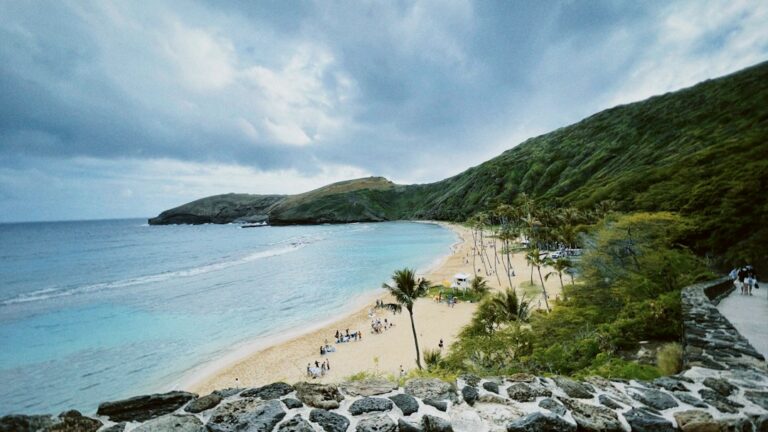
Hanauma Bay is Oahu’s most famous snorkeling spot for kids, and it earns its reputation. The inner reef is shallow and calm most mornings. Non-residents pay $25 per person, children 12 and under enter free, and parking costs $3 per car.
Entry requires an online reservation. Slots are released two days ahead at 7 a.m. Hawaii time and often go within minutes, and the bay is closed Mondays and Tuesdays. To see how other islands compare, the site has a ranking of Kauai snorkel spots by season.
Kid-scale hikes on Oahu
Most families only need a few hikes that are short, end with a payoff and finish before anyone melts down. The three below cover rainforest, coastline and crater. None takes much more than two hours round trip at a child’s pace.
| Trail | Round trip | Elevation gain | Kid pace | Surface | Fees | Best minimum age |
|---|---|---|---|---|---|---|
| Manoa Falls | 1.7 miles | About 800 ft | 1.5–2 hours | Mud, roots, gravel | About $7 parking | 4+ walking, or carrier |
| Makapuu Point Lighthouse | 2.5 miles | About 500 ft | 1.5–2 hours | Paved, no shade | Free | Stroller-capable; 3+ walking |
| Diamond Head summit | 1.6 miles | About 560 ft | 1.5 hours | Paved, then stairs and tunnel | $5 per person plus $10 parking | 5+ walking |
Manoa Falls
Manoa Falls sits at the back of Manoa Valley, about 15 minutes by car from Waikiki. The trail climbs through bamboo, banyan and giant ferns to a waterfall roughly 150 feet tall. To many children it looks like a movie set, and scenes from Jurassic Park were filmed in the valley.
The valley is one of the wettest places on Oahu’s south side, and the trail stays muddy for days after rain. Footwear decides whether the hike is fun or miserable. The site’s guide to Manoa Falls footwear and trail mud covers the options.
Swimming in the pool below the falls is prohibited because of rockfall and leptospirosis, a bacterial infection spread through fresh water. Mosquito repellent is essential.
Makapuu Point Lighthouse Trail
Makapuu is the closest thing on Oahu to a guaranteed win with kids. The trail is a paved service road that strollers can handle, and the views over Waimanalo and the offshore islets stay dramatic all the way up.
From December through April, humpback whales pass close to the point, and hikers often spot spouts from the top. The downside is zero shade. A 10 a.m. start in August can mean 85°F heat on bare asphalt, so starting before 8 a.m. helps.
Diamond Head State Monument
Diamond Head is short but includes about 175 steep stairs and a dark tunnel near the top. Children aged 5 and up generally enjoy it, while younger ones often end up carried. Non-residents must reserve a timed entry slot through state parks, up to 30 days ahead.
Paid attractions: ages, prices and what they suit
Oahu has more paid family attractions than any other island. The prices below are approximate non-resident rates at last check, and Hawaii residents often pay far less. Most operators let children under 3 or 4 in free.
| Attraction | Adult | Child | Free age | Time needed | Best for ages |
|---|---|---|---|---|---|
| Waikiki Aquarium | About $12 | About $5 (4–12) | Under 4 | 1–1.5 hours | 2–10 |
| Honolulu Zoo | About $21 | About $13 (3–12) | Under 3 | 2–3 hours | 2–10 |
| Dole Plantation train | About $16 | About $14 (4–12) | Under 4 | 20-minute ride | 3–10 |
| Dole Plantation garden maze | About $10 | About $8 (4–12) | Under 4 | 30–60 minutes | 5–14 |
| Kualoa Ranch movie sites tour | About $60 | About $40 (3–12) | Varies by tour | 90 minutes | 4+ |
| Bishop Museum | About $35 | About $25 (4–17) | Under 4 | 2–4 hours | 5+ |
| Hanauma Bay | $25 | Free (12 and under) | 12 and under | 3 hours, including film | 4+ snorkeling |
Waikiki Aquarium
The Waikiki Aquarium is small, cheap and within walking distance of most Waikiki hotels. It focuses on Pacific reef life and has an outdoor Hawaiian monk seal habitat. Most families finish in about 90 minutes, which suits toddlers and makes it a good backup when rain cancels a beach morning.
Honolulu Zoo
The Honolulu Zoo covers about 42 acres beside Kapiolani Park. Its African savanna exhibit and children’s petting area are the highlights. Paid parking is limited, so Waikiki guests usually walk. Shade is patchy, so mornings are more comfortable.
Dole Plantation
Dole Plantation sits in central Oahu, about 40 minutes and 25 miles from Waikiki on the way to the North Shore. Entry is free, and the train, maze and garden tour are priced separately. It works best as a 90-minute stop on a North Shore day, and pineapple soft serve is the main draw.
Kualoa Ranch
Kualoa Ranch is a 4,000-acre working ranch on the windward coast, about 45 minutes from Waikiki. It has hosted dozens of film shoots, from Jurassic Park to Jumanji. Tours range from a 90-minute movie sites bus tour to UTV, horseback and zipline options priced from about $100 to over $200.
Age rules vary sharply. Bus tours generally take children from age 3, while horseback rides and ziplines set higher minimum ages, heights and weights. UTV drivers must be licensed adults, so families should check each tour’s rules before choosing a package.
Rainy-day stops for families
Rain on Oahu is usually brief and local. Windward towns like Kailua get roughly 40 to 60 inches a year, while the Honolulu airport averages under 20 inches. A rainy morning in Kailua is often sunny in Waikiki or Ko Olina.
When the rain is island-wide, most often from November to March, Oahu has better indoor options than the neighbor islands. The backup lists differ a lot by island, as the site’s guides to rainy days on Kauai and indoor stops on Maui show.
Indoor options by area
- Bishop Museum: Hawaiian history, a planetarium and hands-on science, about 15 minutes from Waikiki.
- Hawaii Children’s Discovery Center: hands-on galleries for ages 1 to 10, near Kakaako.
- Waikiki Aquarium: the cheapest covered option within walking distance of Waikiki.
- Honolulu Museum of Art: visitors 18 and under enter free.
- Ala Moana Center: a huge open-air mall with covered walkways and food courts.
Chase the dry side
Often the best rainy-day move is a drive. Rain clouds pile up against the Koolau Mountains, so when Kailua is wet, the leeward coast is often dry. A Kailua-based family can reach the Ko Olina lagoons in about 50 minutes. Waikiki families waiting out a shower can try poke shops just off the Waikiki strip.
Where to stay: Waikiki vs Ko Olina vs Kailua
The base you choose shapes almost everything else. It decides whether a rental car is necessary, how far the nearest calm water is and what the trip costs per night. The table compares typical figures for a family of four in a family room or two-bedroom unit.
| Factor | Waikiki | Ko Olina | Kailua rental |
|---|---|---|---|
| Typical nightly rate | $300–$550 | $600–$1,200+ | $350–$700, mostly 90+ day stays |
| Resort or cleaning fee | $35–$55 per night | $40–$60 per night | $200–$400 per stay |
| Overnight parking | $40–$65 per night | $40–$50 per night | Usually free |
| Distance from HNL | 9 miles, 25–40 min | 17 miles, 25–35 min | 16 miles, 30–40 min |
| Nearest calm water | Kuhio Beach pools, on foot | Lagoon, on foot | Kailua Beach, 5-minute drive |
| Rental car needed? | No, or 1–2 days | Yes, for outings | Yes |
| Annual rainfall (approx.) | 20–25 inches | About 20 inches | 40–60 inches |
| Drive to North Shore | About 60 min | About 50 min | About 55 min |
Waikiki: walkable and cheaper
Waikiki suits families who want to skip the rental car for most of the trip. The aquarium, zoo, Kuhio Beach pools and dozens of restaurants are all within walking distance. TheBus costs $3 per adult ride, and young children ride free.
The downsides are density, noise and parking fees that make keeping a car all week expensive. Families with toddlers often prefer the Diamond Head end near Kapiolani Park, where the beach is calmer and the streets are quieter.
Ko Olina: lagoon-front and self-contained
Ko Olina is a planned resort community on the dry leeward coast, built around the four lagoons. Its family resorts have large pool complexes, kids’ clubs and lagoon access on foot, so families can go days without driving.
It costs more, and outings take longer. Waikiki is about 35 minutes away in light traffic and over an hour at rush hour. The site’s Waikiki vs Ko Olina lodging comparison covers the trade-off in more depth.
Kailua: local feel, legal limits
Kailua is the most residential option, a beach town with farmers markets, bike paths and calm morning water. The catch is legal. Under Oahu’s Bill 41, rentals of under 90 days are banned outside resort zones unless the unit holds a grandfathered permit.
Most Kailua listings are therefore legal only for stays of 90 days or more, and a one-week booking risks cancellation. The site’s breakdown of Oahu’s 30- and 90-day rental law explains the rules, and Civil Beat has covered enforcement. For relocation scouting, a 90-day lease gives a realistic test of windward life.
Which base fits which family
- Toddlers and a short trip: Ko Olina, with lagoon access steps from the room.
- School-age kids on a budget: Waikiki, plus a rental car for one or two days.
- Longer stays or relocation scouting: a permitted or 90-day Kailua rental.
- Split stays: three nights in Ko Olina, then four in Waikiki, is a common pattern.
Getting around: rental cars, gear and drive times
Outside Waikiki, Oahu is a driving island. Oahu rental rates are usually the lowest in the state, but they jump around Christmas, spring break and summer. The site’s analysis of Hawaii rental car prices by island and season shows how much booking timing can change the total.
Fuel costs more than on the mainland. Hawaii regularly posts some of the highest gasoline prices in the country, often more than $1 a gallon above the national average, according to U.S. Energy Information Administration data.
Typical drive times from Waikiki
| Destination | Miles | Light traffic | Rush hour |
|---|---|---|---|
| Hanauma Bay | 10 | 20 min | 35 min |
| Kailua Beach Park | 14 | 30 min | 50 min |
| Kualoa Ranch | 24 | 45 min | 70 min |
| Dole Plantation | 25 | 40 min | 65 min |
| Ko Olina | 25 | 35 min | 75 min |
| Haleiwa (North Shore) | 32 | 60 min | 90 min |
H-1 rush hour runs roughly 6 to 8:30 a.m. eastbound and 3:30 to 6 p.m. westbound. The Hawaii Department of Transportation posts lane closures that can add 20 minutes or more.
Car seats and beach gear
Hawaii law requires a child safety seat for children under 4 and a booster or car seat for ages 4 through 9. Rental counters charge about $15 per seat per day, so two seats for a week can add $150 or more. Most U.S. airlines check car seats free.
Waikiki and Ko Olina shops rent umbrellas, boogie boards and snorkel sets for roughly $10 to $25 per day. For stays over five days, buying basics at a big-box store is often cheaper.
- Mineral sunscreen: Hawaii bans the sale of oxybenzone and octinoxate sunscreens.
- Rash guards, which cut sunscreen use and protect shoulders.
- Water shoes for rocky entries and muddy trails.
- A pop-up sun shelter for the shadeless lagoons at midday.
Budgeting an Oahu family trip
Lodging on Oahu is expensive, though food and transport cost less than on Maui or Kauai. Honolulu’s consumer prices run well above the national average, as the Bureau of Labor Statistics Honolulu CPI shows.
Lodging taxes add up fast. The state transient accommodations tax, Oahu’s county surcharge and the general excise tax together come close to 19% of a hotel bill. The Hawaii Department of Taxation publishes current rates.
| Cost item (family of four, 7 nights) | Waikiki base | Ko Olina base |
|---|---|---|
| Lodging plus taxes and fees | $3,000–$4,800 | $5,500–$10,000 |
| Rental car (3 days vs 7 days) | $200–$350 | $450–$800 |
| Parking | $120–$195 | $280–$350 |
| Food (groceries and dining) | $1,400–$2,200 | $1,800–$2,800 |
| Attractions and tours | $300–$700 | $300–$700 |
| Estimated total | $5,020–$8,245 | $8,330–$14,650 |
Groceries offer the clearest saving. A unit with a kitchen and a warehouse-store run can cut food costs by about a third. The site’s comparison of grocery prices on Oahu versus the neighbor islands shows Oahu is the cheapest island for stocking a kitchen.
Best months to bring kids to Oahu
School calendars drive most family trips, but the shoulder windows have real advantages. Late April to early June and September to mid-October bring calmer surf on most coasts, lower hotel rates and shorter lines at Hanauma Bay.
| Period | Avg high | Ocean conditions | Crowds and prices | Family notes |
|---|---|---|---|---|
| Dec–Mar | 80–81°F | Big North Shore surf; south side calm | High, especially late December | Whale season; more rain |
| Apr–May | 82–84°F | Calm transition | Moderate, except spring break | Strong value window |
| Jun–Aug | 86–89°F | South swells; North Shore flat | High | Hottest; reserve early |
| Sep–Nov | 85–88°F | Calm, warmest water | Lowest of the year | Best value; winter swells start in November |
For a ready-made week covering Diamond Head, Kailua and Haleiwa, the site’s 7-day Oahu itinerary adapts to a family pace if you drop one activity per day.
Ocean safety rules every family should know
Drowning is a leading cause of injury death among visitors to Hawaii, and the risk is not limited to big-wave beaches. Many incidents involve adults and teens who overestimate their snorkeling ability. The Hawaii Department of Health publishes prevention guidance.
- Swim only near a staffed lifeguard tower, and ask the guard about conditions.
- Watch the water for 10 minutes before entering to spot sets and currents.
- Keep toddlers within arm’s reach, even in lagoons.
- Never turn your back on the ocean, especially on sloping beaches.
- Give wildlife space: NOAA advises 50 feet from monk seals and 10 feet from turtles.
Brown water advisories, jellyfish warnings and high-surf alerts are posted daily. Local outlets such as Hawaii News Now also report surf warnings.
Frequently asked questions
What is the calmest beach on Oahu for toddlers?
The Ko Olina lagoons and the Magic Island lagoon at Ala Moana Beach Park are the calmest. Both are enclosed by rock, stay calm in winter and summer, and have shallow sandy entries. Magic Island is free with easier parking, while Ko Olina parking for non-guests is limited.
Is Waikiki or Ko Olina better for families with young kids?
Ko Olina suits toddlers best because the lagoons are steps from the rooms and the water is calmer. Waikiki suits families on a tighter budget, with attractions within walking distance and no need for a week-long rental car. Ko Olina rates often run double Waikiki’s.
Can families still rent a vacation home in Kailua?
Only in limited cases. Oahu’s Bill 41 bans rentals under 90 days outside resort zones unless the unit holds a grandfathered permit. Most Kailua listings are legal only for stays of 90 days or more, so families booking a week should confirm the permit number first.
How old should children be for Manoa Falls?
Most children aged 4 and up can walk the 1.7-mile round trip, which takes about 1.5 to 2 hours at a child’s pace. Younger children usually ride in a carrier. The trail is muddy year-round, so closed-toe shoes with good grip matter more than age.
Do kids need a reservation for Hanauma Bay?
Yes. Every visitor needs a time slot booked online, including children 12 and under, who enter free. Slots open two days ahead at 7 a.m. Hawaii time and often sell out within minutes. The bay is closed every Monday and Tuesday.
What should families do on Oahu when it rains?
First, drive to the dry side, since leeward Oahu is often sunny when the windward coast is wet. For island-wide rain, the Bishop Museum, Waikiki Aquarium, Honolulu Museum of Art and Hawaii Children’s Discovery Center are the strongest indoor options for children.
Is a rental car necessary on Oahu with kids?
Not in Waikiki, where the beach, zoo and aquarium are within walking distance and TheBus covers most routes. Families staying in Ko Olina or Kailua need a car. In Waikiki, renting for only two or three days saves on rental fees and on nightly parking of $40 or more.
When is the best time to visit Oahu with kids?
September to mid-October has the smallest crowds, the warmest water at about 81°F and generally calm surf. Late April through early June is the next-best window. December through March brings whale watching, but also bigger North Shore surf, more rain and holiday pricing.