November splits a Kauai trip into two very different products. The first nineteen days deliver some of the lowest room rates and thinnest crowds of the entire calendar year, while the final ten days pull demand — and pricing — into full holiday territory. Households researching a shoulder-season visit before Thanksgiving find the biggest arbitrage on the island in early November.
The month sits at the hinge between summer and winter on Kauai. Trade winds still dominate, sea-surface temperatures hover near 77°F, and daylight runs about 11 hours. But the first significant north-shore swells begin arriving, Hanalei sees a rainfall bump, and the Aloha Festivals close their Kauai season. Understanding that transition is the difference between a soaked trip and a bargain one.
This article covers the pricing structure of the Nov 1–19 dip, the wet-dry divide between Hanalei and Poipu, the timing of the first Tunnels swells, the Aloha Festivals cadence on Kauai, a practical rental-car strategy, and a packing list built for the split weather this month delivers.
The Pre-Thanksgiving Pricing Dip: Nov 1–19 Window
Kauai’s hotel and vacation-rental market runs on a predictable calendar. Once Halloween passes, mainland families with school-age children return to routine, and the island enters a genuine shoulder pocket that runs roughly from November 1 through November 19. This is the last real value window before Thanksgiving week resets the entire pricing chart upward.
Average daily rates at Poipu-area resorts during this stretch typically run 20–35% below the second-half-of-November peak. Vacation-rental platforms show similar patterns for Princeville and Kapa’a inventory. A one-bedroom Poipu condo listed at $340 per night on November 5 often reprices to $475 on November 22 for identical square footage.
The window closes on approximately November 19 because Thanksgiving falls the fourth Thursday of the month, and rental minimums usually start pushing pricing upward five to seven days ahead. Households booking arrival on November 14–15 with departure by November 21 tend to capture the deepest discounts while still leaving room for a full week on the ground.
Direct comparison against the wider annual calendar is worth doing before locking dates. The month-by-month picture of Kauai weather and pricing shows that only late April, mid-May, and early October rival the pre-Thanksgiving window for combined value and crowd conditions.
Sample rate structure by week
| Week | Dates | Poipu 1BR condo (avg/night) | Princeville hotel (avg/night) | LIH midsize rental (per day) |
|---|---|---|---|---|
| Week 1 | Nov 1–7 | $285 | $395 | $62 |
| Week 2 | Nov 8–14 | $310 | $420 | $68 |
| Week 3 | Nov 15–19 | $340 | $465 | $78 |
| Thanksgiving | Nov 20–28 | $495 | $685 | $135 |
The table reflects composite averages across the 2024–2025 booking cycles and should be treated as directional. Individual property rates vary, and Kauai’s inventory is smaller than Maui’s or the Big Island’s, so a single sold-out block can shift comps quickly. Direct-booking a specific property four to six months in advance usually beats the aggregators for this window.
The transient accommodations tax adds 10.25% and general excise tax adds another 4.712% per the Hawaii Department of Taxation, so the sticker rate lands well below the final invoice. A $310 nightly rate carries roughly $46 in tax before any cleaning fee, which itself often runs $175–$285 on Kauai vacation rentals. Household spreadsheets should model the fully loaded total, not the headline.
Hanalei vs Poipu Rainfall: The Wet-Dry Divide
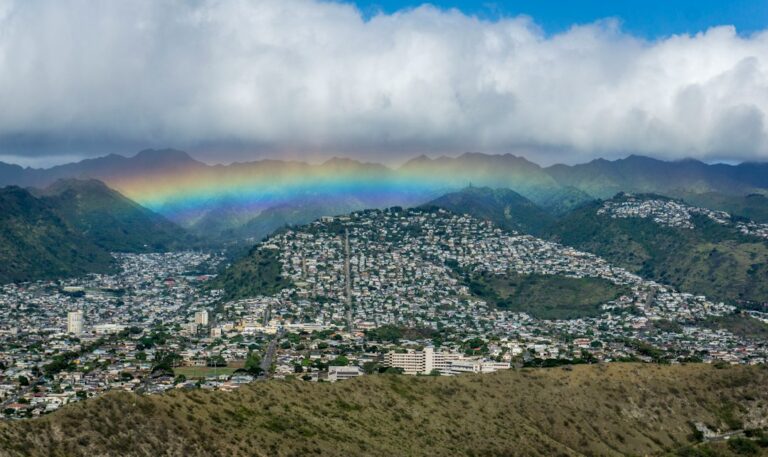
Kauai’s rainfall pattern makes site selection more consequential than on any other Hawaiian island. Mount Waialeale, in the interior, is among the wettest spots on earth. That moisture drapes across the north and east shores while the south and west stay comparatively arid. November amplifies this divide — the first true winter storms of the year usually arrive between mid-November and late December.
Hanalei averages roughly 9–10 inches of rain across the month of November. Princeville, just above Hanalei bay, runs slightly less — closer to 7 inches — because it sits higher and catches wind that pushes the moisture inland. Kapa’a, along the east shore, averages about 5 inches for the same period.
Poipu, on the south shore, averages about 2–3 inches for the entire month. Waimea and the west side, in the rain shadow of the interior mountains, often see under 2 inches. A household headquartered in Poipu can expect a 70–80% sunny-day rate through the Nov 1–19 window in most years.
Rainfall by location — November averages
| Area | Average November rain | Rain days | Micro-climate note |
|---|---|---|---|
| Hanalei / Haena | 9.4 inches | 19 | Windward, sea-level, high humidity |
| Princeville | 6.8 inches | 17 | Elevated bluff, slightly drier |
| Kapa’a / Wailua | 5.2 inches | 15 | East shore, variable trades |
| Lihue | 4.1 inches | 13 | South-east, near airport |
| Poipu | 2.6 inches | 10 | Leeward, sunny most days |
| Waimea | 1.8 inches | 7 | Rain shadow, driest zone |
Rain on Kauai in November tends to arrive in short, intense bursts rather than day-long overcast. A typical wet day in Hanalei might deliver two or three squalls of 20–40 minutes each with sun in between. Guests planning ocean or hiking activities can usually work around these bands, but they should build in flexibility.
The rainfall divide has downstream consequences. Trails on the north shore — Kalalau, Okolehao, Hanakapiai — can close or become treacherous after heavy rain. The Hanalei River sometimes crests high enough to affect road access, and flash-flooding advisories reported by local Kauai coverage are more common. Households booking north-shore lodging should treat weather flexibility as part of the itinerary, not an afterthought.
Site-specific weather also affects lodging comfort. Princeville sits on a bluff around 200–300 feet in elevation, which reduces mosquito pressure and lowers overnight humidity. Sea-level Hanalei, in contrast, holds moisture in mattresses and towels overnight — a fan or dehumidifier often makes a meaningful difference on multi-night stays during a wet week.
When Winter Swell Arrives at Tunnels
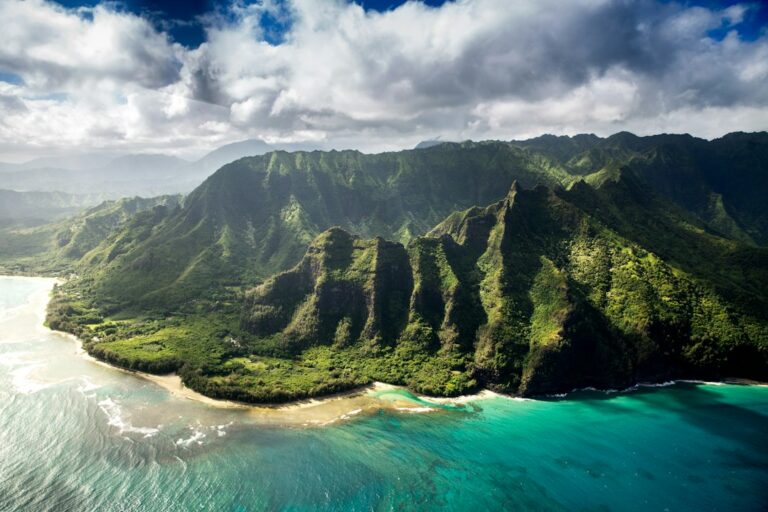
Tunnels — also called Makua Beach — sits at the western end of Kauai’s north shore just before the Napali coast begins. In summer, its outer reef is one of the safest snorkel and dive sites on the island. In winter, the same reef becomes a serious surf break with strong rip currents that make swimming inadvisable. November is when that seasonal switch typically happens.
The first meaningful north-shore swells usually arrive between late October and mid-November. Wave heights climb from summer-flat conditions of 1–2 feet up to 6–10 feet at Hanalei Bay and 8–12 feet outside the reef at Tunnels. By the last week of November, most north-shore beaches have transitioned fully into their winter posture.
For visitors, the practical read is this: early November may still allow calm-water snorkeling on some days at Tunnels, but the odds decline through the month. Any visible swell means the outer reef break is active and inside currents are dangerous. The detailed breakdown of Tunnels reef currents and the winter cutoff covers the specific rip patterns that catch first-time snorkelers off guard.
Swell timing by week
| Week | Typical wave height | Snorkel viability at Tunnels | Best swim alternative |
|---|---|---|---|
| Nov 1–7 | 2–5 ft | Often possible early morning | Poipu Beach Park |
| Nov 8–14 | 4–8 ft | Marginal, ocean-dependent | Salt Pond Beach |
| Nov 15–21 | 6–10 ft | Rarely — surf only | Poipu, Baby Beach |
| Nov 22–30 | 8–14 ft | Closed to swimming | Poipu, Lawai |
The single most important rule for reading north-shore Kauai in November: if there are surfers in the water and no one is snorkeling, the ocean is telling you to stay out. Groups traveling with children should default to south-shore beaches from the second week of November onward — the current risk at Tunnels and Ke’e is not worth the postcard photo. The ranked list of Kauai beaches flags which options remain safe for children through winter.
Photographers chasing swell should note that November on Kauai is early — really big north-shore days more commonly land in December and January. For truly outsized winter surf photography, the Pipeline vantages on Oahu’s North Shore peak later in the season, but Hanalei Bay does deliver strong intermediate swells that are more approachable for handheld shots.
The Aloha Festivals Cadence
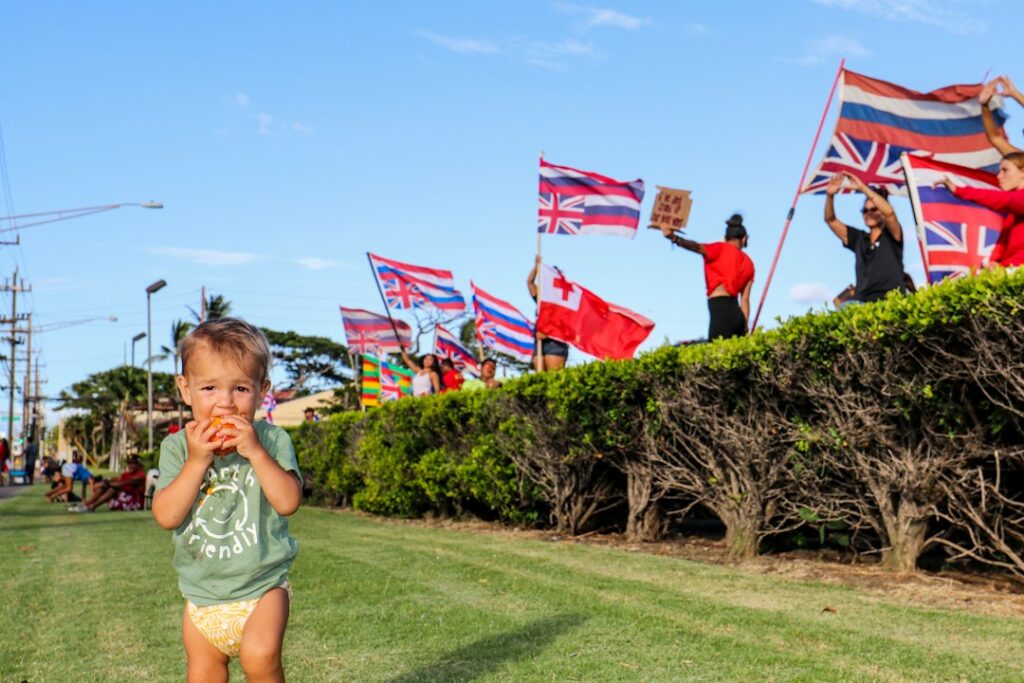
Aloha Festivals is a statewide, month-long cultural celebration that runs across all four major islands each year. Founded in 1946, it is the longest-running Hawaiian cultural festival in the state, and Kauai hosts several signature events. On Kauai, the calendar typically wraps in early November, so early-month visitors often catch the closing programs.
The Aloha Festivals Royal Court, chosen each year to represent Hawaiian ali’i (nobility), makes appearances at multiple events. Programming usually includes hula performances, live music, traditional food vendors, and lei-making demonstrations. Admission is generally free, though some venues charge for parking. Events take place across Lihue, Kapa’a, and occasionally Waimea.
Typical Kauai Aloha Festivals events
- Ho’olaule’a street festival in Kapa’a or Kilauea — early-to-mid October
- Falsetto singing contests and slack-key showcases — mid-October
- Kauai royal court investiture ceremony — varies annually
- Closing programs and lei ceremonies — usually first week of November
- Cultural workshops at partner resorts — throughout the month
Households arriving Nov 1–7 should check the official Aloha Festivals calendar in September for the current year’s schedule. Even if the biggest events have wrapped by the visit dates, ancillary programming — hula performances at resorts, ukulele workshops, Hawaiian language mini-classes — continues throughout early November and offers a low-cost cultural anchor for the trip.
The wider statewide picture of live music and festival programming is covered in the guide to Hawaii’s top music festivals, which places the Aloha Festivals cadence alongside Merrie Monarch, Ukulele Festival Hawaii, and other annual events that shape a trip’s cultural texture.
Rental Car Strategy for November
Kauai has no meaningful public transit for visitors. The Kauai Bus operates limited routes primarily for residents, and it does not serve major beaches or trailheads reliably. Renting a car is functionally mandatory. The pre-Thanksgiving window offers real savings here too — a midsize rental averaging $68 per day in early November often costs $135 during Thanksgiving week.
Lihue Airport (LIH) is the only commercial airport on the island. All national brands operate at LIH, and neighborhood aggregators such as Discount Hawaii Car Rental broker inventory. Booking six to eight weeks ahead usually beats waiting, and rates can be re-priced downward as the trip approaches without penalty on most reservations.
Vehicle selection matters more on Kauai
Two categories of driving push travelers toward specific vehicle choices. Steep single-lane roads with hairpins — Waimea Canyon Drive, the Koke’e climb, and some Napali-side approaches — reward a compact with good sight lines. Access to the north-shore road past Hanalei on Kuhio Highway (State Route 560) has restrictions and often requires an advance reservation for non-residents past the Hanalei bridge.
Convertibles get marketed hard on Kauai, but they are impractical for November’s mixed weather. Passing squalls soak an open cabin quickly, and putting the top up and down repeatedly wears on the mechanism. A midsize SUV or crossover with cargo space for beach gear, snorkel equipment, and rain jackets serves a household of four better than an open-air Mustang.
Insurance and drop-off details
Rental insurance in Hawaii runs $25–$45 per day for full coverage. Many credit cards provide secondary rental coverage that stacks on personal auto policies, but travelers should verify coverage in Hawaii specifically since some cards exclude certain island rentals. State minimum liability rules and typical premium ranges are broken down in the guide to Hawaii car insurance rates.
LIH does not have late-night arrivals or departures on the scale of HNL or OGG, but red-eye timing does exist. The rental counters close between 11 pm and midnight for most brands. Households on a late flight home should confirm after-hours drop-off procedures at booking. The step-by-step approach used at Kahului transfers cleanly — see the red-eye rental return strategy for the exact pre-drop checklist.
Fuel costs on Kauai run well above mainland norms. Statewide Hawaii gasoline routinely tracks $1.20–$1.80 above the national average according to EIA weekly fuel data. A weekly rental returning full often adds $65–$90 in fuel on top of the daily rate. Travelers should factor that into the trip budget alongside the base rental price and daily insurance line.
Packing List: Sun, Squalls, and Reef
Kauai in November tests a packing list because the weather can shift multiple times per day. A morning that starts sunny in Poipu might see a light shower by 11 am, hard sun by 1 pm, and a passing squall at sunset. Layering is more useful than committing to a single-weather kit — the broader Hawaii packing list covers the year-round essentials this section extends.
Clothing essentials
- Two swimsuits — one drying, one wearing, since humidity slows evaporation
- Lightweight rain jacket that packs into a daypack for squall coverage
- Quick-dry hiking pants for Sleeping Giant, Waimea Canyon, or Okolehao
- One warm layer for evening — Koke’e sunrise runs 55°F
- Reef-safe sunscreen with zinc oxide — state law prohibits oxybenzone
- Closed-toe hiking shoes with grip for wet trail conditions
- Water shoes or reef booties for rocky beach entries
Ocean and beach gear
- Personal snorkel and mask — rental gear runs $15–$25 daily
- Rash guard for extended snorkel days to reduce sun exposure
- Dry bag for kayak trips on Hanalei or Wailua rivers
- Wide-brim hat that stays put in the trades — chin strap helpful
- Polarized sunglasses for reef spotting and driving glare
Household and travel items
- Insulated tumbler for water — Kauai tap is potable and cold
- Reusable grocery bags — plastic bags are banned countywide
- Small first-aid kit including anti-itch for centipede or mosquito bites
- Universal power strip if traveling with multiple devices
- Waterproof phone pouch for boat tours or waterfall hikes
Biosecurity rules apply on arrival per the Hawaii Department of Agriculture. Fresh fruits, plants, and soil from the mainland are restricted; travelers should not pack food from home gardens. On departure, the same rules apply in reverse — most locally grown pineapples and papayas can leave the state only after USDA inspection at the airport.
Where to Stay: North Shore vs South Shore
The rainfall divide effectively forces a decision on lodging geography. Households prioritizing beach and pool days lean south to Poipu. Households prioritizing scenery, Napali access, and river adventures lean north to Princeville or Hanalei. Splitting the trip between the two — three nights north, three south — is a common compromise that many first-time visitors regret because Kauai’s roads make transit slower than the map suggests.
The drive from Poipu to Hanalei is roughly 50 miles but takes 1 hour and 40 minutes without traffic. Weekday afternoon congestion around Lihue and Kapa’a can push that to 2 hours 15 minutes. A single north-shore day trip from Poipu costs roughly 4.5–5 hours of driving round-trip, plus the value of any lodging shift.
Neighborhood profiles
- Poipu: Sunniest lodging on Kauai, dense with resorts and condos
- Kalaheo: Upcountry above Poipu, cooler evenings, longer beach drive
- Lihue: Airport-adjacent, urban feel, limited beach appeal
- Kapa’a: East shore, walkable town, moderate rain, central location
- Princeville: Bluff-top resort community, dramatic views, HOA rules
- Hanalei: Sea-level town, wettest lodging, best north access
The full contrast of north-versus-south trade-offs sits in the piece on Poipu versus Princeville lodging. Households considering an upcountry base — cooler nights, coffee farms nearby, still a manageable Poipu commute — should also read the profile of Kalaheo’s upcountry elevation.
For a Nov 1–19 trip, the highest-value combination is usually a Poipu one-bedroom condo with a rental car, using the car for one or two long north-shore day trips rather than moving lodging. This maximizes sunny mornings, minimizes packing disruption, and keeps beach-day logistics simple for households traveling with children.
What Else to Do During the Dip Weeks
The Nov 1–19 window has thinner crowds at almost every major Kauai attraction. Napali coast boat tours, Waimea Canyon lookouts, Wailua River kayak trips, and popular restaurants all become significantly easier to book. Same-day reservations for premium activities that would be impossible in July become routine in early November.
Napali coast access
Boat tours out of Port Allen or Kikiala Harbor operate year-round but scale down in November as swell conditions become less predictable. Morning departures have the best chance of calm seas — afternoon trades often build chop. Zodiac tours from Kikiala reach caves that catamarans cannot enter but are wetter and rougher, so families with small children usually opt for the larger boats.
Culinary and farm experiences
Kauai’s small-farm scene includes coffee acreage in Kalaheo, tropical fruit orchards near Kilauea, and cacao operations near Kealia. Farm tours run 90 minutes to three hours and cost $35–$95 per person. Reservations for November tend to be easier than summer, though holiday-week bookings still fill fast — the Steelgrass bean-to-bar chocolate tour in particular sells out three to four weeks ahead.
Whale watching begins
Humpback whales returning from Alaska begin appearing in Kauai waters in late November. The first sightings each year are usually reported off the south shore near Poipu or off the Napali cliffs. Peak whale season runs January through March, but a lucky November traveler may catch an early breach from a Kikiala tour or a Poipu Bluff walk.
Statewide November context
Kauai’s November calendar sits inside a broader statewide pattern of shoulder pricing and early winter surf. The full picture of what changes across all four counties — including whale timing, Thanksgiving pricing spikes, and value windows on Maui and Oahu — is in the overview of Hawaii in November. Cross-island comparison helps households decide whether Kauai or a neighbor island fits the trip goals.
Frequently asked questions
Is November a good month to visit Kauai?
The first three weeks of November rank among the top three value windows for Kauai in any year, combining thin crowds and lower rates. Weather is generally warm with dry conditions on the south shore and increasing rain on the north. The final ten days of the month shift toward Thanksgiving pricing and heavier rainfall risk statewide.
How much rain does Kauai get in November?
Rainfall varies dramatically by micro-climate. Hanalei averages about 9.4 inches, Princeville about 6.8, Kapa’a 5.2, Lihue 4.1, Poipu 2.6, and Waimea just 1.8 inches. Rain typically comes as short bursts rather than day-long overcast, especially on the south and west shores where sun-day rates in early November often exceed 75% of days.
Is the water warm enough to swim in November?
Sea-surface temperatures around Kauai average approximately 77°F in November, which most visitors find comfortable for swimming, snorkeling, and light diving. The bigger constraint is not temperature but surf conditions on the north shore, where winter swells make many beaches unsafe. South-shore beaches like Poipu, Salt Pond, and Baby Beach usually remain calm and swimmable.
Do you need a rental car for the whole trip?
Yes, in practical terms. Kauai has no rideshare density comparable to Oahu, taxis are expensive for cross-island trips, and the county bus does not serve most beaches or trailheads. A rental car covering the full stay usually costs $65–$85 per day in the Nov 1–19 window and gives visitors the flexibility to chase sun across the island.
Are Napali coast tours reliable in November?
Boat tours run year-round, but November begins the shoulder season where swell can force cancellations. Morning departures out of Port Allen or Kikiala have better odds than afternoon slots. Zodiac tours are wetter but access caves catamarans cannot. Booking with a rescheduling-friendly operator and building a spare day into the itinerary reduces the risk of missing the trip entirely.
Will Aloha Festivals events still be running in early November?
The main Kauai Aloha Festivals programming usually concludes in early November with closing ceremonies and community lei events. Larger street festivals and royal court appearances typically happen in October. Visitors arriving Nov 1–7 sometimes catch late-cycle programming, and resort-based cultural events — hula shows, ukulele lessons — continue throughout the month independent of the festival calendar.
What is the best beach for children in November?
Baby Beach in Poipu is protected by a lava-rock berm that keeps the water calm even during south-shore swells. Poipu Beach Park has lifeguards, easy parking, and shallow sandy entries. Salt Pond Beach near Hanapepe is another safe option with reliable facilities. All three sit on the leeward south shore and rarely see the winter surf that closes north-shore beaches.
Should you split lodging between north and south shores?
For most first-time visitors, no. The 1 hour 40 minute drive between Poipu and Hanalei plus mid-trip repacking often erodes more time than a longer day trip. Basing in Poipu with two long north-shore excursions delivers more sunny beach mornings. Repeat visitors who want the Napali sunset light justify a lodging split more easily than newcomers.