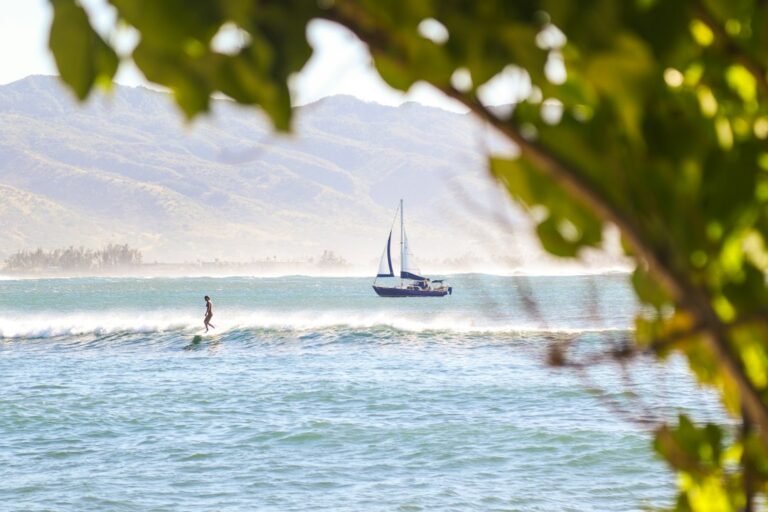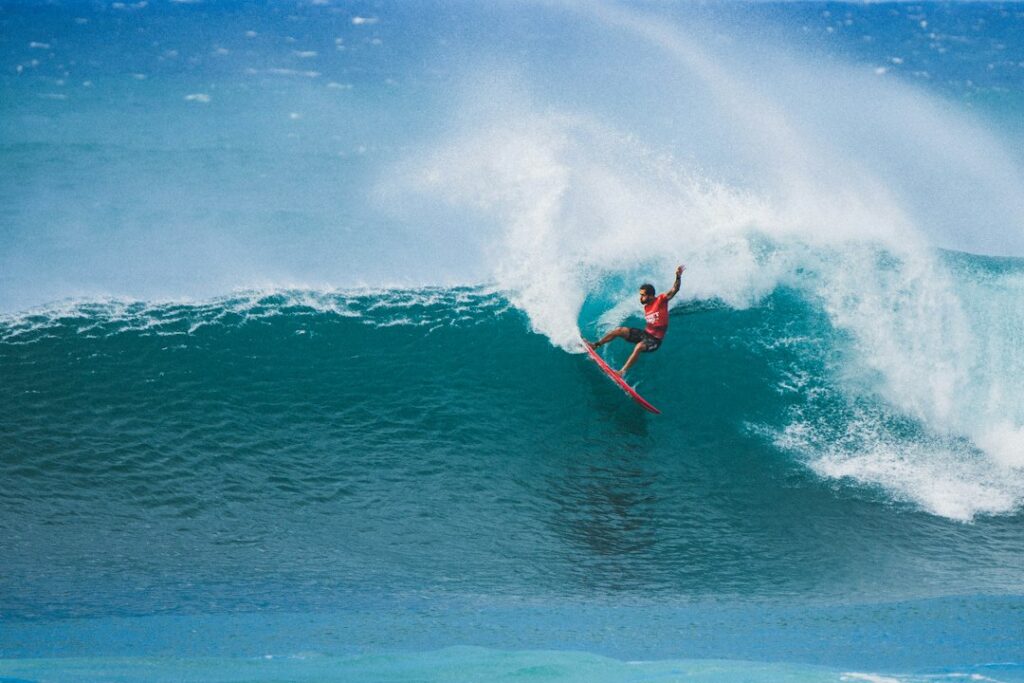
The Makaha Classic and other Waianae Coast winter events pull spectators onto a single-lane-each-way highway that was never built for contest crowds. December through February holding periods coincide with peak North Shore swell activity, meaning traffic pressures stack when big waves arrive from the North Pacific. Households moving to Oahu need to understand these patterns before planning a contest day, whether they live in town or up the leeward coast.
Farrington Highway (State Route 93) is the only vehicular access to Makaha Beach Park, and the two-lane bottleneck between Nanakuli and Makaha shapes every trip. Contest days multiply typical traffic by two or three times, and a stalled vehicle or minor collision can add 45-60 minutes to any leg. Rental-car strategy from Honolulu matters more than most visitors realize.
This research covers Waianae Coast contest windows, Farrington Highway timing math, parking at Makaha Beach Park, the overflow effect from canceled North Shore contests, and swell-forecast sourcing through Surfline and NOAA buoys. It also outlines rental-car pickup timing that avoids the worst congestion, plus safety notes for households new to the leeward side.
The Makaha Classic and Waianae Coast winter contest windows
The Makaha International Surfing Championship, commonly called the Makaha Classic, dates back to 1954 and runs during a holding window that traditionally spans January through February. The event waits for combined swell and clean surface conditions before organizers issue a two-day call. Recent editions have used holding periods of 21-28 days, allowing patience for the right north-northwest pulse of 6-10 feet Hawaiian scale.
Other Waianae Coast contests include Buffalo’s Big Board Classic at Makaha Beach, typically held in late February or early March. That event celebrates traditional surfing disciplines and draws crowds beyond the immediate Waianae community. Together, these events create four to six contest days across the December-February window in most years, though poor swell seasons can compress the calendar.
Timing sits inside the broader Oahu winter cycle. The Hawaii surf season guide covers when North Pacific swells peak and how they shift between coastlines. Waianae contest planners watch the same 5-7 day forecast windows as their North Shore counterparts, so contests often get called on similar weekends when a large swell arrives.
| Event | Location | Holding Window | Typical Swell Trigger |
|---|---|---|---|
| Makaha Classic | Makaha Beach Park | Jan 1 – Feb 28 | NNW 6-10 ft Hawaiian |
| Buffalo’s Big Board Classic | Makaha Beach Park | Feb 15 – Mar 15 | NW 4-8 ft Hawaiian |
| Vans Triple Crown | Sunset / Haleiwa | Nov 12 – Dec 20 | N-NW 8-15 ft Hawaiian |
| Eddie Aikau Invitational | Waimea Bay | Dec 1 – Feb 28 | N 20+ ft Hawaiian |
| Da Hui Backdoor Shootout | Pipeline/Backdoor | Jan 1 – Jan 31 | NW 6-12 ft Hawaiian |
Farrington Highway bottleneck: why west Oahu traffic locks up
Farrington Highway carries every vehicle that travels between Kapolei and Makaha, roughly 15 miles of two-lane pavement with no parallel alternative. There is no bypass route, no rail extension past Kualakai (East Kapolei), and no ferry service. Any incident on the road blocks traffic in both directions until it clears, and shoulder space for pull-offs is narrow along much of the corridor.
The single-lane-each-way section begins near Nanakuli and continues past Waianae town, Makaha, and toward Yokohama Bay. Speed limits drop from 45 mph on the wider Farrington sections to 30-35 mph through Waianae town. Average driving time from the Kapolei H-1 terminus to Makaha Beach Park runs 25-30 minutes with no traffic, 45-70 minutes on a busy weekend morning, and 90+ minutes when a contest is called.
The Waianae Farrington Highway fuel point sequence breakdown covers gas station spacing along the corridor, which matters because there are no fuel stops past the Waianae town cluster. Vehicles running low as they head toward Makaha or Kaena Point should top off before the highway narrows.
Two-lane choke points along the route
Three specific segments cause the most delay on contest days. Each segment lacks passing zones or left-turn refuges through most of its length. A single left-turning car with oncoming traffic can queue 30-50 vehicles behind it before the queue dissipates.
- Nanakuli through Maili — beach parks generate frequent turning traffic and pedestrian crossings
- Waianae town center — signalized intersections at Waianae Valley Road and Lualualei Naval Road
- Makaha commercial strip — direct approach to the beach park with limited turn lanes
- Ma’ili Point curve — visibility limits speed and forces slower merges from side streets
How contest holding periods work and when calls get made
Surf contests operate on holding windows rather than fixed dates because organizers cannot predict swell arrival more than 7-10 days out. Directors monitor forecasts continuously and issue a “green light” call typically 24-48 hours before the first heat. This lead time compresses spectator planning and creates spikes of last-minute traffic.
The Makaha Classic uses a scoring system where organizers weigh forecast confidence against athlete availability. A borderline swell that arrives on a weekday may be skipped in favor of a weekend window with fresher waves. Contest days almost always fall Friday through Sunday, which concentrates traffic on peak days for local residents commuting or running errands.
Call windows typically resolve during evening forecast updates. Surfline and the Pacific Islands National Weather Service issue swell advisories around 5-6 PM Hawaii Standard Time, and contest directors watch those cycles closely. Spectators planning to attend should refresh contest social channels every 6-12 hours during the holding window rather than assuming an event is proceeding as originally announced.
| Day Type | Kapolei to Makaha Drive Time | Peak Volume Hour | Parking Availability at 8 AM |
|---|---|---|---|
| Weekday, no contest | 25-30 min | 7:00-8:00 AM | Ample |
| Weekend, no contest | 35-45 min | 9:00-10:00 AM | Moderate |
| Contest day, small swell | 60-75 min | 7:30-8:30 AM | Limited |
| Contest day, large swell | 90-120 min | 6:30-7:30 AM | Full by 7 AM |
| Contest day + N Shore closure | 120-180 min | 6:00-8:00 AM | Full by 6:30 AM |
Park-and-watch options at Makaha Beach Park
Makaha Beach Park sits directly across Farrington Highway from the contest lineup, giving spectators grandstand-style views. The park offers roughly 60-80 marked parking spaces plus informal roadside pullouts along the highway shoulder. On contest days, parking fills between 6:00-7:30 AM depending on swell size and start time.
The main lot has restrooms, outdoor showers, and shaded pavilions. There is no on-site food vendor for contests unless organizers arrange one, so spectators typically bring their own supplies. A single lifeguard tower operates during daylight hours, and Ocean Safety adds staffing for sanctioned events.
Alternative viewing locations
Several nearby options handle overflow when Makaha Beach Park fills. Honolulu Police Department has ticketed vehicles blocking bike lanes or the Farrington shoulder during peak contest days, with citations running $75-200 per infraction. Spectators arriving late should factor enforcement risk into any decision to abandon a search for legal parking.
- Kea’au Beach Park — 2 miles north, quieter overflow lot with distant contest view
- Papaoneone (Turtle) Beach access — 0.5 miles south, roadside parking for 15-20 cars
- Makaha Valley Country Club area — 1 mile inland, requires walk to shoreline vantage
- Farrington Highway shoulder — informal parking, ticket risk if blocking bike lane
Best vantage points within the park
The southern end of Makaha Beach Park offers the closest view of the takeoff zone, which sits about 200-300 yards offshore on average. The rocky point at the northern end gives a wider panorama and captures the wave shape from a shoulder-angle perspective. Photographers with 400mm+ telephoto lenses use both ends depending on wave direction.
The Ehukai Pipeline vantage photography setup breakdown covers similar principles for the North Shore counterpart, and much of the gear positioning logic transfers directly to Makaha given the comparable point-break geometry and offshore takeoff distance.
North Shore contest overflow: when Pipeline cancels, Makaha fills
The Waianae Coast experiences its heaviest spectator load when a North Shore contest gets canceled, moved, or postponed on the same swell cycle. When Pipeline, Sunset, or Haleiwa runs a red-flag day, wave-hunters who drove out to Kamehameha Highway redirect toward the West Side to salvage the trip. This overflow can double normal contest-day traffic on Farrington Highway.
The overflow effect worsens when the North Shore has strong onshore trade winds but the west-facing Makaha spot remains clean and offshore. Wind patterns can shift the crowd calculus by mid-morning, adding a second traffic wave between 10:00 AM and noon. Living in North Shore Oahu covers the reverse pattern residents there experience during south swell cycles.
Households moving to leeward Oahu should plan grocery runs, appointments, and any Honolulu commute around contest calls. A Friday morning departure from Makaha to a downtown 9:00 AM meeting can require leaving at 5:30 AM on a contest day, versus a 7:00 AM departure on a normal weekday.
Swell forecasting: Surfline, NOAA buoys, and Pacific Islands NWS
Three primary sources drive contest calls and spectator planning. Surfline (paid and free tiers) publishes 5-16 day forecasts with wave height, period, direction, and wind data. NOAA’s National Data Buoy Center provides real-time buoy readings from key upstream stations. The Pacific Islands National Weather Service issues formal high-surf advisories and warnings.
The most-watched Hawaiian buoys for west-facing swells are:
- Station 51001 — Northwestern Hawaii, first upstream reading for NW swells
- Station 51101 — Northwest Hawaii, closer confirmation buoy
- Station 51201 — Waimea Bay, direct North Shore readings
- Station 51205 — Pauwela (Maui), useful for W-NW angle confirmation
Contest-worthy Makaha swells generally read 5-8 feet at 14-18 second periods on station 51001, translating to face-heights of 8-15 feet when they reach the West Side. The lag between the northwestern buoy and Makaha shoreline runs 12-18 hours, giving planners a same-day arrival window once the buoy jumps.
The Hawaii Department of Health issues water quality advisories that can affect beach access after heavy rain. Runoff from Waianae Valley streams can close portions of Makaha Beach Park to swimming even when the surf contest continues, and brown-water postings tend to appear within 12 hours of significant precipitation events during winter months.
Hawaiian scale vs face-height convention
Local surfers measure wave height by back-face rather than face-height, so a 6-foot Hawaiian wave presents as roughly 10-12 feet on the face. Mainland spectators and forecasters often use face-height, creating confusion in casual conversation. Contest broadcasts typically use Hawaiian scale, so knowing the conversion helps interpret announcer commentary during heats.
Rental car strategy from Honolulu airport
The distance from Honolulu International Airport (HNL/PHNL) to Makaha Beach Park is approximately 37 miles via H-1 West and Farrington Highway. Off-peak drive time runs 45-55 minutes; contest-day drive time from HNL can exceed 2 hours if travelers pick up during morning rush hour.
Rental agencies at HNL operate from a consolidated facility connected by shuttle to the terminals. Standard economy rentals during December-February peak season run $75-140 per day plus $30-45 in taxes and fees. Reserving a mid-size or larger vehicle helps with the winding Farrington sections beyond Waianae, where road quality degrades and shoulders narrow.
Timing airport pickup for contest days
Travelers arriving for a specific contest day face a scheduling puzzle. Landing the night before and staying at a Kapolei or Ko Olina hotel cuts contest-morning drive time by 25-30 minutes. Landing on contest morning generally guarantees missing the first several heats unless the flight arrives before 5:00 AM local time.
Fuel and provisioning before Farrington
Gas prices on Oahu averaged $4.85-5.20 per gallon in late 2025 according to EIA weekly gasoline data. West Oahu stations along Farrington Highway typically price 15-25 cents above Honolulu-area stations, and hours narrow past Waianae town. Filling up at Kapolei before heading west saves both money and one potential stop in traffic.
Provisioning follows the same logic. Grocery stores cluster in Kapolei (Foodland, Safeway, Target), then Waianae town (Longs, Sack N Save). Past Waianae, options drop to convenience stores with limited fresh food. Contest spectators planning a full-day stay should stock coolers before leaving the Kapolei area.
| Scenario | HNL Departure Time | Estimated Arrival | Rental Vehicle Notes |
|---|---|---|---|
| Off-day scouting run | 7:00 AM | 7:50-8:15 AM | Economy fine, ~$85/day |
| Weekend contest, small swell | 5:30 AM | 7:15-7:45 AM | Mid-size recommended, ~$110/day |
| Weekend contest, big swell | 4:00 AM | 6:30-7:15 AM | Mid-size, arrive predawn, ~$125/day |
| Overnight Kapolei stay | 6:00 AM from hotel | 6:45-7:15 AM | Any vehicle, saves 30-45 min |
| Overnight Ko Olina stay | 6:15 AM from hotel | 6:55-7:20 AM | Any vehicle, saves 25-40 min |
Daily timing: departure windows that actually work
The single reliable strategy for contest spectators is predawn arrival. Vehicles rolling into Makaha Beach Park before 6:30 AM find parking and unfold beach setups before the wave-hunters arrive from town. First heats commonly launch at 7:30-8:00 AM on contest days, capturing the cleanest morning conditions before trade winds strengthen.
Trade winds along the Waianae Coast typically remain calm until 9:00-10:00 AM, then build to 8-15 mph by early afternoon. Contest heats scheduled for the 8:00-11:00 AM window benefit from glassy conditions; afternoon heats often face onshore texture. Spectators leaving between rounds risk losing their parking spot and re-entering the parking queue.
Weekday contest calls create the sharpest disruption because they overlap with commute traffic. A Wednesday morning green light drops the entire west-side workforce into the same rush as spectators driving out from town. School dismissal times between 2:15-3:00 PM stack another traffic wave on top, so leaving Makaha at 1:30 PM avoids the worst compound congestion.
Departure timing on contest afternoons is equally important. Traffic heading back toward Honolulu peaks between 3:00-5:00 PM as contests wrap and beach crowds thin. Leaving during the final heat around 2:00-2:30 PM avoids the worst congestion, though this strategy trades off catching the crowning moments of the event.
Safety, etiquette, and local norms
Makaha carries a reputation for tight parking, protective locals, and occasional car break-ins at beach lots. Vehicles left with visible bags or electronics have been targeted in past seasons. Honolulu Police statistics show consistent auto burglary counts across west-side beach lots during winter, so leaving valuables at hotels or hidden in trunks matters.
Local surf hierarchy at Makaha respects Buffalo Keaulana’s family and long-time residents who have surfed the point for generations. Spectators are welcome; unsanctioned surf-outs during contest heats bring immediate confrontation from safety boats and Ocean Safety. Watching the water from shore rather than paddling in during an event is the expected posture.
Weather and water conditions
December-February air temperatures in Waianae average 74-80°F daytime highs and 63-68°F overnight lows. Water temperatures on the leeward coast run 74-77°F through the winter contest window. Kona storms occasionally bring 24-48 hours of southwest wind and rain that shuts contest operations entirely, and the leeward side sees roughly 3-6 significant Kona events per winter.
Practical gear for a contest day
Practical gear includes tent shade (Makaha Beach Park has limited canopy), 3-4 quarts of water per person, reef-safe sunscreen (Hawaii banned oxybenzone and octinoxate products in 2021), and closed-toe walking shoes for beach access. Binoculars in the 8×30-10×50 range give clear takeoff-zone views without the weight of a spotting scope. Chairs and coolers get carried in from the parking lot.
The Kaena Point end of Farrington Highway
Farrington Highway ends about 6 miles past Makaha at the trailhead for Kaena Point. Some contest spectators combine a morning heat with an afternoon hike; the 5-mile round trip trail hugs the coastline past the terminus and provides an alternative use of the west-side day. Note that Kaena Point Road becomes impassable for standard rentals past the pavement end.
What households living along the Waianae Coast experience
For residents of Waianae, Makaha, or Nanakuli, contest days function as a de facto commute cancellation. Those employed in Honolulu or Kapolei generally telecommute if possible, or leave home by 5:00-5:30 AM to reach the H-1 corridor before contest traffic solidifies. Return trips face similar bottlenecks stretching from 3:00 through 6:00 PM.
School buses, medical transport, and delivery services adjust routes during major swell events. Household services (propane, grocery delivery, appliance repair) sometimes reschedule for the following day when a contest is called. Residents who moved recently from the mainland cite the traffic pattern as one of the biggest quality-of-life factors on the leeward side.
Employer flexibility varies. Government, healthcare, and construction jobs in Honolulu typically require in-person attendance, meaning contest days require earlier alarms. Remote-eligible roles in tech, professional services, and back-office administration face fewer constraints. New residents evaluating Waianae or Makaha addresses should assess their specific commute pattern against the 20-40 contest-affected days that fall across the winter window.
Considering the leeward coast means weighing daily traffic against relative housing costs. The Census Bureau’s Hawaii QuickFacts shows median household income for zip codes 96792 (Waianae) at levels below the Honolulu average. Rent and grocery costs still track the Honolulu CPI series from BLS, which has run 4-6% above the U.S. average through 2024-2025.
The Oahu short-term rental crackdown enforcement patterns also affect the leeward coast. Contest weekends historically drove vacation rental demand, but the 30/90-day minimum stay rules have shifted the market toward long-term rentals and hotel stays. Kapolei and Ko Olina absorb most of the visitor demand now.
Broader Oahu contest day comparison
Comparing Makaha traffic to other Oahu contest patterns helps set expectations. The Ironman World Championship Alii detour piece shows how Kailua-Kona handles a similar single-corridor bottleneck during its signature event, and many logistics parallels apply. North Shore contests during Vans Triple Crown weekends generate their own Kamehameha Highway snarls with different backup routes available.
Neighbor island events add another comparison point. Kauai’s north shore closures during winter cutoffs show how peak-swell timing affects visitor access broadly across Hawaii. The Queens Bath Princeville winter closure and Tunnels Reef Kauai currents articles cover parallel patterns on Kauai’s exposed north-facing coast.
Traffic pressure at Makaha remains distinctive because it depends on the confluence of two-lane road, single access route, and the North Shore overflow effect. Big Island Ironman traffic disperses across a wider road network; North Shore contest traffic has Kamehameha Highway and Farrington-Kaukonahua backup routes. The Waianae Coast has only Farrington.
Practical checklist for contest-day trips
- Monitor Surfline and NOAA buoys 5-7 days before intended visit
- Refresh contest social channels every 6-12 hours during holding period
- Book accommodations in Kapolei or Ko Olina for contest-morning proximity
- Depart hotel by 5:30-6:00 AM on contest days
- Fill fuel tank in Kapolei before Farrington Highway
- Pack water, snacks, sunscreen, and shade before Waianae town
- Leave no valuables visible in the rental vehicle
- Plan departure between contest rounds, not at the final horn
- Check Hawaii DOT traffic advisories for any Farrington closures
- Keep a backup plan for a beach day at Yokohama or Kea’au if parking fills
Longer-term considerations for newcomers
Households evaluating a move to Oahu often cite winter surf culture as a draw. The Waianae Coast provides a very different experience from the North Shore in terms of housing stock, community fabric, and commute reality. Contest windows amplify existing pressures rather than creating new ones.
Language and community context on the leeward coast lean strongly toward local Pidgin, plantation-era family networks, and the surf lineages of Buffalo Keaulana, Rell Sunn, and Brian Keaulana. The Hawaiian Pidgin in pop culture article covers linguistic context that helps newcomers navigate community interactions during contest events.
Frequently asked questions
Do the Makaha contests always happen in the same month each year?
The Makaha Classic runs on a January-February holding window rather than fixed dates, and the contest may not run at all if swell fails to materialize during the 30-45 day window. Recent editions have called finals as early as mid-January and as late as late February, depending on North Pacific storm timing.
How early should spectators arrive at Makaha Beach Park?
Arrival before 6:30 AM secures paved parking on contest days. Later arrivals face roadside shoulder parking, longer walks, and potential parking citations. Big-swell days with North Shore contest cancellations fill the main lot by 6:00 AM. Predawn arrival also captures the calmest morning conditions before trade winds build.
Is the Makaha Classic televised or livestreamed?
Sanctioned contest broadcasts on Surfline and organizer social channels have become standard since 2020. Signal quality on-site can be limited given Waianae Coast cellular coverage gaps, so viewers watching remotely often get better real-time footage than spectators on the beach. Some events also stream via YouTube and Instagram Live.
Can rental cars handle the Farrington Highway drive?
Standard economy and mid-size rentals handle Farrington Highway to Makaha Beach Park without issue. The road is paved, well-marked, and posted with speed limits between 30-45 mph. Only the unpaved stretch past the Yokohama Bay pavement end toward Kaena Point requires higher clearance, and most rental agreements prohibit off-pavement driving.
Are there safety concerns for tourists visiting Makaha for contests?
The main risks are vehicle break-ins at beach lots and rough surf conditions for anyone entering the water. Spectator crowds at sanctioned contests are well-managed by Ocean Safety and event staff. Locking valuables in the trunk before arriving, staying on marked paths, and respecting posted warnings addresses the most common issues.
What if the contest gets canceled after arrival?
Cancellations happen when wind shifts, swell drops, or safety concerns arise mid-event. Spectators can extend the day at nearby Kea’au Beach Park, hike toward Kaena Point, or drive to the North Shore via Farrington-Kaukonahua for the second-tier contest options at Haleiwa or Sunset. Most contest days include weather-based backup plans announced onsite.
Do contests affect residents’ daily commutes to Honolulu?
Yes. Waianae Coast residents commuting to Honolulu or Kapolei on contest days typically leave home by 5:00-5:30 AM to beat the traffic solidification. Return trips face heaviest congestion between 3:00-5:00 PM. Many leeward-side employers permit telecommuting on major contest days as a matter of practical scheduling.