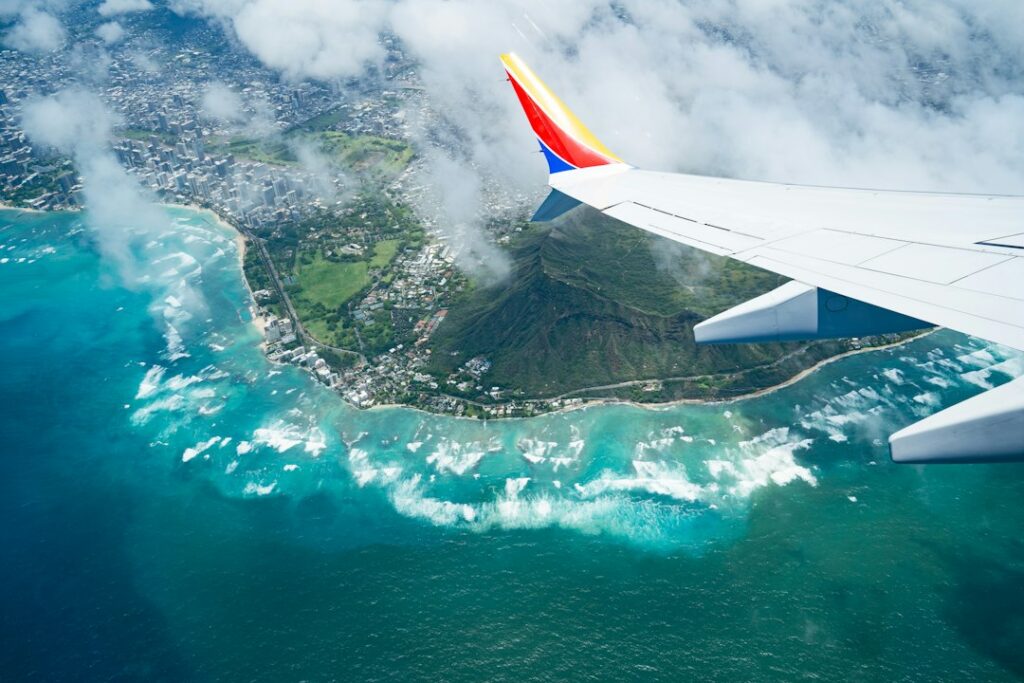
Every Maui arrival funnels through OGG — Kahului Airport, the island’s only major commercial gateway on the north-central coast. The choice made curbside there, between a shared shuttle, a rideshare app, a private car, or the rental counter, shapes the first 24 hours of a trip more than any hotel booking. Get it wrong and a family lands at 10 p.m. with tired kids and no way to reach Kaanapali except a $260 taxi.
The math is not obvious. Speedishuttle looks cheap for a solo traveler and expensive for a family of five. Uber and Lyft advertise Maui coverage that thins out sharply after dark and can vanish on Sundays. Rental cars carry hidden airport fees but pay for themselves after roughly two round-trip fares to a resort area. This article works through those trade-offs with real numbers.
The dominant pattern for Maui visitors is a hybrid: a shuttle or rideshare from OGG on Day 1, then a rental car picked up the next morning once the family has slept off the flight. That two-step approach reduces stress, avoids driving Honoapiilani Highway exhausted, and often costs less than a full rental period. It is not the only pattern, and for shorter or resort-only trips it is not the best pattern.
How OGG’s layout shapes ground transport choices
Kahului Airport sits about two miles east of Kahului town, on Maui’s flat north-central plain. The single terminal is open around the clock, though most commercial services around it close by 11 p.m. Curbside pickup lanes run directly in front of baggage claim, split between hotel shuttles, rideshare, taxis, and private pickup. The rental car facility is not at the terminal — it is a ten-minute walk or a short shuttle ride south.
That physical split matters. A traveler skipping the rental counter walks out the arrivals door and can be on the road within five minutes. A traveler renting a car adds 15 to 45 minutes of shuttle transfer, counter time, and lot pickup, depending on how busy the terminal is. On peak arrival evenings around 6 to 8 p.m., that gap widens to over an hour.
Distances from OGG to the major resort zones are non-trivial. Wailea sits roughly 17 miles south along Highway 311 and Piilani Highway. Kihei is closer at about 13 miles. Kaanapali is the outlier at 35 miles west, requiring the full Honoapiilani Highway run — a scenic but slow drive that takes 45 to 70 minutes depending on traffic and construction. Hana is a different problem entirely at 52 miles east on the twisting Hana Highway.
Terminal-side services
Baggage claim exits into an open-air corridor. Ground transport signage is clear: hotel and shared shuttles use the far curb, rideshare uses a designated pickup lane past the crosswalk, and taxis queue at a dedicated stand. Rental car customers board the free rental facility shuttle from a marked stop and ride roughly one mile to the consolidated lot, where Alamo, Avis, Budget, Enterprise, Hertz, National, Sixt, and Thrifty share counters.
Speedishuttle shared vans: routes, prices, timing
Speedishuttle is the dominant shared-van operator on Maui, running scheduled shuttles between OGG and every major resort zone. Booking is done in advance online. Vans hold roughly 8 to 11 passengers and stop at multiple properties, which means the last hotel on a run can add 30 to 60 minutes to the ride. Drivers help with luggage, greet arrivals in the terminal, and pool riders across flights to keep vans full.
Published one-way fares vary by destination and party size. As of 2026 rate cards, expect roughly $30 per adult to Kihei, $40 to Wailea, and $60 to Kaanapali or Kapalua. Children under 12 typically ride at a reduced rate around $15 to $30. Round-trip pricing offers modest savings, usually 10 to 15 percent. A private van charter runs $150 to $260 depending on distance, and starts to make sense at four or more passengers.
The service is reliable but rigid. Vans meet scheduled flights and hold roughly 30 minutes after wheels-down for baggage clearance. A delayed flight is accommodated within reason; a missed reservation because the traveler wandered into a shop is not refunded. For return trips to OGG, pickup happens 2.5 to 3 hours before departure — earlier than most rideshare timing, since the van still has multiple stops to make.
Where Speedishuttle works well
- Solo travelers or couples heading to Wailea or Kihei on a resort-only trip.
- Groups landing late who plan to pick up a rental car in the morning.
- Anyone connecting to a Kaanapali hotel who does not want the Honoapiilani drive on arrival day.
- Return trips to OGG when a rental has already been dropped off the night before.
Where it does not
- Families of four or more, where per-head pricing exceeds a rideshare.
- Travelers with tight connections or exhaustion who cannot absorb multi-stop routing.
- Anyone landing at Hana, upcountry Kula, or off-grid rentals not on the standard route.
Uber and Lyft at OGG: coverage gaps and surge risk
Rideshare arrived on Maui later than on Oahu and remains thinner. Uber and Lyft both operate at OGG with a designated pickup zone marked on airport signage. Daytime pickups usually match a driver within five minutes for South Maui destinations. Coverage to West Maui is spottier, and after roughly 10 p.m. the driver pool shrinks sharply — sometimes to zero on Sundays and holidays.
Fare estimates for common routes give a useful baseline. To Wailea, expect $45 to $75 without surge, and $80 to $130 with surge. To Kaanapali, base fares run $85 to $140, with peak-time surges pushing $180 to $240. Uber XL and Lyft XL for larger parties add roughly 40 percent. Tipping conventions on Maui match mainland norms, with 15 to 20 percent standard for good service.
The surge risk is the honest problem. On a Saturday evening in high season, a family of four arriving at 9 p.m. can wait 25 minutes for a driver, then pay $175 for a Kaanapali run that would have cost $60 through Speedishuttle. On the return trip, morning departures often see 3x surge because drivers are ferrying school runs and locals to work rather than sitting at hotels.
Return-trip rideshare is where households get burned most often. A 6 a.m. Kaanapali-to-OGG request on a Monday can quote $220 with a 20-minute wait, versus $60 booked ahead through Speedishuttle. Households planning a red-eye or early-morning departure should book a shuttle or car service in advance rather than trusting the app at 4 a.m. See this rundown of red-eye rental return timing for the departure side of that math.
Executive Airport Shuttle and private car services
Executive Airport Shuttle runs private and shared trips out of OGG, competing directly with Speedishuttle on the shared-van side and with independent town cars on the private side. Rates for shared service run comparable to Speedishuttle within a few dollars either way. Private sedan service starts around $130 for Kihei, $160 for Wailea, and $220 to $280 for Kaanapali or Kapalua. Larger SUVs seating six add roughly 30 percent.
The main draw of a private car is timing. There is no multi-stop routing, no wait for other flights, and the driver monitors the flight number in real time so a delay is absorbed automatically. Meet-and-greet inside the terminal is standard for the higher-priced tiers. For families arriving with young children after a red-eye from the East Coast, the extra $60 to $100 over a shared van often buys back an hour of sleep.
Independent operators fill in around the two main brands. VIP Trans, Aloha Rides, and a rotating cast of small charter companies advertise at similar price points. Reviews vary widely. The safest booking pattern is to look up the operator on the Hawaii Public Utilities Commission listings before paying, since state transport authorities maintain permits and complaint records for licensed carriers.
Taxis and the airport taxi stand
Metered taxis queue at a marked stand outside baggage claim. Fares are set by county ordinance, not by app: expect a $3.50 flag drop, roughly $3.60 per mile, and a per-passenger surcharge. That works out to roughly $55 to Kihei, $80 to Wailea, and $150 to $180 to Kaanapali before tip. Cash and cards are both accepted, though drivers may prefer cash and add a card-processing surcharge of 3 to 5 percent.
Taxis are the fallback for late-night arrivals when rideshare coverage collapses. Unlike Uber and Lyft, the stand usually has cars waiting even at 11 p.m. or midnight. The trade-off is price: a metered West Maui run at midnight is the most expensive ground transport option short of an emergency charter. For any group larger than four, a private shuttle booked ahead almost always beats a taxi.
The Day 1 shuttle, Day 2 rental pattern
The most-recommended approach for Maui trips longer than three nights is a hybrid: shuttle or rideshare to the hotel on arrival, then walk or cab to a rental counter the next morning after sleeping off the flight. This works because most resort areas have rental branches within a few miles or offer hotel-based pickup. It removes the arrival-day drive and shrinks the total rental period by 12 to 24 hours.
Doing the math for a five-night Wailea stay: a Speedishuttle round trip for two adults runs about $150. A five-day rental at $75 per day plus fees runs $475. Delaying rental pickup by 18 hours saves roughly $55 in daily rate plus insurance. Net cost of the hybrid is about $570; net cost of a full six-day rental with airport pickup is about $530 — close enough that comfort and sleep tip the choice.
For families with three or more children, the math flips. Shuttle fares stack per head, while a minivan rental serves everyone at one price. A family of five heading to Kaanapali or Wailea with kids generally saves $200 to $400 over a two-week trip by picking up the rental directly at OGG rather than shuttling first.
When to skip the rental entirely
A resort-only trip — Grand Wailea for four nights, no plans to leave the property — genuinely does not need a rental. The hotel handles the airport transfer, restaurants deliver, and any outing to the Wailea Coastal Pathway or a nearby beach happens on foot. The break-even is roughly three outings; below that, taxis and shuttles beat rental costs.
Rental cars: why most trips still need one
Maui rewards mobility. Haleakala predawn approaches, the Road to Hana, upcountry farm tours, west-side snorkeling, and Iao Valley all require a vehicle. Even resort-based trips end up craving one by Day 2 for a grocery run or a sunset drive. That is why the median Maui trip ends up with a rental car for most of its duration, regardless of the arrival-day plan.
Rental rates at OGG in 2026 run $65 to $110 per day for economy and midsize cars, $95 to $160 for SUVs, and $130 to $220 for minivans, before taxes and fees. State general excise tax runs 4.712 percent according to Hawaii’s Department of Taxation, and county rental surcharges add another $5 to $8 per day. The airport concession recovery fee tacks on roughly 11.11 percent of the base rate.
Fuel is a significant line item. Regular gasoline on Maui averages about $4.80 to $5.20 per gallon per EIA weekly fuel price data, well above the national average. A week of moderate driving — resort to Lahaina, Haleakala once, one Hana attempt — burns 15 to 25 gallons. Refuel before returning to the airport, since the on-site fuel-service fee runs $9 to $10 per gallon.
Booking timing and price patterns
Maui rental prices swing hard by season and booking window. Christmas week and February humpback season see rates 40 to 80 percent higher than shoulder-season averages. Booking three to six months out consistently beats last-minute rates. Costco Travel and AAA bundle rates that undercut walk-up prices by 15 to 25 percent for members. May shoulder-season pricing is typically the year’s low point outside hurricane-season promotions.
Cost comparison for common Maui itineraries
The tables below run three typical trip profiles against the four main ground-transport approaches. All figures assume 2026 rate cards, no surge, moderate season, and pre-booked services. Actual costs vary; the pattern of relative costs is what matters most. All prices are in USD, one-way except where noted.
| Destination | Miles | Speedishuttle (per adult) | Uber/Lyft base | Taxi metered | Private car |
|---|---|---|---|---|---|
| Kihei | 13 | $30 | $40-60 | $55 | $130 |
| Wailea | 17 | $40 | $45-75 | $80 | $160 |
| Lahaina | 27 | $50 | $65-110 | $115 | $190 |
| Kaanapali | 35 | $60 | $85-140 | $170 | $240 |
| Kapalua | 39 | $70 | $95-150 | $185 | $260 |
| Hana | 52 | N/A | Rarely available | $260+ | $400+ |
| Five-night trip (2 adults) to: | Full rental (6 days) | Shuttle both ways only | Hybrid: Day 2 rental | All rideshare |
|---|---|---|---|---|
| Kihei | $495 | $120 | $530 | $450-700 |
| Wailea | $530 | $160 | $570 | $540-820 |
| Kaanapali | $560 | $240 | $610 | $900-1400 |
| Family of 5 (2 adults + 3 kids) to: | Minivan rental (6 days) | Shared shuttle both ways | Private van both ways | Rideshare XL both ways |
|---|---|---|---|---|
| Kihei | $780 | $285 | $400 | $220-360 |
| Wailea | $820 | $375 | $440 | $260-440 |
| Kaanapali | $850 | $560 | $540 | $460-800 |
Two patterns jump off the tables. First, the closer the destination, the less the vehicle choice matters — Kihei and Wailea are cheap enough by any method that comfort and timing dominate. Second, Kaanapali is the choice that most punishes a rideshare mistake, because both distance and driver scarcity conspire against the traveler. That is where a booked shuttle or private car nearly always beats spontaneity.
Late-night arrivals and red-eye considerations
OGG’s last mainland arrival banks land between 8 and 11 p.m. from West Coast hubs. A flight touching down at 10:45 p.m. lands after most rideshare drivers have called it a night, especially on Sundays. Speedishuttle runs meet arrivals up to about 11 p.m., after which a private car booking or the taxi stand is the only realistic option. Booking a shuttle in advance is the single most effective way to avoid a $200 surprise fare.
Early-morning departures compound the problem. A 6 a.m. return flight requires OGG arrival by 4:30 a.m., which means leaving Kaanapali by 3:15 a.m. — a slot where no rideshare driver reliably answers. Speedishuttle books pre-dawn shuttles for a modest surcharge; taxis at that hour require a dispatcher call, not a stand pickup. Households flying red-eye out should either return the rental the night before or reserve a private car at least 48 hours ahead.
The rental-return time sink
Returning a rental at OGG for a red-eye departure takes 20 to 40 minutes end-to-end: drop the car, ride the shuttle to the terminal, check bags. Add 30 minutes buffer if there is a line at the return lane, common between 5 and 7 a.m. See the detailed rental-return strategy for red-eye departures for a timing worksheet with fuel stops built in.
Bags, kids, and gear: what fits where
Space constraints eliminate options faster than price. A Speedishuttle shared van seats 8 to 11 with luggage room for one large bag and one carry-on per passenger. Golf bags, surfboards, and oversized coolers require advance notice and sometimes a supplement. Uber and Lyft standard cars fit two adults with two suitcases; Uber XL and Lyft XL fit four adults and up to six checked bags in an SUV or minivan.
Car seats are the friction point for families. Rideshare drivers on Maui rarely carry car seats. Rental agencies offer them at $10 to $15 per day per seat. Speedishuttle installs car seats on request if reserved in advance. Bringing seats from home is often cheaper for a two-week trip but adds airport-handling hassle. A folded booster in a checked bag is the low-friction compromise for children over four.
Snorkel gear, coolers, and beach chairs weigh into the vehicle choice too. Households planning multiple beach days at Blackrock at Puu Kekaa, Kahekili Reef, or Ulua Reef will accumulate gear across the week. A midsize SUV or minivan absorbs that better than a compact rental and matters more than an economy-tier fare on paper.
Sustainability, congestion, and the local view
Ground transport choices carry weight beyond a traveler’s own wallet. Maui carries about 165,000 residents against roughly 2.5 million annual visitors per Census Bureau county data, and rental cars dominate the island’s road congestion. Shuttle and shared-van use meaningfully reduces vehicle-miles per visitor. County officials have floated visitor vehicle caps and higher airport concession fees for years; nothing binding has passed as of 2026, but the conversation is active.
Fuel prices, aging infrastructure, and post-fire recovery from the 2023 Lahaina disaster have all pushed local sentiment toward less-driving models of visitation. Reading Civil Beat’s ongoing coverage gives useful context on policy debates around visitor mobility. None of that changes the practical trade-offs for a specific trip, but travelers who genuinely have flexible plans might weigh a shuttle-first pattern more heavily than the cost math alone suggests.
Booking checklist and common mistakes
The high-leverage moves are all made before the flight lands. Prices, availability, and route options tighten sharply for last-minute requests.
- Book Speedishuttle or Executive Airport Shuttle at least 48 hours ahead for any arrival after 8 p.m.
- Reserve rental cars 60 to 90 days out for winter and spring break; 30 days for shoulder season.
- Confirm car seats separately from the shuttle or rental reservation — they often require phone follow-up.
- Screenshot the shuttle voucher and dispatcher phone number before boarding the flight.
- Pre-download offline maps of Maui before landing; cell coverage drops on parts of Honoapiilani and the Hana Highway.
Common mistakes cluster around trust in the rideshare app. Travelers who assume Uber will work like it does at home underestimate driver scarcity, surge patterns, and the late-night gap. A booked shuttle, even one that costs more per person on paper, buys certainty that a Saturday-night surge fare erodes fast. Households can always cancel a shuttle if the flight arrives early and rideshare looks good; the reverse recovery is much harder.
Frequently asked questions
Is Uber reliable at Kahului Airport?
Uber operates at OGG with a dedicated pickup zone and works well for daytime South Maui trips, matching a driver within roughly five minutes. Reliability drops after 10 p.m. and on Sundays, and West Maui coverage is thinner even during peak hours. Households arriving late or returning at dawn should not rely on the app alone; a booked shuttle or private car is safer.
How much does Speedishuttle cost to Kaanapali?
Speedishuttle’s published one-way adult fare from OGG to Kaanapali runs approximately $60, with children under 12 discounted to around $30. A round trip for two adults totals about $220 after taxes and fees. Private van charter for a full family sits closer to $260 one-way. Booking online in advance is required, and vans typically make multiple stops before reaching a specific hotel.
Do I need a rental car for a Maui trip?
For resort-only stays of three nights or fewer, a rental car is often skippable — shuttles cover airport transfers and hotels handle everything else. For any trip that includes Haleakala sunrise, the Road to Hana, or upcountry exploring, a rental is effectively required. Most trips longer than four nights end up wanting a vehicle for at least the middle days regardless of arrival-day planning.
What is the cheapest way from OGG to Wailea?
For a single traveler, Speedishuttle at roughly $40 one-way beats every other option. For two adults, rideshare during off-peak hours often matches or beats the shuttle at $45 to $60 total. For three or more travelers, a rental car picked up at the airport wins on total-trip cost, especially if the trip length exceeds three nights and includes any outings beyond the immediate resort area.
When should I skip the rental entirely?
Skip the rental for stays of three nights or fewer at a full-service resort, particularly in Wailea or Kaanapali, where on-site amenities and beach access remove most reasons to drive. Skip it for solo business travel and for elderly visitors who prefer not to drive unfamiliar roads. Otherwise, most Maui itineraries recover the rental cost quickly through avoided shuttle or rideshare fares within two or three outings.
How early should I leave for a return flight?
Plan to arrive at OGG two hours before mainland departures and 90 minutes before interisland flights. Add 30 to 45 minutes if returning a rental car — the shuttle from the rental facility runs every 5 to 10 minutes but check-in lines at 5 to 7 a.m. run long. For pre-dawn departures, book shuttle pickup 3.5 hours before the flight to buffer against fuel stops and traffic.
Are taxis available at OGG late at night?
Yes. The metered taxi stand outside baggage claim typically has cars waiting even at midnight, unlike rideshare, which thins sharply after 10 p.m. Fares are set by county ordinance at roughly $3.60 per mile plus a $3.50 flag drop. A late-night taxi to Kaanapali runs $170 to $200 including tip — expensive, but a reliable fallback when Uber shows no drivers and the shuttle window has closed.