Molokini Crater’s crescent silhouette off Maui’s south coast draws roughly a million snorkelers each year, but the reef’s inner-rim ledge sits deeper than most breath-hold swimmers can comfortably reach. Snuba fills that gap. The tethered surface-supplied air system extends bottom time to about 20 feet without requiring scuba certification, and three major Ma’alaea Harbor operators — Trilogy Excursions, Pacific Whale Foundation, and the Four Winds II — sell it as a boat add-on.
Pricing typically lands in a $60-$85 upcharge range depending on operator, season, and how many divers share the raft. The minimum age is 8 on all three major boats, no prior training beyond a 15-minute in-water briefing is required, and one instructor guides two to three guests along a hose tethered to a floating air source on the surface.
This research-oriented breakdown covers each boat’s Snuba pricing structure, the morning departure logistics from Ma’alaea, the reef geometry that makes the crater’s inner rim so productive, weather patterns that cancel the back-wall extension, and the age and health thresholds that determine eligibility. Comparative tables further down give side-by-side numbers for households weighing a relocation year of repeat Maui excursions.
Why Snuba was designed for reefs like Molokini’s
Snuba was patented in 1988 by a California company that wanted a shallow-water breathing rig that skipped scuba certification. The system uses a standard scuba tank on a floating raft; a 20-foot air hose connects the tank to a regulator and harness. Divers wear no tank on their backs, and the surface float doubles as a safety leash the guide can pull toward the raft in seconds.
Molokini’s inner rim was tailor-made for this depth window. The crescent-shaped tuff cone opens to the northwest, and the sheltered inside averages 10 to 35 feet across most of the reef shelf. A pure snorkeler skimming the surface sees perhaps 60 percent of what the reef actually holds; a Snuba diver at 15 to 20 feet reaches the coral heads, cleaner stations, and reef-dwelling fish that congregate deeper.
The system also skips the biggest scuba pain points: no dive tables, no weight-belt fitting drama, and no board certification card. That accessibility is precisely why Trilogy, Pacific Whale Foundation, and Four Winds II package Snuba as an on-boat upgrade rather than a stand-alone excursion. Guests can decide during the sail out whether to commit.
The three Ma’alaea Harbor boats offering Snuba
Trilogy Excursions
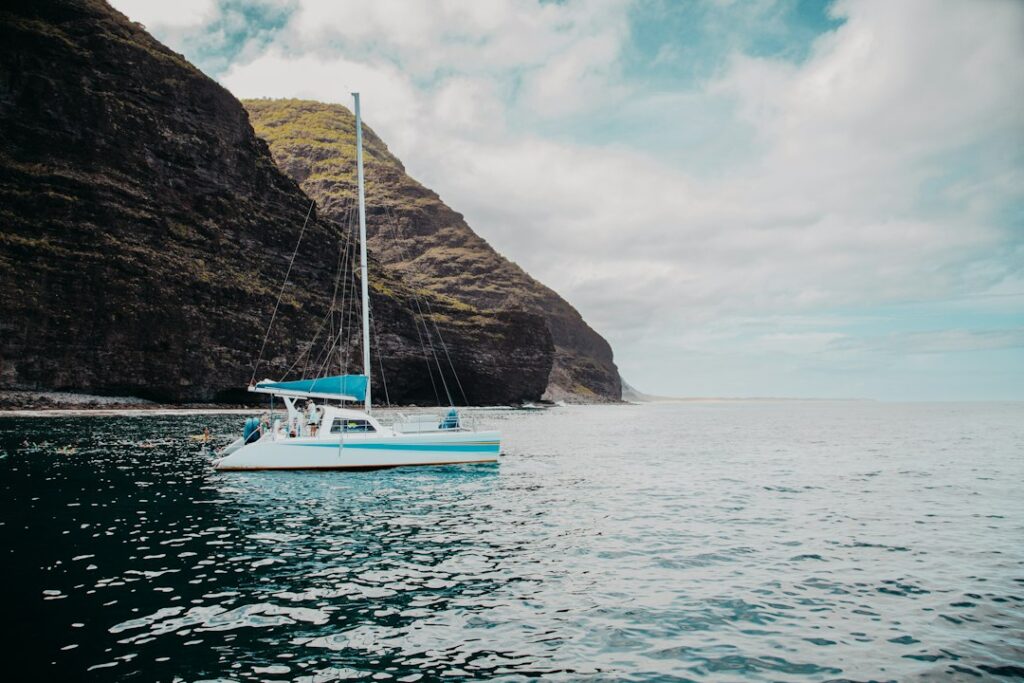
Trilogy’s Discover Molokini catamaran sails from Ma’alaea Harbor slip 62 on a 6:30 a.m. or 7:00 a.m. departure, depending on the season, and runs about 5.5 hours dock-to-dock. Snuba is offered as a $79 per-person add-on on most 2026 sailings, capped at eight Snuba slots per trip. The vessel is a 64-foot power catamaran with freshwater rinse showers and a full breakfast and BBQ lunch included in the base fare.
Trilogy has run Molokini sails since 1973 and holds one of the older permitted mooring assignments. Guides on Trilogy Snuba trips are typically dive-certified staff who rotate through the mid-morning water block. The company’s booking system flags Snuba slots visually at ticket purchase, so guests can confirm availability before committing to the base fare.
Pacific Whale Foundation
Pacific Whale Foundation runs its Molokini snorkel trips on the Ocean Voyager and Ocean Discovery power cats out of the Ma’alaea slip 80 area. Departures cluster at 7:00 a.m. year-round, and the Snuba add-on is typically priced at $65 per diver in 2026, with a maximum of six Snuba guests per trip. PWF’s nonprofit status routes a share of ticket revenue to marine conservation research.
PWF’s boats emphasize onboard interpretive programming: staff biologists narrate the sail out and lead post-snorkel debriefs. Snuba on PWF trips slots between two snorkel blocks rather than replacing one, which shortens each individual water session. Guests already comfortable snorkeling typically prefer PWF for the wider marine-science content bundled into the fare.
Four Winds II
The Four Winds II is a 55-foot glass-bottom catamaran run by Maui Classic Charters that leaves Ma’alaea Harbor at 6:30 a.m. or 7:15 a.m. Snuba typically costs $69 in low season and $79 in whale season, with slots for up to eight divers. The vessel’s slide, water trampoline, and dedicated child-friendly deck layout make it a common pick for families combining a strong Snuba program with kid-oriented amenities.
The glass bottom itself is not a Snuba feature but shapes the deck plan: the boat has a large flat aft platform that makes water entry and exit unusually smooth. Older divers, nervous first-timers, and guests recovering from mobility limitations often prefer this boarding profile over PWF’s ladder-style aft entry.
Pricing breakdown across operators
The Snuba upcharge is only one piece of the total tab. Base snorkel fares, harbor fees, and optional add-ons (photos, cocktails, GoPro rental) all stack on top. The table below reflects mid-2026 published rates and rounds to whole dollars. Season definitions vary slightly between operators; “whale season” here means mid-December through mid-April, which aligns with the humpback presence documented across peak-timing coverage.
| Operator | Adult base fare | Snuba add-on | Total adult | Departure | Return |
|---|---|---|---|---|---|
| Trilogy Discover Molokini | $229 | $79 | $308 | 6:30 a.m. | ~12:00 p.m. |
| PWF Ocean Voyager | $149 | $65 | $214 | 7:00 a.m. | ~12:30 p.m. |
| PWF Ocean Discovery | $139 | $65 | $204 | 7:00 a.m. | ~12:00 p.m. |
| Four Winds II (whale season) | $165 | $79 | $244 | 7:15 a.m. | ~1:30 p.m. |
| Four Winds II (low season) | $149 | $69 | $218 | 7:15 a.m. | ~1:30 p.m. |
Kid fares typically shave $30-$50 off the base for ages 3-12, but the Snuba upcharge is flat regardless of age. Ages 7 and under cannot buy the add-on at any of the three operators. Booking three months out during whale season is standard because Snuba slots on the popular boats sell first — often before base seats have moved through the online cart.
Ma’alaea Harbor morning departure logistics
Ma’alaea Harbor sits about 20 minutes north of Wailea and 12 minutes south of Kahului, on the Ma’alaea Road exit off Highway 30. The harbor holds roughly 89 slips, but overnight parking is prohibited and the free lot fills by 6:00 a.m. on high-traffic days. Late-arriving guests routinely miss the boat call and forfeit their fare.
Check-in typically opens 45 minutes before departure. Trilogy’s slip 62 requires guests to sign a Snuba waiver at check-in, not on the boat, so a 6:00 a.m. arrival for a 6:30 a.m. sail is the practical floor. PWF and Four Winds II accept Snuba waivers on-vessel, but harbor traffic on Highway 30 southbound backs up predictably between 5:45 and 6:30 a.m. during peak weeks.
The Hawaii Department of Transportation Harbors Division manages Ma’alaea and posts current slip assignments and boater notices. For readers researching berthing rules more broadly, the site’s separate coverage of the DLNR DOBOR harbor permit system outlines how commercial charters secure their moorings and what the annual renewal cycle looks like.
Parking and shuttle logistics
The main Ma’alaea Harbor lot has roughly 260 free stalls plus a smaller overflow across Honoapiilani Highway. Guests staying at Wailea or Kihei resorts sometimes book operator shuttles at $20-$30 round trip. Kaanapali or Lahaina guests face a 35-45 minute drive at 5:30 a.m., which pushes wake-up times to around 4:30 a.m. for a 6:30 a.m. sail.
What to eat before boarding
Snuba on an empty stomach frequently causes dizziness at depth, but a heavy breakfast raises seasickness risk on the 45-minute crossing to Molokini. Operators recommend a light 300-400 calorie meal (banana, toast, oatmeal) about 90 minutes before boarding. Trilogy and Four Winds II serve continental breakfast on the sail out, which lands about 30 minutes before the water entry.
Inner rim versus back-wall extension
Molokini has two distinct dive geographies. The inner rim, or “front side,” is the shallow crescent inside the crater where Snuba operates. Depths run 10-35 feet, currents are minimal, and the reef supports around 250 documented fish species. The back wall is the outside of the crescent — a vertical drop from about 30 feet to more than 300 feet — reserved for certified scuba divers only.
Snuba does not operate on the back wall. The equipment is designed for a 20-foot maximum depth, and the exposed side sees swells and currents that would drag a tethered raft dangerously. Boats offering back-wall dive extensions serve a completely different customer segment; readers evaluating that side can compare the site’s coverage of back-wall dive boat selection criteria alongside this Snuba analysis.
When weather permits, some certified-diver boats add a back-wall stop after the inner-rim snorkel. That secondary stop cancels first when trade winds cross 20 knots or swell exceeds 4 feet. The Snuba program is more resilient because it operates in the sheltered inner reef, but a lee-side crater alone doesn’t help when harbor small-craft advisories close Ma’alaea entirely.
Reef features Snuba reaches
- Reef Point coral heads at 18-22 feet, dense with butterflyfish schools
- Middle reef sand channels where whitetip reef sharks sometimes rest by day
- Enenue Point ledge at about 15 feet with cleaner-station activity
- The mid-crater sand shelf where octopuses hunt during morning hours
- Coral archways at 20-25 feet that snorkelers only glimpse from above
Age, health, and certification thresholds
The Snuba add-on requires no prior training. Boat operators issue a 10-15 minute briefing on regulator use, ear equalization, and the buddy signal system before water entry. Certification cards are not required or checked, which is the primary reason the program exists as a snorkel-to-scuba bridge for households not ready to commit to open-water training.
Age minimums are uniform at 8 across Trilogy, PWF, and Four Winds II. That threshold reflects the depth ceiling and the ability to equalize independently. Some operators run a Snuba Doo program for ages 4-7 in a life vest with a shallow tether, but this is not offered on Molokini boats — it’s a resort pool product only.
Medical contraindications mirror scuba: uncontrolled asthma, recent chest or ear surgery, pregnancy, active respiratory infection, and certain heart conditions. Operators provide the standard RSTC medical questionnaire at check-in. A “yes” on any item requires a physician’s clearance letter, which is impractical to secure on the morning of a trip. Guests should complete the form well in advance.
Maximum group size and instructor ratio
| Operator | Max Snuba divers | Instructor ratio | Time in water | Waiver at |
|---|---|---|---|---|
| Trilogy | 8 | 1:2 | ~25 minutes | Harbor check-in |
| PWF Ocean Voyager | 6 | 1:3 | ~20 minutes | On-vessel |
| PWF Ocean Discovery | 6 | 1:3 | ~20 minutes | On-vessel |
| Four Winds II | 8 | 1:2 | ~25 minutes | On-vessel |
The 1:2 instructor ratio on Trilogy and Four Winds II is one reason those two boats command a higher upcharge. PWF’s 1:3 ratio still meets Snuba International guidelines but leaves less individual coaching time for first-timers, particularly children near the age-8 floor and adults uncomfortable with the regulator’s initial mouth pressure.
Gear, rinsing, and what the boat provides
Each Snuba station consists of a floating yellow raft holding a standard aluminum 80 scuba cylinder, two low-pressure hose lines, standard second-stage regulators, and a buoyancy compensator harness. Divers wear a weight belt calibrated by the guide to compensate for a 3mm wetsuit’s buoyancy — most Molokini programs use short-sleeve 3mm suits year-round.
Water temperature at 20 feet ranges from 75°F in February to 80°F in September, per National Data Buoy Center readings at Buoy 51205 south of Maui. A 3mm suit is comfortable across that range for a 25-minute session. Adults who chill easily may prefer to layer a rash guard underneath; children near the age minimum should always wear a wetsuit regardless of surface temperature.
Masks, snorkels, and fins are included in the base snorkel fare and reused for Snuba. Prescription masks are usually available in a limited range of powers. Guests bringing personal masks should defog with baby shampoo, not saliva, to avoid contaminating the boat’s freshwater rinse tanks. Boats provide reef-safe sunscreen (mineral, non-oxybenzone) per the state law effective since 2021.
What to pack
- Reef-safe mineral sunscreen (SPF 30 minimum, non-nano zinc)
- Rash guard or long-sleeve UPF 50+ top for the 4-hour sun window
- Anti-nausea medication taken 60 minutes before departure
- Waterproof phone pouch or dedicated waterproof camera
- Change of dry clothes for the return to Ma’alaea Harbor
- $40-$60 cash for optional bar service and guide tips
Weather cancellation patterns
Molokini itself is protected inside the crescent, but Ma’alaea Harbor is exposed to the Ma’alaea corridor’s tradewind funnel. The Alenuihaha and Kealaikahiki channels around Maui accelerate winds by 30-40 percent versus open-water forecasts. When the National Weather Service posts a small-craft advisory for the leeward waters (usually 25 knot sustained or 34 knot gusts), Ma’alaea operators cancel first, refund fully, and offer next-day rebooking.
The back-wall extension on scuba boats cancels earlier than the Snuba program. Back-wall calls typically shift to inner-rim-only when swells cross 4-5 feet or wind exceeds 20 knots. Snuba on the front side runs down to about 25 knots because the crater blocks fetch. Historical data suggests about 8 percent of scheduled Snuba trips cancel outright between December and February.
The Hawaii Department of Health issues occasional water-quality advisories after heavy rain runoff, though Molokini is far enough from shore that beach postings rarely apply. Boats also self-cancel for lightning or waterspout risk. Trade-wind patterns explained across Maui coverage months like the site’s January base-planning guide and February humpback season overview track the same weather system.
Cancellation rate by month
| Month | Avg wind (kt) | Avg swell (ft) | Snuba cancel rate | Back-wall cancel rate |
|---|---|---|---|---|
| January | 18 | 3-6 | 9% | 28% |
| February | 17 | 3-5 | 8% | 24% |
| March | 16 | 2-5 | 6% | 19% |
| April | 15 | 2-4 | 4% | 13% |
| June | 14 | 2-3 | 3% | 7% |
| September | 12 | 1-3 | 2% | 5% |
| October | 13 | 2-3 | 3% | 8% |
| December | 19 | 3-6 | 10% | 30% |
Rebooking chains during heavy winter runs frustrate visitors on tight schedules. A canceled January sailing may take two or three attempts to rebook because the next available Snuba slot is often four to six days out. Households on a longer relocation-scouting stay have more slack; a five-day vacationer during winter should plan the excursion for day two, not day five, to preserve rebooking room.
Seasonal timing and humpback interference
Humpback whales migrate to Maui waters from roughly mid-November through mid-May, with peak sightings in February. Federal rules require boats to stay 100 yards from humpbacks; Snuba operations pause when whales approach the crater. Sail time between Ma’alaea and Molokini adds 5-15 minutes during peak season because captains detour around pods, particularly along the Kahoolawe channel line.
Peak-season logistics for the same harbor are covered in more depth by the site’s February charter boat departure timing analysis, which walks through how the humpback surge reshapes morning boat schedules. April is often the sweet spot: late humpback tail-end sightings, calmer trade winds averaging 15 knots, and a 4-percent cancellation rate.
Water clarity at Molokini also swings seasonally. Visibility averages 100-150 feet in September and October and drops to 60-90 feet after heavy winter rains flush sediment out of Kihei streams. Snuba divers at 20 feet perceive clarity differences more than surface snorkelers because ambient light dims quickly as suspended particulate scatters blue wavelengths through the water column.
Best months for a Snuba booking
- September: Calmest water, 80°F temp, 150-foot visibility, 2% cancel rate
- October: Low tourist volume, best value — see October base-planning coverage
- April: Whale tail-end, low winds, warmer weather — see April planning notes
- June: Solid conditions before the summer south-swell peak
- March: Whale-heavy trips per March overview
Underwater photography while on Snuba
Snuba divers have a distinct photography advantage over snorkelers. The tethered rig frees both hands, and steady 20-foot depth lets guests hold a camera against a coral head without kicking back to the surface for a breath. GoPro Hero 12 and Hero 13 cameras are the workhorse choice; both handle the crater’s ambient light without needing supplemental strobes.
Boats sell GoPro rentals for $35-$45 per day with SD cards. Trilogy and Four Winds II also sell professional photo packages captured by a staff photographer at $60-$120 depending on the format. Guests bringing personal cameras should attach a wrist lanyard because dropped cameras at 20 feet often disappear into sand channels beyond retrieval by a tethered diver.
The best photo windows at Molokini are the first 15 minutes of the water session when fish are less habituated to divers and the ambient light angle from the east stays low. Post-dive review on the sail back reveals whether a return trip is warranted, which some guests build into a longer Maui itinerary.
Comparing Molokini to other Hawaii Snuba operations
Snuba is also offered on Oahu and the Big Island, but the offerings differ meaningfully. Oahu programs typically run from Waianae beach coves at $89-$99 all-in, without the boat component. Big Island Snuba mostly launches from Kailua-Kona at $95-$115 including boat, though visibility varies more than at Molokini because of active volcanic runoff further south along the Kona coast.
Kauai does not offer commercial Snuba at meaningful scale, largely because most snorkel boats out of Poipu prioritize seasonal Na Pali coast routing. Households comparing island-by-island underwater options should also weigh time-boxed land experiences; the site’s Diamond Head crater trail booking analysis covers a similarly early-morning Oahu excursion.
Molokini’s Snuba program remains the volume leader in Hawaii because the crater’s protected water reliably supports the tethered raft system. That reliability, more than reef diversity, is what drives repeat Snuba sales year after year on the Ma’alaea boats.
Cost comparison versus other underwater options
Snuba’s real competitors are certified scuba discovery dives, submarine tours, and premium snorkel-only trips. The following table places the Molokini Snuba upcharge in context with 2026 published rates for the same customer segment. Prices reflect adult fares from Ma’alaea or Lahaina departures where relevant.
| Underwater option | Total 2026 price | Max depth | Bottom time | Certification required |
|---|---|---|---|---|
| Molokini Snuba (Trilogy) | $308 | 20 ft | ~25 min | None |
| Molokini Snuba (PWF) | $204 | 20 ft | ~20 min | None |
| Molokini snorkel only (PWF) | $139 | Surface | ~60 min | None |
| Discover scuba at Molokini | $249 | 40 ft | ~35 min | None (briefing) |
| Certified 2-tank Molokini dive | $189 | 60-80 ft | ~45 min each | Open Water card |
| Atlantis Submarine (Lahaina) | $135 | 100 ft | ~45 min | None |
For families with an 8- or 9-year-old, Snuba is the only option in the table besides surface snorkel and the submarine. That single fact drives most Snuba purchases on the Molokini boats. Adults with time to complete a pool session can spend a similar dollar figure on a Discover Scuba course and reach twice the depth, but the required half-day pool orientation locks the plan a week ahead.
Booking windows and refund policies
All three operators sell Snuba slots first-come, first-served, but only Trilogy and Four Winds II allow reserving Snuba online at booking time. PWF handles the add-on at check-in with no advance guarantee. That policy asymmetry is one reason Snuba-focused households often book Trilogy despite the higher tab.
Refund policies for Snuba are typically 24-hour cancellation on Trilogy, 48-hour on PWF, and 24-hour on Four Winds II. Weather cancellations trigger automatic 100-percent refunds or same-week rebooking credits. Credit-card refund processing typically takes 5-10 business days per operator terms of service. Booking through third-party OTAs (Viator, GetYourGuide) adds a nonrefundable service fee of roughly 4-7 percent.
Group discounts and repeat-visit programs
Trilogy offers a 5-percent discount for parties of six or more when Snuba slots are booked together. PWF discounts group snorkel base fares but not the Snuba add-on. Four Winds II runs an off-peak “kama’aina and repeat visitor” discount of about $15 for guests staying more than seven nights, which offsets Snuba’s upcharge partially.
Health, safety, and post-dive flight timing
Snuba at 20 feet requires the same no-fly window as a shallow scuba dive: 12 hours minimum before boarding a commercial flight, and 18 hours if two Snuba sessions are completed on the same trip. Because most Molokini Snuba trips return to Ma’alaea by 12:30 p.m., a same-day evening flight is technically possible but risky if the dive runs long.
Ear equalization is the most common in-water problem. Guides teach a valsalva maneuver during the briefing, and any diver who cannot equalize simply stays at the surface — most operators refund the Snuba upcharge in this case. Post-dive dehydration, especially after a long return sail in the sun, causes about 4 percent of first-timers to experience dizziness on the drive home.
The Honolulu Star-Advertiser and Hawaii News Now periodically cover Molokini-related maritime incidents, most involving weather or unrelated scuba diver medical events. Snuba’s own tethered design has produced very few reported incidents in decades of Maui operation.
Molokini’s protected status and impact fees
Molokini is a State Marine Life Conservation District and Seabird Sanctuary. Commercial operators must hold state day-use mooring permits, and no boat is permitted to anchor inside the crescent. Only about 40 permitted operators can visit, and daily boat count caps limit the number of vessels inside the crescent at once. Those permits and mooring rules are administered by the state Division of Boating and Ocean Recreation.
A state harbor and small-boat impact fee of about $2.50 per guest is bundled into the ticket, and Molokini-specific reef access fees add roughly $5-$8 per guest depending on operator. Federal humpback whale sanctuary rules add another compliance layer during whale season. Tourists arriving from more casual dive destinations often underestimate how tightly Molokini is regulated compared to open-reef sites.
General state visitor patterns compared across islands can be sanity-checked at the Census QuickFacts for Hawaii and the state tourism portal gohawaii.com. Readers weighing Maui against other-island underwater options can compare the site’s Kauai monthly weather breakdown for equivalent boat-tour cadence out of Poipu.
Frequently asked questions
Is Molokini Snuba the same as scuba?
No. Snuba uses a tank floating on a surface raft connected to divers by a 20-foot hose, so there is no tank strapped to the diver’s back. Depth is capped at 20 feet, no certification card is required, and the briefing runs 10-15 minutes instead of scuba’s multi-day open water course.
Can an 8-year-old really do Snuba safely at Molokini?
Yes, when the child can equalize ears on cue and follow simple hand signals. The 8-year-old minimum is uniform across Trilogy, PWF, and Four Winds II. The 1:2 or 1:3 instructor-to-guest ratio means kids get direct supervision, and the 20-foot ceiling keeps ambient pressure manageable. Nervous kids can abort the dive at any moment without a refund penalty.
Does bad weather cancel Snuba more often than snorkel-only trips?
Slightly, because Snuba requires calmer surface conditions to safely tether the floating raft. Historical data shows Snuba trips cancel at roughly the same 8-10 percent rate as full snorkel departures in winter, but the back-wall scuba extension cancels three times more often. Molokini’s crescent shape shelters the inner rim from most tradewind swell year-round.
What’s the difference between the crater’s inner rim and back wall?
The inner rim is the shallow crescent inside the caldera, 10-35 feet deep, with calm water and about 250 fish species — where Snuba operates. The back wall is the outer face, a vertical drop from about 30 feet to more than 300 feet, reserved for certified scuba divers on separate boats. Snuba cannot access the back wall.
How early should guests arrive at Ma’alaea Harbor?
Plan on arriving 45 minutes before departure. That covers the walk from parking, waiver signing, wetsuit sizing, and any Snuba-specific check-in. On a 6:30 a.m. Trilogy sail, that puts arrival around 5:45 a.m. Highway 30 southbound backs up between 5:45 and 6:30 during peak weeks, so add another 15-minute buffer during whale season.
Is Snuba worth the $60-85 upcharge over snorkel-only?
For a first-timer curious about depth, yes; for a strong snorkeler comfortable with 15-foot breath-hold descents, probably not. Snuba adds about 20-25 minutes of continuous bottom time at reef level, which surface snorkeling cannot match, but only about 10-15 percent of the crater’s fish community is exclusively deeper than snorkel range.
Can guests fly home the same day after Snuba?
Yes, but only if the flight departs at least 12 hours after the last dive. A 12:30 p.m. return to Ma’alaea allows a 12:30 a.m. or later red-eye departure, which is impractical from OGG. Most Snuba divers plan flights for the next day. Two same-day Snuba sessions push the no-fly window to 18 hours.
Do the Molokini Snuba operators offer refunds for weather cancellations?
All three operators — Trilogy, PWF, and Four Winds II — issue full 100-percent refunds when captains cancel a departure for weather. Same-week rebooking is also offered. Refunds process through the original credit card in 5-10 business days. Guests who cancel on their own inside the 24- or 48-hour window forfeit deposits per operator terms.