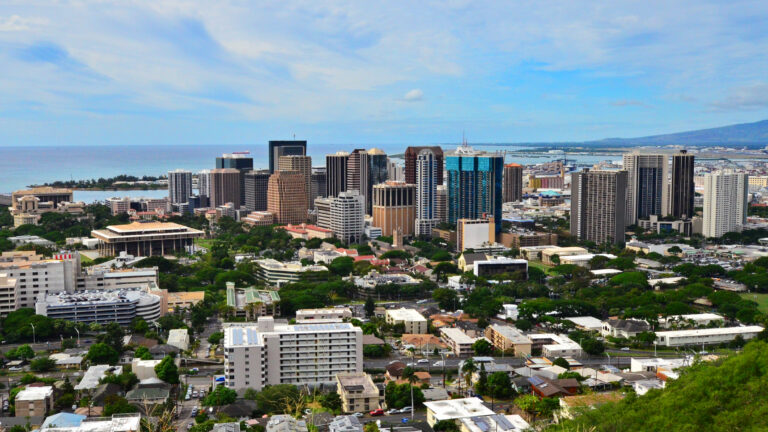
Overview: Hawaii’s Evolving Economy in 2026
Hawaii’s economy stands at a crossroads in 2026, balancing its traditional strengths in tourism and military presence with emerging opportunities in healthcare, technology, and renewable energy. As an isolated island chain 2,500 miles from the U.S. mainland, Hawaii has built what economists call “the richest island economy in the world,” with a GDP per capita at 92% of the continental U.S. average.
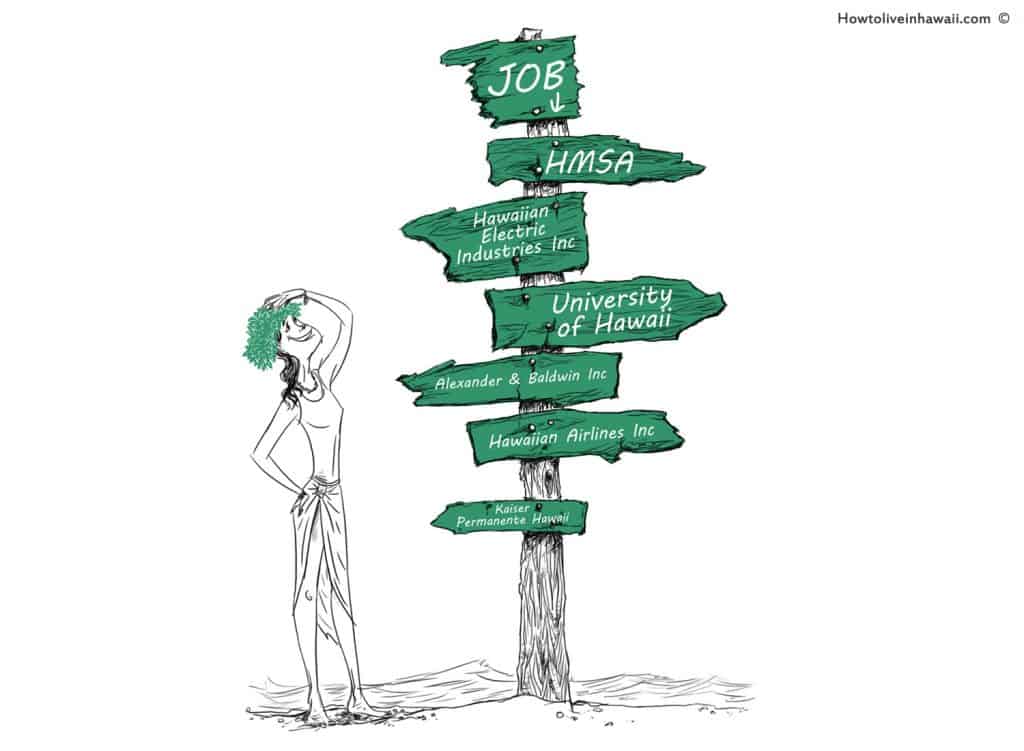
For job seekers and those considering a move to Hawaii, understanding the state’s largest employers is crucial. These companies not only provide the most opportunities but also offer stability in an economy heavily dependent on external forces—from tourism fluctuations to federal spending decisions.
According to the latest data from the Department of Business, Economic Development & Tourism (DBEDT), Hawaii’s labor force showed resilience in 2025 with 1.4% job growth, though projections suggest more modest 0.9% growth for 2026 and 2027. The unemployment rate remains historically low at 2.8%, not because the economy is “hot,” but because Hawaii faces a critical worker shortage driven by high living costs and stagnant wages relative to mainland opportunities.
The state’s largest industries span healthcare, tourism, government, construction, transportation, and financial services. While the cost of living in Hawaii ranks among the highest in the nation, salaries at major companies often include comprehensive benefits packages and unique perks like employee housing assistance and relocation support.
Top 25 Largest Companies in Hawaii (2025-2026)
Based on the latest revenue data, employee counts, and market presence, here are Hawaii’s 25 largest companies. These employers collectively provide opportunities across all major islands and represent the backbone of Hawaii’s private sector economy.
| Rank | Company Name | Industry | Employees (HI) | Est. Revenue |
|---|---|---|---|---|
| 1 | University of Hawaii | Education | 10,000+ | $1.04 billion |
| 2 | Queen’s Health Systems | Healthcare | 7,450 | $1.14 billion |
| 3 | Hawaii Pacific Health | Healthcare | 6,950 | $1.02 billion |
| 4 | Alaska Airlines/Hawaiian Airlines | Transportation | 6,200 | $3.82 billion |
| 5 | Hawaiian Electric Industries | Utilities | 3,702 | $2.9 billion |
| 6 | Kamehameha Schools | Education | 3,380 | $500 million+ |
| 7 | Matson Inc. | Transportation | 2,000+ | $3.4 billion |
| 8 | Kaiser Permanente Hawaii | Healthcare | 2,286 | $1.9 billion |
| 9 | Securitas | Security Services | 2,461 | $200 million+ |
| 10 | Bank of Hawaii | Financial Services | 2,146 | $668 million |
| 11 | First Hawaiian Bank | Financial Services | 2,103 | $881 million |
| 12 | HMSA (Hawaii Medical Service Association) | Insurance | 1,620 | $3.2 billion |
| 13 | Prince Resorts Hawaii | Hospitality | 1,515 | $300 million+ |
| 14 | Walt Disney Co. (Aulani) | Hospitality | 1,400 | $250 million+ |
| 15 | Alexander & Baldwin | Real Estate/Agriculture | 875 | $1.2 billion |
| 16 | Servco Pacific | Automotive | 1,200+ | $1.5 billion+ |
| 17 | Hilton Grand Vacations | Hospitality | 1,100+ | $400 million+ |
| 18 | Hawaiian Telcom | Telecommunications | 900+ | $350 million |
| 19 | Nan Inc. | Construction | 800+ | $500 million+ |
| 20 | Nordic PCL Construction | Construction | 750+ | $437 million |
| 21 | Foodland Super Market | Retail | 2,500+ | $800 million+ |
| 22 | Hawaiian Dredging Construction | Construction | 700+ | $400 million+ |
| 23 | Central Pacific Bank | Financial Services | 650+ | $250 million |
| 24 | Hawaii State Federal Credit Union | Financial Services | 500+ | $150 million+ |
| 25 | Marriott International (Hawaii Properties) | Hospitality | 3,000+ | $600 million+ |
Note: Revenue and employee figures are estimates based on 2024-2025 data. Hawaii-specific numbers are used where available; some companies are divisions of larger mainland corporations.
Hawaii’s Major Industries: A Detailed Breakdown
Healthcare: The State’s Largest Private Sector Employer
Healthcare dominates Hawaii’s private employment landscape, with three major health systems—Queen’s Health Systems, Hawaii Pacific Health, and Kaiser Permanente—collectively employing over 16,000 people statewide. This doesn’t include the thousands more working in private practices, specialty clinics, long-term care facilities, and pharmaceutical companies.
The healthcare boom in Hawaii reflects both an aging population and increased demand for services. Queen’s Health Systems, with its flagship Queen’s Medical Center in Honolulu, reported $1.14 billion in revenue for 2024 and continues expanding with major projects including a large addition to Queen’s Medical Center West Oahu.
Healthcare jobs in Hawaii offer competitive salaries and comprehensive benefits. Registered nurses earn median salaries of $95,000-$110,000, while physicians and specialists can command $200,000-$400,000 depending on specialty. Many healthcare employers offer relocation assistance, shipping allowances, and retention bonuses to attract mainland talent.
Tourism & Hospitality: Hawaii’s Economic Engine
Tourism accounts for approximately 22% of Hawaii’s GDP, though the sector faces headwinds in 2026. Visitor arrivals were down 3.2% through September 2025, with real expenditures (adjusted for inflation) up just 0.1%. The Hawaii Tourism Authority projects cautious growth for 2026, with potential challenges from reduced Canadian and international visitors.
Major hospitality employers include Marriott International, Hilton properties, Prince Resorts, Disney’s Aulani Resort, and numerous boutique hotel groups. The industry employs roughly 200,000 people across hotels, restaurants, tour operators, and related services.
Tourism jobs vary widely in compensation. Entry-level positions in housekeeping or food service may start at $16-$20/hour (Hawaii’s minimum wage rose to $16 in 2026), while experienced hotel managers, executive chefs, and resort directors can earn $80,000-$150,000 annually. Understanding appropriate business attire in Hawaii is important for hospitality professionals.
The Honolulu Convention Center’s closure for renovations from January 2026 through early 2028 will impact group travel, potentially eliminating 60-65% of convention-related business representing about 150,000 visitor nights annually.
Government & Military: Stable Employment Foundation
Government represents Hawaii’s largest overall employment sector, though not classified as a “company” per se. Federal, state, and county government combined employ over 250,000 people in Hawaii—roughly 35% of the total workforce.
Federal employment is particularly significant, with approximately 128,600 federal workers in Hawaii, of which 35,000 are civilian federal employees. The military accounts for about 93,600 active-duty personnel. However, UHERO economists project the potential loss of about 4,500 federal jobs through the end of 2026 due to budget restructuring and federal workforce reductions.
Military construction continues as a bright spot, with NAVFAC Hawaii announcing an $8 billion contract for construction projects across Hawaii and Wake Island running through 2033. This includes housing, industrial buildings, airfields, and a $3.42 billion dry dock expansion at Pearl Harbor Naval Shipyard to support the Pacific nuclear submarine fleet.
Government jobs offer excellent benefits, job security, and defined-benefit pension plans. Federal jobs require U.S. citizenship but offer competitive salaries: GS-9 positions start around $55,000, while GS-13 positions can reach $100,000-$130,000. State workers earn similar ranges with generous health and retirement benefits.
Construction: Booming Through 2027
Hawaii’s construction sector is experiencing robust growth, with total commitments exceeding $10 billion in 2025—a 10% increase over 2024. Residential building permits rose 27%, driven by multi-family housing developments accounting for over 50% of the market.
Major construction employers include Nordic PCL Construction ($437 million in revenue, 750 employees), Nan Inc., Hawaiian Dredging Construction, Hensel Phelps, and Kiewit Infrastructure. These companies are benefiting from both private development and massive military infrastructure investments.
Construction jobs face persistent challenges including material cost volatility due to tariffs (Canadian lumber faces 35% tariffs, Chinese materials 47.5% as of late 2025) and workforce shortages. Skilled trades workers are in high demand, with electricians, plumbers, and heavy equipment operators earning $65,000-$95,000 annually. Project managers and construction executives can earn $100,000-$180,000.
The Lahaina rebuilding effort continues with 784 residential and 191 non-residential permits in process. Major Oahu projects include rail expansion to Ala Moana Center, Aloha Stadium demolition and redevelopment, and extensive residential developments in Kakaako and West Oahu.
Transportation & Logistics: Island Lifelines
Hawaii’s geographic isolation makes transportation companies essential. Matson Inc. leads the sector with over 2,000 Hawaii employees and $3.4 billion in revenue, posting a remarkable $476 million profit in 2024—a 60% increase over the prior year.
The Alaska Airlines-Hawaiian Airlines merger created a powerhouse with 6,200 Hawaii employees and combined Hawaii operations revenue of $3.82 billion in 2024. The merger quadrupled routes connecting Hawaii to the mainland and internationally, with Hawaiian joining Alaska’s global airline alliance in April 2026.
Transportation jobs range from dockworkers and airline mechanics ($50,000-$80,000) to pilots and ship captains ($150,000-$300,000). These positions often include excellent benefits and opportunities for overtime pay.
Financial Services: Steady Profits Despite Challenges
Hawaii’s banking sector maintained solid profitability in 2024-2025 despite economic headwinds. First Hawaiian Bank (2,103 employees, $881 million revenue) held steady at #2 on Hawaii Business Magazine’s most profitable companies list with $230 million in profit. Bank of Hawaii ranked third with $150 million profit.
Banking jobs offer competitive compensation and excellent work-life balance. Tellers start around $35,000-$40,000, while personal bankers and loan officers earn $50,000-$80,000. Senior positions like branch managers and commercial banking executives can earn $100,000-$200,000. Understanding business casual dress codes in Hawaii’s banking sector helps professionals make good impressions.
Technology & Innovation: Growing Sector
While not yet matching mainland tech hubs, Hawaii’s technology sector is expanding. Companies focusing on cybersecurity, data analytics, renewable energy technology, and ocean sciences are growing. The massive buildout of data centers for AI applications nationwide could bring opportunities to Hawaii, though infrastructure challenges remain.
Tech jobs in Hawaii typically pay 15-25% below mainland equivalents but offer quality of life benefits. Software engineers earn $85,000-$130,000, while senior developers and architects can reach $140,000-$180,000. Remote work opportunities allow some Hawaii residents to earn mainland salaries while enjoying island living.
Agriculture: Specialty Crops & Innovation
While no longer the dominant economic force it once was, agriculture remains important with companies like Alexander & Baldwin (875 employees, $1.2 billion revenue) managing large-scale operations. Hawaii’s agriculture focuses on high-value crops: coffee (Kauai Coffee is the largest U.S. coffee plantation), macadamia nuts, tropical fruits, and organic vegetables.
Agricultural jobs vary widely, from farm labor ($30,000-$45,000) to agricultural scientists and managers ($65,000-$100,000). Agritourism and specialty organic farming offer entrepreneurial opportunities.
Salary Ranges by Industry in Hawaii (2025-2026)
| Industry/Position Level | Entry-Level | Mid-Career | Senior/Executive |
|---|---|---|---|
| Healthcare | $40,000-$55,000 | $70,000-$110,000 | $150,000-$400,000 |
| Tourism/Hospitality | $33,000-$42,000 | $50,000-$75,000 | $80,000-$150,000 |
| Construction/Trades | $45,000-$60,000 | $65,000-$95,000 | $100,000-$180,000 |
| Banking/Finance | $35,000-$50,000 | $60,000-$90,000 | $100,000-$250,000 |
| Technology | $55,000-$75,000 | $85,000-$130,000 | $140,000-$200,000 |
| Education | $42,000-$55,000 | $60,000-$85,000 | $90,000-$150,000 |
| Government (Federal) | $45,000-$60,000 | $70,000-$95,000 | $100,000-$160,000 |
| Transportation/Logistics | $40,000-$55,000 | $65,000-$90,000 | $120,000-$250,000 |
Note: Salaries reflect total compensation before taxes. Hawaii’s high cost of living means these salaries have less purchasing power than equivalent mainland positions. When adjusted for cost of living, Hawaii ranks 43rd nationally in real wage value despite ranking 11th in nominal salaries.
Hawaii Job Market Outlook for 2026
The job market outlook for 2026 presents a mixed picture. DBEDT forecasts modest economic growth of 1.5% GDP expansion and 0.9% job growth. UHERO’s forecast is more cautious, predicting weaker tourism performance and federal job losses offsetting construction gains.
Positive Trends:
- Construction boom continuing through 2027 with $8+ billion in military contracts
- Healthcare expansion with major facility additions and aging population demands
- Technology sector growth in cybersecurity, data analytics, and renewable energy
- Minimum wage increase to $16/hour (rising incrementally to $18 by 2028)
- Improved tax benefits with higher standard deductions ($8,000 for single filers in 2026)
- Interest rate cuts by Federal Reserve improving housing market and business investment
Challenges:
- Projected loss of 4,500 federal jobs through end of 2026
- Tourism sector headwinds with reduced Canadian and international visitors
- Convention center closure eliminating 60-65% of group travel (150,000 visitor nights)
- Workforce shortage constraining economic growth—unemployment at 2.8% not from hot economy but lack of available workers
- Tariff volatility increasing business costs (35% on Canadian goods, 47.5% on Chinese imports)
- Affordability crisis driving residents to mainland—42% report difficulty saving, 75% of income needed for median home mortgage
For job seekers, the tight labor market creates opportunities. Employers are offering signing bonuses, relocation assistance, and enhanced benefits to attract workers. However, the fundamental challenge remains: can you earn enough to afford Hawaii’s high cost of living?
Best Companies to Work For in Hawaii
While Hawaii lacks a formal “Best Places to Work” ranking published annually, several companies consistently earn recognition for employee satisfaction, benefits, and workplace culture:
Servco Pacific: Recognized as one of Hawaii’s “Best Places to Work” for 15 consecutive years. The automotive dealer group offers comprehensive benefits, career development programs, and profit-sharing.
First Hawaiian Bank: Employees contributed $873,987 of their own money to charitable causes in 2024—the highest employee giving at any Hawaii company, indicating strong employee engagement and financial stability.
Kaiser Permanente Hawaii: Offers integrated healthcare for employees, excellent benefits, and opportunities for professional development across medical specialties.
Hawaiian Airlines (now Alaska Airlines): Despite industry challenges, consistently ranks well for employee satisfaction with travel benefits, union representation, and local company culture.
University of Hawaii: Provides job security, excellent health and retirement benefits, educational benefits for employees and dependents, and work-life balance.
Kamehameha Schools: Offers competitive salaries, mission-driven work supporting Native Hawaiian education, and comprehensive benefits.
When evaluating employers, Hawaii job seekers should consider total compensation beyond salary: health insurance quality, retirement contributions, paid time off, professional development opportunities, and benefits like employee assistance programs or gym memberships that offset high living costs.
Tips for Job Seekers Moving to Hawaii
1. Secure Employment Before Moving
The most successful Hawaii relocations happen when employment is secured first. The job market is competitive, and employers prefer candidates who can interview in person or start quickly. Remote positions for mainland companies offer another pathway—earn mainland wages while enjoying island living.
2. Network Actively
Hawaii’s business culture emphasizes personal relationships. Join LinkedIn groups focused on Hawaii professionals in your industry, attend virtual networking events, and reach out to Hawaii-based professionals for informational interviews. Understanding local communication styles and pidgin helps you connect authentically.
3. Research Cost of Living Thoroughly
Calculate your true take-home pay after Hawaii’s high cost of living. A $75,000 salary in Hawaii has roughly equivalent purchasing power to $45,000-$50,000 in many mainland cities. Factor in housing ($2,000-$3,500/month for modest rentals), food (30-50% higher than mainland), utilities, and transportation.
4. Target Growth Industries
Focus job searches on expanding sectors: healthcare, construction, technology, renewable energy, and government contractors. These industries offer the most opportunities and career growth potential.
5. Consider Neighbor Islands
While Oahu has the most jobs, neighbor islands (Maui, Big Island, Kauai) often have lower living costs and less competition for positions. However, job diversity is more limited. Research which island fits your lifestyle and career goals.
6. Highlight Relevant Experience
Tailor your resume to emphasize skills valuable in Hawaii: cross-cultural communication, hospitality experience, environmental sustainability knowledge, or familiarity with island logistics challenges.
7. Prepare for Different Interview Processes
Hawaii employers often conduct multiple interview rounds and may ask about your commitment to staying long-term. They’ve seen too many mainland transplants leave after a year. Demonstrate you understand Hawaii’s culture and challenges and have realistic expectations.
8. Understand Licensing and Certification Requirements
Many professions require Hawaii-specific licensing. Research requirements early for healthcare positions, teaching, construction trades, real estate, and legal professions. Visit the Department of Commerce and Consumer Affairs for professional licensing information.
9. Leverage Employer Relocation Benefits
Negotiate relocation packages including shipping assistance, temporary housing, and travel reimbursement. Some employers offer “retention bonuses” requiring you to stay 2-3 years, which aligns with your need for stability while establishing yourself.
10. Plan for Long-Term Career Growth
Hawaii’s smaller economy means fewer senior positions available. Plan career advancement strategies—will you stay with one company long-term, or need to change industries or consider eventual mainland opportunities? Some professionals build Hawaii careers spanning multiple companies in complementary industries.
Frequently Asked Questions (FAQ)
What is the largest employer in Hawaii?
The University of Hawaii is the largest single employer with over 10,000 employees across 10 campuses statewide. However, if you include all government employment (federal, state, and county combined), government employers collectively represent about 35% of Hawaii’s total workforce—approximately 250,000 jobs. The largest private-sector employers are Queen’s Health Systems (7,450 employees) and Hawaii Pacific Health (6,950 employees).
What is a good salary to live comfortably in Hawaii in 2026?
For a single person, financial experts suggest a minimum of $75,000-$85,000 annually to live modestly in Hawaii, with $100,000+ providing more comfortable living. Families need $120,000-$150,000 to manage expenses without constant financial stress. However, this varies by island—Oahu has higher costs than Big Island or Kauai. Remember that Hawaii ranks 11th nationally in nominal salaries but 43rd when adjusted for cost of living. A “thrifty” food budget for a family of four costs $1,500/month, and median rent for a modest 2-bedroom apartment ranges from $2,200-$3,500 depending on location.
Is it hard to find a job in Hawaii as an outsider?
Finding employment from the mainland presents challenges but is definitely achievable. Hawaii employers often prefer candidates who can start immediately and have demonstrated commitment to island life. The tight labor market (2.8% unemployment) works in job seekers’ favor in industries facing worker shortages: healthcare, construction, hospitality, and technology. Remote work arrangements with mainland companies offer another option. The key is starting your search early—ideally 3-6 months before your planned move—and being persistent with networking and applications. Industries with the most opportunities for mainland transplants include healthcare (especially nursing and allied health), technology, skilled trades, and government contracting.
What industries are growing fastest in Hawaii?
Healthcare leads growth with expansion across all major health systems and increasing demand from an aging population. Construction is experiencing a boom lasting through at least 2027, fueled by $8 billion in military infrastructure projects, residential housing development, and Lahaina rebuilding. Technology is expanding, particularly in cybersecurity, renewable energy technology, and data analytics. Renewable energy and sustainability sectors are growing as Hawaii pursues 100% clean energy goals. Government contracting related to military projects continues expanding. Conversely, tourism faces headwinds with 3.2% decline in visitor arrivals through 2025, and federal civilian employment is projected to lose 4,500 jobs by end of 2026.
Do I need to speak Hawaiian or Pidgin to work in Hawaii?
No, English is the primary business language and fluency in Hawaiian or Pidgin is not required for employment. However, learning some basic Hawaiian words and phrases (aloha, mahalo, ohana) shows cultural respect and helps you integrate into the community. Understanding Pidgin—Hawaii’s local English creole—helps with communication, especially in service industries, construction, and community-facing roles. Most professional environments use standard English, but cultural awareness and sensitivity are valued. Many employers offer cultural orientation programs for new employees. Demonstrating genuine interest in local culture and willingness to learn distinguishes you as someone committed to becoming part of the community rather than just living “on” the islands. Resources like understanding Hawaii Pidgin can help you acclimate.
More Hawaii Guides
If you’re considering a move to Hawaii or want to learn more about island living, check out these comprehensive guides:
- How to Ship to Hawaii – Essential guide to moving your belongings across the ocean
- Men’s Business Casual in Hawaii – Navigate professional dress codes in the islands
- Hawaii Pidgin Slang – Learn local language and communication styles
- Grocery Prices in Hawaii – Understand food costs and budgeting strategies
- Cheapest Places to Live in Hawaii – Find affordable communities across the islands
- Best Hawaiian Island to Live On – Compare islands to find your perfect match
- Getting a Hawaii Driver License or State ID – Navigate the DMV process
- Aloha Attire – Understanding appropriate dress for different occasions
- Senior Citizen Benefits in Hawaii – Resources for retirees considering Hawaii
Conclusion: Opportunities and Realities in Hawaii’s Job Market
Hawaii’s largest companies offer genuine career opportunities across diverse industries—from world-class healthcare systems to innovative construction projects reshaping the islands’ infrastructure. The tight labor market creates leverage for job seekers, with employers offering competitive benefits and incentives to attract talent.
However, success requires realistic expectations. Hawaii’s economy faces headwinds in 2026: tourism uncertainty, federal job losses, and persistent affordability challenges that have 42% of residents struggling to save and 29% planning to leave. The state’s 11th-highest nominal salaries become 43rd when adjusted for cost of living.
For those who successfully navigate these challenges, Hawaii offers unparalleled quality of life, strong community connections, and the privilege of calling paradise home. The key is thorough preparation: securing appropriate employment, understanding true living costs, and approaching the move with both excitement and pragmatism.
The companies profiled in this guide—from the University of Hawaii to Matson, from healthcare giants to innovative tech firms—provide the economic foundation that makes life in Hawaii possible for hundreds of thousands of residents. Whether you’re a recent graduate, mid-career professional, or considering relocation in your later working years, opportunities exist. Success comes to those who research thoroughly, network actively, and commit to becoming part of Hawaii’s unique island ohana.
2026 Update: Earnings Snapshot, Hiring Pulse, and Pay-Floor Movement
Hawaii’s largest-employer roster has been remarkably stable through 2026, but the underlying numbers — headcounts, median pay, and growth signals — have shifted meaningfully in the past six months. The 2026 update below pulls from BLS Honolulu MSA employment data, DBEDT’s State of Hawaii Data Book, and individual companies’ published Q4 2025 / Q1 2026 reports.
2026 Top Hawaii Employers by Headcount
| Rank | Employer | 2026 HQ headcount (HI) | YoY change | Median pay band |
|---|---|---|---|---|
| 1 | State of Hawaii (gov) | ~64,000 | +1.1% | $58k–$96k |
| 2 | US Department of Defense (civilian) | ~36,000 | +0.4% | $72k–$112k |
| 3 | Kamehameha Schools | ~3,800 | +1.8% | $54k–$92k |
| 4 | Hawaii Pacific Health | ~7,500 | +2.4% | $62k–$118k |
| 5 | Queen’s Health Systems | ~9,200 | +3.1% | $64k–$124k |
| 6 | Hawaiian Electric Industries | ~3,400 | -1.6% | $78k–$132k |
| 7 | Bank of Hawaii | ~2,000 | -2.2% | $66k–$118k |
| 8 | First Hawaiian Bank | ~2,100 | -1.4% | $64k–$120k |
| 9 | Hawaiian Airlines (Alaska Air Group) | ~7,400 | +0.8% | $54k–$148k |
| 10 | Foodland Super Market Ltd | ~3,000 | +0.6% | $38k–$62k |
The Alaska Air Group acquisition of Hawaiian Airlines closed in late 2024 and the combined entity is now reporting consolidated Hawaii headcount under Alaska Air with Hawaiian retained as a brand. Pay bands above reflect Hawaii-based employees only; mainland Alaska Air pay scales differ.
2026 Hiring Pulse: Where the Growth Is
The healthcare sector accounts for roughly 60% of net new jobs across the top-10 employers in 2026, driven by Queen’s Health Systems’ Punchbowl tower completion and Hawaii Pacific Health’s continued buildout of the Pali Momi outpatient network. Construction sits second, with the Honolulu Authority for Rapid Transportation (HART) Skyline extension and the Aloha Stadium District redevelopment driving sustained crew demand through at least 2028.
Conversely, the financial services sector continues its multi-year contraction. Both Bank of Hawaii and First Hawaiian Bank have shed roughly 2% headcount year-over-year as digital banking adoption reaches saturation among Hawaii residents.
2026 Minimum Wage and Pay Floor Movement
Hawaii’s minimum wage rose to $16.00 per hour on January 1, 2026, per Hawaii Department of Labor and Industrial Relations. The scheduled escalator continues: $16.00 in 2028. Most of the top-25 employers are well above the floor, but it has compressed pay-band entry points at Foodland, Macy’s Hawaii, and the resort hospitality cluster — frontline workers in retail and tourism are now starting at $14.50–$15.75 to maintain hiring momentum.
2026 Sector-Level Net New Jobs (Honolulu MSA)
- Healthcare and social assistance: +2,800 jobs YoY
- Construction: +1,650 jobs YoY (HART, Aloha Stadium, military housing)
- Education: +480 jobs YoY (mostly UH system and DOE)
- Tourism and accommodation: +320 jobs YoY (Maui recovery hiring)
- Financial services: -210 jobs YoY (continued contraction)
- Retail trade: -380 jobs YoY (Sears Hawaii closures, store consolidation)
- Federal government civilian: +140 jobs YoY (modest growth on military bases)
The takeaway: healthcare and construction are the clear hiring engines in 2026; retail and financial services are net job-shedders.
2026 Salary Benchmarks for Hawaii’s Top Employers
The pay bands below reflect 2026 base-pay ranges for mid-career professionals (5–10 years experience) at Hawaii’s largest employers. Bonus and equity vary widely; bands exclude variable comp. Sources: BLS Occupational Employment Statistics for Hawaii and company self-reported median compensation in 2025 annual reports.
| Role | Healthcare (Queen’s, HPH) | Banking (BOH, FHB) | Government (State of HI) |
|---|---|---|---|
| Registered Nurse | $84k–$118k | n/a | $78k–$98k |
| Software Engineer | $92k–$135k | $95k–$140k | $74k–$108k |
| Project Manager | $86k–$128k | $92k–$132k | $72k–$104k |
| HR Manager | $78k–$112k | $82k–$118k | $66k–$94k |
| Accountant (5-10y) | $72k–$98k | $74k–$104k | $62k–$84k |
| Customer Service Lead | $48k–$66k | $54k–$72k | $46k–$62k |
Healthcare pays a small premium for clinical roles and runs roughly equivalent to banking for back-office. State of Hawaii positions trade lower base pay for stronger retirement benefits — the Employees’ Retirement System defined-benefit plan remains one of the strongest public-sector packages in the country.
Pay-band gaps versus mainland tech hubs remain wide. A senior software engineer at a Honolulu employer earns roughly 55–65% of San Francisco or Seattle equivalent base pay; the cost-of-living gap is the partial offset (see the cost-of-living guide for the apples-to-apples comparison).
2026 Hawaii Industry Outlook: What’s Working
The structural shifts in Hawaii’s employer base are now clearer than at any point since the 2008 financial crisis:
Sectors with sustained 2026 hiring momentum:
- Healthcare (aging population + Punchbowl tower)
- Construction (transit + military + Lahaina rebuild)
- Renewable energy (state 100% renewable target by 2045)
- Federal civilian (modest, base-driven)
- Specialty agriculture (Hawaiian-grown branding premium)
Sectors in 2026 contraction:
- Retail (Sears closures, Macy’s footprint reduction)
- Banking back-office (digital migration)
- Print media (Star-Advertiser staffing cuts continued)
- Big-box hospitality (post-Lahaina inventory consolidation on Maui)
The DBEDT Quarterly Statistical and Economic Forecast projects total Hawaii employment to grow 0.7% in 2026 against the US overall projection of 1.1% — meaning Hawaii continues to underperform mainland employment growth, primarily because tourism has not fully recovered to 2019 peak.
2026 Newcomer Hiring Reality Check
Hawaii’s top employers hire from the mainland selectively. The roles most reliably filled by relocating candidates are clinical (RN, physician, NP), engineering (HART transit, military contractor), specialized IT (cybersecurity, infrastructure), and federal civilian positions tied to specific security-clearance requirements. General-management roles are filled internally with much higher frequency than mainland equivalent employers; an outside candidate competing for a mid-level manager opening at Bank of Hawaii or HPH should expect a 10:1 internal-promotion-versus-outside-hire ratio.
For job-seekers moving to Hawaii in 2026:
- Healthcare clinical roles have the shortest time-from-arrival to employment (often 0–30 days)
- Federal civilian roles require a pre-move security clearance — average 6–12 months
- Construction trade roles need Hawaii-specific licensure (Department of Commerce and Consumer Affairs)
- Generic corporate roles average 90–120 days from arrival to offer, longer than mainland equivalents
- Teaching roles via the Hawaii DOE TFTC program are a reliable on-ramp for credentialed mainland teachers
Plan a 6-month financial runway minimum. See how much money you need to move to Hawaii for the full landed-cost breakdown.
2026 Frequently Asked Questions
What is the largest private employer in Hawaii in 2026?
Queen’s Health Systems is the largest private employer in Hawaii in 2026 with approximately 9,200 employees statewide. Hawaii Pacific Health follows at 7,500. Both have grown headcount 2–3% year-over-year, driven by healthcare demand from the aging population and the Punchbowl tower expansion at Queen’s Medical Center.
What is the highest-paying industry in Hawaii in 2026?
Federal civilian engineering and software roles tied to the Department of Defense’s network of bases pay the highest medians in Hawaii, averaging $128k for engineers with 5–10 years of experience. Healthcare specialist physician roles, technology director positions at Hawaiian Electric, and senior airline captains at Hawaiian Airlines round out the top earning bands. The state minimum wage floor of $16.00 per hour now sets the entry-level baseline across all sectors.
How many jobs did Hawaii add in 2026?
Hawaii’s total non-farm employment grew by approximately 4,700 jobs net in the 12 months ending Q1 2026 per BLS Honolulu MSA data — a growth rate of 0.7% against the US national rate of 1.1%. Healthcare added 2,800 jobs (60% of the net gain), construction added 1,650, and retail trade lost 380.
Which Hawaii companies are hiring in 2026?
The most active 2026 hirers among Hawaii’s top employers are Queen’s Health Systems, Hawaii Pacific Health, the HART transit project contractors (Kiewit and others), Hawaiian Electric (grid-modernization buildout), and the federal civilian workforce at the US Indo-Pacific Command. The Hawaii State Department of Education runs a sustained mainland teacher recruitment program through the Teacher From the Continent (TFTC) initiative.
Is the Alaska Air acquisition of Hawaiian Airlines affecting Hawaii jobs?
The Alaska Air Group acquisition closed in late 2024, and the combined entity has retained the Hawaiian Airlines brand and Hawaii-based workforce. Headcount in Hawaii grew approximately 0.8% in 2026. The merger eliminated some Honolulu-based corporate redundancies in finance and HR but added crew positions to support the expanded inter-island and trans-Pacific network. Net Hawaii headcount remains close to pre-merger levels.
Are Hawaii salaries competitive with the mainland in 2026?
Hawaii salaries run roughly 55–80% of mainland equivalent base pay for most professional roles, with healthcare clinical and federal civilian roles closest to parity (75–85%) and tech roles furthest from parity (55–65% of San Francisco or Seattle base). The cost-of-living gap partially offsets the salary gap, but Hawaii’s total household-income-to-housing-cost ratio remains one of the most stressed in the country per BLS regional data.
Where to Track Hawaii Employer Data in 2026
For ongoing tracking of Hawaii’s top employers, headcount trends, and salary benchmarks, the authoritative sources are:
- BLS Honolulu MSA employment reports (monthly)
- DBEDT Quarterly Statistical and Economic Forecast
- Pacific Business News Top 250 Hawaii Companies list (annual, paywall)
- Hawaii DLIR labor force statistics dashboard (monthly)
- Individual public-company 10-K and proxy filings (Hawaiian Electric, Bank of Hawaii, First Hawaiian)
The structural picture for Hawaii’s employer base in 2026 is healthcare and construction in expansion, banking and retail in retrenchment, and government (state, federal, military) holding steady as the consistent foundation. Job-seekers should weight industry choice as heavily as employer choice when planning a Hawaii relocation.
2026 Cross-Reference: How These Employers Affect Hawaii Cost of Living
Hawaii’s top-employer base directly shapes the cost-of-living math for newcomers. The state-government-plus-DoD employment foundation provides the stable income base that supports much of Oahu’s middle-class housing market; healthcare growth at Queen’s and HPH has driven Punchbowl-and-Pali-Momi-adjacent rental rates up 8–12% in 2025–2026; construction sector pay (HART, military housing, Lahaina rebuild) is driving above-average household-income gains in West Oahu and West Maui.
For relocators evaluating where to live based on employer, the geographic pairing matters more in Hawaii than on most US mainland markets because inter-island commutes are not viable. A Queen’s Medical Center role implies an Oahu residence; a Hawaiian Electric grid-modernization role can be Oahu or Big Island; a Hilo Medical Center role is Big Island only. The geographic constraint compresses housing search ranges sharply.
2026 Top-Employer-to-Neighborhood Pairings
| Employer | Primary location | Typical commuting neighborhoods |
|---|---|---|
| Queen’s Medical Center (Punchbowl) | Downtown Honolulu | Makiki, Manoa, Kaimuki, Kakaako, Kalihi |
| Hawaii Pacific Health (Pali Momi) | Aiea / Pearlridge | Aiea, Pearl City, Mililani, Waipahu, Ewa Beach |
| Kamehameha Schools (Kapalama) | Kalihi | Kalihi, Liliha, Kaimuki, Kaneohe |
| Pearl Harbor / Hickam (military) | Pearl City | Aiea, Pearl City, Ewa Beach, Kapolei, Mililani |
| State of Hawaii (downtown) | Downtown Honolulu | Makiki, Manoa, Nuuanu, Liliha, Kaimuki |
| Kahuku Medical Center | Kahuku, North Shore Oahu | Kahuku, Laie, Hauula, Pupukea |
| Hilo Medical Center | Hilo, Big Island | Hilo, Keaau, Volcano |
| Kona Community Hospital | Kealakekua, Big Island | Kailua-Kona, Captain Cook, Keauhou |
Newcomers should accept that Hawaii’s geographic constraints make the employer choice and the housing choice a single decision, not two sequential ones. The HART Skyline extension is shifting some of this pairing math by making Ewa-and-Kapolei-to-downtown commutes more viable through 2027, but for now the matrix above represents the practical reality for 2026 newcomers.