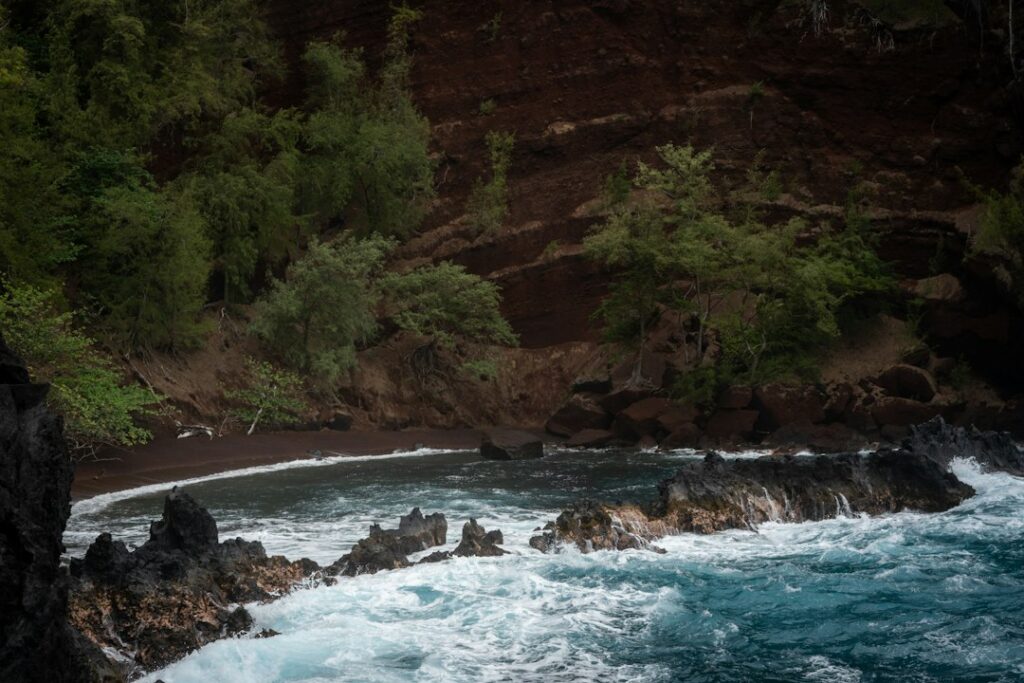
Hawaii sits on roughly 83,000 active cesspools, more per capita than any other state in the country. Each one discharges raw, untreated wastewater straight into the ground. Act 125, signed into law in 2017, set a hard deadline: every cesspool in the state must be converted, connected to sewer, or permanently decommissioned by January 1, 2050. For relocating buyers, that distant mandate has already arrived in the form of paperwork, disclosure forms, and lender questions.
The law also created a point-of-sale trigger. When a Hawaii property with a cesspool changes hands, the seller must disclose it and, in many cases, address conversion before the deal closes. That single line in escrow has stalled or repriced thousands of transactions since 2018. Mainland buyers shopping in rural Puna, upcountry Maui, or Kauai’s North Shore are most likely to encounter the issue first.
This research-driven walkthrough explains what Act 125 actually says, which Upgrade Areas carry the strictest rules, what conversions cost in 2026, and how lenders, escrow officers, and county health departments process a cesspool property. Figures and timelines reflect current data from the Hawaii Department of Health, county wastewater branches, and licensed contractor pricing surveys.
What Act 125 Actually Requires
Act 125 amended Hawaii Revised Statutes Chapter 342D to ban cesspool use after January 1, 2050. The law applies to every parcel statewide regardless of island or zoning. Owners must replace the cesspool with one of three approved alternatives: a septic system, an aerobic treatment unit, or a connection to the public sewer where service is available. The Hawaii Department of Health enforces the rule through its Wastewater Branch.
The 2050 deadline is a backstop, not a slow drift. The state’s Department of Health estimated in its 2017 report that cesspools release about 53 million gallons of wastewater per day into the ground, affecting drinking water aquifers, streams, and nearshore coral. The 2050 target was the political compromise between environmental urgency and the cost of replacing tens of thousands of systems on roughly 83,000 parcels.
Three pieces of follow-on legislation matter. Act 132 (2018) created the Cesspool Conversion Working Group. Act 153 (2022) authorized a $10,000 state tax credit for qualifying upgrades. Act 153 also required the Department of Health to prioritize parcels by contamination risk. The resulting Priority Upgrade Areas dictate which properties must convert sooner than the 2050 statewide backstop.
The Three Compliance Paths
A cesspool is a brick or concrete-lined pit roughly 10 to 20 feet deep. It captures solids and lets liquid waste seep into surrounding soil with zero biological treatment. The legal replacements all treat that wastewater before discharge. Each option carries different cost, footprint, and maintenance profiles, which shape what an owner ultimately spends across decades of ownership.
- Septic system with leach field: two-tank gravity treatment, lowest annual cost.
- Aerobic treatment unit: mechanical aeration, smaller footprint, higher electric use.
- Sewer connection: tied into municipal lines where lateral runs are feasible.
The Point-of-Sale Disclosure Rule
Hawaii law already required sellers to disclose a cesspool’s existence on the standard real estate disclosure form. Act 125 reinforced that obligation and added regulatory teeth. Some counties, including the City and County of Honolulu, now require conversion at the time of sale within certain Priority Upgrade Areas. Even outside mandatory zones, lenders frequently demand resolution before funding the loan.
Disclosure happens through Hawaii Form RR105C, the Seller’s Real Property Disclosure Statement. Item 19 asks specifically about cesspools, septic systems, and aerobic units. A “yes” answer triggers the next round of buyer questions: when was the cesspool installed, has it ever been pumped, is the property in a Priority Upgrade Area, and what is the path to compliance? Buyers should request pumping receipts and prior inspections.
Title companies and escrow officers run a separate check during the title search. The Department of Health maintains a cesspool registry tied to tax map keys. If the registry flags the parcel, escrow will not close until the buyer signs an acknowledgement or the seller produces a compliance certificate. Cash deals can sometimes proceed with a buyer acceptance; financed deals rarely can.
What “Conversion Before Close” Looks Like
When conversion is required at sale, sellers face two practical choices. They can complete the work before listing, factoring the cost into the asking price, or they can offer a price credit at closing tied to the buyer’s post-close conversion. Lenders prefer the former. Most national underwriters will not fund a mortgage on a property with an active, unconverted cesspool inside a designated Upgrade Area.
Priority Upgrade Areas Explained
The Department of Health classifies parcels into four priority tiers based on contamination risk. Criteria include proximity to drinking water sources, distance to surface water and shoreline, soil permeability, and cesspool density. Priority 1 areas pose the highest threat. Priority 2 and 3 areas carry meaningful risk. Priority 4 represents the lowest concern but is still subject to the 2050 statewide deadline.
About 14,000 cesspools sit in Priority 1 areas across Hawaii. These include parts of Kahaluu and Waimanalo on Oahu, Lahaina and Kihei on Maui, Hana, Hanalei and Kapaa on Kauai, and several Big Island coastal stretches from Puako to Kalapana. Priority maps are published by the Hawaii Department of Health and updated as new monitoring data comes in from each county.
Priority designation drives more than just timing. Many state grant and tax credit programs require the parcel to sit within Priority 1 or 2 to qualify. Lenders weighted toward conservative underwriting often flag Priority 1 properties even when the law does not yet require immediate conversion. The practical effect is that Priority 1 owners face the strongest financial pressure to convert now.
| Priority tier | Estimated cesspools | Typical risk factor | Conversion urgency |
|---|---|---|---|
| Priority 1 | ~14,000 | Within 200 feet of drinking water or shoreline | Immediate; tax credit available |
| Priority 2 | ~26,000 | High-density rural or near streams | High; lender flags common |
| Priority 3 | ~30,000 | Moderate density, deeper soils | Moderate; case-by-case review |
| Priority 4 | ~13,000 | Lower density, deep soils | Lower; 2050 deadline applies |
Conversion Cost Ranges and What Drives Them
Most Hawaii cesspool conversions land between $10,000 and $30,000. A simple septic install on a flat lot with accessible soil can finish near the low end. A complex Big Island lava-rock parcel or a sloped Kauai property requiring an aerobic treatment unit and pump-up to a leach field can push past $50,000. The state’s $10,000 tax credit closes part of the gap but rarely all of it.
Labor is the single largest line item. Hawaii’s licensed wastewater contractor pool is small, and demand exceeds supply. Excavation rates on Oahu run roughly $250 to $350 per hour for a trackhoe and operator. Materials shipped from the mainland add another 15 to 25 percent over comparable West Coast prices. County permit fees vary but rarely exceed $1,200 per project for a straightforward residential installation.
| Conversion type | Typical low | Typical mid | Typical high |
|---|---|---|---|
| Septic system (gravity) | $10,500 | $18,000 | $28,000 |
| Aerobic treatment unit | $18,000 | $26,000 | $42,000 |
| Sewer connection (50–100 ft) | $8,000 | $15,000 | $25,000 |
| Sewer connection (200+ ft) | $22,000 | $45,000 | $80,000 |
| Engineered lava-rock system | $24,000 | $38,000 | $65,000 |
What Pushes a Project Toward $30,000 or Higher
- Lava substrate requiring rock breaking or imported soil.
- Steep terrain demanding a lift pump and effluent dosing.
- Tight lot lines that force a sand filter system.
- High groundwater requiring a mound or evapotranspiration design.
- Shared driveway access complicating heavy equipment delivery.
Big Island buyers in Puna and South Kona see the highest cost variance because so much land sits over rough lava. A standard leach field cannot drain through dense pahoehoe, and an engineered system imports tens of cubic yards of soil at $90 to $140 per yard delivered. Costs in the Big Island wastewater market reflect this geological reality clearly.
Septic Systems Versus Aerobic Treatment Units
Septic systems use bacterial action in two chambers, then disperse treated effluent through a leach field. They are simple, durable, and inexpensive to operate. Aerobic treatment units inject oxygen into the wastewater to accelerate biological treatment. ATUs produce cleaner effluent and need less drain field space, which matters on tight Honolulu lots, but they require electricity, regular service visits, and a maintenance contract.
An ATU service contract typically runs $300 to $500 per year. Power draw averages 40 to 80 kWh per month. At Hawaii’s roughly 41-cent residential rate documented by the U.S. Energy Information Administration, that adds $16 to $33 to the monthly electric bill. Buyers comparing options should factor 25 years of operating expense, not just the installation invoice. Septic wins on lifetime cost when the lot allows it.
| Factor | Septic | Aerobic treatment unit |
|---|---|---|
| Install cost (mid) | $18,000 | $26,000 |
| Annual maintenance | $0–$120 | $300–$500 |
| Power draw | 0 kWh | 40–80 kWh/month |
| Pump-out interval | 3–5 years | 1–2 years |
| Required footprint | 1,000–2,500 sq ft | 300–800 sq ft |
| Lifetime cost (25 yr) | ~$22,000 | ~$40,000 |
How Lenders and Escrow Handle Cesspool Properties
Conventional Fannie Mae and Freddie Mac loans treat an active cesspool as a property condition issue. The appraiser must note the system, and the lender’s underwriting team typically requires one of three outcomes: conversion before closing, an escrow holdback for post-close conversion, or a price adjustment with buyer acknowledgement. FHA and VA loans are stricter. Both effectively require a functioning, compliant system at funding.
Escrow officers in Hawaii are well practiced. The standard playbook starts when the disclosure form returns flagging item 19. Escrow then orders a system inspection, pulls the Department of Health registry, and asks both sides to negotiate a conversion approach. Timelines stretch. A typical 30-day escrow on a cesspool property frequently extends to 60 or 90 days, sometimes longer when permits are pending.
For cash buyers, the path is shorter but not zero. Title insurance underwriters increasingly carve out exceptions for active cesspools, leaving the buyer to absorb the future conversion cost without title protection. Mainland investors using all-cash strategies should price the conversion into their offer rather than treat it as a post-close inconvenience to be sorted out later.
Escrow Holdbacks and Repair Credits
When the seller cannot convert before closing, an escrow holdback is the common compromise. The buyer’s lender funds the loan, escrow retains 1.5 to 2 times the estimated conversion cost, and the buyer completes the work within an agreed window, usually 90 to 180 days. Once the Department of Health issues a compliance certificate, the holdback releases. Buyers can frame this against the broader spending picture in the retiree budget breakdown.
Available Grants, Tax Credits, and Loan Programs
The cornerstone incentive is the state’s Cesspool Upgrade Tax Credit, codified under Hawaii Department of Taxation rules. Qualifying conversions receive up to $10,000 against state income tax liability, claimable in the year the work completes. The credit is nonrefundable but can be carried forward. Priority 1 and 2 parcels plus certified cesspool conversion specialists qualify. Owners must keep contractor receipts and Department of Health approvals to claim the credit.
The U.S. Department of Agriculture Rural Development program offers low-interest loans and grants for qualifying low-income rural Hawaii homeowners. Maximum grant is $10,000 with an income cap roughly half the area median. The state legislature has periodically funded direct cesspool conversion grant pools, though appropriations have varied year to year. County wastewater branches publish the current grant cycle on their websites and through outreach events.
For higher-cost projects, homeowners can layer the tax credit with a Property Assessed Clean Energy or home improvement loan. Some Hawaii credit unions offer dedicated cesspool conversion lines at 6 to 9 percent fixed. These are unsecured personal loans, not tied to the mortgage, so they do not trigger lender review of the underlying property condition during loan origination.
Working with Contractors and Permits
Hawaii requires licensed C-37 plumbing contractors or specialized wastewater contractors for cesspool conversions. The Department of Health maintains a public list of approved professionals. Buyers should request a minimum of three bids, verify license numbers through the Department of Commerce and Consumer Affairs, and confirm worker’s compensation and liability coverage before signing any contract. Reputable contractors carry general liability of at least $1 million.
The permit process moves through county building departments. Honolulu, Hawaii County, Maui County, and Kauai County each have slightly different timelines. Honolulu averages 6 to 10 weeks from application to approval. Hawaii County and Maui often run 8 to 14 weeks. Kauai is fastest, frequently 4 to 8 weeks. Counties also charge separately for soil percolation tests, typically $400 to $900 per test.
Typical Project Timeline
- Site evaluation and soil test: 1 to 3 weeks.
- Engineering and system design: 2 to 4 weeks.
- Permit submission and approval: 4 to 14 weeks.
- Excavation and installation: 1 to 2 weeks.
- Inspection and compliance certificate: 1 to 3 weeks.
From the day a buyer engages a contractor to the day the Department of Health issues a compliance certificate, the full process commonly takes 12 to 24 weeks. That timeline matters in a financed transaction because escrow holdbacks usually expire within 180 days. Pushing too close to the deadline risks default of the holdback agreement and potential renegotiation under less favorable terms.
The Soil Testing and Engineering Step
Percolation testing determines whether the lot will accept treated effluent at a rate the Department of Health considers safe. A certified engineer digs test pits, measures water absorption over a timed interval, and produces a report. Acceptable perc rates fall between 1 and 60 minutes per inch. Rates outside that band require alternative designs—mound systems, drip dispersal, or sand filters—each adding cost to the project.
The engineering report drives the system specification. Bedroom count, soil class, lot slope, well locations, and property lines all factor into the final design. Hawaii setback rules typically require 50 feet from drinking water wells, 50 feet from streams, and 10 feet from property lines. Smaller lots in older Honolulu neighborhoods sometimes cannot meet setbacks and must choose an ATU by default.
Soil class on the Big Island is the most consequential variable. Pahoehoe lava reads as functionally impermeable for septic purposes, while a’a fields drain so fast that effluent can reach groundwater without adequate treatment. Either scenario forces engineered solutions. Buyers should request soil class results from the seller during inspection, especially in neighborhoods researched through the Kailua-Kona market overview.
Buyer Negotiation Playbook
For mainland buyers, the cesspool question is leverage. A seller who has not addressed conversion is on the back foot in any priced negotiation. Smart buyers approach the disclosure with one of three asks: a price reduction equal to a high-end conversion estimate, a seller-funded escrow holdback, or seller completion before closing with proof of compliance. Each shifts risk and timing differently.
The price-reduction route is cleanest. The buyer absorbs the conversion work and timeline but controls contractor selection and system choice. Holdbacks let the seller keep the higher price on paper but introduce timing risk for both sides. Pre-close conversion is rare because of permitting timelines but eliminates buyer uncertainty entirely. The right choice depends on the local contractor backlog and the buyer’s appetite for project management.
Inspection Contingency Language
Hawaii’s standard purchase contract allows a cesspool inspection contingency. Buyers should insert clear language requiring camera inspection of the existing cesspool, soil percolation testing in the proposed leach field area, and a written cost estimate from a licensed wastewater contractor. This document becomes the negotiation anchor and the basis for any escrow holdback amount that the buyer’s lender may eventually require.
Seller Preparation Checklist
Sellers can shorten their sale timeline and protect their price by doing pre-listing work. The single highest-impact step is obtaining a conversion estimate before the property goes live. Listing with a known number lets the agent address the issue head-on rather than scrambling mid-escrow. Sellers in Priority 1 areas should also confirm whether their county requires conversion at sale; that one fact dictates the entire selling strategy.
Pre-listing checklist items include having the cesspool pumped (about $400 to $700), obtaining a camera inspection ($300 to $600), pulling the property’s Department of Health record, and ordering at least two contractor bids. Sellers who go further and complete the conversion before listing often recover most of their cost in higher offer prices, particularly when comparable cesspool-flagged listings sit longer on the market without offers.
- Pump and inspect the cesspool before listing photography.
- Confirm the parcel’s Priority Upgrade Area classification.
- Gather two to three licensed contractor estimates.
- Compile permit history and any prior wastewater records.
- Disclose accurately on Form RR105C from day one.
Common Pitfalls and Delays
The most expensive surprise is discovering during permitting that the lot will not perc. Dense clay soils, high groundwater, or proximity to a stream can disqualify a standard leach field. The fallback designs—mound systems, sand filters, drip dispersal—add $8,000 to $20,000 to the budget. Buyers who skipped percolation testing during inspection often face this jolt three months after closing, after the contingency window has closed.
Equally common: contractor scheduling lag. A homeowner who signs in March may not see excavation start until August. The licensed contractor pool serving each island is small, and Priority 1 properties move to the front of the queue. Booking early and accepting flexible install dates is the practical answer. Households juggling other relocation expenses, including Hawaii’s high electricity costs, often phase the project across budget years.
Other Frequently Missed Issues
- Old cesspools shared with a neighboring parcel through an easement.
- Setback violations from existing wells or property lines.
- Archaeological or cultural review required on certain parcels.
- HOA or AOAO restrictions in older subdivisions.
- Insurance carriers refusing coverage until conversion completes.
Older condominium subdivisions sometimes ran cesspools shared across multiple units. Conversion in those cases involves the entire association, not just one owner, and triggers a separate review process. Buyers reviewing Hawaii AOAO governance should ask whether wastewater liability sits with the unit owner or the association before signing any purchase contract.
How This Compares to Mainland Wastewater Norms
Most mainland states do not regulate cesspools because they have been banned for decades. Massachusetts, New Jersey, and Maine completed their cesspool phase-outs in the 1990s and 2000s. Hawaii is the last U.S. state with active cesspools, a function of historical land use patterns and the high cost of building sewer infrastructure on rural island terrain. Mainland buyers from those states often arrive unfamiliar with the concept entirely.
Comparable septic conversion programs on the mainland typically cost $6,000 to $15,000, half to two-thirds of Hawaii rates. Labor, materials shipping, and lava-rock excavation drive the difference. Households relocating from Oregon, North Carolina, or Idaho can preview the comparative spending shift through detailed walkthroughs like the Hawaii vs Oregon cost comparison or the Hawaii vs North Carolina breakdown.
The U.S. Census Bureau places Hawaii’s housing unit count at roughly 561,000, meaning cesspools sit under approximately 15 percent of all housing units in the state. That density is unmatched in any other U.S. jurisdiction and explains the political compromise behind a 30-year conversion window rather than an immediate ban on the systems statewide.
Regional Patterns Across the Islands
Cesspool density varies sharply by island. Oahu has the lowest count per capita because most urban and suburban areas already connect to municipal sewer. The Big Island has the highest absolute count, with roughly 49,000 cesspools concentrated in Puna, Ka’u, and parts of Kona. Maui sits at around 12,000, Kauai at 14,000, and Molokai and Lanai together near 1,500 active systems.
The Big Island’s higher count reflects scattered rural lots, lava terrain that complicates engineering, and the absence of sewer service across most of the island outside Hilo and Kailua-Kona. Buyers researching the Kauai residential market should expect cesspool questions on most pre-1995 listings outside the few sewered town centers along the south and east shores.
Maui’s highest density runs through Hana, Haiku, and the Lahaina-Kihei corridor. Kauai concentrates along the North Shore from Kilauea through Hanalei, and the eastside corridor between Kapaa and Anahola. Each county wastewater branch publishes parcel-specific search tools that confirm whether a given tax map key sits inside a Priority Upgrade Area or outside the current mandatory list.
Frequently asked questions
Does Act 125 apply to vacation rentals and second homes?
Yes. The law applies to every parcel using a cesspool regardless of occupancy type. Owner-occupied homes, long-term rentals, and short-term vacation rentals all fall under the 2050 deadline. Vacation rental owners actually face additional pressure because some county short-term rental permits now require active, compliant wastewater systems as a condition of renewal beyond 2030.
Can the 2050 deadline be extended for hardship cases?
State legislators have discussed targeted extensions for properties where conversion is technically infeasible, such as steep lava parcels with no perc and no sewer access. As of 2026, no general extension has been enacted. The Department of Health treats the 2050 deadline as firm and continues publishing yearly conversion progress reports against that target date.
What happens if an owner ignores conversion after 2050?
The law authorizes the Department of Health to issue notices of violation, impose civil penalties up to $10,000 per day, and place liens against the property. Practical enforcement will likely focus on Priority 1 and 2 parcels first. Owners selling after 2050 with an active cesspool will face title and lender refusals identical to current rules in mandatory-conversion zones.
Does the $10,000 tax credit cover every conversion?
No. The credit applies only to qualifying upgrades on Priority 1 or 2 parcels, completed by licensed contractors, and claimed against actual state income tax liability. Retirees with low Hawaii tax bills may not absorb the full credit in one year, though it carries forward. The credit was renewed through 2026 and may extend further pending legislative action.
How does Act 125 affect homeowner insurance availability?
Carriers increasingly ask about wastewater systems during renewal. Some refuse new policies on properties with active cesspools in Priority 1 areas. Others apply surcharges or exclude septic-related claims. Buyers should request a quote from their planned insurer before finalizing escrow, particularly when also shopping coverage tied to hurricane protection or other Hawaii-specific dwelling risks.
Will conversion lower a property’s resale value later?
The opposite usually holds. Comparable sales data from 2021 through 2025 shows converted properties achieving roughly 3 to 7 percent higher per-square-foot sale prices than nearby cesspool listings in the same neighborhood. Buyers price in the avoided cost, the shorter escrow timeline, and the lower lender friction. Conversion is generally a value-positive renovation for sellers.
Can a buyer claim the tax credit after closing?
Yes, if the buyer completes the work, uses a licensed contractor, and the parcel meets Priority Upgrade Area criteria, the credit follows the person paying for the conversion. Buyers planning to claim it should keep all receipts, contractor licenses, and Department of Health compliance certificates. The credit is filed on the state income tax return for the year work completes.
How long do conversions typically take from start to finish?
From signing a contractor to receiving the compliance certificate, most projects run 12 to 24 weeks. Permit approval alone can absorb 4 to 14 weeks depending on the county. Excavation and install once permits clear take about one to two weeks. Soil testing and engineering happen at the start. Holiday and rainy-season delays add another 2 to 4 weeks.