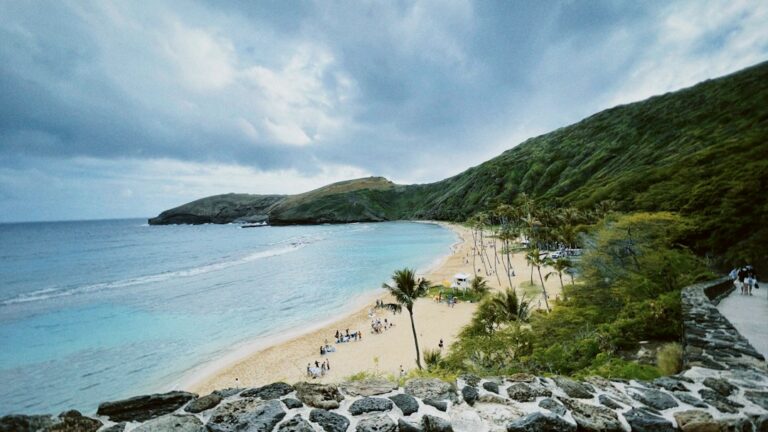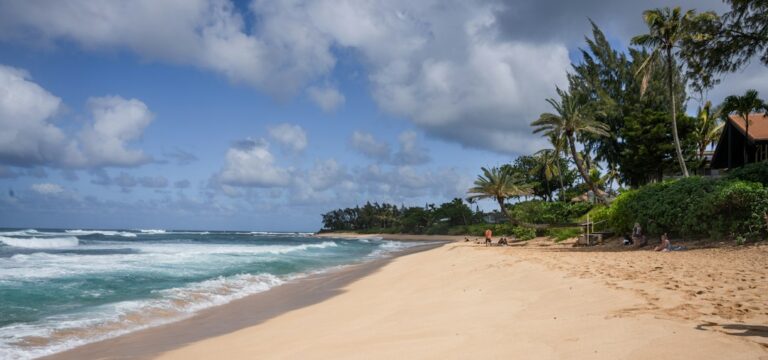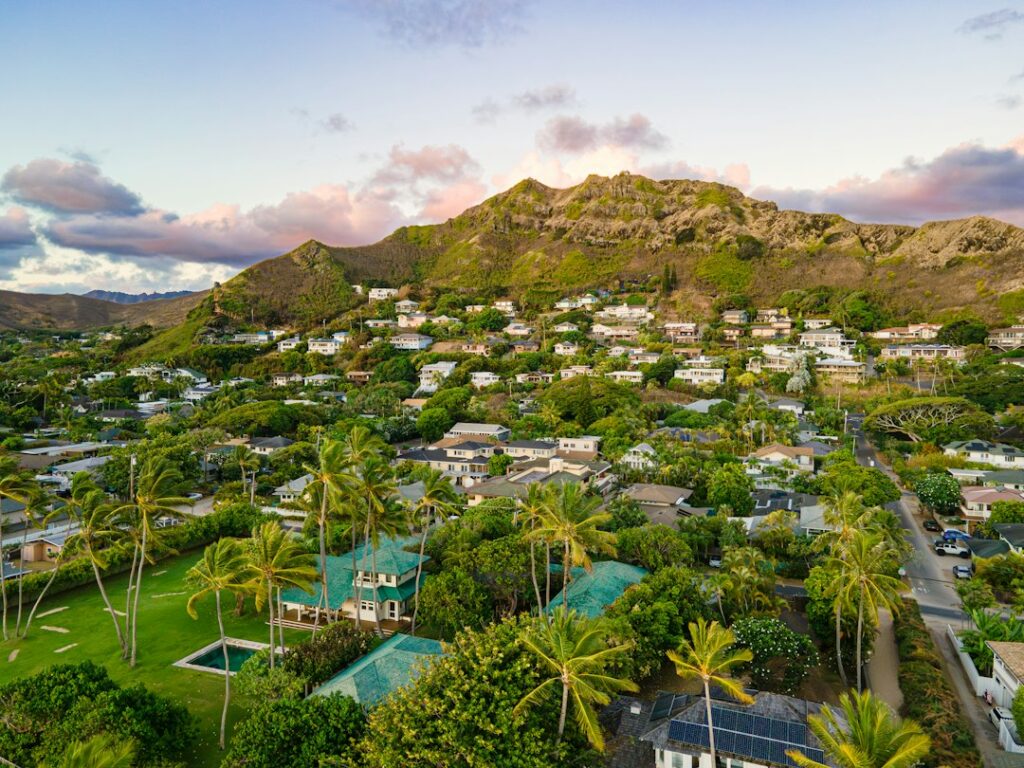
Coastal lots in Hawaii sometimes come with a private well instead of a county water meter, and on lava-shelf parcels in North Kohala, sand plains around Mā’alaea, and dry leeward stretches of Waianae, that well water frequently runs brackish. Salty groundwater is not a defect — it is the geology — but it changes the math on appraisals, treatment systems, and monthly utility bills.
Buyers researching these properties need to understand chloride thresholds, conductivity ranges, the way the freshwater lens floats on seawater in basalt aquifers, and what a reverse-osmosis system actually costs to install and maintain. Lenders care, too: FHA and VA appraisers apply specific potability standards that a marginal well can fail.
This research piece walks through the salinity testing process, the USGS and state data sources that disclose aquifer trends, the CWRM well-permit framework, and the way coastal Hawaii buyers typically structure financing and treatment around a brackish source.
What “Brackish” Means for a Hawaii Well
The U.S. Geological Survey defines brackish water as containing 1,000 to 10,000 milligrams per liter of dissolved solids — saltier than potable freshwater but fresher than seawater, which sits near 35,000 mg/L. For comparison, the EPA’s secondary drinking-water standard caps chloride at 250 mg/L on taste and corrosion grounds.
Most Hawaii coastal wells that owners describe as “brackish” run between 300 and 3,500 mg/L total dissolved solids. Water in that range tastes salty, leaves white deposits on fixtures, and can corrode copper plumbing within a decade. It will not poison a household, but it is rarely consumed without treatment.
Conductivity, measured in microsiemens per centimeter, is the field shortcut. Fresh aquifer water on Oahu typically reads 200 to 500 µS/cm. A coastal well measuring 2,000 µS/cm is mildly brackish; 5,000 µS/cm is firmly brackish; anything above 10,000 µS/cm approaches seawater dilution and is essentially untreatable for household use at reasonable cost.
Where Brackish Wells Cluster in Hawaii
Three regions account for most of the brackish-well housing stock that mainland buyers encounter when researching coastal parcels. Each has a distinct geology and a distinct buyer profile.
North Kohala and the Kona Coast
From Kawaihae south to Kailua-Kona, lava shelves drop steeply into the Pacific and the freshwater lens floating above seawater is thin — sometimes only 30 to 80 feet thick. Wells drilled below sea level on these parcels routinely pull chloride concentrations of 400 to 1,500 mg/L. Buyers exploring the area should pair well research with broader Big Island cost-of-living research.
Mā’alaea and South Maui
The isthmus between Maui’s two volcanoes drains into Mā’alaea Bay through sandy coastal plains. Shallow wells there tap groundwater that mixes with tidal seawater under the dunes, producing conductivity readings of 2,500 to 8,000 µS/cm in dry years. Drought stretches from June through October concentrate salts further as recharge slows.
Waianae Coast on Oahu
The leeward Waianae range receives only 20 to 25 inches of annual rainfall along the shoreline, compared with 150-plus inches in the windward Ko’olau valleys. Private wells in agricultural-zoned parcels above Lualualei and Nānākuli have produced chloride readings above the 250 mg/L EPA secondary standard for decades, per City and County of Honolulu water-resource summaries.
How Salt Gets Into Coastal Wells
Hawaiian basalt aquifers behave according to the Ghyben-Herzberg principle: every foot of freshwater rising above sea level supports roughly 40 feet of freshwater extending below sea level, with seawater underneath. The freshwater “lens” floats because it is less dense.
That ratio works when recharge is steady and pumping is gentle. But aggressive pumping draws the saltwater interface upward in a process called upconing, contaminating a well that was fresh the year before. Long droughts shrink the lens; sea-level rise compresses it from below.
The practical consequence for a buyer: a well log showing 280 mg/L chloride in 2010 may not predict 2026 readings. Salinity drifts. A serious due-diligence pass requires current testing, not just historical disclosures from prior owners or listing agents.
Testing Chloride, Conductivity, and Other Salinity Markers
State-certified laboratories in Honolulu, Kahului, and Hilo run the full panel that buyers and lenders typically want. The Hawaii Department of Health maintains the list of approved labs and publishes the Safe Drinking Water Act standards that mortgage appraisers reference.
A baseline brackish-well panel costs $150 to $350 and turns around in five to ten business days. A full potability panel — adding bacteriological, nitrate, heavy metals, and pesticide testing — runs $400 to $900 and is what FHA and VA appraisers usually require for loan approval.
What the Standard Panel Measures
- Chloride concentration in mg/L (EPA secondary limit: 250)
- Specific conductivity in µS/cm (field salinity proxy)
- Total dissolved solids in mg/L (taste and corrosion)
- Sodium in mg/L (relevant for low-sodium diets)
- pH and hardness (affects RO membrane life)
- Total coliform and E. coli (bacteriological screen)
- Nitrate-nitrogen (agricultural contamination marker)
- Iron and manganese (staining and odor causes)
Salinity Classification at a Glance
| Water Class | Chloride (mg/L) | Conductivity (µS/cm) | Household Use |
|---|---|---|---|
| Fresh | Under 100 | Under 1,000 | Direct potable use |
| Slightly brackish | 100 to 250 | 1,000 to 2,500 | Acceptable with softening |
| Brackish | 250 to 1,000 | 2,500 to 7,000 | RO treatment for drinking |
| Highly brackish | 1,000 to 3,500 | 7,000 to 15,000 | Whole-house RO required |
| Saline | Above 3,500 | Above 15,000 | Not economically treatable |
USGS and CWRM Data Sources Buyers Should Pull
Before commissioning a well test, buyers can pull decades of free aquifer data from public databases. These sources reveal whether a parcel sits over a stressed aquifer, a stable one, or one already trending salty across recent drought cycles.
USGS National Water Information System
The USGS maintains continuous monitoring wells across Hawaii, with some records reaching back to the 1950s. The Pearl Harbor, Honolulu, and Waianae aquifer systems have particularly dense coverage. Buyers can download chloride time-series for the nearest monitoring station to see whether salinity is trending up, flat, or down over the past two decades.
CWRM Well Index
The Hawaii Commission on Water Resource Management (CWRM, within the Department of Land and Natural Resources) maintains a public well index keyed by tax map key. A buyer can look up the parcel, find the assigned well number, and pull the original well-construction report, pumping test data, and any chloride monitoring history submitted by prior owners.
Sustainable Yield Designations
CWRM publishes sustainable yield estimates for each of Hawaii’s 24 aquifer sectors and 119 aquifer systems. If a parcel sits within a designated water management area — currently including the Iao aquifer on Maui and several Oahu systems — new well permits face additional scrutiny and may be denied outright by the commission.
Reverse Osmosis Systems: Sizing, Costs, and Maintenance
Reverse osmosis is the standard treatment for brackish water in Hawaiian households. Membranes force water through a semi-permeable barrier under pressure, rejecting 95 to 99 percent of dissolved salts. The resulting permeate is clean enough for drinking, cooking, and showers; the concentrate (brine) is discharged to a dedicated drywell or, on permitted parcels, an ocean outfall.
Point-of-Use vs Whole-House Systems
A point-of-use unit treats only the kitchen tap and an icemaker line. It costs $400 to $1,200 installed, uses a 50- to 100-gallon-per-day membrane, and is appropriate when the rest of the house can tolerate untreated brackish water for laundry and bathing.
A whole-house brackish RO system treats every fixture. Installed cost for a typical three-bedroom home runs $3,000 to $8,000 depending on feed-water salinity, daily output (usually 500 to 1,500 gallons per day), and whether a softener, sediment filter, and storage tank are needed upstream.
Annual Operating Costs
| Cost Item | Annual Range | Notes |
|---|---|---|
| Pre-filter cartridges | $80 to $200 | Quarterly replacement typical |
| RO membrane replacement | $300 to $800 | Every 3 to 5 years, prorated |
| Electricity for booster pump | $180 to $450 | At $0.42 per kWh Hawaii average |
| Annual professional service | $200 to $500 | Test, sanitize, adjust pressure |
| Water rejected as brine | 20% to 50% of feed | Pumping cost on private wells |
Hawaii’s electricity rates magnify the operating cost. EIA state electricity profiles show Hawaii’s residential rate consistently leading the nation. Households researching Hawaii electricity costs should add 200 to 600 kWh per year for a whole-house RO pump to their projected utility budget.
Concentrate Disposal
Brine disposal is the regulatory pinch point. A 1,000 gallon-per-day RO system rejecting 30 percent produces about 300 gallons of concentrate daily. That waste cannot legally go to a standard septic system. Options include a dedicated drywell, an injection well permitted by the Department of Health, or evaporation ponds on agricultural parcels.
How FHA, VA, and Conventional Appraisers Treat Brackish Wells
Lenders care about well water because the appraisal must certify the home as habitable. FHA, VA, and USDA loans require a water-quality test as a condition of underwriting whenever a parcel relies on a private well. Conventional loans defer to investor guidelines, but Fannie Mae and Freddie Mac generally adopt the same potability standards.
The FHA/VA Potability Standard
Both FHA Handbook 4000.1 and the VA Lender’s Handbook require the well to meet the local jurisdiction’s drinking water standards. In Hawaii that means the EPA Safe Drinking Water Act maximum contaminant levels plus the Hawaii Department of Health secondary standards. Chloride above 250 mg/L, sodium above 160 mg/L, or any bacteriological positive will trigger a deficiency notice.
How Buyers Clear the Deficiency
The standard cure is installing a treatment system before closing and re-testing the post-treatment water. An RO system that brings finished-water chloride down to 30 mg/L will satisfy the appraiser even when raw well chloride sits at 1,200 mg/L. The cost of the system is sometimes negotiated as a seller credit or rolled into a renovation loan.
Buyers should expect a 14- to 30-day delay when treatment must be installed mid-escrow. Working with a well contractor experienced in lender documentation reduces friction; the appraiser typically requires the lab report on certified-lab letterhead plus a manufacturer’s certification of the installed system.
Cash Buyers and Local Portfolio Lenders
Cash purchases avoid the potability hurdle entirely, which is part of why brackish-well coastal parcels often trade at a discount to comparable county-water lots. Local portfolio lenders — Hawaii’s smaller credit unions and community banks — sometimes underwrite to looser standards than national FHA appraisers, particularly for buyers planning to install treatment post-close.
CWRM Well Permit and Drilling Requirements
Anyone drilling, modifying, or abandoning a well in Hawaii must obtain a CWRM Well Construction Permit. The application requires a licensed C-57 well contractor, a sealed site plan, and an estimated pumping rate. Permit fees run modestly — typically $25 to $100 — but the contractor and drilling costs are where the budget goes.
Typical Drilling Costs in Brackish Zones
| Well Component | Typical Cost | Notes |
|---|---|---|
| CWRM construction permit | $25 to $100 | Plus pump installation permit |
| Site survey and design | $1,500 to $3,500 | Required for permit submittal |
| Drilling (per foot) | $75 to $180 | Basalt is harder than sediment |
| Casing and grouting | $4,000 to $12,000 | Sanitary seal to 50+ feet |
| Pump and pressure tank | $3,500 to $7,500 | Submersible pump typical |
| Pumping test (24-hour) | $1,500 to $3,000 | Required for CWRM use permit |
| Total new well, 200 feet | $35,000 to $65,000 | Coastal basalt parcel |
Water Use Permits in Designated Areas
Inside a designated Water Management Area, drilling a new well also requires a Water Use Permit specifying a maximum daily withdrawal. Existing legal uses are grandfathered, but a buyer adding an ohana unit or detached ADU may need to amend the permit to reflect higher household demand.
Monitoring and Reporting
Wells producing more than 70,000 gallons per day must submit monthly pumpage and chloride reports to CWRM. Most single-family residential wells stay well below that threshold — a typical four-person household uses 200 to 400 gallons per day — but agricultural and multi-unit parcels often cross it during peak season.
Insurance, Resale, and Long-Term Value Considerations
A brackish well affects more than the closing checklist. It shapes insurance underwriting, future resale, and the long-run maintenance budget on a coastal Hawaii home.
Homeowners and Equipment Coverage
Standard Hawaii homeowners policies cover the well pump and pressure tank under the dwelling or other-structures clause. RO membranes and treatment electronics are typically excluded as appliances unless the homeowner adds an equipment-breakdown endorsement, which runs $50 to $150 per year. Separate Hawaii hurricane insurance research covers the windstorm side of the policy stack.
Resale Disclosure
Hawaii’s Seller Disclosure Statement requires disclosure of any private water source plus the most recent water-quality test results. Sellers who cannot produce a current potability test typically see longer days-on-market and price reductions of 3 to 8 percent compared with county-water comps in the same neighborhood at the same beach access level.
The County-Water Hookup Question
On parts of the Waianae coast and in pockets of South Kohala, county water mains run within a few hundred feet of brackish-well parcels but have never been extended to the lot. Hookup costs typically range from $15,000 to $60,000 depending on distance, easements, and meter availability. The Hawai’i County Department of Water Supply publishes current connection-fee schedules each fiscal year.
Cost Snapshot: Buying a Brackish-Well Property
A buyer building a realistic budget for a brackish-well coastal parcel should plan for upfront treatment, ongoing operating costs, and a reserve for membrane replacement. Comparing the totals against a county-water property in the same area often shifts the calculus on which lot is actually cheaper to own.
| Line Item | One-Time Cost | Annual Cost |
|---|---|---|
| Pre-purchase water testing | $400 to $900 | $200 retest |
| Whole-house RO installation | $3,000 to $8,000 | — |
| Storage tank and pressure pump | $1,500 to $4,000 | — |
| Concentrate disposal drywell | $2,500 to $6,500 | — |
| Filter and membrane consumables | — | $380 to $1,000 |
| RO pump electricity | — | $180 to $450 |
| Annual service contract | — | $200 to $500 |
| Lab retest each 12 months | — | $150 to $350 |
| Five-year total estimate | $7,400 to $19,400 | $5,550 to $11,500 |
Households comparing parcels across the state often weigh these numbers alongside broader condo versus single-family trade-offs. A condo with metered municipal water sidesteps every line above; a fee-simple coastal lot with a brackish well accepts these costs in exchange for shoreline acreage.
Comparison with Catchment and Municipal Sources
| Water Source | Setup Cost | Annual Operating | Common Region |
|---|---|---|---|
| County municipal | $0 to $5,000 connection | $600 to $1,400 | Urban Oahu, Hilo |
| Rainwater catchment | $8,000 to $18,000 | $300 to $900 | Puna, Volcano, windward |
| Brackish private well | $35,000 to $70,000 new | $1,200 to $2,300 | Kohala, Mā’alaea, Waianae |
| Fresh private well | $25,000 to $55,000 new | $400 to $900 | Upcountry Maui, Waimea |
Buyers comparing alternatives often reference Volcano Village catchment-water relocation as a benchmark — catchment has different failure modes than brackish wells, but the cost structure is closer to a private well than to a metered municipal hookup.
Practical Due Diligence for Buyers
A 30- to 45-day escrow is enough time to complete a thorough water-quality review if the buyer moves on day one. Sequencing matters because lab turnaround and contractor scheduling can otherwise compress the contingency period and force a hasty extension or cancellation.
Recommended Timeline
- Days 1 to 3: Pull CWRM well report and USGS chloride history
- Days 3 to 5: Order independent lab sampling with chain of custody
- Days 7 to 12: Receive baseline panel results back from lab
- Days 10 to 18: Solicit RO contractor bids if treatment is needed
- Days 15 to 25: Negotiate seller credit or buyer-installed treatment
- Days 25 to 35: Lender potability re-test of treated water
- Days 30 to 45: Close with treatment system documented in file
Questions to Ask the Seller
- When was the well drilled and to what total depth?
- What was the static water level at drilling?
- Has chloride been tested in the past 24 months?
- Is there an existing RO or softener system?
- When were membranes and filters last replaced?
- Where does the brine concentrate currently discharge?
- Is the well shared with any neighboring parcels?
- Are there pending CWRM enforcement actions on the well?
Red Flags Worth a Second Look
Rusty fixtures, white mineral deposits on faucets, or copper plumbing that has been replaced within ten years all suggest chronic salt exposure. A seller reluctant to authorize an independent water test is a sharper warning sign. Reporting from Honolulu Civil Beat has documented Waianae-area cases where coastal aquifers shifted faster than disclosed.
Frequently asked questions
Can a brackish well pass an FHA appraisal without treatment?
Rarely. FHA appraisers apply the Safe Drinking Water Act maximum contaminant levels plus Hawaii Department of Health secondary standards. Chloride above 250 mg/L or any bacteriological positive triggers a deficiency. Most brackish-well closings clear this hurdle by installing reverse osmosis before the lender’s final inspection and supplying lab results documenting that the post-treatment water meets every required standard.
How long does a reverse osmosis membrane last on brackish Hawaii water?
A standard thin-film composite membrane treating water in the 1,000 to 2,500 mg/L total dissolved solids range typically lasts three to five years. Higher salinity, poor pre-filtration, or chlorine exposure shortens that to two years. Membrane replacement runs $300 to $800 for a whole-house unit, prorated to roughly $100 to $200 per year of useful service life.
Where can buyers find historical chloride data for a specific Hawaii well?
The Commission on Water Resource Management within the Department of Land and Natural Resources maintains a public well index keyed by tax map key. The USGS National Water Information System publishes long-term monitoring well chloride records back to the 1950s for the Pearl Harbor, Honolulu, and Waianae aquifer systems. Both databases are free and downloadable in spreadsheet format.
Does a brackish well lower a Hawaii property’s resale value?
Comparable sales suggest a 3 to 8 percent discount versus county-water lots in the same neighborhood, widening to 10 to 15 percent if no treatment system is installed. The discount narrows substantially when the seller can document a recent potability panel, a functioning RO system with current service records, and a brine disposal plan that satisfies state regulators.
Can a household drink water from a properly treated brackish well?
Yes. A correctly sized reverse osmosis system rejects 95 to 99 percent of dissolved salts, bringing finished-water chloride from 1,200 mg/L down to roughly 30 mg/L — well under the EPA secondary standard of 250 mg/L. The treated water tastes neutral, will not corrode fixtures, and meets federal drinking water criteria for taste, odor, and bacteriological safety.
Are there parts of Hawaii where new brackish wells cannot be drilled?
Yes. CWRM has designated several aquifer systems on Oahu and Maui as Water Management Areas, where every new well requires both a Construction Permit and a Water Use Permit specifying a maximum daily withdrawal. The Iao aquifer on Maui and parts of the Pearl Harbor system on Oahu currently fall in this category, and new permits in these zones can be denied outright.
How does a brackish well affect other relocation costs like cars or pets?
It does not directly. Vehicle and household costs are separate line items — buyers researching coastal Hawaii relocation should review Hawaii car insurance rates and new-resident vehicle registration independently. The brackish-well question affects only the property itself, not transportation, healthcare, or schooling budgets for the household.