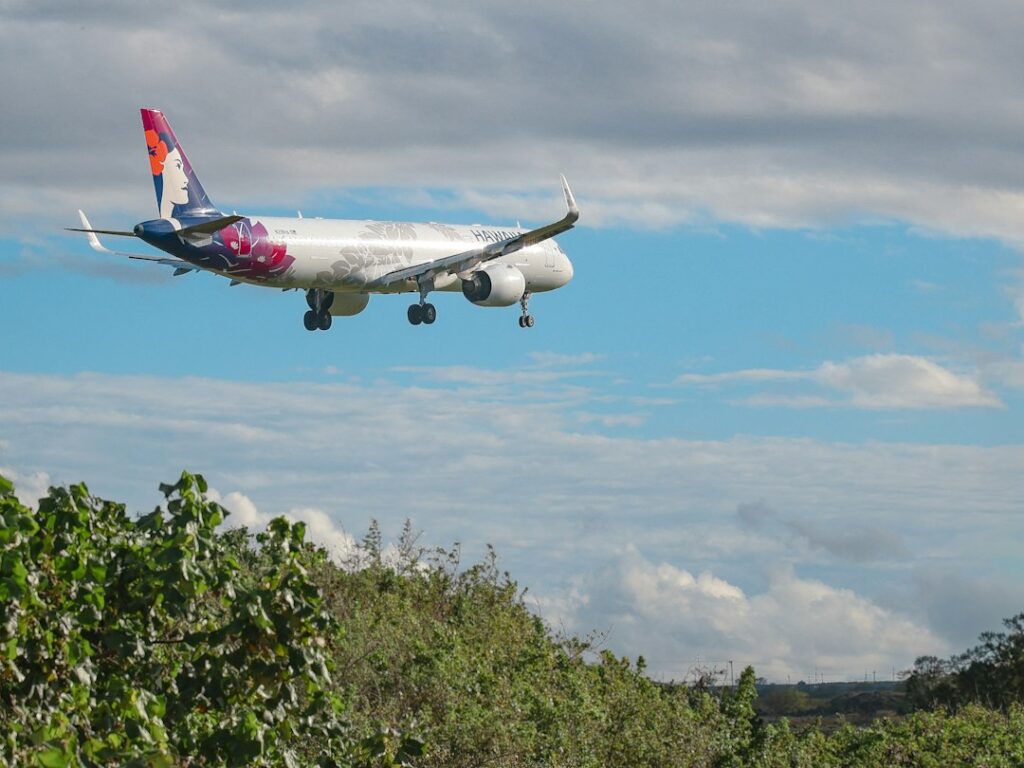
Getting from a mainland U.S. city to Honolulu, Kahului, Kona, or Lihue means crossing roughly 2,400 miles of open Pacific — the longest overwater route flown commercially in North America. That distance sets a floor on fuel burn, aircraft utilization, and crew pay that no fare sale can erase. What varies is the layer on top: which carrier is discounting, which day of the week they release inventory, and which weeks of the year mainland demand collapses.
Research from ARC and airline earnings calls suggests round-trip base fares from the West Coast bottom out around $198 in April and September, versus $650+ during winter break and July. From Midwest and East Coast hubs, the low-fare floor sits closer to $348 and $448 respectively. Understanding when each of the three main Hawaii carriers — Alaska, Southwest, and Hawaiian — publishes discounted inventory is the difference between paying peak and paying trough.
This piece breaks down the four repeatable price patterns that mainland travelers can actually plan around, plus the fare-tracking mechanics that surface those windows before they close. The angle is booking strategy, not brand loyalty — the cheapest seat on any given Tuesday morning belongs to whichever carrier is currently defending market share on that specific city pair.
Why Hawaii fares behave differently from mainland routes
Domestic transcon flights (JFK-LAX, ORD-SFO) compete against seven or eight carriers and dozens of daily frequencies. Mainland-to-Hawaii routes typically compete between two or three: Hawaiian, Alaska, and Southwest, with United and American filling premium demand out of their hubs. That thinner competition creates predictable pricing “wars” — when one carrier drops a fare bucket, the others match within 48 hours or lose the seat.
The other structural quirk is that Hawaii is functionally a leisure market. Roughly 87% of visitors are on vacation, per Hawaii Tourism Authority figures, versus 30-40% leisure share on typical mainland routes. Leisure travelers book earlier and are more price-sensitive than business travelers, which means carriers release sale inventory further ahead — often 90 to 180 days before departure rather than the 14-to-45-day window common on business routes.
The practical implication: fare tracking rewards patience. A traveler watching Seattle-Kahului six months out will see three or four distinct sale cycles before their departure date. Booking on the first sale is often 15-25% more expensive than waiting for the second or third dip.
Capacity dynamics also matter. Alaska Airlines added Hawaii after its 2016 Virgin America merger; Southwest arrived in March 2019; Hawaiian completed a merger with Alaska in September 2024. Each capacity jump produced 6-12 months of below-average fares as carriers fought for market share, and the pattern will likely repeat as fleet integration progresses through late 2026.
The shoulder-month price floor (April-May, September-October)
Hawaii demand cycles around three peaks and two troughs. Peaks are Christmas-New Year, spring break (mid-March), and mid-June through early August. Troughs — the shoulders — are late April through mid-May, and the six weeks between Labor Day and mid-October. October remains soft until Hawaiian Airlines pushes fall promotional fares in mid-month.
During those shoulder weeks, occupancy on West Coast-to-Hawaii aircraft drops from 90%+ to the mid-70s. Carriers respond by dropping fare buckets rather than pulling flights. That is when the sub-$200 round trips from LAX, SFO, and SEA surface, sometimes for stretches of 10-14 days at a time.
Shoulder timing also delivers benign ocean and weather conditions on most islands. Kauai’s south shore begins its predictable May-through-September small-swell window, and rainfall on the leeward sides averages under an inch per week in both April and October. The tradeoff for these calm conditions is that jellyfish and man o’ war landings around Oahu can concentrate in these months, which the site’s Portuguese man o’ war wind analysis covers separately.
Best shoulder booking windows
Historical fare data from Hopper and Google’s flight-price index shows April 15-May 22 and September 6-October 12 as the two cheapest booking blocks. Avoid the last week of May (Memorial Day) and the first weekend of October (Aloha Festivals travel surge into Oahu).
| Window | West Coast round-trip low | Midwest low | East Coast low |
|---|---|---|---|
| April 15-May 22 | $198 | $348 | $448 |
| September 6-October 12 | $212 | $368 | $462 |
| Thanksgiving week | $598 | $728 | $848 |
| December 20-January 3 | $688 | $838 | $948 |
| Mid-June to July 15 | $438 | $568 | $668 |
Alaska Airlines Companion Fare mechanics
Alaska’s Companion Fare is a benefit of the Alaska Airlines Visa Signature card, issued by Bank of America. Cardholders receive one certificate per year (after the first-year annual bonus certificate) that permits a second passenger to fly on the same reservation for $122 total — $99 base plus government taxes of roughly $23. The primary passenger pays the published fare. Both travelers must be on the same itinerary.
Where this matters for Hawaii: even during shoulder months, a two-passenger booking from Seattle to Kona at $258 per person becomes $258 + $122 = $380 total, an effective per-person cost of $190. On peak-week bookings, the savings widen further. A December LAX-OGG paid fare of $688 paired with a $122 companion produces $405 per person.
Restrictions worth knowing before applying:
- Companion fare must be booked directly with Alaska on the certificate’s website.
- Both travelers must originate and return together on identical routing.
- Fare classes X, V, N, and Q are not eligible on some routes.
- The certificate expires 12 months after issuance and cannot be extended.
- Mileage accrual applies to both passengers at 100% of the paid fare miles.
Timing the certificate
Alaska issues the annual certificate on the cardholder’s card anniversary. Applying in July means an August certificate available for booking September shoulder-month travel — the shortest possible path from card approval to Hawaii savings. The card’s $95 annual fee amortizes across the certificate savings quickly on a two-passenger booking, and both travelers earn full miles toward MVP status.
Southwest’s Tuesday sale pattern
Southwest publishes fare sales on Tuesday mornings between 10 a.m. and noon Central Time, and matches competitors’ sales through Tuesday evening. Historical booking data from 2015-2024 shows Tuesday morning as the statistically cheapest window to book any Southwest route, with roughly 62% of the airline’s promotional inventory released on that day.
Southwest entered the Hawaii market in March 2019 and now serves Honolulu, Kahului, Kona, and Lihue from Oakland, San Jose, Sacramento, Long Beach, San Diego, Las Vegas, and Phoenix. All bags fly free (two checked bags, up to 50 lbs each), which materially changes the total cost comparison versus Alaska and Hawaiian’s baggage fees. Interisland Southwest bag rules are covered in more detail in the interisland baggage fee comparison.
Sale mechanics
Southwest sales run in one of three formats:
- Point-to-point sales — usually 3-5 day windows, targeting specific city pairs like OAK-HNL.
- Rapid Rewards points sales — same-day 25-40% point discounts, best used for peak-week travel.
- System-wide sales — quarterly, typically 4-6 weeks in advance of shoulder months.
The Companion Pass — earned after flying 100 qualifying one-way flights or earning 135,000 tier-qualifying points in a calendar year — provides free travel for a designated companion on any Southwest itinerary. For frequent Hawaii travelers, the Pass functionally halves per-person costs. Card sign-up bonuses from Chase can shortcut the points requirement in year one, especially when two personal cards are opened before triggering the qualifying spend.
Hawaiian’s Mahalo Monday drops
Hawaiian Airlines runs a weekly promotional email called Mahalo Monday that releases limited-inventory fares each Monday morning around 6 a.m. Hawaii Standard Time (9 a.m. Pacific, noon Eastern). Fares typically last 24-72 hours before either selling out or being pulled. Sign-up is free through the HawaiianMiles program.
Mahalo Monday tends to feature mid-week departures (Tuesday-Thursday) 45-90 days out, which aligns with Hawaiian’s yield-management model of pushing off-peak inventory rather than discounting Friday-Sunday flights. Common patterns include:
- LAX-HNL round-trip at $218 for Tuesday departures 60 days ahead.
- SFO-OGG at $248 for Wednesday departures during shoulder months.
- Neighbor-island add-ons at $59 one-way when bundled with mainland fare.
- Occasional PDX and SEA drops when Alaska matches West Coast competition.
The Barclays-issued Hawaiian Airlines World Elite Mastercard adds a $100 discount off two round-trip Hawaii tickets each anniversary year, plus a first-year 70,000-mile bonus that redeems for two round-trip West Coast-Hawaii flights at the airline’s saver level (40,000 miles round-trip).
Post-merger changes to watch
Alaska Airlines completed its acquisition of Hawaiian Airlines in September 2024. The two carriers currently operate separate loyalty programs and separate booking systems, though Alaska has announced full integration by late 2026. Mahalo Monday and Companion Fare remain independent products through the transition, but overlapping West Coast routes may see fewer promotional fares as duplicate capacity gets trimmed.
Google Flights, Hopper, and fare tracking mechanics
Google Flights aggregates 300+ carriers and OTAs and offers price-tracking alerts triggered by threshold changes on saved routes. For Hawaii research, three specific features matter more than the default calendar view.
Date grid and price graph
The “Date grid” shows a full month of price combinations at a glance, letting travelers see that Wednesday-to-Tuesday travel is $180 cheaper than Friday-to-Sunday on the same week. The “Price graph” extends this to a rolling 90-day view. Both features surface shoulder-month price floors visually within seconds.
Price insights and Track prices
Google’s “Price insights” label ranks the current fare as low, typical, or high based on historical prices for that route and travel window. Any fare marked “low” and more than 45 days out is worth booking immediately — sub-$220 Seattle-Honolulu fares rarely stay listed longer than 96 hours.
Hopper offers similar tracking with an additional “watch and predict” feature. Its algorithm flags routes as buy-now or wait-and-see with roughly 90% forward accuracy on domestic routes per third-party audits, though Hawaii route accuracy is closer to 84% due to the market’s thinner competitive dynamics.
Airline direct vs. OTA pricing
Fares booked directly with Alaska, Hawaiian, or Southwest are almost always identical to OTA prices, but change fees, refund eligibility, and same-day flight swaps favor the direct booking. Southwest, notably, is not listed on Google Flights, Kayak, or Expedia — its fares must be checked at southwest.com directly. This means fare-tracking tools underreport true Hawaii route availability by roughly one-third on Southwest-served city pairs.
Departure city matters more than airline
The cheapest fare to Hawaii on any given week is almost always dictated by which West Coast city offers the shortest routing to which island. Nonstop flight time from LAX to HNL runs 5h 45m; from JFK to HNL it is 10h 30m nonstop or 12h+ with a connection.
| Departure | Nonstop to HNL | Shoulder low fare | Carriers |
|---|---|---|---|
| Seattle (SEA) | 5h 55m | $198 | Alaska, Hawaiian, Delta |
| Portland (PDX) | 5h 45m | $208 | Alaska, Hawaiian |
| San Francisco (SFO) | 5h 25m | $218 | United, Hawaiian, Alaska |
| Los Angeles (LAX) | 5h 45m | $208 | Hawaiian, Delta, American, United |
| San Diego (SAN) | 5h 55m | $238 | Hawaiian, Southwest |
| Denver (DEN) | 7h 15m | $328 | United, Southwest |
| Phoenix (PHX) | 6h 40m | $298 | American, Hawaiian, Southwest |
| Chicago (ORD) | 9h 10m | $348 | United, American |
| Dallas (DFW) | 8h 15m | $378 | American, Hawaiian |
Positioning flights
Travelers based east of the Rockies often save $150-$300 per person by booking a separate one-way to LAX, SFO, or SEA on a low-cost carrier (Frontier, Spirit, Breeze) and buying the mainland-Hawaii leg independently. The break-even point is typically 4+ hours of layover savings or a $200+ fare gap between the direct and positioning routings.
The tradeoff is baggage protection: separate PNRs mean bags must be re-claimed and re-checked at the connecting city, and any positioning-flight delay is not covered by the Hawaii-leg carrier. A 4-hour connection is the practical minimum for positioning in winter, and 6+ hours for summer thunderstorm season out of DEN, DFW, or ORD.
Interisland connections and total trip cost
The published mainland-Hawaii fare usually terminates at HNL, OGG (Kahului), KOA (Kona), or LIH (Lihue). Travelers heading to Molokai, Lanai, Hilo, or Kalaupapa need a second interisland ticket. Hawaiian Airlines and Southwest operate the highest interisland frequency; Mokulele Airlines and Southern Airways Express serve smaller airports on nine-seat Cessna Grand Caravans.
Interisland one-way fares range from $59 on Hawaiian and Southwest promotions to $89-$139 on standard fares. Mokulele routes to Molokai’s Hoolehua Airport typically run $69-$119 one-way; the site covers Molokai routing from Honolulu in detail.
Bundled vs. separate booking
Booking mainland and interisland legs on the same Hawaiian Airlines PNR includes checked-bag protection: bags check through to the final destination and are automatically re-routed if a mainland delay causes a missed interisland connection. Separate bookings on Southwest and Hawaiian break that protection — bags must be re-claimed and re-checked, and re-accommodation costs fall on the traveler.
| Route | Carrier | Low one-way | Typical duration |
|---|---|---|---|
| HNL-OGG | Hawaiian, Southwest | $59 | 35 minutes |
| HNL-KOA | Hawaiian, Southwest | $69 | 50 minutes |
| HNL-LIH | Hawaiian, Southwest | $59 | 35 minutes |
| HNL-ITO (Hilo) | Hawaiian, Southwest | $69 | 55 minutes |
| HNL-MKK (Molokai) | Mokulele | $69 | 25 minutes |
| HNL-LNY (Lanai) | Mokulele | $79 | 30 minutes |
Rental vehicles and arrival logistics
Most Hawaii itineraries include a rental car, and the vehicle line is often the arriving traveler’s longest post-flight wait — 45-90 minutes at Kahului on peak days, per Hawaii Department of Transportation service metrics. Booking in advance is cheaper and faster; walk-up rentals at OGG averaged $189 per day in 2025 versus prepaid rates near $69.
Credit-card rental collision damage waivers (CDWs) offered by Chase Sapphire Preferred/Reserve, American Express Platinum, and Capital One Venture X provide primary coverage on rentals up to 31 days. That coverage typically replaces the $28-$45 daily CDW charge at the counter — a $780+ savings on a two-week rental.
Red-eye return timing
Kahului airport handles the majority of Maui traffic, and its red-eye flights depart between 9:35 p.m. and 11:55 p.m. Returning a rental at OGG requires careful timing; the site covers red-eye rental return strategy at Kahului in a dedicated piece.
Travelers driving to remote lodging destinations should factor drive times: from Kahului to Hana runs 2h 45m over 52 miles of tight curves; from Kona to Volcano Village near HVNP is 1h 55m over 96 miles.
Timing bookings around Hawaii events
Some weeks that appear as “shoulder” on national demand charts spike locally due to Hawaii-specific events. Booking travel during these windows guarantees higher fares and tight hotel availability.
- Merrie Monarch Festival: Easter week in Hilo. See the Merrie Monarch ticket release timeline.
- Aloha Festivals: mid-September through early October across all islands.
- Honolulu Marathon: second Sunday of December, tight Oahu inventory.
- Ironman World Championship: October in Kona, single-week Big Island surge.
- Vans Triple Crown of Surfing: mid-November through late December on Oahu’s North Shore.
The site also covers November Kauai trip planning around pre-holiday shoulder rates for travelers targeting one of the narrowest cheap-fare windows of the fall.
Cost breakdown for a typical shoulder-month trip
A worked example helps ground the fare research. The scenario: two adults, seven nights, LAX to Kahului in mid-May, Alaska Airlines with Companion Fare, mid-tier rental car, mid-tier condo.
| Line item | Cost | Notes |
|---|---|---|
| Alaska round-trip primary | $258 | Main Cabin, LAX-OGG mid-May |
| Companion Fare add-on | $122 | $99 + $23 taxes |
| Checked bags (2 x $35 each way) | $140 | Waived with Alaska Visa |
| Rental car (7 days midsize) | $483 | $69/day prepaid |
| Condo (7 nights) | $1,890 | $270/night Kihei |
| Groceries and dining | $700 | ~$50/person/day |
| Fuel and parking | $95 | Kahului fuel avg $4.72/gal |
| Total for two | $3,548 | $254/person/day all-in |
Reference data on fuel prices comes from the EIA weekly gasoline report, which tracks Hawaii’s average at $1.20-$1.55 above the national mean. Cost-of-living context and the general Honolulu price basket are covered in BLS’s Honolulu CPI release.
How mainland relocators book differently from vacationers
Households researching Hawaii as a permanent move often make 2-4 exploratory trips before committing. The economics of repeat travel favor different bookings than a one-off vacation:
- Companion Pass or Companion Fare pays for itself on trip two.
- Mid-week departures cut fares by 20-30% versus weekend flights.
- Multi-island itineraries benefit from Hawaiian’s interisland network.
- Renting a car for 14+ days can be cheaper monthly through Turo hosts.
- Extending stays to 21+ days locks in monthly condo rates 30-40% lower than nightly.
Relocation-focused travel also reshapes what “cheap” means. A $600 flight that permits a two-week research trip and hands-on neighborhood tours is often cheaper per usable day than a $300 flight on a three-day weekend. Travel data cited by the Civil Beat and reported through Hawaii News Now tracks these longer-stay patterns among prospective new residents.
Frequently asked questions
What is the single cheapest month to fly to Hawaii from the mainland?
Mid-to-late April and mid-September consistently produce the year’s lowest round-trip fares from West Coast gateways, with LAX-HNL and SEA-HNL bottoming around $198-$212. Both windows fall between spring break and summer peak, and after Labor Day and before fall foliage travel. Fares in these windows sit 60-70% below Christmas-week pricing on the same routes.
How far in advance should Hawaii flights be booked?
For shoulder months (April-May, September-October), booking 60-90 days out captures the deepest sale inventory. Peak weeks (Christmas, spring break, mid-summer) require 150-180 days lead time or Southwest Rapid Rewards point bookings to avoid $700+ fares. Fare tracking through Google Flights and Hopper for 4-6 weeks before booking establishes the route’s actual price floor.
Does the Alaska Companion Fare work on Hawaii routes?
Yes. The Companion Fare certificate from the Alaska Airlines Visa Signature card is valid on all Alaska-operated flights to Honolulu, Kahului, Kona, and Lihue. Some deep-discount fare classes (X, V, N, Q) may not qualify, so certificate holders should book directly through the Alaska site rather than an OTA to confirm eligibility. The card’s $95 annual fee amortizes on the first use.
Is Southwest really cheaper to Hawaii than Alaska or Hawaiian?
Not always on base fare, but Southwest’s two-free-checked-bags policy typically saves $140 per person round-trip versus Alaska ($35 per bag each way) or Hawaiian ($30 per bag each way). Tuesday morning sales frequently drop California-Hawaii fares to $148-$178 one-way. When bags are counted, Southwest wins about 60% of shoulder-month comparisons on West Coast routes.
Can Google Flights predict when Hawaii fares will drop?
Partially. Google Flights labels current fares as “low,” “typical,” or “high” against historical data and offers price-tracking alerts on saved routes. It does not forecast future drops the way Hopper’s algorithm attempts to, but the price graph feature shows 60-90 days of forward pricing across a route, which reveals sale patterns clearly enough to time bookings within 1-2 weeks.
Do rental cars need to be booked before the flight?
Rental car inventory at Kahului, Kona, and Lihue routinely sells out during holiday weeks, and walk-up rates run 2-3x the prepaid rate. Booking cars 30-60 days ahead through Costco Travel, AutoSlash, or the airline’s own portal typically produces the lowest rates. Reservations can be cancelled without penalty until 48 hours before pickup on most bookings.
Are red-eye flights back to the mainland cheaper?
Yes, by an average of $80-$140 per person. West Coast-bound red-eyes from HNL and OGG depart between 8:30 p.m. and 11:55 p.m. Hawaii time, landing on the mainland between 5 a.m. and 8 a.m. local. Alaska, Hawaiian, and Delta run the majority of these overnight flights; timing the rental car return to a red-eye departure requires careful planning at Kahului specifically.
Which West Coast airport has the lowest Hawaii fares?
Seattle (SEA) posts the lowest shoulder-month floor at $198 round-trip, driven by Alaska’s Sea-Tac hub position and Hawaiian’s overlapping capacity. Los Angeles and San Francisco run $10-$20 higher on base fare but offer more daily frequencies and easier positioning-flight options for Midwest and East Coast travelers. Sacramento and San Jose often price identically to Oakland on Southwest’s California-Hawaii routes.